

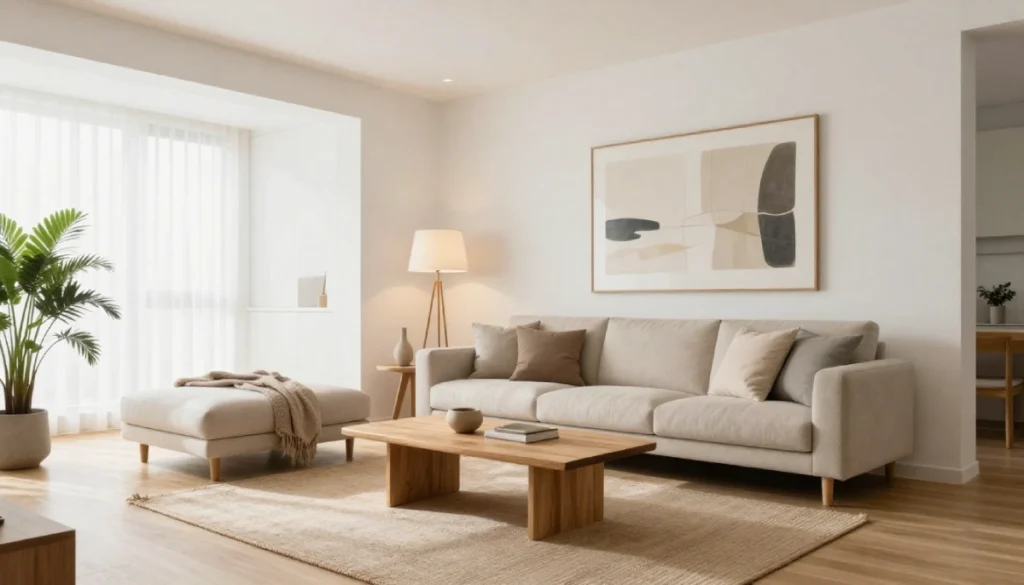
[Modern living room decor ideas that instantly upgrade your home don’t require a full renovation. By focusing on intentional layout planning, neutral bases, and layered lighting, you can transform a dated or cluttered space into a calm, functional retreat.
Your living room is the first space people notice—but small design mistakes can make it feel dated, cluttered, or uninviting. The good news? You don’t need a full renovation to make it look modern and stylish. This guide walks you through the key principles of modern decor. You will learn how to plan your layout, choose colours and furniture, and layer lighting and textures. The result is a living room that feels fresh, functional, and truly yours.
What Defines a Modern Living Room?
A modern living room design shouldn’t feel like an empty gallery. It’s built on deliberate choices that balance visual calm with everyday comfort. The core principles are clean lines, a lack of clutter, and a harmony between form and function. Colour palettes often start with neutrals, then add depth with natural materials and strategic accents.
The goal is a room that looks curated but still feels warm and welcoming. As designer Henriette von Stockhausen notes, “The images you see in magazines are perfectly styled… In real life, our interiors are for living in and not just for show”. Modern decor should work for your daily life.
Plan Your Layout First
Map out how you actually move through the space before purchasing a single piece. A strong layout leaves room to walk freely while keeping seating within easy reach. For small rooms, consider wall-mounted storage and multi-functional furniture like ottomans. In open-plan spaces, use rugs and furniture grouping to define separate zones for relaxing, entertaining, or working.
“To visualise the layout, try using paper templates cut in the shapes of your sofa, coffee table, and other key furniture,” suggests Caron Grant of Bridgman. “This method will help you gauge how much floor space is available”. If paper templates feel cumbersome, upload your floor dimensions into a free digital room planner to drag and drop virtual furniture before committing to a layout. For long, narrow rooms typical of UK terraces, an L-shaped seating arrangement often works better than lining furniture along opposite walls.
Choose a Cohesive Colour Palette
A modern colour scheme typically builds from a neutral base. Think warm whites, soft greys, or earthy beiges for walls and large furniture. This creates a calm backdrop. Then, introduce a character with accent colours.
Deep greens, earthy browns, and rich blue accents work best when applied through a 60-30-10 colour ratio: 60% neutral walls, 30% primary furniture, and 10% accent textiles. Test samples on adjacent walls to see how north vs. south-facing light shifts the tones throughout the day.
Select Furniture with Clean Lines
Furniture forms the backbone of your modern living room. Look for pieces with simple, streamlined shapes—avoid ornate details. A comfortable sofa with a low profile or clean silhouette is a great starting point. Pair it with a coffee table that has a simple geometric form, perhaps in wood or with a metal frame. Storage is key to the uncluttered modern look. Consider a media wall with integrated cabinets or a sleek sideboard.
As trends shift, “low-slung seating will dominate living rooms in 2025, reflecting a shift towards spaces that prioritise laidback style and relaxed comfort”.
Layer Your Lighting for Atmosphere
Overhead “big lights” alone can make a room feel harsh. Modern living rooms avoid this by stacking three distinct light sources at varying heights to create warmth and dimension. Combine three types:
- Ambient lighting: General, soft illumination from ceiling pendants or floor wash lights that provide even coverage without glare.
- Task lighting: Directional reading lamps positioned beside seating, such as an adjustable wall lamp or table lamp, to support focused activities.
- Accent lighting: Decorative lights to highlight artwork or architectural features, like picture lights or LED strips. “Over the past few years, we have moved away from turning on ‘the big light’… As we move into 2025, layering lighting will become more popular,” says Lena Gierasinska of Barker and Stonehouse. Install dimmers on every circuit to shift the room from daytime productivity to evening relaxation.
Add Texture and Personality
Texture is what prevents a modern room from feeling sterile. It adds tactile interest and cosiness. Introduce it through textiles, materials, and decor. Consider a chunky knit throw on your sofa, a wool or jute rug underfoot, or velvet cushion covers. Natural materials like wood, rattan, and stone bring organic warmth. “Walnut and mango wood offer a sophisticated quality that complements both luxe and mid-century aesthetics,” says Andrew Tanner, head of design at Habitat.
Finally, add personality with a few carefully chosen pieces—a large piece of art, a sculptural vase, or a cluster of potted plants.
Common Modern Living Room Mistakes to Avoid
Even with the best intentions, it is easy to stumble. Here are common pitfalls to watch for:
- A rug that is too small: Your rug should be large enough for the front legs of your sofa and chairs to sit on it. This anchors the seating area.
- Poor lighting balance: Relying on a single overhead light source flattens the room. Always layer your lighting.
- Furniture pushed against the walls: In large rooms, this creates a void in the middle. Float furniture to create intimate conversation areas.
- Over-accessorising: A few meaningful objects look curated; too many create visual clutter. Edit your shelves and surfaces regularly.
- Ignoring scale: A tiny coffee table next to a large sofa looks awkward. Ensure your furniture pieces are proportionally balanced.
When Modern Decor Might Not Be Right for Your Home
Modern principles are versatile, but they may not suit every home or lifestyle. Consider these points before you begin:
- If you have a period property with strong original features (like ornate cornicing or a Victorian fireplace), a stark modern scheme might clash. A transitional style that blends modern furniture with respect for period details often works better.
- If your household includes young children or pets, very light-coloured upholstery or delicate materials may not be practical. Opt for performance upholstery treatments that resist stains and fading, paired with darker, forgiving tones.
- If you love collecting and displaying many personal treasures, a strict minimalist approach may feel stifling. An eclectic modern style, which allows for more personal expression, could be a better fit.
FAQs
What is the difference between modern and contemporary living room design?
Modern living room decor ideas lean on mid-century principles like clean lines and natural wood, while contemporary decor shifts with current trends. For styling clarity, anchor your room with timeless modern pieces, then rotate seasonal textiles to stay current without rebuilding the space.
How can I make a modern living room feel cosy?
The key is texture and lighting. Layer soft textiles like wool rugs, velvet cushions, and linen curtains. Use multiple warm light sources at different heights—floor lamps, table lamps, wall lights—and always use dimmers. Incorporating wood tones and greenery also adds natural warmth.
What is the most important piece of furniture in a modern living room?
The sofa. It is usually the largest item and sets the tone for the room. Invest in a well-proportioned, comfortable sofa with a clean design. It serves as both a functional anchor and a style statement.
Can I mix modern with other styles?
Yes. Modern furniture pairs beautifully with vintage or industrial pieces. The mix adds depth and personality. The trick is to ensure a common thread, such as a shared colour palette or material, to tie the look together.
Final Thoughts
You don’t need a showroom budget to nail this look. Start with a clear layout, anchor the room with one or two quality pieces, and build outward with light and texture. Remember, the best modern rooms are not showrooms; they are comfortable, functional, and reflective of the people who live in them. Your upgraded living room is within reach. ]
