

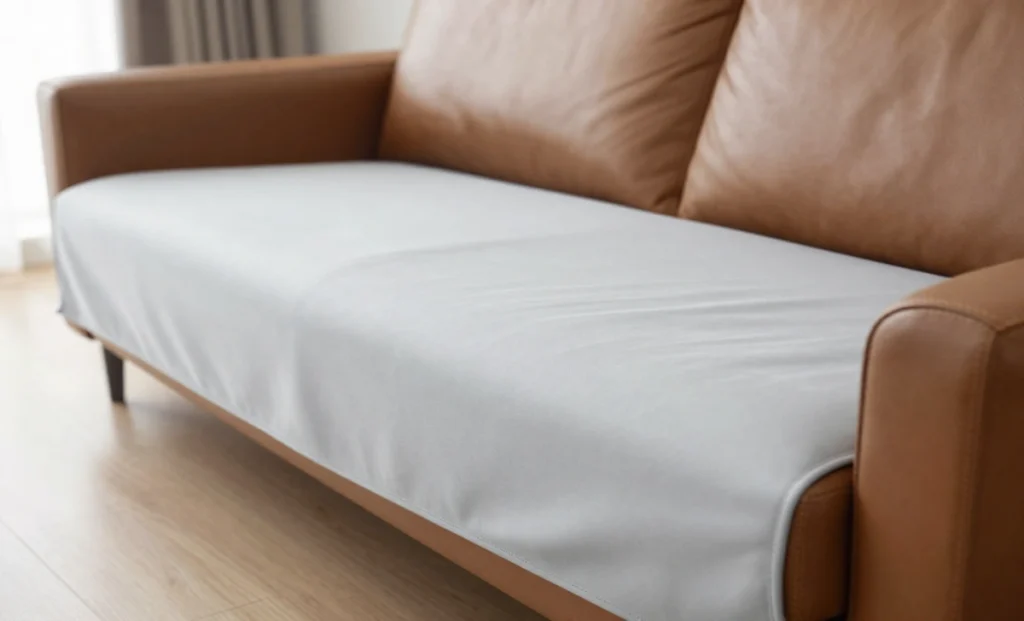
Frustrated by slipcovers that slide off your leather couch within hours? You’re not alone. The fix isn’t giving up—it’s choosing covers engineered for leather’s slick surface: non-slip backing, silicone grip dots, or stretch-to-fit spandex blends that actually stay put. Stretch fabrics like spandex-blend velvet or microfiber conform to the couch’s shape, reducing movement. Measure your couch before buying and check whether your leather has any protective coating, since that affects grip.
Why Slipcovers Slide Off Leather Couches
Love your leather couch for that smooth, luxe feel? That same slick surface is why most slipcovers give up and slide right off within hours.
Fabric couches have a slight texture that grabs onto slipcover material. Leather offers no such friction. A cotton or polyester cover laid over a leather sofa will migrate the moment someone sits down. Add a dog or a child, and the whole thing ends up in a pile on the floor.
Here’s the relief: it’s not that slipcovers don’t work on leather—it’s that you haven’t found the right one yet. Once you understand what causes slipping, choosing the right cover becomes straightforward.
The three main culprits behind slipcover migration on leather:
- A smooth, treated leather surface with no texture for the cover to grip
- Lightweight cover fabric that shifts with any weight or movement
- No anchoring system (straps, elastic, or non-slip backing) to hold the cover in place
Fix any one of these, and the cover performs better. Fix all three, and it stays put all day.
The Leather Surface Problem: Treated vs. Untreated
Before you buy a slipcover, check how your leather is finished.
Most modern leather sofas use pigmented or semi-aniline finishes—protective coatings that boost durability but also increase slip. If your couch has a high-gloss pigmented finish, prioritize strap-based covers over silicone-backing alone. Most modern leather sofas are top-grain or bonded leather treated with a protective coating, wax, or surface pigment. This makes the leather easier to clean and more resistant to cracking. It also makes the surface even more slick than raw leather.
If you apply a slipcover with a silicone rubber non-slip backing to a heavily waxed or coated leather sofa, the silicone may not grip effectively. In that case, a cover with adjustable straps or tucked-in elastic edges will outperform a grip-only design.
Untreated or full-grain leather has a bit more natural texture and tends to hold covers slightly better, though you still need a non-slip solution for long-term use.
A quick test: run your palm firmly across your sofa’s surface. If it feels like glass, go with a strap-based cover. If you feel slight resistance, a non-slip dot backing may work.
Slipcover Types That Work on Leather Couches
Not all slipcovers are built the same. Here’s what to look for specifically with leather.
Stretch Bi-Elastic Slipcovers
These are the most reliable options for leather sofas. Made from spandex blends, they stretch in two directions simultaneously, which means they conform to your couch’s exact shape instead of sitting loosely on top of it. When a cover fits like a second skin, gravity works in your favor rather than against you.
Brands like Paulato by GA.I.CO.—an Italian textile brand specializing in bi-elastic, furniture-grade fabrics—makes slipcovers that Wayfair reviewers consistently praise for fitting angular, modern leather sofas where generic covers fail. One buyer noted the cover “fits any shape like a glove because it is stretchy and tucks in nicely.”
Non-Slip Backed Covers
Look for silicone rubber dot patterns on the underside. These grip the leather without adhesive and don’t damage the surface. The RHF Anti-Slip sofa cover is a commonly cited example. One caveat: if your leather is heavily conditioned or waxed, test a small section before committing.
Strap-and-Buckle Designs
Some slipcovers come with adjustable elastic straps that wrap under the cushions and connect at the base of the sofa. These anchor the cover mechanically, so the surface texture matters less. They’re particularly useful for sectional leather sofas, where covers tend to separate at the seam between pieces.
Separate Cushion Covers
One underrated feature: individual cushion covers. When your sofa’s seat cushions are covered independently, the overall slipcover has less material to shift and stays in position longer. Multiple buyers across review platforms single this out as a major difference-maker.
Still unsure which fabric fits your lifestyle? Save this guide, then compare your top 2 picks side-by-side using the measurement checklist above—most retailers allow easy returns if the fit isn’t perfect.
How to Measure a Leather Couch for a Slipcover
Leather sofas come in specific silhouettes that don’t always match standard slipcover sizing. Getting the measurement right prevents the most common complaint: a cover that looks pulled, saggy, or misshapen.
Before you click ‘buy,’ grab a soft tape measure and note these three numbers:
- Width: armrest edge to armrest edge
- Depth: front of seat cushion to sofa back
- Height: floor to top of back cushion
Pro tip: if your couch sits at the top of a size range, size up for cleaner tucking.
Most slipcovers list a sofa size range (small, medium, large, XL) based on width. If your sofa sits at the top of a size range, size up. A slightly larger cover tucks in more cleanly. A slightly smaller one bunches and gaps.
For sectional leather sofas, skip one-piece covers entirely. For L-shaped sectionals with a chaise, measure the chaise section arm-to-arm separately from the main sofa. U-shaped or modular sectionals often require custom quotes—brands like Comfort Works specialize in these complex silhouettes. Buy individual pieces for the chaise, corner, and standard seats, then secure each with straps. Custom-fitted covers from brands like Comfort Works are worth the extra cost if your sectional has an unusual arm or cushion profile.
Best Fabrics for Leather Couch Slipcovers
Fabric choice affects more than appearance. On leather specifically, some materials perform better than others.
If you want a slipcover that actually stays, start with velvet or a velvet blend—the soft pile creates just enough grip against leather without sacrificing that plush look you love. The pile creates mild friction against the leather surface, which slows shifting. The weight of velvet also helps the cover settle and stay put. For daily use, prioritize fabrics with a Martindale rub count above 15,000—this industry standard measures abrasion resistance and ensures your velvet or microfiber cover won’t pill or thin after months of use. Buyers consistently report that velvet covers on leather couches move far less than lightweight polyester alternatives.
Microfiber works well for pet owners. Pet hair wipes off easily, and the fabric resists snagging on leather edges. Microfiber is also breathable, which matters more on leather than on fabric sofas since leather doesn’t absorb moisture the way fabric does.
Quilted fabrics add grip through weight alone. A quilted cotton cover on a leather sofa tends to stay in position better than a single-layer fabric, though it won’t fit as snugly as a stretch cover.
Avoid: lightweight polyester throws or single-layer cotton covers without any anti-slip backing. These look attractive in product photos but slide immediately in real use.
Still unsure which fabric fits your lifestyle? Save this guide, then compare your top 2 picks side-by-side using the measurement checklist above—most retailers allow easy returns if the fit isn’t perfect.
Protecting Your Leather Under the Slipcover
Most people cover a leather couch to protect it. But the slipcover itself can cause problems if you’re not careful.
Leather needs to breathe. A non-breathable cover traps heat and moisture, which causes leather to dry out, crack, or develop mildew over time. If you plan to leave a slipcover on year-round, choose breathable fabrics under 300 GSM with open-weave construction (like linen-blend microfiber) to maintain leather breathability—this prevents moisture buildup that can cause cracking or mildew over time. Choose a breathable fabric like cotton, linen, or open-weave microfiber.
Set a phone reminder: every month or so, peel off the cover, give your leather a quick wipe-down with a damp cloth, and toss the cover in the wash. Dirt and moisture trapped between the cover and the leather accelerate wear. When you remove it for washing, wipe down the leather with a damp cloth and apply a leather conditioner. This keeps the sofa in good condition even while it’s mostly covered.
One often-missed detail: don’t use silicone-backed covers on leather sofas with a matte finish for extended periods. The silicone can leave faint marks on some matte treatments. A cloth barrier placed between the silicone backing and the leather surface prevents this.
When a Slipcover Won’t Fix the Problem
A slipcover covers a sofa. It doesn’t restructure it.
If your leather cushions have lost their shape, flattened foam, or broken springs, no cover will make the seating feel right. You’ll see lumps and valleys through the fabric. In that case, replace the foam inserts first, then add a slipcover.
Deep cracks in leather that have lifted or separated also show through fitted covers. A slipcover hides surface discoloration and light scratches well, but structural damage needs repair before covering.
If your sofa has an unusual arm style, like a scrolled arm or a very high track arm, standard slipcovers may not accommodate the shape. You’ll end up with excess fabric on the arms that no amount of tucking resolves. In that scenario, a custom-made cover or a simple throw draped and tucked over the affected area is the more honest solution.
FAQs
Can you put a slipcover on a leather couch?
Yes—but only if you choose slipcovers designed for leather. Standard covers without silicone grips, stretch fabric, or anchor straps will slide. Look for bi-elastic blends, non-slip backing, or strap systems that conform to leather’s smooth surface.
Will a slipcover damage my leather couch?
Not if you use a breathable fabric and remove it periodically to condition the leather. Non-breathable covers left on for months can dry out leather and promote mildew.
Do stretch slipcovers work on sectional leather sofas?
Individual-piece stretch covers work better than one-piece designs on sectionals. Buy separate covers for each section and secure each piece with its own straps. One-piece covers for sectionals tend to gap at the corner joint.
What is the best fabric for a leather couch slipcover?
Velvet blends and microfiber perform best. Velvet’s weight and pile texture reduce slipping. Microfiber handles pet hair well and is breathable enough for year-round use.
How do I stop my slipcover from sliding on leather?
Combine silicone-dot backing with foam pipe anchors (like SlipGrip rods or even cut pool noodles) tucked into seat crevices—this creates friction from both sides and is the most effective DIY retention hack. The foam, pushed into the cushion gaps, anchors the cover from inside and is the most effective DIY solution.
