

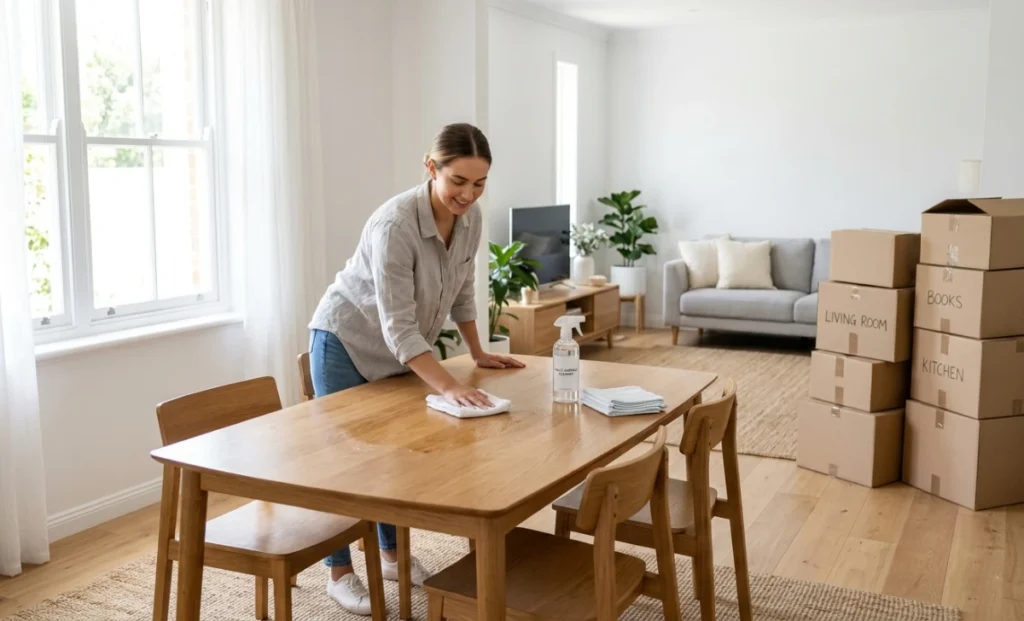
To clean furniture before moving, vacuum all upholstered pieces, wipe down wood and metal surfaces with the right cleaner for each material, treat leather with a conditioner, and sanitise high-touch areas. Do this at least 24–48 hours before moving day so surfaces dry fully and allergens don’t travel to your new home with you.
Moving day brings enough chaos. The last thing you want is to carry dust, allergens, and grime from your old place straight into your new one. Yet most people focus on packing and never give their furniture a second thought.
That is a mistake. According to the American Lung Association, hundreds of thousands of dust mites can live inside a single sofa, mattress, or set of curtains. The Asthma and Allergy Foundation of America (AAFA) reports that 8 out of 10 people in the United States are regularly exposed to dust mite allergens, which settle deep into upholstered furniture and fabric. When you move those pieces without cleaning them first, you bring every bit of that buildup with you.
This guide walks you through exactly how to clean furniture before moving, material by material. You will also find a supply list, timing tips, and answers to the questions most people forget to ask.
Why Cleaning Furniture Before a Move Actually Matters
Furniture collects far more than visible dirt. Fabric fibres trap pet dander, dead skin cells, mould spores, and chemical particles from household dust. Research published in peer-reviewed environmental health literature confirms that simply moving upholstered furniture, throw pillows, or bedding can push mite allergens directly into the air you breathe.
The Environmental Protection Agency has also noted that indoor air can be up to five times more polluted than outdoor air. If you move dirty furniture into a new space without cleaning it first, you are essentially seeding a clean environment with months or years of accumulated pollutants.
Beyond health, there are practical reasons to clean before packing. Cleaning is significantly easier when furniture is still accessible from all sides, before it gets wrapped in packing blankets or squeezed into a truck. And a professionally cleaned sofa or dining table arrives at the new address looking its best.
Supplies to Gather Before You Start
You do not need a storage room full of products. A small, focused kit will cover almost every furniture type:
- A vacuum with a HEPA filter and upholstery attachment
- Microfiber cloths (several, since they trap rather than spread dust)
- Mild dish soap or an all-purpose cleaner
- White vinegar (diluted 50/50 with water for fabric freshening)
- Baking soda (for odour absorption in upholstery)
- Leather cleaner and conditioner (if applicable)
- Wood polish or oil soap formulated for furniture
- Fabric-safe upholstery shampoo or foam cleaner
- Rubber gloves
- A spray bottle
Avoid bleach on wood or fabric. Avoid ammonia-based cleaners on leather. When in doubt, spot-test any product on a hidden area first.
How to Clean Furniture Before Moving, by Material
Different materials need different approaches. Using the wrong product on the wrong surface causes staining, warping, or permanent damage.
Wood Furniture: Tables, Chairs, Dressers, and Shelves
Start by dusting with a dry microfiber cloth, moving in the direction of the wood grain. This picks up loose debris without scratching the finish.
Next, dampen a second cloth with a small amount of oil soap or a wood-safe cleaner, and wipe down all flat surfaces. Get into corners and carved details with a soft toothbrush. Do not soak the wood; excess moisture causes swelling or warping.
If the piece has drawers, pull them out completely. Wipe the inside and underside of each one. Dust collects heavily in drawer grooves and along the bottom runners.
Finish with a light application of furniture polish or conditioning wax. This protects the finish during the move and prevents scratches from packing blankets rubbing against the surface.
Upholstered Sofas, Armchairs, and Ottomans
Upholstered pieces hold the most allergens of any furniture type and need the most thorough attention.
Start by removing all cushions. Vacuum both sides of every cushion, then vacuum the frame of the sofa underneath. Use the crevice attachment to get into seams, button indentations, and the gap between the seat back and base. This is where the bulk of dust mites and debris accumulate.
Once vacuumed, sprinkle a thin, even layer of baking soda over all fabric surfaces. Let it sit for at least 15 minutes. Baking soda absorbs odours and draws moisture out of the fabric without leaving residue. Vacuum it off completely.
For stains, apply a small amount of upholstery foam cleaner or mix a solution of one teaspoon of mild dish soap with one cup of warm water. Blot the stain; do not rub. Rubbing spreads the stain and damages fibres. Let the area air dry fully before wrapping the piece for the move.
If you have a handheld steam cleaner, pass over the entire surface to kill dust mites. Research shows dust mites die at temperatures above 50°C (122°F), and steam cleaning reaches well above that threshold.
Note on fabric codes: Check the tag on your sofa before using any liquid. A “W” code means water-based cleaners are safe. An “S” code means solvent-only cleaners. An “X” code means vacuum only. Ignoring these codes can void warranties or permanently damage the upholstery.
Leather Sofas and Chairs
Leather needs moisture to stay supple. Dry leather cracks, and cracked leather cannot be repaired without professional help.
Start by wiping down the entire piece with a dry microfiber cloth to remove surface dust. Then apply a leather cleaner with a soft cloth using small, circular motions. Work in sections to avoid product drying before you can buff it out.
After cleaning, apply a leather conditioner while the surface is still slightly damp from the cleaner. This prevents the leather from drying out during the move, especially if the truck will be warm or the furniture will sit in storage.
Pay attention to seams and piping, where dirt collects. A soft brush or a cotton swab works well in those tight spots.
Avoid household wipes or general surface sprays on leather. Many contain alcohol or citrus compounds that strip natural oils and cause discolouration.
Metal and Glass Furniture
Metal frames and glass tabletops are the easiest pieces to clean. They do not harbour allergens the way fabric does, but they show fingerprints, smudges, and dried liquid clearly.
For metal frames, wipe down with a damp microfiber cloth and a small amount of all-purpose cleaner. Check for any rust spots, particularly on older pieces. A paste of baking soda and a few drops of dish soap, scrubbed with a soft brush, removes light rust without scratching the metal.
For glass tabletops, use a streak-free glass cleaner sprayed onto a cloth, not directly onto the glass. Spraying directly can let liquid seep under the glass into any frame or base below. Wipe in one direction for a clean finish.
Remove glass tabletops from their bases before wrapping them. Store glass vertically, never flat, during transport to reduce the risk of cracking under the weight of other items.
Mattresses
A mattress deserves special attention before a move. The American Lung Association notes that mattresses are one of the highest-concentration environments for dust mites in any home.
Strip the mattress completely. Sprinkle a generous, even layer of baking soda over the entire top surface. Let it sit for at least 30 minutes, or up to a few hours if you have time. This absorbs moisture and neutralises odours.
Vacuum off all the baking soda with the upholstery attachment. Flip the mattress and repeat on the other side.
For any stains, mix a solution of hydrogen peroxide, a few drops of dish soap, and a tablespoon of baking soda into a spray bottle. Apply lightly, blot with a clean cloth, and allow it to air dry fully. Never soak a mattress; it takes hours to dry and can develop mould if wrapped or stored while still damp.
Once cleaned and fully dry, wrap the mattress in a dedicated mattress bag before loading it into the truck. This protects it from road dust, moisture, and contact with other items during transport.
When to Clean: Timing Your Pre-Move Schedule
Timing matters as much as technique. If you clean upholstered pieces too close to moving day, they may still be damp when loaded, creating conditions for mildew to develop inside the truck.
A practical timeline looks like this:
- 7 days before moving: Deep clean upholstered sofas, armchairs, and mattresses. These take the longest to dry.
- 3 days before moving: Clean leather furniture and treat it with conditioner. Wipe down wood pieces with oil soap.
- 1 day before moving: Clean metal frames, glass tops, and any remaining surfaces. Do a final vacuum pass on all upholstered items.
- Moving day: Wipe down handles and contact points one final time before loading.
This schedule ensures everything is completely dry before wrapping, which protects both the furniture and the new space it moves into.
Cleaning Furniture After You Arrive
Even well-cleaned furniture picks up dust and contact from the moving process. Once you reach your new home, a quick secondary pass makes a real difference.
Do this before placing furniture in its final position, while you still have access to all sides:
- Vacuum upholstered pieces one more time to remove any truck dust
- Wipe down wood surfaces with a dry cloth before positioning them
- Clean glass tops before setting anything on them
- Air out the new space for at least an hour by opening windows before bringing pieces inside
This two-stage approach, cleaning before and after the move, is the most effective way to start fresh in a new home without importing old allergens and debris.
Signs You Should Hire a Professional Cleaner
Some situations call for professional equipment. Consider booking a cleaning service if:
- Your upholstered furniture has deep stains that have not responded to home treatments
- The sofa or mattress has a persistent odour that baking soda has not resolved (this can indicate embedded mould)
- You or a family member has significant allergies or asthma, and you want certified allergen reduction
- The furniture has not been deep-cleaned in more than two years
- You are moving antique or heirloom pieces with delicate finishes
Professional upholstery and carpet cleaners use truck-mounted hot water extraction equipment that reaches temperatures and pressure levels no home machine can match. Many also offer allergen-specific treatments.
FAQs
How far in advance should I clean furniture before moving?
Start upholstered pieces and mattresses at least seven days before moving day. This gives them enough time to dry fully before they are wrapped or loaded. Wood and metal pieces can be done three to four days out.
Can I use the same cleaner on all furniture types?
No. All-purpose cleaners work on metal and some sealed wood surfaces, but they can damage leather, strip unfinished wood, or leave residue on fabric. Always match the product to the material and check upholstery codes on the tag before applying any liquid.
Does vacuuming furniture actually remove dust mites?
Vacuuming with a HEPA-filter vacuum significantly reduces allergen levels on furniture surfaces, but it does not eliminate live mites, which cling to fabric fibres. Combining vacuuming with steam cleaning or hot water extraction is more effective for reducing mite populations.
Is it necessary to clean furniture if it looks clean?
Yes. Surface appearance tells you very little about allergen or bacteria levels. Research from the AAFA confirms that upholstered furniture that looks clean can still carry significant dust mite loads. The cleaning process is about health and hygiene, not just appearance.
What should I do if my furniture smells after the move?
Set the piece in a well-ventilated area. Sprinkle baking soda over the fabric and let it sit for several hours before vacuuming. If the odour persists, a diluted white vinegar spray (50/50 with water) applied lightly and allowed to dry completely can neutralise many odour sources. For strong or persistent smells, consult a professional upholstery cleaner.
