

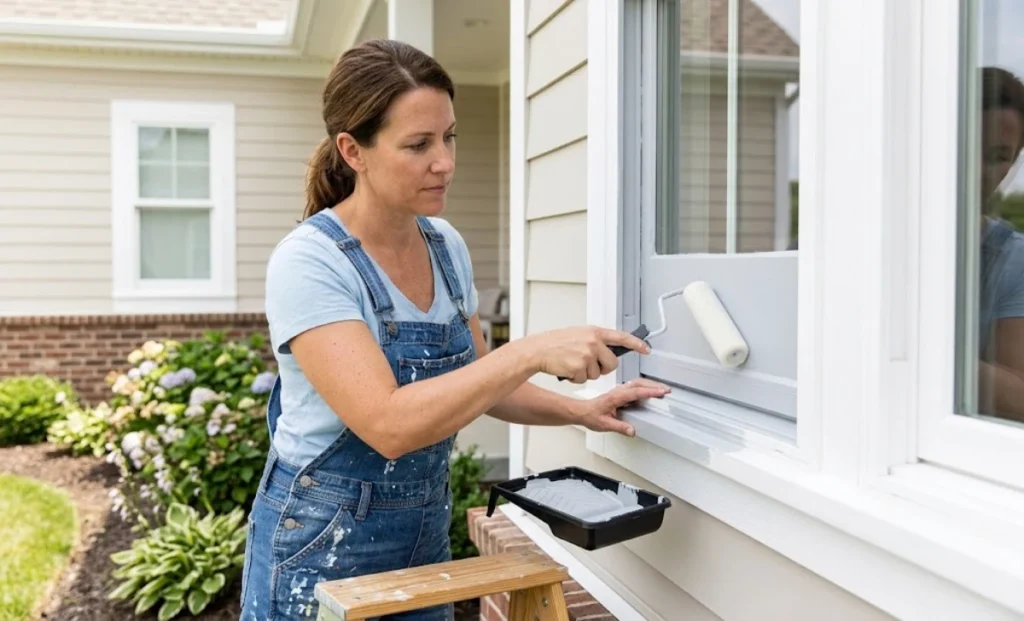
Yes, you can paint vinyl windows, but most professionals do not recommend it. Vinyl is a smooth, non-porous plastic (PVC) that resists paint adhesion. Without the right primer, paint, and prep, the finish will crack, peel, or warp within a few years. If you proceed, use a bonding primer and vinyl-safe acrylic paint, and always choose a light colour with a Light Reflectance Value (LRV) of 55 or higher.
You looked at your windows and thought: a fresh colour would change everything. Maybe you just repainted the exterior, and the old white frames look dated. Maybe a previous owner chose a colour you hate.
So the question arises: can you actually paint vinyl windows?
The short answer is yes. The more complete answer is: it is possible, but it is harder than most people expect, and it carries real risks. This guide covers everything you need to know before picking up a brush, including what can go wrong, what products actually work, and when replacement is the smarter call.
What Makes Vinyl Windows Difficult to Paint
Vinyl windows are made from polyvinyl chloride, better known as PVC. This is a smooth, slippery plastic engineered to be low-maintenance. That same quality that makes vinyl windows easy to clean is exactly what makes them resist paint.
Paint struggles to grip a non-porous surface. Without proper prep and the right products, it will slide off, bubble, or peel in patches within months. On top of that, vinyl naturally expands and contracts with temperature changes more than wood or aluminium. Any paint on the surface has to flex with those movements, or it will crack.
As paint professional Rachel Otto from Fleury Lumber put it: “Vinyl expands and contracts more than wood, so you run the risk of it cracking and peeling sooner if you decide to paint it.”
This does not mean painting is impossible. It means the project demands more preparation than most DIY jobs, and the results will never match a factory finish in durability.
The Real Risks of Painting Vinyl Windows
Before you commit, you need to know what you are signing up for.
Warranty void. This is the biggest risk. Most OEM warranties explicitly prohibit field painting on vinyl profiles. Colour changes affect expansion and heat absorption, so manufacturers will not cover related failures. If your windows are still under warranty, check the fine print before touching them with a brush.
Paint failure on moving parts. Every time you open or close the window, the frame shifts slightly. Paint on hinges, tracks, and sashes wears down faster than on fixed frames. You may find the window sticky or jammed if paint layers build up in the tracks.
Heat damage from dark colours. Dark colours like navy, black, dark brown, and forest green absorb heat and can cause vinyl temperatures to exceed 180°F in direct sunlight. That level of heat causes frames to warp, seals to fail, and glass to crack under stress.
Uneven finish over time. According to painting professional Joseph Umana, after a few years, a glossy sheen becomes splotchy with both flat and shiny areas, especially on the south side of a house.
Reduced property value. Painted vinyl windows may raise concerns for home inspectors or buyers. Window warranties are often transferable, and painting voids that transfer.
Short lifespan. Matt Stone from Hometown Painting says, “No matter how much prep is done and what kind of paint is chosen, no paint will last as long as the original vinyl finish.” With professional-grade materials and careful application, a good paint job may last seven to ten years. Poor prep or the wrong products can cause failure within two to three years.
Can You Paint Vinyl Windows? Choosing the Right Paint
If you have weighed the risks and still want to proceed, choosing the right materials is not optional. The wrong products almost guarantee failure.
Paint type: Use 100% acrylic latex paint or a urethane-acrylic blend. These formulas are flexible enough to move with vinyl as it expands and contracts. Standard interior or exterior house paint will not work on vinyl.
Brand to know: Sherwin-Williams VinylSafe paint is one of the most widely recommended products for this job. It comes in 100 colour options, including a selection of darker shades formulated to resist weather damage.
The LRV rule: Light Reflectance Value (LRV) measures how much light a colour reflects, on a scale of 0 (black) to 100 (pure white). For vinyl windows, choose a paint with an LRV of 55 or higher. Going darker than your original factory colour, unless the paint is explicitly labelled “vinyl-safe for dark colours,” carries a serious risk of heat warping.
Colours to avoid entirely: Black, navy blue, dark brown, dark forest green, and any colour significantly darker than the original frame. These absorb too much heat for vinyl to handle safely.
How to Paint Vinyl Windows: Step-by-Step
Step 1: Confirm Your Windows Are Good Candidates
Skip painting if any of the following apply:
- The windows are still under the manufacturer’s warranty
- The frames are cracked, brittle, chalking, or warped
- There is condensation between the panes (failed seal)
- You plan to sell the home within the next two years
Step 2: Gather Your Supplies
You will need:
- Mild detergent and warm water (or a 70/30 mix of warm water and distilled white vinegar)
- Denatured alcohol and clean rags
- Painter’s tape
- Plastic sheeting or butcher paper for masking
- Bonding primer rated for PVC or vinyl surfaces
- Vinyl-safe acrylic paint (LRV 55 or higher)
- Paint sprayer (strongly preferred) or a small foam roller
Step 3: Clean the Surface
Wash every inch of the vinyl frame with mild detergent and warm water. Remove all dirt, oils, and any mildew. Rinse thoroughly and let it dry completely.
Follow up by wiping down every surface with denatured alcohol. This step removes the factory oils that prevent paint from bonding. Do not skip it.
Note: Some professionals recommend a light scuff with fine-grit sandpaper to create surface texture, while others advise against sanding vinyl entirely. Rachel Otto advises skipping sanding on vinyl, as it can weaken, scratch, or damage the material. If you do scuff lightly, use 220-grit and work gently.
Step 4: Mask Everything
Use painter’s tape along the glass edge, window trim, and any hardware you cannot remove. Cover nearby surfaces with plastic sheeting if you are spraying.
Step 5: Apply a Bonding Primer
Even with vinyl-friendly paints, you need to apply a primer first. A primer ensures better adhesion for your colour of choice. Look for primers labelled “bonding,” “adhesion,” or “multi-surface for PVC/vinyl.”
Apply one thin, even coat. Follow the manufacturer’s dry time exactly. Do not rush this step.
Step 6: Apply Two to Three Thin Coats of Paint
Apply paint in thin, even coats. Two to three coats will give you full coverage without building up a thick layer that is more likely to crack or peel.
A paint sprayer gives the smoothest finish and reaches every crevice. A small foam roller works as a second option. A standard brush leaves visible strokes and is harder to use in tight corners.
Allow each coat to dry fully before applying the next.
Step 7: Reinstall Hardware and Remove Masking
Remove tape while the final coat is still slightly tacky to get clean edges. Reinstall any hardware. Check that sashes and tracks move freely before the paint cures completely.
Application Methods at a Glance
| Method | Finish Quality | Best For |
|---|---|---|
| Paint sprayer | Excellent, smooth | All vinyl window types |
| Foam roller | Good | Flat frame surfaces |
| Brush | Fair, shows strokes | Touch-ups only |
How Long Will the Paint Last?
Lifespan depends heavily on prep quality, product choice, and your climate. With professional-grade materials and careful application, paint lasts seven to ten years. Average performance is five to seven years. Poorly prepared or budget paint may fail within two to three years. Climates with humidity, temperature extremes, or UV exposure typically reduce these timeframes by one to two years.
Plan to inspect the finish every year and touch up any areas where paint begins to lift.
Alternatives Worth Considering
If the risks feel too high, you have other options.
Vinyl window wrap. A vinyl film wrap goes over the existing frame and comes in many colours, including wood grain finishes. It is removable, does not void the warranty in most cases, and lasts five to ten years before needing replacement. It costs more than paint but less than a full window replacement.
Factory-colored replacement windows. Modern vinyl and fibreglass windows as of 2024 are available in factory-applied exterior colours, including black, bronze, clay, and custom hues. These factory finishes are warranted and engineered to handle heat without warping. You get the colour you want without the maintenance concerns of a field-applied coating.
Final Thoughts
Painting vinyl windows is possible. It is not the simple weekend project it might appear to be, but it is doable if you use the right materials, prep carefully, and accept the trade-offs.
The biggest decisions are whether your windows are still under warranty and what colour you plan to use. Dark colours on vinyl are a real risk, not just a caution label. If your windows are in good shape, out of warranty, and you are choosing a lighter colour, a careful DIY paint job can refresh your home’s look for several years.
If the windows are ageing, under warranty, or you want a lasting result with no maintenance headaches, factory-colored replacement windows or a vinyl wrap are worth pricing out first.
FAQs
Can I paint vinyl windows black?
Technically, yes, but it carries the highest risk of heat damage. Black absorbs far more heat than lighter shades. If you want dark frames, use a product specifically labelled as vinyl-safe for dark colours, such as Sherwin-Williams VinylSafe in one of its darker approved shades. Even then, frames in full sun on south-facing walls are most vulnerable to warping.
Will painting vinyl windows void the warranty?
In most cases, yes. Most vinyl window manufacturers prohibit field painting in their warranty terms. Check your specific warranty document before you start. If you are outside the warranty period, this is less of a concern, though the paint performance risks still apply.
Do I need to sand vinyl before painting?
Expert opinion is split. Some pros recommend a light scuff with 220-grit sandpaper to create surface texture. Others, including some paint professionals, advise skipping sanding entirely because it can scratch and weaken the vinyl surface. The most important prep step is cleaning with detergent, followed by a wipe-down with denatured alcohol.
Can I paint vinyl windows from white to a dark colour?
You can apply darker paint over white vinyl, but it carries a significant risk. Dark colours absorb heat, which transfers to the vinyl below. Always check that your chosen paint has an LRV of 55 or higher, and avoid black or near-black shades on south or west-facing windows.
How much does it cost to paint vinyl windows yourself?
DIY material costs typically run between $80 and $200 per colour phase, depending on brand and quantity. This covers primer, paint, tape, and basic supplies. Professional labour adds to that cost, but still usually comes in below a full window replacement.
