

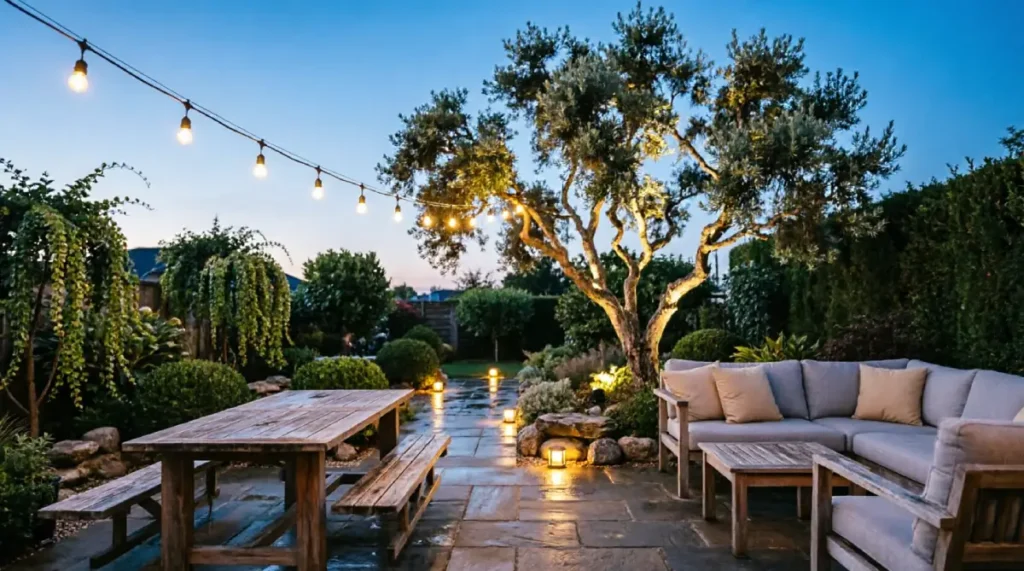
A dark patio or garden can cut a beautiful summer evening short way before you’re ready. Once the sun dips, conversations huddle around a single porch bulb, and kids can’t see the path back inside. The problem isn’t a lack of style — it’s a lack of layered light that works for how you actually use the space. I focus on practical, soft illumination that feels natural and extends your outdoor hours without a complicated setup.
In this article, I’ll share 12 outdoor lighting ideas that solve real nighttime challenges, from dining to late-night lounging, so you can enjoy a safer, cozier yard all season.
1. String Lights Over a Dining Zone
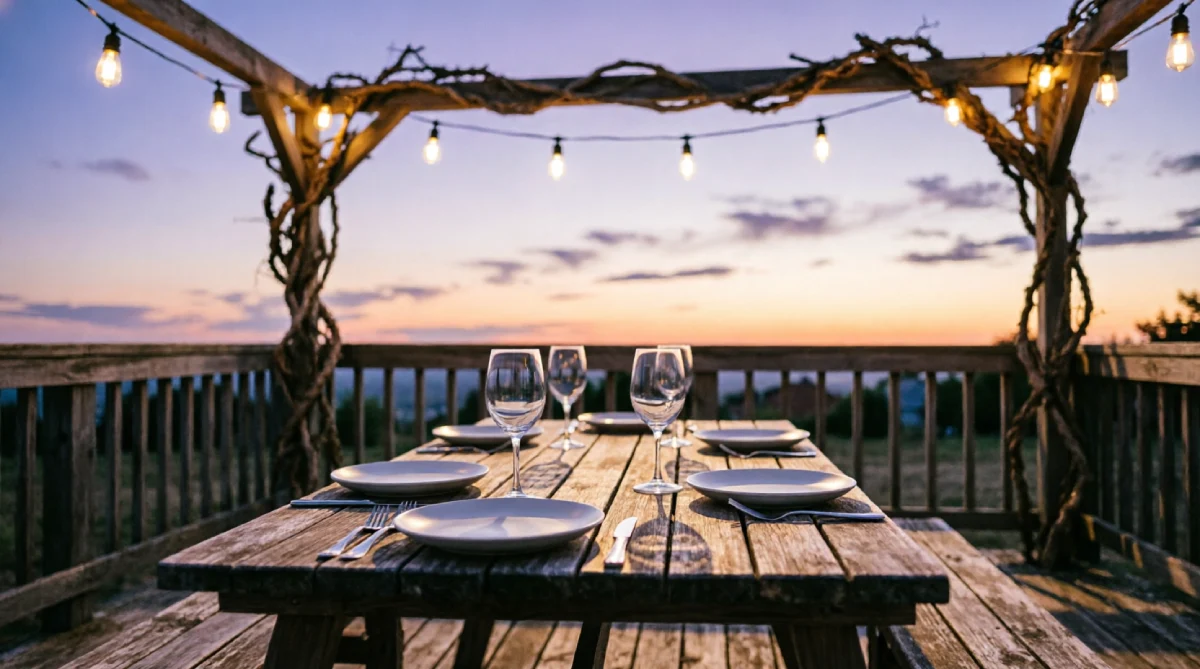
I usually start with café-style string lights above the main eating area. They define the dining zone and cast a warm, even glow that makes food and faces look great. The overhead placement mimics indoor dining light, so the space feels intentional. In many homes, a simple wire suspended between house and fence transforms a plain table into a gathering spot.
A common issue is choosing bulbs that are too cool, soft white (2700K), which keeps the mood relaxed. I recommend commercial-grade strands with replaceable bulbs so one failed light doesn’t ruin the whole line.
2. Solar Path Lights Along Walkways
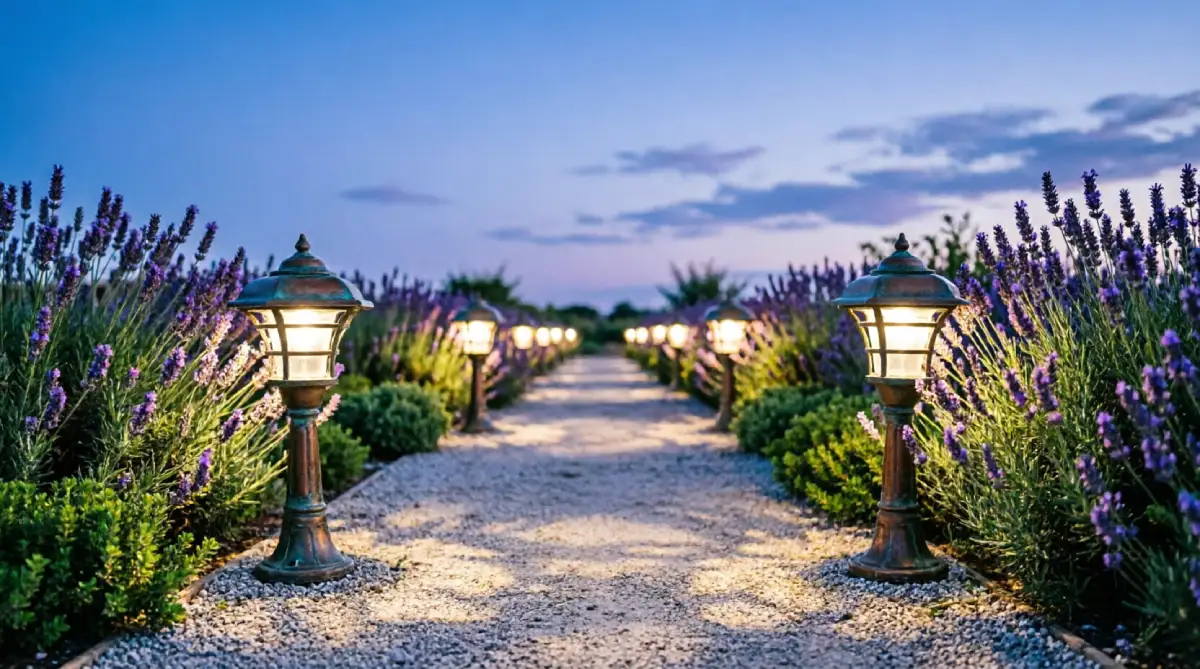
Guiding foot traffic safely is one of the most practical uses of light. Solar path lights eliminate the need for buried wiring and charge themselves all day. The gentle downward glow highlights edges without overwhelming the garden. I’ve seen many nighttime trips avoided when a walkway is softly outlined.
A common observation is that cheap plastic models fade quickly and produce a cold blue tint; metal fixtures with a warm LED stay reliable. I suggest spacing them about six feet apart and angling them slightly away from seating areas to keep the light low and comfortable.
3. Lanterns with Flameless LED Candles
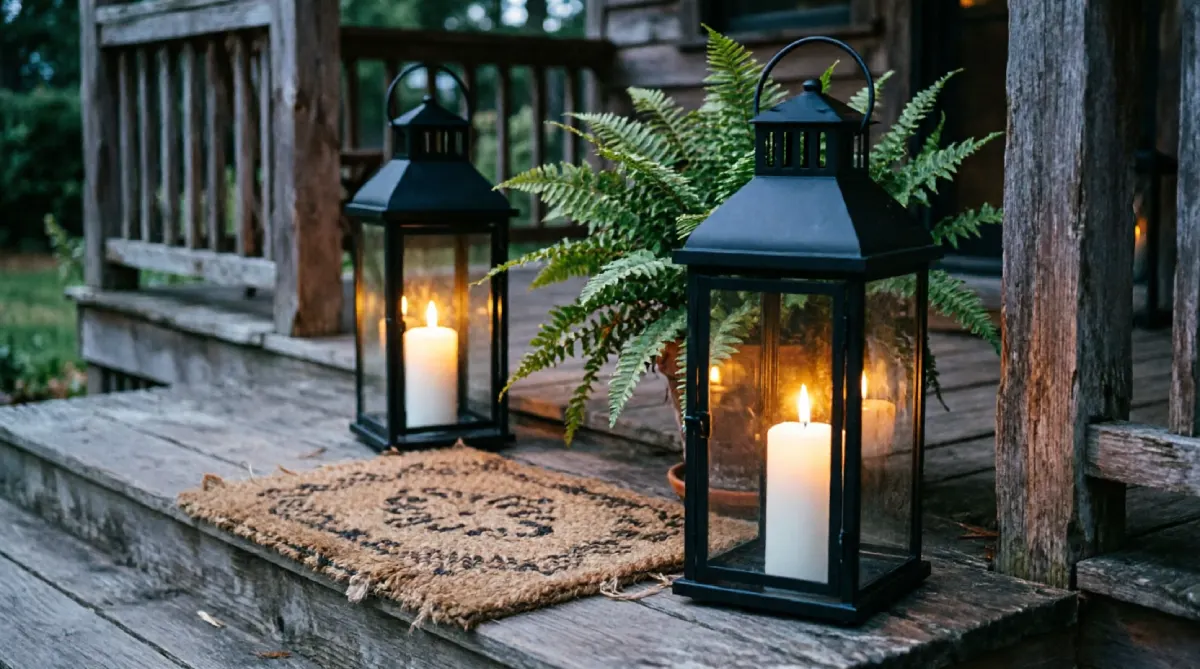
For tables and steps, I prefer flameless LED candles inside weatherproof lanterns. They give the flicker and charm of real flame without the fire risk on a breezy evening or near dried foliage. This works because the enclosure protects the light from wind and creates a contained, cozy beacon.
In many homes, a pair of lanterns flanking the back door signals a welcoming transition. A practical tip is to choose models with a built-in timer so they automatically turn on at dusk and off after midnight, saving battery life and effort.
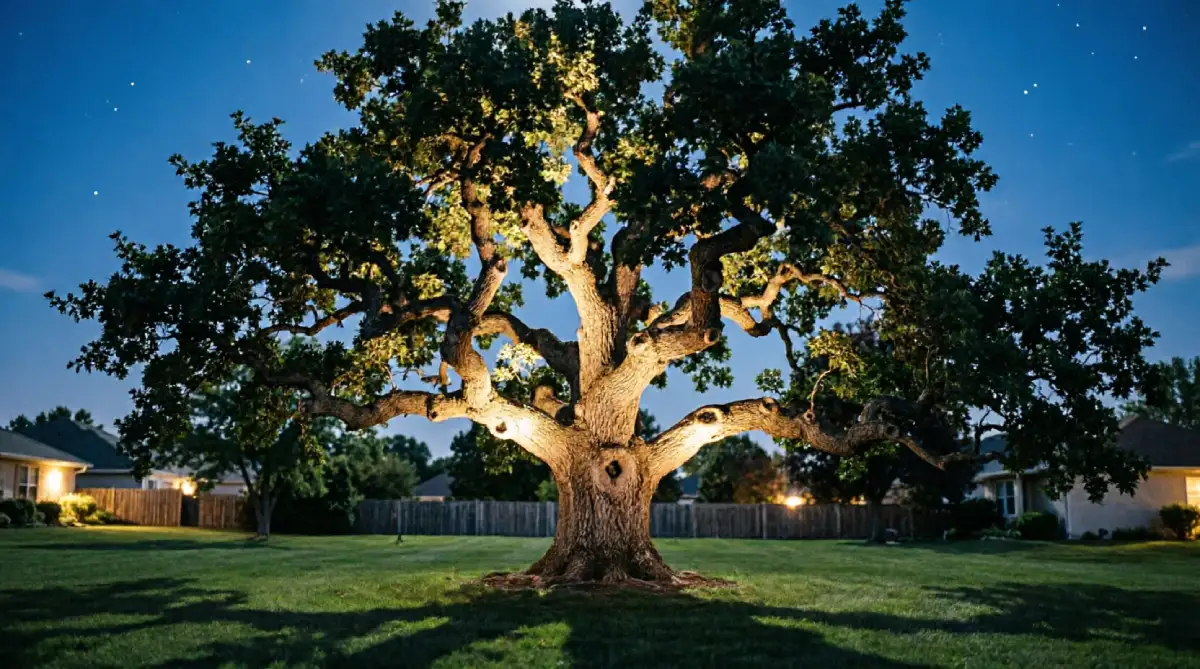
4. Uplighting a Mature Tree
Pointing a well-lit light into the canopy turns a tree into a sculptural focal point after dark. The upward beam traces trunk texture and leaf shapes, adding depth to the yard without spilling light into a neighbor’s window. I’ve found that low-voltage in-ground fixtures with an adjustable head work best.
A common observation is that a single uplight creates dramatic shadows, while two units placed on opposite sides reduce harshness. I recommend using a narrow beam spread for tall trees and a wider flood for bushy ones, and always bury the cable just below the mulch line.
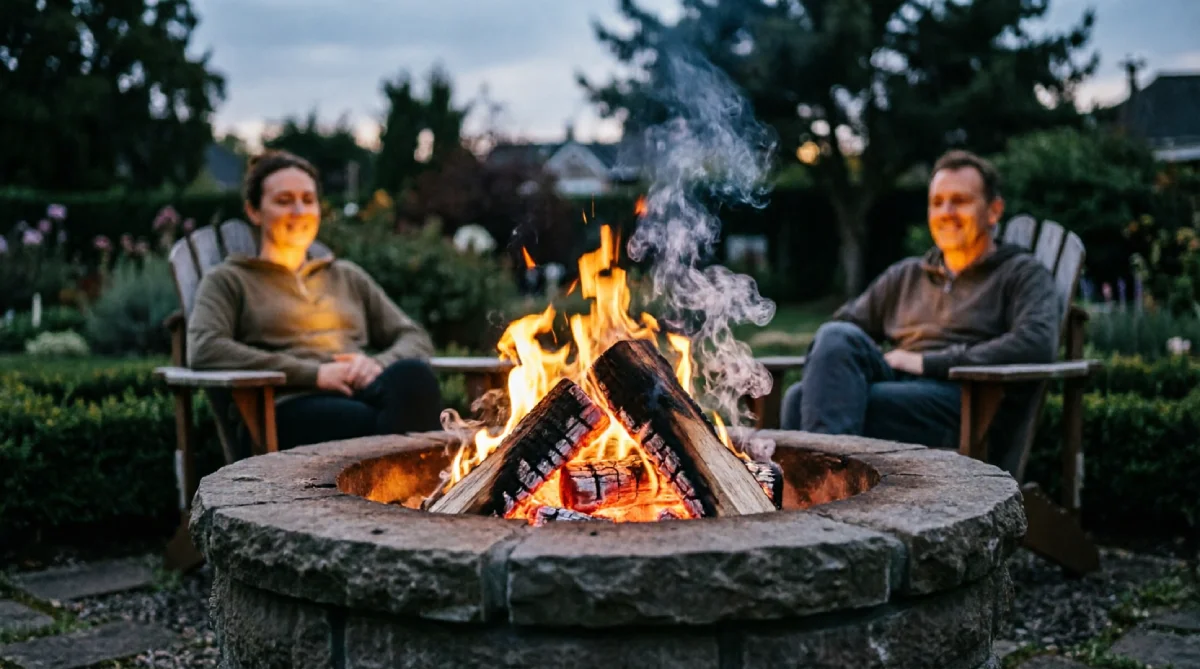
5. Glow from a Fire Pit
The light from a fire pit is dynamic and naturally draws people in. I count this as lighting because the dancing flames set the entire seating circle aglow and eliminate the need for additional overhead fixtures. It works because the warm, orange light relaxes the eye and masks the darkness beyond.
In many homes, a simple stone fire pit with a low surrounding wall doubles as extra seating and a safety barrier. For those with wood smoke restrictions, a propane fire table with lava rock and a hidden tank provides an equally inviting glow without the embers.
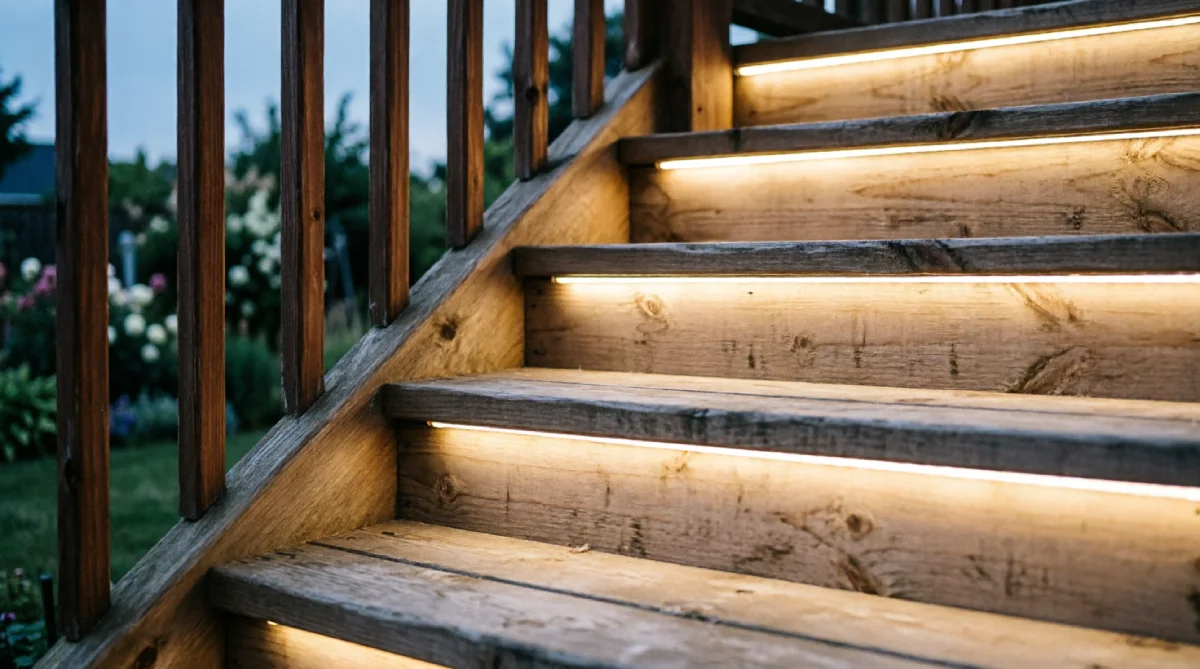
6. Recessed Step Lights on Deck Stairs
Safety and style meet in the often-overlooked stair riser. Small recessed LED step lights installed in the vertical face of each tread remove the guessing game of where to place your foot. This works because the light is directed downward onto the step below, preventing glare into your eyes.
I’ve noticed that homes with multi-level decks without stair lighting see more hesitant movement at night. If running wires is a challenge, solar-powered surface-mount step lights with motion activation are a good retrofit option. Aim for a low lumen output enough to define the edge, not flood the whole staircase.
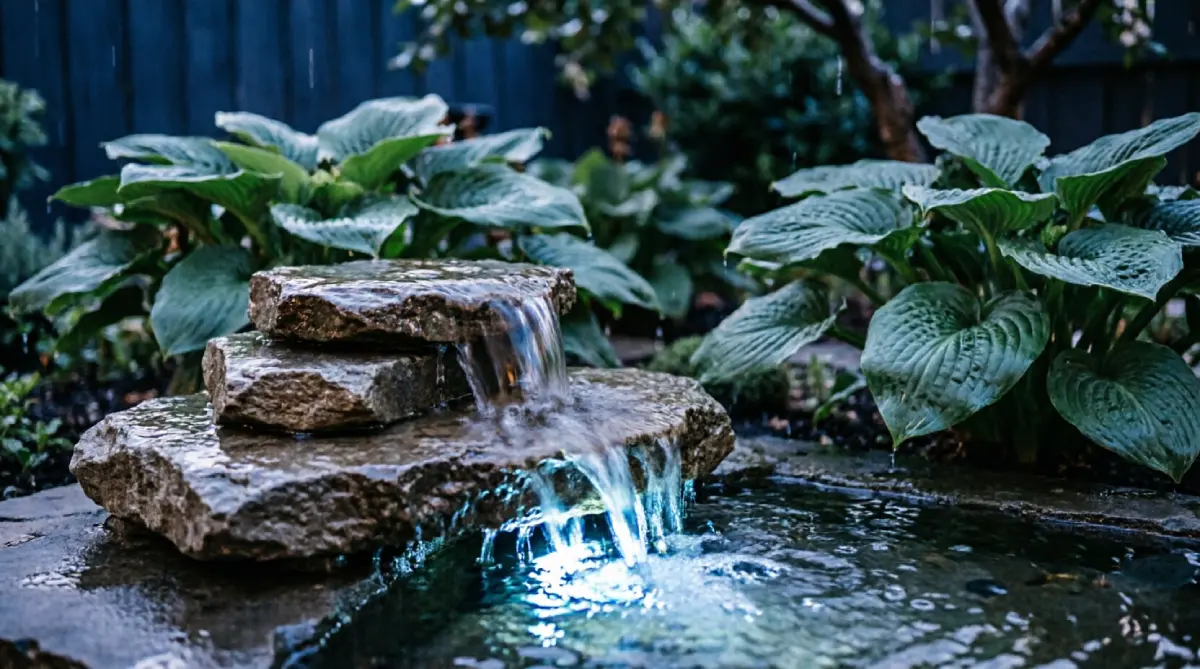
7. Submersible Lights in a Water Feature
If you have a pond, fountain, or even a large birdbath, submersible LED spots create a mesmerizing rippling effect that reflects onto nearby walls or foliage. The light moving through water adds a cool, refreshing visual element on hot summer nights. I’ve seen small recirculating fountains turn into the evening’s focal point with just one waterproof puck light.
A common issue is algae growth dulling the lens, so choose fixtures that are easy to lift out and wipe clean. For a gentle look, place the light at the base of the water flow, pointing up.
8. Wall Sconces for a Finished Look
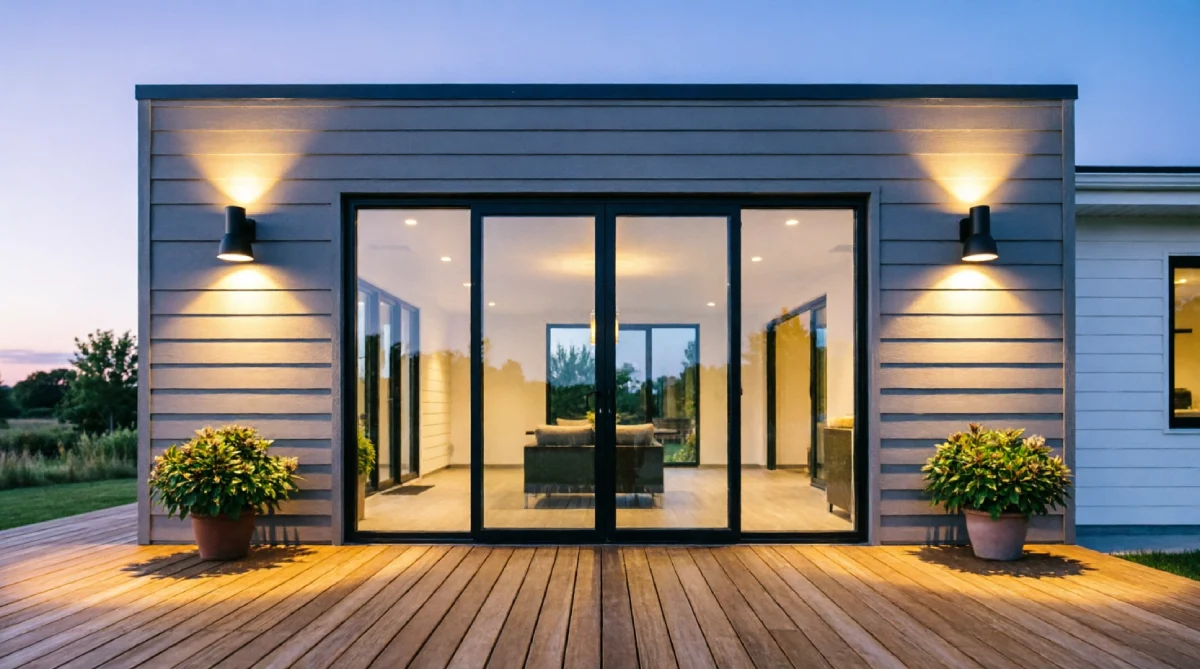
Not every summer night light needs to be floating in the air. Hardwired wall sconces on the house wall or a garden shed give architecture a polished feel. I often recommend downward-facing sconces beside a back door or along a blank wall to create a hallway-like rhythm.
The downward wash puts light where you move, not in your eyes. In many homes, replacing a bare bulb fixture with a simple black or bronze sconce instantly elevates the outdoor room. Stick with damp-rated fixtures that have a closed-top shade to minimize bug collection.
9. Fairy Lights Woven Through a Pergola
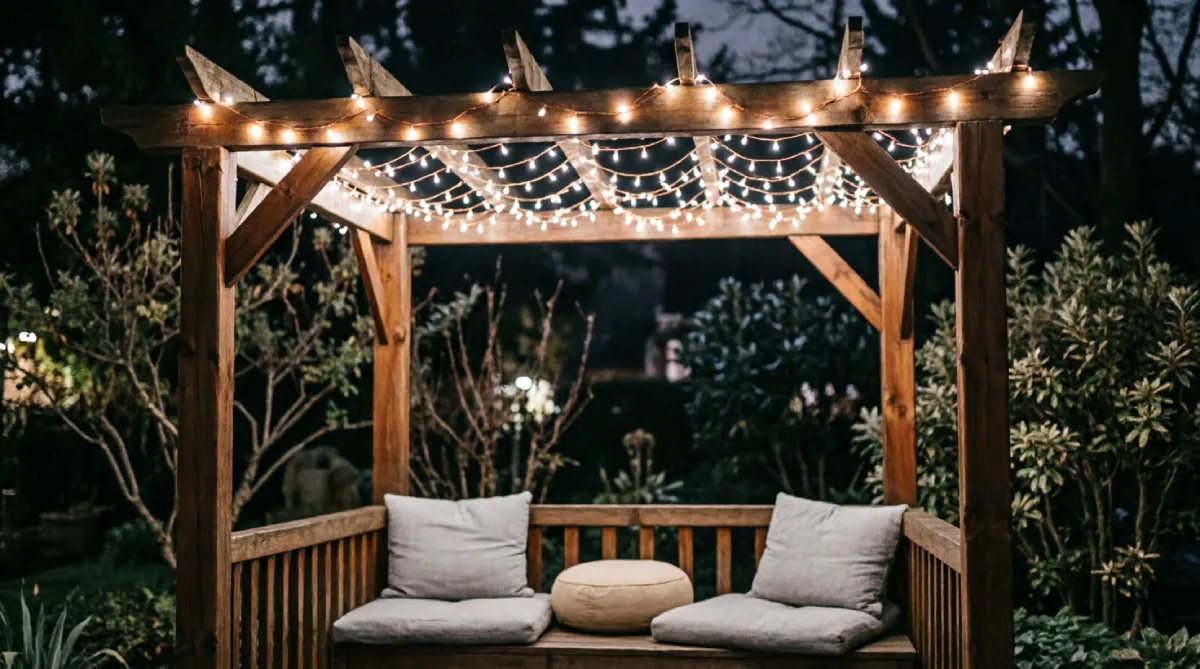
For a more whimsical, starry effect, I’ve found that battery-operated fairy lights with a thin copper wire strand disappear against dark beams. When woven loosely through the top of a pergola or across an arbor, they create a ceiling of tiny points of light. This works because the scale is delicate and doesn’t visually clutter the structure during the daytime.
A common observation is that a single long strand zig-zagged back and forth creates a fuller look than multiple short strands. Use a rechargeable battery pack with a remote timer and tuck it behind a pillar.
10. Motion-Activated Security Lights Used Gently
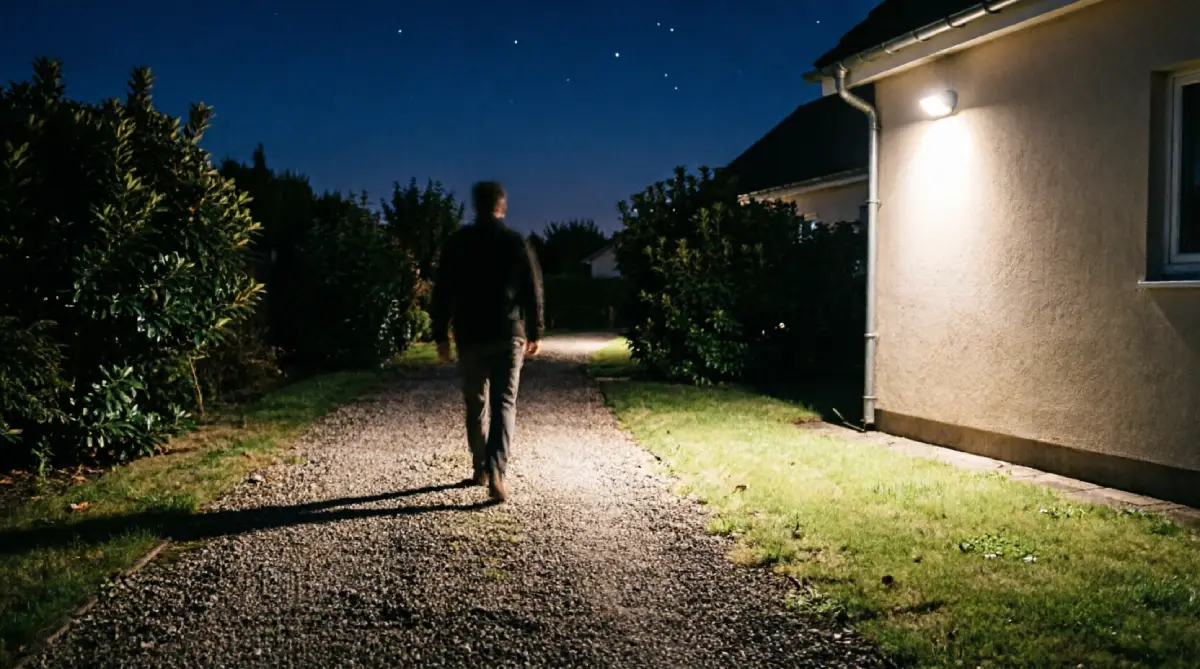
Security lighting doesn’t have to be harsh. I prefer adjustable motion-sensor floodlights with a warm color temperature and a wide, low-mounted beam that illuminates only when needed. Pointed downward over a driveway or side path, they give peace of mind without a constant glare.
I’ve noticed many families set them to a short duration and lower sensitivity to avoid false triggers from roaming cats. The key is placing the sensor to detect human-height movement near entry points, not across the entire yard. This keeps the summer night dark and calm until you really need light.
11. Recessed Deck Post Caps
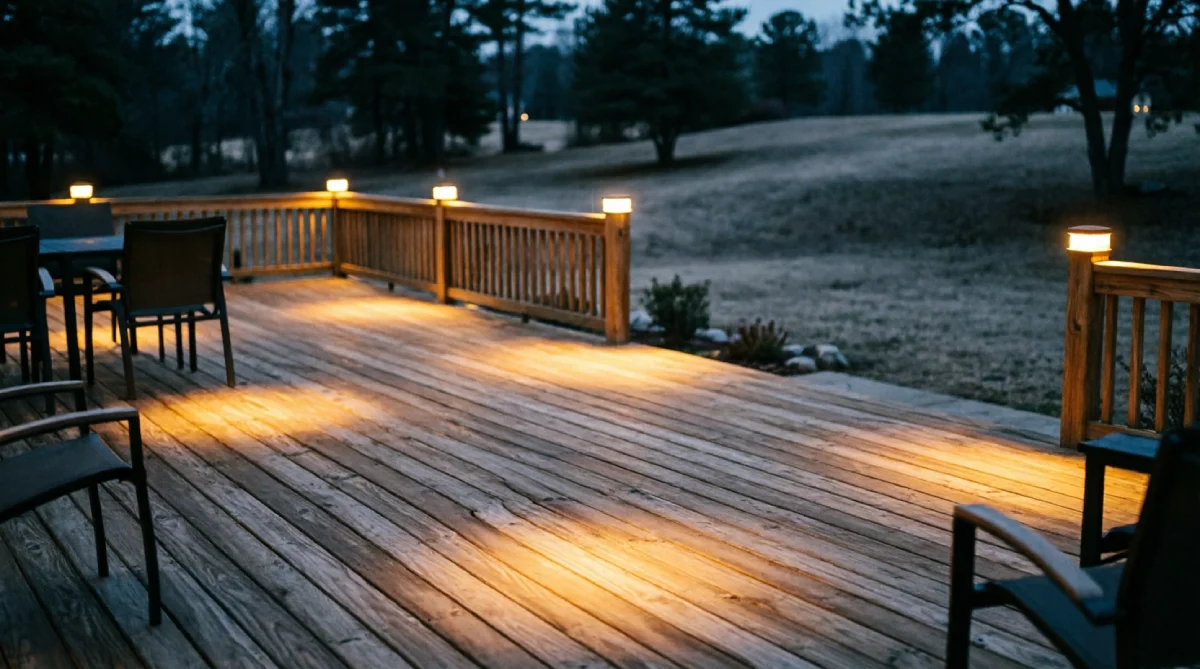
Swapping a hollow deck post cap for one with a built-in LED is a sleek way to outline the perimeter of a deck or railing. The light spills downward and sideways, defining the edge without visible bulbs. I’ve found that low-voltage post caps in a warm amber tone give a soft, hotel-balcony feel.
A common issue is using caps that are too bright, turning a relaxation spot into a runway. Choose caps with a frosted lens and a lumens rating under 50 each. They wire together easily from post to post, hiding connections inside the rail.
12. DIY Mason Jar Solar Hangers
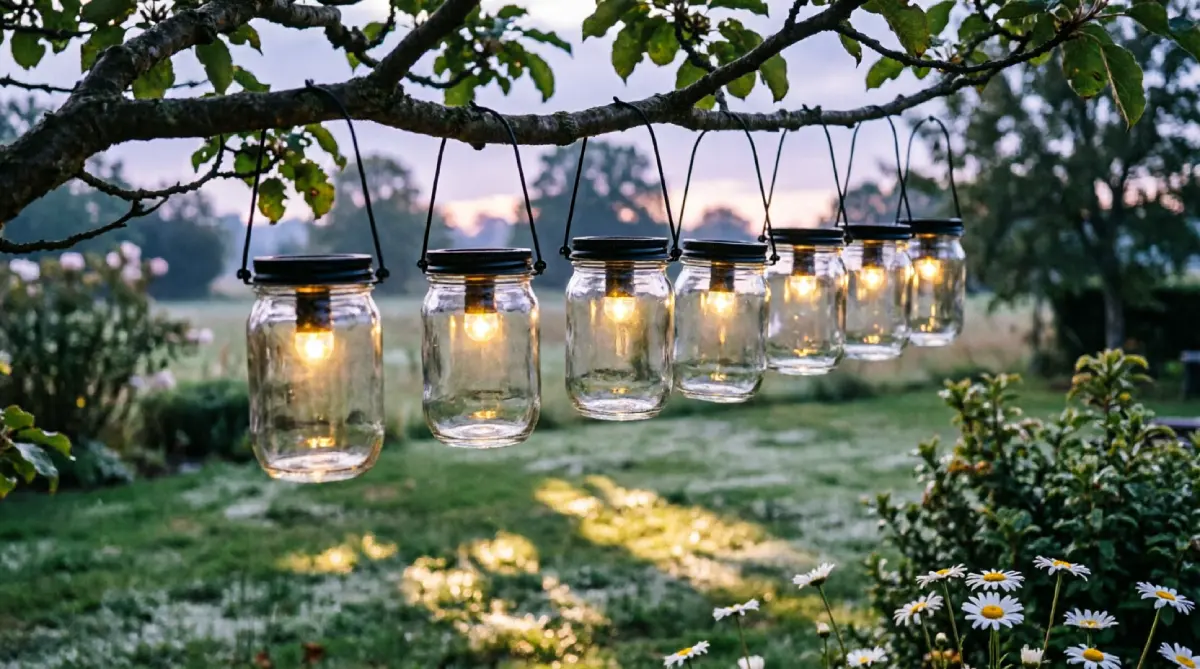
For a budget-friendly, hands-on project, I’ve helped friends convert old mason jars into hanging solar lights. A solar path light lid fits on a jar, and a wire handle lets you hang it from a shepherd’s hook or branch. The glass diffuses the small LED into a soft, glowing orb.
This works especially well dotted along a fence or a vegetable garden edge. In many homes, these jars add charm without a permanent commitment. I recommend using clear jars rather than colored glass, as tinted jars can filter out the already limited light output and make them too dim.
Practical Tips
- Layer your light sources: Combine overhead string lights, low path markers, and accent uplights for depth instead of a single bright fixture.
- Stick to warm white (2700K): This color temperature mimics sunset and is less harsh on eyes and insects than cool daylight LEDs.
- Use timers and sensors: Photo sensors or smart plugs keep lights running only when needed, saving energy and bulb life.
- Go low-voltage for permanent installations: A simple transformer system is safer to DIY and uses less power than line-voltage wiring.
- Keep fixtures clean: Pollen, dust, and spider webs build up fast in summer and cut light output significantly.
- Test placement before burying wire: Run cables loosely for a night or two so you can adjust beam angles and spacing without re-digging.
Common Mistakes to Avoid
- Overlighting the space: Too many bright fixtures wash out the sky and feel more like a parking lot than a patio.
- Using non-weatherproof indoor lights outside: Even under a covered porch, humidity and temperature swings cause rust and electrical hazards.
- Ignoring glare: Unshielded bulbs at eye level cause discomfort. Always aim the light down or use shaded fixtures.
- Forgetting nearby neighbors: A poorly aimed spotlight can shine directly into bedroom windows and create tension.
- Neglecting maintenance access: Place fixtures where you can reach them to change bulbs or clean lenses without a ladder drama.
Comparison
| Feature | Solar | Low-Voltage (12V) | Line-Voltage (120V) |
|---|---|---|---|
| Installation ease | No wires, stake into the ground | DIY-friendly, thin cable | Requires an electrician, conduit |
| Brightness consistency | Varies with sun exposure | Steady output all night | Maximum and constant |
| Best for | Path lights, small accents | Uplights, step lights, post caps | Wall sconces, permanent floodlights |
| Typical cost per fixture | $10 – $40 | $25 – $80 | $40 – $150+ |
FAQs
What is the best way to light a small patio without outlets?
Solar string lights and rechargeable LED lanterns work well. A small portable power station can also run low-voltage lights for several evenings without a permanent hookup.
Can I install low-voltage landscape lighting myself?
Yes, low-voltage systems are safe for DIY work. You plug a transformer into an outdoor GFCI outlet, then run a shallow-buried cable to each fixture with simple clamp connectors.
Is it expensive to leave outdoor lights on all night?
With LED bulbs and a timer, the cost is minimal. A strand of LED string lights running for 6 hours might add less than a dollar to your monthly electricity bill.
How do I keep bugs away from my outdoor lights?
Use warm amber or yellow bulbs (below 3000K), which attract fewer insects than white or blue light. Also, place fixtures slightly away from seating rather than directly overhead.
What outdoor lighting is safest during summer thunderstorms?
Solar lights and battery-operated LEDs are the safest, as they have no wired connection to your home. For wired systems, make sure all outlets are GFCI-protected, and any extension cords are rated for wet locations.
Conclusion
Great summer nights don’t require a backyard overhaul. A few string lights above the table, a gentle glow along the path, and a soft accent on a favorite tree can shift how long you linger outdoors. The ideas here avoid harsh glare and over-complication, focusing instead on warm, practical light that fits how you actually live. Mix a couple of these approaches — maybe start with step lights for safety and one decorative focal point — and watch the space open up. Most importantly, test things out before making them permanent. A small change in positioning often makes the biggest difference. I hope these ideas give you a clear starting point to create a safer, more inviting summer night at home.
