

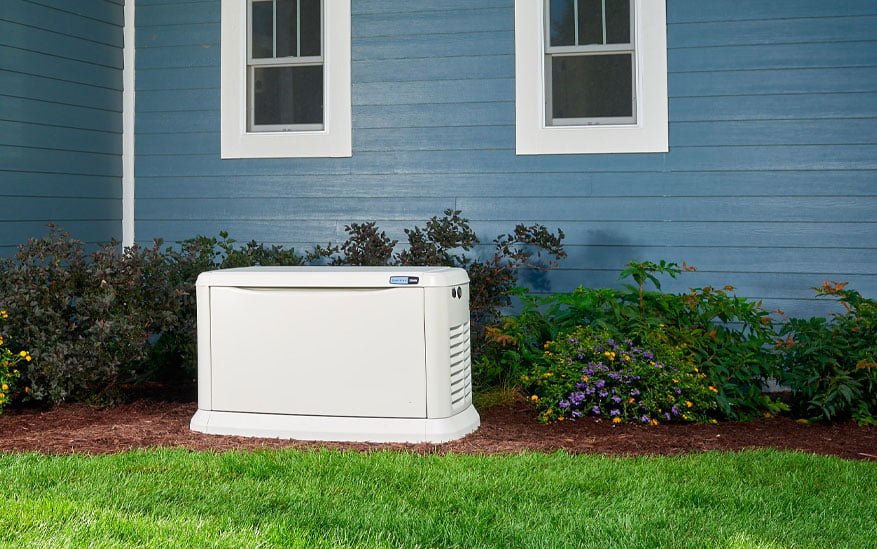
Have you ever experienced a lengthy power outage that left your home without electricity for heat, lights, refrigeration, and other essentials? Or wanted backup power during severe storms but weren’t sure where to start?
Investing in a standby generator for your home can provide reliable protection against electric grid failures. It automatically turns on within seconds when utility power is lost, keeping critical appliances running. This prevents food spoilage, ensures basic heating or cooling continues, and avoids other inconveniences of extended outages.
But with so many standby generator options on the market, how do you select the right size, fuel type, and model? What features and placement considerations matter most? And what are typical installation costs?
This in-depth guide covers everything homeowners need to know about choosing the best home standby generator system. You’ll learn how to:
- Calculate electrical load requirements
- Compare fuel types – natural gas, propane, diesel, and dual-fuel setups
- Evaluate key generator features like voltage, noise, power quality, and connectivity
- Determine ideal placement based on safety, permits, and weather protection
- Understand routine maintenance needs
- Compare top standby generator brand models and warranties
- Get professional generator installation and ongoing service
- Decide overall value based on the purchase price, operating costs, and more
Let’s explore these key decision points and considerations to help you invest in the optimal standby generator for your home.
Why Your Home Needs a Standby Generator
Before diving into the details of selecting and installing a unit, let’s look at the core reasons homeowners invest in these permanently installed backup power systems:
Protection From Power Outages
The number one motivation is having an automated source of electricity when the utility grid fails. According to the US Energy Information Administration, the average US home experiences around 5-10 power outages per year, with some areas seeing 15+ annually. Outage numbers also rise after major storms, floods or grid reliability issues.
Rather than suffering through hours to days without power – including losing food in refrigerators and freezers or dealing with extreme indoor temperatures – a standby generator seamlessly takes over to supply key circuits. It automatically runs appliances like:
- Refrigerator & freezer
- Lights, outlets, and other essentials
- HVAC system (heating/cooling)
- Medical devices
- Security system
This capability brings substantial convenience and prevents safety issues or property damage.
Backup Power for Storms and Emergencies
In addition to bridging typical electricity grid outages, homeowners in regions prone to severe weather invest in standby generators for added defense. Hurricanes, ice storms, tornadoes, and other events can cause exceptionally long and widespread blackouts.
Rather than evacuating or struggling through dangerous conditions without power, an automatic backup supply from a permanently installed unit keeps critical systems running. This allows families to safely shelter in place until utility crews complete repairs.
Off-Grid Capabilities
In remote areas beyond the electric grid, homeowners use standby generators as the primary power source. Paired with solar arrays or other renewable energy, these whole-house generator systems provide completely off-grid lifestyles.
Peace of Mind
Regardless of outage frequency or duration in your area, having backup assurance gives homeowners confidence and comfort. Just knowing essential appliances will keep running during blackouts, and that your home’s crucial systems won’t fail when you’re away, provides significant peace of mind.
How to Size Your Standby Generator
One of the most important steps in the standby generator selection process is choosing adequate capacity to handle your home’s electrical loads. In generator terms, capacity equates to wattage (measured in Watts).
You’ll need to calculate the total running watts typically required across desired circuits, then use that load number to size an appropriately powerful unit.
Calculate Electrical Load Requirements
First, tally which lights, appliances, and other items you want to power during an outage. Your standby generator runs selected circuits through an automatic transfer switch that detects loss of utility supply.
So focus on only essentials rather than entire home coverage. Common inclusions are:
- Refrigerator
- Freezer
- Furnace fan/blower
- Air handler for AC
- Sump pump
- Kitchen circuits (outlets, lights, appliances)
- Washer/Dryer
- Home office
- TV & internet equipment
- Security system
For each circuit, note connected devices and required watts:
- Major appliances = check the unit label for watt rating
- Light bulbs = add watts of all bulbs on the circuit
- Outlets = assume 1500 watts continuous draw unless measured otherwise
- Hardwired equipment = check model wattage spec
Then total the individual circuit loads for your whole-house wattage needs.
Be sure to account for any future electric increases too – perhaps planning to add an electric vehicle charger down the road or pool heating equipment. This prevents buying undersized.
Choose Sufficient Generator Wattage
Use your total calculated home load and add 20-30% extra capacity as a safety buffer. This overhead accounts for:
- Start-up power surges – appliances/devices initially draw more watts upon turning on before settling into normal running loads. Air conditioners are a major example requiring very high starting currents.
- Simultaneous loads – your full circuit total assumes everything wouldn’t run together, but some overlap is inevitable.
- Capacity decreases over time – like most equipment, generators lose a bit of oomph from wear & tear over years of use.
Oversizing by 1.2 to 1.3 times your base load is perfect. Then compare your needed capacity against various generator models’ max wattage ratings. This indicates which has enough power to drive your backed-up electrical demands.
To put your calculations in context, most smaller homes with a handful of essential circuits typically require a unit in the 7-12kW range. Medium-sized homes where the HVAC system, kitchen, and several other circuits are backed up generally need 12-20kW. Larger homes with full whole-house coverage – including multiple HVAC zones, laundry, and all major appliances – usually require 20-30kW or more. These ranges aren’t substitutes for an actual load calculation, but they give you a useful starting point before speaking with a professional installer.
Professional electricians also offer load calculation services if you prefer turnkey sizing assistance.
Standby Generator Fuel Source Options
In addition to providing enough wattage capacity, choosing a suitable standby generator fuel type is vital. Models run on natural gas, diesel, or propane supply sources, and some are configured to operate on more than one fuel type:
Natural Gas Generators
For homes already on utility natural gas service, tying into existing gas lines for the standby generator fuel feed is convenient and cost-effective. There’s no need to periodically refill any onboard fuel tank since infinite piped supply is available anytime.
Nat gas also wins on long-term affordability thanks to lower residential energy rates compared to alternatives. Maintenance needs are moderate.
On the downside, areas lacking gas line infrastructure install additional upfront piping for generator fuel intake. Areas prone to gas network breaks during natural disasters are also at risk despite having a generator.
Diesel Standby Generators
Diesel-powered systems store their long-lasting fuel supply onsite in integrated, large-capacity tanks (~60-100 gal.). Reduced maintenance needs combined with very reliable cold-weather performance make diesel generators popular picks.
The tradeoff is having to manually refill the diesel supply when depleted – unlike automatic natural gas. Tank corrosion and fuel stability/rotations are required too. Upfront unit costs also tend to exceed the other fuel options.
Propane / LP Gas Generators
For homeowners without natural gas, propane (liquefied petroleum / LP gas) is the leading fuel choice given easy portability and storage. No underground pipes or tanks are necessary. Self-contained propane capacity ranges from 60 to 150+ gallons.
Drawbacks include moderate runtimes before needing propane refills, along with the hazards & environmental/code considerations of keeping large flammable/explosive tanks onsite. Fuel expenses may be higher than natural gas too.
Dual-Fuel Generators
Rather than committing to a single fuel source, some standby generator models are built to operate on both natural gas and propane. These dual-fuel systems let homeowners switch between the two depending on what’s available during a given outage scenario.
This flexibility is particularly useful in situations where natural gas supply is disrupted – say, after an earthquake damages utility lines – but on-site propane tanks remain full and ready. The generator simply switches over without manual intervention in many configurations.
The tradeoff is that dual-fuel units tend to cost more upfront, and the added fuel-switching components may require additional maintenance over time. For homeowners in disaster-prone regions where any single fuel source could go down, though, the redundancy is worth considering.
Key Fuel Choice Considerations
To choose the optimal energy source, weigh these aspects in the context of your property:
- Available utility connections
- Upfront fuel line/tank installation costs
- Local utility provider prices
- Typical weather-related outage durations (to gauge needed runtime)
- Natural gas distribution & offsite generator compatibility
- Onsite space for fuel system
- Refilling convenience/logistics
- Local codes and fire/environmental considerations
- Whether dual-fuel redundancy is worth the added cost in your area
Discuss options with qualified generator installers to match the right fuel infrastructure to your home setup and regional factors.
Evaluating Key Generator Features & Functions
All reputable home standby generator models on the market provide the core capability to automatically power backed-up circuits when the utility supply drops offline. But looking beyond that basic feature, additional electrical factors, outputs, and functionality can vary:
Voltage & Phase Output
- Voltage determines compatibility and backups for either:
- 120V systems to run smaller household loads on a single-phase
- 240V for larger equipment/appliances or multi-phase whole-home coverage
- Phase further dictates supported circuits:
- Single-phase – 120 or 240V for simpler household loads
- Three-phase – Mainly for industrial sites, commercial buildings or very large properties needing robust power for heavy-duty equipment spanning multiple circuit breaker panels.
Consider whether you simply need backup lighting and kitchen/laundry appliances on 120V household circuits only. Or if you also require a beefier 240V supply for well pumps, HVAC condensers or other larger gear – dictating 240V single or three-phase abilities.
Installation pros assess your home configuration to spec the proper electrical outputs.
Power Quality & Sensitive Electronics
Voltage and phase tell part of the electrical story, but the quality of that power matters just as much for modern homes. Computers, smart appliances, network equipment, security systems, and medical devices all depend on stable, clean electricity. Poorly regulated power introduces fluctuations and electrical noise – measured as total harmonic distortion (THD) – that can shorten equipment lifespan or cause malfunctions while the generator is running.
This is why some manufacturers have developed specific technologies to address power quality at the generator level. Generac’s True Power Technology, for example, targets low THD output on their residential models, delivering electricity closer to utility-grade quality. Kohler and Cummins have also made power conditioning a focus in their newer residential lines.
If your home has a significant number of sensitive electronics, networked devices, or any medical equipment that requires stable voltage, power quality should be a factor in your buying decision – not just the kilowatt rating.
Circuit Breakers & Power Distribution
Sufficiently powerful breaker panel(s) safely channel generated watts across your covered circuits via the transfer switch. Withstand ratings and type vary:
- The main breaker size (amps) must meet your total load
- The number of circuits/breakers should match your backed-up branch count
- Load center models include integral breaker panel
- Separate external panels house supplied breakers
Again, the generator’s integrated current ratings and electrical infrastructure must align with your specific home wiring and devices for safe functionality.
Generator Enclosures
Units come in open-frame or enclosed cabinets:
- Open-frame models are typically only weather-resistant on their control panels. They must be sited indoors or under protective cover to prevent external equipment damage. Cheapest option.
- Metal enclosures shield the entire generator, allowing flexible outdoor placements. But noise emissions remain.
- Sound-attenuated enclosures use high-density acoustic insulation for remarkably quiet operation as low as 52 decibels. Allows flexibility even near bedrooms or gatherings. The preferred solution where noise matters.
Startup Response Time
When the grid goes down, how quickly the generator reaches full power matters – especially for homes with sump pumps, medical equipment, or security systems where even a brief delay can be problematic. Most modern residential standby units restore power within 10 to 30 seconds of detecting an outage through the automatic transfer switch. Premium models from brands like Kohler advertise response times at the faster end of that range.
This specification may not matter much for homeowners who simply want their fridge and lights back on. But for anyone relying on continuous operation of time-sensitive equipment, it’s worth comparing across models.
Extreme Weather Operation
Generators rely on internal combustion engines susceptible to failure in sub-zero cold. So adequate protections ensure reliable running no matter the temps if you experience frigid winters:
- Cold weather coolant improves viscosity
- Battery & oil warmers ease ignition
- Enclosures or insulation retain warmth
- Engine block heaters further protect
Additional Integrated Features & Options
Advanced generators boast extra capabilities via digital controls, connectivity, and accessories:
- Remote monitoring platforms like Generac’s Mobile Link allow homeowners to check generator status, receive maintenance alerts, and view run history from a smartphone – whether you’re home or away. Some brands offer similar connectivity through their own proprietary apps or web dashboards.
- WiFi enables wireless data logging, alerts, and diagnostics with vendors or technicians
- Extended-run tanks and kits provide larger fuel capacity if afforded space on smaller properties
- Supplemental solar power inputs let standalone solar arrays or batteries contribute additional runtime during longer multi-day outages.
- Portability kit trailers allow large generators to be towed to alternative rural sites as needed
- Hospital-grade outlet guarantees perfectly stable power for delicate medical equipment despite dips elsewhere
Carefully evaluate which bonus attributes matter for your situation or possible future needs if investing in premium standby power protection.
Ideal Standby Generator Placement
Beyond technical specifications, homeowners must consider physical placement factors so their backup system runs safely while avoiding hazardous or disruptive conditions:
Follow Safety & Building Codes
Strict regulations govern generator installations to avoid fires, explosions, electrocution risks, or CO poisoning:
- Verify separation distances from windows, doors, HVAC intakes, and occupied areas
- Maintain ample clearance around fuel lines, exhaust piping, and hot components
- Ensure weather-protected, tamper-resistant housing if outdoors
- Get all required permits and pass inspections before operation
Consider Noise Impacts
Even “quiet” home standby units emit up to 60-70 dB of engine/exhaust drone and vibration. This disturbs households and neighbors if poorly positioned:
- Keep greater than 7 m distance from bedrooms and patios
- Add sound baffles behind the unit if bordering other properties
- Face exhaust away from gathering areas or sightlines
Accommodate Fuel & Exhaust Infrastructure
Generators require various mechanical linkages plumbed to external areas, constraining possible placements:
- Propane models need large onboard tanks plus intake/return fuel lines.
- Natural Gas types involve new direct pipe feeds trenched from the main utility line.
- Diesel generators require filler access plus spill catchments and ventilation around tanks.
- All units need exhaust piping safely routed away from windows and intake flows according to code.
Professional guidance for ideal system orientations is vital.
Secure From Theft & Interference
These expensive investments warrant properly controlled access so they’re not stolen or damaged:
- Locked, tamper-proof metal or concrete enclosures
- Installation above ground level to inhibit water submersion or flooding
- Avoid openly visible locations attractive for theft
- Alarm systems to notify about physical interference
With good positioning that meets technical specifications, your home generator brings years of seamless backup protection.
Understanding Routine Standby Generator Maintenance
A well-maintained residential standby generator can last 20 to 40 years, making it one of the longer-lived major home investments. But reaching that lifespan depends on consistent upkeep. While today’s automatic standby systems are designed for convenient hands-off operation, they still rely on mechanical and electrical components needing periodic attention to keep performing reliably over decades:
Testing & Exercising
It’s crucial to verify normal functioning and run diagnostics by having units exercise under load at least monthly. This confirms full operational readiness when actually needed during a real powers loss. Never just assume your system works unless tested!
Most modern generators handle this automatically. Many brands build in weekly or bi-weekly exercise cycles that start the engine and run it under a light load for a set period. What’s worth noting is that some manufacturers – Generac being a prominent example – offer Quiet-Test modes that run the engine at lower RPMs during these exercise cycles, producing noticeably less noise than a full-load startup. If your generator sits close to a neighbor’s property or a bedroom window, this feature makes a real difference in day-to-day livability.
Exercise runs also prevent stale fuel or mechanical issues from sitting idle. Checking battery charging, wiring integrity, filter statuses and combustion quality during tests gives technicians a head start addressing any minor issues promptly too.
Fluid Changes
Oil, coolant and filter changes every 100-200 running hours (or annually if unused) ensures optimal internal lubrication and engine cooling year-round. This maintenance matches most manufacturers’ specifications.
Skipping fluid upkeep accelerates wear or valve/seal leaks over time. Extreme outdoor conditions may necessitate more frequent inspections and rotations than milder climates.
Fuel & Additive Care
Models running on liquid propane or diesel stores require special fuel precautions for long equipment life and outage readiness:
- Top off tanks before severe weather seasons when prolonged supply is crucial
- Add stabilizer chemicals to handle aging diesel or gasoline during normal conditions
- Treat tanks for moisture or algae risks in humid regions
- Rotate supply before expiration/degradation sets in from storage – usually under 12 months depending on formulation
Connection & Wiring Inspections
Technicians should check associated generator wiring, cables, pipes/hoses and linkages during routine maintenance for:
- Loose electrical contacts
- Leaky, worn or crimped fuel/exhaust lines
- Corrosion especially on battery terminals or outdoor enclosures
- Rodents or insect nests that chew insulation
- General wear plus weathering cracks on sound enclosures
Addressing minor connection issues promptly is essential to avoid bigger problems or downtime.
Schedule maintenance periods per manufacturer guidance to keep your major generator investment running reliably whenever needed. It’s also worth understanding that most manufacturer warranties require documented proof of routine maintenance to remain valid. Skipping scheduled service – even unintentionally – can void coverage on expensive components. Keeping a maintenance log and working with a qualified service provider ensures both equipment longevity and warranty protection.
Comparing Top Standby Generator Brands & Models
Industrial generator manufacturers produce home standby product lines alongside commercial units. Across popular brands like Generac, Kohler, Cummins, Briggs & Stratton and Champion, you’ll find models scalable to residential needs with considerations like:
- Enclosed weather resistance
- Quieter noise ratings as low as 52 dBA
- Smaller size footprints to fit home placement constraints
- Simplified controls and maintenance procedures
Rather than treating all brands as interchangeable, it helps to understand where each one positions itself in the residential market and what their specific model lines offer:
Generac
Generac holds the largest share of the residential standby market, and their Guardian series covers a wide range from 10kW units for essential-circuit backup up to 24kW for full whole-home coverage including large HVAC systems. The lineup is supported by Mobile Link remote monitoring, Quiet-Test exercise modes that reduce noise during scheduled self-tests, and True Power Technology for cleaner electrical output on compatible models. Generac also maintains one of the broadest residential dealer and service networks, which matters when you need parts or repairs years down the road. Their standard residential warranty is typically 5 years, with extended options available through authorized dealers.
Kohler (Rehlko)
Kohler, now operating under the Rehlko brand name, brings commercial-grade build quality into residential applications. Their home standby lineup includes models from 14kW to 26kW, and the brand has built its reputation around fast power restoration speeds and rugged construction designed for long-term durability. Kohler also offers OnCue Plus, a remote monitoring platform for tracking generator status and receiving service alerts. Standard warranty periods are generally 5 years, though some models carry longer coverage through dealer programs. Kohler tends to carry a higher price point, reflecting its commercial heritage.
Cummins
Cummins applies its commercial power generation expertise to residential use with the QuietConnect series, offering models in the 13kW to 20kW range. These units tend to run quieter than many competitors at comparable capacities, making them worth considering for noise-sensitive placements. Cummins generators are a frequent choice for larger homes with heavier electrical loads or homeowners who specifically want equipment backed by a commercial power generation track record. Cummins also offers remote monitoring through its own connected platform. Their residential warranty is typically 5 years.
Briggs & Stratton
Briggs & Stratton offers residential standby models generally ranging from 12kW to 25kW. One differentiator is their Symphony II Power Management system, which intelligently prioritizes and sequences circuits so a smaller-capacity generator can manage more of your home’s loads without overloading. This approach lets some homeowners size down on generator capacity – and cost – while still covering a wider range of appliances. Warranties are typically 5 years on their residential units.
Champion
Champion has gained traction in the residential market by offering competitive pricing while still including features like automatic transfer switches and remote monitoring capability. Their home standby lineup generally covers 8.5kW to 14kW, making them more suited for essential-circuit backup or smaller to mid-sized homes rather than full whole-house coverage. Champion has also built a reputation for responsive customer support, and they back many of their residential units with a 10-year limited warranty – one of the longer standard coverage periods in the category.
You’ll notice meaningful differences in capacity ranges, feature sets, warranty terms, and price positioning across these brands. Warranties and the availability of local service and parts support often matter more in the long run than a small spec-sheet difference between two models. Installers also typically prefer working with certain product lines they trust and can source parts for quickly.
Getting the right professional partnership matched to equipment capabilities you understand is key – rather than just buying standalone on model specs alone.
Why Professional Installation Is Essential
Attempting generator or electrical work without licensed credentials and experience risks equipment problems, voided warranties or serious hazards if incorrectly handled.
Always hire certified local pros for standby unit placements:
Ensure Proper Sizing & Hookups
A reputable vendor’s consultation should start by gathering details on your home systems, loads and outage priorities. This drives suitable generator and switchgear selection considering:
- Electrical panel capacity & phases
- Appliance/device wattages
- Runtime duration needs
- Fuel infrastructure
- Load controlling to prevent tripping
The transfer switch integrating with utility supply is extremely delicate work reserved only for qualified electricians.
Meet Building & Safety Codes
Permitted generator installations must satisfy numerous local regulations governing safe practices. Professionals ensure:
- Proper handling of fuel systems to avoid contamination, explosions or environmental hazards
- Ventilated generator housing preventing dangerous CO buildup
- Fail-safe transfer switchgear not backfeeding utility lines or risking electrocution
- Watertight enclosures seal out moisture or floods
- Exhaust directed safely away from doors, windows and intake vents per code
- Sound buffering meets noise ordinances
- Tamper-protected, well-grounded electrical boxes and conduits
Lacking any such precautions risks injury, fines, lawsuits or very expensive damage if your system isn’t fully compliant.
Work With Authorized Dealer Networks
Beyond basic installation credentials, it’s worth seeking out installers who are authorized by the generator manufacturer you’re purchasing from. Brands like Generac, Kohler, and Cummins maintain tiered dealer programs that certify installers on their specific product lines, provide access to factory training, and ensure parts availability through official channels.
Why this matters: a generator installed by someone unfamiliar with the specific brand’s wiring diagrams, transfer switch configurations, or firmware updates may create subtle issues that don’t surface until the first real outage. Authorized dealers also tend to stock common replacement parts locally, which reduces downtime when something does need repair. And manufacturer warranty claims are typically processed more smoothly when installation and service records come from a recognized dealer.
Ask potential installers which brands they’re certified on, how many units they’ve installed in your area, and whether they offer ongoing maintenance agreements – not just a one-time installation job.
Simplify Maintenance & Repairs
You’ll want assurance that qualified service networks are available to assist once your generator is running. Perks like mobile fleet maintenance, discounted parts inventories and rapid emergency response give peace of mind your valuable investment stays reliable for the long haul.
Seek out licensed dealers belonging to reputable brands’ dealer networks within your region. Review maintenance packages beyond just basic annual tune-ups too.
Understanding Standby Generator Costs
There’s no single universal price tag to define a “good deal” on home generators. Many variables in local equipment, builds and site-specific complexity swing costs widely. But understanding the main factors affecting budget overall helps set realistic expectations:
Main Elements of Total Home Generator Cost:
- Generator unit purchase price
- Transfer switch gear
- Installation labor
- Permits, site surveys, drawings
- Fuel system parts & configuration
- Base pad, housing or weather enclosures
- Applicable sales taxes
Ongoing Considerations Affecting Total Cost of Ownership Over Time:
- Fuel consumption & supply
- Manual or automatic exerciser utilities
- Testing & inspection service rates
- Fluid maintenance
- Load bank diagnostics
- Major part replacements
- Remote monitoring subscription plans (optional)
Ballpark investment ranges go from around $5,000 to $15,000+ for complete installed systems. Smaller portable units fall under $5,000 (with less capacity and manual operation). And large permanent whole-home setups with premium enclosures, dual fuel kits or residential-grade warranty maintenance easily justify $15-25,000+.
Get multiple upfront quotes from licensed integrators to compare options matching your property’s custom needs. And weigh ongoing costs over decades against the advantages of outage protection.
Key Decision Factors on Home Standby Generator Value
With so many considerations around optimal standby power systems for households, it’s natural to feel overwhelmed evaluating if the investment is justified, and what capabilities best match your situation.
Let’s recap key questions homeowners should ask themselves when objectively assessing value:
Do the Benefits Outweigh the Costs For You?
- How many and how long are typical outages in your area?
- What household systems or members are vulnerable without backup power?
- Are harsh weather risks increasing in frequency or severity long term?
- Can you financially absorb expensive food spoilage, water damage etc?
- Is peace of mind and outage insurance worth the major purchase cost?
- Are you comfortable with a 20-40 year equipment lifecycle given that maintenance commitment?
If your home risks and electrical needs warrant it, generators often prove very worthwhile despite high upfront pricing.
How Much Would a Standby Generator Save You?
- Estimate costs from recent outages like replacing spoiled food/medications, staying at hotels, eating out, loss of income sources etc.
- Factor long term reductions in utility bills by running essentials off a generator fueled by cheaper natural gas
- Compare against paying typical monthly generator financing payments or rental fees instead
Crunch the numbers to see if returns offset your real-world losses and inconveniences experienced now.
Are You Able to Make Effective Use of Backup Power?
- Does your home layout or family situation allow easily restricting electric usage to key circuits, without exceeding generator capacity attempting to run too many loads?
- Are codes, permits, equipment space or other restrictions blockers to properly installing home standby equipment?
- Can you responsibly maintain the generator long term given your interest or ability to handle mechanical systems?
- Is authorized service support available in your area for the brand you’re considering?
If limitations exist preventing you harnessing the technology’s potential, seek alternatives like preparedness plans, portable units or community shelter options instead during grid failures.
Carefully weighing feedback to the above questions will determine if and where investing in permanent standby power generation makes sense for your household now or later down the road. Consider both emotions and numbers – outages trigger real anxiety and expenses for many families, but generators carry major budget impacts as well.
Conclusion & Next Steps
- Key Takeaways: Modern home standby generators automatically supply backup electricity to keep essential appliances safely running during grid power failures. Homeowners need to evaluate options matching their family’s electrical loads, fuel availability, weather risks and total budget. Licensed electricians then handle complete code-compliant installation and maintenance for long term reliability.
- Where To Learn More: Consult additional home standby buying guides, manufacturer product specifications, and local dealer advice tailored to your property’s unique needs.
- Decide Generator Viability: With all the information this guide provided on permanent standby generator systems, carefully consider costs, risks, and benefits before choosing to upgrade your home’s backup capabilities. Installation quotes from reputable professionals in your area will clarify exact budgets and specifications to help finalize if now is the right time to invest.
Reliable electricity is an essential foundation of comfort and security for families. Standby home generators provide an added layer of outage protection that many homeowners increasingly prioritize – especially amid aging utility infrastructure and worsening extreme weather threats.
Hopefully, this detailed walkthrough gave you greater insight into finding the ideal solution to match your household’s budget and needs for automatic backup power. Reach out with any other questions as you explore options further!
