

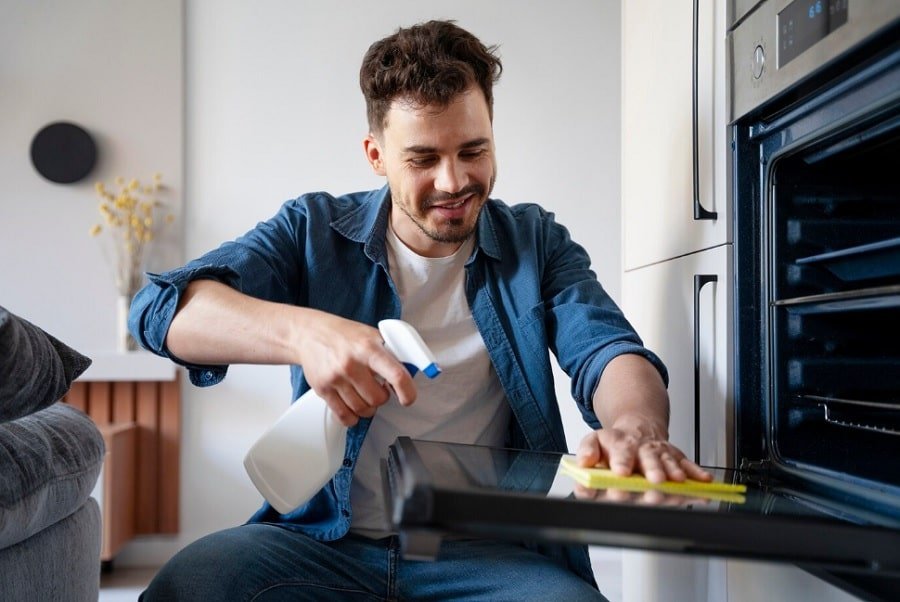
Have you opened your oven door and cringed at the sight of caked-on grime and grease splatters? As much as you love baking casseroles and roasting meats, the aftermath can leave your oven looking like a war zone.
Beyond appearances, that built-up grease is a genuine safety concern. Left unchecked, it can cause your oven to smoke while cooking, fill your kitchen with unpleasant burnt odors, and in severe cases, become a fire hazard.
It’s tempting to reach for a commercial oven cleaner, but most contain harsh chemicals like sodium hydroxide and bleach that release toxic fumes. And the self-cleaning cycle? It heats your oven to extreme temperatures — often producing noxious smoke, triggering fire alarms, and in older ovens, potentially cracking interior panels or damaging heating elements.
The good news is, you can clean your oven naturally without any of that risk. A few pantry staples — baking soda, vinegar, salt, and lemons — can cut through the toughest grease, and they cost a fraction of what a can of commercial cleaner does.
In this article, we’ll walk through the most effective methods for getting your oven spotless, from quick spill cleanups to heavy-duty deep cleaning. Let’s get started.
Why You Should Avoid Harsh Oven Cleaners
Before we dive into natural cleaning methods, let’s look at what’s actually inside the commercial oven cleaners lurking under your sink.
Most conventional oven cleaners contain powerful chemicals like sodium hydroxide (lye), 2-Butoxyethanol, and bleach. When you use these cleaners, they release toxic fumes that you can end up inhaling.
Exposure to the chemicals found in these cleaners has been linked to:
- Respiratory issues
- Headaches
- Eye, nose, and throat irritation
- Skin burns
- Nausea
The fumes are strong enough to irritate your eyes and lungs. You also risk chemical burns if the products come into direct contact with your skin.
On top of harming you, these chemicals are terrible for the environment. They can contaminate groundwater if poured down drains. Many oven cleaners also come packaged in aerosol cans, releasing greenhouse gases like propane and butane into the atmosphere.
What About the Self-Cleaning Cycle?
Your oven’s built-in self-clean function might seem like the easy way out, but it carries its own set of problems. The cycle works by heating the oven to roughly 900°F (480°C) to incinerate food residue. At those temperatures, the baked-on grime produces thick, acrid smoke that can fill your kitchen and trigger fire alarms. In older or poorly maintained ovens, the extreme heat can crack enamel coatings, warp oven racks, and damage heating elements.
So for the sake of your health, your oven’s longevity, and the environment, chemical-free alternatives are well worth exploring.
Method #1: Baking Soda and Vinegar
One of the most effective ways to clean an oven without chemicals is the classic baking soda and vinegar combination. It’s non-toxic, inexpensive, and remarkably effective on grease.
How Does It Work?
Baking soda, or sodium bicarbonate, is a mild alkali that dissolves grease and neutralizes odors. It also serves as a gentle abrasive to lift dirt from surfaces.
Vinegar is an acid that breaks down grime. The acetic acid in vinegar cuts through grease while providing antibacterial properties to disinfect surfaces.
When baking soda and vinegar combine, a chemical reaction occurs, releasing carbon dioxide gas. This fizzing action helps to penetrate and lift built-up grime. The gritty texture of baking soda also loosens debris to allow the vinegar to work its grime-busting magic.
Cleaning Your Oven with Baking Soda and Vinegar
What You’ll Need:
- ½ cup baking soda
- 3 tablespoons water
- White vinegar
- Spray bottle
- Silicone or plastic spatula
- Microfiber cloths
- Rubber gloves
- Measuring cup and spoon
Step 1. Remove the oven racks, thermometer, pizza stone, or any stored pans from inside the oven. Wipe out loose crumbs and debris with a damp cloth.
Step 2. Combine ½ cup of baking soda and 3 tablespoons of water in a bowl to form a spreadable paste. Adjust the ratio as needed until you get a thick, pancake-batter-like consistency. For stubborn build-up or larger ovens, double or triple the recipe.
Step 3. Wearing gloves, coat the interior surfaces of the oven with the paste — including the sides, back, ceiling, floor, and the inside of the glass door. Avoid getting paste on the heating elements. As you spread it, the paste will turn a brownish color where it contacts grease. That’s a sign it’s absorbing grime and working. Don’t worry if it looks uneven or chunky in places — aim for full coverage with extra attention to heavy build-up spots.
Step 4. Close the oven door and leave it overnight — ideally 10 to 12 hours. The longer the paste sits, the more time it has to break down baked-on grime. While you wait, that’s the perfect window to clean your oven racks (see the dedicated section below).
Step 5. After the paste has set, use a damp microfiber cloth to wipe away as much of the dried paste as you can. A silicone spatula helps scrape off thicker patches without scratching the surface. Reapply paste to any stubborn spots and repeat if needed.
Step 6. Fill a spray bottle with white vinegar. Spritz any areas where baking soda residue remains — you’ll see it fizz gently as the vinegar reacts with the leftover baking soda, loosening what’s left.
Step 7. Wipe the interior one final time with a clean, damp microfiber cloth until all residue is gone. If needed, spray more vinegar and wipe again. Once everything is clean, dry with a fresh cloth and replace the racks.
Heavy-Duty Deep Cleaning
If it’s been months — or longer — since your last oven cleaning, the standard paste might need reinforcement. For heavily soiled ovens, try this stronger recipe:
- 1 cup baking soda
- 1 tablespoon table salt
- 2–3 tablespoons water
Mix into a thick paste, about the consistency of cake icing, adding water half a tablespoon at a time if needed. The salt adds extra abrasive power for cutting through layers of burnt-on grease. Spread it across the oven interior and leave it overnight. By morning, the paste will have hardened. Use a damp cloth and spatula to remove it, then follow up with the vinegar spray and final wipe described above.
Baking Soda and Vinegar Cleaning Tips
- For heavily soiled areas, overnight is always better than a short wait — longer contact time makes a significant difference in baked-on grime.
- Use white distilled vinegar for the best results. Apple cider vinegar works as a substitute.
- For a quick wipe-down after cleaning, a 3:1 water-to-vinegar solution in a spray bottle works well to remove any lingering residue.
- Avoid getting baking soda paste directly on heating elements to prevent damage.
- Wear gloves when handling concentrated vinegar or scrubbing with paste to prevent skin irritation.
- Follow up with a hot water rinse to remove any lingering vinegar scent.
Method #2: Salt and Vinegar
If baking soda isn’t handy, salt paired with vinegar is another effective option. The coarse texture of salt acts as a natural abrasive, while vinegar’s acidity cuts through grease. Together, they dissolve caked-on grime without any chemical additives.
What You’ll Need:
- 1 cup salt
- 1 cup white vinegar
- Bowl and spoon
- Microfiber cloths
Step 1. Remove racks and trays from the oven. Give the interior a preliminary wipe down with a wet cloth.
Step 2. Pour the salt and vinegar into a bowl and stir into a thick, gritty paste.
Step 3. Spread the paste over the stained areas of the oven, coating the heaviest build-up liberally.
Step 4. Let the paste sit for 20 minutes. For tougher jobs, leave it for up to an hour to give the salt and vinegar more time to dissolve the grime.
Step 5. Wipe the oven clean using a damp microfiber cloth, removing all residue. Scrub stubborn spots as needed.
Step 6. Rinse the interior with hot water and dry with a fresh cloth. Replace racks and trays.
Method #3: Lemon Juice
Lemon juice offers natural acidic cleaning power thanks to its citric acid content. It dissolves grease and stains while leaving behind a fresh citrus scent — no chemical fumes involved.
What You’ll Need:
- 3 large lemons
- Baking dish
- Water
- Microfiber cloths
Step 1. Remove oven racks and trays. Wipe the interior down with a wet cloth.
Step 2. Slice lemons in half widthwise. Squeeze the juice into a baking dish and drop the used rinds in too.
Step 3. Fill the dish halfway with water to dilute the lemon juice concentrate.
Step 4. Place the dish on the bottom rack. Set the oven to 250°F (120°C) and let it run for 30 minutes. The lemon-infused steam will condense on the oven surfaces and loosen baked-on grime.
Step 5. Turn the oven off and let it cool completely before proceeding.
Step 6. Once cool, remove the dish. Wipe down all interior surfaces with a damp microfiber cloth to lift stains loosened by the steam.
For extra cleaning power, boil lemon peels in a pot of water first, then transfer that concentrated lemon water into the baking dish. The natural acid and steam together help lift grime without heavy scrubbing, and leave your oven smelling fresh.
How to Clean Oven Racks
While the baking soda paste works inside your oven overnight, that’s the perfect time to tackle the racks. Grease and burnt food collect on racks just as heavily as on oven walls, and they deserve their own attention.
Step 1. Lay the racks in a bathtub or large sink. Fill with enough warm water to fully submerge them and add a few squirts of mild dish soap.
Step 2. Let the racks soak for at least 2 to 3 hours. If they’re heavily soiled, overnight soaking works best.
Step 3. After soaking, sprinkle the racks with baking soda and spray with white vinegar. The fizzing reaction helps loosen remaining grease in the joints and corners.
Step 4. Scrub with a gentle scouring pad or non-abrasive brush, paying extra attention to the corners and cross-bars where grease tends to collect.
Step 5. Rinse thoroughly with warm water, dry with a cloth, and set aside until the oven interior is ready.
Quick Cleanup for Fresh Spills
If you’ve just had a spill in the oven — a bubbling casserole overflow or dripping roast — you don’t need to wait for a full deep clean. Here’s a quick method to handle it while the mess is fresh:
- Let the oven cool down to a safe temperature after cooking.
- Sprinkle baking soda generously over the spill.
- Spray with water or a 3:1 water-to-white-vinegar solution. If using vinegar, the baking soda will bubble.
- Let it sit for 15 to 20 minutes.
- Wipe up the baking soda and dissolved residue with a damp cloth.
Addressing spills promptly prevents them from baking on permanently and makes your next deep clean far less work.
Easy Habits to Keep Your Oven Clean Naturally
Now that you know the core methods, here are some habits that keep your oven clean with minimal effort:
- Wipe Spills While They’re Fresh. The longer food residue sits in a hot oven, the harder it becomes to remove. A quick wipe once the oven cools down after cooking saves hours of scrubbing later.
- Use Oven Liners. Place a sheet of aluminum foil or a reusable baking liner on the rack below whatever you’re cooking. It catches drips and makes cleanup as simple as replacing the liner between batches.
- Remove Racks Before Cleaning. Always take the racks out before applying any paste or solution. This gives you full access to the oven interior without bumping into racks, and allows you to soak the racks separately (see the method above).
- Try a Dish Soap Wipe-Down for Light Cleaning. For everyday maintenance between deep cleans, mix 2 tablespoons of dish soap into a bowl of warm water. Wipe the interior with a sponge, rinse with a damp cloth, and dry. It handles light grease and surface grime without needing a paste.
- Steam Clean Between Deep Cleans. For a quick refresh, place a heat-safe bowl of water in the oven and heat to 250°F (120°C) for 20 to 30 minutes. The steam loosens light debris so you can wipe it away without scrubbing. Add a splash of vinegar or a squeeze of lemon to the water for extra deodorizing.
- Reach for Microfiber. When wiping down your oven, microfiber cloths outperform paper towels or regular rags. They pick up residue more effectively, don’t leave lint behind, and can be washed and reused.
- Set a Cleaning Schedule. Mark your calendar to deep clean the oven every 3 to 6 months, or more frequently if you cook often. Regular upkeep prevents the kind of heavy build-up that turns a quick wipe into an all-day project.
In Conclusion
Chemical oven cleaners and self-cleaning cycles both come with drawbacks you don’t need to accept. Baking soda, vinegar, salt, and lemons are all it takes to cut through grease and grime — without the fumes, the health risks, or the environmental cost.
Whether you’re handling a quick spill after dinner or tackling months of build-up, these pantry-staple methods deliver real results. They’re inexpensive, safe around kids and pets, and leave no chemical residue that lingers the next time you cook.
The next time your oven needs attention, skip the gloves and face mask. A box of baking soda and a bottle of vinegar are all you need.
