

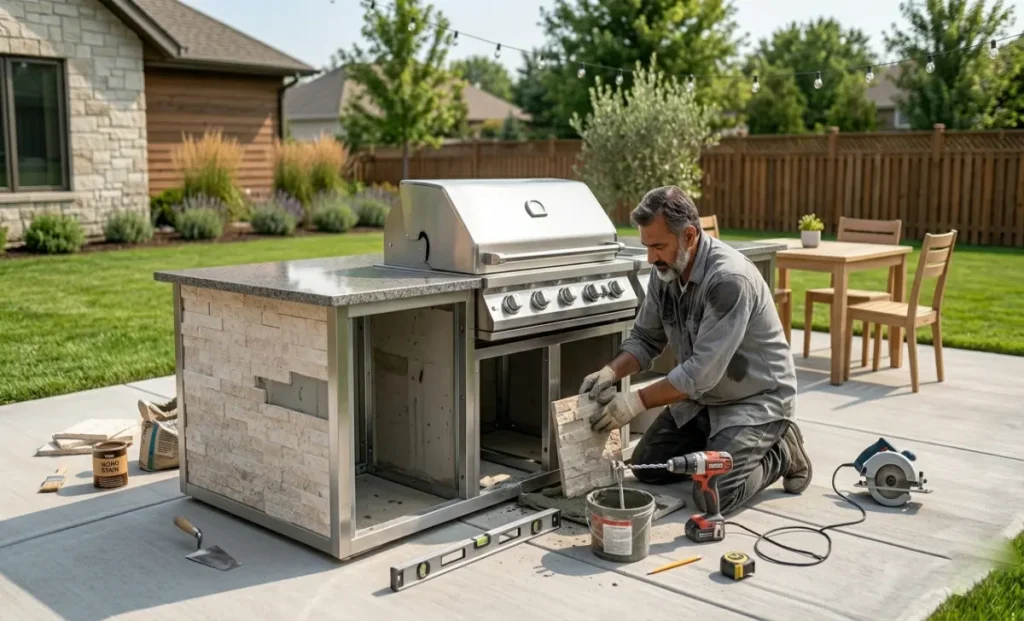
An outdoor kitchen DIY project lets you build a fully functional backyard cooking space at a fraction of professional costs. You can choose from three main methods: scratch build, ready-to-finish (RTF), or ready-to-assemble (RTA). Material costs range from $4,000 to $10,000, and going DIY can save you 20% to 40% compared to hiring a contractor.
Hiring a contractor to build an outdoor kitchen can cost you anywhere from $13,000 to over $50,000. That’s a lot of money for something you might be able to do yourself over a weekend. The outdoor kitchen market has grown fast, and so have the options available to DIYers of every skill level.
This guide walks you through everything you need to know: the three main DIY methods, the tools and materials required, realistic cost breakdowns, and the tasks you should always leave to a licensed professional.
3 Outdoor Kitchen DIY Methods Compared
Before you touch a single tool, you need to pick the right method. The one you choose depends on your skills, your budget, and how much time you want to spend.
1. Build from Scratch. This is the most complex option. You frame the structure yourself using wood, steel, or concrete block, then cover it with cement board, apply a scratch coat, install countertops, and finish with your cladding material. Expect a timeline of one to four weeks and a steep learning curve if you haven’t done masonry work before. It gives you the most design freedom, but it demands the most skill.
2. Ready-to-Finish (RTF) RTF kits come with a pre-built frame and cement board already attached. You skip the framing stage, but you still need to cut appliance openings, apply your own finish, and install countertops. This takes two to five days and is a solid middle-ground option.
3. Ready-to-Assemble (RTA) RTA kits arrive around 95% complete. You bolt the panels together, place the countertops, and slide in the appliances. No finish work is needed, and the appliance cutouts are already done. Most RTA builds take two to six hours with basic tools. This is the best choice for most first-time DIYers.
What You Need Before You Start
Planning matters more than tools. A few key decisions made early will save you significant time and money later.
Check your local permits. Most municipalities require a permit for any permanent outdoor structure with gas, electrical, or plumbing connections. Permit costs typically run between $500 and $2,000, depending on your location and project scope. Skipping this step can create problems when you sell your home.
Plan your utility lines. Think about what appliances you want before you set a single panel in place. Gas grills and side burners need a propane tank or a direct gas line. Refrigerators, lights, and electric appliances need a power source. Sinks and ice makers need plumbing. Map out where these lines will run before construction starts.
Assess your surface. Your patio surface needs to be level and structurally sound. If you’re building on a wood deck, check whether it can handle the extra weight. Concrete, pavers, and stone patios are the most straightforward surfaces to work with.
How to Build an Outdoor Kitchen from Scratch
This section covers the scratch-build method step by step. If you’re using RTA or RTF, you’ll skip most of these stages.
Step 1: Build the Frame. The three main framing materials are pressure-treated wood (2x4s), metal studs, and concrete block. Wood is the most DIY-friendly. Metal framing is similar to wood but requires a chop saw with a metal blade and a welder. Concrete block requires masonry experience and is heavier, which matters if you’re building on a deck.
Always build the frame slightly shorter than your target finished height. If you want the countertop at 36 inches and your countertop is 1.25 inches thick, frame it to 34.75 inches.
Step 2: Cover the Frame. Cut cement board sheets to size and attach them directly to your frame using exterior screws. Apply self-adhesive fiber mesh to all seams and corners. Cement board replaces the older method of plywood plus moisture barrier plus wire mesh. It’s faster and more durable.
Step 3: Apply a Scratch Coat Mix exterior-rated thin set (for cement board) or masonry mortar mix (for concrete block). Apply it with a trowel, then score horizontal lines across the surface with a 1/2-inch notch trowel at a 45-degree angle. This rough texture gives your cladding material something to grip. Let it cure for 24 hours.
Step 4: Install the Countertops. Common outdoor countertop materials include concrete, granite, porcelain, and stainless steel. Make sure all appliance cutouts are fabricated before installation. Some builders install countertops before cladding, others after. Either works; choose what’s easier given your layout.
Step 5: Apply the Cladding Work from the bottom up. Apply mortar to the back of each tile or stone, press it to the scratch coat, and clean up any excess as you go. Use a masonry saw or angle grinder with a masonry blade to cut pieces around corners and appliance openings.
Step 6: Install Appliances and Utilities. Start with drop-in appliances like the grill, side burner, and sink. Their flanges rest on the countertop and don’t need fastening. Then install access doors, refrigerators, and any mounted accessories. Hook up gas, electrical, and water lines last, with the help of licensed tradespeople where required.
Best Materials for an Outdoor Kitchen
Material choice affects durability as much as it affects cost. Outdoor kitchens face rain, heat, UV exposure, and temperature swings. What works indoors often fails outside.
Frame: Metal studs are the most durable long-term option. Pressure-treated wood is fine if used with cement board cladding, but it should be treated as combustible around appliances. Concrete block is the most permanent, but it requires real masonry skill.
Cladding: Stone veneer, porcelain tile, and stucco all perform well outdoors. Avoid any material that absorbs water or cracks in freezing temperatures.
Countertops: Concrete and porcelain are the most popular for DIY builds. Both handle heat and moisture well. Granite looks premium but requires professional fabrication for clean cutouts. Avoid unsealed natural stone, which stains easily in an outdoor cooking environment.
Cabinetry (for RTA): Look for high-density polyethylene (HDPE), powder-coated aluminum, or concrete composite panels. These materials resist rust, moisture, and UV damage far better than wood or steel with a basic finish.
How Much Does an Outdoor Kitchen DIY Cost?
Cost is where most people get surprised. Here’s a realistic breakdown.
<br>According to data from multiple home improvement platforms, <br>the national average for a complete outdoor kitchen sits between $13,000 and $16,500 when professionally built. Going DIY can reduce that total by 20% to 40%.
For materials and basic appliances on a DIY build, budget between $4,000 and $10,000. That range assumes you already have a patio. If you need to pour a concrete pad or lay pavers first, add $5 to $50 per square foot for that work.
Here’s a rough cost breakdown for a mid-range DIY build:
- Grill (built-in): $1,500 to $5,000
- Countertops (per sq ft, installed): $40 to $200
- Cladding material (tile or stone): $15 to $50 per sq ft
- Cement board and framing materials: $300 to $800
- Permits: $500 to $2,000
- Utility connection (plumber/electrician): $500 to $2,500
A basic RTA or RTF kit, including appliances and countertops, typically runs from $4,000 to $10,000 before permits and utilities.
Tasks You Should Never DIY
Going DIY doesn’t mean doing everything yourself. Some tasks need licensed professionals, both for safety and code compliance.
Gas line installation. Connecting a grill to a natural gas line requires a licensed plumber or gas fitter in most states. A faulty connection is a fire and explosion risk.
Electrical wiring. Running a new circuit to your outdoor space for lights, refrigerators, or electric appliances requires a licensed electrician. Outdoor electrical work involves GFCI protection and weatherproof enclosures that need to meet local codes.
Plumbing. Installing a sink with proper drainage, especially if it ties into your home’s main line, is not a beginner task. Improper drainage leads to standing water, pests, and long-term structural damage.
Attempting these tasks without a license can void your homeowner’s insurance and create serious liability if something goes wrong. Budget for them separately. Most homeowners spend between $500 and $2,500 on professional utility work, which is a small share of the total project cost.
Choosing the Right Layout for Your Space
Your layout shapes how well the kitchen actually works, not just how it looks.
The most common configurations are linear (a straight run), L-shaped, and U-shaped. A linear island is the simplest to build and suits smaller patios well. An L-shape adds prep and counter space without dramatically increasing cost. A U-shape creates a full cooking station and works well for entertaining.
Leave at least 42 inches of clearance between the kitchen and any other structure or seating area. This keeps traffic flowing safely, especially when the grill is hot and people are moving around. For L-shaped or U-shaped builds with bar seating, plan for 12 to 15 inches of countertop overhang per seat.
FAQs
Do I need a permit to build an outdoor kitchen?
In most cases, yes. Any permanent structure with gas, electrical, or plumbing connections typically requires a permit. Check with your local building department before starting. Permit costs generally run from $500 to $2,000, depending on scope and location.
What is the cheapest way to DIY an outdoor kitchen?
An RTA kit gives you the fastest and lowest-skill path to a finished outdoor kitchen. Basic kits with appliances start around $4,000. Choosing concrete tile for cladding and a standard propane grill instead of a natural gas connection also keeps costs low.
Can I build an outdoor kitchen on a wood deck?
Yes, but you need to verify that the deck can handle the structural load. A concrete or masonry outdoor kitchen can weigh several thousand pounds. Check with a structural engineer if your deck wasn’t built to accommodate that weight. Also, make sure all materials near the grill are non-combustible.
How long does a DIY outdoor kitchen last?
With proper materials, 15 to 20 years is realistic. The biggest factor is how well the structure handles moisture. Sealed countertops, non-porous cladding, and powder-coated or HDPE cabinetry will outlast cheaper alternatives significantly.
What is the best countertop for an outdoor kitchen?
Porcelain and sealed concrete are the top choices for DIY builds. Both resist heat, UV damage, and moisture. Granite performs well but needs professional fabrication for grill cutouts. Avoid unsealed stone, laminate, or wood countertops in an outdoor setting.
