

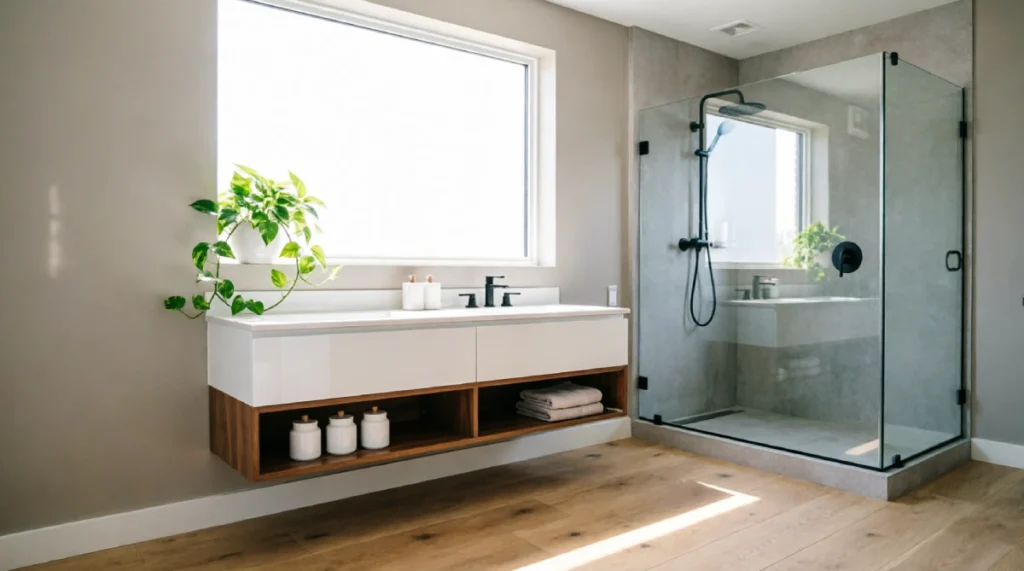
A cramped bathroom feels even smaller when summer light highlights every shadow and closed-off corner. You want the room to breathe — to feel open, cool, and connected to the longer days. Layout is what really makes that happen, more than any single decor choice. In this article, I’ll walk you through 12 summer bathroom layout ideas that focus on smarter use of space, better lighting, and easier movement. Whether you’re renovating or just rearranging, these changes can make your bathroom feel noticeably larger and more inviting during the warmer months.
1. Open Vanity with Floating Shelves
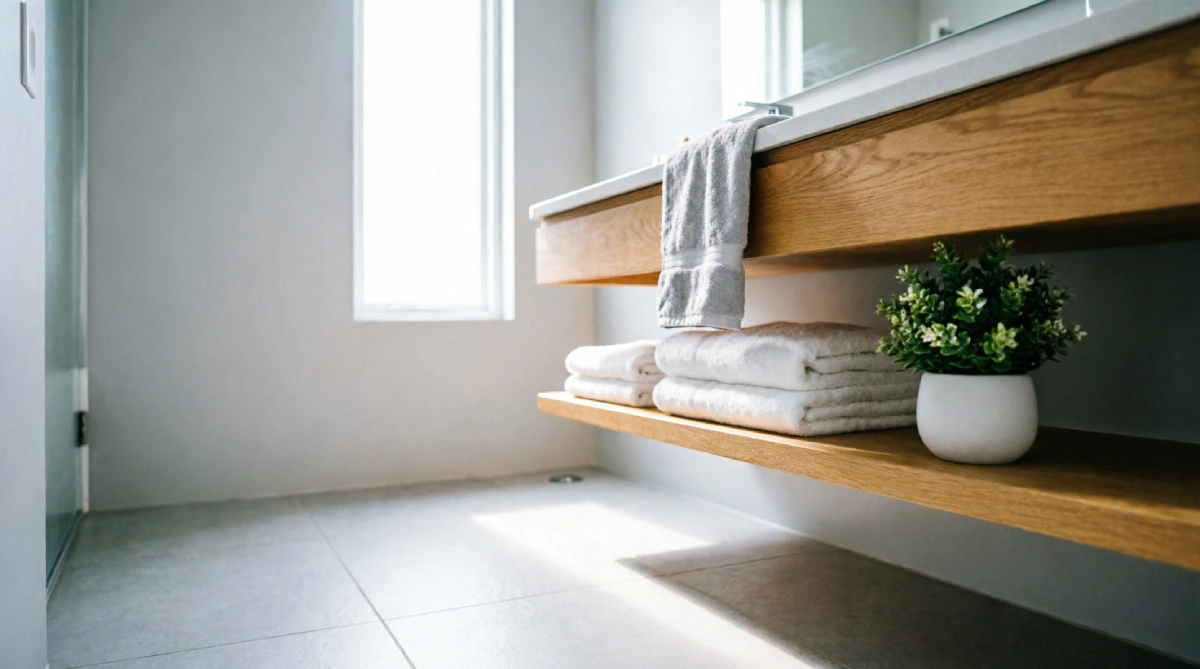
An open vanity layout removes the heavy visual block of a full cabinet, instantly making the floor area feel wider. Without a solid front, light travels freely underneath, which is perfect for summer’s brighter days. In many homes, I’ve noticed that wall-mounted vanities with open lower shelving create an airy, almost spa-like feeling. The room breathes better.
A common issue is losing hidden storage, but you can keep the look tidy with woven baskets or rolled towels on the shelves. Try replacing a boxy vanity with a floating unit and a slim shelf beneath for everyday items. It transforms the footprint without major construction.
2. Corner Shower with Glass Enclosure
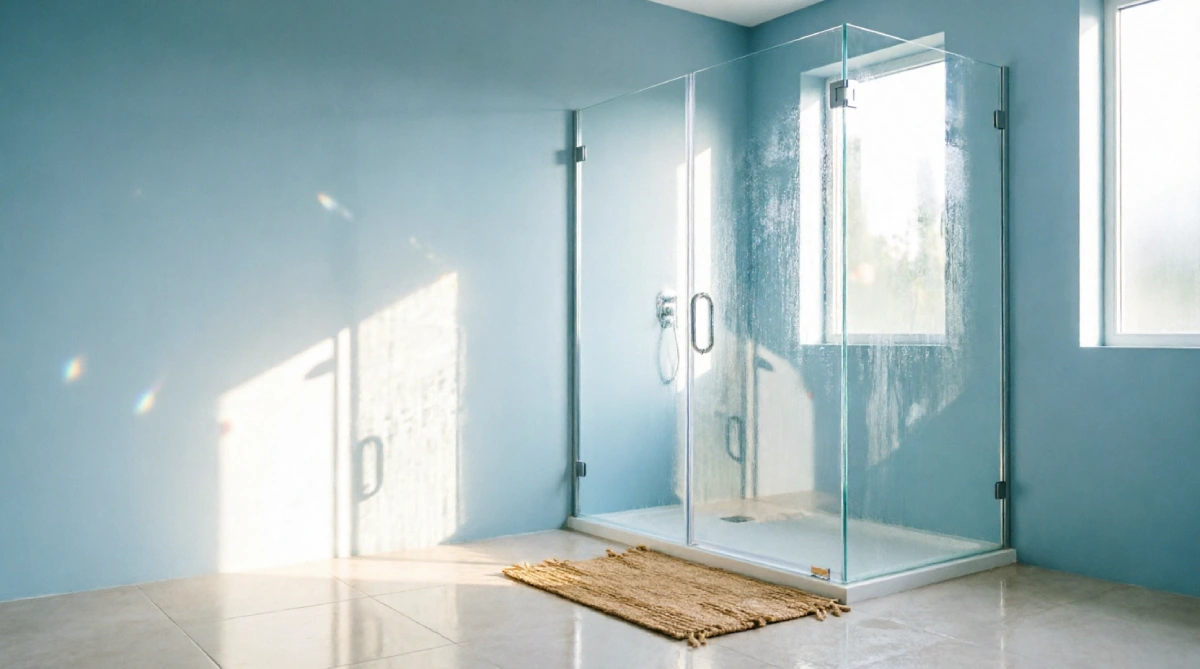
Positioning the shower in a corner and using clear glass panels instead of a full cubicle frees up the central floor area. The room gains a continuous sightline that makes it appear much more spacious. Glass enclosures reflect both natural and artificial light, which is especially useful in summer when you want the bathroom to feel brighter without adding fixtures.
I’ve seen compact bathrooms feel almost twice their size once a corner glass shower replaced an old frosted enclosure. The difference is immediate. If your layout allows it, shift the shower to the least-used corner and use a frameless glass screen. The open center will give you more room to move and let daylight reach deeper into the space.
3. Skylit Wet Room
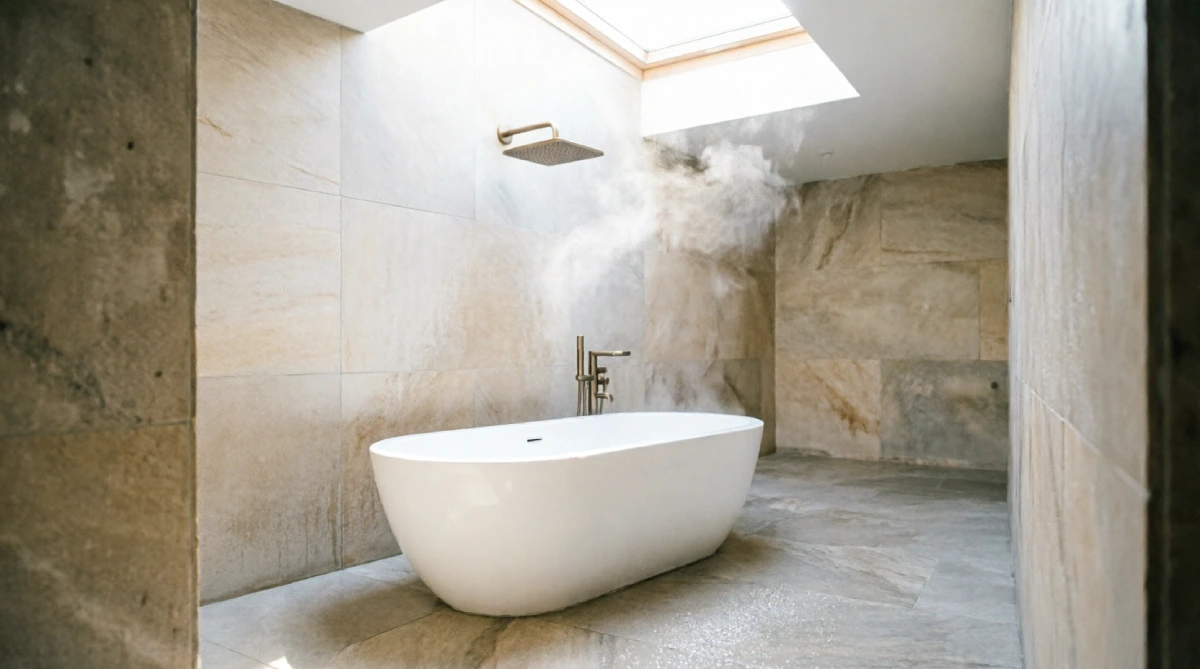
Eliminating the separation between shower and bath areas while adding a skylight overhead turns a closed-in bathroom into a bright, open wet room. The whole space feels unified and much larger. With no curb or shower tray breaking the floor line, the layout becomes seamless. Summer light pours directly from above, creating a warm, outdoorsy feel without leaving the house.
I’ve noticed that even small bathrooms benefit from this approach, because the eye no longer stops at enclosure walls. The ceiling height also seems taller. To get the layout right, waterproof the entire floor and install a central drain. Position a freestanding tub under the skylight to make natural light the focal point.
4. Pocket Door Entrance
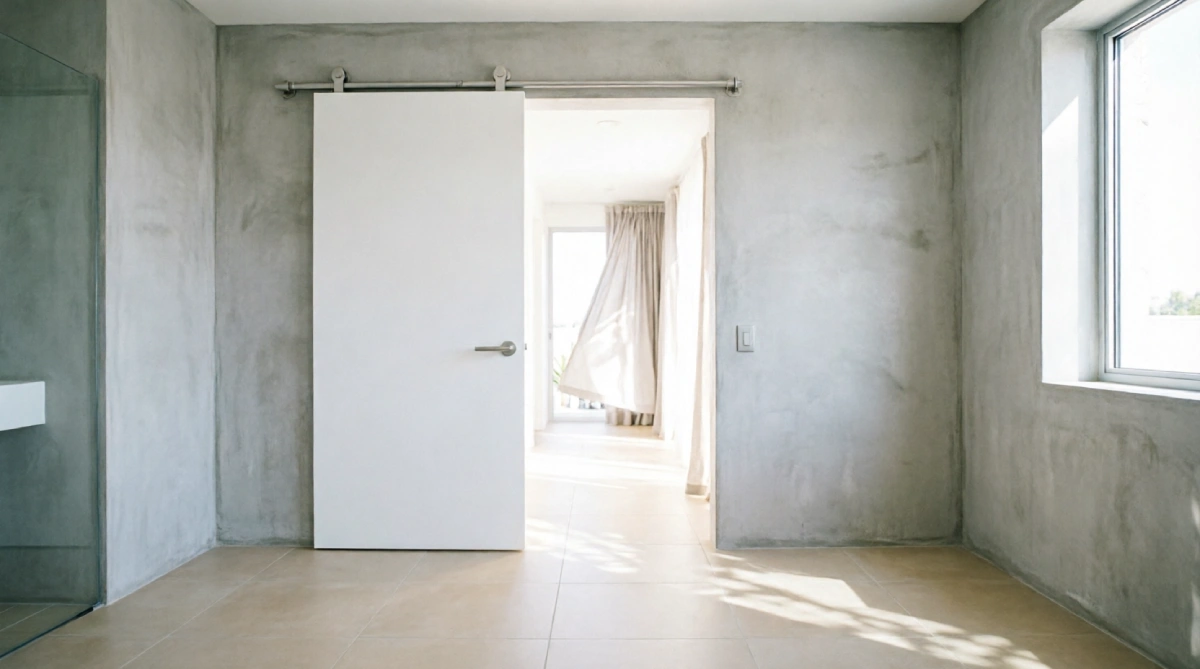
A standard swing door takes up valuable floor space and forces you to plan the layout around its arc. Swapping it for a pocket door that slides into the wall instantly reclaims that square footage. In summer, when you tend to leave doors open to encourage airflow, a pocket door doesn’t block any path and keeps the connection between rooms feeling light and easy.
A common improvement in older homes is cutting back the wall to install a pocket door, which can make a cramped bathroom feel more generous without moving plumbing. If your wall allows it, consider this swap early in any layout refresh. It works especially well in narrow bathrooms where every inch counts.
5. Window-Facing Freestanding Tub
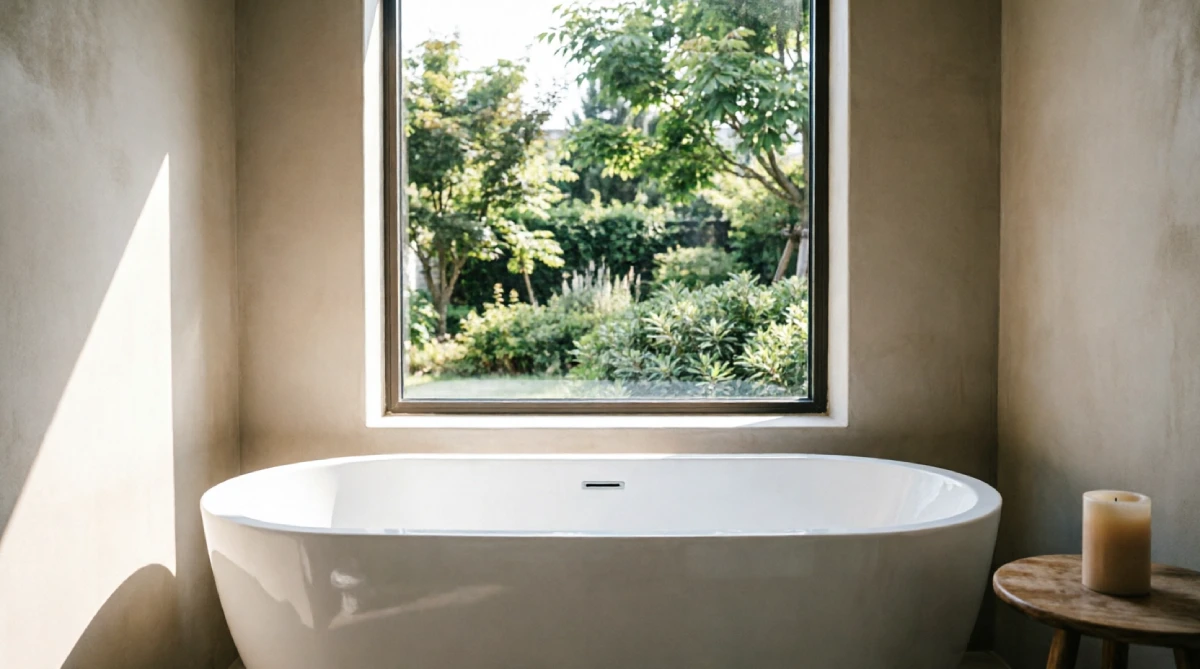
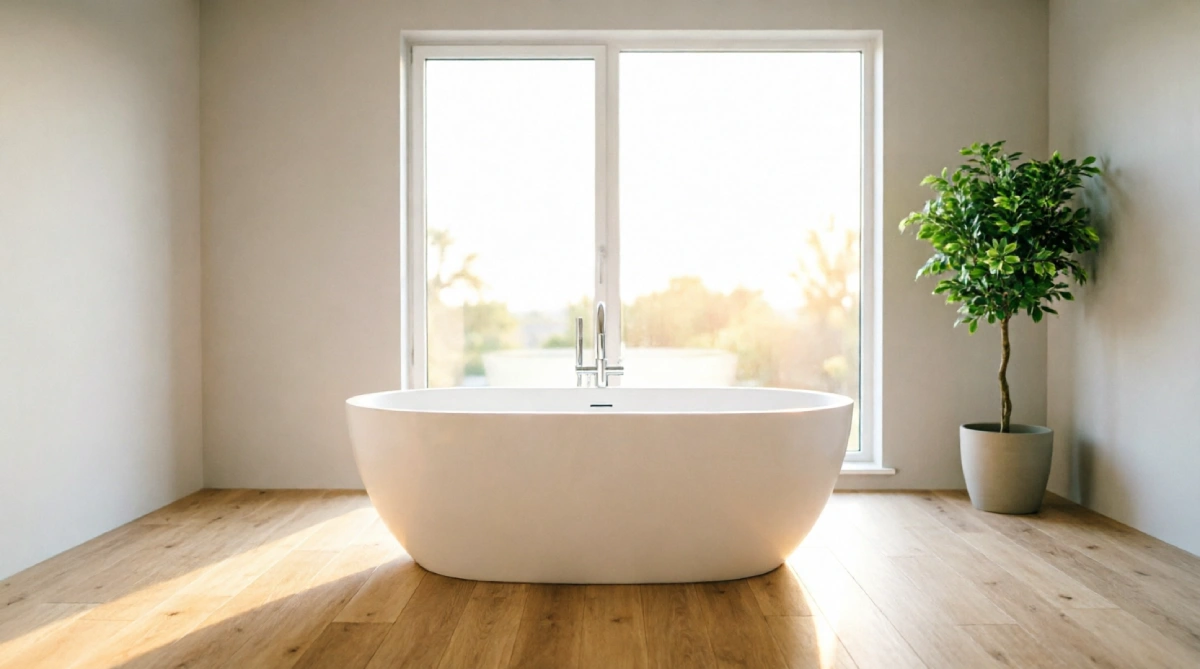
Placing a freestanding tub directly in front of a window — or even centered beneath it — makes bathing feel like a summer retreat. The layout draws your eye outward and borrows visual space from outside. Natural light from the window wraps around the tub and reflects off the water, amplifying brightness throughout the room. This orientation also keeps the center of the bathroom clear for movement.
I’ve seen this work even with smaller windows; the alignment creates a strong focal point that distracts from limited square footage. If privacy is a concern, use sheer cafe curtains that still let light through. Position the tub so the window sill acts as a shelf for bath essentials.
6. Dual-Access Layout for Pool or Garden
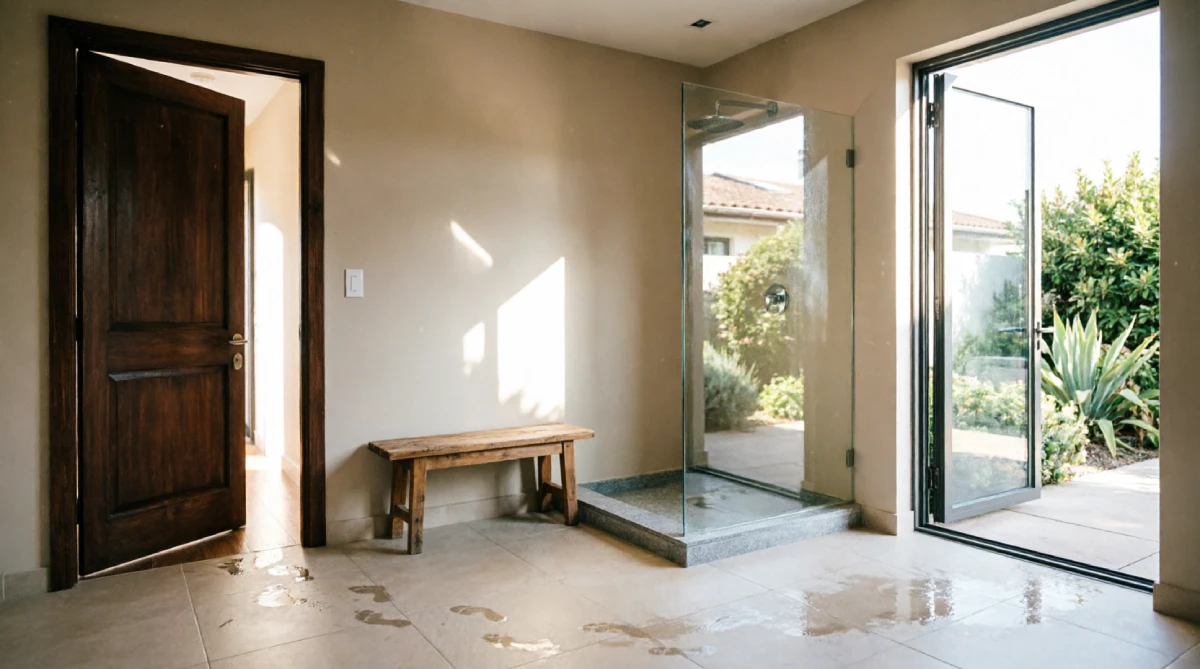
A bathroom that connects to both the interior hallway and a backyard or pool area acts as a summer transition zone. This layout keeps wet feet and towels out of the main living spaces. With two entries, traffic flows smoothly without crossing through the entire house. It’s especially useful when you entertain outdoors and need a quick rinse or bathroom break.
In homes where a bathroom sits along an exterior wall, adding a secondary door is often more straightforward than it sounds. If your setup allows, convert a small ground-floor bath into a dual-access layout with a secure outdoor door. Use a waterproof floor like sealed concrete or tile to handle pool-to-bathroom traffic.
7. Split-Level Vanity Zone
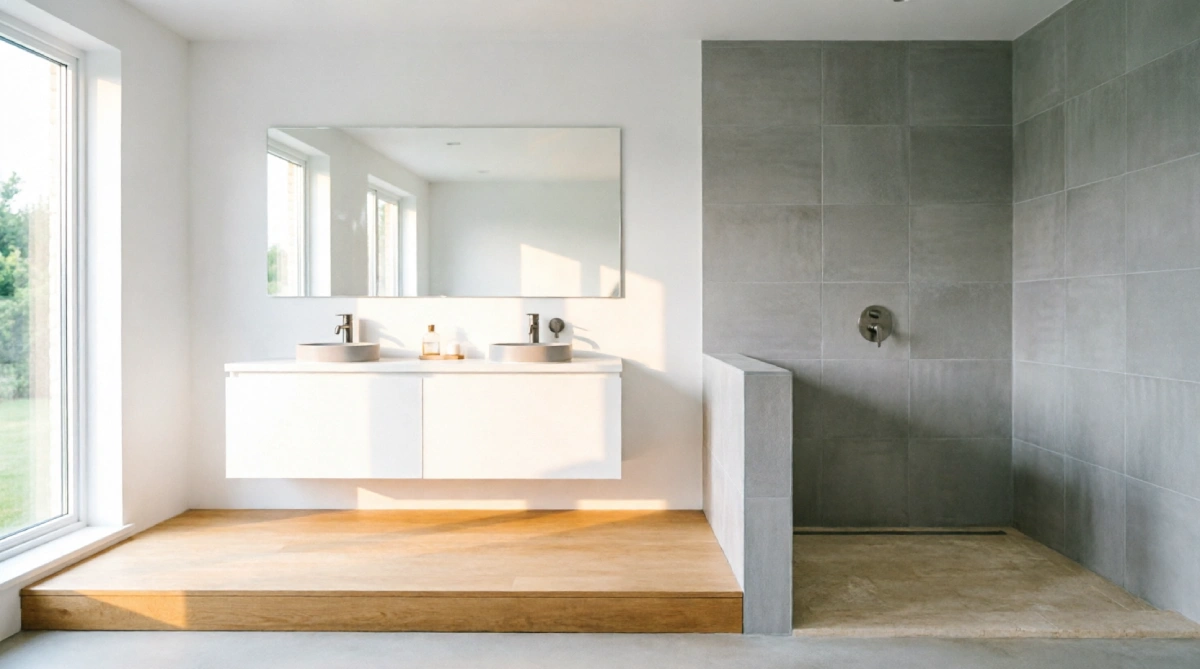
Separating the vanity area from the wet zone — even by a half-wall or a change in floor level — creates distinct zones within the bathroom. The layout feels more organized and spacious than a single blocky room. In summer, this separation keeps the grooming area drier and cooler, while steam from showers stays contained. It also allows two people to use the space comfortably without crowding.
I’ve noticed that a simple pony wall between the vanity and toilet or shower can make a long, narrow bathroom feel like two purposeful areas instead of one corridor. Try a step-up or step-down transition if your floor structure permits, or use a glass block partial wall to maintain light flow while defining zones.
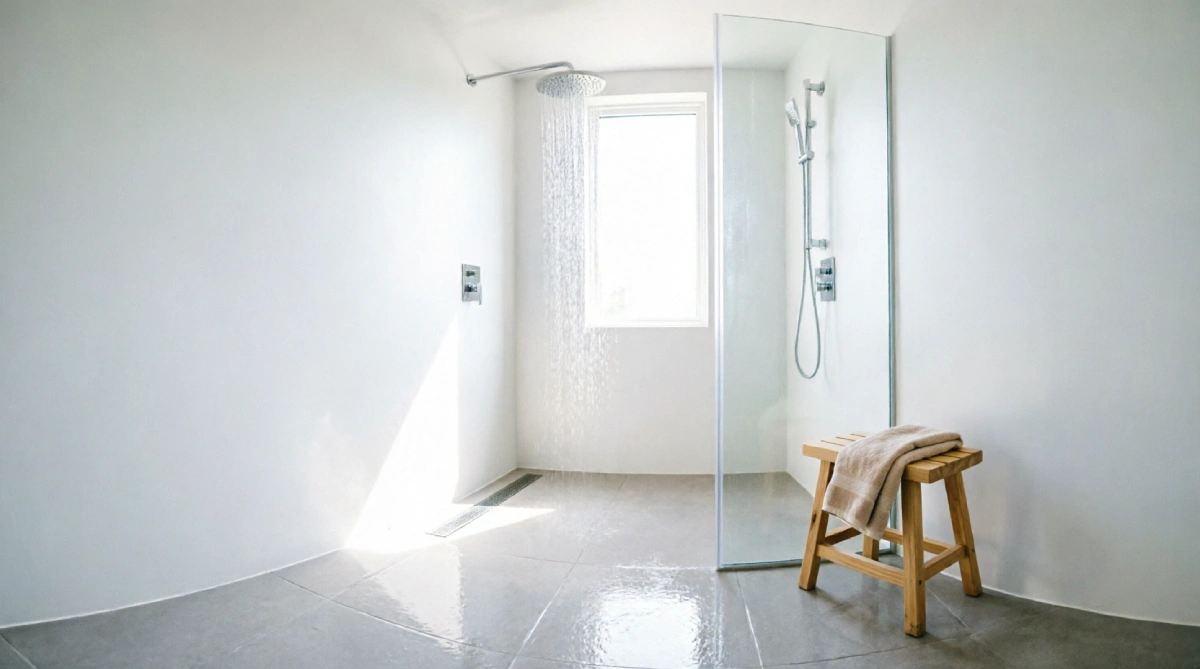
8. Open Shower Without Full Enclosure
Ditching the shower enclosure entirely — using a single glass panel or no barrier at all — opens the room dramatically. The floor runs uninterrupted, so the bathroom reads as one big space. Summer’s warmth means you won’t feel a chill without a full door, and the openness helps moisture dissipate faster. It also makes cleaning easier.
I’ve seen this layout work beautifully in bathrooms with good ventilation and a slight floor slope toward the drain. The visual payoff is huge. If a completely open shower feels too extreme, install a fixed glass panel on the spray side. It defines the wet area without cutting off the room or blocking light.
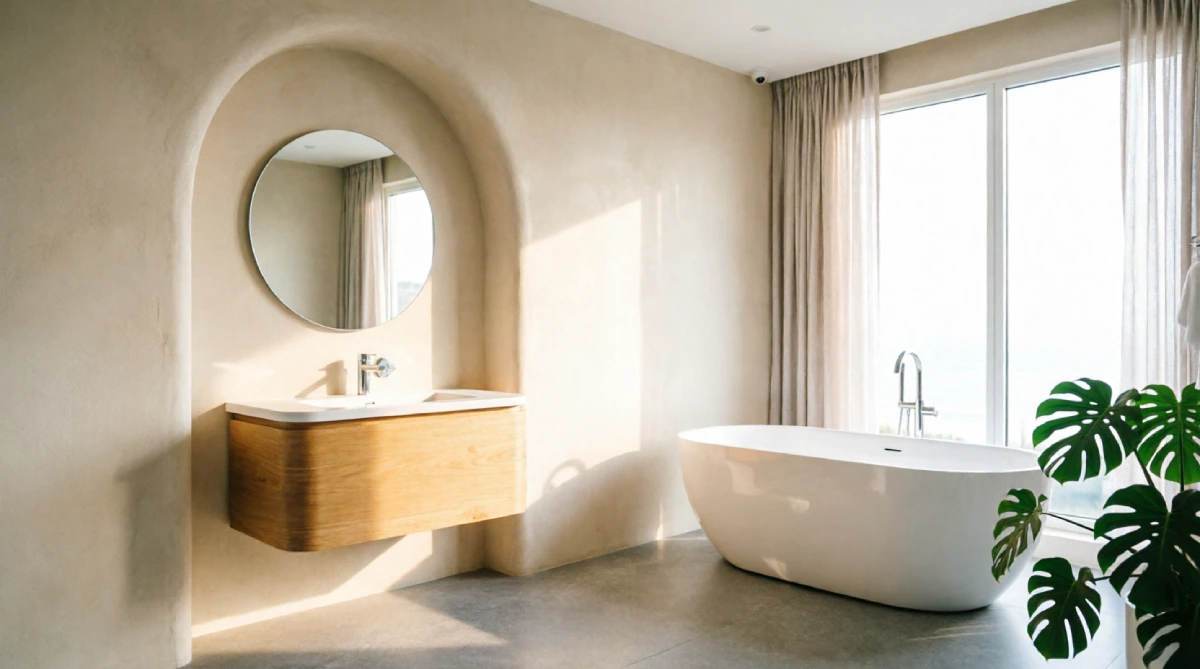
9. Vanity Set Into an Alcove or Niche
Moving part of the vanity into a recessed wall niche or an adjacent hallway alcove pulls bulky cabinetry out of the main bathroom footprint. The room gains usable floor space without losing any storage. This layout trick works especially well in summer, when you want less furniture crowding the room and more open area to move freely after a shower.
A common scenario is stealing a few inches from a neighboring closet to create a vanity recess, leaving the bathroom itself open and airy. If your floor plan allows it, frame a small niche for a narrow sink and mirror just outside the bathroom door. The main room instantly feels larger and less cluttered.
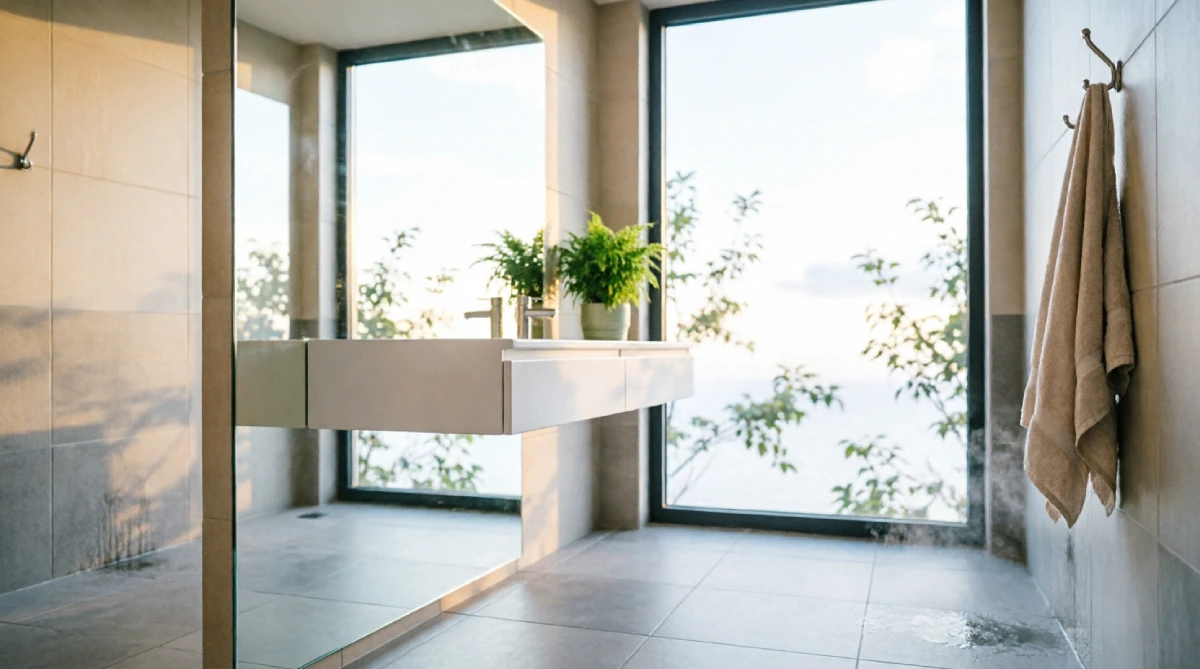
10. Full-Height Mirror Wall
A mirror covering one whole wall — from countertop to ceiling — visually doubles the room. It’s one of the simplest layout changes that makes an immediate impact on perceived space and light. During summer, that mirror wall catches and bounces every bit of available daylight, reducing the need for artificial lighting and making the room feel cooler and fresher.
In narrow bathrooms, I’ve seen a mirrored long wall transform a tunnel-like space into something that feels wide and bright. Choose a wall opposite a window for the best effect. Make sure it’s properly sealed against moisture, and use large mirror panels with minimal seams to keep the reflection seamless.
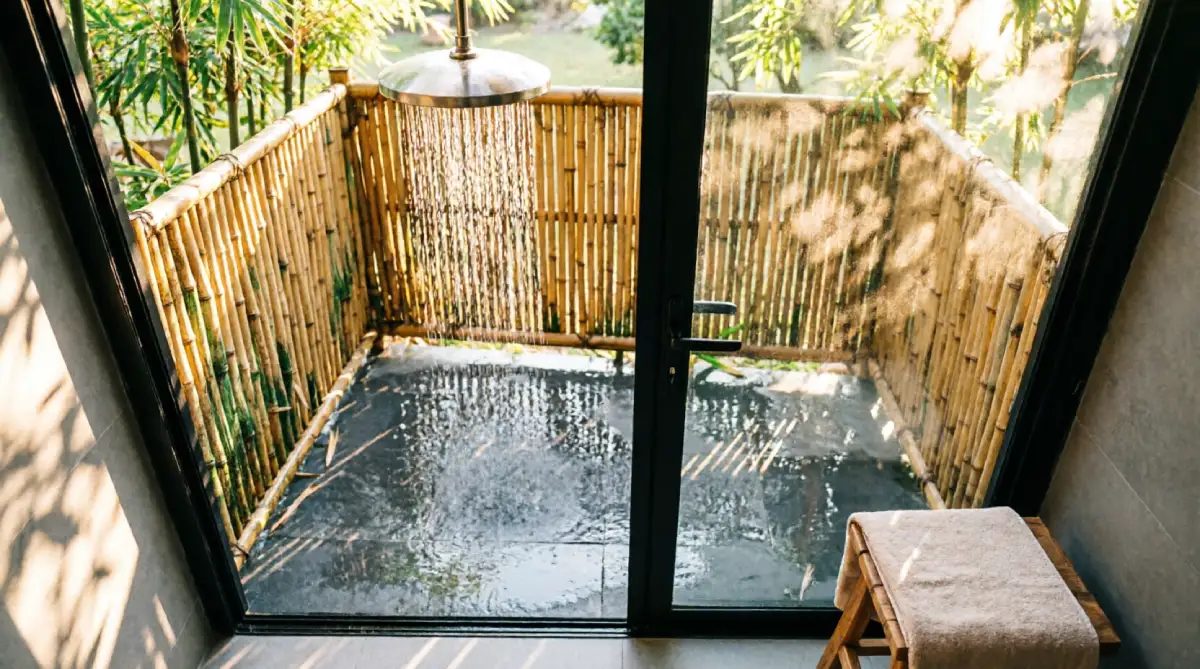
11. Outdoor Shower Access
Connecting the bathroom directly to an enclosed outdoor shower stall creates a seamless indoor-outdoor layout. You can rinse off after gardening or a swim without tracking water through the house. The bathroom itself can be smaller when the shower moves partially outdoors, freeing up interior space for a more open vanity or dressing area.
I’ve seen this setup work beautifully in warm climates, where a private exterior shower becomes an everyday summer pleasure rather than a novelty. If an outdoor shower is possible, place it just outside the bathroom door with a privacy screen of wood or frosted glass. Use a non-slip floor that handles both wet feet and summer heat.
12. Central Freestanding Tub with Open Circulation
Placing a freestanding tub in the center of the room, with clear walking space on all sides, turns it into a sculptural focal point. The layout feels luxurious and much less boxed in. Without the tub pushed against a wall, light can flow completely around it, and the room gains a sense of balance that wall-hugging fixtures can’t provide.
In older bathrooms where the tub once took up an entire alcove, moving it to the center after a remodel completely changes the room’s character. This layout works best in bathrooms that are at least medium-sized. Use a floor-mounted tub filler and keep surrounding surfaces minimal so the open path remains unobstructed.
Practical Tips
- Use light-reflective surfaces: Glossy wall tiles, polished countertops, and large mirrors bounce sunlight deeper into the room, amplifying a summer-bright feel.
- Plan for cross-ventilation: Where possible, position windows or vents on opposite walls to create a cooling breeze without mechanical help.
- Keep the floor clear: Wall-mounted vanities, floating shelves, and recessed niches remove obstacles from the floor and make a small layout feel walkable.
- Designate a wet zone near the entrance: In dual-access or outdoor-connected layouts, place the shower close to the exterior door so damp feet don’t travel across the whole room.
- Avoid heavy visual dividers: Even a partial glass wall or open shelving unit lets light pass while defining areas, which is key in summer.
- Choose light, heat-resistant materials: Natural stone, light ceramic, and light wood tones stay cooler underfoot and reflect less heat into the room.
Common Mistakes to Avoid
- Blocking windows with tall cabinetry: Even a slim storage tower can cut off valuable summer light and make the layout feel dark.
- Overcomplicating a small footprint: Too many zones or angled fixtures in a compact bathroom break the flow and make the room feel tighter.
- Ignoring door swing clearance: A poorly placed inward-opening door wastes floor space and frustrates movement — pocket or barn doors often solve this.
- Using dark, heavy tile in a windowless bathroom: In summer, this absorbs light and heat, making the room feel oppressively warm.
- Forgetting about humidity paths: An open layout needs smart ventilation; otherwise, moisture can damage mirrors and finishes over time.
FAQs
What is the best layout for a small summer bathroom?
An open vanity, a corner glass shower, and a large mirror on one wall can make a small bathroom feel twice its size. Keeping the floor clear and using light colors also helps enormously.
Can I add outdoor access to an existing bathroom?
Yes, if the bathroom shares an exterior wall. Adding an exterior-grade door and a simple outdoor shower zone is often feasible without a full addition, especially on a ground floor.
Is a wet room layout practical for summer?
A wet room eliminates barriers and feels incredibly open. In summer, it dries quickly and can be paired with a skylight for a bright, airy atmosphere — just be sure to waterproof properly.
How can I improve natural light without adding windows?
A full-height mirror wall, reflective tiles, and a glass shower enclosure can multiply existing light. Even adding a solar tube or light shelf near the ceiling can bring in more daylight.
Do I need a designer to change my bathroom layout?
Not necessarily. Many simple layout improvements — like swapping to a floating vanity or repositioning a shower — can be planned with careful measuring and a contractor’s input.
Conclusion
A summer-ready bathroom isn’t about a single style; it’s about how the space works. Even small layout shifts — opening a vanity, turning a shower, redirecting a door — can make the whole room feel lighter, larger, and more relaxed. Think about how you move through the space and where the light falls during the day, then choose the ideas that fit your home. Any one of these twelve changes can bring in more air, more brightness, and a genuinely better everyday experience through the warmest months of the year.
