

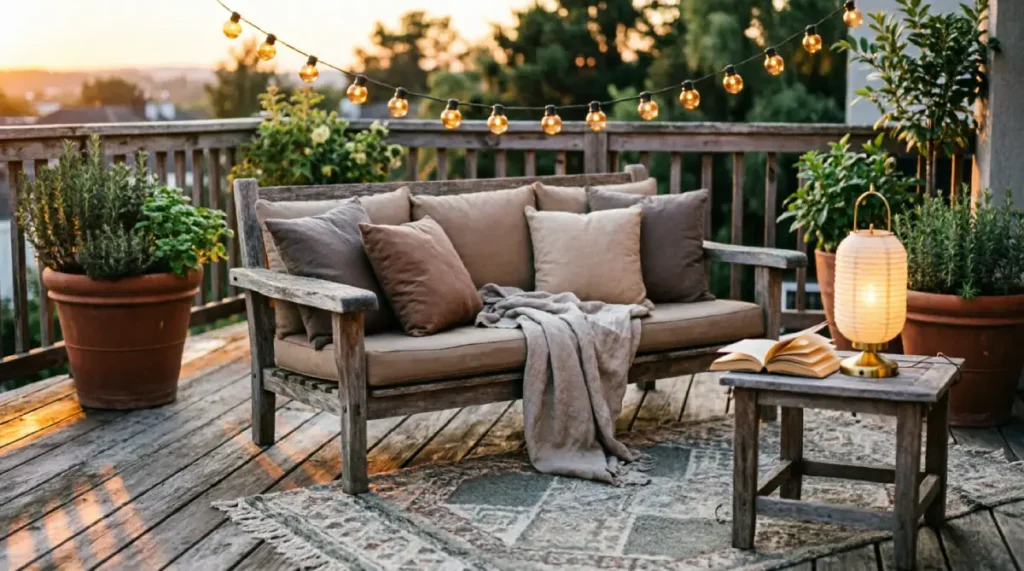
After months of cold weather, many outdoor spaces look forgotten—bare corners, faded cushions, and a general lack of warmth. You want to spend time outside, but the setting doesn’t exactly invite you to linger. Fresh summer outdoor decor doesn’t require a major renovation or a designer budget. It’s often small, thoughtful changes that make a patio or balcony feel like a natural extension of your home.
I’ll walk you through 13 real-world ideas that add comfort, softness, and personality. Each one is practical, easy to borrow, and focused on creating that laid-back summer feeling you actually want to come home to.
1. Soft Lighting with Weatherproof String Lights
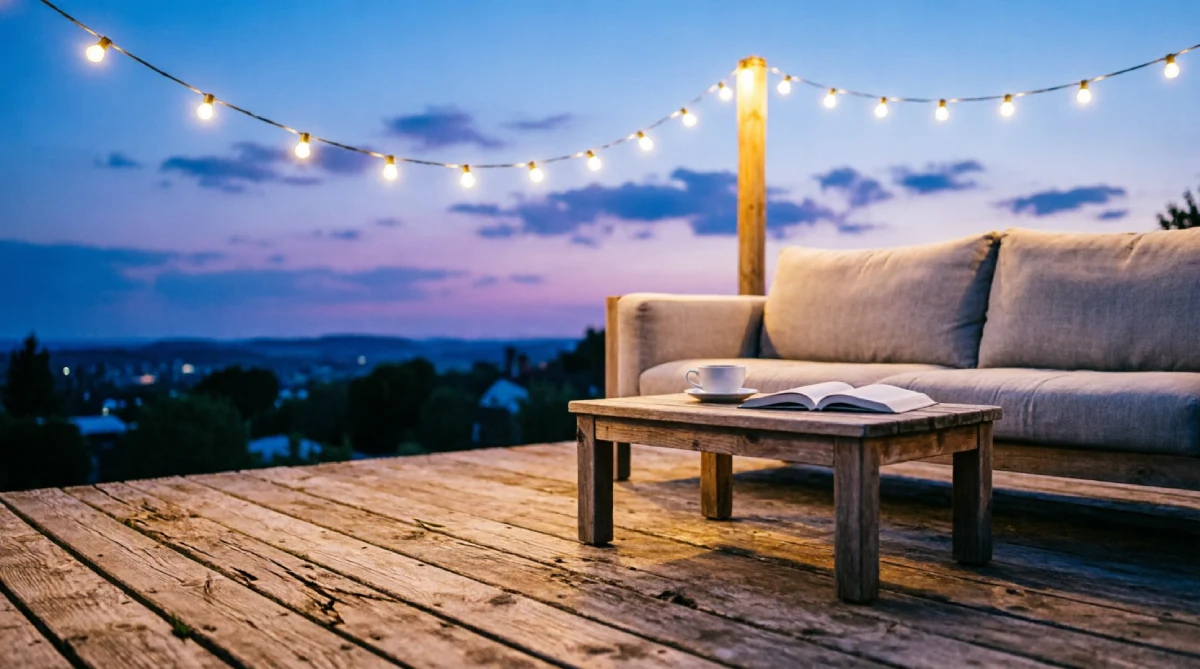
Harsh overhead bulbs can make any patio feel like a utility area. Swapping them for gentle, glowing string lights shifts the whole mood after sunset. Warm light creates visual depth and makes people want to sit and talk longer, which is exactly what a summer evening should feel like.
In many homes, a single porch light leaves dark pockets around seating areas. Draping commercial-grade string lights in a loose zigzag above a dining spot or along a fence line fills those gaps without looking like a festival setup. Choose LED filaments with a warm amber tone (around 2200K) and make sure they’re rated for damp locations. A dimmer plug adds even more control.
2. An All-Weather Outdoor Rug Underfoot
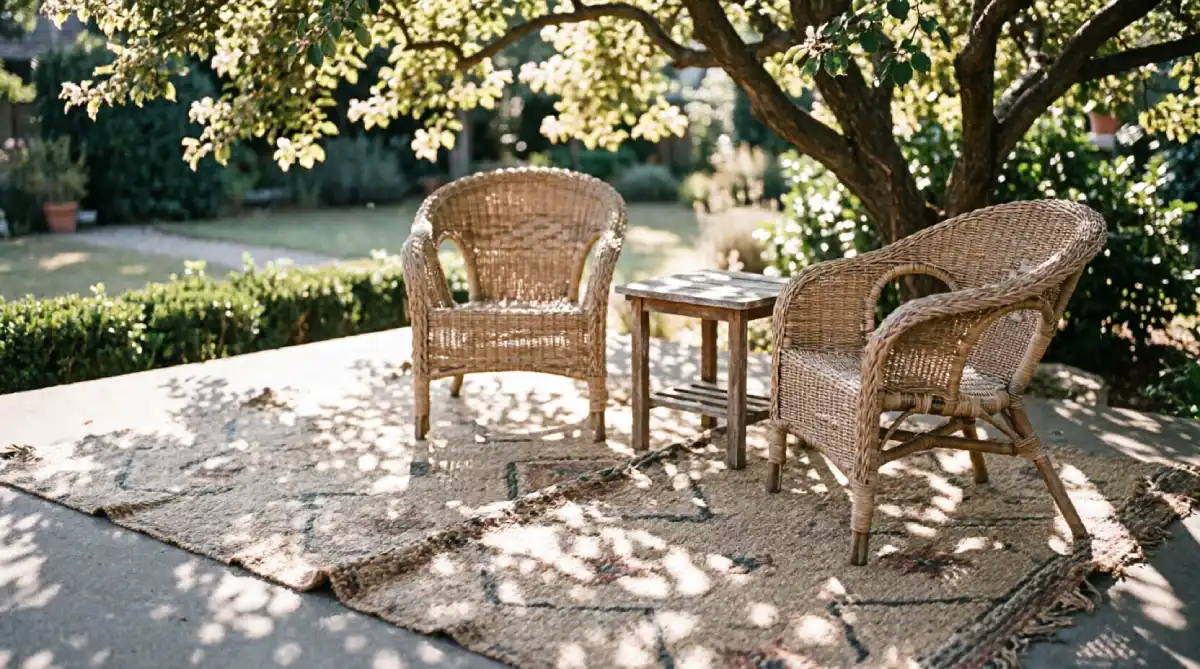
Bare concrete or deck boards can feel cold and ungrounded. An outdoor rug instantly defines the seating area and adds a layer of comfort that makes you want to kick off your sandals. It also helps zone an open patio, separating the lounge space from the grill or walkway visually.
I’ve noticed that many people hesitate because they worry about mildew or fading. The trick is choosing a flatweave polypropylene rug—it dries quickly, resists stains, and can be hosed off. Go for a pattern with earthy terracotta, faded blue, or sandy beige to hide the inevitable summer dust. One size larger than you think works best, so front furniture legs sit comfortably on the rug.
3. Layered Cushions and Quick-Dry Throws
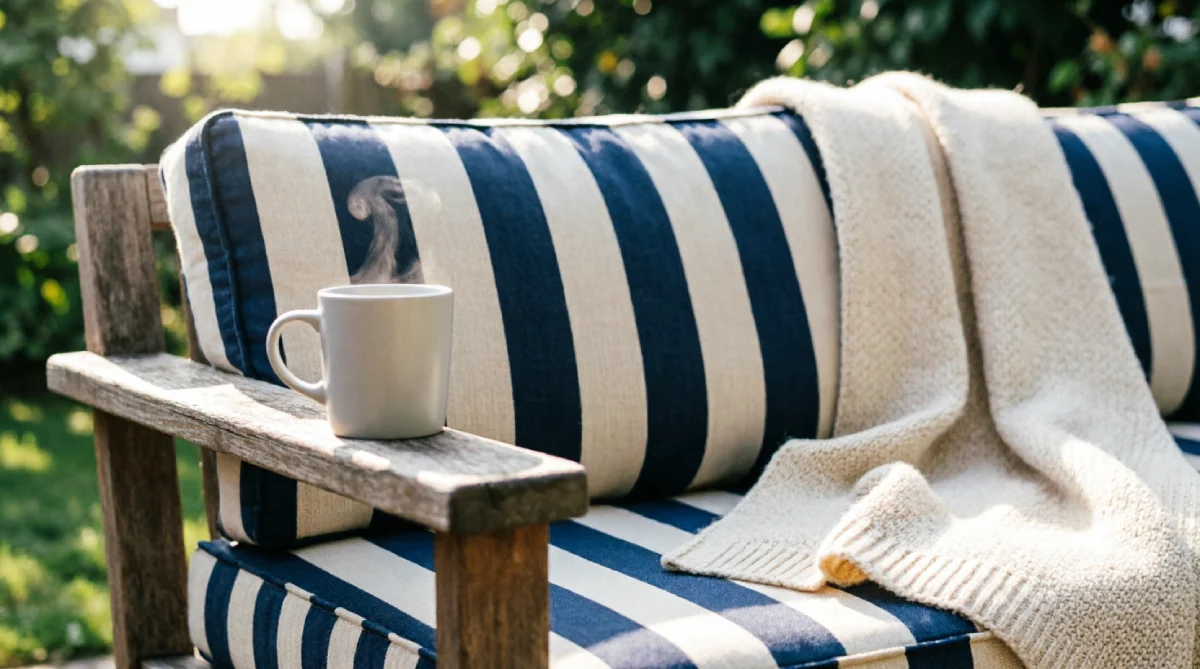
Hard seating discourages people from relaxing. Adding generously filled cushions and a couple of lightweight throws changes that immediately. It signals comfort without making the space feel overstyled, and you can swap covers seasonally to keep things fresh.
A common issue is pillows that go flat or stay damp after a morning dew. I recommend inserts made from quick-dry foam and covers in solution-dyed acrylic or polyester that resist UV fading. A throw blanket made from recycled cotton blends can handle moisture and drapes nicely over a chair arm. Keep an outdoor storage bin nearby for easy grab-and-stash, which reduces the chore factor.
4. Lush Potted Plants and an Herb Garden Nearby
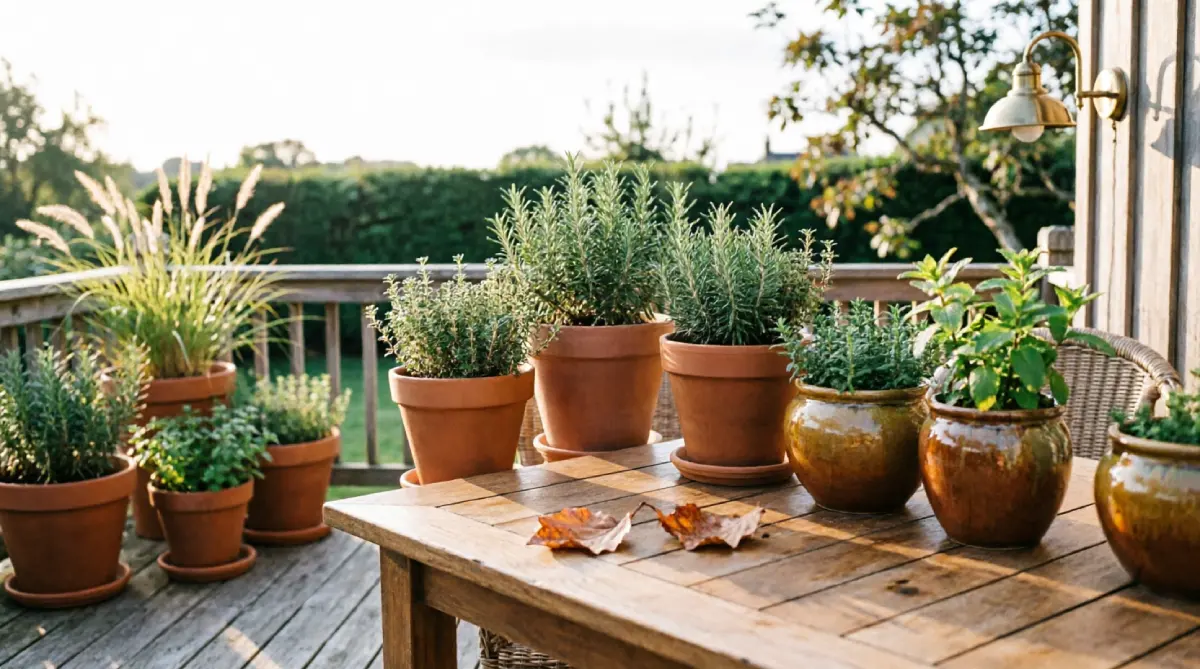
Greenery softens hard surfaces and connects your seating area to the garden. Large statement pots with sculptural plants, mixed with smaller clusters of herbs, give your space life and a subtle, pleasant scent. It’s a low-commitment way to add color and movement.
In many homes, potted plants are treated as an afterthought—a single lonely fern in a corner. Instead, group containers in odd numbers at varying heights. A tall cordyline next to a low, trailing rosemary pot creates a dynamic corner. Placing a small herb planter box right on the dining table or bar cart makes the setting feel intentional and useful for summer meals.
5. Outdoor Curtains for Softness and Privacy
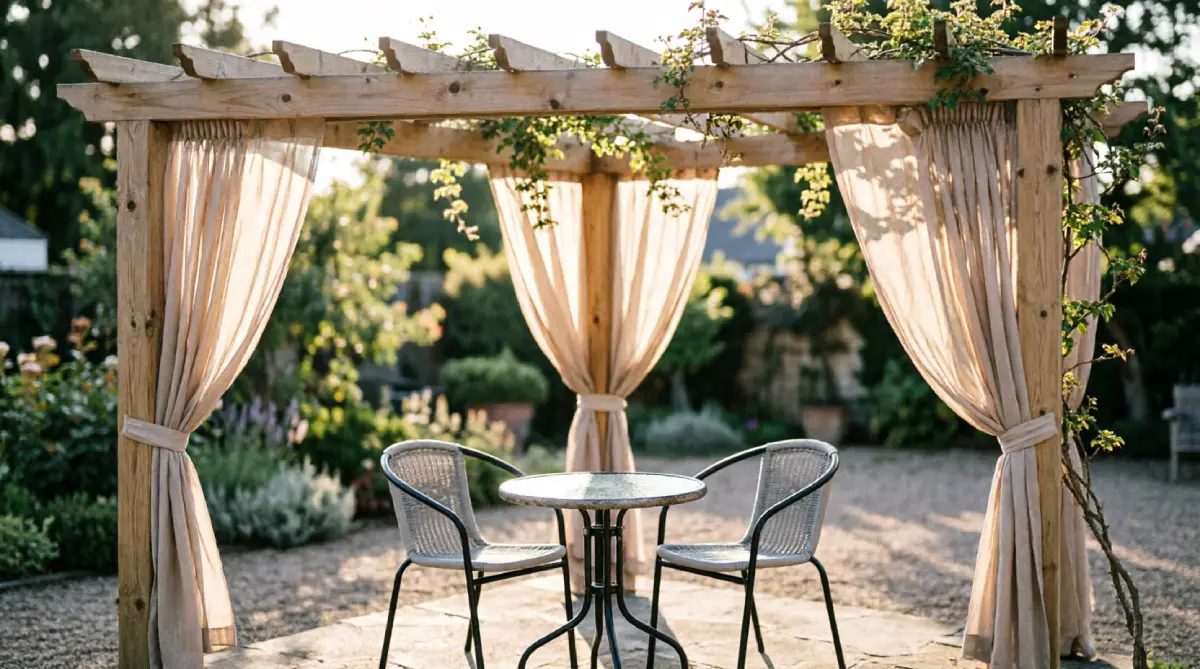
Outdoor curtains do more than block the sun—they create the feeling of an outdoor room. Hung from a pergola, gazebo, or even a tension rod on a porch, they add a soft vertical layer and a sense of enclosure that makes the space feel sheltered and intimate.
I’ve seen plain pergolas turn into inviting nooks just by adding simple white or beige curtain panels on the sunniest side. Use mildew-resistant polyester fabric with grommets; they slide easily and can be pulled back with simple tiebacks when you want an open view. The fabric also helps cut glare on a laptop screen if you work outside, which is a bonus not everyone considers.
6. A Defined Dining Spot with Simple Table Settings
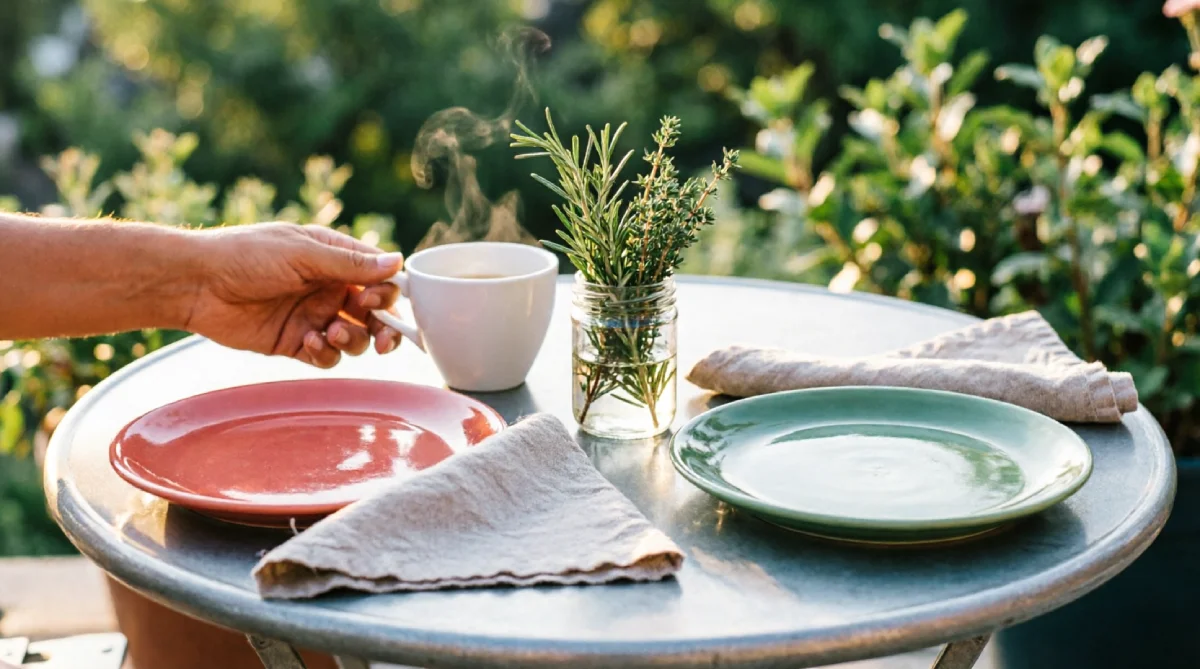
Even a tiny balcony feels more special when there’s a designated place to eat. A small bistro table with real plates and cloth napkins turns a quick lunch into a moment to pause. It’s not about expensive tableware, just the mindset that eating outdoors deserves a tiny bit of ceremony.
A common oversight is using leftover kitchen items that look sad outside. I prefer melamine plates with a wood-grain look or enamelware—they’re durable, stack well, and don’t scream “picnic.” Adding a small vase of garden clippings or a single citronella candle as a centerpiece makes the table feel set, not staged. Everything can live in a weatherproof caddy nearby.
7. A Fire Pit Conversation Circle
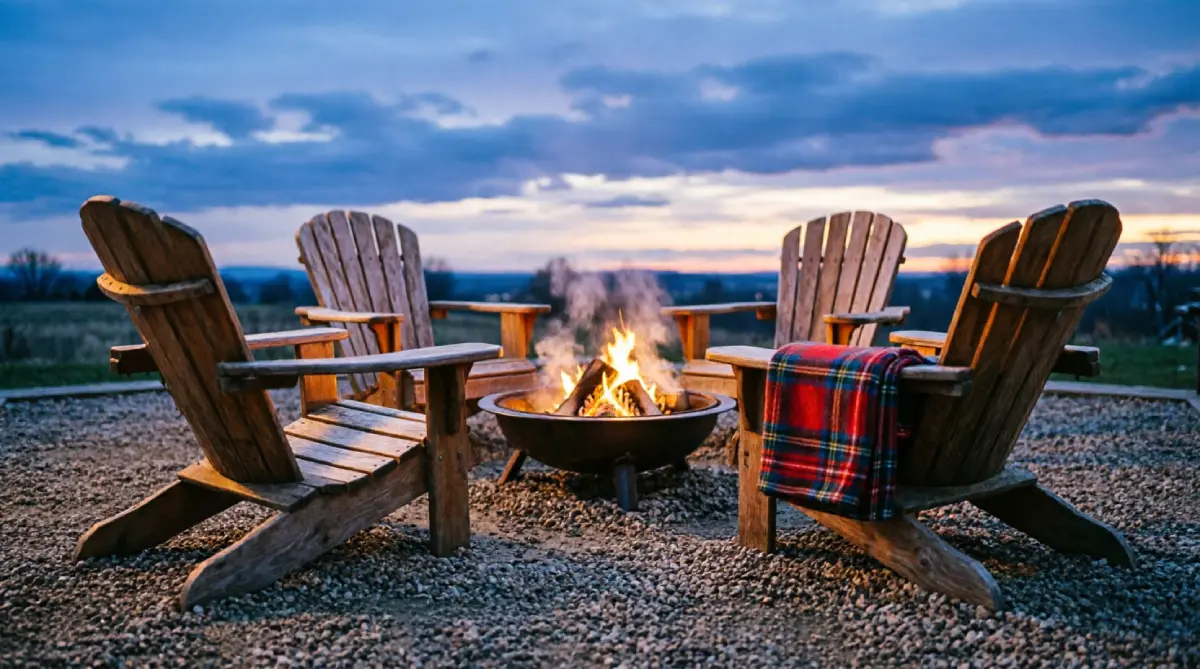
When the sun goes down, people naturally gravitate toward warmth and flickering light. A fire pit area acts as an anchor for evening gatherings, and the circle arrangement invites everyone to face each other rather than a screen. Even a portable steel bowl on a heat-safe mat can do the job.
In many backyards, seating is scattered and disconnected. Pulling four chairs into a tight ring around a low fire feature instantly gives the space purpose. Keep a small side table within reach for drinks, and store a bucket of sand nearby for safety. I’ve found that keeping a stack of wool blankets in a deck box makes cooler nights comfortable without anyone needing to go inside.
8. Hanging Lanterns and Solar-Powered Accents
If string lights feel too permanent or you lack overhead supports, portable lanterns solve the lighting puzzle beautifully. They cast a soft glow exactly where you need it—on steps, next to a lounger, or gathered on a side table. Solar versions charge during the day and turn on automatically, so there’s zero effort.
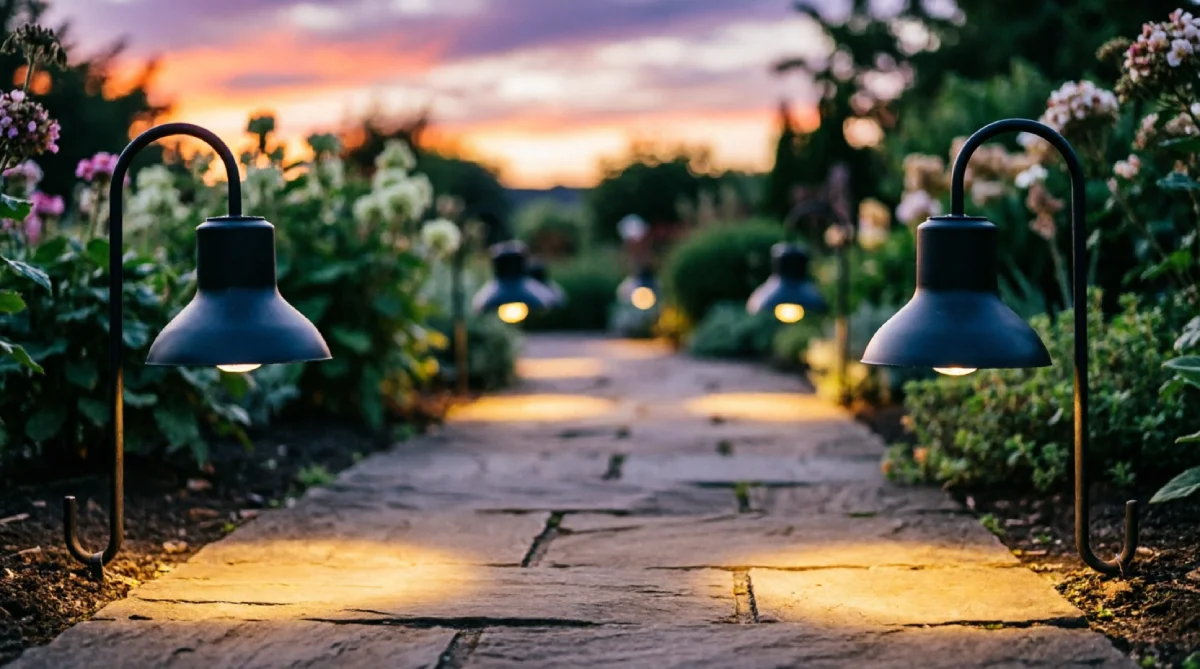
I often see dark walkways that become trip hazards at night. Placing a couple of sturdy hanging lanterns on shepherd’s hooks along a path adds both safety and charm. Opt for warm LEDs rather than cool blue ones; the latter can feel harsh. Mix heights: a tall floor lantern near a reading chair, a smaller one on the table.
9. A Vertical Garden or Lattice Screen
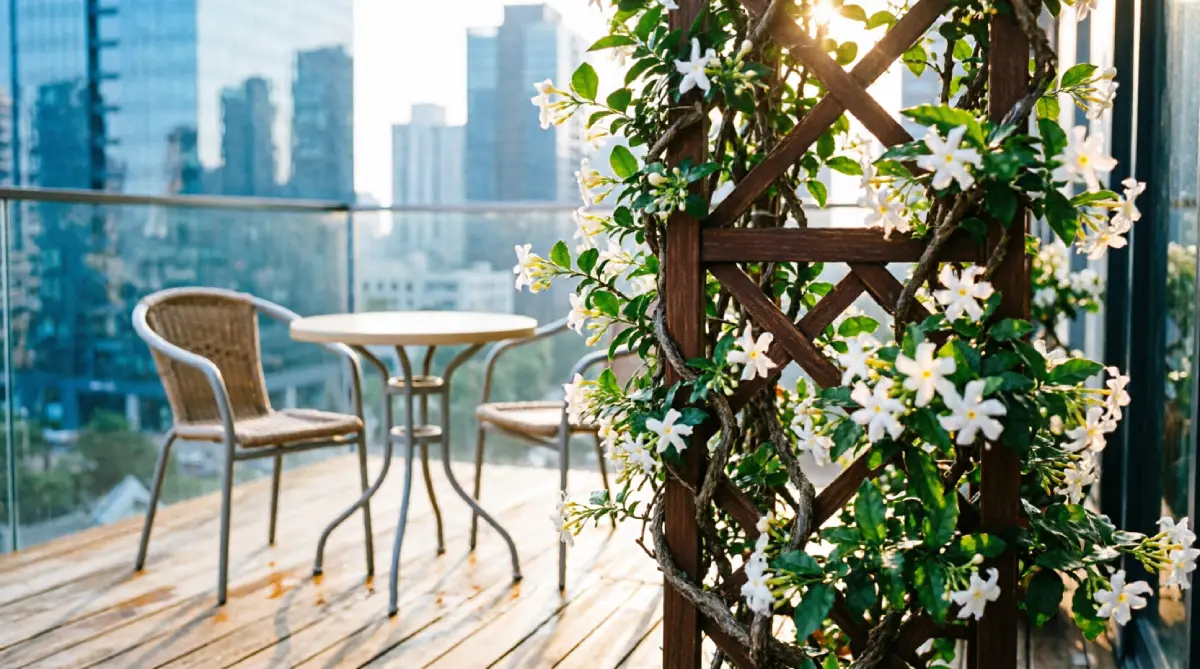
Small patios and narrow side yards often lack floor space for pots, but vertical surfaces are often ignored. A simple trellis or wall-mounted planter grid filled with trailing plants adds a green backdrop, hides an ugly fence, and creates privacy without feeling heavy.
A common issue is a bare wall or chain-link fence that makes the whole area feel exposed. Mounting a modular vertical planter with herbs, ferns, and ivy is a quick fix. If you’re not ready to plant, an expandable willow or bamboo screen leaned against the wall gives instant texture. It also muffles a bit of traffic noise, which surprised many homeowners I’ve talked to.
10. An Outdoor Bar Cart or Drink Station
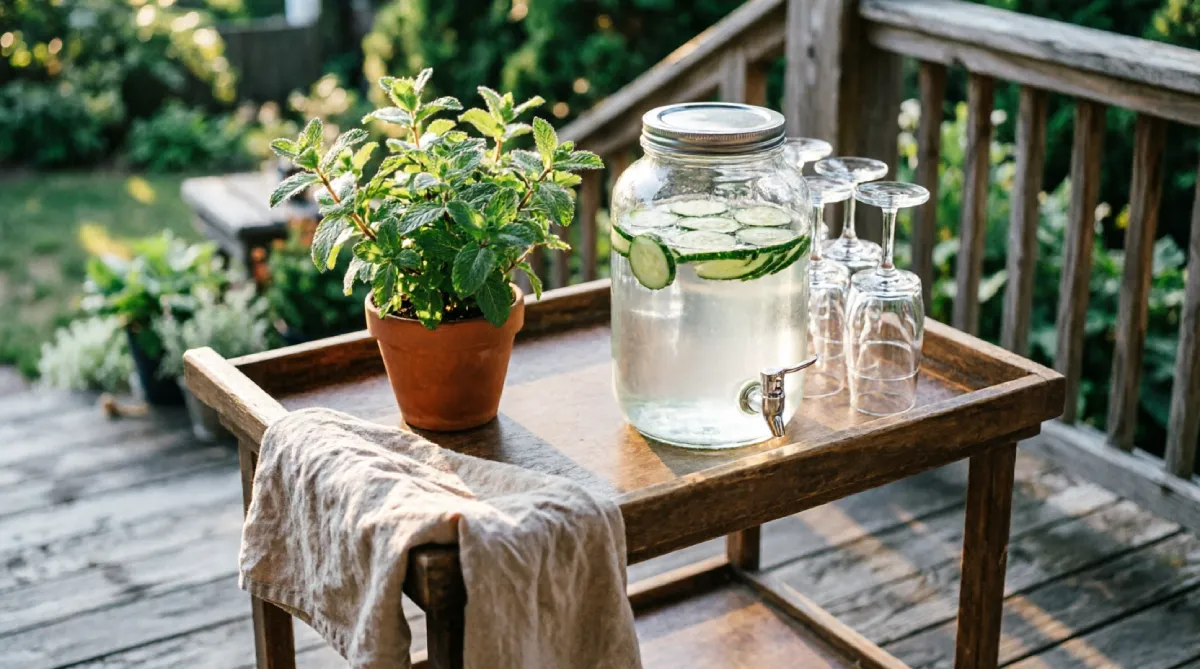
Fetching drinks from the kitchen interrupts the flow of an afternoon outside. A dedicated bar cart or small console table stocked with a pitcher of infused water, glasses, and a few essentials keeps everyone outside longer. It also signals hospitality in a natural, unforced way.
I’ve noticed that even a simple wooden plant stand can be repurposed for this. Place it against a wall or near the seating area, and use a tray to corral bottles and a little vase of mint. A metal or acacia wood cart on casters is great because you can roll it into the shade as the sun moves. Don’t forget a small bin for coasters and a bottle opener tied to the handle.
11. Shade Sails and Colorful Umbrellas
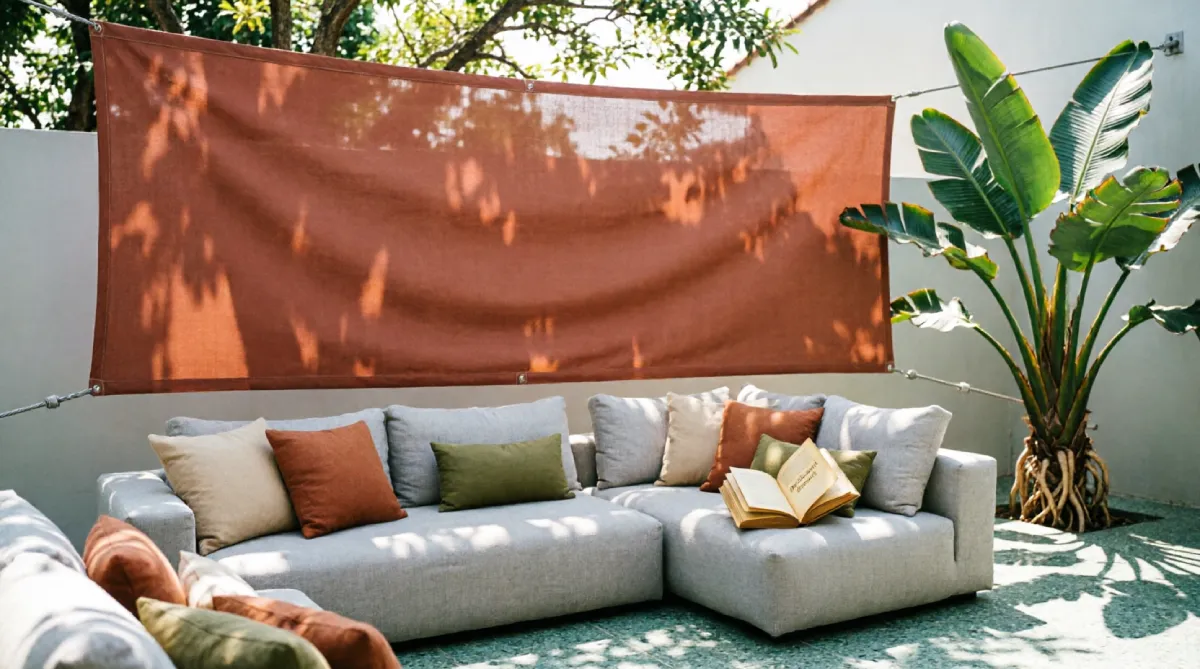
Sun control is decor, too. A well-placed shade sail in a warm sand or terracotta tone adds a modern architectural element while keeping your seating area cool. A bright market umbrella over a dining table acts as a cheerful focal point and makes midday meals possible.
A mistake I see often is choosing flimsy umbrellas that fade to a sad pink by August. Invest in a solution-dyed acrylic canopy; the color stays true, and the fabric breathes better. Shade sails need proper tension with sturdy posts, but even a small triangular one over a bench creates a much cooler microclimate. Angle it to block the harsh western sun for the biggest comfort payoff.
12. Outdoor-Friendly Wall Art and Decorative Mirrors
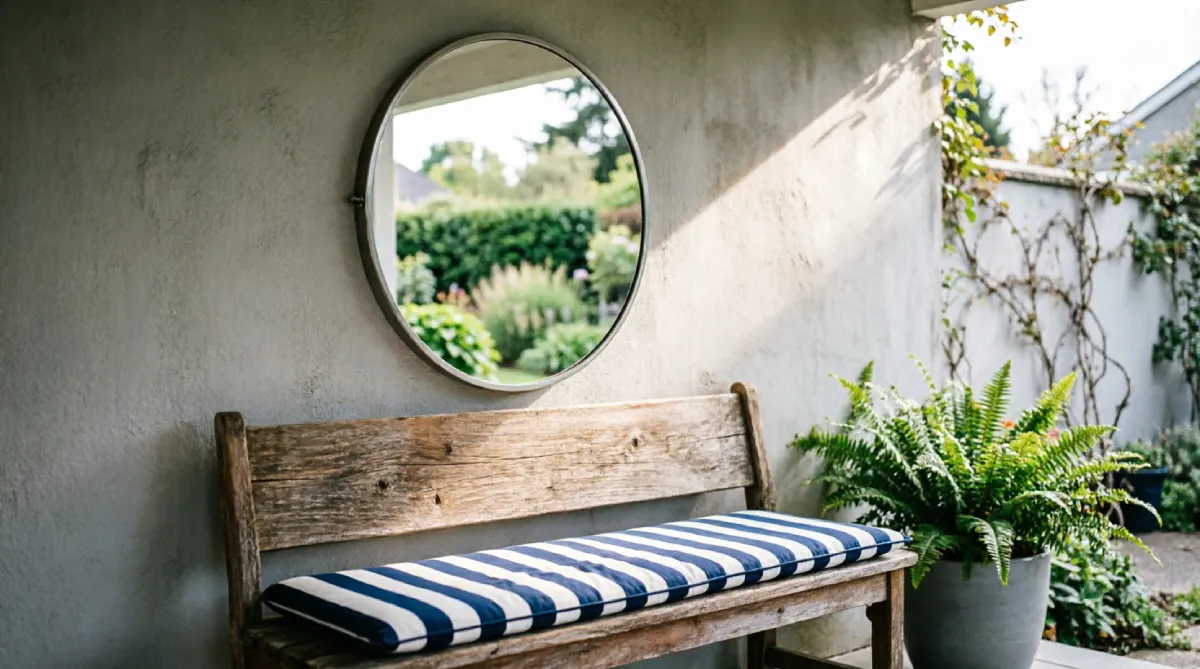
Bare exterior walls can make a space feel unfinished. Adding a metal sunburst sculpture, a weatherproof canvas print, or a decorative outdoor mirror brings personality and a sense of interior design outside. Mirrors also bounce light into shady corners, making a small area feel larger and more open.
I’ve seen a simple convex mirror hung on a fence create a fascinating window effect, reflecting greenery and sky. Choose pieces specifically rated for outdoor use—powder-coated metal, treated wood, or acrylic mirrors that won’t shatter. Hang them securely and out of direct wind. Even a collection of woven plates or a macramé wall hanging can add texture and warmth.
13. A Playful Games Corner with Stylish Storage
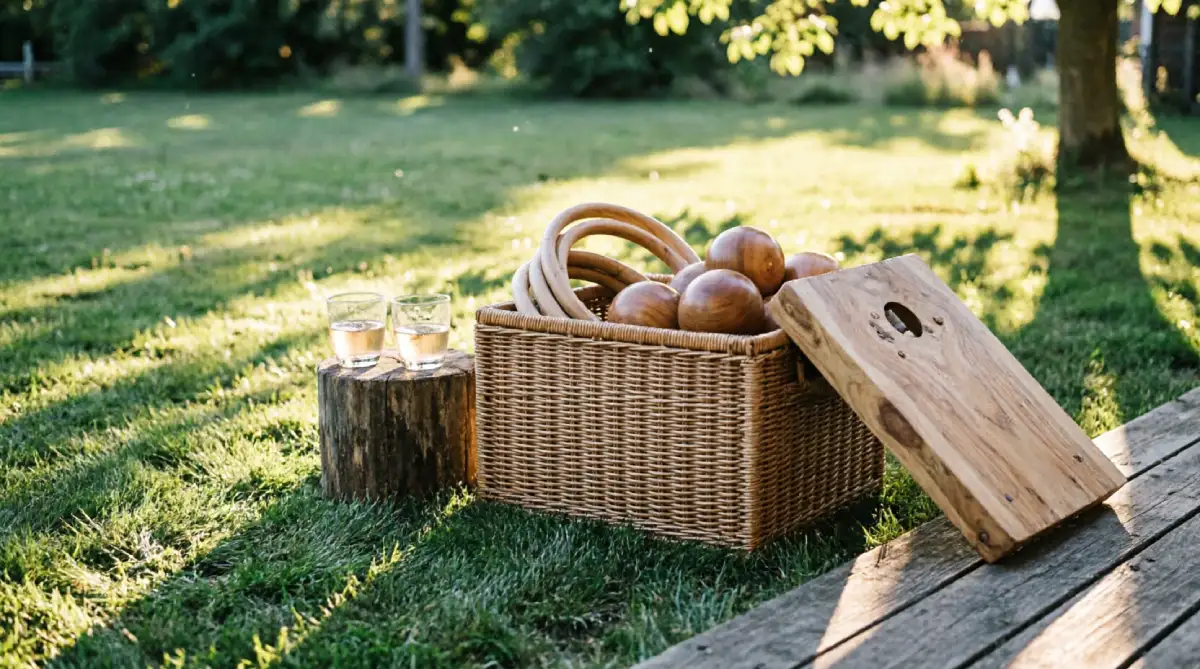
Outdoor living isn’t all about lounging; having a few games ready invites spontaneous fun. A corner dedicated to a cornhole set, a ring toss, or a giant Jenga tower turns the yard into a gathering spot for all ages. The key is making it look tidy, not like scattered toys.
In many homes, sports gear ends up in a messy pile. I like using a large lidded wicker basket or a weatherproof deck box to keep bocce balls, frisbees, and badminton rackets together. Choose equipment with natural wood tones or muted colors so it blends with your decor. A small outdoor chalkboard or wooden scoreboard leaned nearby adds a playful, nostalgic touch without any clutter.
Practical Tips
- Hose down outdoor rugs and cushions monthly and let them dry completely in the sun to prevent mildew odors.
- Rotate potted plants every week or two, so they grow evenly and don’t lean toward the light.
- Use citronella candles or essential oil diffusers with lemongrass near seating areas to gently discourage mosquitoes.
- Store throws and textile accessories in a weather-tight deck box when heavy rain is forecast—not just at the end of summer.
- Refresh table centerpieces with seasonal clippings like lavender or rosemary; they last surprisingly long in water and smell great.
- Check solar light panels regularly and wipe off dust and pollen so they stay bright through the night.
Common Mistakes to Avoid
- Overcrowding small spaces with too many furniture pieces—leave clear pathways so the area doesn’t feel cramped.
- Relying on a single harsh light source instead of layering soft, low-level lighting at different heights.
- Using indoor-only decor items outdoors without weatherproofing—even under a roof, humidity can warp untreated wood and fade fabrics.
- Forgetting to anchor lightweight items like umbrellas, small tables, and lanterns on breezy days; a sudden gust can send things flying.
- Choosing all hard seating without cushions—most guests won’t linger long if the chairs are uncomfortable.
FAQs
What is the best low-maintenance summer outdoor decor idea for beginners?
Start with an outdoor rug and a couple of good-quality cushions. These two items define a space and add comfort immediately, with hardly any upkeep beyond occasional hosing off.
Can I use regular indoor pillows outside if I cover them?
It’s risky. Even with covers, humidity can cause mildew inside indoor foam. Quick-dry outdoor inserts are a better, safer investment and won’t stay damp after rain.
How do I protect my outdoor decor from sun damage and fading?
Choose solution-dyed acrylic or polyester fabrics. Rotate cushions and rugs periodically, and use a UV protectant spray designed for outdoor textiles to slow fading.
What’s a budget-friendly way to update a tired patio for summer?
A fresh coat of paint on old wooden chairs, a new patterned outdoor rug, and a cluster of potted plants can completely change the feel for under a hundred dollars.
How can I make a small balcony feel inviting without clutter?
Fold-down wall tables, a vertical planter, and a slim bench with storage inside save floor space. Hang a small mirror to visually double the area and add warm cafe lights overhead.
Conclusion
Refreshing your outdoor space for summer isn’t about buying everything new—it’s about layering softness, warmth, and a few thoughtful touches that make you want to sit down and stay. From gentle lighting and all-weather rugs to a simple drink station or a vertical garden, these 13 ideas give you plenty of ways to transform a porch, patio, or balcony into a fresh, inviting retreat. Pick two or three that fit your setup and build from there. The best summer decor is the kind that actually gets used—with bare feet, messy tables, and long, easy evenings.
