

If your energy bills are climbing, your heating system could be the reason. The most energy efficient heating systems in the UK are designed to keep your home warm while using less fuel, which directly lowers your monthly costs. Whether you are replacing an old boiler or building a new home, choosing the right system is one of the best financial decisions you can make this year.
This guide compares the top options for 2026—from heat pumps to modern boilers—so you can see what fits your home and your budget.
Why Energy Efficiency Matters in UK Homes
Henergy-efficientfor about half of what you spend on energy in a typical UK home. If your system is old, you could be wasting a significant portion of that money. An outdated G-rated boiler, for example, might operate at only 60% efficiency, meaning a large chunk of the fuel it uses goes to waste.
Upgrading to an efficient system changes that. Modern solutions capture more heat from less fuel, which is crucial as the UK transitions away from fossil fuels. Plus, with government targets pushing for lower carbon emissions, investing in efficiency now prepares your home for the future. It makes your property more comfortable, reduces your environmental impact, and can increase its market value.
Types of Energy-Efficient Heating Systems
There is no single “best” system for every home. The right choice for you depends on your property type, your budget, and whether you have access to the gas grid. Here are the main options available in the UK today.
Air Source Heat Pumps
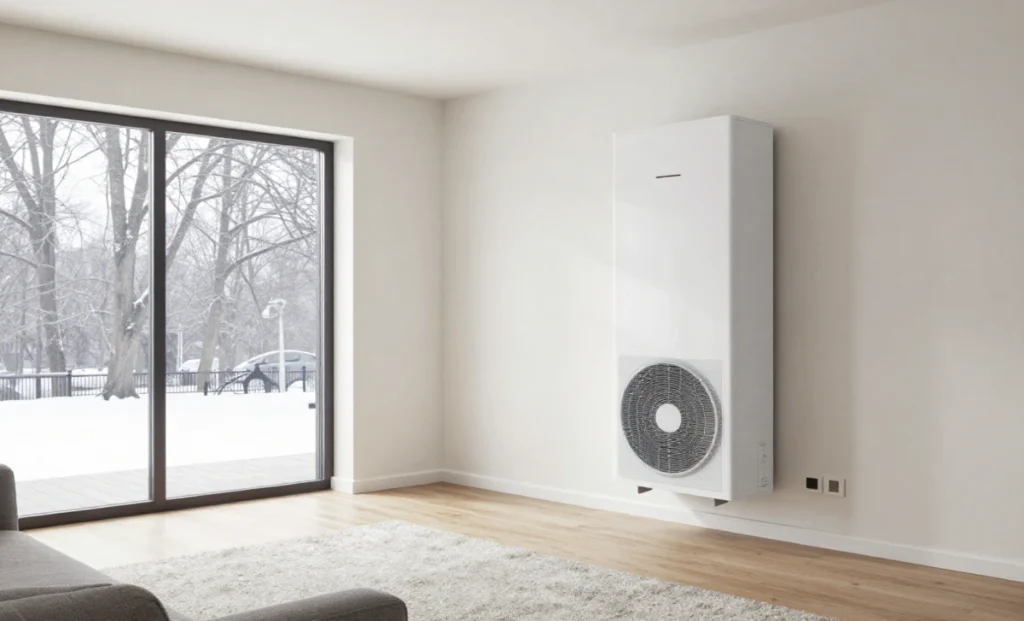
An air source heat pump (ASHP) works like a refrigerator in reverse. It absorbs heat from the outside air and uses it to warm your home and hot water. Even when the temperature drops below zero, it can still extract heat efficiently.
Modern heat pumps are proven to keep homes warm, even during cold snaps. Recent data from over 1,800 UK homes showed that 85% of heat pump owners were satisfied with their home’s warmth during freezing weather, compared to 80% of gas boiler owners . They are also quieter and more reliable than many people expect.
Pros:
- Very low carbon emissions
- Can lower your energy bills if installed correctly
- Long lifespan (15–20 years)
- Eligible for a £7,500 government grant
Cons:
- Higher upfront cost
- Requires good insulation to work efficiently
- You may need larger radiators or a hot water cylinder
Cost: The typical installation cost ranges from £7,000 to £13,000. However, after the Boiler Upgrade Scheme (BUS) grant of £7,5, you could pay as little as £500 to £5,500, depending on your home size .
Ground Source Heat Pumps
A ground source heat pump (GSHP) does a similar job to an air source model, but it collects heat from the ground via pipes buried in your garden. The ground temperature stays more consistent than air, making these systems incredibly efficient all year round.
Because of the digging involved, this is a major project. It is usually only an option if you have a large outdoor space. While the initial investment is steep, the running costs are often the lowest of any heating system.
Pros:
- Extremely efficient and stable performance
- Very low running costs
- Adds significant value to your property
- Eligible for the £7,500 BUS grant
Cons:
- Very high installation cost
- Requirethe s a large garden or land for trenching or boreholes
- Disruption to your landscape during installation
Cost: You are looking at an upfront cost of £20,000 to £30,000 or more . The £7,500 grant helps, but it remains a significant long-term investment.
Modern Condensing Boilers
If you are connected to the gas grid, a modern condensing boiler is a reliable and relatively low-cost option. These boilers are called “condensing” because they capture extra heat from the exhaust gases that would have been lost up the flue in older models. This makes them much more efficient.
Most homes in the UK use combi boilers, which heat water directly from the mains and don’t need a separate hot water tank. They are compact and provide hot water on demand
Pros:
- Lowest upfront cost
- Smaller footprint, especially combi models
- Works with existing radiators and pipework
- Quick and straightforward installation
Cons:
- Runs on gas, a fossil fuel
- Shorter lifespan than heat pumps (10–15 years)
- No government grants for gas boilers
Cost: A new gas combi boiler supply and installation averages around £3,000 . Costs range from £2,500 to £4,000 for a straightforward replacement
Electric Heating Systems
Electric options are versatile and can be a great fit for flats, off-grid homes, or properties that don’t need a full central heating system.
Electric Boilers: These work like a large immersion heater, heating water for your radiators and taps. They are 99% efficient at point of use and require no flue, making them simple to install . However, because electricity is more expensive than gas per unit, the running costs can be higher unless you are on a specialist tariff. An electric combi boiler installation averages around £3,000 to £4,200 .
Electric Heaters: For smaller spaces or occasional use, portable electric heaters can help. The Good Housekeeping Institute found that oil-filled radiators are often the safest and most economical type for spot-heating a room, as they retain heat after being switched off. However, they recommend using them with a timer to control costs .
Which Heating System is Best for Your Home?
To make this decision easier, here is a direct comparison of the main options. This able breaks down the key numbers for 2026.
| System Type | Typical Install Cost | Cost After £7,500 Grant | Average Annual Running Cost | Lifespan |
|---|---|---|---|---|
| Gas Boiler | £2,500 – £4,000 | N/A | ~£900 (for a 3-bed semi) | 10–15 Years |
| Air Source Heat Pump | £7,000 – £13,000 | £500 – £5,500 | ~£990 (for a 3-be semi) | 15–20 Years |
| Ground Source Heat Pump | £20,000 – £30,000+ | £12,50 – £22,500+ | Lower than ASHP | 20–25+ Years |
| Electric Boiler | £3,000 – £4,200 | N/A | ~£2,472 (based on 12kW model) | 10–15 Years |
Note: Running costs vary based on your home’s insulation, your energy tariff, and your heating habits.
Installation Costs in the UK
The price you pay isn’t just for the equipment. Installation costs cover labour, pipework, and any necessary upgrades to your home. For heat pumps, this often includes installing a new hot water cylinder, as they don’t work with a combi boiler’s on-demand system . You might also need to upgrade some radiators to larger ones because heat pumps operate at a lower temperature than boilers.
For a gas boiler, a like-for-like swap is usually the cheapest option. Moving the boiler to a new location or switching from a conventional boiler to a combi will add to the labour cost . Always ask for a detailed quote that breaks down these expenses so you know exactly what you are paying for.
Running Costs Comparison
It is a common myth that heat pumps are always expensive to run. While gas is currently cheaper per unit than electricity, heat pumps are so efficient that they balance this out. They typically deliver three units of heat for every one unit of electricity they use .
As the table shows, a heat pump in a 3-bedroom semi can cost around£990 per year to run, compared to about £900 for a gas boiler . That gap is small and will shrink further as the UK’s electricity grid gets greener and cheaper. Electric boilers, while efficient, face higher running costs because they use one unit of electricity to create one unit of heat, without the efficiency boost of a heat pump .
Government Grants & Schemes
The UK government offers ffinancial supportto help with the upfront cost of low-carbon heating. Here are the key schemes for 2026:
- Boiler Upgrade Scheme (BUS): This provides £7,500 off the cost of installing an air source or ground source heat pump in England and Wales. The installer usually applies for this on your behalf, and it is deducted directly from your invoice .
- Warm Homes: Local Grant (WHLG): Replacing the old ECO scheme, this funds energy efficiency improvements for low-income households. It can cover air source heat pumps, solar PV, electric storage heaters, and insulation for homes with an EPC rating of D-G . Eligibility often depends on income or benefits.
- 0% VAT: The government has extended the 0% VAT rate on the installation of energy-saving materials like heat pumps and solar panels until 2027, helping to lower your total bill
Final Thoughts
Choosing the right heating system is about balancing what you can afford to pay now with what you want to save later. If you have a larger budget and want the greenest option, an air source heat pump is a strong contender, especially with the £7,500 grant available. If your home is on the gas grid and you need a simple, low-cost replacement, a modern condensing boiler remains a practical and efficient choice.
Whatever you decide, the long-term keto savings are making sure the system is right for your home. A system that is too big or too small will waste energy and money.
Get a professional heating assessment before choosing a system. A qualified engineer can survey your property, check your insulation, and calculate the exact heating load. This ensures you invest in a system that will keep you warm and deliver the savings you expect for years to come.
