

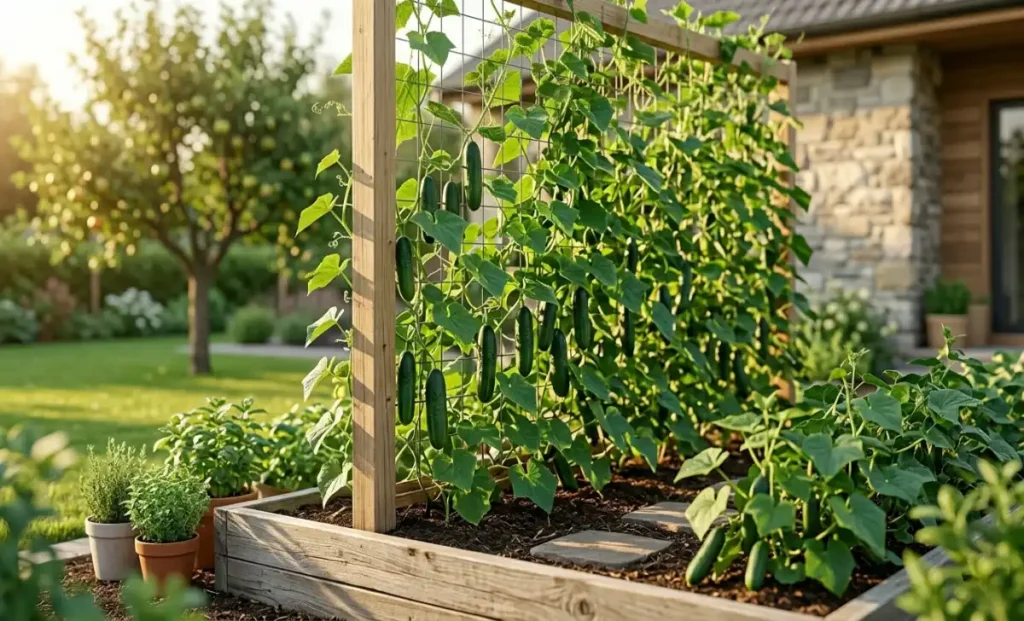
A DIY cucumber trellis supports vining cucumber plants vertically, saving ground space and improving airflow to reduce disease. Build one using T-posts and netting, bamboo poles, a cattle panel arch, or scrap wood and twine. Trellis height should reach at least 4 to 5 feet. Train vines early by guiding tendrils toward the structure using soft clips or loose twine loops.
Cucumbers left on the ground sprout fast. A single plant can cover six square feet of garden bed by midsummer, shade out neighboring crops, and leave fruits hidden under dense foliage until they turn bitter and yellow. A trellis solves all of that — and as of 2026, most experienced home gardeners treat vertical growing as a default, not an afterthought.
You do not need carpentry skills or expensive lumber to build a trellis that holds up through an entire growing season. The five designs in this guide range from under $5 to around $40. Most take under an hour to set up.
Why Cucumbers Need a Trellis (Not Just Want One)
Growing cucumbers vertically does more than save space. When vines stay off the soil, you eliminate a direct transfer point for fungal spores. Powdery mildew and angular leaf spot — two of the most common cucumber diseases — spread more aggressively in humid, low-airflow conditions created by sprawling plants.
Trellised cucumbers also produce fruit that grows straight. When a cucumber hangs freely from a vine, gravity does the shaping work. Fruits sitting on soil often develop pale, flattened undersides and pick up grit and pests from ground contact. Vertically grown cucumbers are visibly cleaner and more uniform at harvest.
Harvesting itself becomes faster. With fruit hanging in plain view at eye level, you see and pick every cucumber before it overripens. Overripe cucumbers signal the plant to stop producing — so frequent, easy harvesting directly extends your yield window.
Choose the Right Cucumber Before You Build Anything
Cucumber plants fall into two growth habits: vining and bush.
Vining cucumbers are the type you trellis. They produce long, sprawling stems with tendrils that naturally grab onto supports. Varieties like Suyo Long, Marketmore 76, Straight Eight, and Lemon cucumber all fall into this category. Most standard slicing and pickling cucumbers are vining types.
Bush cucumbers stay compact — typically 2 to 3 feet — and do not need trellis support. Growing a bush variety on an elaborate trellis wastes build time and garden real estate. Check your seed packet or plant tag before buying materials.
How to Size Your DIY Cucumber Trellis Correctly
Get the dimensions right before you buy or gather materials.
Height: Most vining cucumber varieties grow 4 to 6 feet long. Some, like Straight Eight, can push past 8 feet in good conditions. Build your trellis at least 5 feet tall. Shorter than that, and vines pile up at the top with nowhere to go.
Width: Allow at least 12 inches of trellis space per plant. If you’re growing five plants in a raised bed, your trellis should span at least 5 feet wide.
Mesh or grid opening size: This one detail most guides overlook. If your netting or wire mesh has openings smaller than 4 inches, you cannot reach through it to harvest cucumbers from the back side. Aim for 4- to 6-inch grid openings. Hardware cloth and most nylon garden netting hit this range.
5 DIY Cucumber Trellis Designs That Work
What to Do When Vines Outgrow the Trellis
1. T-Post and Netting Trellis
This is the workhorse design for in-ground rows and long raised beds. Drive two or more 6-foot metal T-posts into the ground at 3- to 5-foot intervals along your planting row. Attach nylon or jute netting between the posts. This setup handles multiple plants side by side, costs around $15 to $25 depending on post count, and stores flat off-season. Use C-clips or soft twine loops to guide young vines toward the netting before tendrils find it on their own.
2. A-Frame Trellis (Bamboo or Wood)
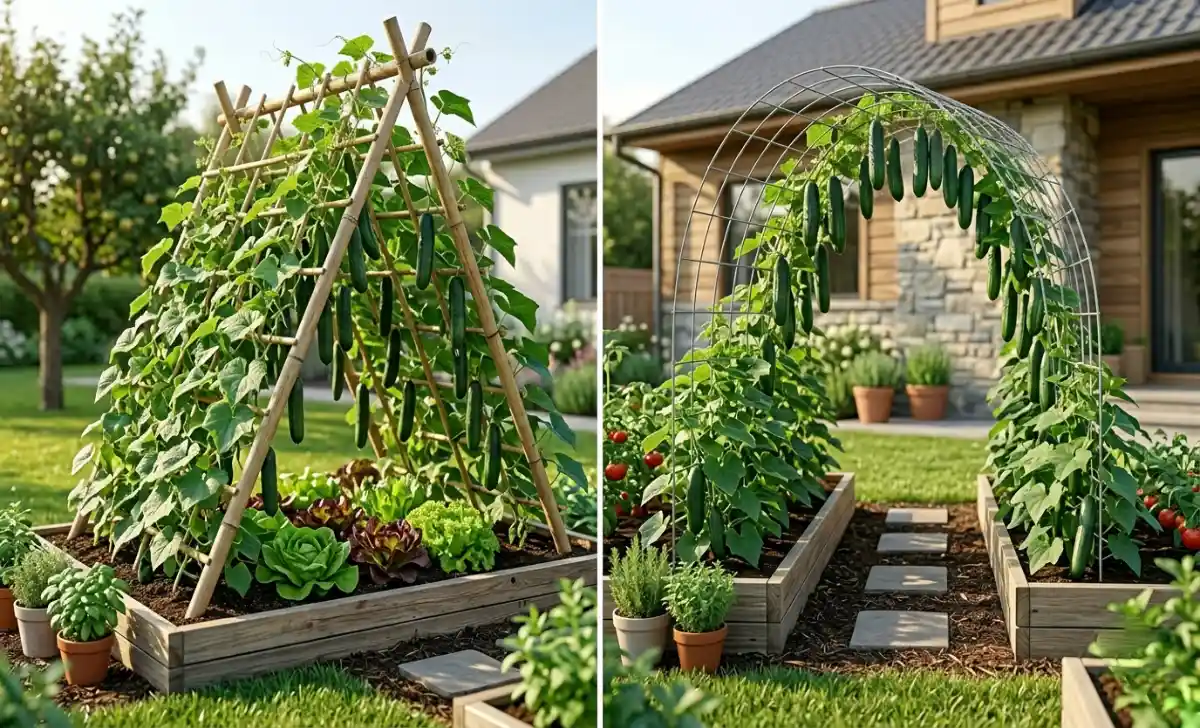
An A-frame gives you a growing surface on two sides. Build two rectangular frames from bamboo poles or scrap 1×2 lumber, connect them at the top with a hinge or lashed joint, and string horizontal twine or attach wire mesh between the verticals. Lean the two sides together to form a triangle. Cucumbers climb both faces. Under the shaded interior, you can grow lettuce, spinach, or radishes — a smart use of space that most backyard gardeners ignore. Cost: $5 to $20 using bamboo and jute.
3. Cattle Panel Arch
A 16-foot cattle panel bent into an arch between two raised beds or garden rows is the most structurally impressive option on this list. Anchor the ends with T-posts or rebar stakes. Cucumbers planted on both sides meet in the middle and hang their fruit inside the arch — directly at shoulder height for effortless harvesting. Cattle panels cost around $25 to $40 but last a decade with basic care. This is a permanent structure worth building if you grow cucumbers every year.
4. String or Twine Trellis
The lowest-cost option on this list. Screw two wooden posts or stakes into the ends of a raised bed, run a horizontal rail across the top, and hang vertical lengths of jute twine or cotton string at 6- to 8-inch intervals from top to bottom. Tie the lower ends to a bottom rail or stake them into the soil. Cucumbers climb the string columns naturally. One warning: use quality jute or nylon twine, not bargain twine. Cheap string snaps under fruit weight mid-season. Budget: $3 to $8.
5. Repurposed Materials
An old wooden ladder leaning against a fence gives cucumbers a ready-made climbing frame — no tools required. A wooden pallet stood upright and staked into the ground works similarly; weave vines through the slat gaps as they grow. A large tomato cage flipped upside down handles compact vining varieties in containers. These zero-cost options are worth using if you have the materials already. None is as durable as the options above, but for a single-season test garden, they work.
One Tip Most Guides Skip: Trellis Orientation
Where you position the trellis relative to the sun matters more than most articles acknowledge. Align your trellis on a north–south axis when possible. This arrangement means both the east-facing and west-facing sides of the trellis receive direct sun during different parts of the day, instead of one side sitting in permanent shade. An east–west orientation puts the north-facing side in near-constant shade, which reduces yield on that side and increases humidity — a direct invitation for fungal problems.
What to Do When Vines Outgrow the Trellis
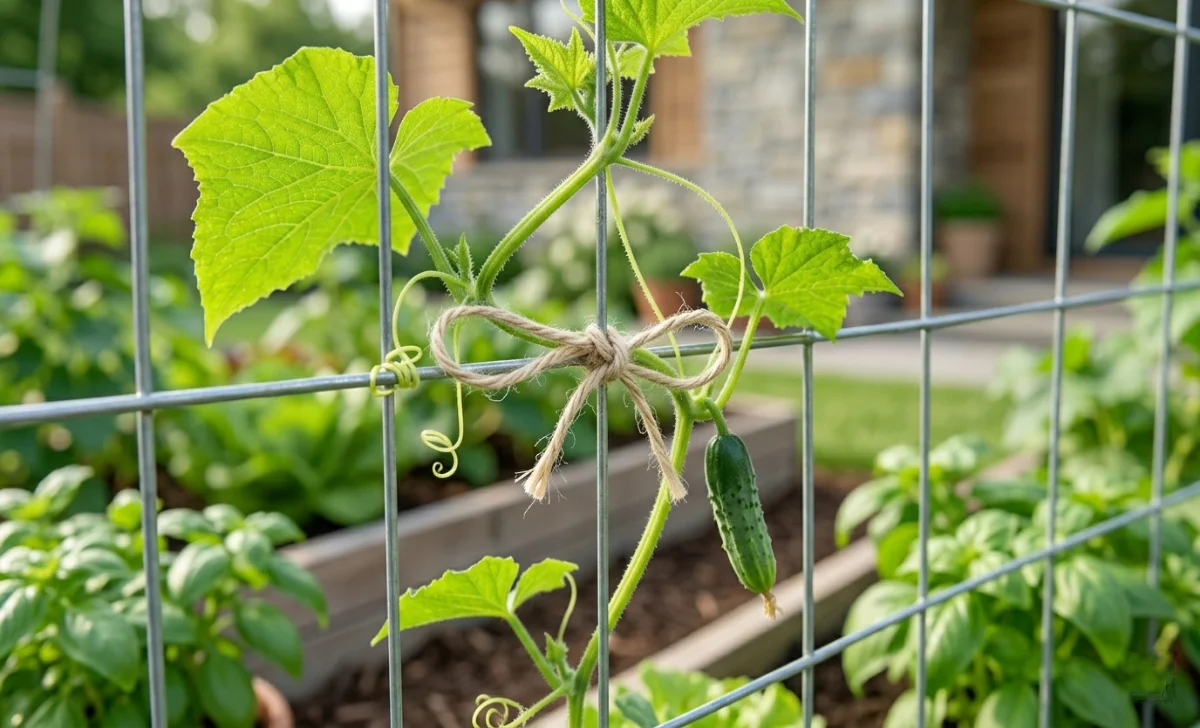
Even a 6-foot trellis eventually runs out of vertical space during a productive season. When the main vine reaches the top, pinch off the growing tip at the terminal point. This redirects the plant’s energy downward into fruit development rather than further vertical extension. Secondary lateral vines will continue to fill in and produce. You can also train lateral vines horizontally across the top rail of your trellis to buy a few more weeks of growth without the plant collapsing on itself.
End-of-Season Trellis Care
Reusable trellises last much longer with basic end-of-season attention. Remove all dead vines from the structure before composting them — cucumber plant debris left on netting or wire can harbor fungal spores that overwinter and reinfect next year’s crop. Rinse nylon netting with a dilute bleach solution (1 tablespoon per gallon of water), let it dry fully, then store it rolled in a dry location. Bamboo poles dry out and last two to three seasons if kept off wet soil during winter. T-posts and cattle panels need no special treatment beyond pulling them out and stacking them flat.
FAQs
How tall should a DIY cucumber trellis be?
Build it at least 5 feet tall for most vining varieties. Some varieties like Suyo Long push past 6 feet, so if you grow those, target 6 to 7 feet. A trellis that is too short forces vines to pile up at the top and reduces total yield.
Do cucumbers climb a trellis on their own?
Yes — vining cucumbers produce tendrils that naturally reach out and grip nearby supports. You do not need to tie every vine. That said, guiding the first 12 inches of growth toward the trellis using soft twine loops or C-clips prevents young plants from sprawling sideways before they find the structure.
Can you grow cucumbers on a trellis in a container?
You can, as long as the container is at least 5 gallons and you use a compact vining variety like Bush Pickle or Spacemaster. Anchor a stake or small A-frame directly into the container soil. Container trellises need to be stable since container-grown cucumbers dry out faster and require consistent watering, which softens the soil around anchored supports.
