

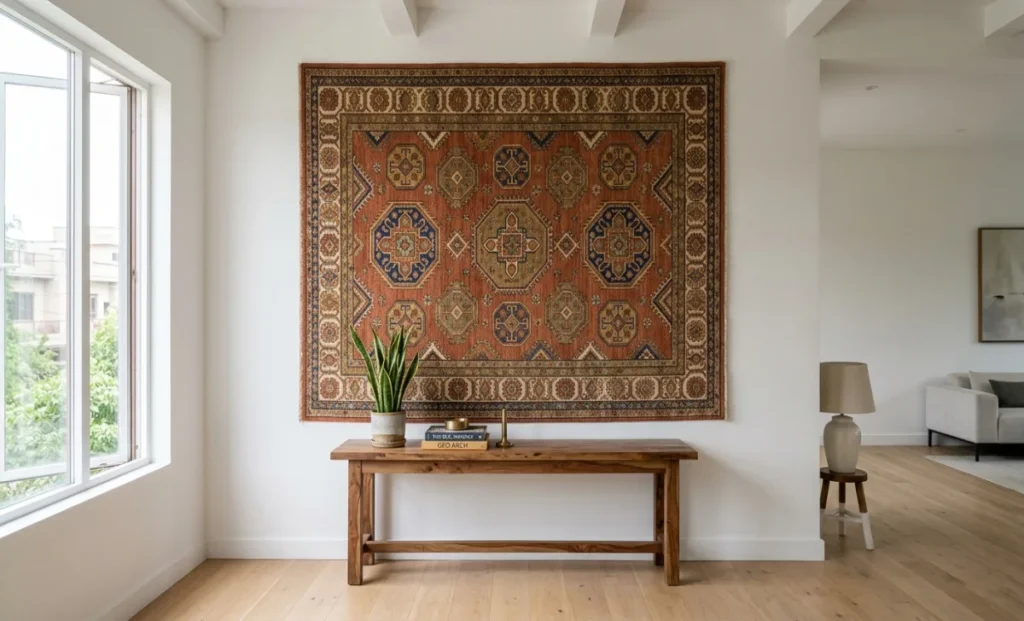
To hang a rug on the wall, choose a method based on the rug’s weight. The Velcro method works best for most rugs and is the preferred choice in museums and galleries. Other solid options include a curtain rod sleeve, rug clips, and tackless carpet strips. Always distribute weight evenly across the top edge to protect the rug and your wall.
Most people think rugs belong on the floor. That’s a fair assumption. But once you see a hand-knotted Persian rug or a bold geometric kilim displayed on a wall, it’s hard to go back.
Hanging a rug transforms a blank wall into a focal point. It adds texture, warmth, and character that framed prints simply cannot match. It also preserves valuable or sentimental rugs by keeping them away from foot traffic.
The challenge? Rugs are heavy, awkward to mount, and easy to damage if you use the wrong technique. This guide walks you through five proven methods for hanging a rug on the wall, picking the right one for your rug, and keeping it looking good for years.
What to Know Before You Start
Before you pick a method, there are a few things worth getting right first. Skipping this step is how rugs end up sagging, warped, or damaged.
Measure and weigh your rug. A small flatweave runner is completely different from a 6×9 ft hand-knotted wool piece. Heavier rugs require stronger wall anchors and broader weight distribution across the top edge, not just a couple of nails.
Avoid direct sunlight. UV exposure fades vegetable dyes and weakens natural fibres. Position your rug on a wall that does not get hours of direct sunlight. If your wall is near a large window, use UV-protective window film or keep blinds partially drawn.
Keep it away from heat sources. Hanging a rug near a radiator, heating vent, or fireplace can dry out fibres and cause them to become brittle over time.
Do not use raw, uncoated metal. Bare nails or raw iron rods will rust and stain the rug. Use treated wood, coated hardware, or stainless options instead.
Never use peel-and-stick adhesive directly on the rug. Sticky residue is nearly impossible to remove and will damage the backing. The one exception is hook-and-loop tape that is properly sewn to a muslin backing strip first.
The 5 Best Methods to Hang a Rug on the Wall
Method 1: Hook-and-Loop Tape (The Velcro Method)
This is the gold standard. Museums and galleries prefer it because it is secure, distributes weight evenly, and causes no damage to the rug fibres when done correctly.
The method uses two strips of hook-and-loop tape. The soft, fuzzy loop side is sewn onto a muslin backing strip, which is then hand-stitched to the back of the rug. The rough hook side is stapled to a flat piece of treated wood mounted on your wall.
When you press the rug against the wall, the two strips lock together firmly. The rug hangs flat and can be removed cleanly whenever you want.
What you need:
- 2-inch wide hook-and-loop tape (by the yard)
- Unbleached muslin fabric
- Carpet thread and a needle
- Flat treated wood board (2.5 inches wide, cut to the width of your rug)
- Staple gun, drill, and screws
- Stud finder (for heavier rugs)
Estimated cost: $25 to $40 plus hardware
Estimated time: 2 hours
Steps:
- Cut muslin and the loop-side tape to the full width of your rug.
- Sew the loop tape to the muslin strip using a whip stitch.
- Hand-stitch the muslin strip to the top edge on the back of the rug. Use carpet thread that matches the rug colour.
- Staple the hook-side tape to the treated wood board, every 4 to 6 inches for a firm hold.
- Mount the wood board to the wall using screws. For rugs over 10 lbs, anchor into wall studs.
- Press the rug firmly against the board.
Use 2-inch wide tape for most rugs. For heavier pieces over 15 lbs, use 3-inch wide tape and attach the wood board to studs for extra support.
Method 2: Curtain Rod and Fabric Sleeve
This method looks polished and works well for medium to large rugs. A fabric casing is sewn across the back of the rug near the top edge. A rod is then threaded through the sleeve and mounted on wall brackets.
The rod distributes the rug’s weight across its full width, which reduces stress on any single point of the fabric. You can hide the rod behind the rug or let it extend past the edges for a decorative look.
What you need:
- Heavy cotton, linen, or canvas fabric for the sleeve
- Carpet thread and needle
- Curtain rod (cut to rug width or slightly wider)
- Wall brackets, drill, and screws
Estimated cost: $35 to $55 plus hardware
Estimated time: 2 to 3 hours
Steps:
- Cut fabric into a strip a few inches shorter than the rug’s width and about 3 inches wider than your rod’s diameter.
- Fold and sew the fabric into a tube, leaving both ends open.
- Stitch the sleeve firmly to the top back edge of the rug. Try to catch two warp threads per stitch for strength.
- Thread the rod through the sleeve.
- Mount the brackets to the wall, spacing them evenly, and rest the rod across them.
This method works particularly well for flatweave rugs, kilims, and lighter wool pieces that are easy to sew. For heavier hand-knotted rugs, reinforce the sleeve with a second row of stitching.
Method 3: Rug Clips and Clamps
Rug clips or clamps are a no-sew option. They grip the top edge of the rug and hang it on a rod or wire mounted to the wall. This is a fast method and a good choice for lighter rugs or temporary displays.
The main risk is uneven weight distribution. If clips are spaced too far apart, the rug can sag between them or develop stress points in the fabric over time. Space clips no more than 6 inches apart, and use clips with rubber or felt padding on the gripping surface.
What you need:
- Rug clips or artist canvas clips
- A rod or wire system
- Drill, screws, and wall anchors
Estimated cost: $30 to $55 plus hardware
Estimated time: 1 hour
This method is used in rug shops and gallery spaces because it is fast to install and easy to swap out. For long-term display of a valuable rug, use one of the sewn methods instead. Clips are better suited for lighter textiles, tapestries, and rugs under 10 lbs.
Method 4: Tackless Carpet Strips
Tackless strips are plastic or wood boards with small, angled teeth, normally used to secure carpet to floors. You can also mount them to a wall to grip a rug along its top edge.
This is a cheaper option, but it carries risk. The teeth can pull at the rug fibres over time, especially on loosely woven or delicate pieces. If you go this route, seal or paint the strip first to protect the wood and neutralise the metal teeth against rust.
What you need:
- Tackless carpet strips
- Paint or clear sealant
- Nails or screws
- A level
Estimated cost: $5 to $15
Estimated time: 1 hour
Only use tackless strips for lower-value or synthetic rugs. Keep them away from antique rugs, hand-knotted pieces, or anything with loose pile. Press the rug firmly and evenly onto the teeth to secure.
Method 5: Quilt Hanger or Textile Rail
A quilt hanger uses a wooden or metal channel that clamps along the top edge of the rug. You mount the hanger to the wall, then clamp the rug into place. This is a clean, professional-looking option used widely for textiles, tapestries, and smaller decorative rugs.
Quilt hangers spread clamping pressure across the full width, making them gentle on delicate fibres. They are sold online and at fabric or craft stores.
This method works best for smaller, thinner rugs up to 4 feet wide. For large, heavy pieces, the Velcro method or sleeve-and-rod method offers better long-term support.
Choosing the Right Method for Your Rug
Here is a quick reference based on rug type and size:
- Lightweight flatweave or kilim (under 8 lbs): Rug clips, quilt hanger, or rod sleeve
- Medium wool or synthetic rug (8 to 15 lbs): Rod sleeve or Velcro method
- Heavy hand-knotted wool rug (15 lbs and over): Velcro method with a wood board anchored to studs
- Antique or fragile rug: Velcro method with muslin backing strip, handled by a textile conservator if possible
- Temporary display or gallery rotation: Rug clips on a wire system
Before You Hang: Preparing the Rug
Clean the rug before it goes on the wall. Dust and dirt accumulate faster on a vertical surface than you might expect, and a dirty rug on the wall will fade and degrade faster than a clean one. For valuable or antique pieces, use a professional cleaner before mounting.
Inspect for frayed edges, loose threads, or moth damage. Small repairs done before hanging will prevent the problem from worsening once the rug is under tension on the wall. For larger damage, seek professional textile restoration.
If you are adding a Velcro strip or sleeve, do your sewing before the rug goes up. Trying to stitch into a rug that is already on the wall is unnecessarily difficult and often results in uneven stitches that stress the fibres.
How to Hang a Rug on the Wall: Placement and Styling
Height. Centre the rug at eye level, typically 57 to 60 inches from the floor to the centre of the piece. In a room where people are often seated, such as a living room, you can hang slightly lower.
Position above furniture. When hanging above a sofa or console, leave 6 to 12 inches of space between the top of the furniture and the bottom edge of the rug. The rug’s width should generally align with or be slightly narrower than the piece below it.
Wall space. Leave at least 3 to 6 inches of bare wall on all sides. A rug pushed tight into a corner or ceiling looks crowded and harder to appreciate.
Lighting. A focused picture light or track light pointed at the rug highlights the texture and pattern. Avoid placing the rug where it will receive hours of direct afternoon sun, which causes fading.
Mixing with other pieces. A rug can anchor a wall gallery when surrounded by framed prints or ceramics. Keep the colour palette unified. Let the rug serve as the primary piece, with smaller items working around it.
How to Keep a Wall-Hung Rug in Good Condition
A rug on the wall collects dust just like any surface. Vacuum it gently every two to three months using a soft brush attachment on low suction. Run the attachment along the pile, not against it.
For spot cleaning, use a small amount of mild soap and cool water on a soft cloth. Blot, never scrub. Test on an inconspicuous area first.
Rotate the rug annually if light exposure is uneven. This distributes any minor fading and keeps the colours looking consistent.
Check the mounting hardware twice a year. Hooks, screws, and anchors can loosen over time, especially in humid climates. A rug that falls off a wall can be badly damaged, and that is entirely preventable with a quick inspection.
If the rug is valuable, consider a fabric protector spray designed for wool or natural fibres. Apply it before mounting and reapply every couple of years. This reduces dust adhesion and helps repel insects.
FAQs
Can I hang a heavy rug on drywall without studs?
You can, but you need the right wall anchors. Toggle bolts or heavy-duty drywall anchors rated for 30 lbs or more are the minimum for anything over 10 lbs. For the safest installation, locate the studs and screw your wood mounting board directly into them.
Will hanging a rug damage it over time?
It can, if you use the wrong method. Bare nails through the pile, raw metal clips without padding, or unsupported tackless strips all put stress on the fibres. A properly sewn Velcro system or rod sleeve distributes the weight across the full top edge and causes no long-term damage.
How do I hang a rug without sewing?
Use a quilt hanger or rug clips on a rod. Both grip the top edge without any stitching. For heavier rugs, use multiple clips spaced 4 to 6 inches apart and choose clips with soft padding on the contact surfaces.
How high should I hang a rug on the wall?
The centre of the rug should sit 57 to 60 inches from the floor. Think of it the same way you would hang a framed picture. If the rug goes above a sofa or table, centre it over that piece of furniture and leave a 6 to 12-inch gap between the furniture top and the rug’s lower edge.
Can I hang a rug with fringe on the wall?
Yes, but avoid mounting hardware that presses on or folds the fringe. A rod sleeve stitched above the fringe line or a Velcro strip along the top edge both leave the fringe hanging freely at the bottom.
