

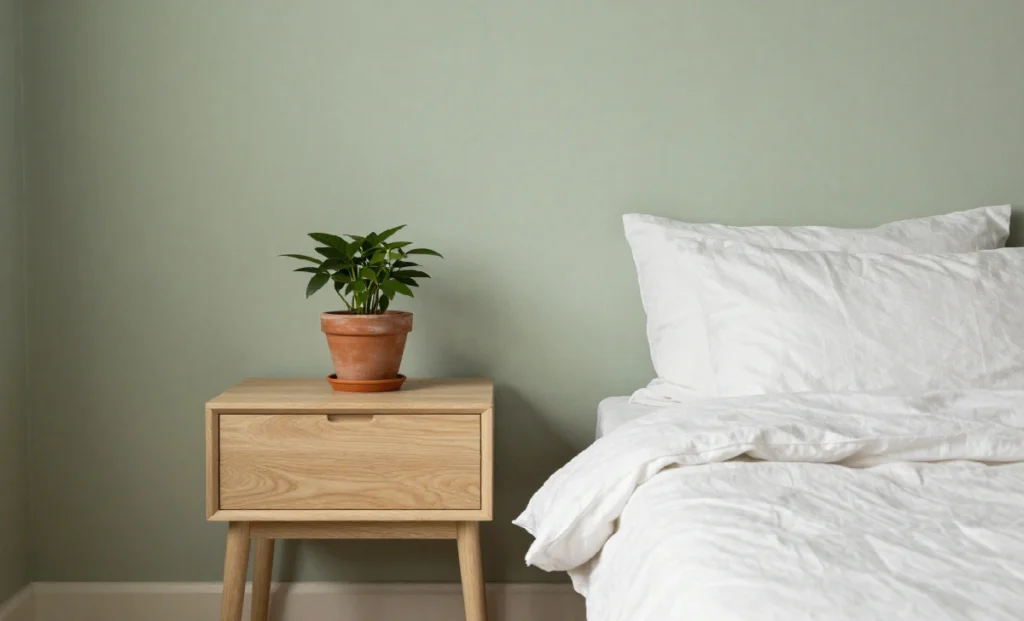
Sage green bridges the gap between a bold statement and a quiet neutral, making it a top pick for homeowners who want a refresh without overwhelming a layout. Whether you’re painting a single accent wall or swapping out throw pillows, this muted gray-green adapts to any floor plan—and pairs effortlessly with natural wood, cream, brass, and terracotta. Below are proven sage green room ideas for every room in your home, from the bedroom to the kitchen, so you can use the color with confidence, complete with finish recommendations and lighting cues.
Why Sage Green Works in Any Room
Sage green occupies that sweet spot where neutral meets vibrant. The gray undertones keep it grounded, while the green base keeps the room breathing. That push-and-pull is exactly why it never feels overwhelming.
In 2025, earthy and subdued greens are a core part of interior palettes, often complementing earthy neutrals. Designers lean on the Biophilic Design Framework here because muted greens naturally lower cortisol levels and mimic forest understory tones, creating instant visual rest—no demanding focal point required.
Industry forecasts like the Sherwin-Williams 2025 Color Report consistently place muted earthy greens at the forefront of residential palettes. This shift reflects a broader move toward restful, nature-inspired interiors rather than high-contrast statement walls.
One thing competitors rarely address: the shade you pick matters more than the color itself. A sage with blue undertones will read cooler and work better in north-facing rooms. A sage with yellow undertones feels warmer and suits south-facing spaces. Before buying paint, pull two or three large samples and apply them vertically on opposite walls. Check how the Light Reflectance Value (LRV) shifts from morning to evening. For walls, aim for a 45–55 LRV to keep the space bright. Pair it with an eggshell or matte finish to mute reflections and maintain that soft, earthy depth.
Sage Green Bedroom Ideas That Actually Calm You
The bedroom is where sage green has the most impact. Sage green is one of the leading bedroom color palette choices for 2025, valued for creating a private place for reflection and rest. Used on walls, it wraps the room in a quiet, natural tone that does not compete with your sleep.
The easiest approach is a single sage accent wall behind the headboard. You get the visual depth without painting every surface. Pair it with cream linen bedding and wood nightstands, and the room feels complete without any effort.
If you want to go further, consider these combinations:
- Sage walls with warm white trim and brass lighting for a slightly formal look
- Sage with terracotta accents and rattan furniture for a boho feel
- Sage paired with charcoal gray and matte black fixtures for a modern edge
- Sage with blush pink and natural linen for a soft, romantic palette
Paint alone won’t save a flat room—texture does the heavy lifting. Layer a chunky knit throw, a woven jute rug, and relaxed linen curtains to give the space actual dimension.
Lighting also changes everything. At night, warm-toned bulbs (around 2700K) will make sage walls look richer and cozier. Cooler bulbs push the green toward gray, which can feel clinical in a bedroom. Use layered lighting: a ceiling fixture, bedside lamps, and a wall sconce if space allows.
Sage Green Living Room Ideas Worth Trying
The living room gives you more options because there is more surface area to work with. You can go big with a full sage sofa or go subtle with a few throw pillows.
According to Dulux’s Colour Trends, softer greens enhance perceived spatial dimensions and induce a calming effect, which is useful if your living room feels small or boxed in. A sage accent wall behind the sofa can make the space feel longer.
Interior designer Kelsey Haywood offers a practical starting point for hesitant decorators: “A sage green, block-printed drape is a great way to ease into green. It creates a backdrop for deeper colors throughout the space.”
If you want to go bolder, a sage velvet sofa is one of the most popular choices right now. It pairs naturally with brass floor lamps and a jute rug, and the combination reads as sophisticated without trying too hard.
For living rooms with an L-shaped layout or an awkward floor plan, painting the longer wall sage can visually unify the space. It draws the eye down the room and makes the area feel intentional rather than choppy.
Some specific ideas to consider:
- Sage green paneling above a fireplace adds texture and warmth
- Floor-to-ceiling linen curtains in sage soften light and add height
- Open shelving with sage paint on the back panels highlights displayed objects
- A sage accent chair paired with a neutral sofa gives you color without full commitment
Sage Green in Kitchens and Bathrooms
Most sage green articles focus on bedrooms and living rooms. But this color works just as well in kitchens and bathrooms, and competitors rarely cover this properly.
In the kitchen, sage green cabinets have been popular for a few years, and they are not going anywhere. The color pairs naturally with stone countertops, brass hardware, and white subway tile. It gives the kitchen a fresh, slightly vintage feel without looking trendy in a way that dates quickly.
If you rent or do not want to commit to painted cabinets, sage green can come in through open shelving, a tile backsplash in muted green tones, or even just small appliances and pottery. Even a sage linen tea towel hanging from the oven rail shifts the color story of the room.
In bathrooms, sage works best on a single wall or as a tile choice. A sage green penny tile floor with white walls and a wooden vanity is a clean, considered combination. Add warm brass fixtures and a simple plant on the shelf, and the bathroom feels like a proper retreat rather than a utility space.
Avoid using sage in bathrooms with very little natural light unless you test the swatch carefully. In low light, some sage greens can shift toward a murky olive, which is a very different feeling.
Colors That Go Well With Sage Green
For a foolproof palette, anchor sage green with brushed brass hardware or travertine countertops to introduce warm, tactile contrast. If you’re leaning into a modern aesthetic, pair it with matte black fixtures and charcoal textiles. The goal is balance: let sage green act as the calming backdrop, not the competing focal point.
The most reliable pairings include:
- Warm white and cream: keeps the palette light and airy without going stark
- Natural wood tones: the earthy warmth balances the coolness of the green
- Brass and gold: the contrast between metallic warmth and muted green works across every style
- Terracotta and rust: adds heat and a slightly boho quality to the space
- Dusty blush or soft peach: quiet and romantic without being sweet
- Charcoal and matte black: a sharper, more graphic combination for modern rooms
- Olive green: Layering greens creates depth when used carefully
Colors to avoid pairing with sage green include bright white (too cold and stark), neon or saturated tones (they overwhelm the subtlety of sage), and cool grays with strong blue undertones, which can push the room toward dull.
How to Use Sage Green Without Overcommitting
Not everyone wants to paint four walls or buy a new sofa. The good news is that sage green works at almost any scale.
Start small if you are unsure. A sage green ceramic lamp base, a set of linen cushions, or a simple plant pot can bring the color into a room without any risk. Once you see how it reads in your light and alongside your existing furniture, you can decide how far to go.
Renting doesn’t mean you have to settle for bare walls. Start with textiles or a single velvet chair—zero landlord approvals, zero permanent marks, instant warmth. You can also use removable wallpaper or peel-and-stick vinyl tiles in a muted sage glaze for instant floor or wall coverage without adhesive damage. If you want full coverage in an owned space, try color drenching—painting the walls, trim, and ceiling in the same sage shade. It blurs architectural lines and makes compact rooms feel intentionally cohesive.
If you want to test paint without a full wall, try painting the inside of a bookcase or the back of a niche. It introduces the color in a contained way and gives you a real sense of how it reads in your specific room.
The key is to build the color gradually rather than all at once. Sage green rewards layering. A room with a sage wall, sage cushions, and sage towels can feel heavy. A room with sage walls, cream bedding, wood furniture, and one brass lamp feels considered and calm.
FAQs
Is sage green a good color for a small room?
Yes. Sage green, especially lighter shades, can make a small room feel more open. The key is to keep other elements light: white trim, pale flooring, and minimal furniture.
What is the best sage green paint color?
A few consistently recommended shades include Farrow and Ball’s Mizzle, Benjamin Moore’s Aganthus Green, and Sherwin-Williams’ Privilege Green. Always test samples on your wall before buying full cans.
Does sage green work in a north-facing room?
It can, but choose a shade with warmer undertones to counteract the cool natural light. Test the sample at different times of day before deciding.
What furniture colors work with sage green walls?
Natural wood, cream, white, and warm gray furniture all work well. Avoid furniture in cool, blue-toned grays, which can make the room feel cold.
Is sage green still trendy in 2026?
Yes. Sage green has moved beyond trend status into a broader design staple. Its association with calm, nature, and biophilic design keeps it relevant even as faster trends come and go.
