

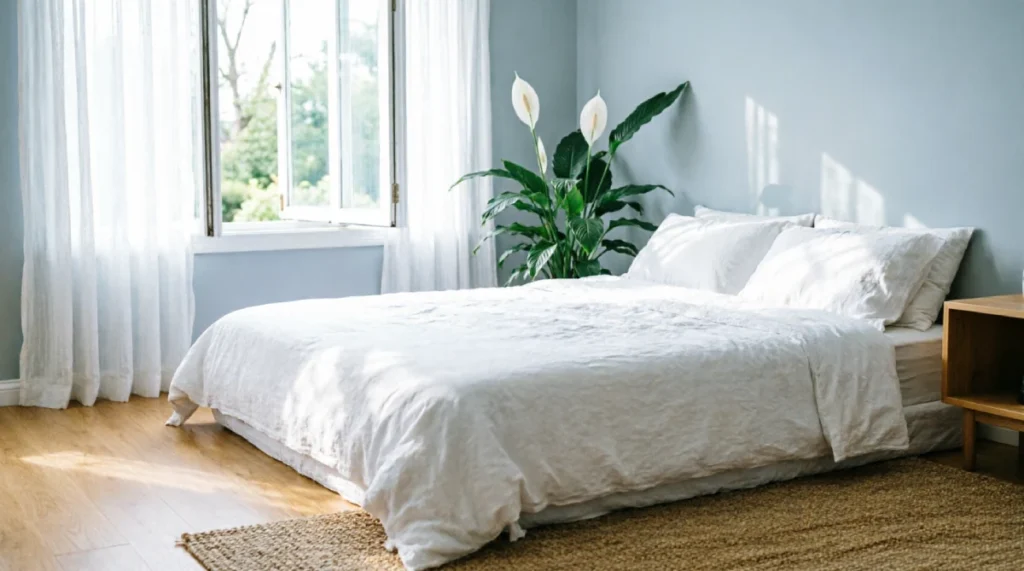
I know how summer heat can turn a bedroom into a stuffy, restless space overnight. I focus on real, doable changes that improve comfort without a full renovation or a sky-high energy bill. This guide shares 12 summer bedroom design ideas — from breathable bedding to smart window tricks. So you can sleep cooler, breathe easier, and wake up refreshed even on the warmest nights.
1. Switch to Breathable Linen Bedding
I always tell anyone struggling with night sweats to start with the fabric touching their skin. Linen’s open weave and natural flax fibers let air circulate and wick moisture instantly, so you never get that clingy, damp feeling.
I use this principle year after year because linen actually gets softer and more breathable with every wash. It’s a one-time upgrade that delivers lasting summer comfort without needing extra gadgets.
I once swapped a client’s high-thread-count cotton sheets for stonewashed linen in late June. She called me a week later to say she’d stopped kicking off the covers entirely and finally slept through the night.
I suggest investing in a mid-weight linen duvet cover and a fitted sheet in a light, heat-reflecting color like oatmeal or soft white. Wash them a couple of times before first use to kickstart that lived-in softness.

2. Install Blackout Curtains with Thermal Lining
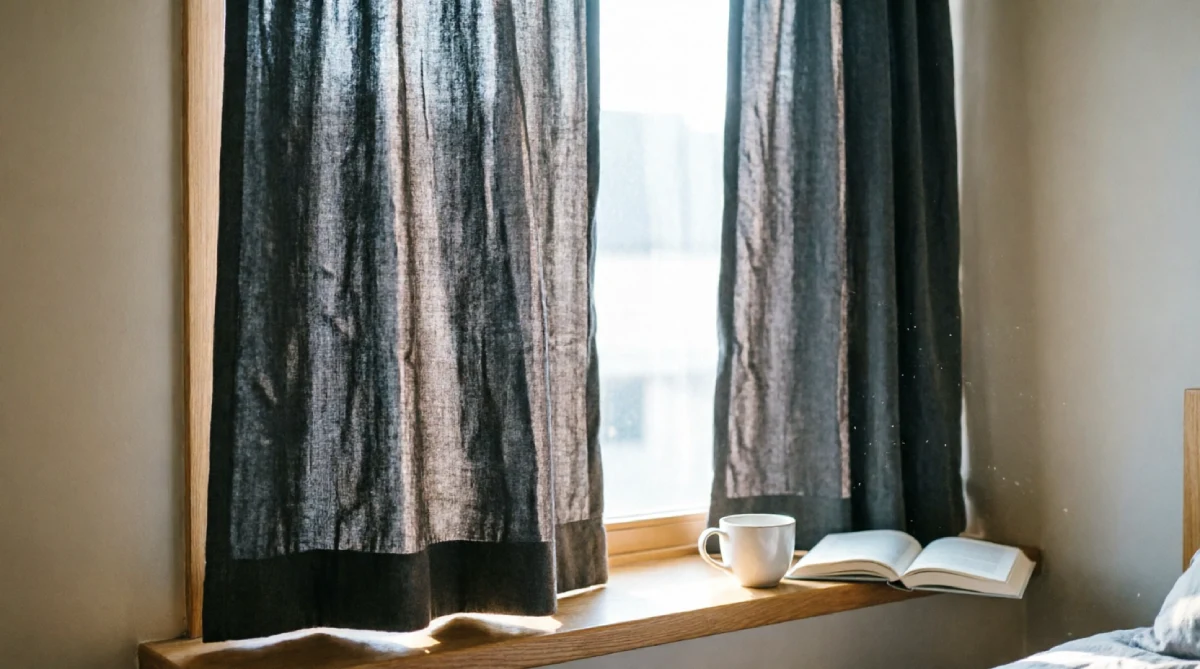
I always block early morning and late afternoon sun with layered window treatments. Thermal-lined blackout curtains aren’t just for darkness — they trap heat at the glass and stop it from warming up your bedroom like a greenhouse.
I use this simple fix because it instantly drops the room’s temperature by several degrees and protects your furniture from UV fading. The key is the thermal backing that reflects heat outward.
I once hung double-rod blackout drapes on a west-facing bedroom window in my own home. Before, the room was unusable by 3 p.m. After, it stayed cool enough that I canceled plans to install a second AC unit.
I suggest mounting the rod well above and wider than the window frame so the curtains can fully cover the glass without gaps. Look for curtains labeled “thermal insulated” and go floor-to-ceiling for maximum heat blocking.
3. Rearrange Furniture for Better Airflow
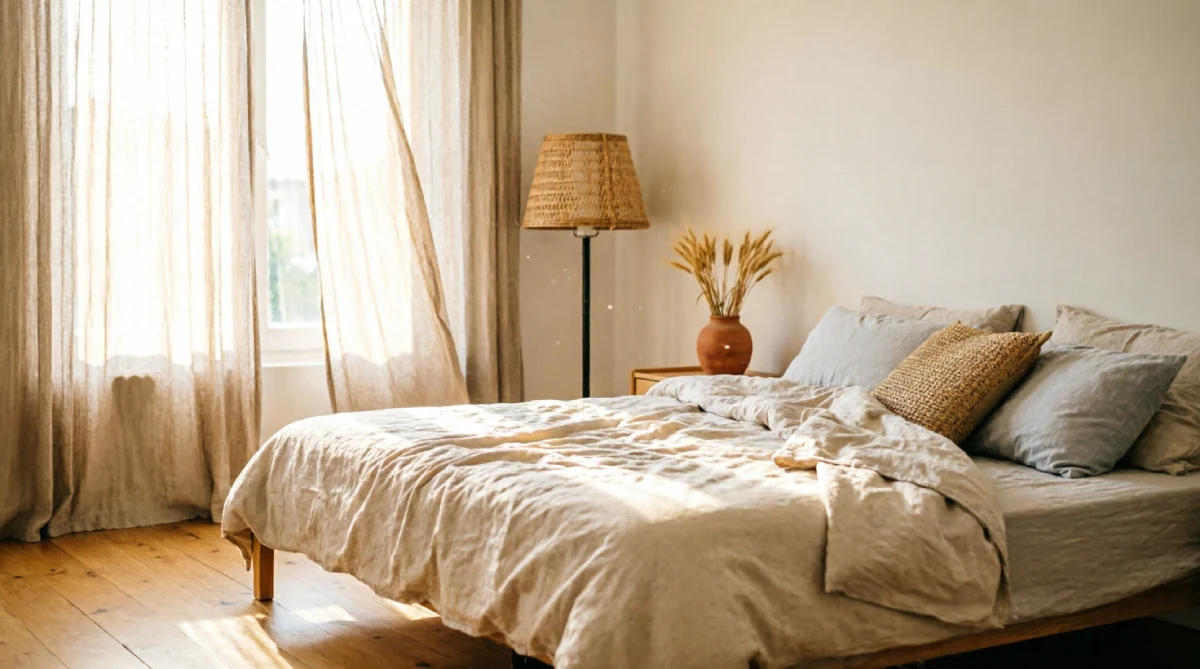
I always do a quick layout audit before summer starts. Heavy pieces like wardrobes or tall headboards can block air vents, radiators, or natural draft paths and trap stagnant pockets of hot air.
I use an open, low-profile arrangement because it lets air from windows, fans, and AC vents circulate freely across the sleeping area. Even moving your bed a few inches away from a wall can make a noticeable difference.
I once helped a friend reposition his queen bed that was wedged into a tight corner near a heating duct. Simply angling the bed to face the window and leaving space on both sides improved the cross-breeze dramatically, and he stopped running the fan all night.
I suggest standing in your doorway and visually mapping the path from window to window. Remove any tall, solid obstacles in that line. Even swapping a solid headboard for a slatted one can help.
4. Add a Ceiling Fan and Set It to Summer Mode
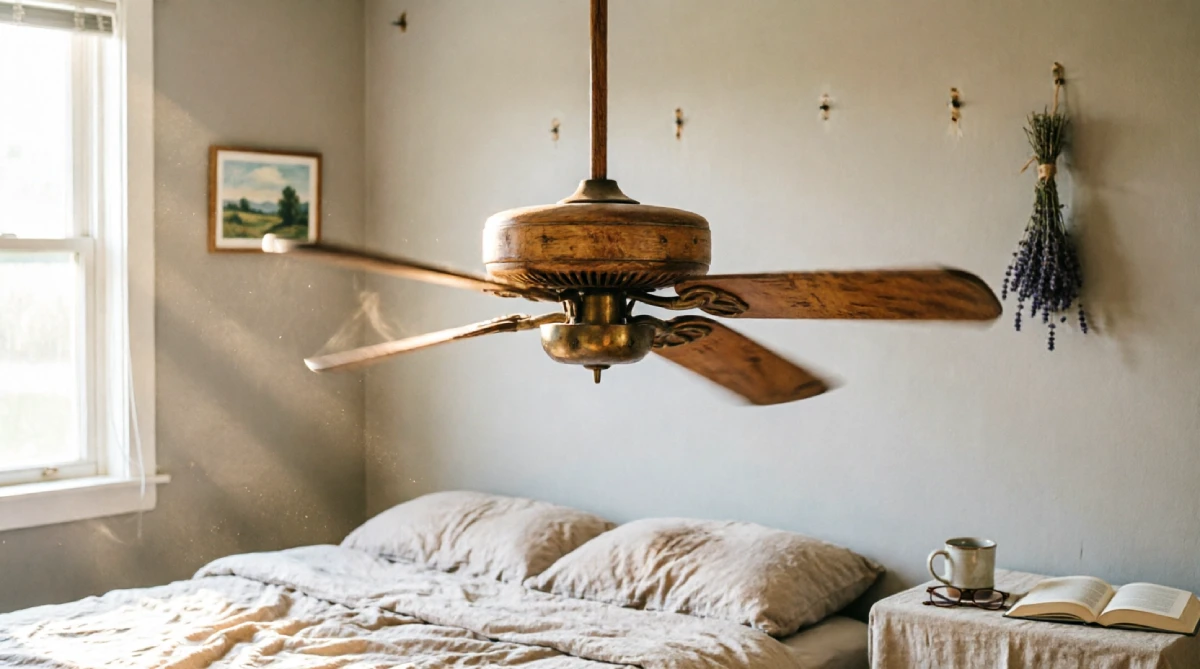
I always rely on a ceiling fan as the backbone of summer bedroom comfort, not as an AC replacement but as a great enhancer. The air movement speeds up evaporation on your skin, making you feel up to 4 degrees cooler.
I use the directional switch on the fan hub to set it spinning counterclockwise in summer. This pushes air straight down instead of pulling it up, creating a direct cooling breeze that reaches the bed.
I once cleaned neglected fan blades coated in dust and flipped the summer switch on a unit that had been running in winter mode for years. The bedroom felt immediately cooler, and the owner thought I’d somehow increased the fan’s power.
I suggest checking your fan’s direction every spring. Stand under it — if you don’t feel a strong downdraft, flip the switch. Also, dust the blades regularly; clean blades push air much more efficiently.
5. Layer with a Cooling Mattress Topper
I always recommend a cooling mattress topper before anyone invests in an entirely new mattress. Modern gel-infused or ventilated latex toppers add a heat-dissipating layer between your body and the mattress core.
I use this trick for guest rooms, especially because it’s cheaper and easier than replacing a perfectly good mattress that sleeps hot. The topper’s open-cell structure lets air move and prevents body heat from building up.
I once added a 2-inch gel memory foam topper with a breathable cotton cover to my own bed in a heatwave. I woke up without the usual sweaty back, and the topper didn’t retain heat like my old solid foam pad.
I suggest looking for toppers specifically labeled “cooling” with gel or graphite infusion, or natural latex with pin-core ventilation holes. Pair it with a moisture-wicking mattress protector to keep the cooling effect going all night.
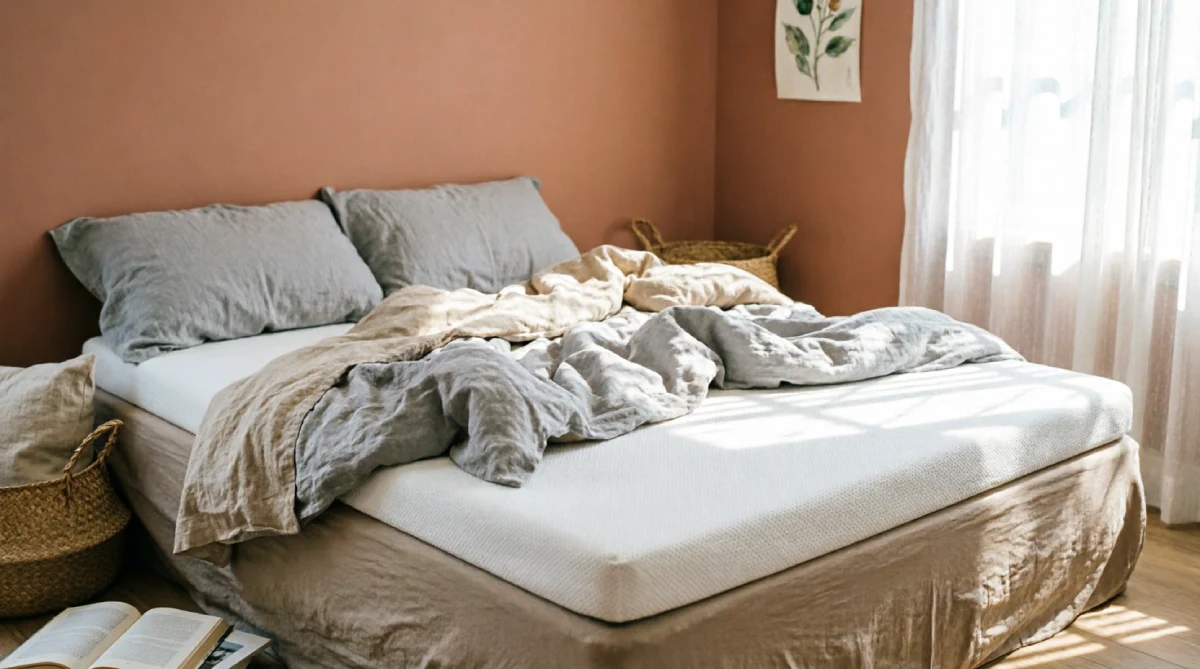
6. Swap Area Rugs for Natural Fibers
I always roll up thick wool or shag rugs in late spring and replace them with natural fiber rugs like jute, sisal, or seagrass. Heavy rugs trap heat and can make a room feel visually stuffy, while woven plant-fiber rugs breathe and stay cool underfoot.
I use this swap because natural fiber rugs are inherently more breathable and don’t hold warmth like synthetic pile. They also bring a laid-back summer texture that lightens the whole room’s feel.
I once pulled a deep wool rug from a client’s bedroom in July and replaced it with a flatweave jute rug. She told me the room felt instantly airier, and her bare feet stayed cooler when stepping out of bed.
I suggest choosing a tightly woven jute or sisal rug with a non-slip pad underneath. The natural beige tones also reflect light, helping keep the visual temperature down.

7. Embrace a Light, Reflective Color Palette
I always encourage shifting bedroom color accents toward soft whites, faint blues, pale greys, and cool greens during summer. Dark, saturated walls or heavy bedding absorb heat and radiate it back slowly, raising the room’s thermal load.
I use this approach because color influences not just the look but also how a space feels. Light tones reflect sunlight rather than trapping it, which keeps the room noticeably cooler on sunny days.
I once repainted a small bedroom from a deep terracotta to a soft off-white and swapped burgundy throw pillows for linen in a seafoam shade. The room felt five degrees cooler, and my client said she could finally breathe in there.
I suggest you don’t need to repaint the whole room. Start with light, cool-toned bedding, lightweight curtains, and pale wall art. Even swapping dark lamp shades for white ones helps bounce light and heat away.

8. Introduce Indoor Plants That Actually Cool
I always use plants as a natural evaporative cooling tool, not just décor. Through transpiration, plants release moisture into the air, which can slightly lower the ambient temperature around them.
I use broad-leafed plants like peace lilies, snake plants, and areca palms because they have high transpiration rates. Grouping a few creates a mini cooling zone near a window or beside the bed.
I once placed a tall areca palm next to a south-facing bedroom window that got painfully hot. The corner felt fresher, and the plant filtered the harsh light into a dappled, gentler glow. It was a simple, breathable green barrier.
I suggest clustering two or three leafy plants on a tray of pebbles with water to boost humidity and cooling through evaporation. Keep them well-watered — a thirsty plant doesn’t transpire as much.
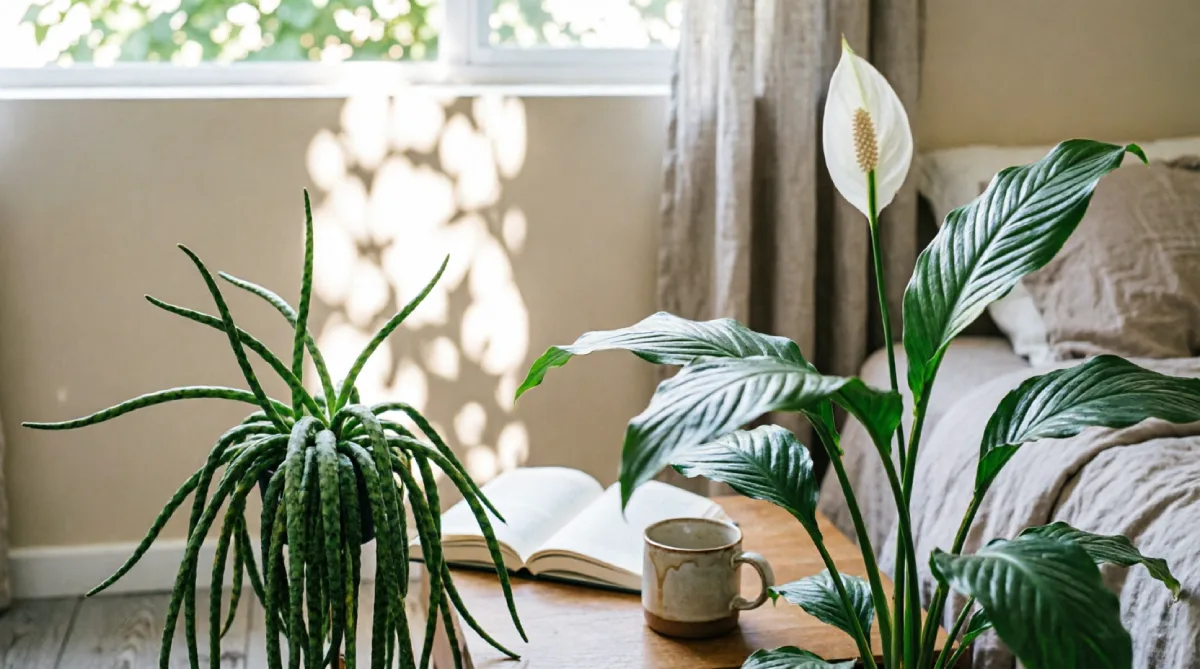
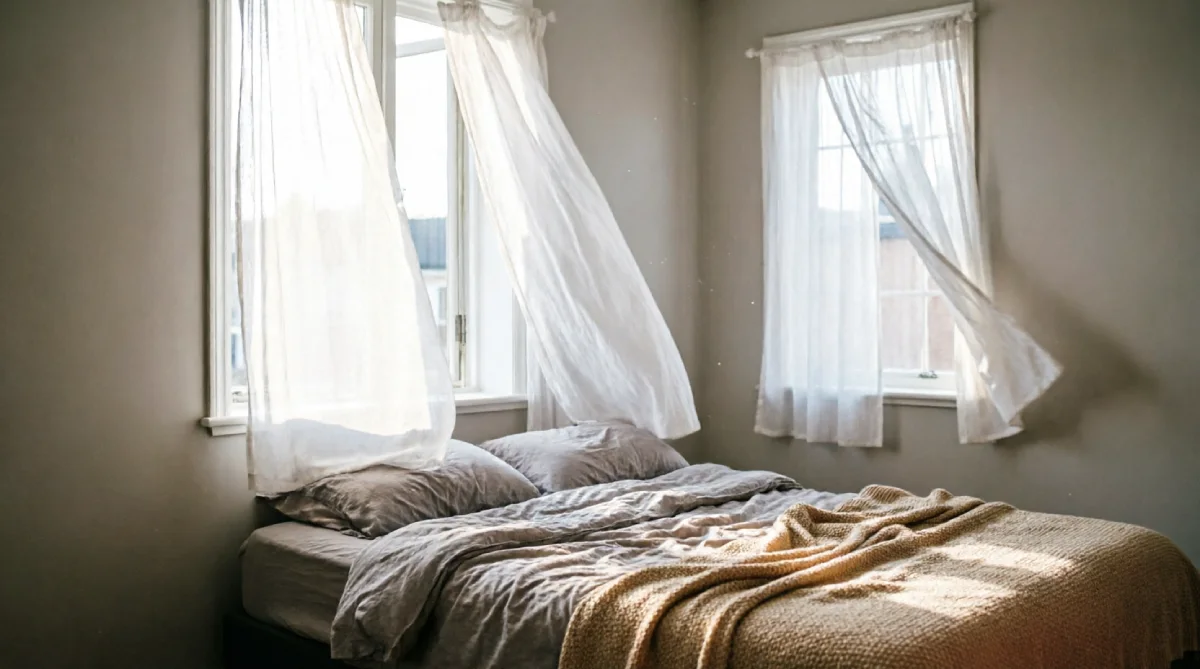
9. Create Cross-Ventilation With Thoughtful Window Use
I always treat windows as a team, not solo performers. Opening one window rarely moves enough air; you need a clear inlet and outlet to pull a breeze through the room.
I use the principle of cross-ventilation by opening windows on opposite walls or sides of the house during cooler morning and evening hours, then closing them before the day heats up. This flushes out stale, warm air.
I once noticed that just cracking open a bathroom window across the hall from the bedroom door created a strong pull that dropped the bedroom temperature within 20 minutes. No fan needed.
I suggest installing simple window screen panels if bugs are an issue, and use a small box fan in one window, blowing outward to actively exhaust hot air while letting cooler air pull in from the other side.
10. Switch to Smart Lighting That Emits Less Heat
I always check the type of bulbs in bedside lamps and overhead fixtures when summer hits. Incandescent and even some halogens convert a lot of energy into heat, literally warming the room while they’re on.
I use LED bulbs with a warm color temperature (around 2700K) to keep the cozy feel without the heat load. LEDs run significantly cooler and reduce the subtle but constant heating from nightstand lights.
I once replaced four halogen sconces in a small bedroom with dimmable LEDs. The room didn’t just feel cooler after an hour of reading; the lamp shades weren’t hot to the touch anymore, which made the whole corner more comfortable.
I suggest swapping out all frequently used bulbs with LED alternatives and installing a dimmer switch. Lower light levels in the evening feel calmer and add less heat just when you’re trying to wind down.

11. Declutter for Visual and Thermal Space
I always clear surfaces and reduce clutter before summer settles in. A crowded room with piles of books, thick throws, and excess decor holds heat physically and makes the space feel mentally heavier and warmer.
I use a minimalist approach not for style’s sake but because open surfaces allow air to move freely. Removing unnecessary textiles, stacked pillows, and clutter also eliminates places where dust and heat can gather.
I once helped a couple pare down their bedroom by removing a heavy bench at the foot of the bed and storing half the decorative pillows. They were stunned at how much lighter and cooler the room felt immediately.
I suggest packing away thick blankets, heavy quilted throws, and non-essential decor for the season. Leave surfaces clear, keep the floor open, and enjoy the psychological coolness of breathing room.
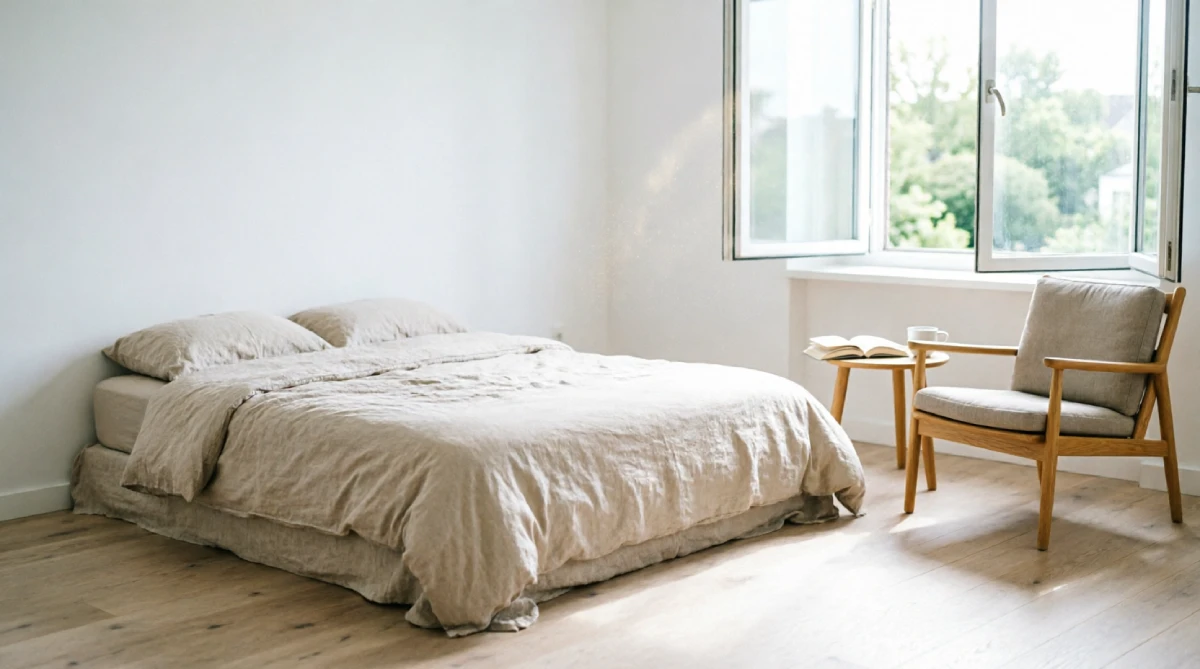
12. Add a Portable Evaporative Cooler for Dry Heat
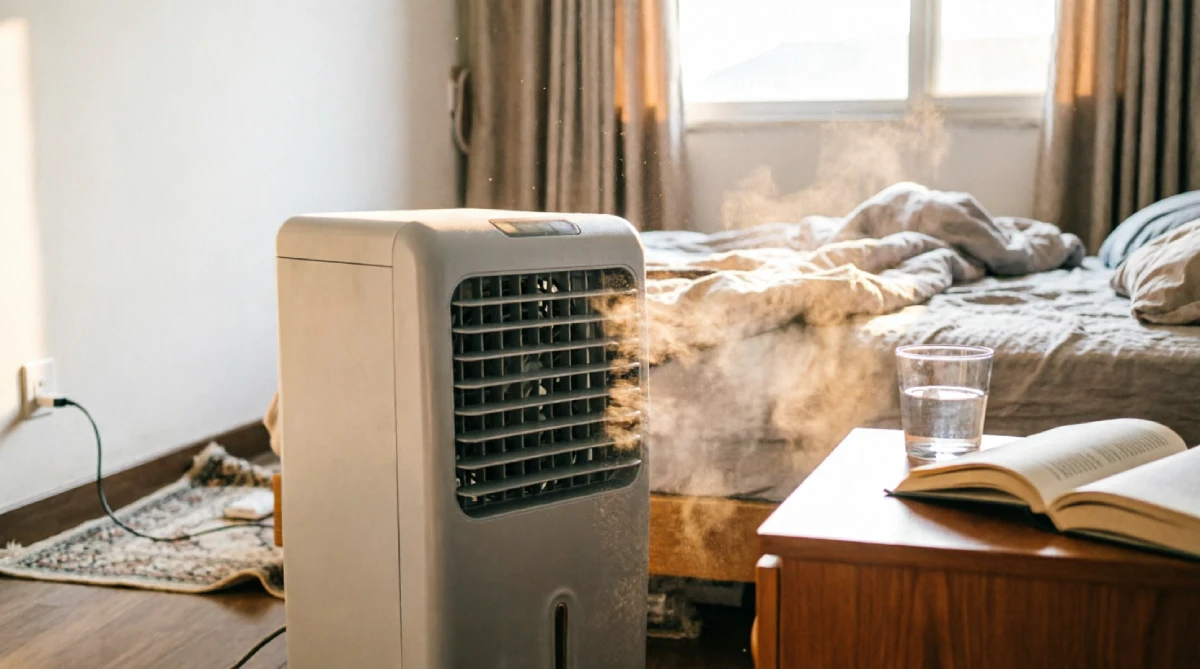
I always keep a small evaporative cooler on standby for summer nights when the air is dry and hot. Unlike refrigerated air conditioning, these units use water and a fan to add moisture and chill the air naturally.
I use them in climates with low humidity because they’re energy-efficient, quiet, and don’t require a window kit. They work beautifully as a bedside personal cooler that makes sleeping much more comfortable.
I once set up a compact evaporative cooler on a nightstand during a dry heatwave. It dropped the immediate sleeping zone by several degrees and added a soft hum that actually improved my sleep quality.
I suggest filling the water tank with cold water and ice packs for an extra punch. Position it to blow across the bed, not directly on your face, and clean the filter weekly to maintain efficiency. In humid areas, opt for a dehumidifier instead to make the air feel lighter.
Practical Tips
- Layer your cooling solutions: Combine a ceiling fan with breathable bedding and thermal curtains for a cumulative effect rather than relying on one fix.
- Time your ventilation: Open windows during the coolest hours (early morning and after sunset), then shut them and draw the curtains before the heat climbs.
- Use a chilled water bottle trick: Place a frozen water bottle in front of a fan to blow chilled air — a temporary but effective DIY cooler for extreme nights.
- Rotate your mattress: Flip or rotate your mattress seasonally so you’re not sleeping on a heat-soaked side from the previous summer.
- Keep electronics unplugged: Chargers, TVs, and gaming consoles emit standby heat. Unplug them or use a power strip to minimize extra warmth in the room.
- Opt for cotton or linen pajamas: Your sleepwear matters. Light, natural fibers wick moisture and prevent that sticky feeling better than synthetics.
Common Mistakes to Avoid
- Using heavy, dark drapes without thermal backing: They just absorb and radiate heat into the room instead of blocking it.
- Pointing a fan directly at your face all night: It can dry out sinuses and eyes. Angle it to circulate air over your body or oscillate.
- Ignoring ceiling fan direction: Running a fan in winter mode (clockwise) during summer wastes energy and reduces the cooling effect.
- Leaving thick mattress protectors on: Waterproof or padded protectors that aren’t breathable trap body heat and undo your cooling upgrades.
- Forgetting to close doors: Hot air from the rest of the house seeps in; keep the bedroom door closed during the day to maintain a cooler pocket.
Comparison Table
| Feature | Best Option | Why It Works |
|---|---|---|
| Bedding Material | Stonewashed Linen | Open weave allows air to flow; wicks moisture and never feels clammy. |
| Window Treatment | Thermal Blackout Curtains | Reflects heat outward and blocks light, reducing solar gain. |
| Floor Covering | Flatweave Jute or Sisal Rug | Breathable natural fibers don’t hold heat; cool underfoot. |
| Cooling Accessory | Ceiling Fan (counterclockwise) | Creates direct downdraft; makes skin feel cooler via evaporation. |
| Mattress Enhancement | Gel-Infused Cooling Topper | Dissipates body heat and adds air circulation layer without replacing the mattress. |
| Light Bulb Type | Dimmable LED (2700K) | Emits minimal heat; it reduces the room’s internal heat load. |
FAQ
What is the best way to cool a bedroom without air conditioning?
Combine cross-ventilation, a ceiling fan set to summer mode, and lightweight linen bedding. Close windows and curtains during peak heat, then open them when outdoor temperatures drop. Even a shallow tray of ice in front of a fan helps on the worst nights.
Can I make my bedroom feel cooler just by redecorating?
Absolutely. Swapping dark textiles for light, cool colors, removing heavy rugs, and adding reflective surfaces reduces both physical and visual heat. Decluttering alone often makes the room feel fresher and more breathable.
Is it expensive to summer-proof a bedroom?
Not necessarily. Many effective changes — like rearranging furniture, switching fan direction, or changing light bulbs — cost little or nothing. Even linen sheets or a cooling topper pay off in better sleep and lower energy use.
How do I choose the right ceiling fan for a small summer bedroom?
Look for a fan with a blade span that fits the room (around 42–44 inches for small spaces), an Energy Star rating, and a reversible motor. Ensure it’s mounted at least 7 feet above the floor and has a summer mode switch.
Do indoor plants really help cool a bedroom?
Yes, through transpiration, plants release moisture that slightly lowers the surrounding air temperature. Broad-leaf varieties like peace lilies and areca palms are most effective when placed in groups near windows.
Conclusion
These 12 summer bedroom design ideas all target one thing: making your sleep space genuinely more comfortable without an expensive overhaul. From breathable linen to simple fan direction changes, each tweak contributes to cooler, calmer nights. Start with what’s easiest — maybe flipping a fan switch or clearing a windowsill — and stack upgrades as the summer heat settles in. Your bedroom can be a refuge, not a sauna, no matter how high the temperature climbs outside.
