

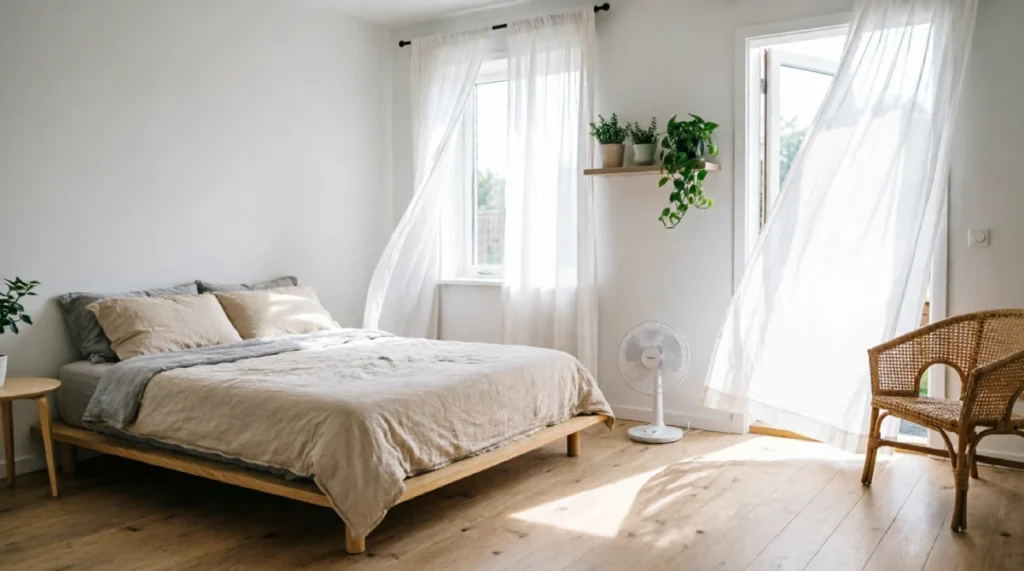
Hot nights turn a bedroom into a restless box when the layout works against you. A bed pushed against a sun‑soaked wall or a bulky wardrobe blocking the only breeze can trap heat even with the window open. Many summer comfort fixes focus on bedding or fans alone, but I’ve found that small furniture shifts often make a bigger difference.
This article focuses purely on laying out how you place what you already own. The promise is simple: by tweaking your room’s arrangement, you can create a space that feels noticeably cooler, breathes better, and helps you sleep through muggy weather.
1. Move the Bed Out of the Direct Sun Path
Where your bed sits in relation to the window determines how much radiant heat you absorb all day. Even with blinds closed, a mattress pressed against a west‑facing wall soaks up stored warmth that releases at night.
I usually recommend pulling the headboard to an interior wall, away from the afternoon sun. This single shift drops the surface temperature on the bedding noticeably.
In many older homes, the bed ends up under the window simply because it “fits.” I’ve seen the same room feel cooler just by flipping the bed to the opposite wall.
Start by identifying which wall stays coolest all day. Place the bed there, even if it means a less conventional arrangement.
2. Build an Unobstructed Cross‑Breeze Path
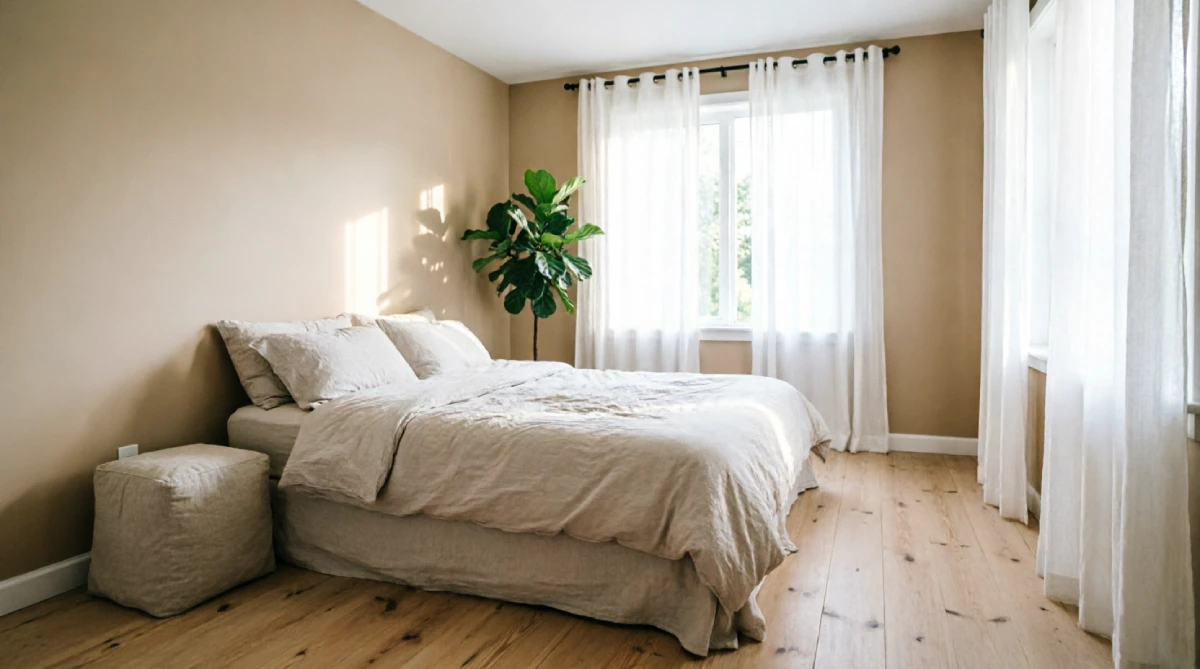
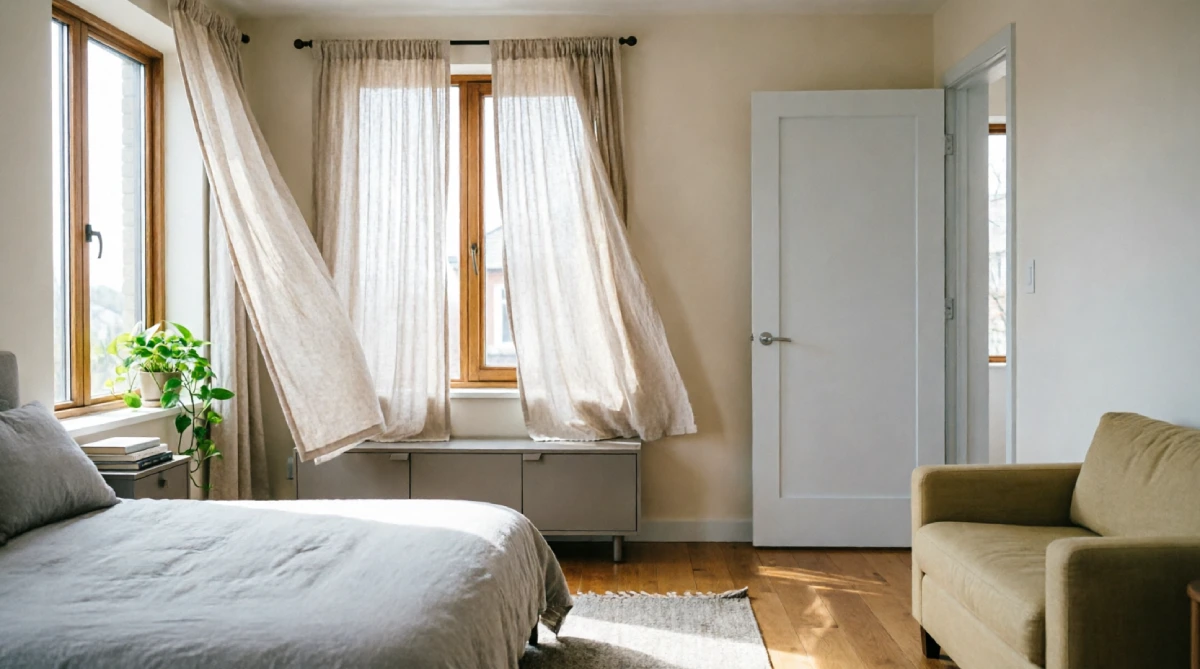
A cross‑breeze only works when air can travel in a straight line from one opening to another without furniture or walls. A tall bookshelf or a heavy dresser between a window and a door acts like a dam.
In a stuffy room, I look for a clear flight path. Ideally, the main sleeping area sits just to the side of that current, not directly in it, so you feel the airflow without being hit by drafts.
A common layout mistake is placing the bed parallel to the window, splitting the room in two, and killing the breeze. Try aligning all large furniture along one wall to create a long, open channel between the window and the door.
3. Switch to Lower Bed Height
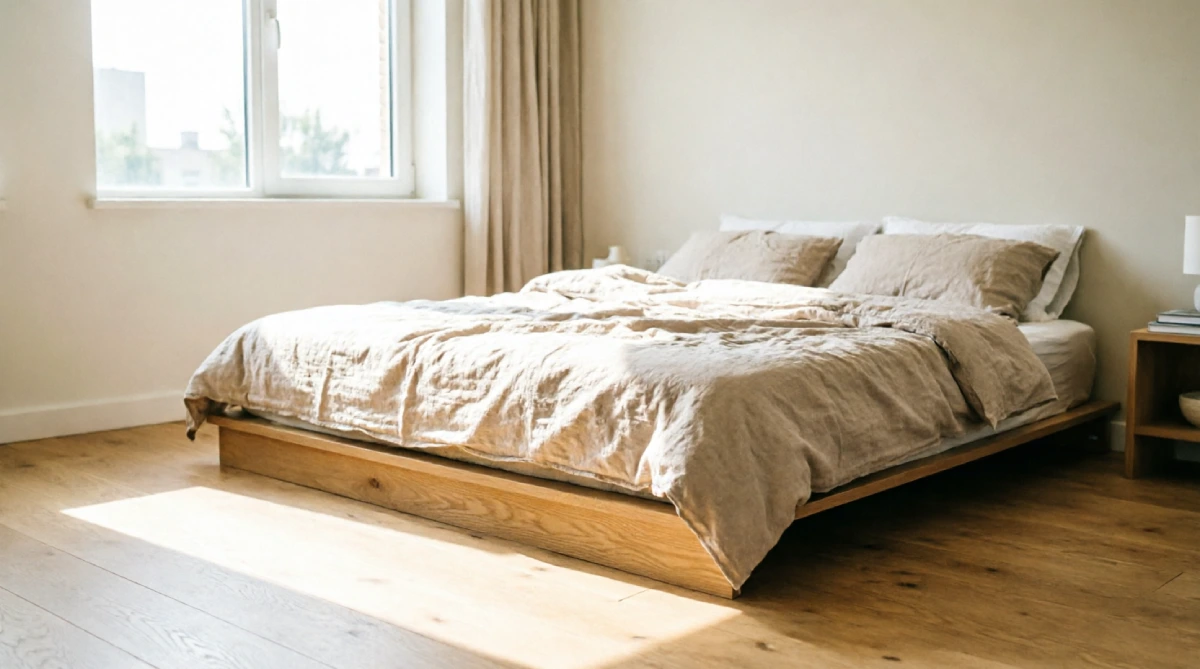
Hot air rises, so the difference in temperature between floor level and mattress height can be several degrees on a sweltering evening. A low‑profile bed frame or even a mattress placed directly on slats brings you closer to the cooler zone.
I’ve noticed that in naturally ventilated homes, switching to a lower bed makes the air feel less stifling when you lie down.
In many homes, tall bed frames with thick box springs become unintended heat traps.
If you’re open to a temporary change, remove the bed frame during the hottest months and use low wooden slats or a platform base under the mattress.
4. Create a Dedicated Cool‑Floor Zone
Hard surface flooring feels refreshing on bare feet when the air is heavy. If your bedroom layout buries the floor under rugs, you lose that natural cooling surface.
I often suggest rolling up thick wool rugs for summer and leaving a section of hardwood, tile, or stone exposed near the bed or dressing area.
In many homes I visit, a large area rug covers the entire sleeping area year‑round, trapping body heat.
Pull the rug back or store it entirely. Arrange a reading chair or a small ottoman right where your feet land so that cool floor contact becomes part of the morning routine.
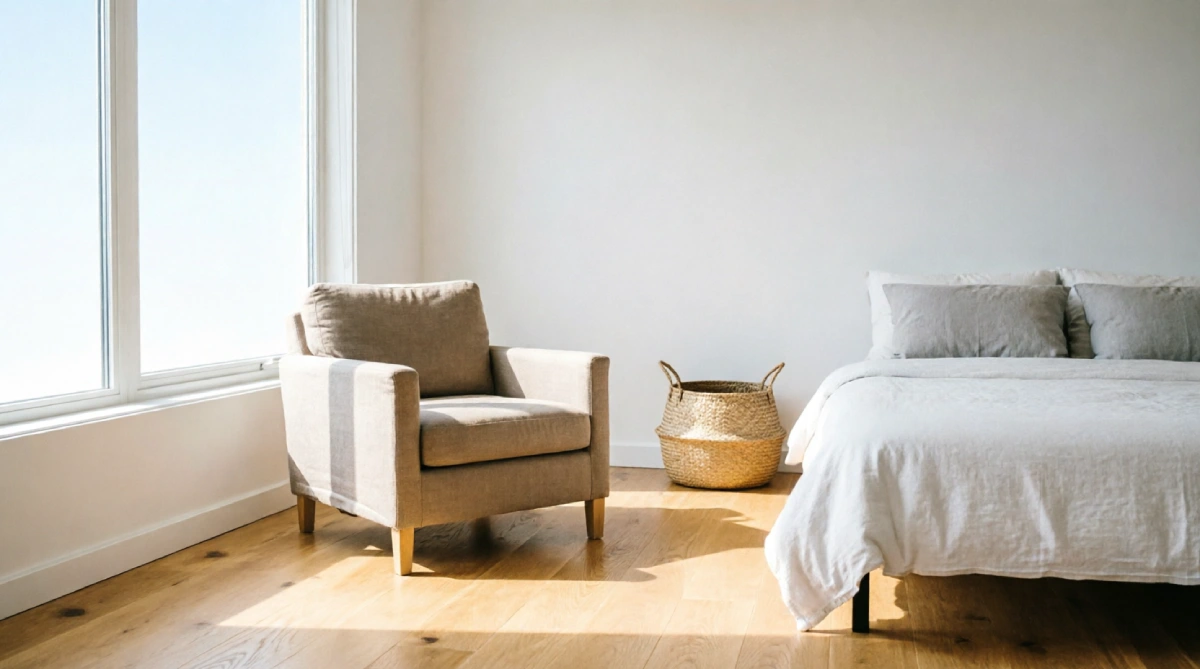
5. Float the Bed Away from Walls
When the mattress is pressed tight against a wall, one side of the body loses the chance to radiate heat into open air. A bed accessible from both sides allows heat to escape more evenly.
I generally recommend pulling the bed away from the walls by at least a foot, even in small rooms. That narrow gap becomes a heat‑shedding channel.
In many compact bedrooms, the bed gets wedged into a corner as a space‑saving move, but the trapped warmth often leads to restless sleep.
Try centering the bed on the main wall and keep both sides clear. The room will also feel lighter and more open.
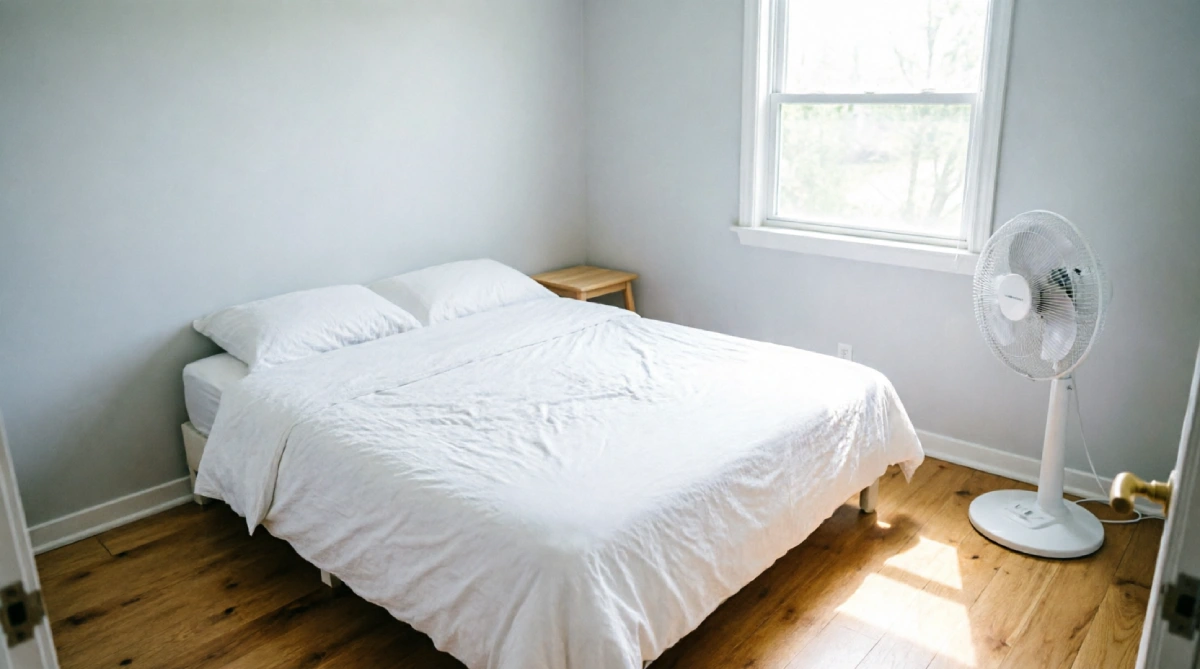
6. Separate Sleep and Day‑Activity Zones
A bedroom that doubles as a home office or a workout corner often collects heat from electronics, desk lamps, and body movement late into the evening. Heat lingers where you hope to cool down.
I usually try to visually and physically separate the sleep zone from the work or dress area, ideally placing it near the window and farthest from heat sources.
A common issue I see is a desk shoved next to the bed, its power bricks radiating warmth all night.
Pull the desk to the opposite side of the room. Use a lightweight open shelf or a curtain as a soft divider to keep computer heat away from the sleeping corner.
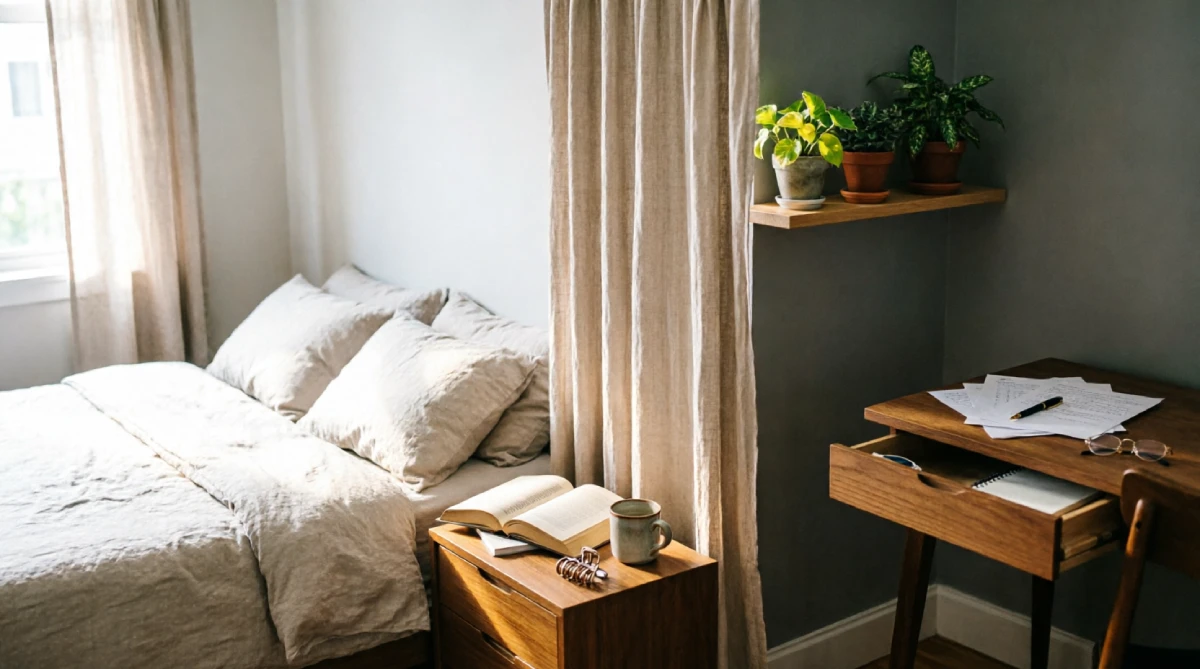
7. Relocate Electronics to the Hallway or Closet
Charging stations, routers, and glowing devices are small radiators. They also emit light that can disturb sleep during long summer evenings.
I advise moving the main phone charger, modem, and any power strips out of the bedroom entirely if possible. At the very least, place them behind a closed closet door.
In many homes, the modem sits on a bedside table because of a short cable—an easy heat source to overlook.
Extend the cable and place the router in a closet or hallway. This simple re‑routing instantly drops a room’s ambient heat after sunset.
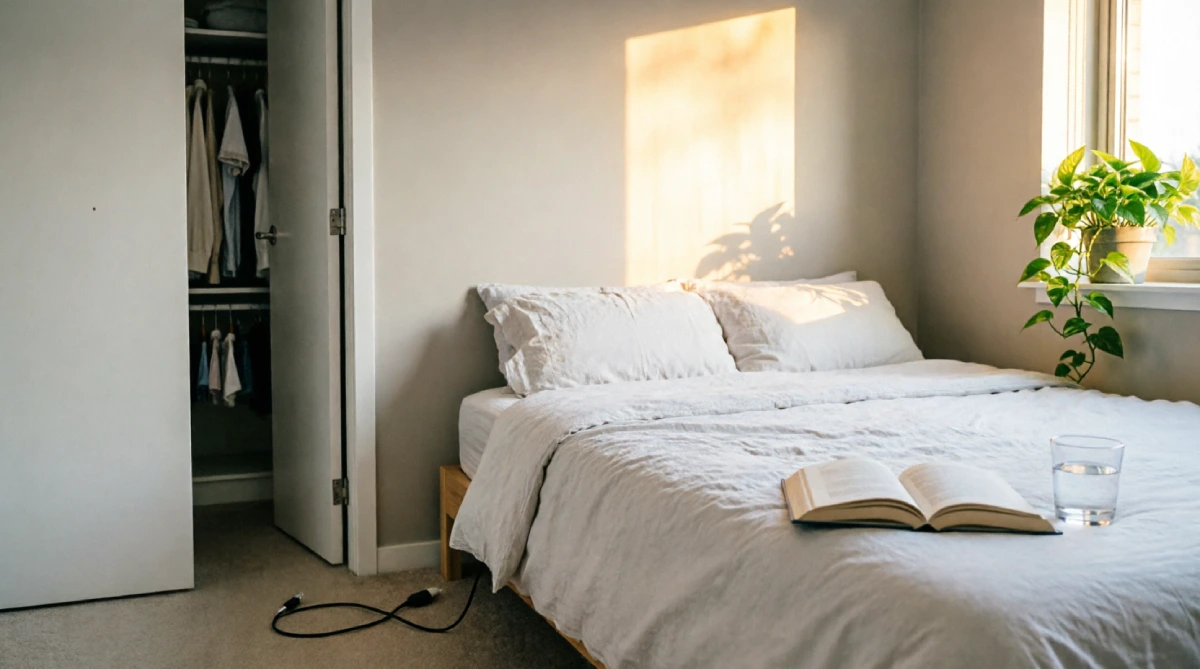
8. Use Lightweight Movable Furniture for Evening Shifts
A heavy wooden bench might face the garden in the morning but become a heat sink by dusk. When every piece is light enough to move, you can quickly reconfigure the room as the sun moves.
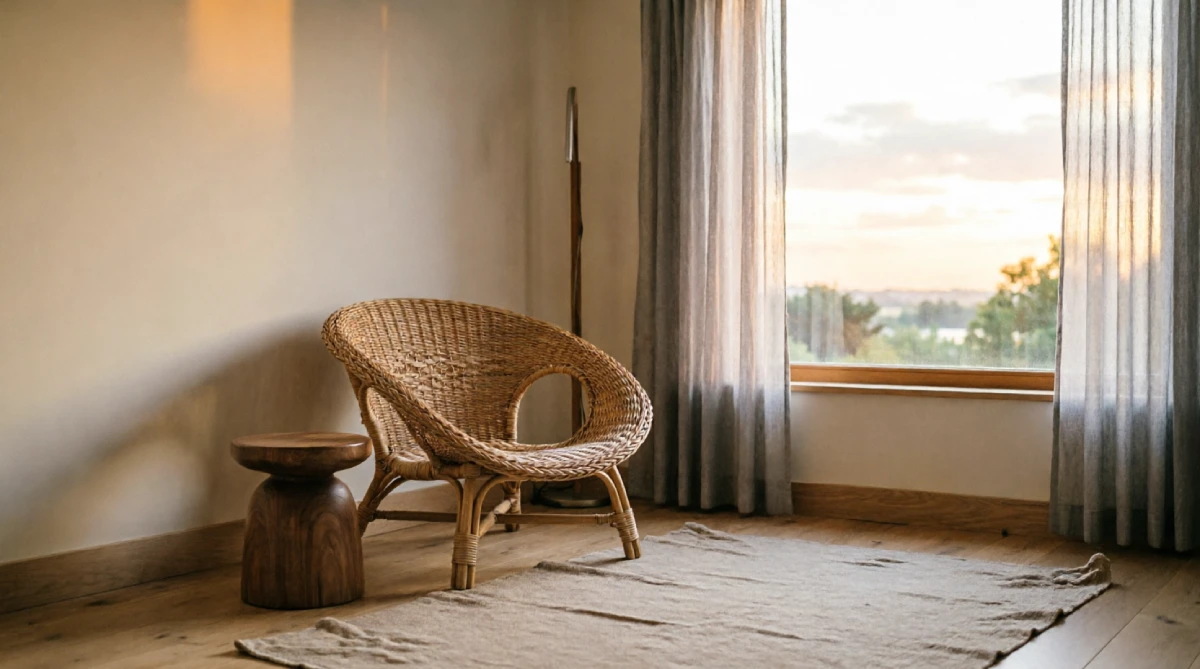
I prefer to use a small stool, a slipper chair, or a folding side table that can be carried to a cooler spot when the temperature shifts.
I’ve noticed that in older houses with deep window reveals, a simple move of a reading chair from the sunny corner to an interior wall changes the comfort within minutes. Keep a pair of light furniture pieces near the bed. Shift them to the cooler side of the room as needed.
9. Orient the Bed for Natural Venturi Effect
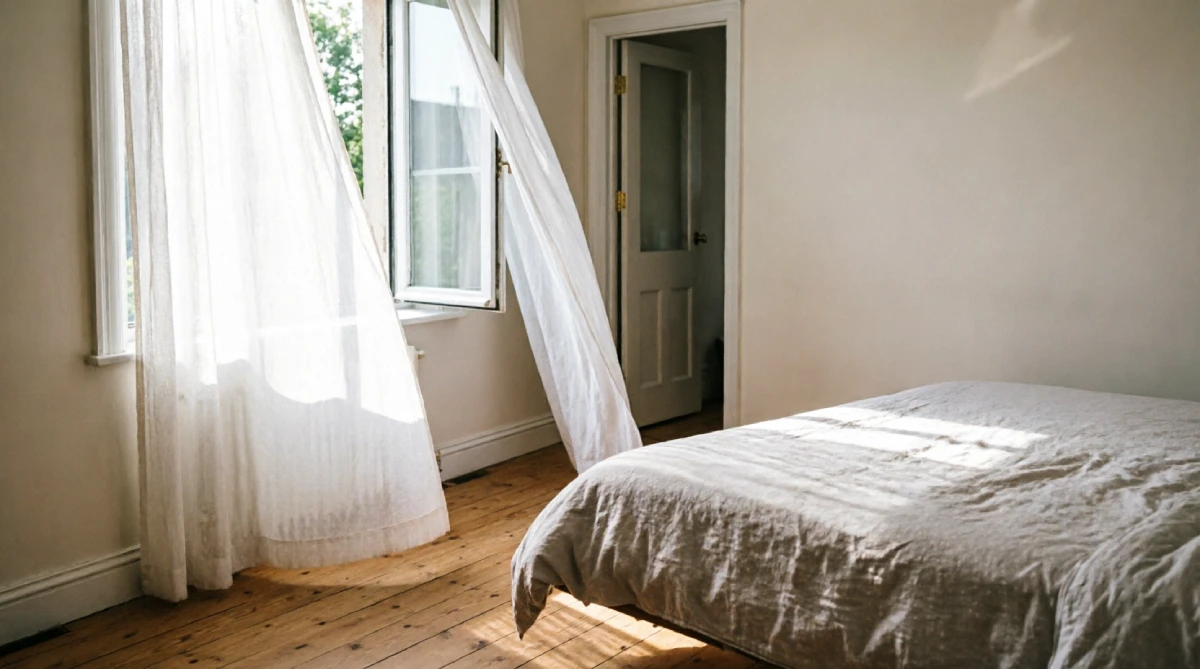
A narrow gap between a window and a door can actually speed up air if you position the bed to funnel the breeze along its length. This uses the Venturi principle—air accelerates when squeezed through a slightly narrower path.
I sometimes angle the foot of the bed toward the window opening, leaving a tapered space that channels the wind straight over the mattress.
In many narrow bedrooms, the bed is placed parallel to the door, which blocks this effect completely.
Try a slight diagonal placement that points the bed’s long axis between the air source and the exit. You’ll feel a focused, cooling stream right where you sleep.
10. Swap the Sleeping Position Head‑to‑Toe
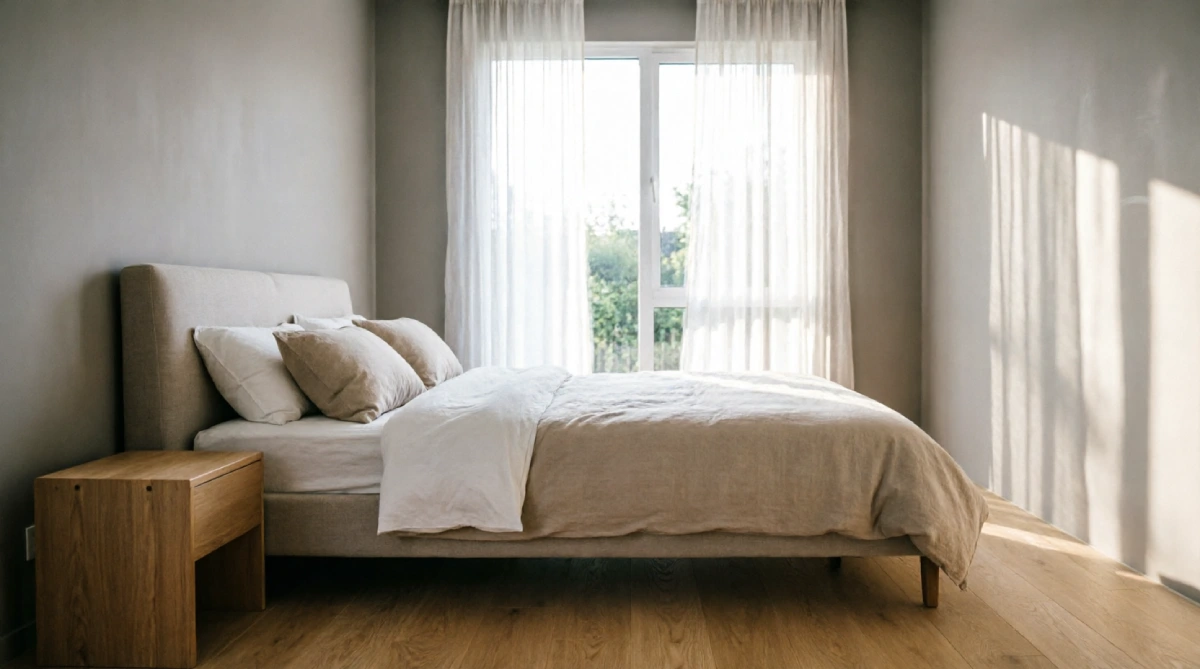
Sometimes the best layout fix is simply sleeping with your head where your feet usually go. The far end of the room might sit under a better‑placed window, near a cooler wall, or farther from a hot closet.
I’ve found this trick especially useful in rooms with an en‑suite bathroom; the bathroom wall tends to stay cooler.
A common frustration is a bed that stays comfortable on one side only. Try flipping the mattress orientation for a week. Re‑route the bedside lamp with an extension cord. This no‑cost switch can put your head in the room’s naturally coolest spot.
11. Hang a Tension Rod Canopy for a Microclimate
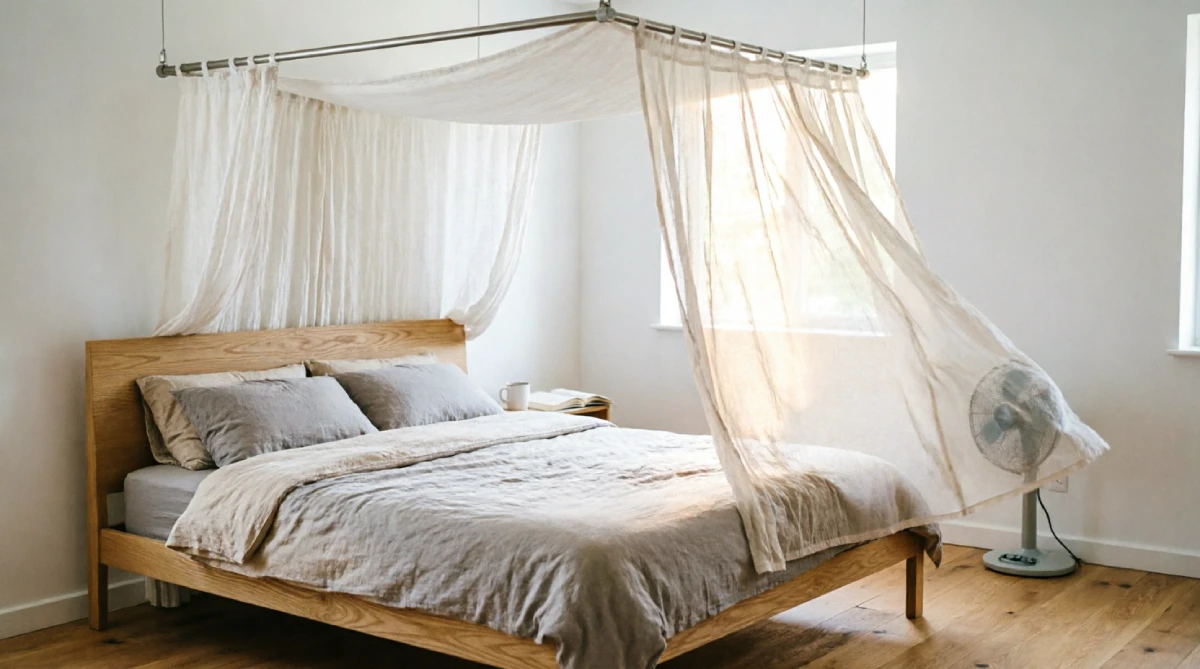
A sheer canopy suspended directly over the bed creates a small zone of still, slightly cooler air, especially when combined with a low‑speed fan. The fabric filters move air without blocking it entirely.
I often recommend a simple tension rod between two walls and a lightweight cotton voile panel draped over it, forming an air‑pocket cocoon.
In many rooms with high ceilings, cool air gets lost far above the bed. The canopy holds a layer just around the sleeping body. Hang the panel loosely so air can still flow. This works best with a fan set on low, pointed across the opening.
12. Create a Clutter‑Free Six‑Inch Air Gap Baseboard
Even the best layout fails if air can’t circulate at floor level. Furniture pushed flush against walls, under‑bed storage bins, and piles of shoes create stagnant pockets of warm air.
I keep a strict rule in summer: nothing is stored directly on the floor that blocks the gap between the baseboard and the lowest furniture shelf.
In many bedrooms, under‑bed storage boxes smash right against the skirting board, killing the cool draft that naturally hugs the floor.
Lift everything onto short legs or slide storage to the center of the room. Keep that perimeter air path open.
Practical Tips
- Check wall temperature before moving the bed: Late in the afternoon, touch the interior walls. Move your pillow to the coolest one, even if it’s a closet wall.
- Use empty suitcases as temporary heat blocks: Slide a hard‑shell suitcase between a hot west wall and the bed to add an insulating air gap.
- Adjust curtain placement, not just the window: Shift curtain rods to extend beyond the window frame so drapes can cover the hot wall surface beside the glass.
- Rotate your mattress seasonally: A mid‑summer flip or rotation evens out body impressions and exposes a cooler sleeping surface.
- Move water source closer: A simple carafe and glass on the bedside table, refilled with cool water before bed, keeps you hydrated without leaving the cooler room zone.
Common Mistakes to Avoid
- Pushing the bed against the only exterior wall: That wall often holds the most solar gain, making the mattress a heat sponge.
- Placing a fan where it blows straight into a cluttered corner: The airflow needs a clear exit path; otherwise, it just stirs warm air around.
- Leaving heavy winter duvets on the bed while rearranging furniture: A thick comforter nullifies even the smartest layout; swap it out.
- Blocking the bottom of the door: A gap under the door is crucial for cool hallway air to enter. Resist stuffing a draft stopper there in summer.
- Thinking a hotter upstairs room can’t be fixed by layout: Simple moves like lowering the bed and opening a skylight stairwell door often surprise people.
Comparison Table
| Feature | Best Option | Why It Works | Cost |
|---|---|---|---|
| Floor fan location | Near an open window, pointing slightly outward | Draws hot air out first, pulls cooler air in | $ |
| Ceiling fan blade direction | Counter‑clockwise in summer | Pushes air straight down, creating wind chill | $ |
| Bedside fan setup | Clip‑on fan attached to the bed frame | Directs a personal air stream without taking floor space | $ |
| Tower fan placement | In an open doorway blowing inward | Pulls cooler hallway air into the bedroom | $$ |
FAQs
Can I use these layout ideas in a very small bedroom?
Yes. Most changes, like shifting the bed away from walls, clearing the floor perimeter, or removing rugs, require no extra space. Focus on the two or three shifts that affect your immediate sleeping zone.
Do I need to buy anything new to improve my summer layout?
Rarely. These adjustments rely on repositioning existing furniture, removing heavy textiles, and routing cables. A tension rod and a cotton panel are affordable additions if you want the canopy effect.
What if my room only has one window?
Then, cross‑breeze isn’t possible, but you can still create movement by placing a fan near the window, blowing inward or outward, paired with an open door to form a single‑direction air tunnel. Bed orientation relative to that airflow still matters.
Is it worth changing my layout just for a few hot weeks?
I usually find that once people try a cooler arrangement, they keep many elements year‑round. Lighter furniture positions often make the room feel bigger and more restful, regardless of the season.
How long does it take to try these ideas?
Most can be tested in under an hour. Move the bed, clear the baseboard gap, and remove one rug—then spend a night. You’ll know quickly which layout shift helps most.
Conclusion
Summer bedroom comfort isn’t only about air conditioning or fancy cooling gadgets. The way you place your bed, how you route air paths, where you store heat‑generating electronics, and even the height you sleep at all add up. Start with the simplest moves: pull the bed away from hot walls, clear a path between the window and the door, and get rid of the thick rug. Test one shift at a time, and you’ll notice the room breathes differently. A cooler night’s sleep often lies in the layout you haven’t tried yet. Adjust what you already have, and let the heat move on without you.
