

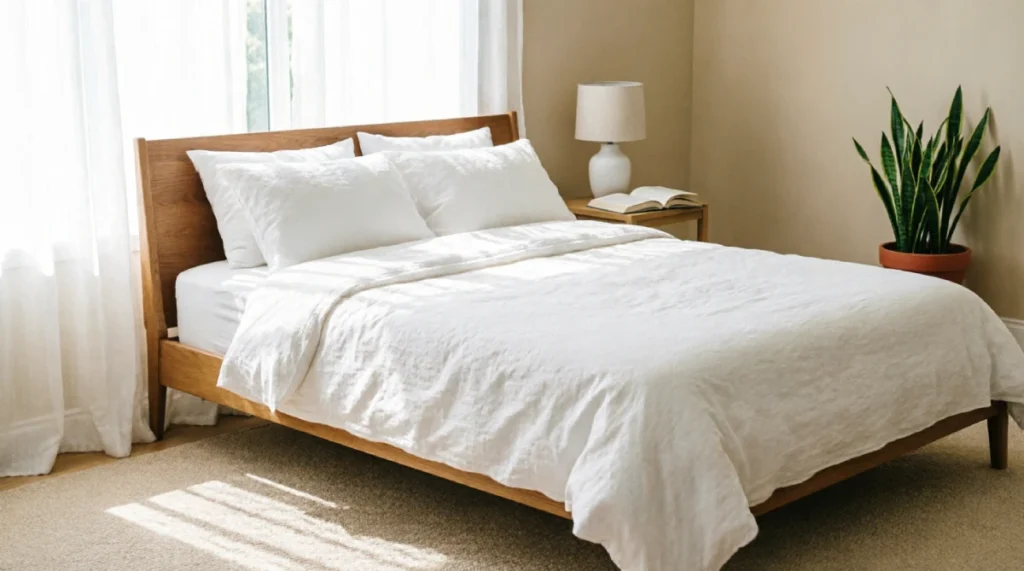
Summer nights can feel too sticky or bright for deep rest, and many bedrooms flip between stuffy and sterile when you try to cool them down. A cozy summer bedroom isn’t about piling on heavy throws; it’s about layering lightweight textures, controlling light, and designing a calm, sleep-friendly retreat.
I’m sharing 14 practical, easy-to-try ideas that preserve that tucked-in feeling without overheating. These small changes can help you drift off easier and wake up refreshed all season long.
1. Swap in Breathable Linen Layers
Heavy duvets often turn a summer bed into a sweat trap. Replacing them with breathable linen or long-staple cotton layers instantly cools your sleep surface.
Linen wicks moisture and lets air circulate freely, so you avoid that clammy feeling while still enjoying a soft, inviting texture. The fabric naturally gets softer with every wash, too.
I’ve noticed many people keep their winter-weight comforters on all year, only to kick them off at 2 a.m. This broken sleep pattern is easy to fix.
Try a linen flat sheet paired with a lightweight quilt folded at the foot of the bed. You can pull it up if the night cools down, but you won’t overheat.

2. Combine Blackout Curtains with Sheer Panels
A dark room signals your body that it’s time to sleep, but sealing off all light can trap heat. The trick is to layer window treatments.
Blackout curtains block early sun and streetlight, while a sheer inner panel lets you keep the window open for a breeze without giving up privacy. This combination gives you total light control and airflow.
In many homes, I see heavy drapes drawn all day, which can make a room feel closed in. Adding a sheer layer softens the look and keeps the space airy.
Hang a double curtain rod, place the sheer closest to the glass, and mount the blackout curtain wide enough to clear the window completely during daytime.

3. Choose a Cooling Mattress Topper
A mattress that retains body heat can ruin even the best summer sleep routine. A breathable topper is often the fastest fix.
Look for toppers made of natural latex, wool, or gel-infused memory foam. These materials disperse heat rather than trapping it, so you stay cooler and more comfortable throughout the night.
A common issue I’ve seen is people cranking the AC while still sleeping on a dense memory-foam mattress, which fights the cool air. That leads to a cycle of chills and night sweats.
Add a two-inch breathable topper and test it with a cotton mattress protector. The difference in surface temperature is noticeable almost immediately.

4. Place a Small Fan Strategically
Cooling doesn’t have to mean a loud AC unit. A small, well-placed fan can change how a room feels almost instantly.
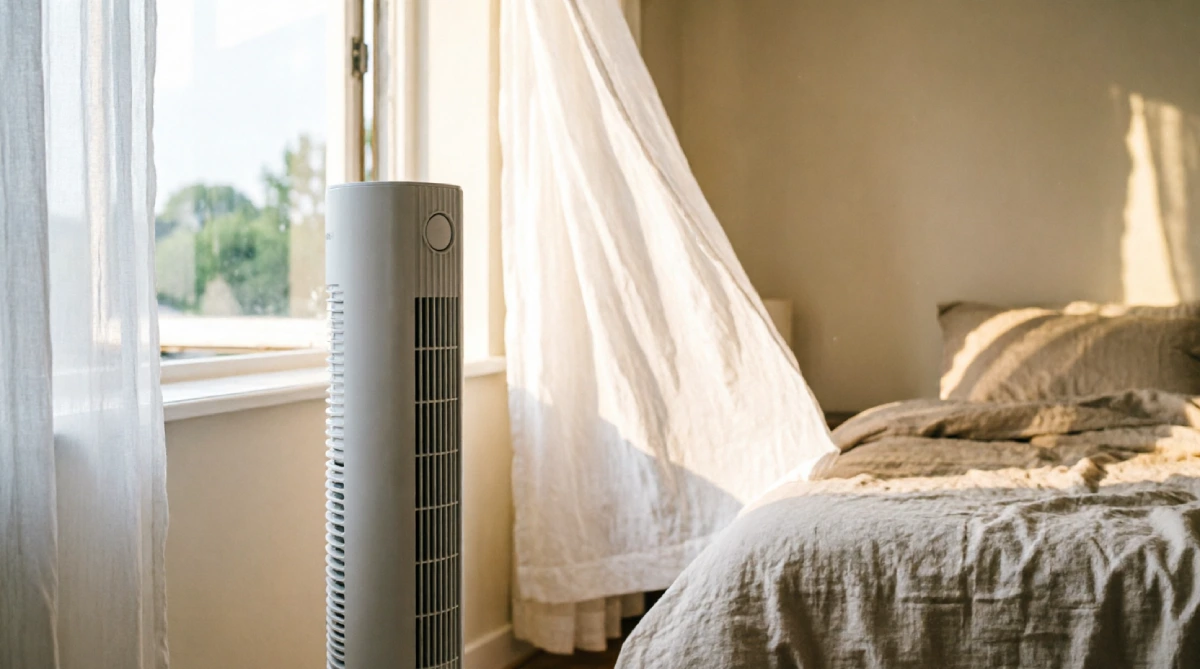
Positioning a fan near a window creates cross-ventilation, pulling in cooler outside air and pushing out warm, stale air. Even a gentle oscillation helps sweat evaporate, which naturally cools your skin.
In many homes, the bedroom fan points directly at the bed on high, which can feel harsh and dry out the nose and throat. A better approach is an indirect breeze.
I recommend aiming a tower fan toward a wall or ceiling so the air circulates softly without a direct draft. Pair it with a cracked window for the best result.
5. Add Warm, Dimmable Lighting
Overhead lights can feel harsh in summer, making a bedroom look more like an office than a restful retreat. Soft, layered lighting does the opposite.
Warm-toned bulbs (around 2700K) in bedside lamps or wall sconces create a cozy glow that signals your brain to wind down. Making them dimmable lets you dial the brightness down gradually as bedtime approaches.
Often, bedrooms rely on a single ceiling fixture. I’ve noticed that simply switching to a lamp with a warm bulb changes the room’s mood within seconds.
Add a small lamp with a fabric shade on each nightstand, and consider a plug-in dimmer. It’s an inexpensive upgrade that makes the room feel calmer immediately.

6. Declutter the Nightstand
A messy nightstand can unconsciously raise stress levels, making it harder to relax. Summer tends to bring extra clutter — water bottles, sunscreens, bug sprays — onto that small surface.
Keeping only a lamp, a book, and maybe a calming object clears visual noise. A clear surface helps the mind feel quieter, which is essential for drifting off.
I often see nightstands filled with electronics and half-empty glasses. That constant visual reminder of to-dos works against the calm you’re trying to create.
Switch to a small tray to corral necessities, charge your phone across the room, and wipe the surface before bed. It takes less than a minute and resets the space.

7. Introduce a Calm Summer Scent
Scent has a direct path to the brain’s relaxation centers, and the right one can make a warm bedroom feel like a sleepy sanctuary. Lavender, chamomile, and cedarwood all work well.
A linen spray, a reed diffuser, or a few drops of essential oil on a cotton ball by the pillow introduce a gentle aroma without overpowering the room. It’s a sensory cue that tells your body it’s time to rest.
Many homes rely on strong plug-in air fresheners that can feel artificial. I’ve found that a light, natural scent barely noticed until you breathe deeply is far more soothing.
Start with a lavender pillow mist and use it only at bedtime. The repeated association can improve how quickly you fall asleep over a couple of weeks.

8. Switch to Moisture-Wicking Sheets
Cotton percale and linen are go-to summer sheets, but high-quality bamboo or Tencel blends also excel at pulling moisture away from the body. Dry comfort makes a huge difference.
These fabrics feel cool to the touch and dry quickly if you sweat during the night. Unlike sateen weaves that can cling, a percale weave stays crisp and airy.
A frequent summer complaint I hear is waking up with damp sheets even with the air conditioning running. The issue often isn’t the room temperature — it’s the sheet’s ability to breathe.
Look for sheets labeled 100% cotton percale or a Tencel-cotton blend with a thread count between 200 and 400. They’ll feel fresh and inviting all night.

9. Layer a Soft Cotton or Linen Quilt
A thick comforter is too much, but sleeping without any cover can feel ungrounded. A lightweight quilt bridges the gap perfectly.
Cotton voile, linen, and even lightweight cotton gauze quilts offer just enough weight to feel cozy while remaining incredibly breathable. They drape without trapping body heat.
In many summer bedrooms, the solution is to push the duvet to the floor, which leaves the bed looking unfinished and feels less secure. A thin quilt solves both problems.
I often recommend keeping a folded quilt at the end of the bed during the day and pulling it up at night. It adds texture and color to the room, too.
10. Add a Natural Fiber Rug
Stepping onto a cold floor is refreshing, but a completely bare floor can make a room feel sparse and less cozy. A natural fiber rug adds warmth without heaviness.
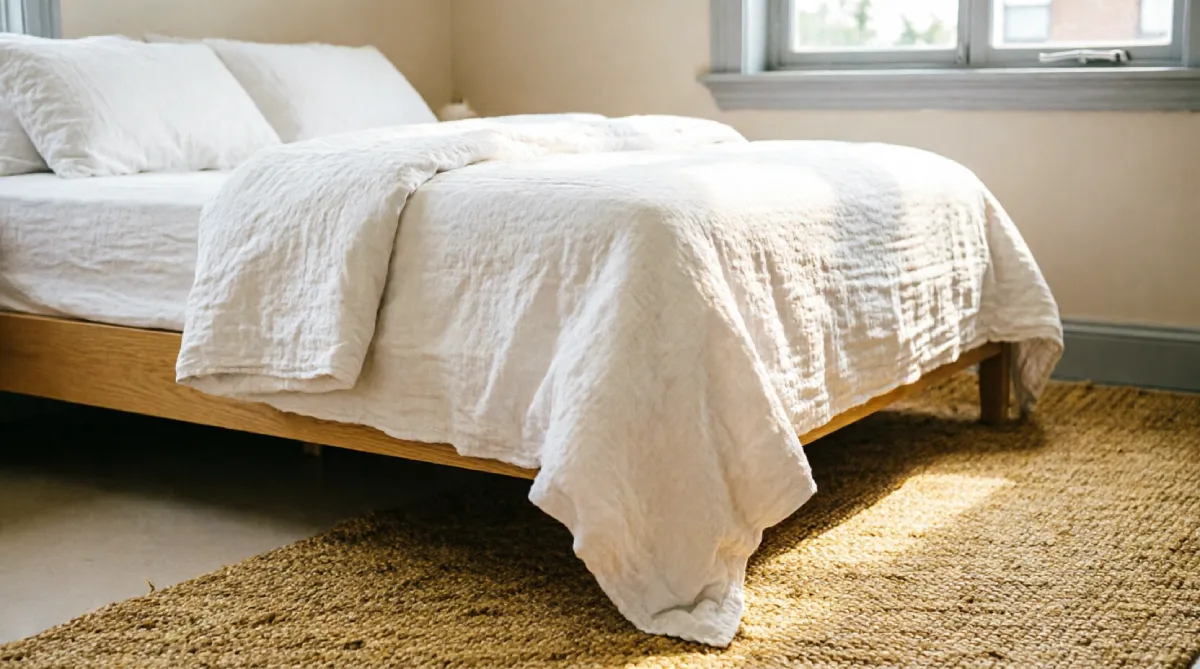
Jute, sisal, or flat-woven cotton rugs are breathable, easy to clean, and bring in an earthy texture that softens the room visually. They don’t hold heat the way thick wool or shag rugs do.
I’ve walked into summer bedrooms that feel almost echoey because all soft surfaces were removed. A simple flatweave rug under the bed anchors the space and absorbs sound.
Place a slim jute rug that extends about two feet on each side of the bed. It gives your feet a soft landing in the morning without adding insulation.

11. Bring in a Few Low-Light Plants
A little greenery makes any bedroom feel more alive and calm, and some plants can even slightly improve air quality. In summer, they connect the indoor space with the season.
Snake plants, pothos, and peace lilies thrive in lower light and release oxygen at night. Their presence softens hard corners and adds a cooling, organic touch.
A common mistake I see is filling the bedroom with humidity-loving tropicals that need constant misting. That extra moisture can make the room feel muggy.
Choose one or two resilient plants in light ceramic or terracotta pots. Place them on a dresser or windowsill where they get indirect light but don’t crowd your sleep space.

12. Create a Small Pre-Sleep Ritual Corner
A dedicated spot for a quiet pre-bed habit signals your mind that the day is ending. It doesn’t require a full reading nook — just a chair and a small surface work.
This corner can hold a journal, a book of poetry, or a cooling herbal tea. Spending even ten minutes there, away from your phone, helps your brain downshift.
I’ve seen that when people scroll in bed, the bed stops being a sleep cue. Moving that transition ritual to a separate spot strengthens the mental link between bed and deep rest.
Place a simple armchair near a window with a small side table. Keep a soft throw handy for early mornings, and let the space be tech-free.

13. Minimize Electronics and Blue Light
Screens emit heat and blue light that interfere with melatonin production. A bedroom that doubles as an entertainment hub rarely delivers deep restorative sleep.
Removing a TV or tablet from the bedside reduces mental stimulation and lowers the room’s ambient temperature. Even small chargers emit a little warmth when devices are plugged in overnight.
Many homes have a phone charger right on the nightstand. I’ve noticed that the urge to check notifications “one more time” is hardest to resist when the device is within arm’s reach.
Charge your phone in another room or across the bedroom. Use an analog alarm clock if needed. The difference in how quickly you fall asleep can be noticeable within days.

14. Use Temperature-Regulating Pillows
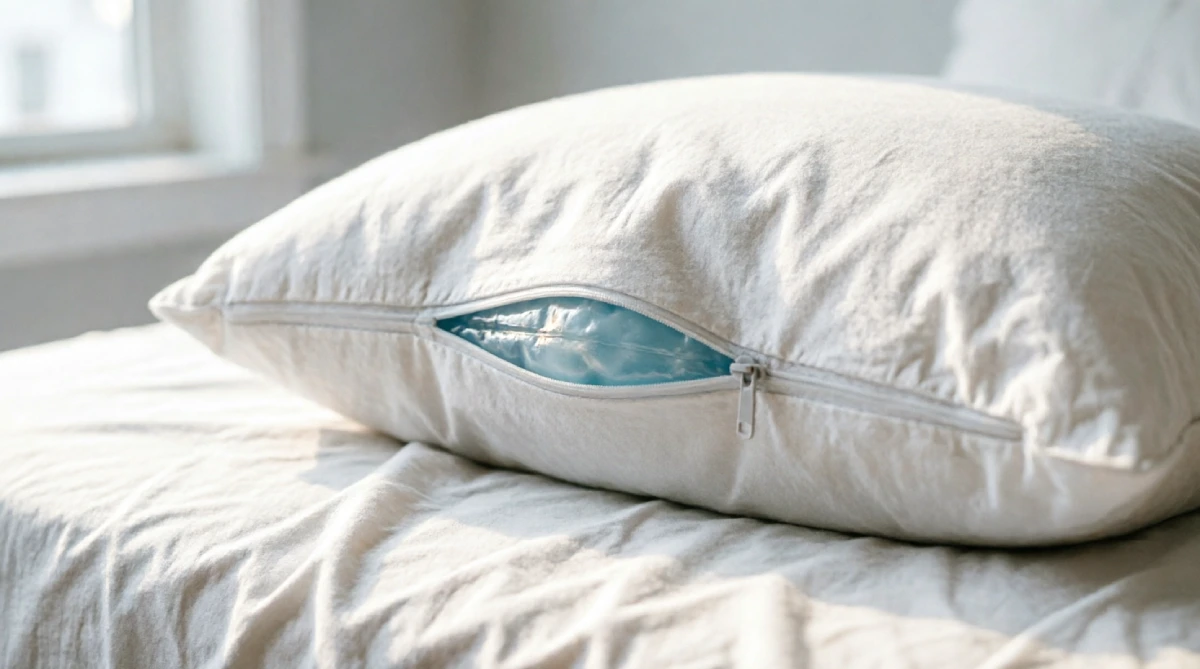
A hot pillow can cause constant flipping, breaking deep sleep. Pillows made with cooling gel, buckwheat hulls, or ventilated foam help keep the head and neck comfortable.
These materials dissipate heat rather than holding it close to your scalp. A pillow with a breathable cotton cover and a shredded memory foam fill allows air to move through the filling.
A common complaint I hear is waking up with a damp pillowcase. Switching to a cooling pillow and a moisture-wicking pillowcase often solves this without changing the room temperature.
Test one cooling pillow first, paired with a percale pillowcase. If it feels too firm, look for a model with an adjustable fill so you can customize the loft.
Quick Tips
- Wash your sheets weekly in cool water to keep them crisp and fresh.
- Open windows during cooler morning and evening hours to let the room breathe.
- Keep a carafe of ice water on the nightstand instead of insulated bottles that trap heat.
- Clear out under-bed storage to improve air circulation beneath the mattress.
- Dim all lights at least 45 minutes before bedtime to start melatonin production.
Common Mistakes to Avoid
- Using synthetic bedding that traps heat. Polyester blends can feel plasticky and sweaty. Stick with cotton, linen, bamboo, or Tencel.
- Blocking windows completely. Sealing windows with heavy drapes prevents fresh air from entering. Layer sheers instead.
- Relying only on air conditioning. Overcooled dry air can irritate the throat. Combine AC with a gentle fan and breathable fabrics.
- Forgetting to change pillowcases often. Summer sweat and skin oils build up quickly. Switch them every few nights for a cooler surface.
- Keeping electronics near the bed. The heat from chargers and standby devices adds up and can subtly raise the room’s temperature.
FAQs
Can a summer bedroom still feel cozy without heavy blankets?
Yes. Coziness comes from soft textures, warm low lighting, and a sense of enclosure. Layer lightweight linen quilts, add a rug, and use dim lamps — the feeling stays without the heat.
What is the best window treatment for summer sleep?
A double curtain rod with sheer panels behind blackout curtains gives you full control. By day, you can let light and air in; at night, you can block streetlight and early sun completely.
How can I reduce humidity in my bedroom naturally?
Open windows when outdoor humidity is low, use a small dehumidifier, or place a bowl of rock salt in the corner. Plants like peace lilies can also absorb a bit of excess moisture, but don’t overwater them.
Is it better to sleep with the bedroom door open or closed in summer?
Keeping the door slightly ajar improves air circulation throughout the house and prevents the room from feeling stuffy. If privacy or safety requires a closed door, make sure a fan circulates air inside.
How often should I rotate my mattress in summer?
Rotate your mattress every three months and let it air out without sheets once a month. Airing out reduces moisture buildup and keeps the sleep surface feeling fresher.
Conclusion
A cozy summer bedroom doesn’t require a total makeover. Small, deliberate changes — swapping heavy bedding for breathable layers, softening the light, clearing clutter, and adding simple sensory cues — can transform how you sleep. These 14 ideas are designed to keep the relaxed, tucked-in feel you love without trapping heat. Try just two or three tonight, like a linen sheet and a warm bedside lamp, and notice the difference. A cooler, calmer, more restful summer night is completely within reach.
