

What Are Power Tools?
Power tools are tools that use an additional power source beyond human capability to operate. The most common power sources are electricity or fuel that runs small motors. These motors allow the tools to generate the required force and motion to perform specific functions like drilling, sanding, grinding, and more.
Power tools have revolutionized DIY capabilities by making tasks much easier, faster, and achievable to a higher standard. What could take hours or days of manual labor can be accomplished in minutes or hours with the right power tools. They enable DIYers to complete projects that would otherwise require professional expertise and tools.
Some key benefits of power tools include:
- Save huge amounts of time and effort
- Deliver better quality and accuracy
- Make difficult jobs much more achievable
- Increase safety by reducing fatigue and errors
- Offer versatility to complete different applications
- Provide value for money over manual methods
With the right set of power tools, everyday DIYers can tackle projects such as building furniture, installing flooring, constructing decks, remodeling bathrooms, and much more. Let’s look at the most essential power tools for your home DIY toolkit.
Essential Power Tools for DIY Projects
There is a vast range of power tools out there catering to both professionals and hobbyists. It’s important to understand which ones are essential for the typical DIYer rather than getting overwhelmed by everything on offer.
Based on the most common DIY projects around the home, the following power tools provide the biggest bang for your buck. We’ll summarize what makes each one invaluable below:
1. Power Drill
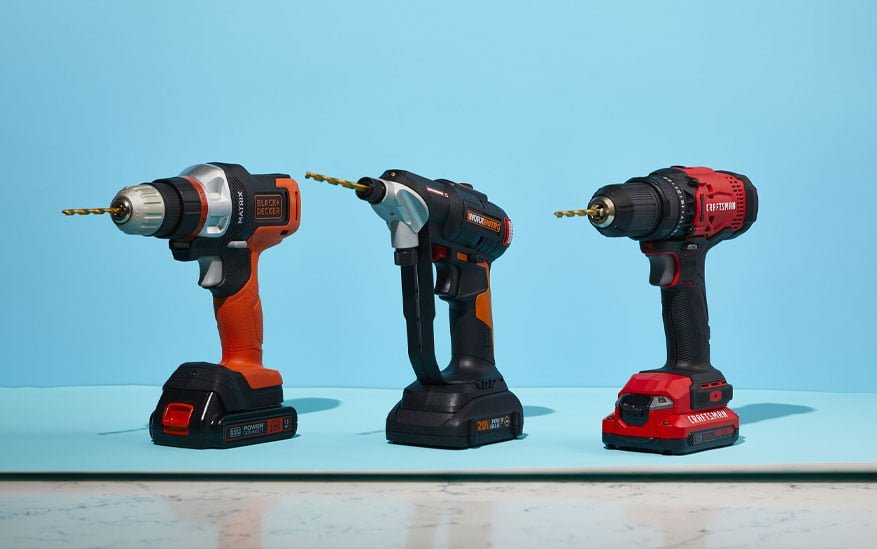
A power drill is used primarily to bore holes into wood and other materials. It is extremely versatile and replaces manual drills or brace and bits if used properly. From assembling furniture and hanging shelves to installing cabinetry and mixing paint, a power drill handles tasks that come up in nearly every DIY project. Choosing a model with a 1/2-inch chuck gives you the flexibility to use larger drill bits and a wider range of attachments.
- Manufactured for removal, drilling, driving screws, and even mixing paints
- A corded or cordless power drill is a must-have
- Choose between a keyless chuck, a keyed chuck, or an impact driver chuck
- Variable speed options from 200-1500 RPM are ideal
- 3/8th inch keyed chuck drills are good all-round performers
2. Circular Saw
A circular saw uses a toothed blade to cut through wood and sometimes metal. It is one of the most useful tools for accurately cutting straight lines and larger pieces of material. Whether you are breaking down plywood sheets, cutting floor joists and roof rafters, or ripping lumber for a new deck, a circular saw delivers portable cutting power that handles most straight-cut needs without requiring a bulky table saw.
- Enables perfectly straight cuts not possible by hand
- Great for structural work like floor joists, roof rafters, and stair treads
- Choose 7 1/4″ blades for versatility and smooth cuts
- Corded models provide sustained power; cordless models add portability
- Select the right blade for the material you’re cutting
- Pay attention to blade direction and safety guards
3. Jigsaw
A jigsaw has a thin, reciprocating blade that moves up and down to cut various shapes and patterns into wood or metal sheets. It enables detailed curved cuts not possible with circular saws. From cutting out sink holes in countertops to crafting custom shapes and fitting trim around corners, the jigsaw is the go-to tool whenever a straight cut is not what you need. For workshop-based curved cuts and resawing lumber, a bandsaw offers additional precision and consistency, though a jigsaw handles most portable curved-cut tasks effectively on its own.
- Used to make intricate or interior cuts
- Great for curves, holes, or creative patterns
- Choose blade width and thickness for your needs
- Pay attention to the jigsaw’s orbit setting
- Can cut wood, PVC, laminates, ceramic tiles, etc
4. Random Orbital Sander
A random orbital sander uses sandpaper attached to a pad in circular and oscillating motions to smoothly and quickly sand down the wood. This essential finishing tool prepares surfaces for staining or painting. Whether you are smoothing rough lumber, removing old paint or varnish from furniture, or prepping a surface before applying a fresh coat of stain, the orbital sander saves significant time compared to hand sanding and delivers a swirl-free finish.
- Creates very smooth finishes without visible scratches
- Removes material quickly without gouging the surface
- Cordless is the most convenient and provides ample runtime
- Some models can also be used for polishing or buffing
- Pay attention to dust collection features
5. Cordless Screwdriver
A cordless screwdriver drives and removes screws using rechargeable lithium-ion batteries without needing to be plugged into an outlet. This offers superior convenience and portability between project sites. For repetitive screwing tasks like assembling flat-pack furniture, installing cabinet hardware, or swapping out outlet covers and light fixtures, a cordless screwdriver reduces hand strain and speeds up the work considerably.
- Lightweight with exceptional grip and balance
- Magnetic bit tips to prevent losing screws
- Great for repetitive screwing/unscrewing tasks
- Reduces hand strain vs manual screwdrivers
- Pay attention to torque ratings and driver bits
6. Table Saw
A table saw has a circular saw blade sticking up through a flat table. This allows for stable and accurate straight cuts through large pieces of wood. When you need to rip plywood sheets to width, cut multiple boards to the same dimension, or break down dimensional lumber for cabinetry and furniture builds, the table saw delivers repeatable accuracy that handheld saws simply cannot match.
- Delivers very straight, flat, and square cuts
- A large table provides material support as you cut
- Make rip cuts (with the grain) or cross cuts (across the grain)
- Great for breaking down plywood and dimensional lumber
- Pay attention to blade size, table extensions, and fences
7. Compound Miter Saw
A compound miter saw makes extremely accurate angled crosscuts through boards. The blade head pivots left/right for miter cuts and tilts side-to-side for bevel cuts. For projects that demand precision angled cuts — such as installing crown molding, cutting baseboards, framing pictures, or forming tight furniture joints — nothing delivers cleaner and more repeatable results. Sliding variants expand the crosscut capacity for wider boards, making them well worth the additional investment.
- Used for making precision, angled cuts
- Great for cutting trim molding, baseboards, crown molding, and forming joints
- Compound models allow both miter and bevel cuts
- Sliding variants expand crosscut capacity
- Pay attention to cutting capacity and laser guides
8. Router
A router uses interchangeable bits that spin at very high RPMs to cut, groove, shape, and joint wood or plastic materials. It offers immense versatility for detailed work. From adding decorative edges to tabletops and cutting dadoes for shelving to shaping custom profiles on trim pieces, a router opens up a level of craftsmanship that elevates DIY projects significantly. For even finer detail work — such as engraving, polishing, or grinding in extremely tight spaces — a compact rotary tool complements the router by handling precision tasks that require a smaller, lighter touch.
- Used for decorative edging, cutting grooves, and shaping profiles
- A large range of bits available for varied functions
- Plunge base vs fixed base dictate applications
- Cordless options provide flexibility for spacing cuts
- Pay attention to variable speed and soft start features
9. Oscillating Multi-Tool
An oscillating multi-tool has a quick side-to-side oscillating blade movement that provides controlled cutting versatility in tight spaces that other tools can’t reach. Its true strength lies in situations where larger tools simply cannot fit — undercutting door jambs for new flooring, scraping away old grout during bathroom renovations, flush-cutting protruding nails or pipes, and cutting drywall for outlet openings.
- For flush cutting, plunge cuts, and detailed shaping
- Gets into tight spaces around pipes, walls, door jambs, etc
- Great for installing floor underlayment and undercutting door frames
- Provides more control than jigsaws in confined areas
- Pay attention to tool attachment compatibility
10. Angle Grinder
An angle grinder is a powerful tool fitted with interchangeable discs that cut, grind, and polish a range of materials, including metal, tile, masonry, and concrete. By swapping the disc, you can transition between cutting metal pipes, smoothing rough welds, grinding down concrete surfaces, or sharpening lawnmower blades. For any DIYer taking on renovation, repair, or metalwork projects, an angle grinder handles heavy-duty tasks that other tools in this list are not designed for. A 4.5-inch model covers the majority of DIY applications.
- Cut-off wheels handle metal, rebar, bolts, and pipes
- Grinding wheels smooth welds and shape masonry
- Flap discs are effective for polishing and surface preparation
- Available in 4.5″ and 7″ sizes — 4.5″ covers most DIY needs
- Pay attention to disc compatibility, guard positioning, and RPM ratings
11. Air Compressor and Nail Gun
An air compressor and nail gun combination allows for quick, easy, and consistent nailing. The air compressor provides power to drive nails directly into the wood with a single trigger pull. For framing, sheathing, decking, and heavy trim installation, this setup replaces slow and fatiguing manual hammering with fast, consistent results. For lighter finish work such as installing baseboard molding and thin trim, a cordless brad nailer (18-gauge) is a practical alternative — it operates without a compressor, is easy to carry around the house, and fires thin nails that leave small holes simple to fill with putty.
- Allows rapid and repetitive nail driving
- Consistent depth and power application
- Great for framing, sheathing, decking, and trim work
- Reduce fatigue and injuries vs manual nailing
- Cordless brad nailers offer portability for finish work without a compressor
- Pay attention to PSI level, tank size, and nailer type
Beyond these core tools, a reciprocating saw is worth considering once your projects expand into demolition and renovation territory. It makes fast work of removing old studs, cutting out pipes, and dismantling structures — tasks that would otherwise demand significant manual effort.
This covers the most essential power tools that no DIYer should be without. Let’s look at some key safety guidelines when using power tools to ensure you complete projects successfully while protecting yourself.
Safety Guidelines for Power Tools
Power tools can be extremely dangerous if not used properly. Their spinning blades, speedy operation, and sharp edges demand healthy respect and caution. Follow these guidelines closely every time you use power tools:
General Safety Tips
- Always read the instruction manual first
- Check guards are working and intact
- Use eye protection, hearing protection, gloves, and dust masks
- Make sure bits and blades are securely attached
- Ensure the workpiece is securely clamped
- Mind loose hair, clothing, and jewelry to prevent entanglement
- Pay full attention – no distractions
- Double-check measurements
- Unplug the tool before changing bits/blades
- Ensure the correct blade for the material
- Never apply excessive force or pressure
In addition to these general tips, follow the safety guidelines below for using each of the essential power tools we’ve covered:
Power Drill Safety
- Keep a firm grip and brace yourself for torque
- Ensure the drill bit is tight and secured
- Use the correct type, shank size, and length of the bit
- Start drilling at low speed and increase slowly
- Let the bit do the work – don’t apply too much pressure
- Ensure clearance behind the workpiece for the drill bit
- Do not touch the drill bit immediately after drilling to avoid burns
Circular Saw Safety
- Adjust the blade depth correctly for the material
- Do not use dull, cracked, or warped saw blades
- Keep your hands away from the blade exposure zone
- Do not pull the saw backward while the blade is still spinning
- Hold securely and prepare for reactive forces
- Ensure nothing behind the workpiece will interfere
Jigsaw Safety
- Tighten blades properly to avoid slipping
- Do not force the jigsaw through the material
- Control speed and direction of cuts
- Release the trigger before removing the blade
- Do not cut corners or the sides of the blade
- Blade holders must cover the entire blade width
Random Orbital Sander Safety
- Do not sand small pieces without clamping
- Check that workpiece edges are smooth
- Always use the correct grit sandpaper
- Move constantly to avoid uneven spots or grooves
- Apply light pressure and keep flat on the surface
- Double-check that the sander is unplugged before changing the paper
Cordless Screwdriver Safety
- Use the correct size and type of screwdriver bits
- Make sure the screw head cleanly engages a bit
- Apply enough downward force to prevent camming out
- Be prepared for higher initial torque
- Do not overtighten screws
- Maintain a good grip in case of sudden spin when the screw tightens
Table Saw Safety
- Keep blade guards installed and working properly
- Pay attention to kickback dangers and anti-kickback devices
- Use feather boards, push sticks, and related safety items
- Ensure the rip fence is aligned accurately
- Make sure you have a clear path behind the saw
- Look out for loose hair/clothing entanglement
Compound Miter Saw Safety
- Firmly clamp/brace all workpieces
- Keep your hands at least 6 inches away from the blade
- Double-check the blade is clean and sharp
- Do not force cuts – let the blade cut at its own pace
- After completing the cut, release the trigger & hold the blade guard down until the blade stops spinning to prevent unwanted contact
- Remove scraps and sawdust from the workspace before the next cut
Router Safety
- Always grip the router firmly with both hands
- Feed the router bit into the workpiece correctly
- Route in a rightward direction and understand the bit spin direction
- Do not rout pieces too small to be stabilized
- Use appropriate jigs and fixtures for specialized operations
- Apply even pressure and do not force the router or stall bit
Oscillating Multi-Tool Safety
- Brace the tool against the workpiece to prevent loss of control
- Make sure the blade does not contact any utilities
- Pay attention to the direction of the blade
- Do not apply too much side pressure on the blade
- Keep your hands away from accessories and the range of cutting paths
Angle Grinder Safety
- Always use the guard and keep it positioned between you and the disc
- Wear a face shield in addition to safety glasses — grinders produce high-velocity sparks and debris
- Inspect discs for cracks or damage before every use
- Never use a disc rated below the grinder’s RPM
- Hold the grinder with both hands and stand to the side, never directly behind the disc
- Allow the disc to reach full speed before contacting the workpiece
- Set the tool down and wait for the disc to stop completely before putting it away
Air Compressor & Nail Gun Safety
- Make sure the trigger and safety tip are aligned before firing
- Keep fingers away from the nail exit path
- Be very cautious of the recoil after firing
- Ensure the air hose does not pose a tripping hazard
- Disconnect the air supply when clearing jammed nails
- Check and maintain consistent air pressure
This covers major safety guidelines for each essential power tool. Follow all manufacturer instructions as well. Safety is critical when undertaking DIY projects, so invest time to understand and apply protective methods before jumping into using power tools!
Maintenance and Storage of Power Tools
Power tools represent major investments for DIYers. Proper maintenance and storage ensure they deliver reliable performance and longevity. Follow these guidelines for your essential power tools:
Maintaining a clean workspace is just as important as maintaining the tools themselves. A wet/dry shop vacuum is invaluable for clearing sawdust from your work area, connecting to dust ports on tools like circular saws and sanders, and handling debris or accidental liquid spills. A clean workspace improves visibility and accuracy while reducing slip and fire hazards.
Maintenance Tips
- Blow out or vacuum dust routinely
- Wipe down tools after every use
- Tighten any loose screws or fittings
- Clean air filters and compressor heads
- Inspect cords, plugs, and casings periodically
- Lubricate bearings, blades, and chalk lines
- Replace worn-out brushes and gears
- Service tools annually
Storage Guidelines
- Allow tools to fully cool down before storing
- Clean all sawdust, dirt, and debris beforehand
- Store tools in a dry location away from direct moisture
- Use protective cases or covers when available
- For battery-powered tools, remove batteries before storage
- Avoid exposure to temperature or humidity extremes
- Hang extension cords correctly to prevent kinks
- Group related tools together logically
Proper maintenance keeps the components of power tools running smoothly over the years of usage. And correct storage avoids moisture or temperature damage during downtimes. Investing some periodic effort into upkeep will ensure your power tools last for the long run!
Choosing the Right Power Tools
With this foundation on essential power tools, you likely want to purchase options suitable for your needs and budget. Keep the following aspects in mind:
Cordless or Corded
Cordless tools provide exceptional flexibility and range of motion, but are limited by battery charge. Corded tools offer sustained power but require outlet proximity. Choose based on your needs and project scale.
If you decide to go cordless, consider investing in a single battery-powered ecosystem — most major brands offer platforms where the same battery (typically 18V or 20V) fits across their entire lineup of tools. This means you only need a few batteries to power a drill, circular saw, sander, and more. Sticking to one platform saves money on spare batteries and chargers while keeping your toolkit streamlined.
Power and Speed Variables
Higher power or speeds allow quicker work but require managing the added torque. Variable speed/torque settings offer flexibility for different applications.
Ergonomics
Look for tools sized appropriately for your hand with rubberized grips. Shape, balance, and handling make a major difference in the control and prevention of injuries.
Safety Features
Built-in blade guards, automatic brakes, anti-kickback devices, emergency stops, etc., are crucial safety mechanisms. Do not compromise here.
Cost Considerations
DIYers don’t necessarily need professional-grade gear. Great starter or mid-tier options from reputable brands offer the highest value. Focus on reliability and longevity rather than just price. Consider the costs of extensions, accessories, and replacements as well.
Here are some excellent power tool brands to consider across different price spectrums:
Professional Grade: Festool, Makita, DeWalt, Bosch, Hitachi
Consumer Grade: Ryobi, Craftsman, Skil, Porter Cable
Value Options: Harbor Freight, Wen, Skill Saw, Genesis
Starter Combo Kits
If you are building your toolkit from scratch, purchasing a starter combo kit is one of the most cost-effective ways to begin. These kits typically bundle a drill, circular saw, reciprocating saw, and a couple of other tools along with batteries and a charger — all for significantly less than buying each tool individually. Since the batteries are shared across the entire kit, you also avoid the expense of separate chargers and power packs for each tool. Once you have the core kit, you can expand one tool at a time as your projects demand it.
Finding the sweet spot between cost and performance for an amateur DIYer is key to getting started with power tools without breaking the bank. Do your research, read multiple reviews, and make informed purchasing choices. Protect your investments with proper maintenance and storage as well!
