

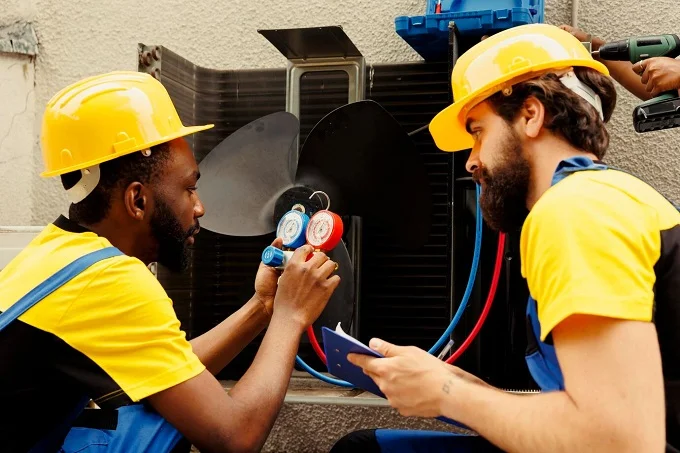
Your HVAC system quietly impacts two things you care about most: your monthly energy bill and the air your family breathes. Skip maintenance, and you’ll pay for it—both in higher costs and lower comfort. Most homeowners only think about it when something goes wrong — usually during a heatwave or in the middle of January. That’s the worst time to discover your system has been slowly losing efficiency for two years because of a clogged filter or a dirty evaporator coil. That’s why regular HVAC maintenance isn’t optional—it’s your first line of defense against costly repairs and poor air quality. Per EPA Indoor Air Quality guidelines, regular HVAC maintenance directly impacts the PM2.5 and VOC levels in your home.
This guide covers what regular maintenance actually does, which tasks are genuinely DIY-friendly, and where the boundary is between a homeowner with a screwdriver and a licensed technician.
Why Regular HVAC Maintenance Prevents Early System Failure
Treat your central air systems right, and it’ll reliably serve your home for 15–20 years. Skip the basics, and you’ll cut that lifespan short—fast. Most that get replaced early don’t fail catastrophically — they get progressively more expensive to run and repair until replacement becomes the cheaper option. The culprit is almost always deferred maintenance.
When your air filter gets clogged, your blower motor has to strain just to move air—and that extra effort adds up in wear and energy costs. That adds wear to the motor, raises electricity use, and reduces airflow across the evaporator coil. When the coil doesn’t get enough airflow, it can ice over — which stops cooling entirely and, if ignored, damages the compressor. A compressor replacement on a central AC unit typically runs $1,200–$2,800. The filter that could have prevented it costs $10–$30.
The same logic applies to heating. On a gas furnace, restricted airflow causes the heat exchanger to overheat repeatedly. Over time, that thermal stress can crack the heat exchanger, which is both a safety issue (carbon monoxide) and an expensive repair that often triggers a full system replacement.
Air Quality: More Than Just Dust
Yes, HVAC maintenance improves air quality—but let’s get specific: it’s not just about less dust. It’s about reducing the PM2.5 and VOCs that actually trigger asthma attacks. Per EPA Indoor Air Quality guidelines, maintaining clean coils and appropriate MERV-rated filters directly reduces circulating PM2.5 and VOCs—key triggers for asthma and allergy sufferers. A system with a heavily loaded filter or dirty coils can actually circulate more fine particles — PM2.5 and VOCs included — than one with no filter at all, because contaminated surfaces become secondary emission sources.
Picking the right filter matters: a standard MERV 8 catches most pollen, mold spores, and bigger dust particles—enough for many households. The MERV rating system (Minimum Efficiency Reporting Value) helps you match filter performance to your household needs—without over-restricting airflow. ASHRAE Standard 52.2 defines MERV testing protocols—so when you select a MERV 13 filter, you’re choosing verified performance for fine particle capture. If someone in your home has asthma or allergies, upgrading to MERV 11 or MERV 13 provides better filtration of fine particles and some bacteria. The catch: higher MERV ratings increase airflow resistance, so you need to change them on schedule — typically every 2–3 months—set a calendar reminder so you never miss a change. Running a MERV 13 filter past its useful life is worse than using a MERV 8. For filters, options like 3M Filtrete or Honeywell TrueCLEAN offer MERV 11-13 ratings that balance airflow and particle capture—just check compatibility with your system first.
For whole-home air quality, pair your filter strategy with ASHRAE Standard 62.2 ventilation guidelines—proper fresh air exchange reduces VOC buildup that filters alone can’t capture.
Homes with pets, high dust, or occupants with respiratory conditions should check filters monthly rather than relying on a calendar schedule.
The Energy Efficiency Reality
Here’s the payoff: a well-maintained system doesn’t just breathe easier—it keeps more money in your pocket every single month. Dirty coils are the main efficiency killer most homeowners never see. The evaporator coil (inside) and condenser coil (outside) transfer heat. When either is coated in grime, that transfer is impaired, and the system has to run longer to reach the set temperature.
Studies from the Air Conditioning Contractors of America (ACCA) and Lawrence Berkeley National Laboratory have consistently shown that a neglected system can use 10–30% more energy than the same system kept clean. On a home spending $200/month on cooling, that’s $20–$60 per month in preventable waste.
Worth noting: if your system is more than 10–12 years old and running below 14 SEER (the old minimum efficiency standard; the new SEER2 (Seasonal Energy Efficiency Ratio, the 2023 updated standard) minimum is 13.4 in most regions as of 2023), even a perfectly maintained unit is significantly less efficient than a new mid-range system. If you’re evaluating replacement, ensure your contractor performs an ACCA Manual J load calculation—this industry-standard protocol prevents oversizing, which wastes energy and shortens equipment life. Look for the ENERGY STAR Most Efficient label when upgrading—these top-tier models deliver 15–30% greater savings than standard new units, but only if maintained properly. If your system carries the ENERGY STAR label, proper maintenance ensures it delivers the verified savings you paid for—neglect erases that advantage fast. Think of maintenance like oil changes for your car: it keeps your system running longer and smoother, but it won’t turn a 10-year-old unit into a brand-new high-efficiency model.
Maintenance Tasks You Can Actually Do Yourself
Most of the tasks homeowners can handle safely come down to keeping air moving cleanly through the system.
Replacing or cleaning the air filter is the most impactful thing you can do and requires no tools. Know your filter size (written on the filter frame), buy the right MERV rating for your household, and change it on schedule. Filters are the most commonly neglected maintenance item and the one with the highest leverage.
Keeping the outdoor condenser unit clear is straightforward. The unit needs roughly two feet of clearance on all sides. Hose it down annually in spring to remove debris from the fins — spray from the inside out if you can, and keep the water pressure low enough that it doesn’t bend the fins. Don’t use a pressure washer.
Checking and cleaning the condensate drain line prevents water damage and mold growth. This is the PVC pipe that drains moisture from the evaporator coil. A clogged drain line will back up and either trip a float switch (which shuts the system off) or overflow into the ceiling. Pour a cup of diluted bleach or white vinegar through it once a year to prevent algae buildup.
Testing your thermostat — or replacing an older mercury thermostat — is worth doing before cooling season. Smart thermostats like the Ecobee SmartThermostat or Google Nest Learning Thermostat add scheduling and remote monitoring that genuinely reduce energy use, especially if your household has irregular schedules. Before installing a smart thermostat like Ecobee or Nest, verify C-wire compatibility—many older systems require this common wire for reliable power, or you’ll need an adapter kit.
What Belongs to a Professional
Refrigerant handling is EPA-regulated and requires Section 608 certification (required for legal refrigerant handling). You cannot legally purchase refrigerant (R-410A, or the newer R-454B in newer systems) without certification, and a system that’s losing refrigerant has a leak that needs to be found and fixed — not just topped off. Any technician who offers to “add refrigerant” without diagnosing the source of the loss is not doing their job.
Electrical components — capacitors, contactors, blower motors — should be handled by a licensed HVAC technician. Capacitors, in particular, store a charge even when power is disconnected. A failed run capacitor is one of the most common summer breakdowns, but replacing one incorrectly is a legitimate electrocution risk.
When booking a tune-up, look for NATE-certified technicians (North American Technician Excellence, the industry’s leading credential)—they’ve demonstrated expertise in system diagnostics and safety protocols. Annual professional tune-ups (once in spring before cooling season, once in fall before heating season) allow a technician to check refrigerant charge, measure amperage draws on the motors and compressor, inspect the heat exchanger for cracks, clean the coils properly, and calibrate combustion on gas furnaces. A thorough tune-up runs $80–$150 per visit. HVAC maintenance contracts typically bundle both visits for $150–$300 annually and often include priority scheduling.
The Honest Case for Maintenance Schedules
Here’s the math that matters: spending $150–$300 now on maintenance beats a $400 emergency call later—and it’s a fraction of the cost of replacing a system that wore out too soon.
The non-financial argument is convenience. HVAC systems fail most often under peak load — the hottest day of summer, the coldest night of winter — because that’s when stress on the system is highest. A system that’s been inspected and tuned in spring is less likely to fail in July. That’s not a guarantee, but it’s a meaningful reduction in the probability of a bad situation at the worst possible time.
A Simple Maintenance Calendar
- Monthly: Check the air filter. Replace if visibly loaded, regardless of schedule.
- Spring (before cooling season): Professional AC tune-up, condenser coil cleaning, condensate drain flush, thermostat check.
- Fall (before heating season): Professional furnace tune-up, heat exchanger inspection, filter replacement, ductwork visual inspection for obvious gaps or disconnections.
- Every 3–5 years: Professional duct cleaning if there’s evidence of buildup, visible mold, or a major renovation that generated significant dust.
Bottom line? HVAC maintenance doesn’t have to be complicated—you just need to stick with it. The tasks that prevent 80% of problems — clean filters, clear coils, functioning drain lines, and annual professional inspections — are low-cost and low-effort. The systems that break down at the worst possible moment? Almost always the ones where someone skipped the $15 filter change for years. Pick a schedule, set calendar reminders today, and breathe easier knowing your system—and your budget—are protected. **Download our free HVAC Maintenance Checklist** to stay on track.
