

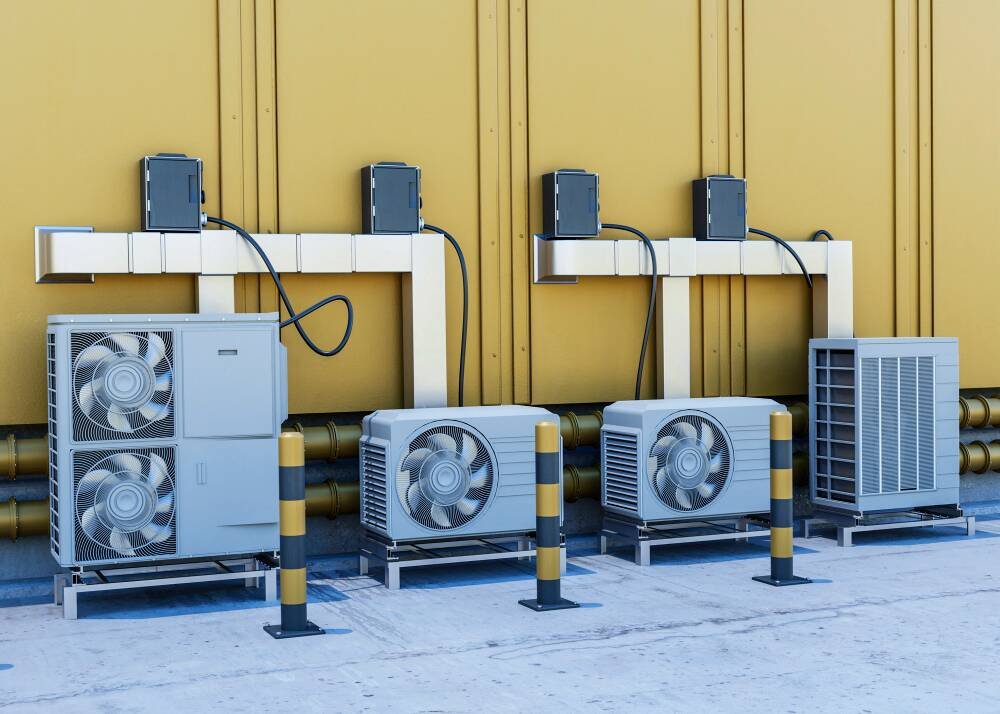
Energy Efficient Air Conditioners
With energy costs climbing and environmental awareness growing, efficiency has become a deciding factor for homeowners upgrading their cooling systems. The average American household spends approximately $1,640 annually on energy, with cooling accounting for roughly 12% of that total. A well-chosen, energy-efficient air conditioner can reduce cooling costs by 30–50% compared to older units while cutting household CO2 emissions by as much as 0.75 tons per year.
Today’s high-efficiency systems use inverter compressors, smart controls, and improved refrigerants to deliver the same level of comfort with far less electricity. This guide walks through the key factors in selecting the right system — from understanding SEER2 ratings and system types to evaluating costs, incentives, and long-term value.
Choosing the Best Energy-Efficient Air Conditioner
Key Takeaways
- SEER2 ratings replaced SEER in 2023 and reflect real-world ductwork conditions — always compare SEER2 values when shopping.
- EER2 measures peak-condition performance (95°F outdoor temperature) and matters most in hot climates like Texas, Arizona, and Nevada.
- ENERGY STAR certified central AC units must meet SEER2 ≥ 15.2 and EER2 ≥ 11.7.
- Inverter-driven variable-speed compressors adjust continuously to match cooling demand, saving 30–50% over single-speed systems.
- Proper sizing through Manual J load calculations is essential — oversized units waste energy and underperform on humidity control.
- Smart thermostats with learning algorithms can improve efficiency by 10–15%.
- Sealed, insulated ductwork (minimum R-6 in unconditioned spaces) prevents the loss of conditioned air.
- Central AC, ductless mini-splits, and heat pumps each serve different home layouts and climate needs.
- Federal tax credits cover up to $2,000 for ENERGY STAR heat pumps and $600 for central AC under the Inflation Reduction Act.
- High-efficiency systems typically achieve payback within 8–12 years and offer the lowest lifetime cost over a 15–20 year lifespan.
- Regular maintenance — including MERV-rated filter replacement and annual professional tune-ups — sustains peak performance.
When shopping for a new high-efficiency air conditioning system, several specifications and features determine how well a unit will perform in your specific home. Understanding these factors before comparing models ensures you invest in a system that delivers real savings — not just a high number on a spec sheet.
Understanding Energy Efficiency Ratings
The most important starting point is the unit’s efficiency rating. In 2023, the industry transitioned from the traditional SEER (Seasonal Energy Efficiency Ratio) to SEER2, which tests equipment under higher external static pressure — conditions that better reflect the resistance created by actual ductwork. A SEER2 rating is more conservative than the old SEER, so the two numbers are not directly interchangeable, but SEER2 gives a much more accurate picture of how a system will perform once installed.
Federal minimum requirements under SEER2 vary by region:
- Northern regions: 13.4 SEER2 minimum
- Southern and Southwest regions: 14.3 SEER2 minimum
Systems in the 18–22 SEER2 range represent an excellent efficiency-to-value balance, while premium models reaching 24–26 SEER2 deliver the lowest operating costs available in residential central cooling.
While SEER2 measures seasonal average efficiency across varying outdoor temperatures, EER2 (Energy Efficiency Ratio 2) captures performance at a single peak condition — 95°F outdoor temperature. For homeowners in consistently hot climates, EER2 is often the more relevant number because it tells you how hard the system works on the hottest days when cooling demand is highest. Top-performing units maintain EER2 ratings of 11–13, with the most advanced reaching 14 or above.
For those considering a heat pump (which provides both heating and cooling), the heating equivalent is HSPF2 (Heating Seasonal Performance Factor 2). The most efficient heat pumps reach HSPF2 ratings up to 13, making them a compelling year-round option — particularly in mixed climates.
ENERGY STAR certification remains a reliable, quick filter. In 2025, certified central AC units must achieve a SEER2 of at least 15.2 and an EER2 of at least 11.7, along with additional refrigerant management criteria. These thresholds exceed federal minimums by a meaningful margin, and certified systems typically use 15–20% less energy than baseline models.
Assessing Your Needs
No efficiency rating matters if the system is the wrong size for your home. An oversized unit cools the air quickly but shuts off before it can remove humidity — leaving you with a cold, clammy house and higher energy bills. An undersized unit runs constantly without reaching the setpoint.
The industry standard for proper sizing is a Manual J load calculation, which evaluates your home room by room. It accounts for:
- Square footage and ceiling height
- Insulation levels in walls, attic, and floors
- Window size, type, orientation, and solar heat gain
- Air sealing and infiltration rates
- Number of occupants and internal heat sources
- Local climate design conditions
Professional load calculations often reveal that homes need 20–40% less cooling capacity than rules-of-thumb suggest. Insisting on a Manual J calculation before any system is quoted is the single most impactful step toward real-world efficiency.
Building envelope improvements can further reduce cooling loads by 30–50%, allowing a smaller, less expensive system to do the same job. Priorities include attic insulation (R-38 to R-60 depending on climate zone), air sealing around penetrations and ducts, and low-E window coatings or exterior shading.
Features to Look For
Modern high-efficiency systems offer several technologies that work together to reduce energy consumption:
- Inverter-driven compressors adjust their speed continuously rather than cycling on and off at full power. This eliminates the energy spike at each startup and allows the system to run at lower, steadier speeds most of the time — using significantly less electricity while maintaining tighter temperature control (typically within 0.5°F of the setpoint).
- Variable-speed vs. two-stage vs. single-stage operation: Single-stage compressors run at 100% capacity only, leading to frequent on-off cycling and temperature swings of 2–4°F. Two-stage systems add a lower setting (usually around 65% capacity) for milder conditions. Variable-speed systems modulate across a continuous range, matching output to demand at any given moment. Variable-speed delivers the highest efficiency and comfort, but two-stage systems offer a meaningful step up from single-stage at a lower price point.
- Smart thermostats go beyond simple scheduling. Models with learning algorithms adapt to your habits, integrate with utility demand-response programs, and can adjust operation based on weather forecasts and occupancy patterns. Properly configured, they can improve system efficiency by 10–15%.
- Variable-speed blower fans adjust airflow to match the compressor’s output, reducing energy use during lighter cooling loads and improving dehumidification.
- Communicating controls allow the thermostat, compressor, and blower to share data in real time, optimizing performance across the entire system rather than each component operating independently.
- Improved insulation, sealing, and materials in both the equipment cabinet and your home’s ductwork prevent conditioned air from escaping before it reaches living spaces.
Types of Energy-Efficient Air Conditioners
Several system configurations are available, each suited to different home layouts, budgets, and cooling needs.
Central Air Conditioning
Central systems remain the most common whole-home cooling solution. An outdoor condenser connects to an indoor air handler that distributes conditioned air through ductwork to every room. High-efficiency central ACs rated at 18 SEER2 or above deliver excellent energy savings, especially when paired with sealed ducts and zoning controls that direct cooling only where it’s needed.
The newest central air conditioners use variable-speed compressors that modulate cooling output based on real-time demand — meaning fewer temperature swings, longer run cycles at lower power draw, and better humidity management compared to older single-stage equipment.
Mini-Split Ductless Systems
Ductless mini-splits connect an outdoor condenser to one or more indoor wall or ceiling units via refrigerant lines, bypassing ductwork entirely. Without duct losses — which can waste 20–40% of conditioned air in poorly sealed central systems — mini-splits often achieve higher real-world efficiency. Multi-zone configurations allow independent temperature control in different rooms, and systems rated 18 SEER2 or higher deliver substantial energy savings.
Mini-splits are particularly well-suited to homes without existing ductwork, room additions, or spaces where extending ductwork is impractical. They also provide an energy-efficient cooling and heating solution when selected as heat pump models.
Heat Pumps
Heat pumps provide both cooling and heating in a single system by reversing the refrigeration cycle. In cooling mode, they function identically to a standard air conditioner. In heating mode, they extract heat from outdoor air and move it inside — a process that uses far less energy than generating heat from electricity or burning fuel.
The most efficient heat pumps available today achieve SEER2 ratings up to 26 for cooling and HSPF2 ratings up to 13 for heating. Cold-climate models now operate effectively in temperatures down to −15°F, making them viable in regions where earlier generations struggled. For most climates, a heat pump represents the most energy-efficient option for year-round whole-home comfort.
Heat pumps also qualify for the largest federal tax credits — up to $2,000 under the Inflation Reduction Act — which can significantly offset the higher upfront cost compared to cooling-only systems.
Through-the-Wall Air Conditioners
These self-contained units mount into a wall sleeve, venting hot air and condensation directly outside without occupying window space or floor area. While less common in new construction, they can be an efficient upgrade in older homes. Look for units rated at least 14 SEER2.
Casement Air Conditioners
Casement-style window units are designed for crank-open or sliding windows, providing a tighter seal than standard double-hung units. If your window openings are compatible, an ENERGY STAR certified casement model rated at least 14 SEER2 offers a solid efficiency baseline for single-room cooling.
Most Efficient Central AC Models in 2025
Advances in compressor design, refrigerant chemistry, and smart controls have pushed residential central AC efficiency to levels that were unavailable just a few years ago. Below are the highest-performing models currently on the market, organized by efficiency tier.
Ultra-High Efficiency (24+ SEER2)
These flagship systems represent the cutting edge of residential cooling technology. They carry the highest equipment prices but deliver the lowest operating costs and often qualify for maximum incentive amounts.
- Lennox SL25KCV — Up to 26.0 SEER2. Variable-capacity operation from 35–100%, SilentComfort™ technology for quiet operation around 58 dB, and compatibility with the iComfort S30 smart thermostat. Equipment price range: approximately $4,800–$8,500.
- Bryant Evolution Extreme 26 (186CNV) — Up to 26.0 SEER2. Multi-stage comfort with smart-communicating technology that optimizes energy use and grid load across the system. A strong option for homeowners within the Bryant/Carrier dealer network.
- Carrier Infinity 26 — Up to 26.0 SEER2. Features Greenspeed Intelligence, which allows the compressor to adjust output in precise 1% increments for unmatched dehumidification and temperature accuracy. Equipment price range: approximately $4,600–$8,200.
- Lennox EL23XCV — Up to 23.5 SEER2. A more accessible tier within Lennox’s premium lineup, using the same Precise Comfort® technology at a lower price point. Equipment price range: approximately $3,800–$7,000.
- Trane XV20i TruComfort — Up to 22.0 SEER2. Trane’s TruComfort™ system automatically adjusts to the home’s exact cooling load while managing indoor humidity. Built with Spine Fin™ outdoor coil design for improved heat transfer. Equipment price range: approximately $4,200–$7,800.
High Efficiency (20–24 SEER2)
Systems in this range offer an excellent balance of efficiency and cost, with many qualifying for federal tax credits and utility rebates.
- Amana ASXC20 / Goodman GSXC20 — Up to 21.5 SEER2. Communicating inverter technology with noise-reduction features. Amana’s models include a lifetime unit replacement warranty on the compressor, one of the strongest in the industry. Equipment price range: approximately $3,200–$6,500.
- Rheem Prestige Series (RA20) — Up to 20.5 SEER2. EcoNet is enabled for smart diagnostics and home automation integration, allowing remote monitoring and performance optimization. Equipment price range: approximately $3,100–$6,200.
- American Standard AccuComfort Platinum 20 — Up to 20.0 SEER2. Features 750 stages of variable operation for precise temperature matching with virtually no swings. Low-profile side-discharge design makes it easier to install in tight spaces. Equipment price range: approximately $3,400–$6,800.
- Daikin Fit (DX20VC) — Up to 20.0 SEER2. Compact side-discharge design and swing compressor technology make this one of the quietest and most space-efficient central AC options available. Equipment price range: approximately $2,900–$6,000.
- York Affinity Series (YXV) — Up to 20.0 SEER2. Features Climaset™ technology for customized climate tuning and whole-home comfort optimization. Equipment price range: approximately $2,800–$5,800.
Key Technologies Behind These Ratings
The performance numbers above are made possible by several converging technologies:
- Variable-speed and multi-stage compressors that modulate capacity rather than cycling at full output
- Inverter-driven motor controls for precise speed adjustment across a wide operating range
- Sensors and smart algorithms that continuously balance temperature and humidity
- Improved heat exchanger designs (such as Trane’s Spine Fin™ coils) for better thermal transfer
- Next-generation refrigerants — R-32 (68% lower global warming potential than R-410A) and R-454B (78% lower GWP) are replacing older refrigerants across most manufacturers
- Integration with smart home platforms, voice assistants, and energy monitoring apps
- Connectivity with solar panels, home batteries, and utility grid demand-response programs
Installation and Maintenance for Peak Efficiency
Even the most efficient system will underperform if it’s poorly installed or neglected. Installation quality and ongoing care are just as important as the equipment you choose.
Why Installation Quality Matters
A high-efficiency system installed incorrectly can lose 30% or more of its rated performance. The most common issues include improper refrigerant charge, incorrect airflow (measured in CFM and static pressure), and undersized or leaky ductwork. Professional installation by certified technicians — including commissioning tests that verify refrigerant charge, airflow rates, and electrical connections — ensures the system operates as designed.
Ductwork deserves special attention. Poorly sealed or uninsulated ducts in unconditioned spaces (attics, crawlspaces) can waste 20–40% of the air the system produces. Industry guidelines call for all joints to be sealed with mastic or approved tape and insulated to at least R-6. A Manual D duct design calculation ensures the ductwork is properly sized for the system’s airflow requirements.
Climate Zone Considerations
Different climates demand different priorities when selecting a system:
- Hot-dry regions (Southwest): Emphasize high EER2 ratings, since systems spend more time at peak output. Sensible cooling capacity matters more than dehumidification.
- Hot-humid regions (Southeast): Prioritize variable-speed systems that run longer at lower speeds to remove moisture effectively. Dehumidification capability is critical.
- Mixed climates (Mid-Atlantic, Midwest): Heat pumps offer the best year-round value, handling both cooling and heating efficiently across shoulder seasons.
Filters and Ongoing Maintenance
Air filters directly affect both efficiency and air quality. Dirty filters restrict airflow, forcing the system to work harder — reducing efficiency by 15–25% in severe cases. Filter selection involves a tradeoff between filtration level and airflow restriction, measured by the MERV (Minimum Efficiency Reporting Value) scale:
- MERV 1–4 (fiberglass): Basic protection, replace monthly
- MERV 8–12 (pleated): Good balance of filtration and airflow, replace every 2–3 months
- MERV 13–16 (high-efficiency): Superior filtration, replace every 3–6 months — verify your system can handle the added resistance
Beyond filter replacement, an annual professional tune-up ($150–300 typically) should include refrigerant level checks, coil cleaning, electrical connection inspection, and condensate drain clearing. Regular maintenance preserves 5–15% of system efficiency and extends equipment life significantly.
Common Efficiency-Reducing Problems
Several issues can erode efficiency gradually, often going unnoticed until energy bills climb:
- Refrigerant leaks reduce cooling capacity and efficiency by 10–30%
- Dirty evaporator and condenser coils impair heat transfer
- Duct leakage wastes conditioned air into unconditioned spaces
- Thermostat malfunctions cause unnecessary runtime or incorrect cycling
Prompt attention to these issues prevents minor problems from becoming expensive efficiency losses.
Cost Analysis: Efficiency vs. Investment
High-efficiency systems carry higher upfront price tags, but the math over time often favors the more efficient option — especially when incentives are factored in.
Upfront Equipment and Installation Costs
For a typical 3-ton residential system, equipment costs break down roughly as follows:
- Standard efficiency (14–16 SEER2): $2,500–$4,000
- High efficiency (18–22 SEER2): $3,500–$6,500
- Ultra-high efficiency (24–26 SEER2): $5,000–$8,500
Total installed costs — including labor, ductwork modifications, and electrical work — typically range from $6,000–$12,000 for equipment replacement and $8,000–$16,000 for new installations requiring ductwork.
Annual Energy Savings
Savings depend on your current system’s age and efficiency, local electricity rates, and climate. For a 2,000-square-foot home at the national average electricity rate of roughly $0.12/kWh:
- Upgrading from 10 SEER to 16 SEER2: approximately $400–$600 per year
- Upgrading from 10 SEER to 22 SEER2: approximately $600–$900 per year
- Upgrading from 10 SEER to 26 SEER2: approximately $700–$1,100 per year
Payback Period and Lifetime Cost
Payback periods for high-efficiency upgrades generally fall in the 8–12 year range, with shorter paybacks in hot climates where cooling costs are highest. Over a 20-year lifespan — and assuming approximately 4% annual energy cost inflation — total cost of ownership often favors high-efficiency systems:
- 14 SEER2 system over 20 years: approximately $22,000–$28,000 total
- 18 SEER2 system over 20 years: approximately $20,000–$26,000 total
- 22 SEER2 system over 20 years: approximately $19,000–$25,000 total
Higher-efficiency systems also tend to require fewer repairs due to lower-stress operation and better build quality.
Federal Tax Credits and Utility Rebates
The Inflation Reduction Act provides meaningful incentives for efficient cooling equipment through 2025:
- ENERGY STAR heat pumps: up to $2,000 (30% of equipment cost)
- ENERGY STAR central AC: up to $600 (30% of equipment cost)
- Smart thermostats: up to $150 (30% of cost)
Many states and utilities offer additional rebates on top of the federal credit. California programs can add $1,000–$3,000, New York heat pump incentives range from $500–$2,500, and Texas utility rebates typically fall between $500–$1,500. Check the DSIRE database (dsireusa.org) for incentives specific to your ZIP code.
Financing options — including contractor financing, home improvement loans, PACE programs (repaid through property taxes), and utility on-bill financing — can make the upfront cost manageable, with some programs offering 0% promotional rates for qualified buyers.
Our Top Picks: Window and Room Air Conditioners
For spaces where a central system isn’t practical — or where supplemental cooling is needed — these room air conditioners offer strong efficiency and performance.
1. Best Overall Value: Midea U Inverter Window AC
The Midea U Inverter offers an excellent blend of value, efficiency, and cooling power. Its inverter compressor and ENERGY STAR rating above 14 SEER2 make it a reliable and affordable cooling upgrade. The smart Eco mode, follow-me remote temperature sensor, and built-in antimicrobial filter add convenience without inflating the price.
2. Quietest Design: Dreo DR-HAC002 Window AC
For sliding windows, the Dreo’s U-shaped dual-hose design enables fast cooling with minimal noise. An embedded antimicrobial filter inhibits bacteria growth, and its ENERGY STAR certification, meeting 14 SEER2, confirms solid efficiency.
3. Easiest Installation: TOSOT 8000 BTU Window AC
A clean, modern design with an easy-to-use remote and LED display. ENERGY STAR certified for efficiency, with an EZ-Fit window bracket and expandable side panels that simplify installation significantly.
4. Best for Larger Rooms: Friedrich Chill Premier CP12G10B
This 12,000 BTU window unit uses a variable-speed compressor to achieve roughly 19 SEER efficiency — well above ENERGY STAR standards. Smart features and whisper-quiet operation make it one of the most capable window units available.
5. Most Window Space: LG LW1817IVSM Window AC
Delivering 18,000 BTUs within a standard double-hung frame, the LG provides high capacity with minimal window obstruction. Its design also makes it one of the quietest through-the-window units in its class.
What’s Coming Next in Cooling Efficiency
The industry is moving toward even stricter standards and cleaner technology:
- Next-generation refrigerants: R-32, R-454B, and R-290 (propane) are phasing in as manufacturers transition away from high-GWP substances. R-290 is a natural refrigerant with near-zero GWP, already common in European systems.
- Advanced compressor designs: Magnetic bearing and linear compressors eliminate friction losses and mechanical wear, promising longer service life and finer capacity control.
- AI-driven optimization: Systems that learn occupancy patterns, respond to weather forecasts, and coordinate with utility grid signals to pre-cool during off-peak hours.
- Regulatory tightening: Potential SEER2 minimum increases in 2026, and possible phase-out of remaining high-GWP refrigerants by 2028 will continue pushing the efficiency floor upward.
Systems purchased today at the top of the efficiency range will remain well above minimum standards for years to come.
FAQs
What’s the difference between SEER and SEER2?
SEER2 replaced the original SEER rating in 2023. It tests air conditioners under higher static pressure to simulate real ductwork resistance, producing a more conservative — and more realistic — efficiency number. The two scales are not directly interchangeable, so always compare SEER2 to SEER2 when evaluating current equipment.
What SEER2 rating should I look for?
For meaningful energy savings, look for 18 SEER2 or above. Systems in the 20–26 SEER2 range represent the highest-performing central ACs available and often qualify for federal tax credits and utility rebates. The sweet spot for most homeowners — balancing upfront cost with long-term savings — is typically in the 18–22 SEER2 range.
How much can I save by upgrading?
Replacing a 10 SEER system with a 22 SEER2 unit can reduce cooling costs by 40% or more. For a typical 2,000-square-foot home, that translates to roughly $600–$900 per year in electricity savings. Over a 15–20 year system lifespan, the cumulative savings can be substantial.
Is a heat pump better than a standard air conditioner?
For most climates, a heat pump is the more efficient choice because it handles both cooling and heating in a single system. Heat pumps achieve SEER2 ratings comparable to standalone ACs for cooling while also providing efficient heating — and they qualify for up to $2,000 in federal tax credits versus $600 for central AC alone.
What’s involved in installing a high-efficiency central AC?
Installation requires proper load sizing (Manual J calculation), ductwork evaluation, precise refrigerant charging, airflow verification, and full system commissioning. It’s specialized work — always use a licensed, insured HVAC professional.
Are energy-efficient AC units worth the higher upfront cost?
In most cases, yes. Between lower monthly energy bills, available tax credits and rebates, fewer repairs, and a longer equipment lifespan, high-efficiency systems typically achieve payback within 8–12 years and deliver the lowest total cost of ownership over their full lifespan.
How often should I replace my air filter?
It depends on the filter type. Basic fiberglass filters (MERV 1–4) should be replaced monthly. Pleated filters (MERV 8–12) typically last 2–3 months. Higher-efficiency filters (MERV 13–16) can go 3–6 months, but check your system’s documentation — not all equipment can handle the added airflow resistance of high-MERV filters.
Can I make an old AC more energy-efficient?
Regular maintenance, clean filters, sealed ductwork, and a programmable or smart thermostat can meaningfully improve an older system’s performance. However, the biggest gains come from replacing aging equipment with a modern, properly sized system — the technology gap between a 15-year-old unit and a current model is significant.
Conclusion
Upgrading to an energy-efficient air conditioning system is one of the most practical investments a homeowner can make. Today’s high-efficiency models — whether a 26 SEER2 central AC, a ductless mini-split, or a year-round heat pump — deliver measurable savings on electricity bills while providing better comfort control, quieter operation, and a smaller environmental footprint.
The key is matching the right system to your home. Start with a professional load calculation, prioritize installation quality, and take full advantage of federal tax credits and local rebates to reduce the upfront investment. With proper selection and maintenance, a modern high-efficiency system will pay for itself in energy savings over its lifespan while keeping your home comfortable for years to come.
