

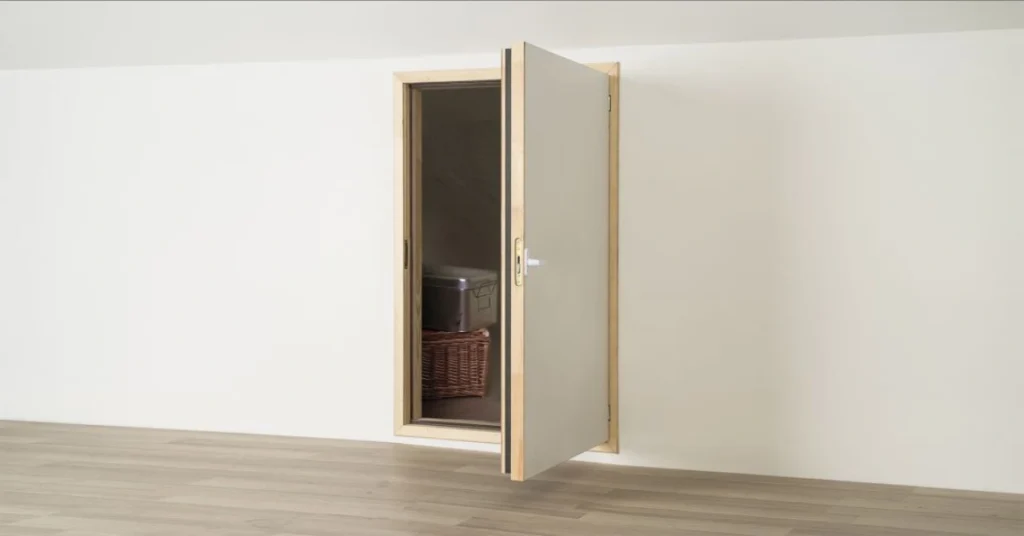
Today’s property owners and construction professionals demand seamless finishes that elevate residential and commercial spaces—without sacrificing accessibility to critical building systems. Every design choice, wide and small, needs to be both functional and aesthetically appealing.
This is where wall access doors become a must-have. Most people overlook them, but hidden access doors quietly do the heavy lifting—keeping your walls pristine while giving technicians the access they need. Using a design-build methodology, teams can specify hidden access solutions during schematic design to avoid retrofit costs. Most of them have designs that allow them to blend into the background without compromising accessibility to important systems within a building’s infrastructure.
Hidden Access Doors: The Invisible Solution for MEP Maintenance & Aesthetic Integrity
Simply put, hidden access means putting entry points into a building’s systems in places that cannot be seen but can still be reached when needed.
From plumbing to electrical junctions, hidden access doors ensure MEP systems remain serviceable without visual disruption. These include electrical wires, water pipes, air ducts, and internet cables hidden behind walls and ceilings. Facility managers and building inspectors must regularly access these critical systems for maintenance, repairs, and code-mandated safety checks. Align access panel placement with your facility management protocol schedule to streamline quarterly inspections.
Without a wall access door, you’re looking at smashed drywall, wasted materials, and a repair bill that could’ve been avoided.
As for design, visible access points or awkward hatches can ruin a space’s appearance. This can take away from a property’s overall value.
Hidden access doors solve both challenges by allowing vital systems to remain accessible without drawing attention.
How Hidden Wall Access Doors Provide Easy Access Without Disrupting Design
Most concealed access panels today are built with finishes and profiles that match the surrounding surfaces. They:
- Are flush with the surrounding wall or ceiling
- Can be painted, textured, or wallpapered to blend in
- Can be filled with the surrounding tile, drywall, or masonry
- Have concealed hinges and latches
- Have no visible handles, locks, or deadbolts
For Level 5 drywall finishes, request access doors with knife-edge frames that accept joint compound for a truly invisible seam. These features help the panels match the surrounding surface, providing beauty without compromising function.
That’s exactly why high-end homes, luxury hotels, and healthcare facilities specify these doors—they keep critical systems hidden without sacrificing access. Places like high-end residential homes, luxury hotels, healthcare, or educational facilities come to mind.
Beyond Aesthetics: The Value of Wall Access Doors
From a contractor’s perspective, integrating a wall access door during the initial construction phase can save time and money and avoid frustrations later on. Integrating wall access door specifications into your BIM model during pre-construction prevents costly field modifications and ensures precise rough-in placement.
Faster Maintenance and Repairs
While buying good flush-mount service doors might initially seem like a small cost, the money and time saved in the long run add up.
Service technicians can open a secure panel instead of breaking into a wall or ceiling to reach pipes or wiring. This reduces labor costs, minimizes material waste, and mitigates downtime in commercial or institutional settings. Tag each access panel with a QR code linked to your CMMS, so technicians instantly pull service histories and schematics upon arrival.
Fewer Future Renovations
Installing wall access doors in strategic locations makes future renovations convenient; no need to destroy walls when upgrading internal systems. This is helpful in commercial buildings, where halting operations to demolish walls can be expensive.
Enhanced Building Performance
Easy access allows for regular checks of important systems. This helps technicians find and fix problems before they become dangerous. This proactive approach makes the building safer and helps it last longer.
Enhanced Property Value
Prospective buyers, tenants, or occupants prefer a well-maintained and easy-to-service space. Whether it’s a luxury apartment, a medical office, or a retail space. Therefore, being able to say, “Every key system is accessible without disruption” is a strong selling point.
Compliance With Building Codes
Many mechanical, electrical, and plumbing (MEP) systems require easy access by code. Wall access doors simplify code compliance, helping avoid costly penalties or rework. This is especially so for specialized requirements like fire-rated access doors and panels. For corridor walls in multi-family buildings, specifying UL-listed fire-rated access panels ensures code compliance while maintaining the 1-hour fire barrier integrity.
Areas That Need Hidden Access in Modern Buildings
To understand how important invisible access solutions can be, let’s look at all the different spots in a building that need hidden access:
- Plumbing: Access here is essential for accessing pipes and valves in kitchens, bathrooms, and utility rooms.
- HVAC Ducts and Controls: This benefits maintenance personnel who carry out filter changes, inspections, and repairs.
- Electrical Junctions or Circuit Breakers: Access here is important, especially in commercial buildings where wiring runs behind drywall.
- Internet and Data: Access panels for network cables and connection points make future upgrades easy.
- Fire Safety: They provide easy access to sprinkler system controls, alarm wiring, and fire barriers in an emergency.
- General Storage: Access doors unlock hidden storage behind walls and ceilings, keeping things tidy.
- Vertical Pipes/Cables: Access to pipes and cables that run up through different floors is also critical in maintaining a building’s performance
In healthcare facilities, flush access panels in MRI rooms allow technicians to service cooling lines without disrupting sterile environments or patient scheduling. Following FGI Guidelines, specify non-magnetic access panels for imaging rooms to maintain safety compliance. In all these cases, quickly and secretly accessing the hidden parts of the building simplifies maintenance and keeps the space looking and working as intended.
Final Thoughts
Don’t let their low profile fool you: for builders, hidden access doors are a strategic spec that prevents future headaches while keeping designs clean. In modern construction, every finish and feature needs to meet the mark. This transforms hidden access from luxury to necessity.
As more property owners expect a combination of seamless design and easy maintenance, wall access doors have become a part of top-tier construction. Whether working on a minimalist home, a high-traffic commercial site, or a custom build, the right access solution can provide long-term value, operational efficiency, and modern appeal. When specifying wall access doors, prioritize fire-rated options for commercial corridors and paintable steel frames for residential remodels—always confirm rough-in dimensions with your MEP engineer before drywall installation.
