

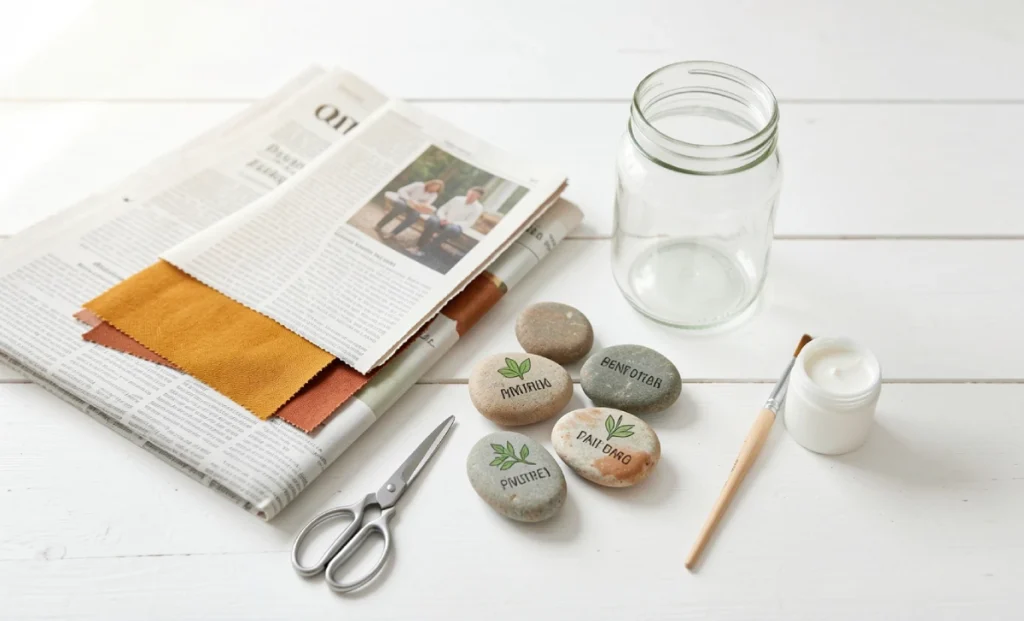
Inventive LWMFCrafts are hands-on DIY projects rooted in the LookWhatMomFound crafting community. They focus on turning ordinary household materials, paper, fabric scraps, and recyclable containers into functional or decorative items that actually serve a purpose. You don’t need expensive supplies or professional skills to get started. Most projects take under an hour, cost little to nothing, and train you to see everyday objects as raw material rather than waste.
The approach works because it removes the two biggest barriers to crafting: cost and complexity. A consumer survey by the Association for Creative Industries (AFCI) found that nearly two-thirds of crafters cite an overwhelming supply list as the top reason they avoid new projects. Inventive LWMFCrafts flip that logic entirely. You start with what you already own, not a shopping list.
What “Inventive LWMFCrafts” Actually Means
LWMF stands for LookWhatMomFound, a family-focused crafting community built around the idea that creativity doesn’t require a specialty store. Inventive LWMFCrafts specifically refers to projects that go beyond copying a template. They ask you to adapt, improvise, and solve small problems with materials already in your home.
The word “inventive” carries real weight here. A basic craft follows a pattern. An inventive craft asks you to make choices: what if I swap cardboard for fabric? What if I add texture with something I already have? That shift in thinking separates a single fun project from a skill you develop over months.
Unlike generic DIY tutorials — many now generated by AI for visual appeal rather than real-world use — inventive LWMFCrafts lean on substitution and resourcefulness. The gap between a polished tutorial photo and a Tuesday afternoon with real household materials has never been wider. A glass jar becomes a candle holder. The newspaper becomes a seed pot. Old denim becomes a wall organizer. The craft isn’t the point. The thinking behind it is.
Why Inventive LWMFCrafts Beat Generic DIY Tutorials
Most DIY content online has the same problem. Projects are designed for photos, not for people with 45 minutes on a Tuesday and no craft store nearby. The supply list alone can run $40 to $60, and the finished result rarely matches the tutorial. You end up with half-used materials and less motivation than you started with.
Inventive LWMFCrafts solve that by building around what you have, not what a tutorial tells you to buy. Once you internalize that principle, you stop seeing a shortage of supplies as a dead end. You start asking what you can use instead.
The skill transfer is also real. Learning to adapt materials makes you better at every project you try afterward, not just the one in front of you. Experienced crafters in the LookWhatMomFound community consistently point to material substitution as the skill that unlocked the most growth, more than any technique or tool they learned.
5 Inventive LWMFCraft Projects You Can Make This Week
These five projects use materials most households already have. Each takes between 20 minutes and one hour.
- Roll strips of newspaper around a cylindrical mold, fold the base closed, and fill with soil. These biodegrade directly in the ground when planting time comes. No plastic pots to buy, no waste to deal with at season’s end.
- Cut fabric scraps into triangles and tie them along a length of twine. No sewing required. Works for birthdays, outdoor spaces, or year-round wall decor. The more mismatched the fabrics, the better it looks.
- Clean three to four glass jars, add a layer of gravel for drainage, top with potting soil, and plant herbs like basil, mint, or chives. Label with a paint pen. The total cost is under $5 if you buy seeds from a garden center.
- Cut a cereal box into thirds, cover each section with leftover wrapping paper or brown paper, and mount them at angles on a wall. Holds mail, notebooks, or kids’ artwork. Costs nothing if you save your packaging.
- Collect smooth stones from outside, paint each one with the name of a plant using leftover house paint, and place them in your garden. They hold up through rain and won’t rot the way wooden markers do.
Each project follows the same inventive LWMFCrafts principle: start with what’s there, keep the process clear, and make the result genuinely useful.
Materials That Cost You Almost Nothing
The low cost is one reason inventive LWMFCrafts have built such a consistent following. Most projects draw from three material categories you already own.
Paper and cardboard cover the widest range: cereal boxes, newspapers, toilet roll tubes, old magazines, paper bags, and wrapping paper scraps. These are the backbone of most starter projects, and they’re endlessly flexible.
Fabric and fiber fill in the rest: old t-shirts, mismatched socks, worn denim, ribbon offcuts, yarn ends, burlap bags. You can cut, tie, braid, or layer them without any sewing experience. The texture alone adds visual interest to simple projects.
Containers and surfaces round out the list: glass jars, tin cans, wooden pallets, old frames, plastic bottles, and baking trays past their kitchen use. These give structure to projects that need a base or a boundary.
Projects built around household materials typically cost well under $5 in out-of-pocket spending. The only recurring purchases worth making are adhesives, basic paint, and cutting tools — all of which carry across dozens of future projects.
How to Build Your Skills Without Burning Out
The most common mistake new crafters make is starting too complex. You see a finished piece, want to replicate it immediately, and skip the foundational steps that make it achievable. The result is frustration rather than progress.
Start with one technique. Paper folding, basic stitching, and flat painting each give you a skill that carries into dozens of other projects. Once you can fold paper cleanly, you have a foundation for origami, structural cardboard work, and paper jewelry. One technique opens many doors.
Try a “constraint project” once a week. Pick one material and one color, then make something using only those two elements. Constraints force creative decisions that open-ended projects don’t, and many experienced crafters say this exercise taught them more than any tutorial. You can’t buy your way out of a constraint, so you have to think.
Keep a record. Photograph every finished project, even the ones that didn’t work. Looking back at three months of work shows you real progress, which is easy to miss when you’re focused on the piece in front of you.
The Sustainability Case for LWMFCrafts
Craft waste is a real and underreported problem. Hobby crafting generates significant material waste annually in the UK alone — much of it from unused specialty supplies and projects that never leave the planning stage. Repurposing household materials sidesteps that waste stream entirely before it starts.
Inventive LWMFCrafts cuts that number at the household level by starting with material already headed for the bin. When you repurpose a glass jar, you save the energy required to process that glass through the recycling system. When you use old fabric instead of new, you skip the water and chemical cost of producing new textiles from scratch.
These are small decisions, individually. Across a household over a year, they add up to a measurable reduction in both waste and spending. The LookWhatMomFound community has long tied this sustainability thread through its content, framing responsible material use not as a sacrifice but as a creative constraint that makes projects more interesting.
FAQs
What does LWMF stand for?
LWMF stands for LookWhatMomFound. It began as a family craft and activity community and has since grown into a broader DIY resource covering projects across skill levels, ages, and material types.
Do I need prior crafting experience?
No. The projects built around the inventive LWMFCrafts approach are designed to work for complete beginners. Start with the five projects listed above and add complexity once you’re comfortable with each technique.
Are these crafts suitable for children?
Most are, with supervision for any step involving cutting tools or hot glue. Newspaper seed pots, painted rocks, and fabric bunting are all appropriate for children aged six and up with minimal adult involvement.
How do I find more inventive LWMFCraft project ideas?
The LWMFCrafts community publishes new project ideas regularly at LookWhatMomFound.com, organized by material type and skill level. You can also search by the specific material you have on hand — a useful way to clear out a cluttered craft drawer. Short-form video versions of many projects are available on their social channels for a quick visual walkthrough.
Can I sell items made using these techniques?
Yes. The techniques are not proprietary. If you plan to sell at markets or online, focus on consistency and quality across your pieces rather than speed of production.
