

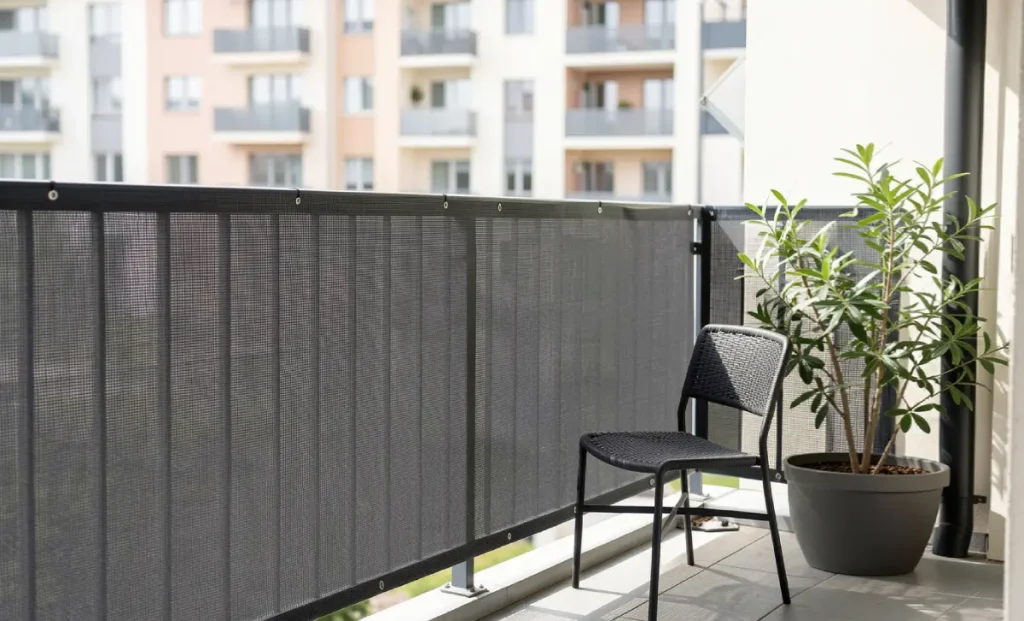
A privacy screen for a balcony blocks sightlines from neighbors or street traffic while letting you use your outdoor space freely. The best options include HDPE mesh, bamboo, PVC panels, and reed fencing. Your choice depends on your balcony’s size, local wind conditions, and your building’s rules. Most screens attach to railings or wall brackets and require no drilling.
Almost 40% of apartment residents say lack of privacy is their top reason for avoiding their balcony. If that sounds familiar, a privacy screen is one of the fastest fixes you can make. This guide covers the main screen types, what to look for before buying, how to install one correctly, and how to keep it in good shape long term.
What a Balcony Privacy Screen Actually Does
A privacy screen creates a visual barrier between you and neighboring buildings, passersby, or street traffic. It does not seal your balcony; it just limits sightlines. Depending on the material you pick, it can also reduce wind, muffle noise slightly, and give your outdoor space a more defined, finished feel.
Most screens are designed to work with standard railing systems. Some use zip ties or grommets for attachment. Others clip directly to the rail or hang from overhead beams. You do not need special tools for most installations.
The Main Types of Privacy Screens for a Balcony
The material you choose determines how much privacy you get, how long the screen lasts, and what it looks like. Here are the four most common types:
HDPE mesh screens are the most popular option for balconies. High-density polyethylene is UV-stabilized, lightweight, and breathable. It blocks 85 to 90 percent of sightlines while still letting air pass through. Most HDPE screens come in black, beige, green, or brown. Prices typically start around $30 to $60 for a standard panel.
Bamboo and reed panels give a more natural, textured look. They work well on larger balconies with low to moderate wind. Reed fencing is slightly more flexible than bamboo; bamboo panels are denser and more structured. Both are biodegradable, which matters if you want a low-waste option. Expect a lifespan of three to five years with good care.
PVC privacy panels are rigid, weather-resistant, and come in several colors. They offer full privacy with no gaps. The trade-off is weight; PVC panels are heavier than mesh and require sturdier mounting. They are a good fit for balconies with solid walls rather than open railings.
Fabric screens are the most affordable entry point. Most are made from polyester or canvas and attach with grommets and ties. They are easy to install and remove, which is useful if your building has seasonal rules. They do fade faster than HDPE or PVC, usually within two to three seasons.
Key Things to Check Before You Buy
Buying the wrong screen wastes money. Before you order, work through these four questions:
- What is your railing type? Metal railings, wood railings, and glass panels each need different attachment methods. Confirm the screen you are buying is compatible.
- How strong is the wind on your balcony? Mesh and fabric screens handle wind better than solid panels. If you are on a high floor or in an exposed area, look for a screen rated for wind loads above 60 mph.
- What are your building’s rules? Many condo and apartment buildings have restrictions on exterior alterations. Check your lease or HOA guidelines before buying.
- What size do you need? Measure the full width and height of the area you want to cover. Add a few inches on each side so the screen overlaps the railing rather than stopping flush with it.
How to Install a Balcony Privacy Screen
Most screens take 30 minutes or less to install. The process is straightforward if you follow the right order.
Step 1: Gather your materials. You will need the screen, zip ties or bungee cord hooks (usually included), scissors, and a measuring tape. Some screens come with grommets already attached; others need you to thread them through a rail.
Step 2: Unroll and position the screen. Hold the screen up against your railing to confirm the fit before attaching anything. If it is too long, most mesh and fabric screens cut cleanly with scissors.
Step 3: Attach from the top first. Secure the top edge to the railing before working down. This prevents sagging. Space your zip ties or hooks every 12 to 18 inches for an even hold.
Step 4: Work down the sides and bottom. Pull the screen taut as you attach each point. A screen with slack in the middle will catch wind and wear faster.
Step 5: Trim and finish. Clip any excess zip tie length. Check that no corners are loose or lifting. If the screen moves noticeably in light wind, add more fasteners along the bottom edge.
Privacy Screen Options by Balcony Size
Screen sizing is not one-size-fits-all. Here is a quick reference by common balcony sizes:
- Small balcony (under 40 sq ft): One or two panels of 3 x 6 ft mesh; fabric screens work well here
- Medium balcony (40 to 80 sq ft): Two to three HDPE panels or a continuous roll up to 10 ft wide
- Large balcony (over 80 sq ft): Bamboo or reed panels work better for defined sections; PVC panels for a permanent look
For corner balconies, measure each exposed side separately. You may need screens with different widths to cover both angles without overlap gaps.
How Long Do Balcony Privacy Screens Last?
Lifespan varies by material and your local climate. Here is what to expect:
HDPE mesh screens last six to ten years in most climates. They resist UV fading, moisture, and temperature swings well. PVC panels also last a long time, often eight years or more, but can crack in extreme cold. Bamboo and reed degrade faster, especially in humid or wet climates, averaging three to five years. Fabric screens have the shortest lifespan, at one to three years, depending on sun exposure and whether you store them in winter.
To get the most out of any screen, rinse it with water once or twice a year to remove debris and salt buildup. In harsh winters, remove fabric and bamboo screens and store them flat or rolled indoors.
Final Thoughts
A privacy screen for a balcony is one of the most affordable ways to make your outdoor space more usable. The right choice comes down to your building rules, your railing type, wind exposure, and how permanent you want the solution to be. HDPE mesh covers most situations well. If you want something that looks more natural, bamboo or reed panels are worth the extra care they need. Measure before you buy, attach from the top down, and check the fit before you commit to full installation.
FAQs
Do balcony privacy screens require drilling?
Most do not. The majority attach with zip ties, bungee hooks, or grommets that loop over a railing. Rigid PVC panels may need wall brackets, which sometimes require screws.
Can a privacy screen handle strong wind?
Mesh and breathable fabric screens handle wind better than solid panels because air passes through them. If your balcony gets regular gusts above 40 mph, look for screens labeled wind-resistant or rated to specific wind loads.
Are balcony privacy screens allowed in apartments?
That depends on your lease or building rules. Many buildings allow removable screens since they do not damage the structure. Always confirm with your landlord or HOA before installing.
What is the cheapest balcony privacy screen option?
Fabric polyester screens are usually the lowest-cost entry point, often under $25 for a standard panel. HDPE mesh costs a little more but lasts significantly longer, making it the better value over time.
Can I use a privacy screen for shade as well?
Mesh screens reduce glare and heat slightly, but they are not designed for full shade. If you want both privacy and shade, look for dual-purpose shade sails or screens with a tighter weave rated at 90 percent or higher sun blockage.
