

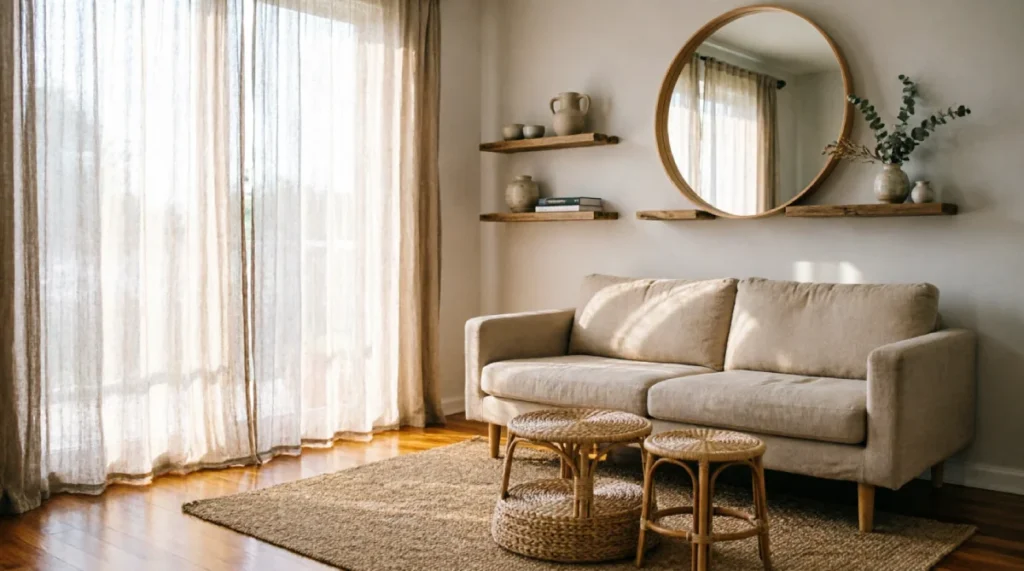
I know how a cozy living room can suddenly feel cramped and heavy once summer rolls in. Heavy throws, dark corners, and cluttered surfaces make small rooms feel smaller. I focus on simple, real-world changes that free up space, invite light, and bring in that airy summer feeling — without a major renovation.
This guide shares 10 practical ideas I’ve used and tested in real homes, so you can make your small living room feel open, fresh, and exactly right for the season.
1. Swap Heavy Curtains for Sheer Linen Panels
I always start summer refresh by replacing dense drapes with sheer, light-filtering linen curtains. Heavy window treatments block light and visually shrink the room the moment you walk in.
I use ceiling-mounted, extra-wide rods so the sheer panels can stack completely off the glass. This trick pulls the eye upward and makes the window — and the room — feel taller and broader.
I once helped a friend in a 400-square-foot apartment do nothing but switch to off-white linen sheers, and suddenly her living room felt twice as airy. The sunlight softened the corners and erased that boxed-in feeling.
I suggest choosing unlined linen or cotton-blend panels in a neutral tone. Wash them once before hanging for a relaxed drape. The goal is light, movement, and a hint of privacy without sacrificing the view.
2. Replace a Dark Rug with a Natural Fiber Flatweave
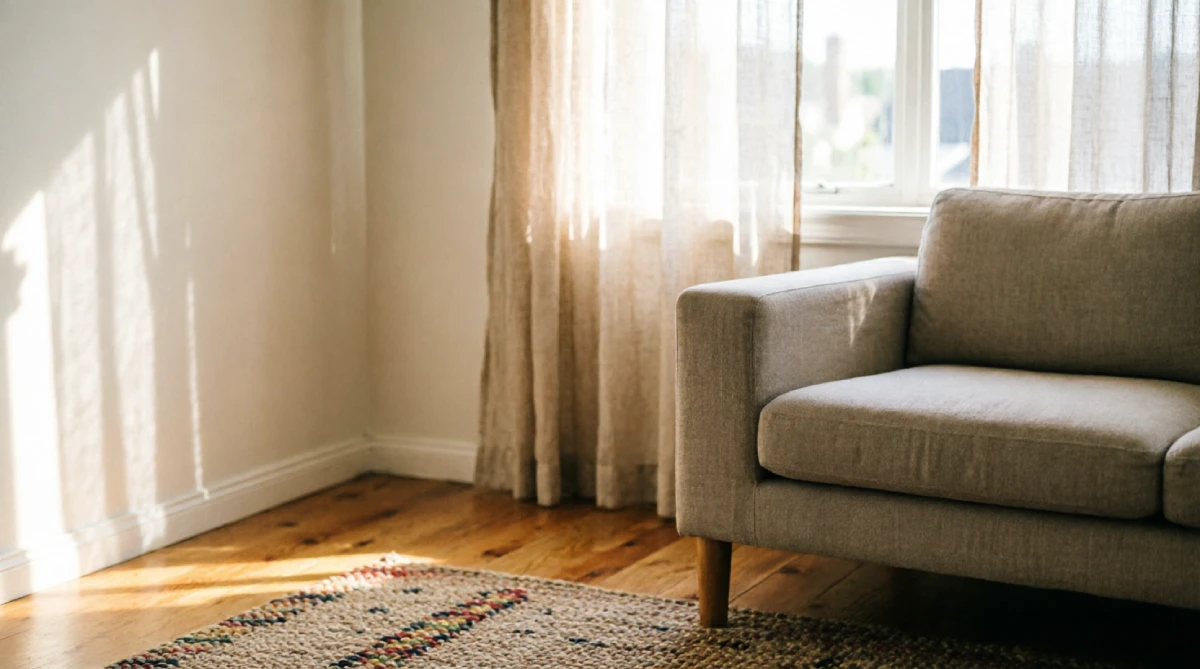
I always roll up deep-colored or high-pile rugs the moment temperatures rise. Dark wool rugs trap heat visually and physically, anchoring the room in a winter mood.
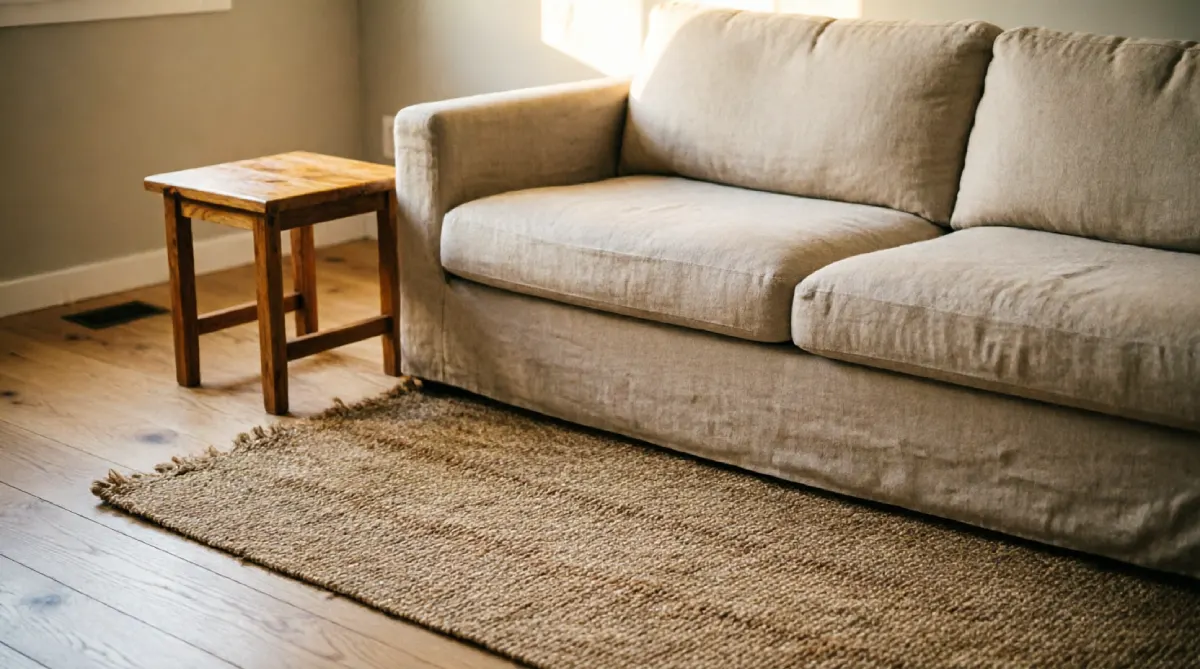
I use a light-toned jute, sisal, or cotton flatweave that covers most of the visible floor. The pale natural texture bounces light around the room and creates a continuous, uninterrupted ground that expands the space.
I noticed in my own small living room that switching from a dark oriental-style rug to a simple seagrass one instantly reduced visual clutter. Even though the floor area didn’t change, the room felt more open and a lot cooler underfoot.
I suggest picking a flatweave with a subtle border or texture rather than a bold pattern. Stick to a size that leaves an 8- to 12-inch border of bare floor around the edges — this prevents the rug from swallowing the room.
3. Use Floating Shelves Instead of a Bulky Bookcase
I always look up when floor space disappears. Tall bookcases and media units eat up square footage and cast shadows that close in a small room.
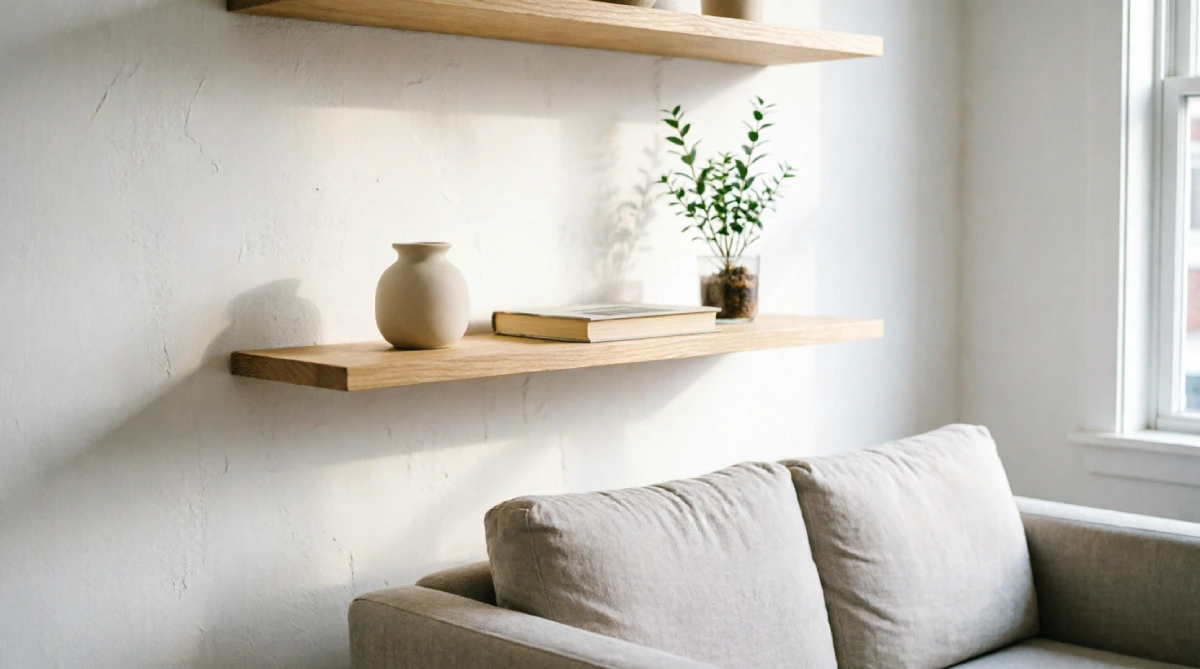
I use slim floating shelves mounted at eye level and above the sofa to store books, plants, and a few curated objects. By lifting storage onto the wall, I free the floor and draw attention upward, making ceilings feel higher.
I once worked on a rental living room that had no storage and a narrow footprint. Adding three 6-inch-deep floating shelves in white oak gave the tenant a place for summer reads and tiny potted plants without stealing an inch of floor area.
I suggest keeping shelf depth under 8 inches for small rooms. Style them with just a few items — a small framed print, a trailing plant, and a stack of two books — so they breathe instead of looking cluttered.
4. Choose a Slim Console Table Behind the Sofa
I always look for dead space behind a floating sofa. Against the wall is obvious, but pulling the sofa even 18 inches forward creates a useful zone without crowding the room.
I use a narrow console table — no more than 10 inches deep — tucked behind the sofa. It becomes a display surface for a small lamp, a stack of magazines, and a cool drink on a summer evening without requiring a full side table.
I once borrowed this idea from a tiny lakeside cottage where the owner used a painted plank on hairpin legs behind a loveseat. It gave her a place to rest a glass of iced tea and a book within reach, and the room still felt open.
I suggest hunting for a console table with an open lower shelf or slim legs so it doesn’t read as a heavy block. Keep styling simple; one or two objects are enough.
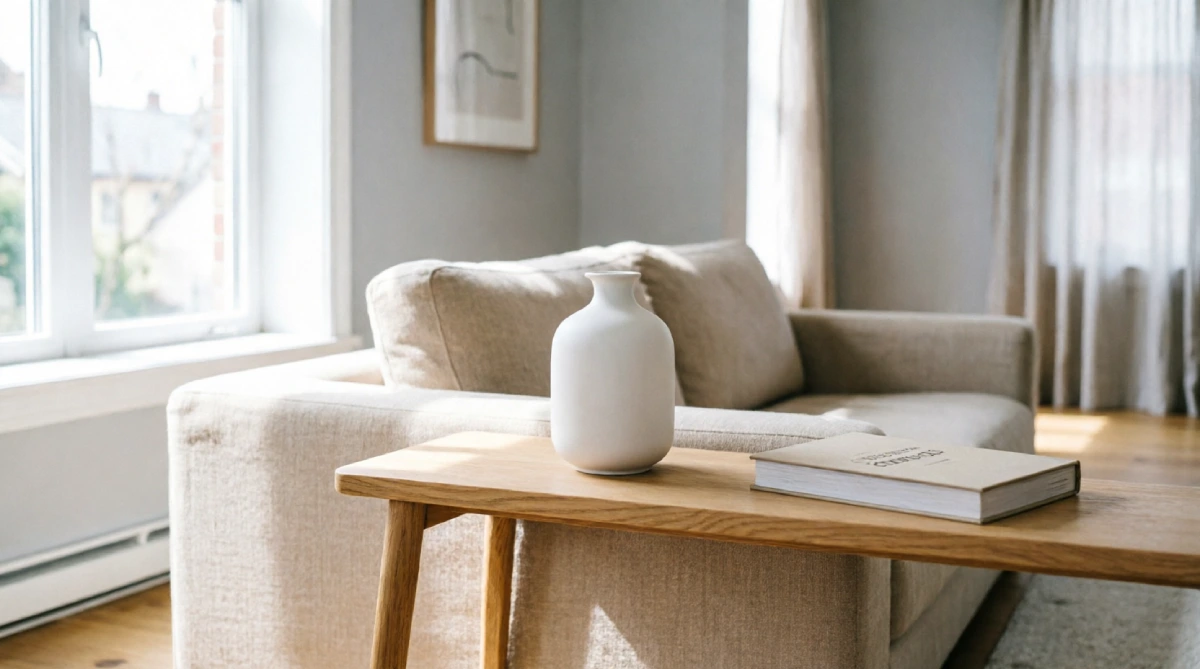
5. Mount a Fold-Down Wall Desk for a Flexible Work Spot
I always treat surfaces as seasonal — what serves as a desk in winter can become free wall space in summer. A fixed desk often traps a corner that could otherwise open up.
I use a wall-mounted drop-leaf or fold-down desk that tucks flush when not in use. On a warm day, I fold it up and reclaim that floor area for a pouf, a plant, or simply space that makes the room breathe.
I noticed in my own home that closing the desk after work hours mentally shifted the room from office to living space. The room felt immediately larger and more relaxing, which mattered more during long summer evenings.
I suggest installing the desk on a wall near an outlet but away from the main flow of traffic. Choose a light wood or white finish so it blends into the wall when closed and doesn’t add visual weight.
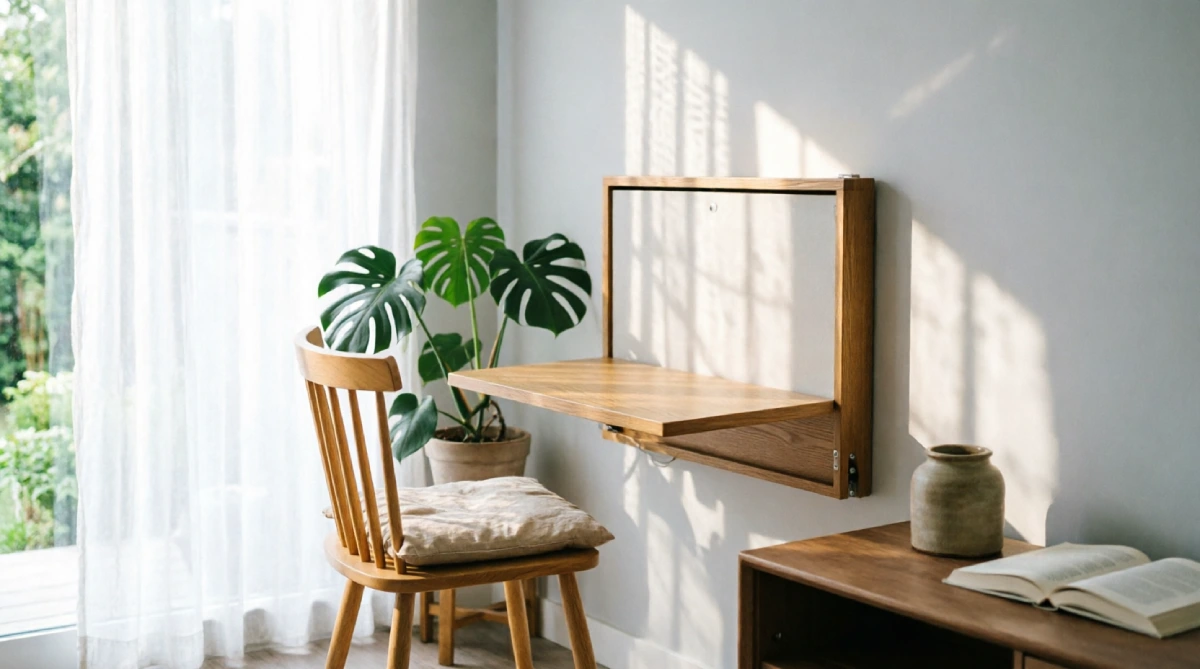
6. Hang a Large Mirror Opposite a Window
I always use a mirror to double the light in a small room. It’s the fastest, most reliable way to visually push walls outward and catch every ray of summer sun.
I use a single oversized mirror with a thin frame, leaning or hung directly opposite the largest window. The reflection pulls the outdoors inside and makes the living room feel like it extends beyond its actual footprint.
I once placed a floor mirror behind a small sofa across from a bay window in a ground-floor flat. Even on overcast days, that corner went from dark and forgotten to bright and usable, and the room’s perceived size shifted dramatically.
I suggest going bigger than you think — a mirror that’s at least two-thirds the width of the window it faces. Simpler frames in wood or metal keep the look light and seasonal rather than heavy.
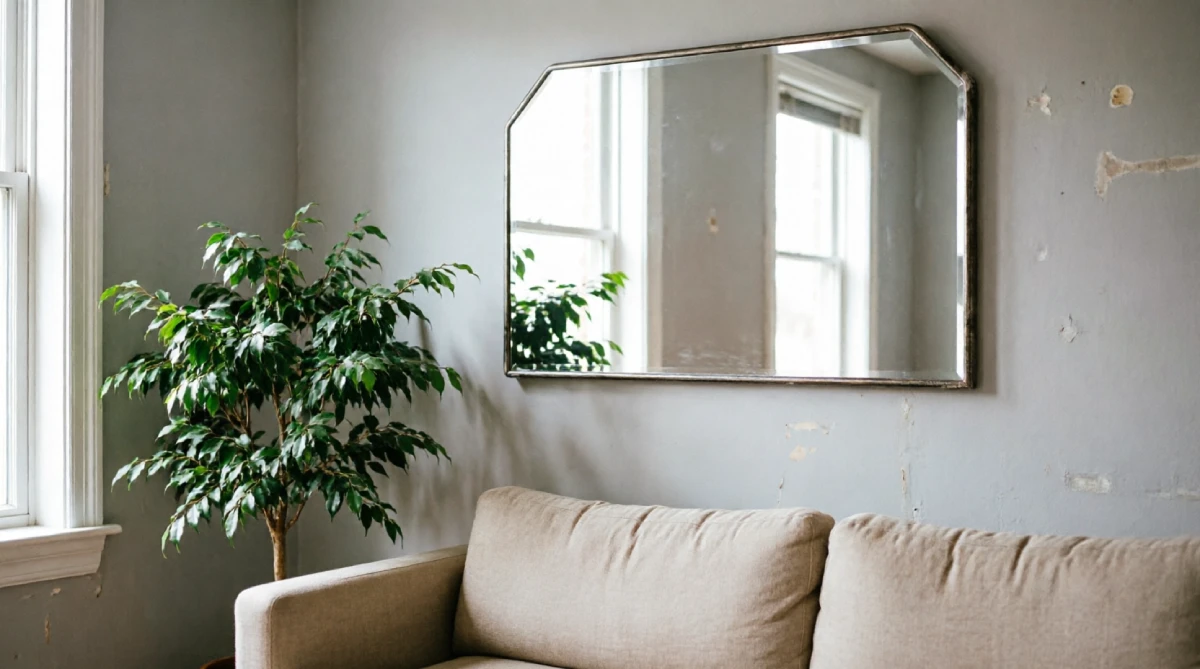
7. Swap a Heavy Coffee Table for Two Lightweight Stools
I always rethink the coffee table in summer. A boxy wooden or glass block takes up permanent space and dictates the traffic pattern around it.
I use two small, lightweight stools or poufs that can be pulled up as footrests, separated as side tables, or pushed together when needed. This modular setup keeps the center of the room flexible and reduces visual mass.
I once replaced a bulky ottoman with two woven rattan stools in a tight apartment living room. The floor opened up immediately, and when guests came over, the stools doubled as extra seating that could move out to the balcony.
I suggest choosing stools with a handhold or cutout sides to make them easy to carry. Round shapes soften a small room and make traffic flow feel smoother.
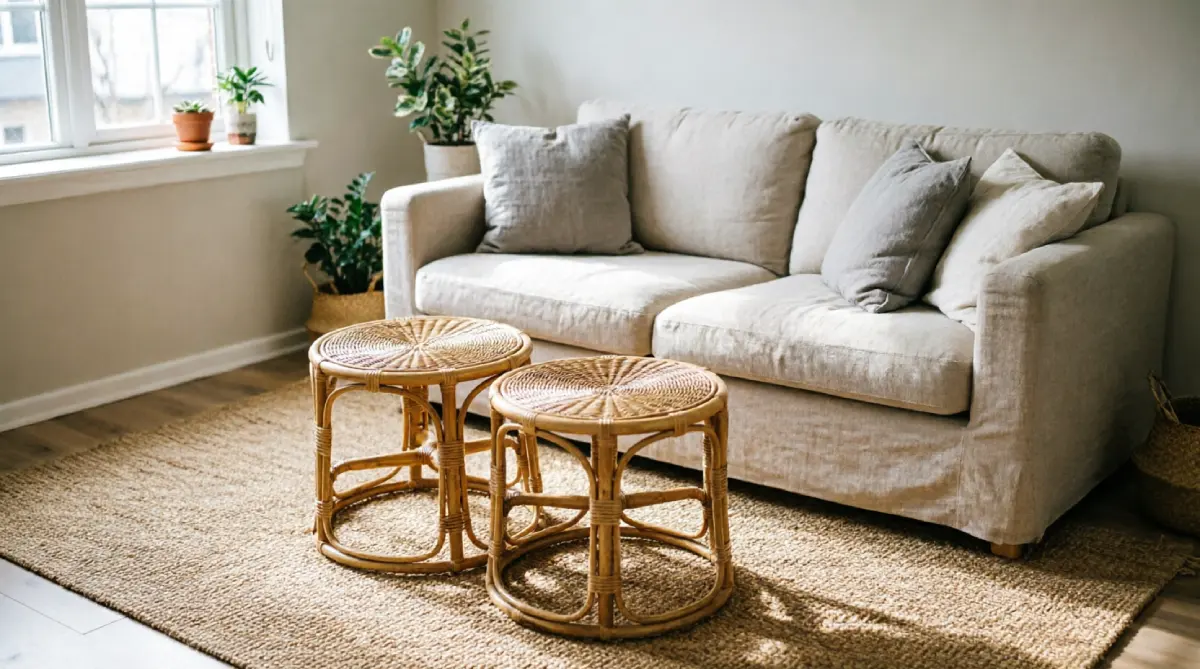
8. Store Extra Textiles in Low Woven Baskets Under a Bench
I always treat open floor space as prime real estate — even the spot under a window or beside a console. Instead of bulky cabinets, I stash blankets and summer throws where they’re hidden but accessible.
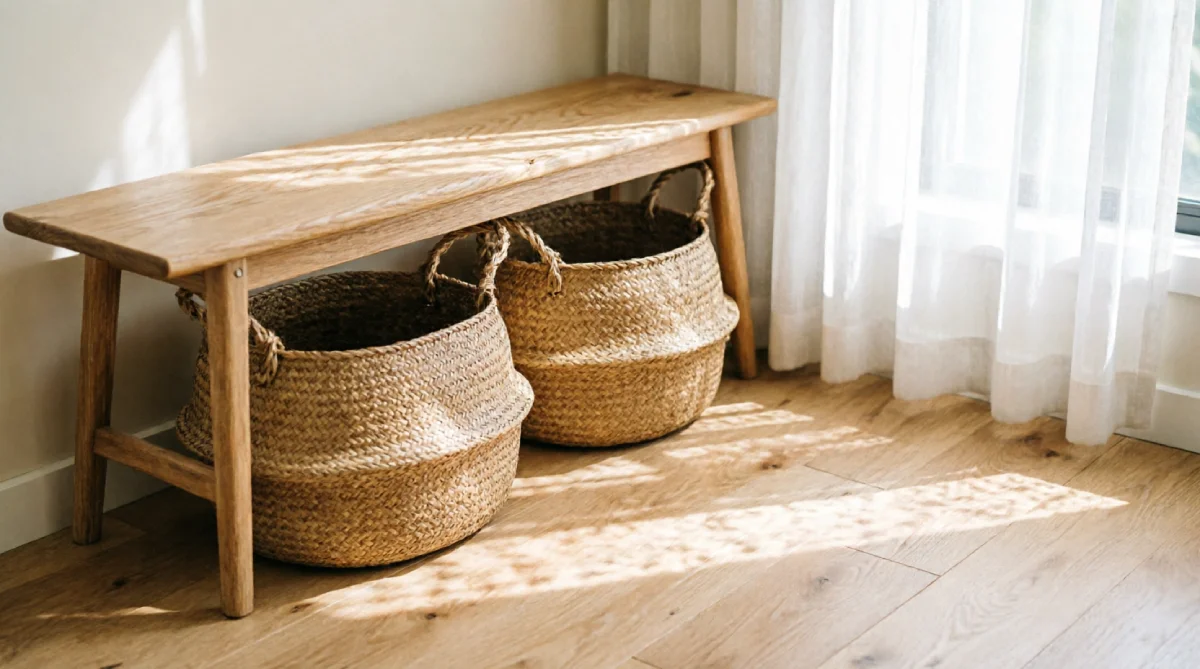
I use flat woven baskets or low-profile lidded seagrass boxes slid under a slim bench or an open-legged armchair. They contain the clutter of extra cushion covers and lightweight throws that can make a small room feel messy.
I noticed in a client’s narrow terrace-facing living room that simply tucking two matching baskets under a floating bench removed the visual noise of draped blankets. The room instantly read as sharper and more spacious.
I suggest looking for baskets with lids that sit flush and handles that make them easy to pull out. Keep the contents strictly seasonal — pack away heavy woolens elsewhere.
9. Use a Dual-Purpose Ottoman as a Coffee Table and Secret Storage
I always advocate for furniture that works twice as hard. In a small summer living room, every piece has to earn its floor space.
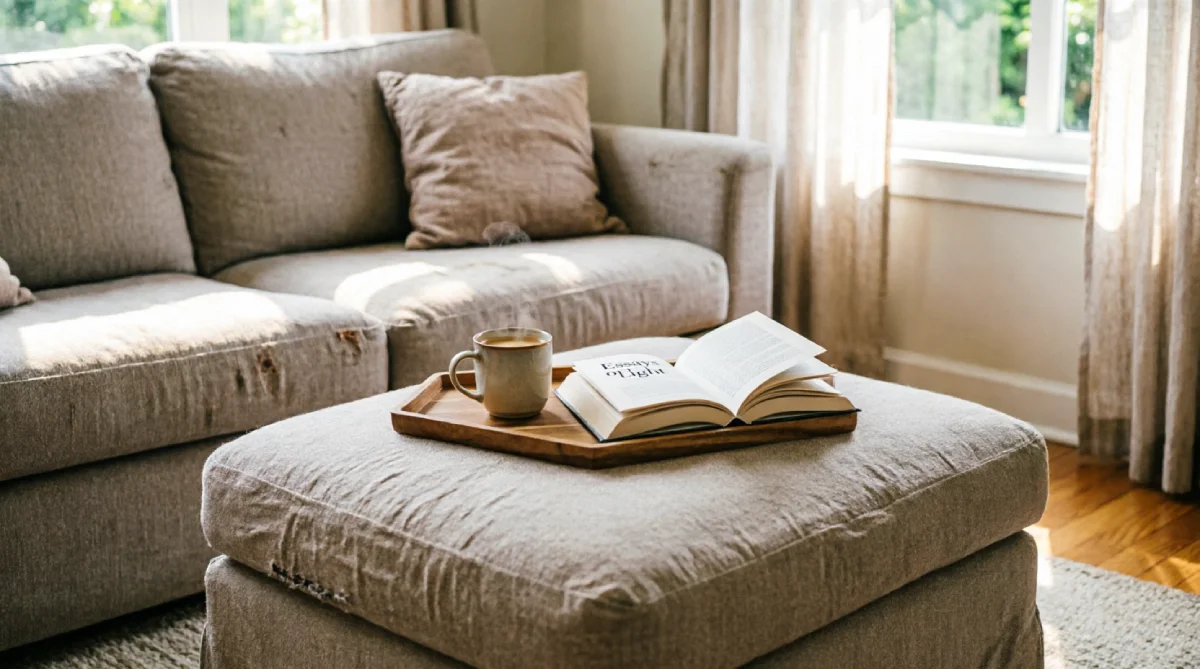
I use a lightweight, upholstered ottoman with a removable lid that opens to hidden storage. Top it with a tray for drinks and snacks, then lift the lid to stash board games, magazines, or even an extra fan for hotter days.
I once found a square linen ottoman in a soft sand color for a tiny apartment, and the owner used it to hide away all the visual clutter that accumulates daily. The room stayed serene, yet everything she needed was within arm’s reach.
I suggest picking a fabric that breathes — cotton, linen, or a cotton-blend — so the piece feels seasonally appropriate. A removable, washable cover is a bonus for summer when sandy feet and drippy popsicles appear.
10. Switch to Wall-Mounted Lighting Instead of Floor Lamps
I always look at what’s touching the floor and ask if it can move up. Floor lamps eat floor space and create visual tripods that chop up a small room.
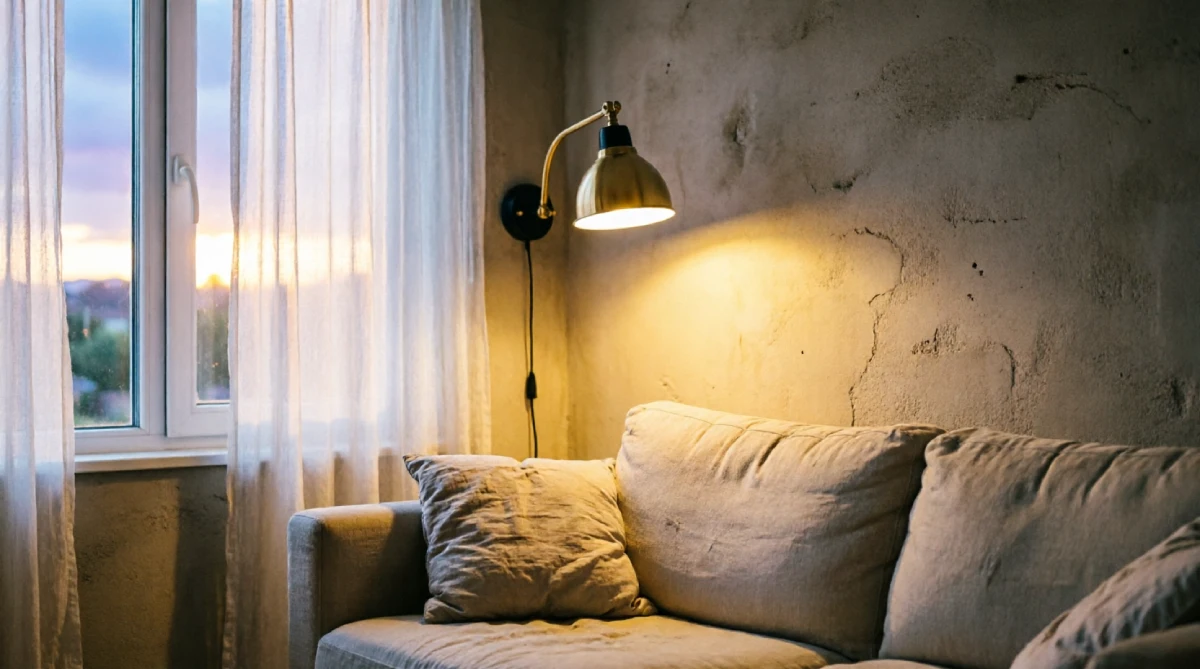
I use plug-in wall sconces or swing-arm lights mounted at reading height beside the sofa. They deliver targeted light for summer evenings while leaving every inch of the floor clear for circulation and that coveted open feeling.
I once replaced two floor lamps with a pair of brass swing-arm sconces in a very narrow living room. The change was immediate — suddenly there were no dark corners, and the floor plan felt like it had gained a few extra square feet.
I suggest choosing sconces with adjustable arms and warm, dimmable bulbs. Hardwire if possible, but plug-in models with a neat cord cover work beautifully and keep the project rental-friendly.
Practical Tips
- Declutter surfaces first. Before rearranging anything, clear coffee tables, windowsills, and shelves. Space creates rest for the eyes and instantly makes a small room feel larger.
- Introduce one living plant at eye level. A hanging plant or a small pot on a floating shelf adds summer freshness without stealing floor area.
- Switch cushion covers seasonally. Replace velvet or wool pillows with linen or cotton covers in pale, sun-faded tones. This tiny swap shifts the room’s temperature visually.
- Leave a clear path to the windows. Even if furniture has to slide a few inches, an unobstructed approach to a window makes the whole room feel more connected to the outdoors.
- Use mirrors strategically, not decoratively. One large mirror opposite a window does more than several small decorative mirrors scattered on a wall.
- Layer transparent textures. Combine sheer curtains, a glass vase, and a woven rattan tray. Light passes through these materials, keeping the look airy rather than heavy.
Common Mistakes to Avoid
- Treating every wall as a storage opportunity. Floor-to-ceiling shelves on every wall can overwhelm a small room. Leave at least one wall visually quiet.
- Using dark, heavy textiles in summer. Even if they “match,” deep-toned rugs and throws absorb light and create a heavier emotional temperature. Save them for cooler months.
- Pushing all furniture against the walls. This creates a corridor of emptiness in the middle, which often makes the room feel narrower. Pull the seating slightly forward to create depth.
- Skipping a cohesive color palette. Too many clashing colors in a tiny room fragment the space and make it feel chaotic. Stick to a simple, light-toned palette with one or two accent hues.
- Blocking natural light with furniture placement. An armchair in front of a low window steals lumens. Arrange seating so sightlines to windows remain open.
Comparison Table
| Feature | Best Option | Why It Works |
|---|---|---|
| Seating | Armless loveseat or slim-profile sofa | Visual lightness and exposed legs make the floor visible, expanding the sense of space. |
| Coffee Table | Dual-purpose storage ottoman or two stools | Frees floor area when moved, and hidden storage reduces summer clutter instantly. |
| Rug | Natural fiber flatweave (jute, sisal) | Pale tone and low pile reflect light and feel cool underfoot without overwhelming the room. |
| Window Treatment | Ceiling-mounted sheer panels | Full-length sheers blur wall edges and maximize daylight while keeping the view open. |
| Lighting | Plug-in wall sconces with swing arms | Zero floor footprint and adjustable light make a small room adaptable for reading and relaxing. |
FAQs
What is the best way to make a small living room feel larger in summer?
Start by swapping heavy textiles for lightweight, pale-colored alternatives. Sheer curtains, a natural fiber rug, and removing dark cushions immediately change how light moves through the room. Then, shift storage upward with floating shelves and wall-mounted lights to free the floor.
Can I use dark colors in a small summer living room?
You can, but use them sparingly. I suggest keeping large surfaces light and introducing dark color through small accents like a cushion, a framed print, or a ceramic vase. This anchors the room without absorbing the airy summer feel.
Is it expensive to redecorate a small living room for summer?
Not at all. Most changes — switching cushion covers, rearranging furniture to capture breeze, using baskets you already own, and adding a mirror — cost very little. Even new sheer panels or a jute rug can be found at reasonable prices and make a lasting impact.
How do I add greenery without taking up floor space?
I hang a plant from the ceiling by a window or set a small pot on a floating shelf. Trailing plants like pothos or string of pearls work beautifully and draw the eye up, making the ceiling feel higher and the room fresher.
How should I arrange furniture in a very narrow living room?
I suggest pulling seating away from the walls just enough to create a sense of depth, and choosing a slim console behind the sofa rather than a bulky side table. Keep the path to the window open, and use round shapes instead of square corners to ease traffic flow.
