

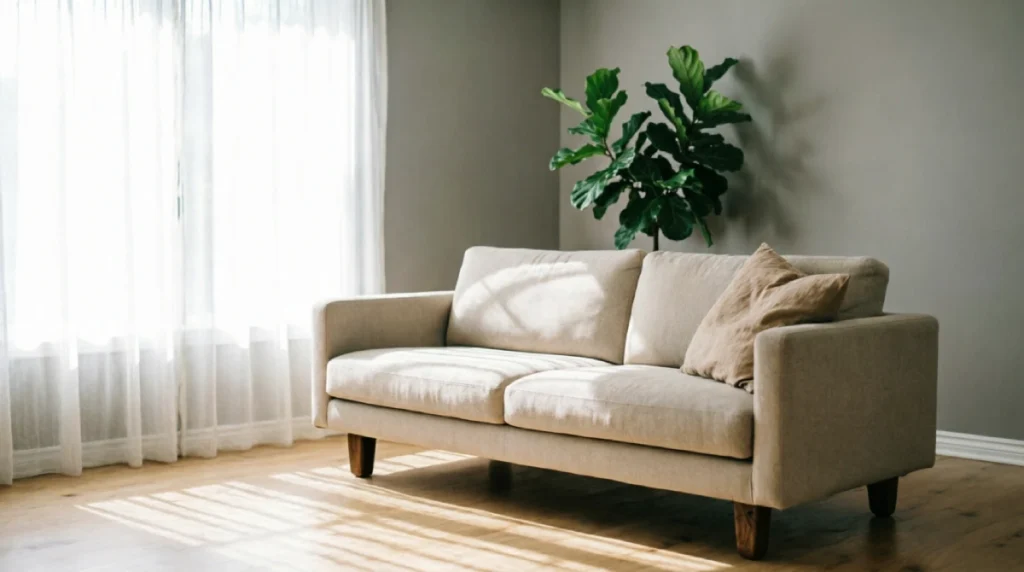
I know how frustrating it can be when your living room feels cramped the moment summer arrives. The heavy furniture, cluttered corners, and poor traffic flow suddenly become impossible to ignore. I focus on layout because where you place each piece determines how open and airy your space truly feels.
This guide shares 12 practical, experience-backed ideas that will transform your summer living room without a major renovation.
1. Float Furniture Away From Walls
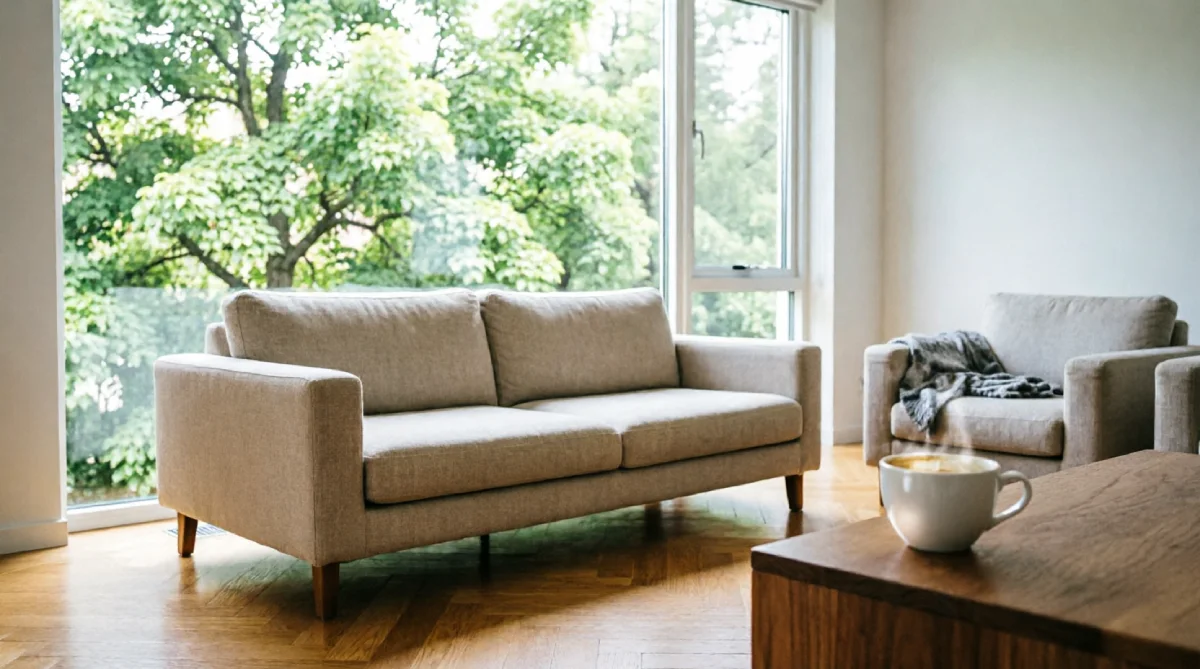
I always start summer makeovers by pulling sofas and chairs away from the walls. Counterintuitive as it sounds, leaving a few inches or even two feet behind large pieces actually makes the room feel larger. Centering furniture creates breathing room and encourages a more intimate conversation area.
I use a simple rule: keep at least 12 to 18 inches between the back of your sofa and the wall. This gap allows air to circulate and visually expands the floor area. I also angle armchairs slightly toward the center to soften the space.
I once worked on a narrow living room where the owners had every piece pressed against the perimeter. After floating the sofa just 14 inches off the back wall and pulling two chairs toward the coffee table, the room suddenly felt twice as wide. The clients could not believe the difference.
I suggest testing the layout with painter’s tape on the floor. Mark where your furniture will sit, then live with the tape marks for a day before moving anything heavy.
2. Create Zones With Rug Placement
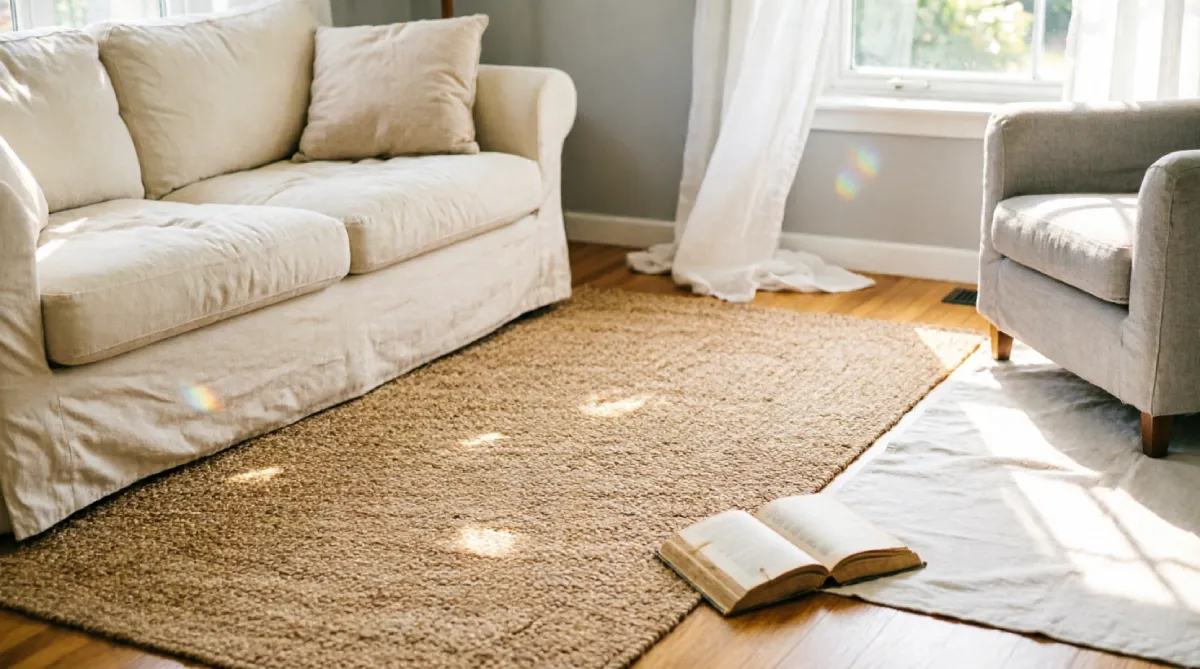
I always use rugs to carve out distinct activity zones in open or awkwardly shaped living rooms. Instead of one giant rug under everything, I layer smaller rugs or place separate runners to define a seating area, a reading nook, and even a play corner.
I use a 5×7 or 6×9 rug under just the front legs of the sofa and chairs. This anchors the conversation zone without overwhelming the floor. For a summer refresh, I swap heavy wool rugs for flat-weave cotton or jute, which keep the layout visually light.
I noticed that most people push all their furniture onto a single oversized rug, which actually compresses the room visually. When I split a long living room into two zones using separate rugs, the eye travels across distinct areas, making the entire space feel larger and more purposeful.
I suggest measuring your floor and sketching a simple zone map. Place a rug under your main seating, then use a second small round rug near a window for a chair and floor lamp.
3. Angle the Sofa Diagonally
I always experiment with diagonal placement when a rectangular room feels like a bowling alley. Turning your sofa at a 30- to 45-degree angle toward the room’s corner breaks up the long, narrow sightline and adds unexpected dynamism.
I use this trick specifically in rooms that have a fireplace or a large window off-center. Angling the sofa directs focus toward that architectural feature while opening up a triangular space behind it. I then place a slim console table against the back of the angled sofa for storage.
I once helped a friend who lived in a shotgun-style apartment with the front door opening directly into a long, tunnel-like living room. After angling her sectional toward the far corner and adding a tall plant behind the angle, guests stopped commenting on the length and started noticing how cozy yet open it felt.
I suggest trying this only if your room is at least 12 feet wide. Use furniture sliders to test the angle easily—rotate the sofa a few degrees at a time until the traffic path behind it feels natural.
4. Push the coffee table to the Side
I always challenge the assumption that a coffee table must sit dead center. During summer, when you want open floor space for airflow and movement, I push the coffee table to one side of the seating arrangement or replace it entirely with two small side tables.
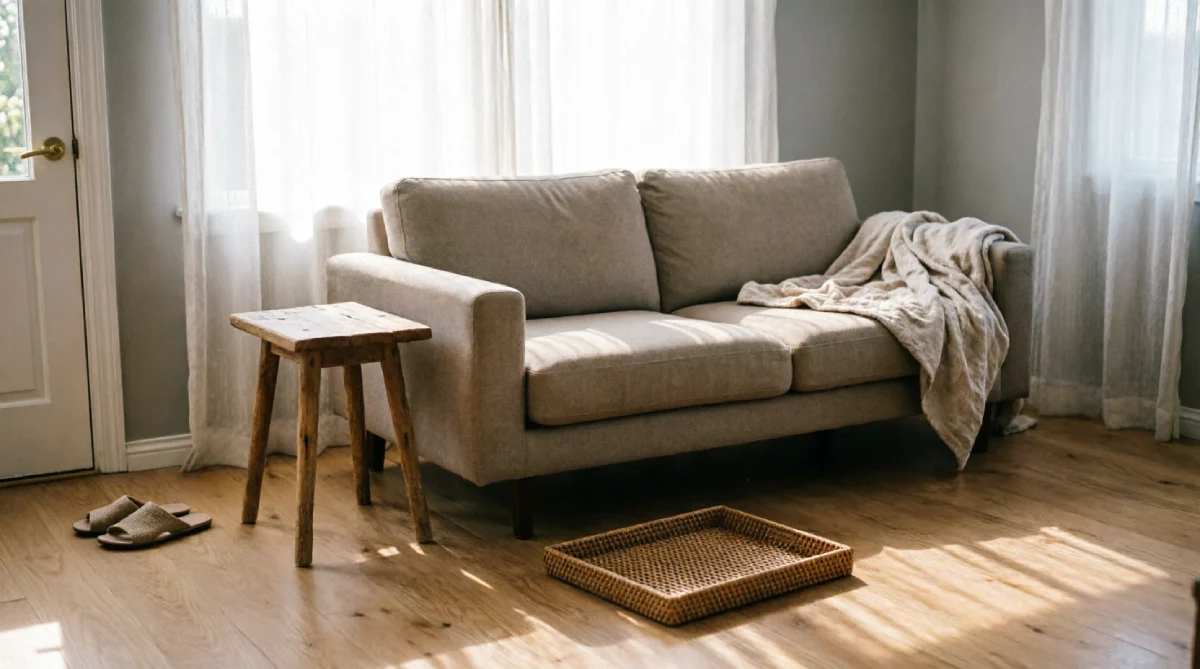
I use a lightweight wooden bench or a pair of stackable ottomans that I can move easily. This opens the center of the room for walking, yoga mats, or just letting the room breathe. My favorite summer swap is a large woven tray on the floor that holds drinks but leaves the middle empty.
I noticed that massive central coffee tables create a visual barrier and make conversations feel formal. In one project, removing a heavy trunk-style table and placing two small nesting tables near the sofa arms instantly made the space feel 30 percent larger. The family started using the floor for board games again.
I suggest measuring the distance between your sofa and any opposite seating. If the gap is less than 36 inches, skip the coffee table entirely and use C-tables that slide over the sofa arm.
5. Create a Corner Reading Nook
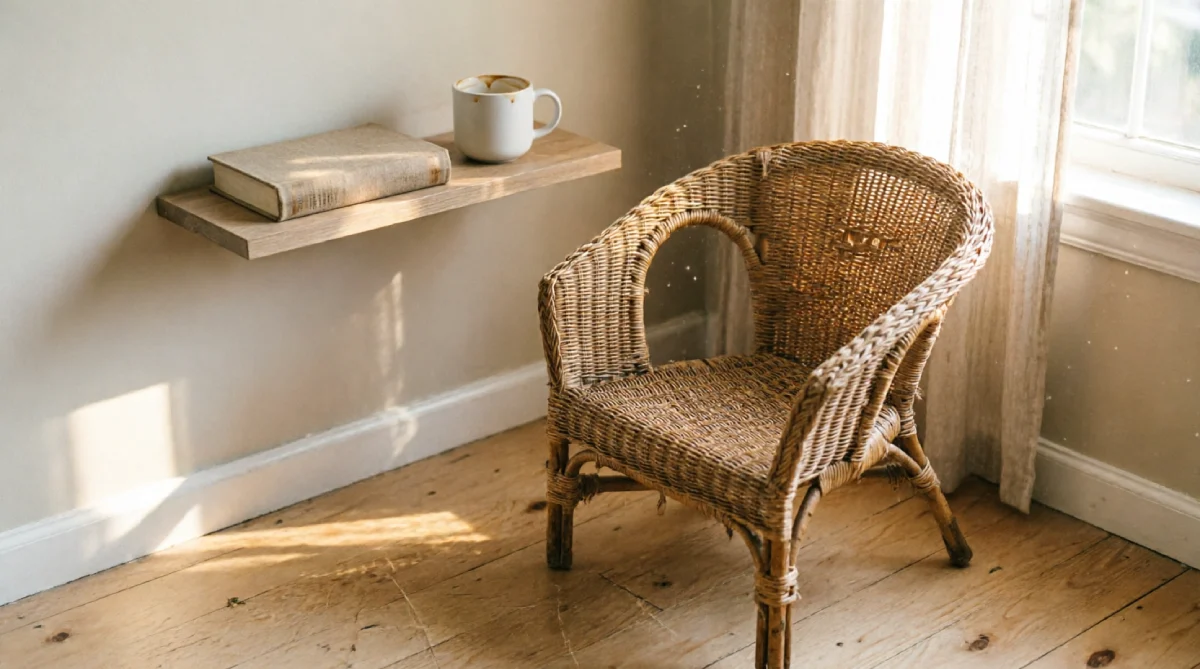
I always look for dead corners when optimizing summer layouts. A neglected corner near a window becomes a compact reading nook that actually frees up the main seating area. I place a narrow armchair or a floor cushion cluster at a 45-degree angle.
I use a small floating shelf mounted at armrest height instead of a bulky end table. This keeps the floor clear. I also added a task lamp with a clamp base to avoid taking up any floor space. The goal is to steal square footage from a corner that was doing nothing.
I once redesigned a living room where the only seating was a massive sectional that ate up 70 percent of the floor. By removing the chaise portion and creating a reading nook in an empty corner, we actually gained two extra seats while opening the center for traffic.
I suggest looking at every corner and asking: “Can I fit a 24-inch-wide chair here without blocking the window?” If yes, move your main seating inward by six inches to make room.
6. Swap Loveseat for Two Accent Chairs
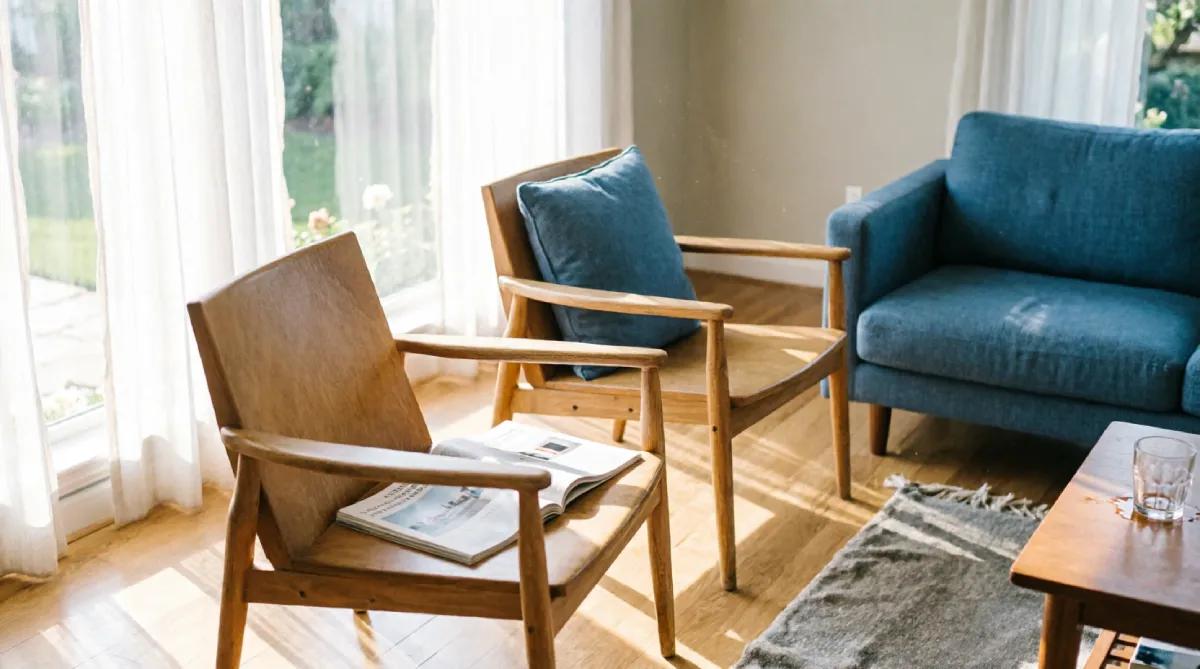
I always advise replacing a bulky loveseat with two lightweight accent chairs during the summer. A loveseat often functions as a space hog that limits layout options. Two separate chairs can be placed apart, pulled closer, or even moved to different zones.
I use chairs with exposed legs and open bases rather than skirted or boxy designs. This visual transparency maintains sightlines across the room. I also look for chairs that swivel, which multiplies layout possibilities without adding physical bulk.
I noticed that many homeowners keep loveseats out of habit, even though they rarely have three people sitting on them. In one living room, swapping a dark fabric loveseat for two cane-back chairs allowed us to float the sofa further from the wall and create a secondary conversation area. The room felt twice as open.
I suggest trying this as a seasonal swap. Store the loveseat for summer or move it to a bedroom. Place two chairs at a 90-degree angle to your sofa for better conversation flow.
7. Use the Back of the Sofa as a Divider
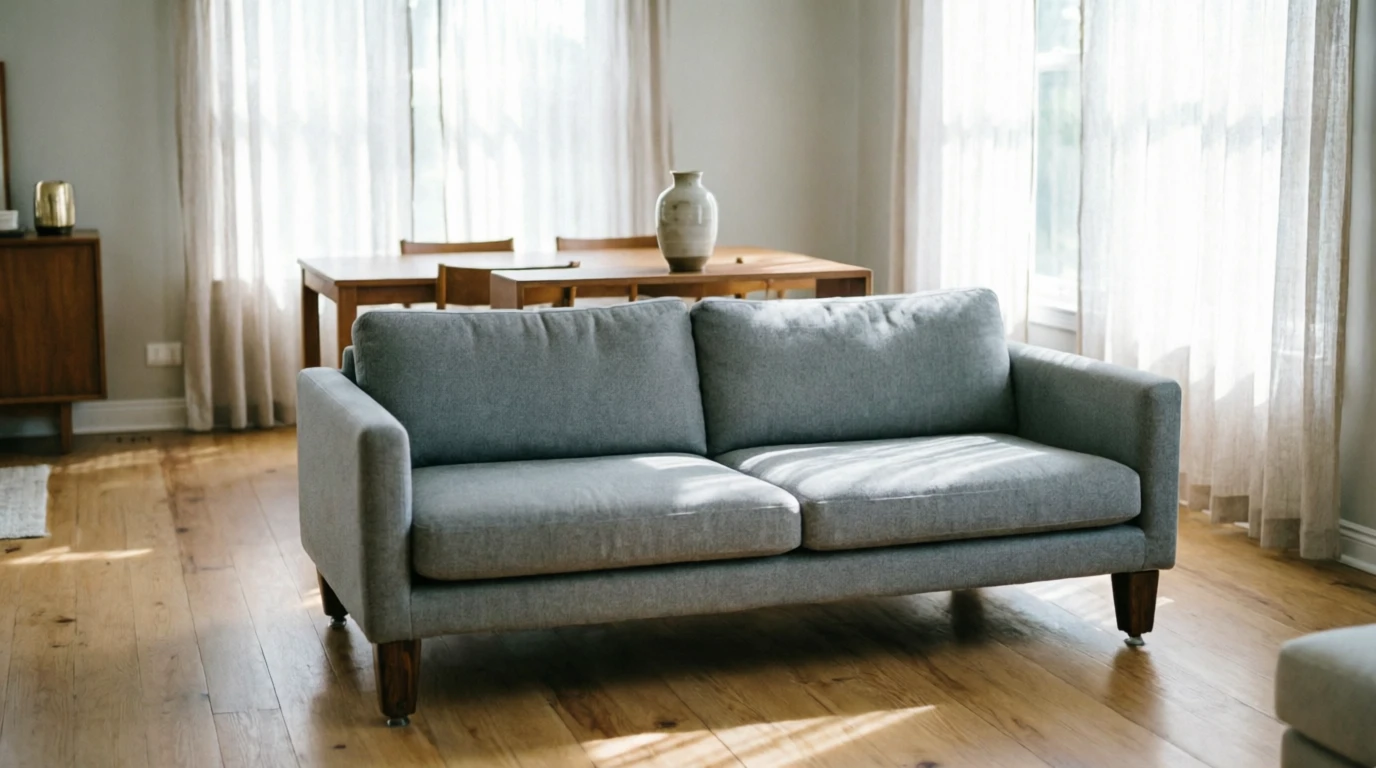
I always place the sofa with its back facing a hallway or dining area when creating distinct zones in an open floor plan. This turns the sofa into a low divider that defines the living room without building walls or blocking light.
I use a tall console table behind the sofa to catch keys, mail, or summer hats. The table should be the same length as the sofa and no deeper than 12 inches. I also added two bar stools behind a longer sofa if the space opens to a kitchen counter.
I once helped a client in a loft apartment where the living room flowed directly into the dining area. Floating the sofa with its back to the dining table and adding a narrow shelf behind it gave each zone a clear identity. They could watch TV while someone prepped food without feeling crowded.
I suggest measuring the walkway behind the sofa. You need at least 30 inches of clearance. If tight, skip the console and use the sofa back itself as a clean visual barrier.
8. Arrange Furniture at 90 Degrees
I always try a perpendicular arrangement when facing parallel walls to create a tunnel effect. Instead of placing the sofa directly across from the TV wall, I turn the sofa 90 degrees so it runs along one wall and faces an armchair or a console with the TV mounted on the adjacent wall.
I use a small media stand on the perpendicular wall rather than a long entertainment center. This opens the longest sightline in the room. I also place a narrow bench or floor cushions along the former TV wall for flexible extra seating.
I noticed that most people default to parallel arrangements because they think the TV dictates everything. In one narrow room, rotating the sofa 90 degrees meant the sofa was no longer fighting for space with a walkway. The traffic path ran naturally behind the sofa instead of cutting through the conversation area.
I suggest drawing your room on paper. Place your sofa along the longest wall, then position the TV on a short wall. You will likely gain at least 18 inches of open floor space.
9. Remove One Large Item Entirely
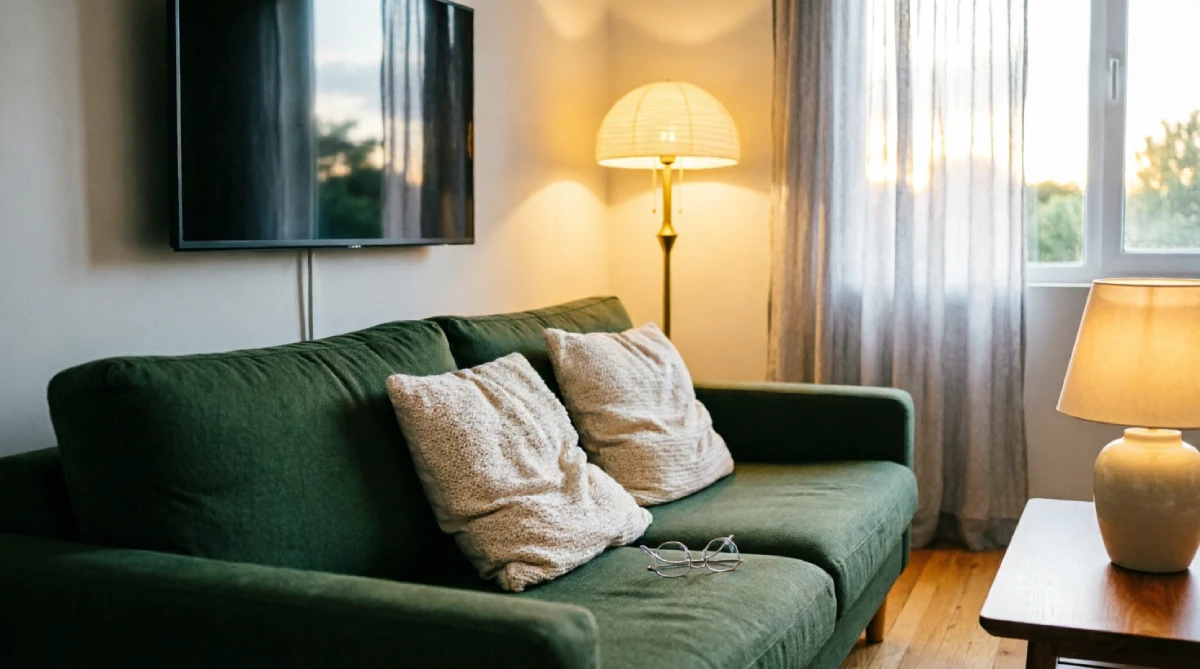
I always identify one oversized piece of furniture that can be temporarily relocated for the summer. This could be a large ottoman, a wingback chair, or even a bulky media console. Removing just one item transforms layout possibilities.
I use a simple test: if you have to shuffle sideways to pass between two pieces, remove one. During the summer, I move that piece to a bedroom or storage. The empty floor space becomes a visual rest area that makes the remaining furniture feel more intentional.
I once removed a massive leather recliner from a client’s living room. The chair was rarely used but dominated the corner. After moving it to the basement, the remaining sofa and two chairs could be spread out slightly. The client said the room felt “like a new house.”
I suggest walking through your living room and pointing to the largest non-essential item. Ask: “Would I miss this for three months?” If the answer is no, move it out and enjoy the breathing room.
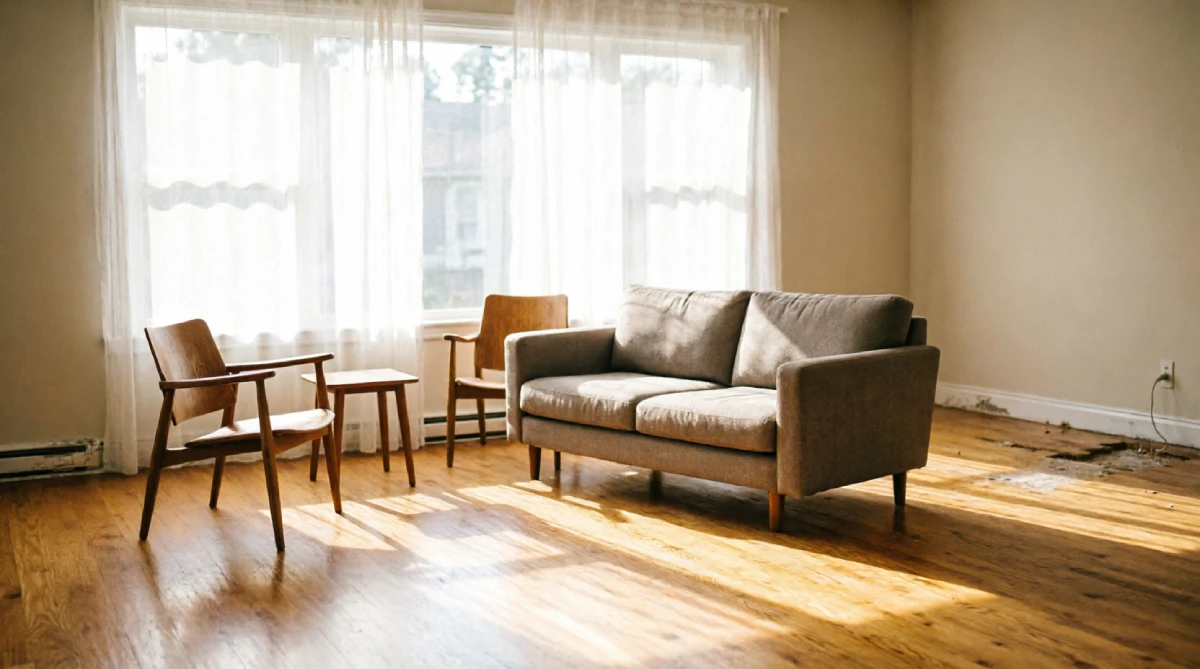
10. Stack Floor Cushions Instead of Chairs
I always use oversized floor cushions as temporary seating when a summer party or family gathering requires extra spots without permanent bulk. Stack them in a corner when not in use, then scatter them in a semicircle for movie nights.
I use cushions that are at least 24 inches wide and 5 inches thick, filled with foam or buckwheat. I store them in a large woven basket that doubles as a side table. This approach keeps the floor clear 90 percent of the time but offers instant flexible seating.
I noticed that many people buy extra folding chairs that take up closet space. In one household, replacing four folding chairs with six floor cushions meant the living room layout remained open all summer. The kids preferred sitting on cushions anyway.
I suggest buying cushions with removable, washable covers in light cotton or linen. Stack them no more than three high for stability. Place a low tray on top of the stack to turn it into an occasional side table.
11. Carve a Path Behind Every Seating Group
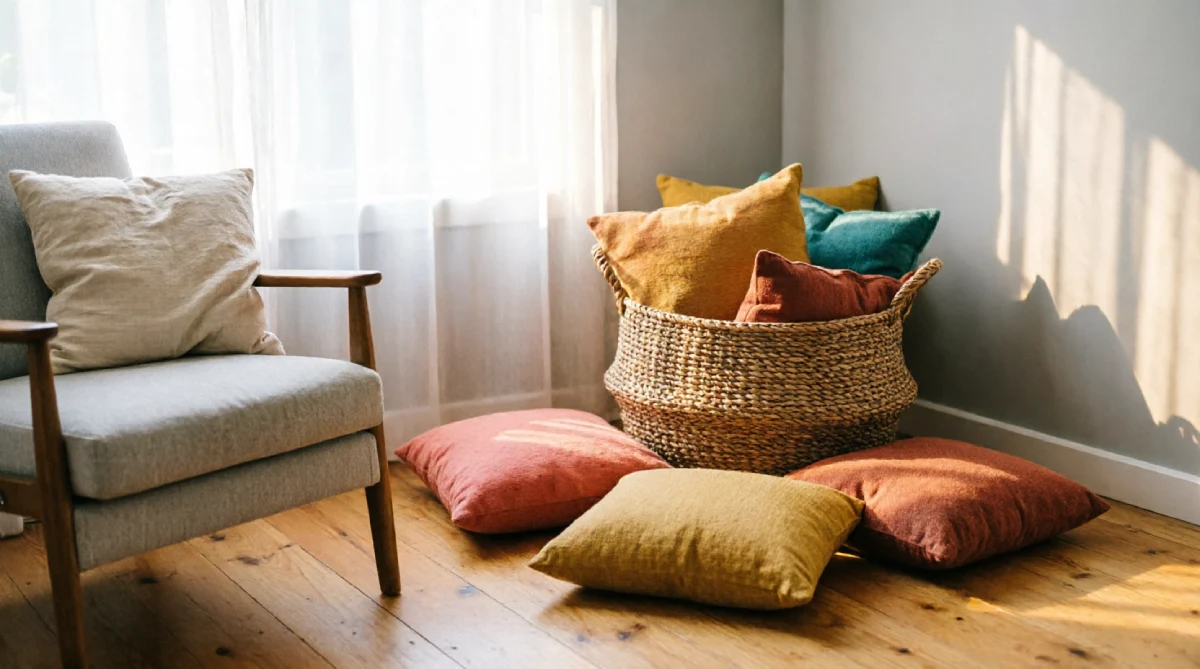
I always ensure there is a clear, unobstructed walking path behind every seating piece. In summer, I audit the layout by walking from every door to every window. If I have to ask someone to move their legs, the path is too narrow.
I use a standard of 24 inches for a single-person path and 36 inches for a main thoroughfare. I measure from the back of a chair to the nearest obstacle. If the gap is smaller, I shift furniture in two-inch increments until the path opens.
I once spent an afternoon rearranging a living room where the sofa back was only 14 inches from a bookcase. Moving the sofa just 10 inches toward the center and pulling the bookcase 4 inches off the wall created a usable path. No furniture was removed, yet the room felt dramatically larger.
I suggest doing the “door test.” Open your front door fully and see if it hits any furniture. If it does, shift that piece at least 6 inches. Repeat for every interior door and window.
12. Point Furniture Toward the Windows
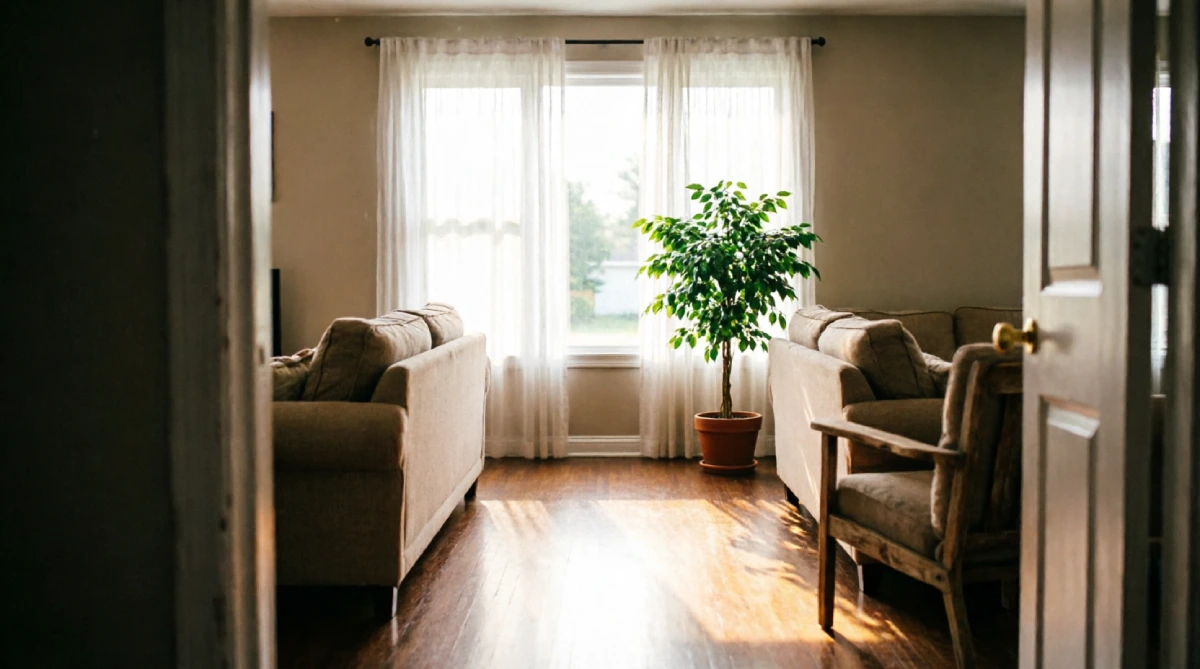
I always rotate the main seating to face the largest window during the summer months. This shifts the room’s focal point from the TV or fireplace to the outdoor view, which naturally improves mood and makes the space feel connected to nature.
I use this layout only if the window is not directly hit by harsh afternoon sun (or if you have sheer curtains). I angle chairs and sofas to face the window, even if that means the TV ends up on a side wall. Summer is for enjoying longer days and breezes.
I noticed that homes with seating facing away from windows always feel darker and smaller. In one project, simply turning a sectional 180 degrees so it faced a garden window made the room feel five feet deeper. The clients started leaving the window open for cross-breezes.
I suggest trying this for one week. Move your sofa and chairs to face the best window. Hide the remote. You will likely find yourself using the room differently—more conversation, less screen time.
Practical Tips
- Measure your pathways first. Before moving any furniture, mark walking routes with tape. A 24-inch minimum keeps summer traffic flowing.
- Use furniture sliders on every leg. They cost under $10 and let you test multiple layouts in minutes without scratching floors.
- Swap heavy curtains for sheer panels. Lighter window treatments visually push the layout outward by softening the wall line.
- Store area rugs during heat waves. Bare floors reflect more light and make a room feel larger. Roll rugs up and lean them against a closet.
- Add mirrors opposite windows. A well-placed mirror can double the perceived depth of any layout without moving a single chair.
- Label furniture bottoms with painter’s tape. Write “sofa front,” “chair left,” etc., so you can reassemble your winter layout easily.
Common Mistakes to Avoid
- Pushing everything against the walls. This often makes a large room feel smaller and creates a no-man ’s-land in the center.
- Blocking air returns or vents. Summer layouts must keep HVAC vents clear. Check floor vents before finalizing furniture positions.
- Using oversized ottomans as coffee tables. They eat floor space. Opt for a small tray table that you can tuck under a sofa when not needed.
- Forgetting about door swings. An inward-opening door needs a 36-inch clear radius. Many layouts fail this simple check.
- Leaving no landing space by the entry. Your living room should have a small surface (like a slim console) within three feet of the main door.
Comparison Table
| Feature | Best Option | Why It Works |
|---|---|---|
| Seating type for small summer layouts | Two lightweight accent chairs | Movable, visually open, creates multiple layout options |
| Rug placement | Multiple small rugs defining zones | Breaks up the floor visually, increases perceived square footage |
| Coffee table alternative | Pair of C-tables or floor tray | Keeps the center open, allows flexible placement |
| Sofa position | Floating 12-18 inches from the wall | Improves air circulation, adds depth perception |
| Corner treatment | Compact reading nook with floating shelf | Uses dead space, reduces clutter in the main area |
| Window orientation | Seating facing the primary window | Shifts the focal point outdoors, making the room feel larger |
FAQ
What is the best way to arrange living room furniture for summer without buying new pieces?
I always start by removing at least one large item temporarily. Then I float the sofa away from the wall and rotate the seating to face the windows. Use painter’s tape to test pathways before moving anything heavy.
Can I improve the living room layout in a rented apartment without making permanent changes?
Absolutely. Use furniture sliders, floor cushions, and removable rug tape. Floating furniture is perfectly renter-friendly. Just avoid wall-mounting anything. Store bulky pieces in a closet for the season.
Is it expensive to change a summer living room layout?
Not at all. Most layout changes cost nothing—just sweat equity. If you want to replace a coffee table or loveseat, check thrift stores. I found a pair of cane-back chairs for $40 that transformed a room.
How do I balance a summer layout with a large TV that seems to demand center placement?
Mount the TV on a swivel bracket. This allows you to face seating toward windows or a garden for 90 percent of the day, then rotate the TV toward the seats when needed. Best of both worlds.
What if my living room is too small to float furniture away from the walls?
In very small rooms (under 120 square feet), skip floating. Instead, use the “perimeter plus one” rule: keep seating against walls but add one small piece (like a floor cushion or a stool) in the center to break the monotony.
Conclusion
Summer is the perfect time to rethink your living room layout. The 12 ideas I shared all focus on one thing: opening up space so you can breathe, move, and enjoy the longer days. Whether you float your sofa, remove a bulky chair, or simply face your seating toward a window, small changes deliver big results. I encourage you to try just two or three of these ideas this weekend. Your living room will feel cooler, larger, and more inviting—without spending a dime on renovation.
