


In today’s bustling world, finding peace at home can be a challenge. Whether you live near a busy street or have noisy neighbors, unwanted noise can be a constant annoyance. But what if you could soundproof your windows and create a tranquil oasis? Soundproof windows are available and offer a practical solution to reduce noise in your home.
Why are soundproof windows a must-have for noise reduction at home?
Understanding the basics of noise and soundproofing
Noise is measured in decibels (dB), and louder sounds have higher dB levels. Every day sounds like a dog barking (60 dB) or a garbage truck (100 dB) can be disruptive. To understand how soundproofing works, it helps to know that sound travels in two ways — through the air and through materials. Airborne noise like voices, traffic, and sirens enters through gaps and thin surfaces. Structural noise, like vibrations from construction or heavy vehicles, transfers through the building itself. Windows are often the weakest point in both paths, which is why they become the primary focus when reducing unwanted noise at home.
It is also worth noting the distinction between noise reduction and noise cancellation. Noise reduction windows significantly lower the volume of outside sounds that enter a space. Noise cancellation, on the other hand, is an active technology that uses opposing sound waves to neutralize noise — something standard window products do not do. Most soundproof windows on the market fall into the noise reduction category, and while they cannot eliminate every sound, they can bring outdoor noise down to a level where it no longer disrupts daily life.
Soundproofing aims to block or absorb sound waves, preventing their transfer into your living space.
How soundproof windows work to block outside noise
Standard single-pane windows do little to reduce noise, as sound waves easily vibrate through the glass. Soundproof windows use specialized glazing and framing to create an effective barrier against noise.
The way they achieve this comes down to two key mechanisms. First, dissimilar glass thickness plays an important role. When two panes of different thicknesses are used together — for example, one pane at 6mm and another at 4mm — each pane vibrates at a different frequency. This means a wider range of sound frequencies gets disrupted as they try to pass through, rather than both panes resonating at the same frequency and letting sound through.
Second, in laminated glass constructions, a flexible vinyl interlayer sits between two panes of glass. When sound vibrations hit this layer, the energy is absorbed and converted into a small amount of heat, rather than passing through as audible noise. This is especially effective against higher-frequency sounds like sirens, car horns, and dogs barking.
Together, these technologies prevent sound from entering your home, creating a more peaceful environment.
The impact of noise pollution on the quality of life
Constant exposure to loud noises can have detrimental effects on your health and well-being. Unwanted noise can lead to stress, sleep disturbances, and even hearing damage.
By reducing noise levels in your home, you can enjoy a higher quality of life and improved overall comfort.
What makes soundproof windows effective against loud noises?
Soundproof windows combine multiple engineering principles to reduce the amount of outside noise that reaches your interior. The most common configurations use dual-pane or triple-pane glass with an insulating air or gas-filled gap between the panes. This gap acts as a buffer that slows down sound waves before they reach the second pane.
Beyond the glass itself, the frame and seal quality matter just as much. Even the best glass will underperform if the window frame allows air — and sound — to leak around the edges. Properly sealed frames combined with quality glazing create a system where each component reinforces the other’s noise-blocking capability. For homeowners also concerned about energy costs, many of these same features — the insulating gaps, tight seals, and multi-pane designs — also reduce heat transfer, making the home more thermally efficient, while also being quieter.
The role of glass thickness and pane configuration in noise reduction
Thicker glass panes are more effective at blocking sound waves than thin panes. Dual-pane or triple-pane windows have additional layers of glass and an insulating gap between the panes. This creates a barrier that prevents sound from transferring through the window.
As a general progression, single-pane windows offer the least noise reduction because there is only one layer of glass with no insulating gap. Dual-pane windows add a second layer and a sealed air space, which meaningfully reduces noise. Triple-pane windows add a third layer and a second gap, providing the highest level of sound blocking among standard window types. However, the improvement from dual to triple pane is not always as dramatic as the jump from single to dual — other factors like glass thickness variation and the width of the air gaps play a significant role in the final result.
Laminated vs. double-pane vs. triple-pane: Which is best for you?
Laminated glass consists of two or more panes bonded together with a plastic interlayer. This construction effectively dampens sound vibrations, reducing noise transmission. Because the interlayer also holds the glass together if it cracks, laminated windows provide an added layer of security against break-ins and block a portion of UV radiation, which helps protect furniture and flooring from sun damage.
Double-pane and triple-pane windows offer additional noise reduction, but the level of soundproofing depends on the glass thickness, whether the panes use dissimilar thicknesses, and the size of the air gap between them. A wide air gap between panes performs better acoustically than a narrow one, as the larger space allows sound waves to dissipate more before reaching the next surface.
For homeowners in moderately noisy areas, dual-pane windows with laminated glass often strike the best balance between cost and performance. For those dealing with extreme noise — such as living directly beside a highway or airport — triple-pane windows with a laminated inner pane and dissimilar glass thicknesses provide the highest level of reduction.
The science behind sound transmission class (STC) and OITC ratings
The STC rating measures a window’s ability to reduce airborne sound transmission.
Higher STC ratings indicate better noise-blocking performance, and most soundproof windows have ratings above 40 STC.
To put this in perspective, a standard dual-pane window typically has an STC rating around 26, while single-pane windows rate even lower. Moving from a 26 STC window to one rated at 40+ STC represents a substantial and noticeable difference in how much outside noise enters your home.
However, STC is not the only rating system to consider. The Outdoor/Indoor Transmission Class (OITC) specifically measures how well a window blocks lower-frequency sounds — the kind produced by traffic, construction equipment, and aircraft. While STC testing uses mid-to-high frequency sounds, OITC focuses on the 125 Hz to 4,000 Hz range, making it a more relevant metric for homeowners dealing with traffic or industrial noise. Most standard dual-pane windows have an OITC rating in the low 20s.
When comparing windows, make sure you are comparing STC to STC and OITC to OITC. A window rated at 27 STC and another rated at 24 OITC are measured on different scales and cannot be directly compared. Ask manufacturers for both ratings to get a complete picture of a window’s noise-blocking ability across different sound frequencies.
Can installing soundproof windows really solve your noise problem?

Comparing soundproof window solutions: Inserts, secondary glazing, and full replacement
- Inserts: Soundproof window inserts are a cost-effective solution for reducing noise. These inserts fit behind your existing window and create an additional barrier against sound. They are typically made from acrylic or glass and are custom-measured to fit snugly within your existing window frame, requiring no structural changes.
- Secondary Glazing: A related but distinct option is secondary glazing. Unlike inserts, secondary glazing involves installing a dedicated interior window unit behind your existing window. This creates a separate, sealed air cavity between the original window and the new interior pane — a setup that can significantly improve both sound and thermal insulation without touching the exterior window.
- Full Replacement: For maximum noise reduction, replacing your existing windows entirely with new soundproof windows may be necessary. Full replacement allows you to specify every element — glass type, pane count, frame material, and seal quality — giving you the highest potential performance. However, it is also the most expensive and disruptive option.
Measuring the effectiveness: Before and after noise levels
The true test of a soundproof window’s effectiveness is how much it lowers noise levels inside your home.
Many homeowners report a significant reduction in intrusive sounds, such as traffic noise or sirens, after installation. Measuring dB levels before and after can demonstrate the window’s noise-blocking capabilities.
For context, reducing noise by roughly 10 dB is perceived by the human ear as cutting the volume approximately in half. So a window system that brings a 70 dB traffic hum down to around 40 dB transforms a persistent annoyance into a faint background murmur — a difference most people find immediately noticeable.
Real homeowner experiences: Living near highways and busy urban areas
Homeowners living in noisy environments, like near highways or in densely populated urban areas, often struggle with constant noise pollution. Installing soundproof windows has transformed their living experience, allowing them to enjoy peace.
Common feedback from these homeowners includes being able to sleep through the night without being woken by traffic, being able to hold conversations at normal volumes, and noticing a reduction in the stress and fatigue that came with constant background noise. While results vary depending on the severity of the noise and the type of window installed, the consistent theme is that the improvement is immediately noticeable from the moment the new windows are sealed.
How to choose the right type of soundproof window for your home
Assessing your home’s unique noise challenges and window needs
Every home faces different noise sources and levels, so a one-size-fits-all approach may not be effective.
Evaluate the types of sounds you want to reduce, their frequency and intensity, and the number of windows that need soundproofing.
For instance, high-frequency sounds like voices and car horns are handled differently from low-frequency rumbles from trucks or construction. Identifying your primary noise problem helps narrow down the right glass and pane configuration.
Custom solutions vs. off-the-shelf soundproof window options
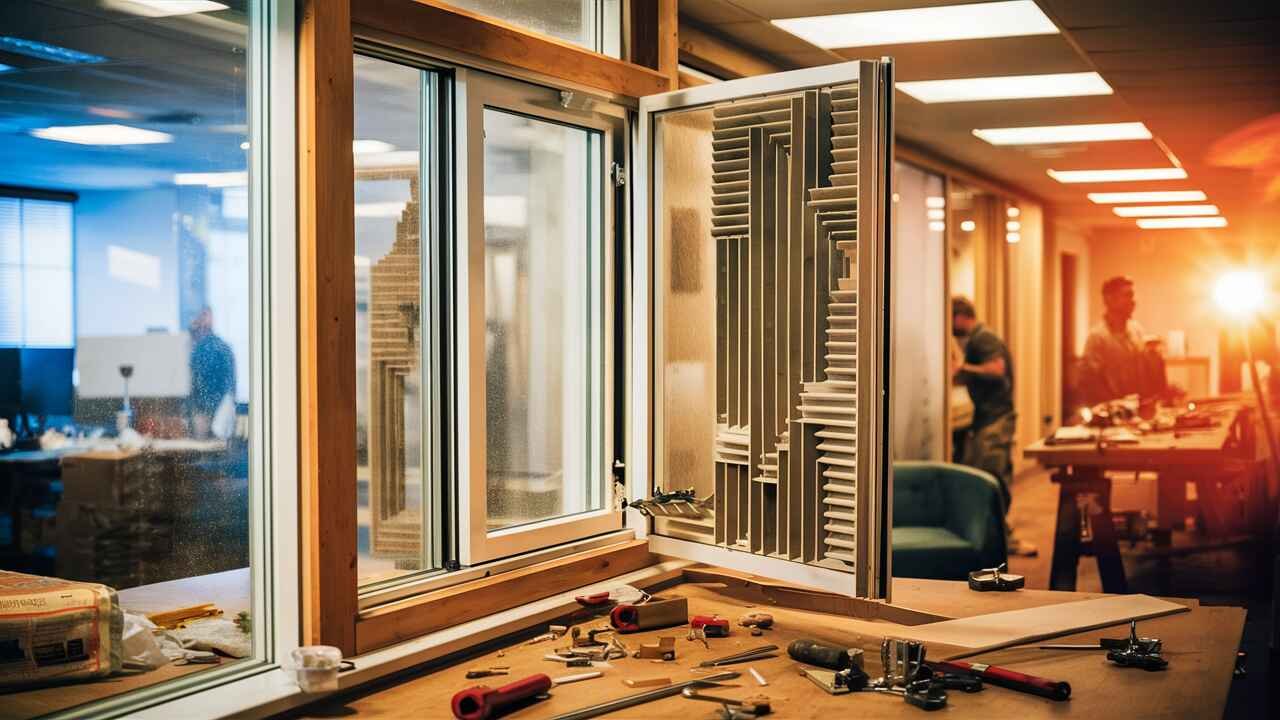
For complex noise issues or unique window sizes, custom-built soundproof windows may be the best option. These are designed and manufactured to your exact specifications, ensuring optimal noise reduction. Off-the-shelf soundproof windows are also available and can be a more affordable choice for standard window sizes.
Key features to look for: STC and OITC ratings, glass type, frame material, and seal quality
When selecting soundproof windows, pay close attention to the STC and OITC ratings, glass type (laminated, double-pane, or triple-pane), and frame and seal quality. These factors directly impact the window’s ability to block noise and prevent sound leaks.
Frame material deserves specific attention. Fiberglass frames offer excellent dimensional stability, meaning they do not expand or contract significantly with temperature changes — this helps maintain a tight seal over time. Vinyl frames are a popular and more affordable option that also provides good insulation, though they may expand slightly more in extreme heat. Both are superior to standard aluminum frames for soundproofing, as metal conducts sound vibrations more readily.
Also look for windows with warm-edge spacer systems — the component that separates the panes of glass at the edge. Traditional aluminum spacers can transfer both heat and sound. Warm-edge spacers use less conductive materials, which helps reduce both heat loss and noise transmission at the perimeter of the glass unit.
One trade-off to keep in mind: the tighter the seal, the less natural ventilation the window provides. If you choose fixed (non-opening) soundproof windows for maximum noise reduction, you will need alternative ventilation solutions, such as a separate ventilation system or strategically placed operable windows in less noise-sensitive areas of the home.
Don’t compromise on these essential features to ensure maximum noise reduction in your home.
DIY versus professional soundproof window installation: What you need to know
Step-by-step guide to a DIY soundproof window installation
For handy homeowners, DIY soundproof window installation can be a cost-effective option.
Follow a step-by-step guide to properly measure, prepare, and install the windows for optimal noise reduction.
However, be aware of potential challenges and limitations when attempting a DIY installation.
When to call in the pros: Complex installations and maximizing noise reduction
Professional installation is recommended for complex window configurations, large-scale projects, or when you need to maximize noise reduction.
The reason professional installation matters so much for soundproof windows comes down to sealing precision. Even a small gap between the window frame and the wall — sometimes as thin as a credit card — can let sound leak through and significantly reduce the window’s acoustic performance. Professional installers use specialized tools and techniques to ensure an airtight fit, including proper application of acoustic sealants and precise shimming to eliminate any voids around the frame. This level of detail is difficult to replicate without experience.
Cost comparison and long-term benefits of professional installation
While professional installation may have a higher upfront cost, it can provide long-term benefits in terms of noise reduction and window longevity. A properly installed soundproof window will maintain its acoustic performance for years, potentially saving you money on future replacements. Weigh the costs against the value of a quiet, peaceful living environment.
Living with soundproof windows: Maintenance, care, and enhancing noise reduction
Routine maintenance tips for long-lasting soundproof windows
To ensure your soundproof windows continue to perform at their best, follow these routine maintenance tips:
- Keep frames and seals clean and in good condition to prevent air leaks.
- Inspect for any cracks or damage that could compromise the window’s acoustic integrity.
- Consider reapplying weatherstripping or caulking as needed to maintain a tight seal.
Additional measures to further insulate your home from noise

Even with soundproof windows, some noise may still penetrate your home through other sources.
Enhance noise reduction by adding insulation, soundproofing doors, or using white noise machines in particularly noisy areas.
For window-specific reinforcement without replacing them, there are several non-invasive options worth considering. Applying dense acoustic caulk around the window frame can seal small gaps that let sound through. Weighted soundproof curtains add a layer of mass in front of the window that absorbs some sound energy, particularly mid-to-high frequency noise. These are not replacements for proper soundproof windows, but they serve as practical supplements — especially in rooms where a full window upgrade is not immediately feasible.
Life after installation: Enjoying a quieter, more peaceful home
Imagine waking up refreshed, free from the sound of honking horns or barking dogs. With soundproof windows, you can finally enjoy the serenity of a quiet home environment. Reduce stress, improve concentration, and truly relax in the comfort of your own space.
FAQs
How can I make my windows soundproof?
There are several ways to soundproof your windows, including installing:
- Soundproof window inserts or secondary glazing panels behind your existing windows
- Double-pane or triple-pane windows with laminated glass and dissimilar glass thicknesses
- Custom-built soundproof windows with high STC and OITC ratings
- Temporary measures like acoustic caulk, weatherstripping, or weighted soundproof curtains
How much do soundproof windows cost?
The cost of soundproof windows can vary widely depending on the type, size, and level of noise reduction required. Here are some general cost estimates:
- Soundproof window inserts start around $200–$500 per window for basic models.
- Installing new dual-pane or triple-pane soundproof windows can cost $500–$1,200 per window.
- Custom-built soundproof windows with laminated glass and high STC ratings can range from $1,000–$2,500 per window.
- Professional installation typically adds 20–30% to the overall cost.
While the upfront investment may be higher, soundproof windows can provide significant long-term value by improving your quality of life and potentially increasing your home’s resale value.
What are the best noise-reducing windows?
Some of the best noise-reducing windows include:
- Triple-pane windows with laminated glass and high STC ratings (50+ STC)
- Dual-pane windows with a wide air gap and laminated glass (40–50 STC range)
- Custom-built acoustical windows designed for maximum sound insulation
The most effective option will depend on your specific noise levels and budget. Look for windows that provide both STC and OITC ratings to ensure performance across a wide range of sound frequencies. Higher ratings generally indicate better noise reduction, but the right choice also depends on whether your primary noise problem is high-frequency (voices, horns) or low-frequency (traffic rumble, construction).
Do soundproof windows exist?
Yes, soundproof windows do exist and are designed to significantly reduce outside noise entering your home. While no window can completely block out all sound, specialized soundproof windows use advanced glazing and framing to create an effective acoustic barrier.
Some key attributes of soundproof windows include:
- Thick laminated or double/triple pane glass with dissimilar thicknesses
- Wide air gaps between panes to dampen vibrations
- Frames made from fiberglass or vinyl for better sound insulation
- High-quality seals and warm-edge spacer systems to prevent sound leaks
- STC ratings of 40 or above and favorable OITC ratings for low-frequency noise
With the right soundproof windows installed, you can drastically improve the quiet inside your home environment.
