

Are you tired of stepping on errant LEGO pieces or tripping over toy cars strewn across the floor? Every parent knows the struggle — one moment the living room looks pristine, and the next it’s a minefield of plastic figures, crayons, and stuffed animals. The good news is that with the right approach, you can take control of the chaos and create a home that works for both adults and kids.
Why Toy Storage is Essential for a Tidy Home
There’s nothing quite like stepping on a stray crayon or Matchbox car to remind you why having a proper toy storage system matters. Toys multiply fast — and without a plan, they take over every room. The solution isn’t to get rid of everything your child loves. It’s to find smart ways to store, organize, and rotate what you have so that every toy has a place and cleanup doesn’t feel like a daily battle.
1. The impact of clutter on living space
A room full of scattered toys can make your home feel cramped and disorderly. Clutter doesn’t just affect the aesthetics of your living space — it impacts your mental well-being too. Research has shown that visual clutter increases cortisol levels and makes it harder to relax. By implementing effective toy storage solutions, you can reclaim your home and create a more peaceful environment for the whole family.
2. Making room for play without the mess
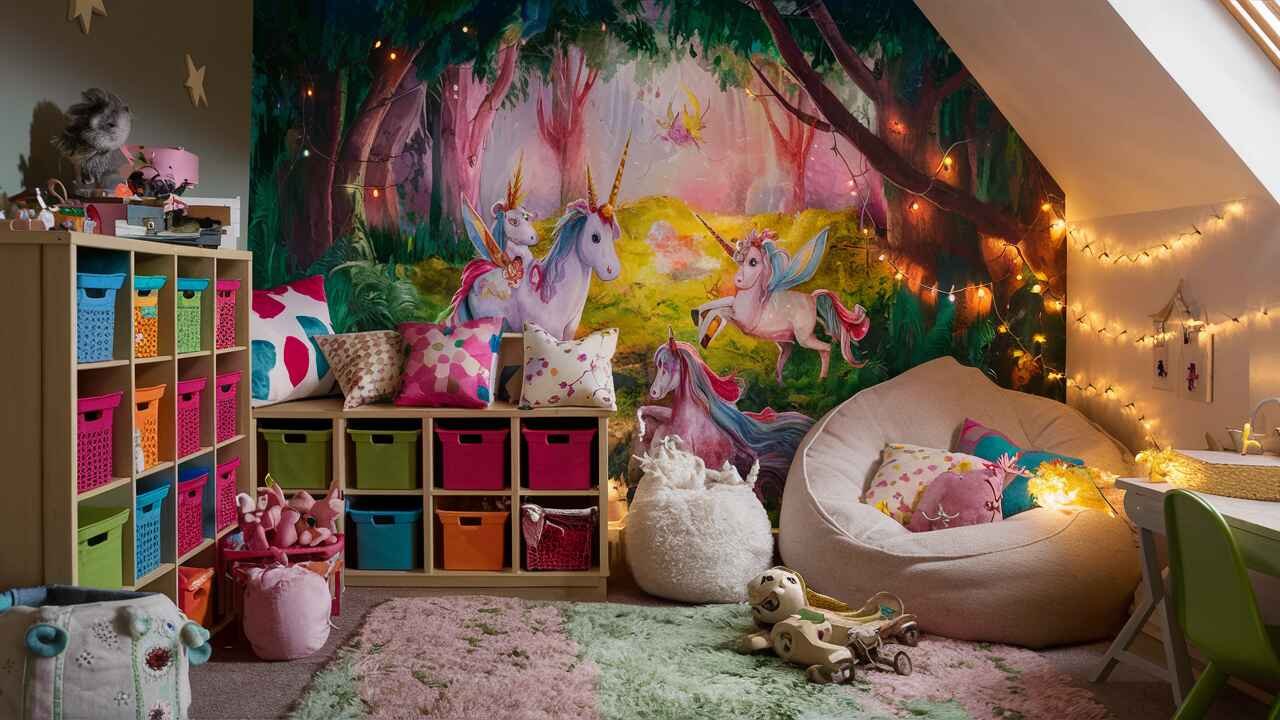
Kids need space to play and explore, but that doesn’t mean your home has to be a constant mess. With the right organizational ideas, you can create designated play areas that are both fun and tidy. This allows your children to enjoy their favorite things without compromising the overall cleanliness of your home.
3. Benefits of an organized play area for kids’ development
An organized play area benefits you and supports your child’s development. When toys are easily accessible and neatly arranged, children are more likely to engage in focused, imaginative play. Research from the American Academy of Pediatrics suggests that fewer, well-organized toys actually promote deeper play and creativity. Kids develop problem-solving skills and independence when they can find and put away their toys without assistance — and that sense of responsibility carries into other areas of their lives.
Toy Storage Ideas That Spark Joy
Finding the right storage solution isn’t just about hiding the mess — it’s about creating systems that your kids will actually use. The best toy storage ideas blend into your home’s style while making cleanup simple enough that even toddlers can pitch in.
1. Using baskets and bins for easy cleanups
Baskets and bins are a go-to option for corralling toys and making cleanup a breeze. But not all bins are created equal, and choosing the right type makes a real difference in how likely your kids are to actually put things away.
For younger children, open-top bins without lids are the way to go. They eliminate the struggle of opening closures and encourage faster, independent cleanup. When a toddler can simply drop a toy into a bin without fumbling with a lid, cleanup feels less like a chore and more like part of the play routine.
Look for sturdy, see-through containers that allow your child to easily identify what’s inside. Stackable bins help maximize vertical space, while soft canvas options can be folded flat and stored when not in use. Brands like 3 Sprouts offer roomy bins decorated with felt animal appliqués — each design makes it easier to tell bins apart without extra labeling, and parents report them holding up well after five-plus years of daily use. Their taller laundry hampers work equally well for stuffed animals, and some kids end up using the same bin for years, transitioning from toy storage to actual laundry as they grow.
For a more solid option, cubby-style organizers like those from Badger Basket give you deeper compartments where toys stay reasonably tucked away but still within reach. They’re sturdy enough for a child to sit on, stackable for tighter spaces, and versatile enough that once the toy phase passes, they can be repurposed for bike gear, tools, or seasonal items in other rooms.
One important thing to keep in mind: portable bins offer a flexibility that fixed shelving doesn’t. If you’re hosting a gathering or simply want to relocate the play area for the afternoon, bins that can be picked up and moved to another room — or tucked into a closet entirely — give you options that wall-mounted systems can’t match.
2. Repurposing bookcases and shelves for toys and games
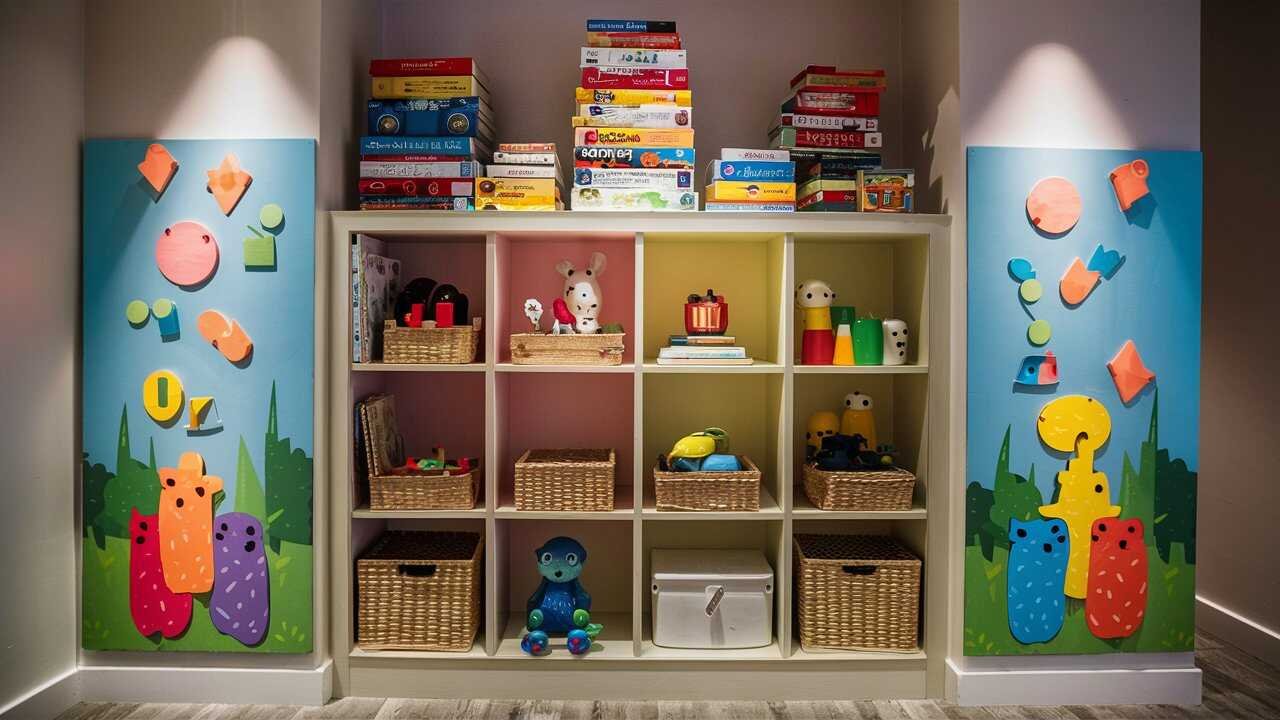
Give old bookcases and shelves a new lease on life by dedicating them to toy storage. Use the shelves to display favorite toys, books, and games, making them easily accessible for playtime. You can add some playful touches, like colorful labels or decorative baskets on the lower shelves, to make the storage more appealing to your little ones.
A clever trick is to place decorative fabric bins or wicker baskets on the bottom shelves and fill them with toys. From a distance, it looks like an intentional design choice. Up close, it’s a toy box your kids can reach on their own. The upper shelves stay adult-friendly with books, plants, or display pieces — everyone’s happy.
3. Whimsical options: Hammocks, canvas mats, and creative storage
If you want toy storage that doubles as a conversation piece, there are some genuinely creative options worth exploring.
Hammocks for stuffed animals are a classic. Hanging a net in the corner of the room keeps plush toys off the floor and turns a clutter problem into a fun display. They come in various styles — from basic mesh nets in multiple colors to boho macramé versions that blend right into a bedroom’s decor. Most are simple to install with a few wall hooks, and they hold a surprising number of stuffed animals without sagging.
For toys with lots of small pieces — think LEGO, Matchbox cars, or craft supplies — canvas drawstring bags that double as play mats are surprisingly effective. Products like the Swoop Bag and Play Pouch Australia work the same way: spread them open on the floor as a play surface, then pull the drawstring to cinch everything into a bag when playtime’s over. They can hold hundreds of small pieces, hang neatly on a hook, and because they’re soft cloth rather than plastic, they muffle the sound of rummaging through a pile of bricks — something any parent who’s endured the noise of a plastic bin full of LEGO will appreciate. They’re also much easier for kids to carry around on their own than a rigid bin, so a child can drag one from the living room to the kitchen and back without help. The Play Pouch versions come with themed designs — a farm scene, a town with roads for cars — that double as play backdrops, adding another layer of fun for younger kids.
IKEA Hacks for Toy Organization
IKEA has become something of a secret weapon for parents tackling toy chaos. Two product lines in particular — Trofast and Kallax — have earned a loyal following for their flexibility, durability, and ability to grow with your family.
1. Maximizing small spaces with IKEA Trofast and Kallax
The IKEA Trofast storage combination is one of the most popular toy organization systems out there, and for good reason. The frames come in multiple sizes and configurations, and the drawer bins are available in four different depths — so you can use shallow drawers for small items like crayons and action figures, and deeper ones for larger toys or bulk collections.
What makes Trofast especially practical for kids is that the drawers slide out easily. During a LEGO building session, a child can pull out a drawer, use it on the floor, and slide it back when they’re done. Some parents have combined two or more units, anchored them together and into the wall, and topped the whole thing with a sheet of plywood to create a large play table with all the storage drawers underneath. It keeps everything close at hand without eating up extra floor space. Adding lids to the bins also makes them stackable, which is handy for storing toys that aren’t getting much love or that you’re saving for a younger sibling. And once your kids outgrow the system entirely, the frames and bins can be repurposed for tool storage or workshop organization.
The IKEA Kallax shelf unit works similarly but offers a different aesthetic. Instead of plastic drawer bins, you can outfit the cubes with fabric inserts, rattan baskets, cabinet doors, or hanging organizers — giving you more control over how the finished piece looks in your living space. The four-cube, eight-cube, and sixteen-cube configurations make it versatile enough for different room sizes, and the cubes are big enough for most children’s books or large toys. Because Kallax units can double as bookshelves, sideboards, or media consoles, they transition naturally as your child grows out of the toy phase. Many parents report their Kallax units lasting through a decade and multiple moves.
One thing to keep in mind: both systems should be anchored to the wall for safety, especially in homes with younger kids who might try to climb. Orienting Kallax units horizontally on the ground is another good precaution.
2. DIY toy storage solutions: From cube organizers to play tables
With a little creativity, IKEA products can become the base for custom storage builds. Transform a simple Kallax shelf into a multi-functional play table by adding a tabletop and tucking storage bins underneath. Or give a plain cube organizer a makeover with a fresh coat of paint and some playful decals to match your child’s bedroom or playroom decor.
The beauty of modular systems is that they’re forgiving — if one configuration doesn’t work, you can reassemble and try something different without starting from scratch.
3. Creating a LEGO paradise with designated storage units
LEGO enthusiasts know the pain of stepping on tiny bricks or searching for that one specific piece buried in a mountain of plastic. A well-organized LEGO station starts with shallow drawers — the IKEA Trofast with its shallow bin option works perfectly — so that pieces are visible and accessible rather than buried at the bottom of a deep bucket.
Beyond the main drawers, smaller organizational tools make a big difference. Clear zipper pouches are ideal for keeping individual sets together — when a child finishes building a set and wants to take it apart, all the pieces go back into the labeled pouch before returning to the drawer. For mixed collections, compartmentalized containers with divided sections — similar to a tackle box — let you sort by color, piece type, or project. Label each drawer or container to make finding the right piece intuitive, and you’ll spend a lot less time on your hands and knees searching under the couch.
Designated Spaces: How to Keep Toys in Their Place
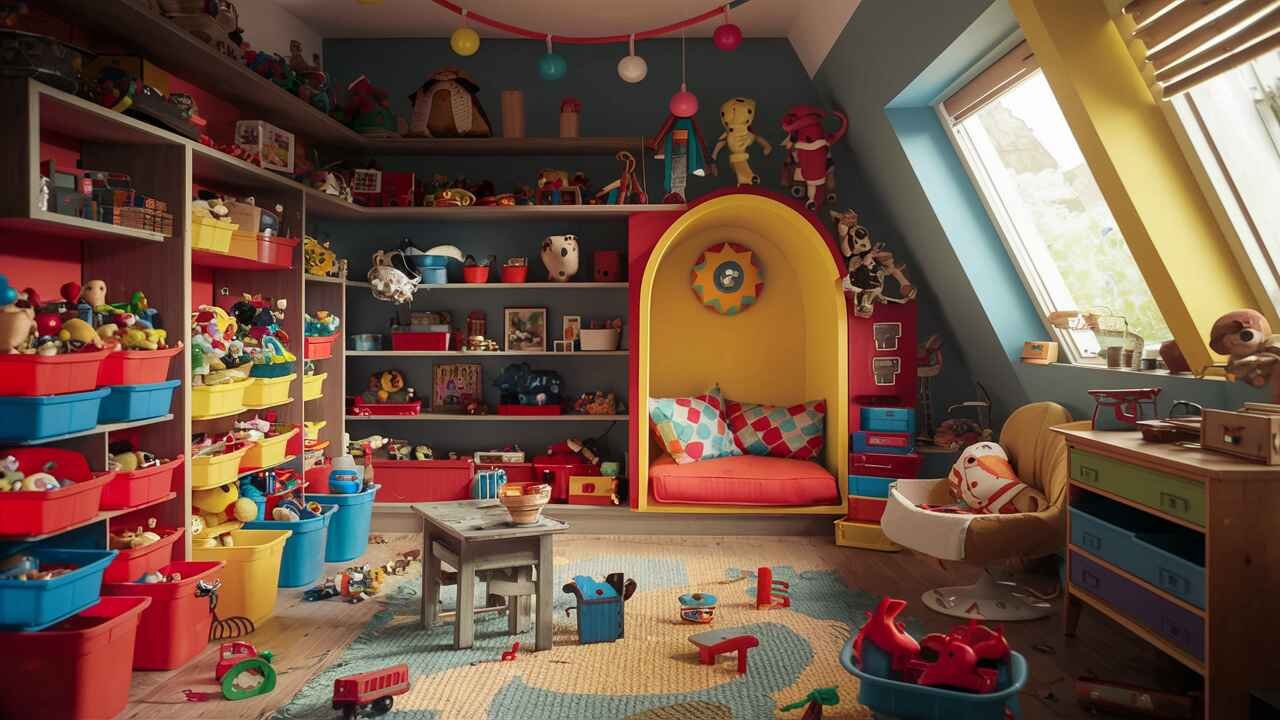
Even the best storage containers won’t help much if there’s no clear system for where things belong. Creating designated spaces — both for play and for storage — is what turns a collection of bins and shelves into a system that actually works.
1. Designating play areas versus storage spaces in your home
To maintain a tidy home, it’s worth establishing clear boundaries between where play happens and where toys live when they’re not being used. This helps your child understand the rhythm of play and cleanup, and makes it easier for them to put things away when playtime is over.
Consider setting aside a specific room or corner of your living space as the play zone. Within that zone, keep a drawer system on swivel wheels or a set of open bins that can be pulled out during play and tucked away afterward. Arranging the rest of your living room furniture to face away from the play area helps keep the visual mess contained — even if toys haven’t been fully sorted yet, they’re not the first thing you see when you walk in.
For living rooms that serve double duty, closed-door furniture is your best friend. A wardrobe, armoire, media stand, or console table with doors lets you tuck the entire toy collection out of sight when it’s time for adult relaxation. If your existing furniture doesn’t have doors, you can often add them — vintage or decorative doors propped in front of open shelving create an instant hidden storage effect without replacing the whole piece.
And if completely hiding toys feels like a losing battle — which, let’s be honest, it sometimes is — there’s another approach worth considering: lean into the family room vibe. Instead of fighting to keep every toy invisible, allow a few well-chosen items to live on display. A wooden toy chest in the corner, a couple of handcrafted toys on a shelf alongside your own books and decor, or a framed piece of your child’s artwork hung next to yours — these touches make the room feel lived-in and family-friendly without tipping over into chaos. The key is balance: keep the number of displayed toys roughly even with other decor items, and rotate what’s on display based on what your kids are currently interested in. An outdoor storage box on the porch or a dedicated bin in the hallway closet works well for swapping items in and out.
2. Using labels and containers to make cleanup fun for kids
Encourage your kids to participate in cleanup by making it a positive, interactive experience rather than a punishment at the end of playtime. Use colorful labels — ideally with both words and pictures for pre-readers — to help them identify where each type of toy belongs.
You can turn cleanup into a game by setting a timer and racing to beat the clock, or by creating a checklist of items to put away scavenger-hunt style. But beyond the fun factor, there’s a deeper lesson worth teaching. When kids are involved in organizing their own space — deciding which toys to keep on the shelf and which to put in storage — they develop a sense of ownership and responsibility. Even something as simple as letting them choose which bin the action figures go in gives them a stake in keeping the system running.
For families ready to take it a step further, involving kids in the decluttering process itself can be surprisingly powerful. Start by modeling the behavior with your own belongings — sort a drawer of your things into piles for keeping, donating, selling, and discarding, and explain your thought process out loud. Then guide your kids through doing the same with their toys. It won’t be easy — there will be emotional attachments to outgrown toys — but learning to thoughtfully let go of things they no longer use is a skill that serves them well beyond childhood. If they push back with “but what if I want to play with it again someday,” a helpful response is to let them know those toys can go into a storage area rather than out the door permanently. In most cases, they’ll forget about them within a few weeks — and the reintroduction later will feel like getting something brand new.
And when those decluttered toys need a new home, you’ve got more options than the trash bin. Consider organizing a toy swap with other families in your neighborhood or school — one child’s outgrown toys become another’s new favorites. Local toy libraries, where kids can borrow and return toys like books, are another option worth exploring. Donating to preschools, kindergartens, or daycares ensures toys get plenty of use, and selling through local marketplaces can put a few dollars back toward the next round of toys.
3. Organizing toys by type: Making it easy for kids to find and store
Group toys by type or category to make it intuitive for your child to find what they’re looking for and put things back. Keep all the action figures in one bin, the dress-up clothes in another, and the art supplies in a designated drawer. This kind of simple categorization — broad labels like “Blocks,” “Dolls,” and “Cars” rather than overly specific ones — makes cleanup faster and encourages more focused, imaginative play.
Keep in mind that a shelf-based system is a commitment. Once units are anchored and filled, they define the room. If you value the ability to completely clear a space — for a party, a holiday gathering, or just a change of scenery — make sure part of your storage plan includes bins and baskets that can be picked up and moved to a closet or another room entirely.
Creative Toy Storage Ideas for Small Living Spaces
When every square foot counts, toy storage needs to be both creative and efficient. These solutions help you make the most of limited space without sacrificing accessibility or style.
1. Utilizing vertical space: Wall-mounted shelves and hanging organizers
When floor space is limited, think vertically. Install wall-mounted shelves or hanging organizers to keep toys off the floor and within easy reach. Clear acrylic shelves work well for showcasing favorite toys or collectibles, while fabric hanging organizers with multiple pockets can corral everything from dolls to art supplies without taking up any floor space at all.
Vertical shelving also pairs well with decorative baskets and bins — load up the lower shelves where kids can reach, and reserve the upper shelves for items that are in rotation-out or need to stay away from younger siblings.
2. Under-bed storage: Hidden options for large toys and playthings
Don’t let the space under your child’s bed go to waste. Rolling under-bed bins are ideal for stashing bulky items like stuffed animals, building sets, or play tents — things that take up valuable closet space but aren’t in daily use. Because they’re on wheels, kids can slide them out independently when they want something and push them back when they’re done. It’s hidden storage that requires zero extra floor space.
3. Multi-functional furniture: Storage that works harder
When space is at a premium, every piece of furniture should earn its keep. Multi-functional furniture that doubles as storage is one of the smartest investments a family with young kids can make.
Storage ottomans are a popular choice — they provide seating, work as a coffee table, and hide a surprising amount of toys inside. But here’s an angle many parents overlook: an ottoman’s height is actually perfect for young children as a play surface. Toddlers can stand and draw or play with figurines at a comfortable level, and older kids can sit on the floor and use it as a table for building sets or doing puzzles. During the day, it’s their play table. In the evening, it goes back to being your living room furniture with everything tucked away inside.
Beyond ottomans, look for coffee tables with drawers or shelves underneath, TV stands with concealed compartments, storage benches that double as seating at the foot of a bed or in an entryway, and sofas with built-in storage under the cushions. Some furniture lines even offer pieces that transform as your child grows — a toy chest that converts into a desk, or a play table with a hidden compartment underneath where collections can live out of sight.
And if your child already has a play kitchen sitting in the corner, don’t let that space go to waste. Play kitchens have plenty of interior room beyond just pretend food — you can stash art supplies, small toys, or craft kits inside them when they’re not being used for make-believe cooking. Just be prepared to empty it when it’s time for your kids to play chef.
Making Cleanup Easier: Practical Tips and Tricks
Even the best storage system falls apart without a routine to keep it running. These strategies help make cleanup a natural part of the day rather than a nightly battle.
1. How to encourage kids to participate in tidy-up time
Make tidy-up time a regular part of your daily routine, and involve your kids in the process from the start. Lead by example — show them how to properly store their toys and praise them for their efforts. A cleanup song or dance can make the task more engaging for younger kids, and setting a timer to “race the clock” adds a playful element for older ones.
But beyond making cleanup fun, it helps to have a structured approach. A simple method that works well is the four-pile system: keep, donate, sell, and trash. Walk your kids through sorting their toys into these categories, and let them have a say in what stays and what goes. For the “keep” pile, you can go a step further and split it into two: things that stay in the room for daily play, and things that go into a storage area for rotation.
This teaches kids a valuable distinction — between things they use regularly and things they value but don’t need every day. It also heads off the classic “but what if I want to play with it again someday?” objection. The storage pile isn’t gone forever — it’s just waiting its turn.
2. Rotating toys to keep the play area fresh and organized
Toy rotation is one of the simplest and most effective strategies for keeping a play area manageable, yet most parents either don’t know about it or underestimate how well it works.
The concept is straightforward: keep only a portion of your child’s toys accessible at any given time, and store the rest out of sight in a closet, a spare room, or even a storage unit. Every few weeks, swap some items out. Toys that have been hidden away come back feeling almost brand new, and the ones that have lost their appeal go into rest.
This approach has several benefits beyond just reducing clutter. With fewer toys available at once, kids tend to play more deeply and creatively with what’s in front of them. The regular reintroduction of “new” toys keeps their interest piqued without you having to buy anything. And the play space stays more manageable because there’s simply less to scatter across the floor.
You don’t need a complicated system for this. A hall closet, a set of bins in the garage, or even under-bed storage can serve as your overflow area. The only rule is that the stored toys stay out of sight and out of mind until it’s time for the swap.
3. Storing toys with small parts: Avoiding the inevitable pile-up
Toys with small parts — LEGO bricks, puzzle pieces, craft supplies, action figure accessories — are some of the hardest things to keep organized. They end up mixed, lost under furniture, or buried in a bottomless bin. A few targeted strategies can save you from the chaos.
The key principle is “small containers inside big containers.” Rather than dumping everything into one large bin, use smaller organizers within it. Clear zipper pouches work wonderfully for keeping individual sets together — a LEGO set, a puzzle, or a craft kit can each live in its own pouch, labeled and easy to grab. Compartmentalized containers with divided sections — similar to a tackle box — are ideal for sorting items by type: Hot Wheels cars in one section, action figure accessories in another, doll house furniture in a third.
For stuffed animals and other plush toys that seem to breed on their own, a large breathable storage bag or a wall-mounted hammock keeps them contained without squishing them into a space where they’re impossible to retrieve. Canvas drawstring bags also work well here — toss everything in, pull the string, and hang it on a hook behind the door.
The goal is always the same: every category of toy should have a specific, designated home. When kids know exactly where things go, they’re far more likely to put them there.
FAQs
How do you store a lot of toys?
To store a large number of toys, combine multiple types of storage solutions — shelving for frequently used items, bins and baskets for quick cleanup, and hidden storage (under-bed drawers, ottomans, closed-door furniture) for overflow. Vertical storage, like wall-mounted shelves and hanging organizers, helps maximize space. And don’t underestimate the power of toy rotation: storing half the collection out of sight and swapping every few weeks keeps the active collection manageable without getting rid of anything.
How do you organize a large number of toys?
Start by sorting toys into broad categories based on type — building toys, dolls and figures, art supplies, dress-up clothes, and so on. Use labeled containers for each category, and designate specific zones in your home for different types of play. Involve your kids in the process so they understand the system and feel ownership over it. A regular decluttering routine — even just once every few months — prevents the collection from growing beyond what your storage can handle.
How do you store a lot of toys in a small space?
In small spaces, every surface counts. Maximize vertical storage with wall-mounted shelves and hanging organizers. Use under-bed drawers and rolling bins to take advantage of hidden floor space. Choose multi-functional furniture — storage ottomans, coffee tables with drawers, benches with lift-up seats — so that everyday furniture also serves as toy storage. And keep the active toy collection small through regular rotation; you don’t need everything out at once.
What is the best storage for kids’ toys?
The best storage depends on your space, your child’s age, and the types of toys you’re dealing with. Some of the most versatile options include:
- Open-top bins and baskets — great for young kids who need easy, lid-free access
- Modular shelving systems like IKEA Kallax or Trofast — customizable, durable, and adaptable as kids grow
- Canvas drawstring bags — ideal for small-piece toys like LEGO, doubling as play mats
- Multi-functional furniture — ottomans, benches, and tables with hidden compartments
- Wall-mounted shelves and hammocks — for maximizing vertical space and keeping stuffed animals off the floor
The key is matching the solution to your family’s habits. If your kids play mostly in the living room, prioritize hidden storage that blends with your decor. If they have a dedicated playroom, open shelving and accessible bins make more sense. Whatever you choose, make sure it’s easy enough for your kids to use on their own — because the best storage system is one that actually gets used.
