

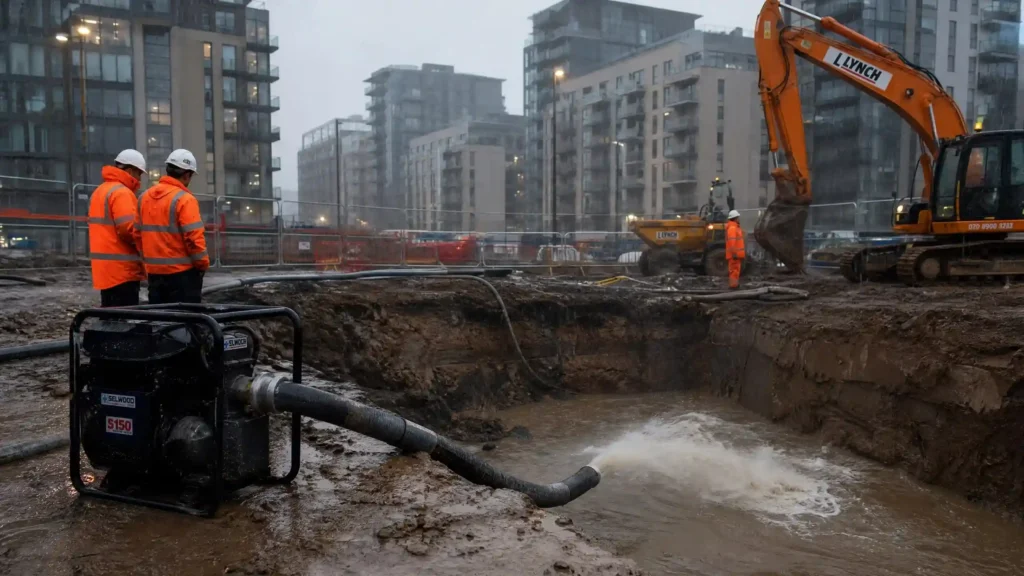
Drainage is one of the most persistent challenges in UK construction. The country’s high annual rainfall, varied geology, and ageing infrastructure combine to create drainage demands that test even experienced site managers. Whether you are managing a new residential development, a commercial refurbishment, or a large infrastructure project, understanding the drainage landscape — and knowing where to turn for reliable equipment and expertise — is essential to keeping your project on track.
The UK Drainage Context
The United Kingdom receives an average of around 1,200mm of rainfall per year, with significant regional variation. Scotland, Wales, and the north of England experience considerably higher precipitation than the south-east, but no region is immune to the heavy rainfall events that can overwhelm drainage systems and flood construction sites. Climate change is increasing the frequency and intensity of these events, making robust drainage planning more important than ever.
UK construction sites also face challenges from groundwater. Many parts of the country have high water tables, particularly in river valleys, coastal areas, and regions underlain by permeable chalk or limestone. Excavations in these areas require active dewatering from the outset, and the drainage systems installed in completed buildings must be designed to manage ongoing groundwater ingress throughout the building’s operational life.
Regulatory Framework
Drainage in UK construction is governed by a combination of Building Regulations, British Standards, and guidance from water authorities and the Environment Agency. Part H of the Building Regulations covers drainage and waste disposal, setting out requirements for foul water drainage, surface water drainage, and the management of solid waste. Compliance is not optional — non-compliant drainage installations can result in enforcement action, costly remediation, and delays to practical completion.
For developments that discharge to public sewers, approval from the relevant sewerage undertaker is required under the Water Industry Act. This process — known as a Section 104 adoption agreement for new sewers — requires detailed design submissions and may involve significant negotiation. Understanding these requirements early in the project programme is essential to avoiding delays.
Pump Selection for UK Site Conditions
The diversity of UK site conditions means that pump selection cannot be approached with a one-size-fits-all mentality. Clay-heavy soils in the Midlands and south-east present different dewatering challenges to the sandy soils of East Anglia or the rocky ground conditions of Scotland and Wales. Pump selection must account for the specific characteristics of each site, including the expected groundwater inflow rate, the depth of excavation, and the available discharge points.
For permanent building drainage applications, the pump specification must also account for the long-term performance requirements of the installation. A pump that performs adequately in the first year of operation but requires frequent maintenance or early replacement represents poor value, regardless of its initial purchase price. Specifying pumps from manufacturers with established reputations for reliability, and sourcing them from authorised UK distributors with comprehensive stock and technical support, is the most reliable approach to long-term performance.
The Value of a Specialist UK Supplier
For UK construction professionals, working with a specialist pump supplier that understands the specific demands of the UK market offers significant advantages. Local stock availability means that equipment can be on site quickly when it is needed — a critical factor when project timelines are tight or when an unplanned pump failure requires immediate replacement. Technical support from engineers who understand UK regulations, site conditions, and installation practices adds genuine value beyond simple product supply.
Whether you need temporary dewatering equipment for an active excavation or permanent drainage pump systems for a completed building, a specialist UK supplier with deep product knowledge and reliable stock availability is an invaluable partner. For sewage and wastewater pump requirements across the full range of construction applications, jung-pumps.co.uk offers an extensive product range, same-day dispatch from a UK warehouse, and expert technical support tailored to the demands of UK construction projects.
Conclusion
Drainage challenges are an unavoidable feature of UK construction. Site managers and project teams who approach drainage planning proactively — specifying the right equipment, working with knowledgeable suppliers, and understanding the regulatory framework — consistently deliver better outcomes than those who treat drainage as an afterthought. In a sector where margins are tight and programme delays are costly, getting drainage right is one of the most effective investments a construction professional can make.
