

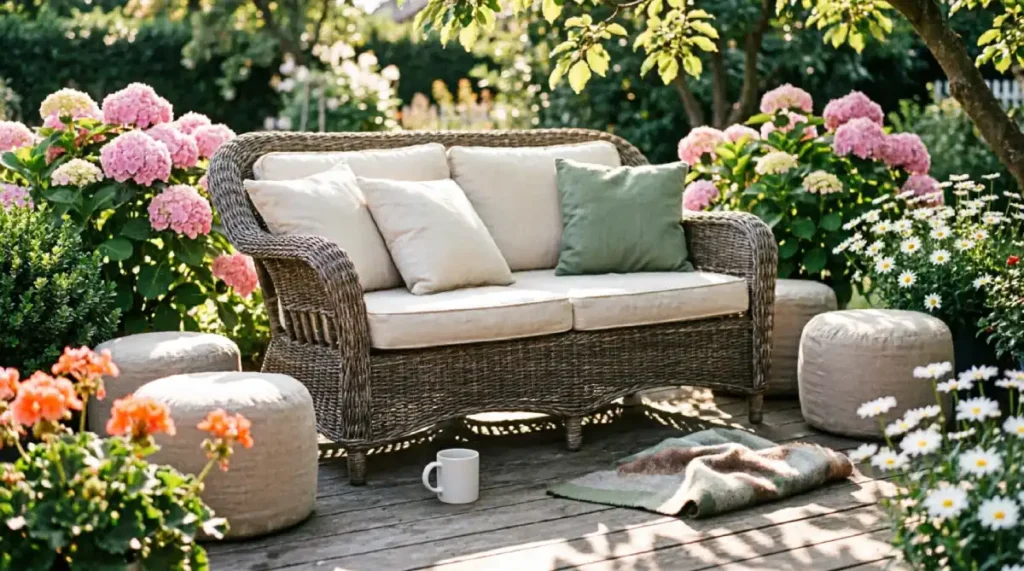
I know how frustrating it is to step into your garden on a warm summer evening only to find nowhere truly comfortable to sit. Hard benches, flimsy chairs, and baking sun can ruin the mood. I focus on seating that holds up outdoors, provides real comfort, and works with how you actually use your space.
This guide shares 12 summer garden seating ideas I’ve used in real projects, from rented patios to sprawling backyards. Each one puts comfort first without turning your garden into a maintenance nightmare.
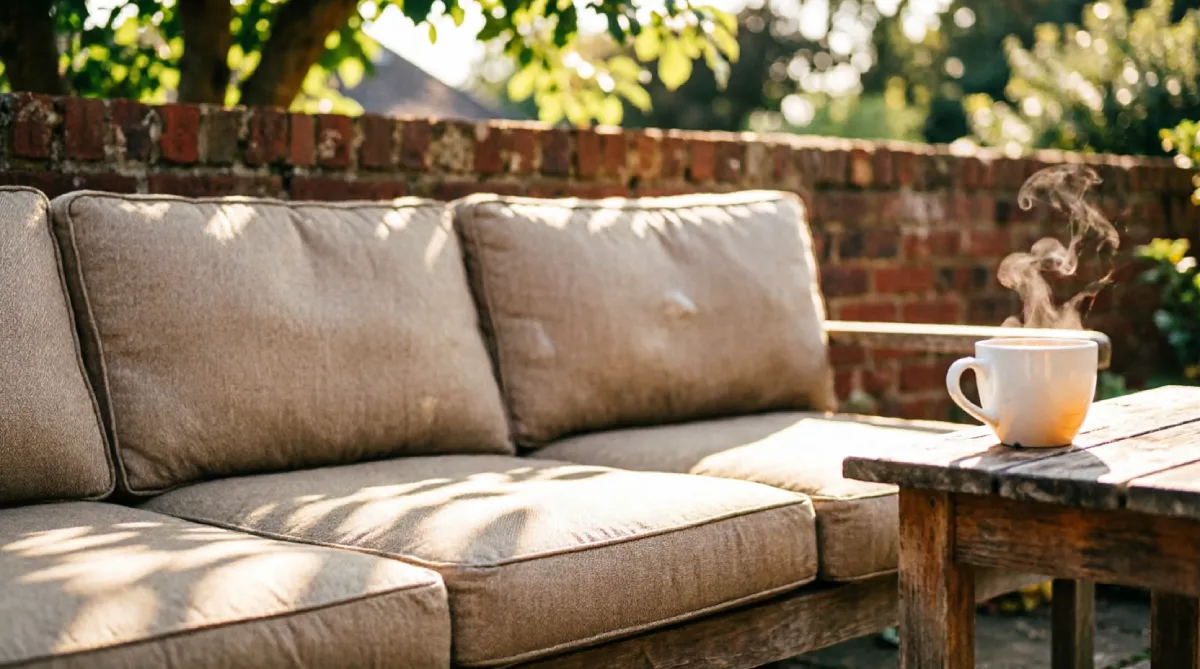
1. Deep Seating Sofa with Quick-Dry Cushions
I always position a deep-seating outdoor sofa against a wall or fence to create a natural windbreak and a sense of enclosure. I use quick-dry foam cushions with Sunbrella fabric because they shed rain fast and resist fading even in full sun. I once replaced a client’s cold metal bench with a compact two-seater, and they started using the garden daily for morning coffee.
I suggest adding a low side table for drinks and keeping a lightweight throw nearby for cooler evenings.
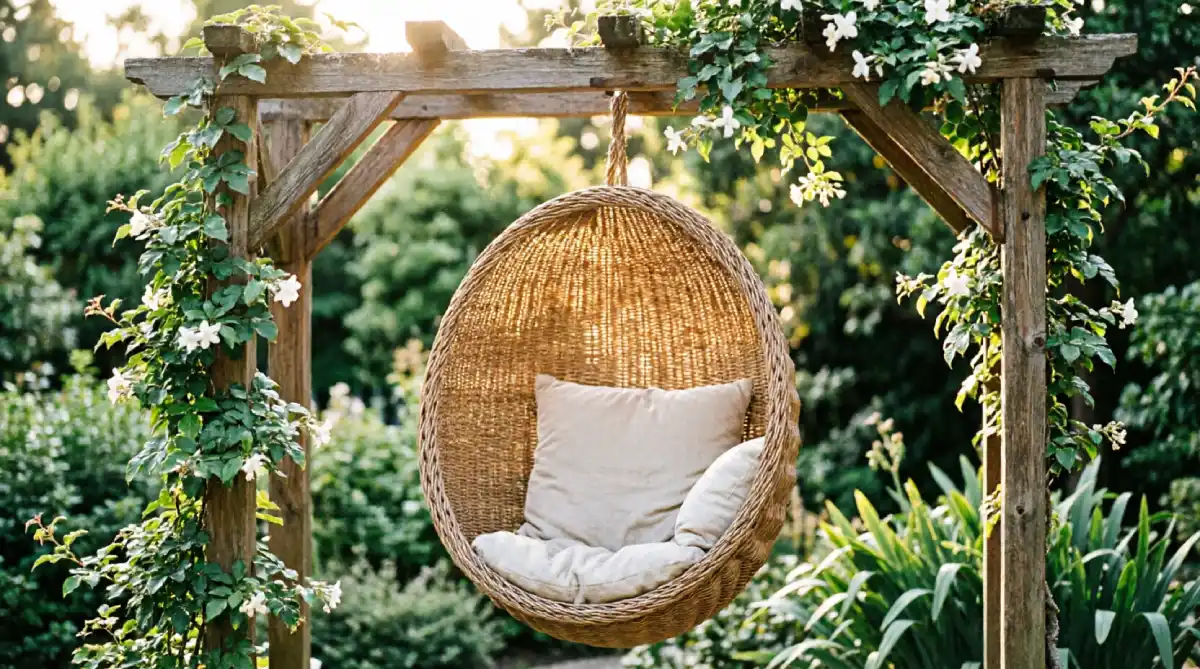
2. Hanging Rattan Chair Tucked in a Corner
I always hang a rattan chair from a sturdy pergola beam or a dedicated stand slightly off-center in a quiet corner. I use a thick cotton cushion and a small footstool because the gentle sway naturally eases tension after a long day. I once installed one for a friend who had very little floor space; it instantly became the most used seat in her yard.
I suggest checking weight limits and fixing the chair at a height where your feet just graze the ground for that floating sensation.
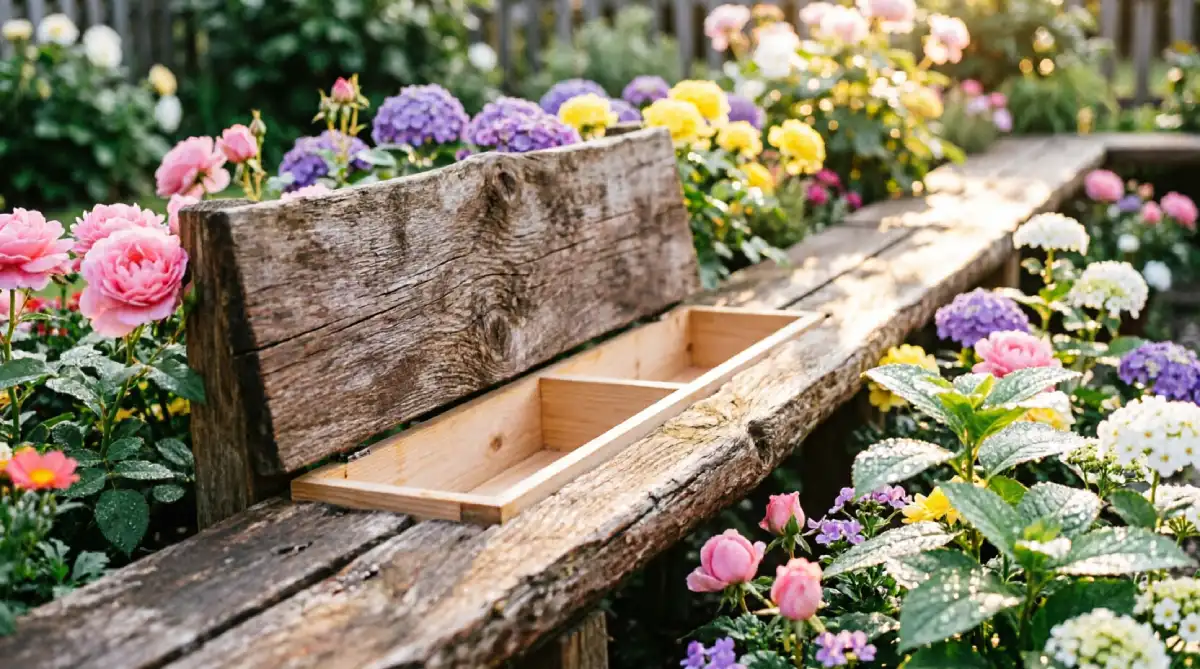
3. Built-in Timber Bench with Hidden Storage
I always build a fixed timber bench along a flower bed or retaining wall, making it part of the landscape instead of separate furniture. I use rot-resistant wood like cedar and add a hinged seat lid so I can stash cushions, garden tools, or kids’ toys out of sight. I once helped a neighbour construct a short L-shaped bench that doubled as a sandpit cover.
I suggest angling the seat slightly forward by a few degrees so rainwater runs off instead of pooling on the wood.
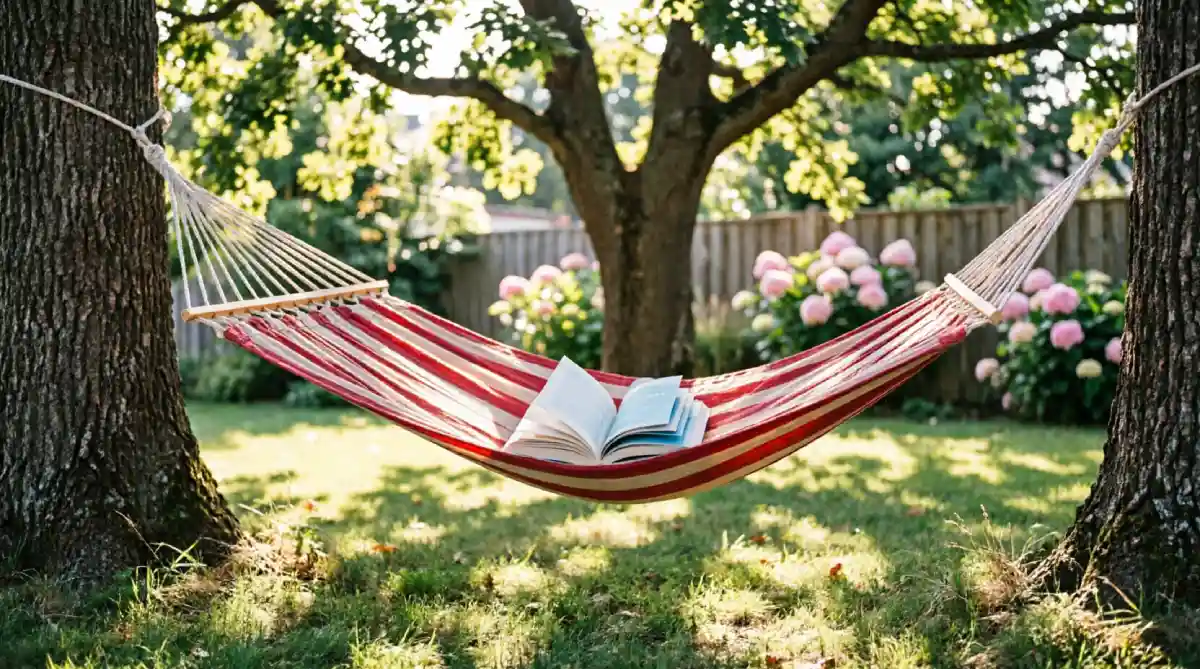
4. Double Hammock for Zero-Gravity Relaxing
I always hang a double hammock between two mature trees or on a heavy-duty frame placed diagonally across the lawn. I use a breathable cotton or quilted fabric hammock because it moulds to your body and keeps air flowing on sticky days. I once fell asleep in one after a barbecue and woke up without any backache, something that never happens on a lounger.
I suggest installing it with a slight sag and using tree straps that won’t damage the bark.
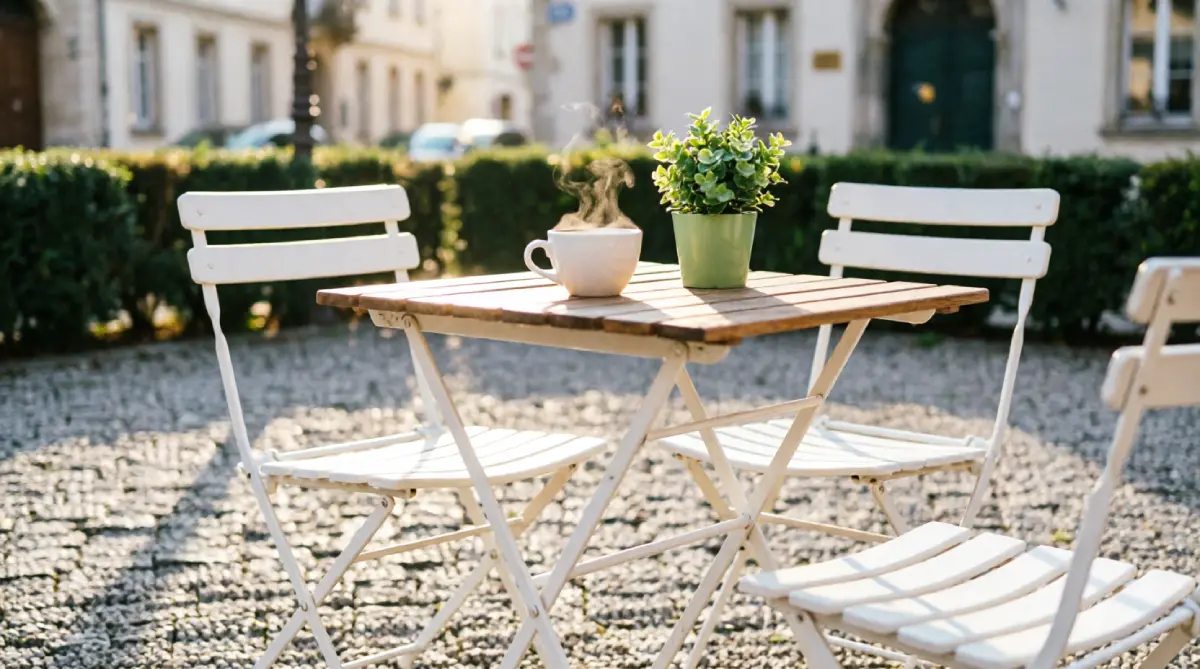
5. Lightweight Bistro Set You Can Move with the Sun
I always keep a small metal bistro set that’s light enough to carry with one hand yet heavy enough not to blow over in a breeze. I use powder-coated aluminum or wrought-iron-style sets with small round tables because they tuck into the tiniest spots. I noticed how often my own family chased the last rays of evening sun across the patio, so I taught them to drag the set around like sundials.
I suggest adding slim folding chairs that hang on a wall hook when you need the floor space back.
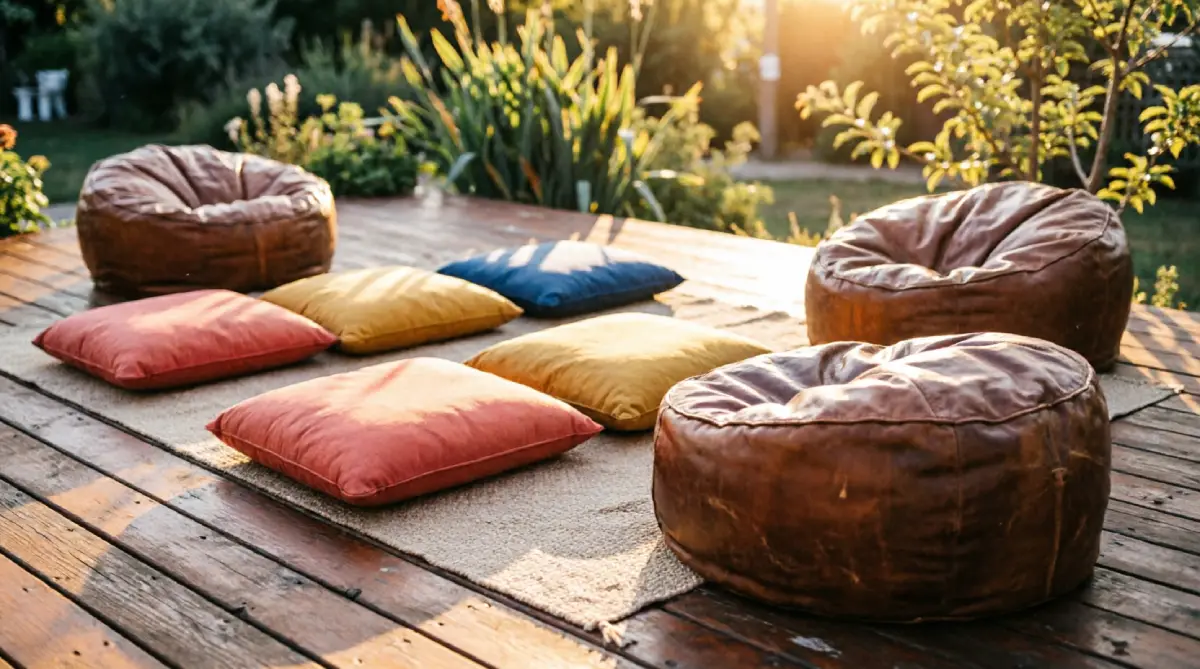
6. Floor Cushions and Moroccan Poufs on Decking
I always scatter large floor cushions and weather-resistant poufs on a wooden deck or flat lawn to create a low, informal lounge zone. I use outdoor fabric covers with handles because they are easy to grab and stack inside if rain hits. I once set up a cushion circle for a teen birthday gathering, and the kids ended up staying outside far longer than any upright chair arrangement allowed.
I suggest placing a waterproof picnic blanket underneath to keep bottoms dry from rising damp.
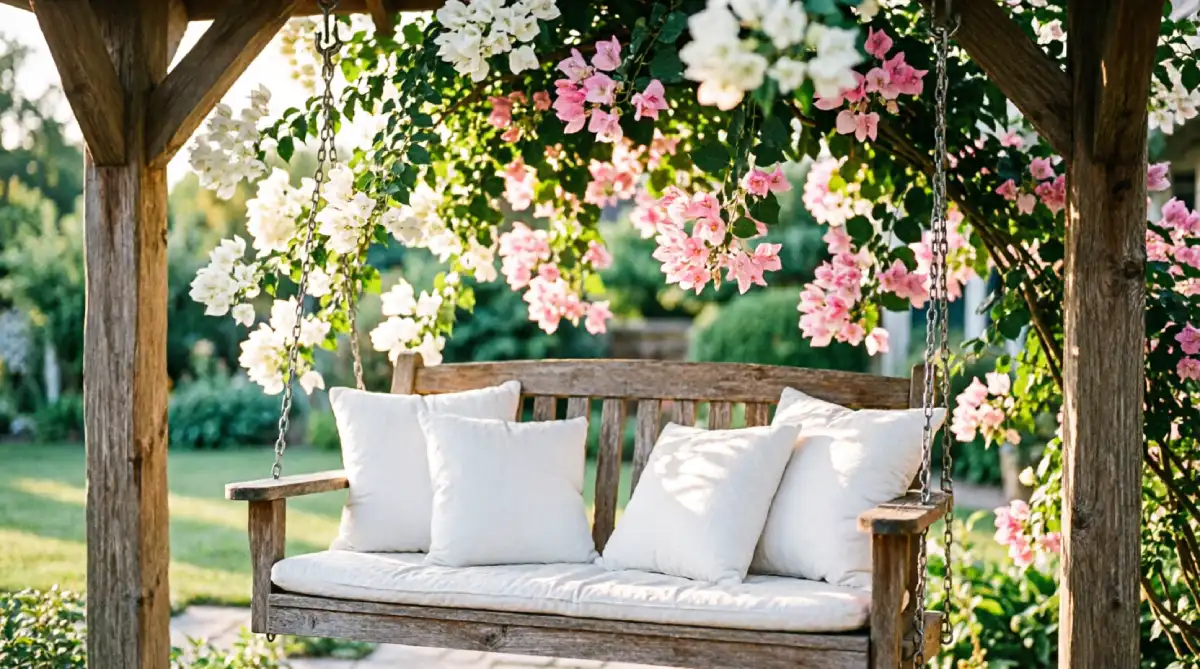
7. Wooden Porch Swing with Plush Pillows
I always hang a solid wood swing on a covered porch or under a pergola using rust-resistant chains and heavy-duty hooks. I use outdoor pillows with removable covers because they let me switch colours with the seasons and wash off pollen easily. I once retrofitted an old garden bench into a hanging swing, and it became the spot where my family lingered long after dinner.
I suggest adding a cup holder armrest and making sure the swing clears the wall by at least 18 inches.
8. Pallet Daybed with a Removable Canopy
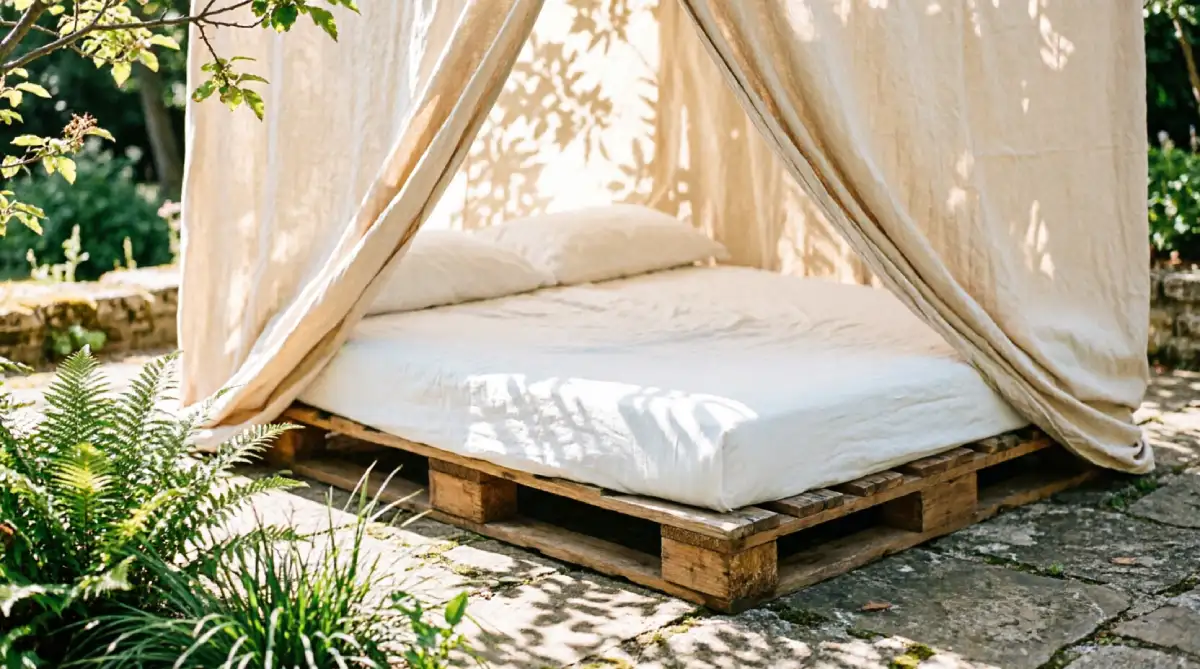
I always build a low daybed from heat-treated pallets, stacked two high, then top it with a twin mattress encased in a waterproof cover. I use a simple fabric canopy stretched over four posts because it blocks midday glare and gives the bed a cabana feel. I once created one on a rented patio for under £60, and guests often fell asleep on it during lazy Sunday afternoons.
I suggest sanding every surface thoroughly and adding caster wheels so you can roll it into the shade.
9. Foldable Camping Rockers for Instant Lounging
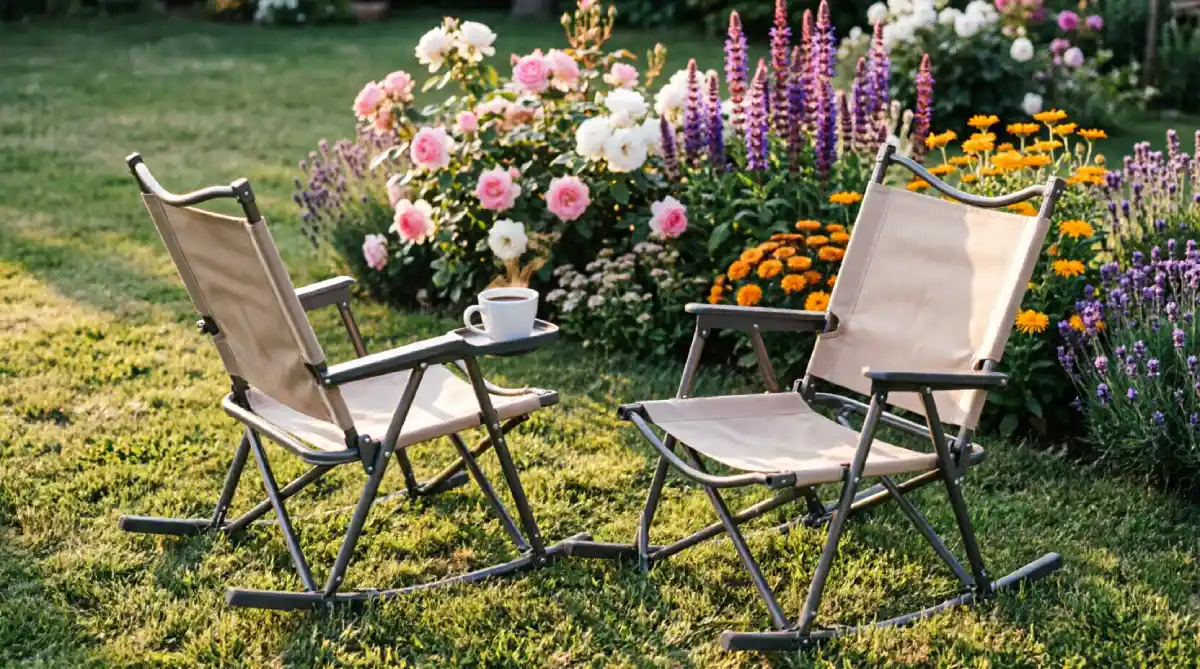
I always stash a couple of folding rocker chairs in the shed because they set up in seconds and offer that gentle rocking motion anywhere. I use models with padded armrests and a built-in cup holder, which makes them feel far more luxurious than a standard camp chair. I noticed that older relatives who struggle to get out of low seating find these rockers especially supportive and easy to rise from.
I suggest pairing each rocker with a small side table that folds flat so nothing takes up storage space.
10. Log Seats Formed from Fallen Trees
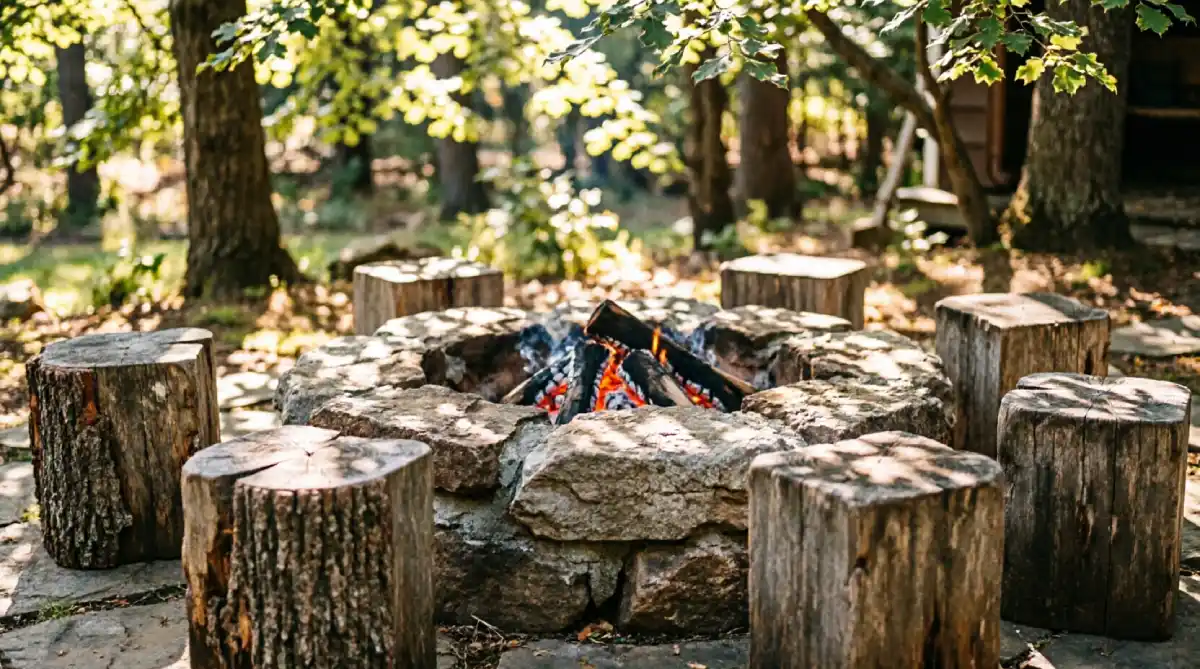
I always repurpose thick, sturdy log sections from a tree taken down by a storm, cutting them into 40–50 cm tall stools. I use a chainsaw and then sand the tops smooth, leaving the bark intact for a rustic look that settles perfectly into a woodland garden. I once arranged five birch logs around a fire pit, and the conversation flowed better than around any store-bought set.
I suggest sealing the cut surfaces with outdoor wood protector and checking for sap before you sit down.
11. Wicker Rocking Chair on a Covered Patio
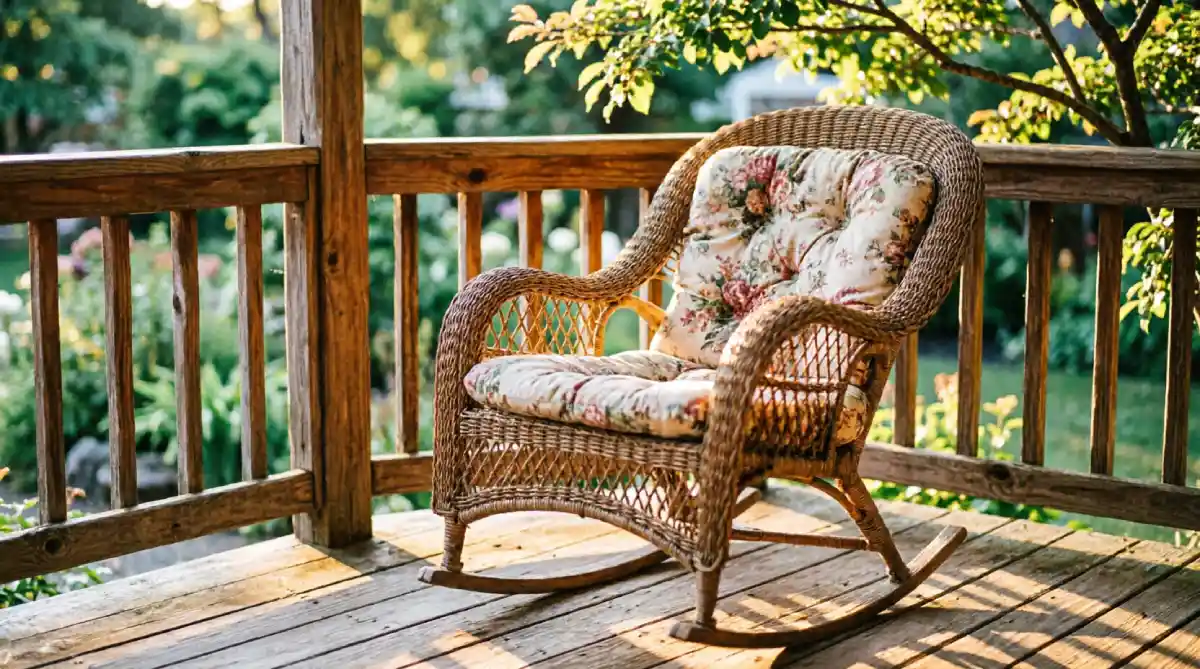
I always place a classic wicker rocking chair on a covered patio or inside a gazebo where it’s protected from direct rain but still feels outdoors. I use high-backed synthetic wicker that won’t unravel, paired with a thick seat pad that has ties to stop it slipping. I once inherited my grandmother’s rocker and gave it new life with outdoor spray paint and a Sunbrella cushion.
I suggest positioning it at a slight angle toward the garden view so the rocking rhythm feels meditative.
12. Oversized Outdoor Bean Bag That Handles Dew
I always choose a truly oversized outdoor bean bag filled with shredded water-resistant foam and covered in marine-grade vinyl or solution-dyed polyester. I use it as a movable floor lounger that kids and adults fight over, shifting it from sun to shade without effort. I noticed that, unlike bean bags made for indoors, the outdoor versions don’t soak up morning dew and dry within minutes after a light shower.
I suggest looking for a model with a removable, machine-washable cover and a handle for dragging.

Practical Tips
- Mix heights. Combine tall-backed chairs, low poufs, and floor cushions to create conversational levels that feel inviting rather than rigid.
- Always add shade. Even the most comfortable seat becomes unusable under a blazing sun—use a parasol, shade sail, or leafy tree.
- Choose materials that can stay out. Powder-coated aluminum, teak, and all-weather wicker ask far less of you when summer storms roll in.
- Layer textiles wisely. Machine-washable cushion covers and outdoor rugs add softness, but store them in a deck box overnight when possible.
- Test before you commit. Sit in a chair for at least ten minutes before buying; bad lumbar support shows up quickly.
- Weigh portability against wind. Lightweight pieces are easy to rearrange but need to be stowed or weighted if a gusty day is forecast.
Common Mistakes to Avoid
- Ignoring drainage. Upholstered seats that hold water lead to mildew and ruined foam—always elevate cushions or use quick-dry cores.
- Placing all seating in full sun. A beautiful bench in a sun trap stays empty from noon till evening. Pair each seat with a shade source.
- Buying a perfectly matched set. Five identical chairs can look like a waiting room. Mix materials and shapes for a lived-in feel.
- Forgetting how you actually use the space. A sprawling sofa is wasted if you mostly drink coffee alone; a single bistro set might serve you better.
- Overcrowding. Leave clear pathways and breathing room around seating groups so the garden doesn’t feel like a furniture showroom.
Comparison Table
| Feature | Best Option | Why It Works |
|---|---|---|
| All-Day Shade | Pallet Daybed with Removable Canopy | On-demand canopy blocks overhead sun without a permanent structure. |
| Back Support | Deep Seating Sofa with Plush Cushions | High backrest and dense foam reduce slump and pressure points. |
| Weather Resistance | Oversized Outdoor Bean Bag | Waterproof shell and drain-friendly filling handle dew and rain. |
| Easy to Move | Foldable Camping Rockers | Folds flat in seconds; lightweight but stable on grass or stone. |
| Space Efficiency | Floor Cushions and Poufs | Stack or spread out to fit any corner; no footprint dominance. |
| Gentle Motion & Calm | Wooden Porch Swing | Rhythmic swinging soothes and encourages longer outdoor stays. |
FAQs
What is the best way to keep garden cushions dry?
Use quick-dry foam inserts and fabric like Sunbrella. Store cushions in a waterproof deck box when not in use, or bring them inside during prolonged wet spells.
Can I leave wooden seating outside all summer?
Hardwoods such as teak or acacia can stay out, but apply a protective oil once a season. Softwoods need regular sealing, or they’ll crack and grey faster.
Is it expensive to create comfortable garden seating?
Not at all. Pallet daybeds, log seats, and floor cushions can be built for very little money, and a well-chosen hammock costs no more than a couple of pizzas.
How do I stop chairs from sinking into the lawn?
Place flat patio stones or wide-based feet under the legs. For lightweight chairs, switch to cast aluminum frames with spreader bars that distribute weight.
Which seating works best for small balconies?
A folding bistro set or a hanging chair that clamps to a railing makes the most of a tiny footprint while still feeling like a destination to sit.
