


My neighbor in Austin redid her living room last year. She had a 400-square-foot open-plan space that connected directly to the kitchen, got blasted with afternoon sun from the west-facing windows, and had to survive two kids, a dog, and the kind of weekly gatherings Texans treat as a basic human right. She tried copying a design she saw in a New York-based magazine — cool blues, linen curtains, minimalist shelving — and it looked completely wrong within six months. The fabrics faded. The room felt cold in January and like an oven in August. The furniture didn’t fit how her family actually moved through the space.
That’s the core problem with most living room design ideas you’ll find online: they aren’t built for Texas. This guide is. Everything here is written specifically for Texas family homes — the climate, the square footage, the open floor plans, and the price tags that come with working with Texas contractors and sourcing from Texas-area suppliers.
Understanding Living Room Design for Family Homes in Texas
Texas living rooms have a set of conditions that most national design guides ignore.
- The heat and sun issue is real. Most Texas homes — particularly in Dallas, Houston, San Antonio, and Austin — face south or west. That means your living room gets 6 to 8 hours of direct sun daily from spring through fall. Without accounting for this, you’ll fade furniture, overheat the room, and constantly fight your HVAC.
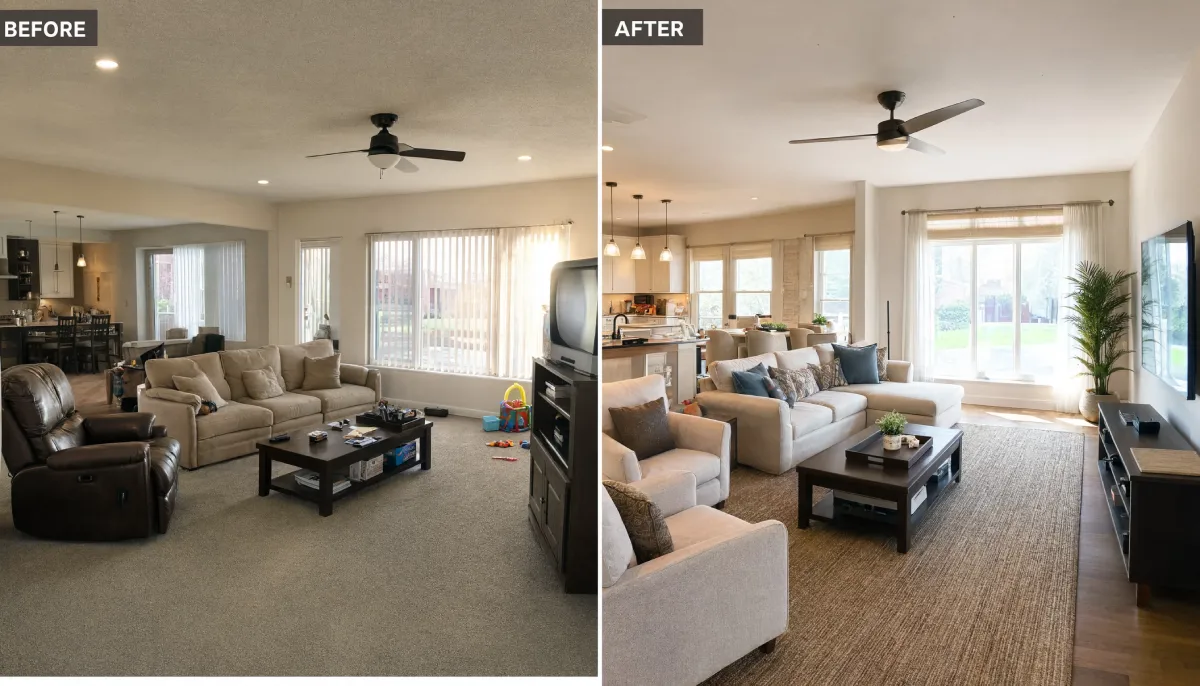
- Open floor plans dominate. The majority of homes built in Texas after 2000 have combined kitchen-living-dining areas. That changes your design approach entirely — you’re not decorating one room, you’re managing the visual flow across a large multi-function space.
- Family size and gatherings matter. Texas families tend to entertain at home. A living room that works for four people on a Tuesday needs to handle twelve people on a Friday night. That means furniture placement, traffic flow, and seating capacity need to be part of your planning from the start.
- Humidity varies sharply by region. Houston and the Gulf Coast sit at 70–80% average humidity. El Paso and West Texas are dry. This directly affects your material choices — wood that warps in Houston, paint finishes that hold better in dry climates, and fabrics that resist mildew in coastal areas.
- Labor and material costs in Texas run slightly below the national average in most markets, though Austin has been climbing. Expect to pay $40–$75/hour for interior work in most Texas cities, with Austin and The Woodlands running closer to $65–$90/hour.
Best Living Room Design Approaches for Texas Homes
There’s no single “Texas look,” but there are proven approaches that hold up to the climate and lifestyle. Here are the ones that consistently perform well.
1. Warm Neutrals with Natural Texture
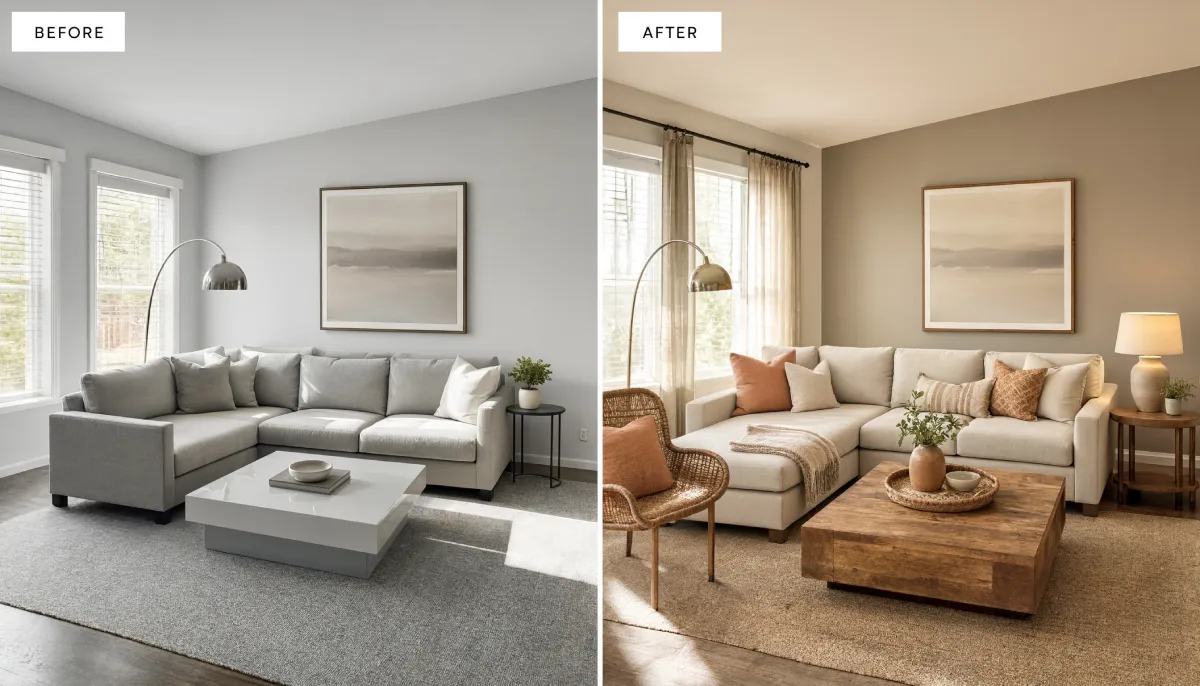
Walls in warm white, greige, or terracotta work far better in Texas light than cool grays or stark whites. Cool tones look washed out under the intense Texas sun and feel clinical under artificial light at night. Pair walls in Benjamin Moore’s “White Dove” or Sherwin-Williams “Accessible Beige” with natural textures — rattan, jute rugs, linen-blend upholstery — and you get a room that reads modern without fighting the environment.
2. Performance Fabrics, Not Decorative Ones
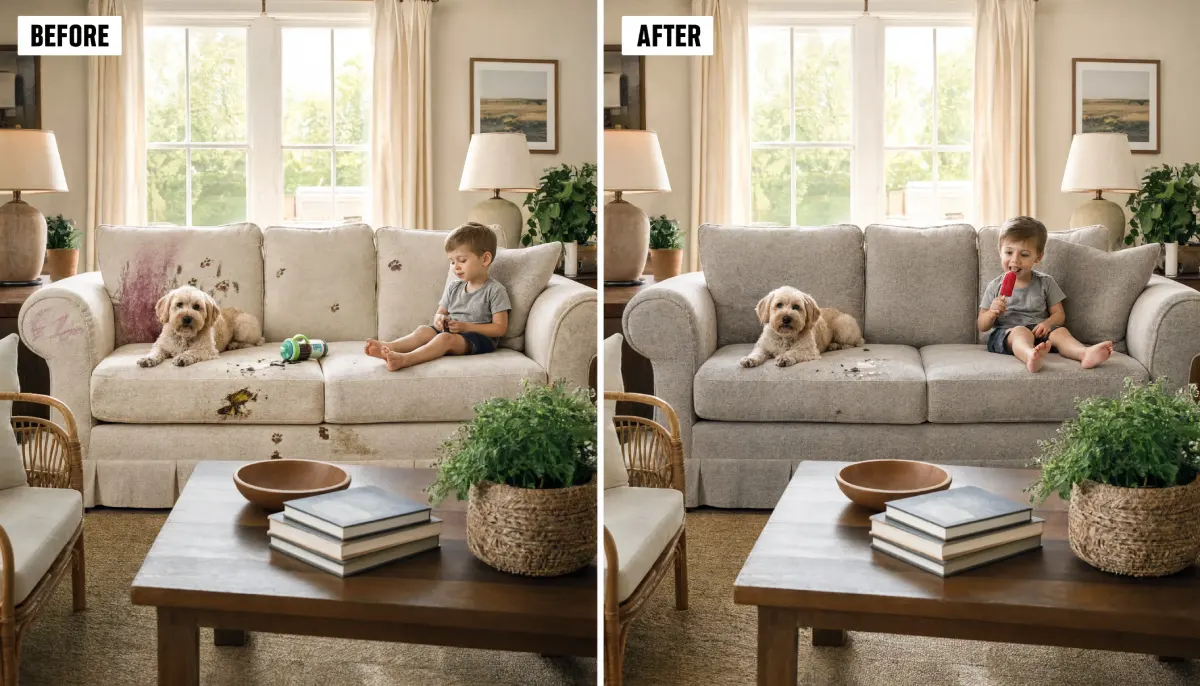
If you have kids or pets and you’re buying upholstered furniture in Texas, you need performance fabric — specifically Crypton, Sunbrella, or similar stain/moisture-resistant materials. These aren’t budget fabrics anymore; they come in good-looking options and are available at Rooms To Go, Nebraska Furniture Mart (Dallas, Houston, San Antonio locations), and most Texas-based furniture stores. Standard linen or velvet on a sofa in a Texas family home is a two-year mistake.
3. Solar Shades or Motorized Blinds for West-Facing Rooms
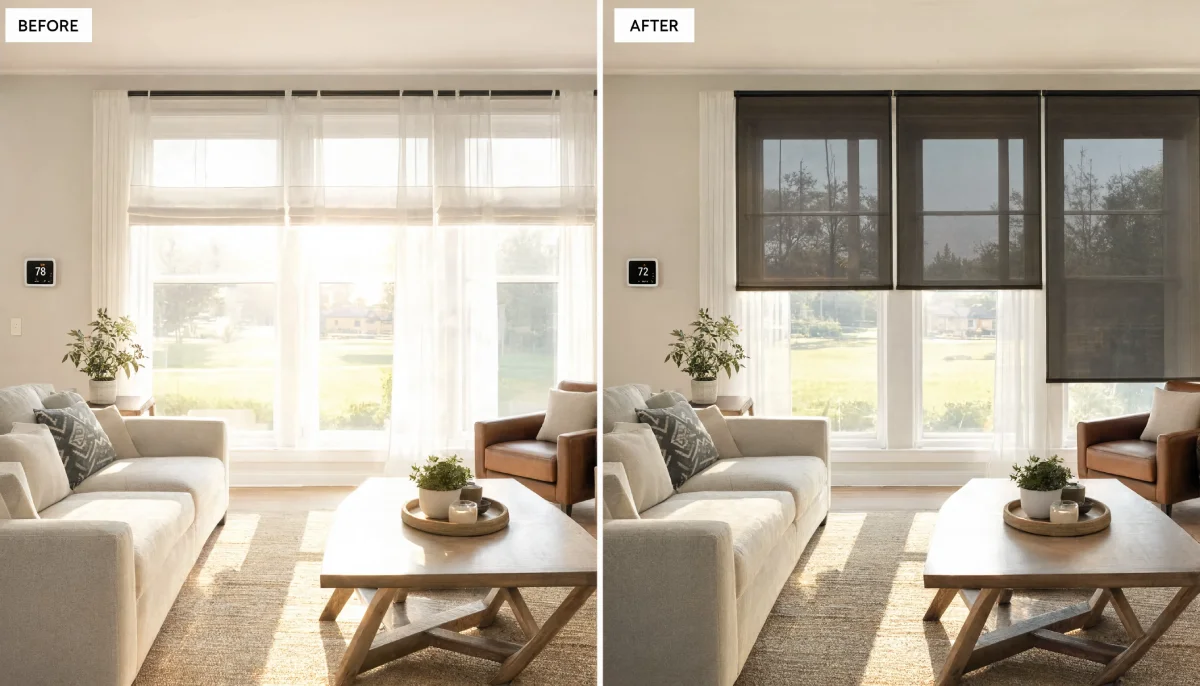
Roman shades and sheer curtains look great in magazines. In a west-facing Texas living room, they’re pointless by 3 pm. Solar shades with a 5–10% openness factor block 90–95% of UV while still letting light through. Hunter Douglas and 3 Day Blinds both have Texas locations with installation services. This single change also reduces your cooling load, which matters when you’re running AC from April through October.
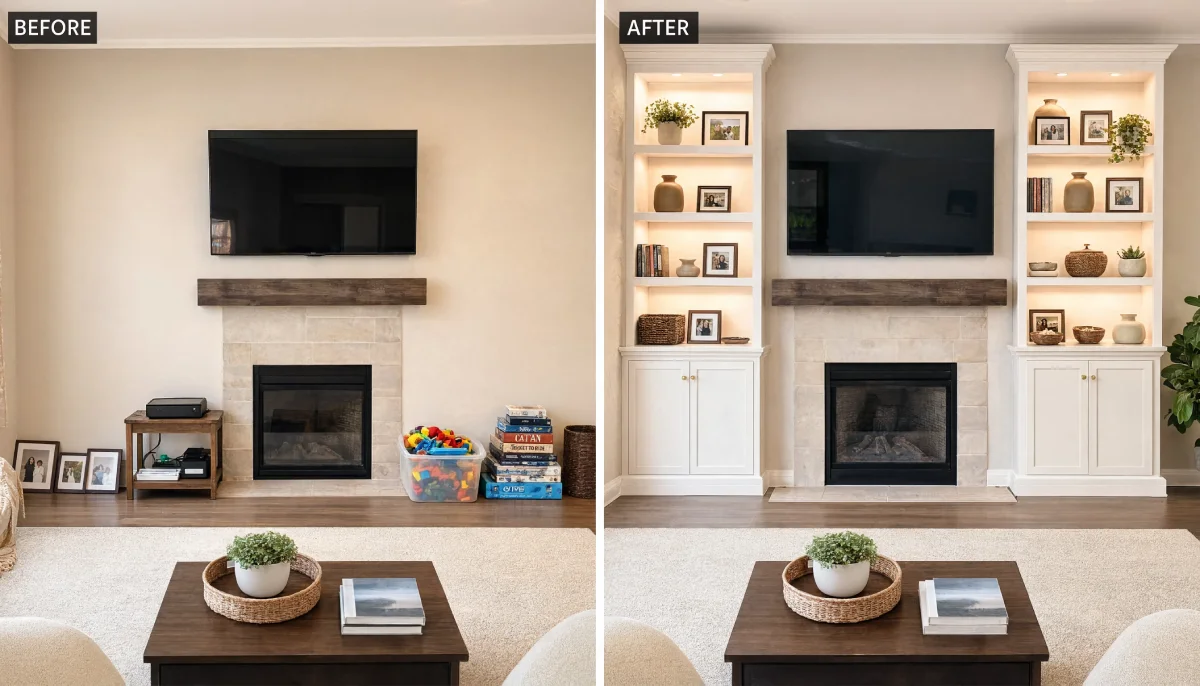
4. Built-In Storage That Doubles as a Design Element
Texas family homes rarely lack square footage, but they often lack storage that’s built into the living room itself. Custom built-in shelving flanking a fireplace or TV wall runs $1,500–$4,500, depending on complexity and whether you’re working with a carpenter or a big-box pre-fab solution. IKEA’s Billy/Oxberg combination is a common Texas workaround that runs $600–$1,200 installed and looks clean when done right.
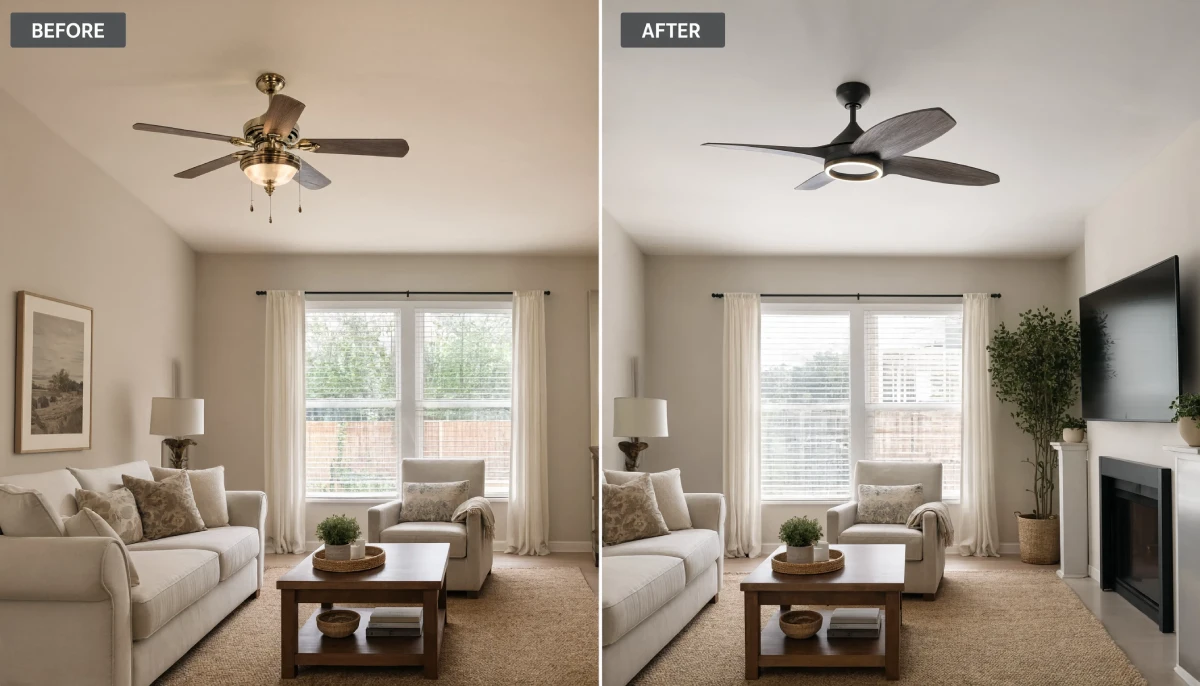
5. Ceiling Fans as a Design Choice, Not an Afterthought
Every Texas living room needs a ceiling fan. The mistake is treating it like a utility item bolted up last. Modern ceiling fans from Hunter or Minka Aire in matte black, brushed nickel, or wood tones can anchor a room visually while doing real work. Budget $150–$450 for the fan, plus $85–$150 for the electrician installation.
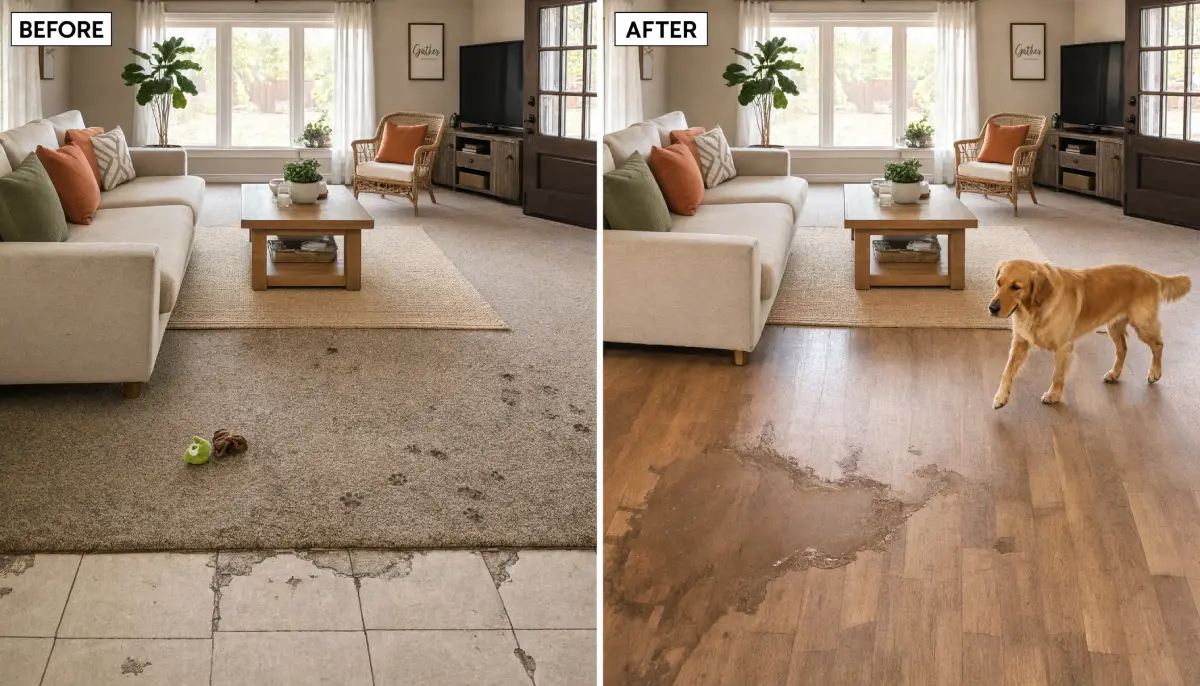
6. Durable Flooring Under Furniture Arrangements
Most Texas homes already have tile or LVP (luxury vinyl plank) in common areas. If you’re updating, LVP in a warm wood tone runs $3–$6 per square foot for materials, with installation adding $1.50–$3 per square foot. In a 300-square-foot living room, you’re at $1,350–$2,700 total installed, and you get something that handles spills, pets, and the constant indoor/outdoor traffic Texas families put on their floors.
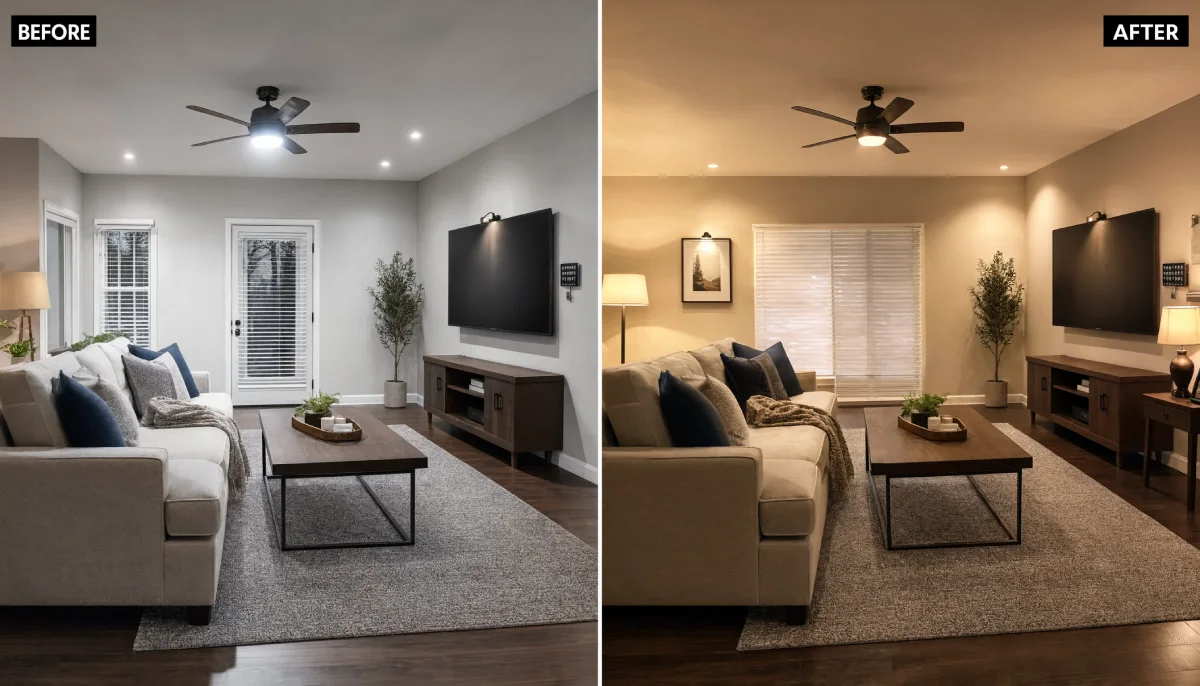
7. Layered Lighting with Dimmers
Texas living rooms that rely on a single overhead fixture look flat at night and harsh during the day. A proper lighting plan uses three layers: ambient (overhead or recessed), task (floor or table lamps), and accent (LED strips behind TVs, picture lights). Add dimmer switches — Lutron Caseta works without a neutral wire, which matters in older Texas homes — and you can shift the room’s mood without touching the furniture.
8. An Outdoor Connection Point
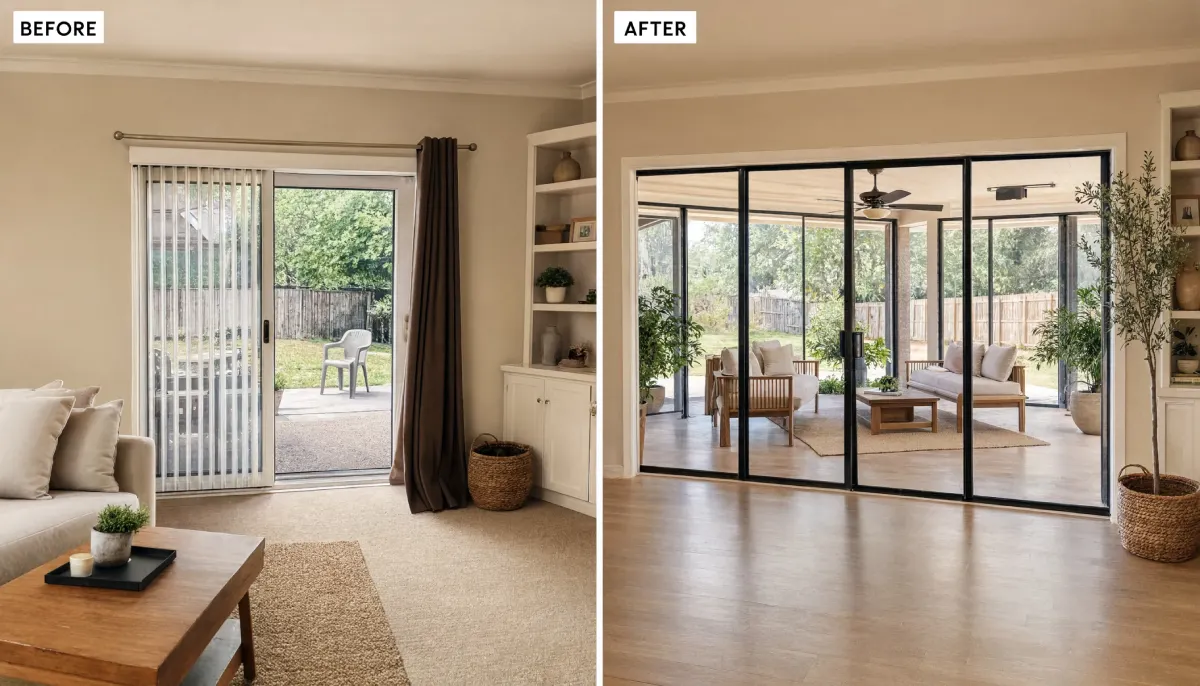
Texas has usable outdoor weather from September through November and again from February through April. If your living room has a door to a covered patio, treat that transition as part of the design. Consistent flooring materials (tile that flows from inside to outside, or similar tones), a sightline that carries through, and blackout or solar shades that frame the opening rather than block it make the indoor space feel larger and better integrated.
Cost Breakdown for Living Room Renovation in Texas
| Item | Low Budget | Mid Budget | High Budget |
|---|---|---|---|
| Paint (walls + trim, 300 sq ft room) | $200–$350 DIY | $500–$900 hired | $900–$1,500 premium finish |
| Window treatments (solar shades) | $300–$600 DIY | $800–$1,500 installed | $2,000–$4,000 motorized |
| Sofa (performance fabric) | $600–$1,200 | $1,500–$2,800 | $3,500–$7,000+ |
| Flooring (LVP, 300 sq ft) | $900–$1,500 | $1,800–$2,700 | $4,500–$8,000 (hardwood) |
| Lighting update (fixtures + dimmer) | $250–$500 | $700–$1,500 | $2,500–$5,000+ |
| Built-in shelving/cabinetry | $600–$1,200 (IKEA) | $2,000–$4,500 (carpenter) | $6,000–$15,000 (custom) |
| Ceiling fan | $150–$250 + install | $300–$500 + install | $600–$1,200 + install |
| Rug (8×10) | $150–$400 | $500–$1,200 | $1,500–$4,000+ |
| Full room refresh (all categories) | $3,000–$5,500 | $8,000–$15,000 | $20,000–$45,000 |
Texas cost notes: Labor in Austin runs 20–30% above Dallas and San Antonio averages. Houston sits in the middle. Materials at Home Depot and Lowe’s are consistent statewide, though delivery fees vary by location. For full renovations, always get three contractor bids — the spread in Texas between low and high bids is often 40–60%.
Common Mistakes Texas Living Room Owners Make
- Choosing the wrong paint undertone. Texas sunlight is warm and direct. Cool-toned grays and blues that look fine in Pacific Northwest homes look purple or dingy in Dallas. Test paint samples on your actual wall in direct afternoon light before committing. A $6 sample can save you a $300 repaint.
- Buying furniture before measuring traffic flow. In an open floor plan, furniture that blocks the path between the kitchen, front door, and back porch creates daily frustration. Map out the traffic lanes first — typically 36 inches minimum clearance — then design around them.
- Ignoring the west wall entirely. A lot of Texas homeowners hang their TV on the west wall because that’s where the cable outlet is. That’s also where your afternoon sun hits hardest, creating glare on the screen from 2–6 pm. Either relocate the TV, add solar shades, or accept you’ll be watching with the lights on.
- Picking indoor-only materials for a high-traffic family room. Silk throw pillows, wool rugs without a pad, and untreated wood side tables all deteriorate fast under real family use. Texas humidity (especially in Houston) accelerates this. Invest in materials rated for durability — Crypton fabric, solution-dyed rugs, sealed wood or stone surfaces.
- Skipping electrical planning before a big furniture rearrangement. Many Texas homes have outlets placed for specific furniture layouts. If you move your sofa to a new wall, you may have no nearby outlet for lamps. Running a new circuit costs $200–$400 with a licensed electrician — plan this before the furniture arrives, not after.
- Over-buying for a single moment. Texas home style has been heavily influenced by the Joanna Gaines/Magnolia look — shiplap, farmhouse sinks, woven everything. That look dates faster than people expect. Stick to timeless structural choices (color palette, flooring, built-ins) and put trend-driven pieces in easily replaceable accessories.
When to DIY vs. Hire a Contractor in Texas
DIY is realistic for:
- Painting — a two-person team can do a 300-square-foot room in a weekend. Use Behr or Sherwin-Williams from Home Depot. Rent a sprayer from Home Depot Tool Rental for ~$50/day for a faster finish on large walls.
- Hanging curtain rods, mirrors, and art — straightforward if you use a stud finder and the right anchors for Texas drywall (most Texas homes use 5/8″ drywall on metal studs in newer construction).
- Assembling flat-pack furniture — IKEA delivers to most major Texas cities. Assembly is doable solo for most pieces.
- Replacing a ceiling fan on an existing fan junction box — takes about 45 minutes and requires no permit if you’re swapping like-for-like.
Hire a contractor for:
- Any electrical work beyond swapping fixtures — adding circuits, moving outlets, installing dimmer switches in homes with aluminum wiring (common in Texas homes built before 1975) requires a licensed electrician. Texas requires an electrical permit for new circuits.
- Flooring installation on more than 200 square feet — poor LVP installation (improper subfloor prep, wrong expansion gaps in Texas’s heat) fails fast.
- Built-in cabinetry — carpentry mistakes are expensive to fix and obvious to anyone who looks.
- Anything touching your HVAC or requiring a permit — Texas municipalities (Austin, Houston, Dallas, San Antonio) all require permits for structural and MEP work. Unpermitted work creates problems at resale.
When hiring, look for contractors licensed with the Texas Department of Licensing and Regulation (TDLR). For interior design work, the Texas Board of Architectural Examiners (TBAE) registers interior designers. Always ask for proof of liability insurance before anyone starts work.
Practical Tips for Decorating Your Texas Living Room
- Start with the rug, not the sofa. The rug anchors everything. In a Texas living room with LVP or tile, an 8×10 or 9×12 rug is the minimum for a standard seating area. Too small and everything floats. Find good options at HomeGoods, Tuesday Morning (still operating in Texas), World Market, and Rugs USA online.
- Use plants that survive Texas heat and AC. Succulents, snake plants, pothos, and ZZ plants handle both the intense Texas sun near windows and the dry air from constant AC. Fiddle leaf figs are a bad idea near a west-facing window.
- Add a gallery wall to a blank north or east wall. These walls get less direct sun, meaning less fading on photos and art. Use Command strips for lighter pieces — Texas humidity can weaken adhesive over time, so check them seasonally.
- Buy a sofa with removable, washable covers if you have kids or pets. IKEA KIVIK and similar models offer this. It’s not the most luxurious option but it’s the most practical one for Texas family life.
- Use warm LED bulbs (2700K–3000K) throughout. Daylight bulbs (5000K+) work in kitchens and bathrooms but make living rooms feel harsh and cold at night. Get these at any Home Depot or Lowe’s — the LED selection has improved significantly.
- Install a smart thermostat if you haven’t. Ecobee and Nest both work well in Texas homes. Keeping your living room at a consistent temperature (especially 75–77°F during the day in summer) extends the life of wood furniture and reduces humidity-related warping.
- Add blackout liner to any existing curtains before replacing them. Sold at most Texas Walmart locations and online, blackout liner clips or sews onto existing curtain panels and cuts heat gain by 30–40% on a west-facing window for about $15–$25 per panel.
FAQs
How much does a living room renovation cost in Texas?
A basic cosmetic update — paint, new rug, updated lighting — runs $1,500–$3,500 for a typical 300-square-foot Texas living room, doing most work yourself. A mid-range update with new flooring, window treatments, and furniture runs $8,000–$15,000. A full renovation with built-ins, custom flooring, and electrical work can reach $25,000–$45,000. Austin and The Woodlands tend to run 20–30% above Dallas and San Antonio on contractor labor.
Can I DIY my living room redesign in Texas?
Yes, for cosmetic work. Painting, furniture arrangement, lighting fixtures, window treatments, and soft furnishings are all within reach of most homeowners. For electrical changes, flooring over 200 square feet, or anything structural, hire a licensed contractor. Texas requires permits for electrical, structural, and HVAC work, regardless of whether you do it yourself or hire someone.
Do I need a permit to renovate my living room in Texas?
Cosmetic work — painting, flooring, furniture — requires no permit in Texas. If you’re moving outlets, adding circuits, changing light fixtures on a new circuit, or modifying any walls, you need a permit from your local municipality. Austin, Houston, Dallas, and San Antonio all have online permitting portals. Skipping permits creates problems at resale — Texas real estate law requires disclosure of unpermitted work.
Is a living room renovation worth it for Texas homeowners?
Generally, yes, with caveats. Paint and lighting updates offer the best return on investment — low cost, immediate visual impact, and they appeal to buyers if you sell. Flooring in Texas also adds clear resale value, particularly LVP or hardwood replacing dated carpet. Custom built-ins are worth it if you plan to stay 5+ years; less so if you’re selling in the next two years. Avoid over-improving relative to your neighborhood — a $40,000 living room renovation in a $250,000 neighborhood rarely pays back at sale.
What living room colors work best in Texas homes?
Warm neutrals perform best — think Benjamin Moore “White Dove,” Sherwin-Williams “Accessible Beige” or “Agreeable Gray” (warm version), or Behr’s “Sculptor Clay.” These hold up under direct Texas sunlight without looking washed out and work with both modern and traditional Texas furniture styles. Avoid cool grays with blue or purple undertones — they look fine in overcast climates and wrong in Texas light.
How do I keep my Texas living room cool without running the AC constantly?
Solar shades on west and south windows are the single most effective change. Combine with ceiling fans (which make a room feel 4–6°F cooler at the same thermostat setting), and plant larger outdoor trees or add a covered patio overhang if you’re doing exterior work. Inside, light-colored flooring and walls reflect heat rather than absorbing it. For families in older Texas homes with single-pane windows, replacing to Low-E double-pane windows pays back in 5–8 years in energy savings and makes a significant difference in comfort.
Conclusion
Designing a living room for a Texas family home comes down to a handful of real decisions: which wall gets the TV (and whether that wall is getting afternoon sun), what materials will survive your actual daily life, how much natural light and heat you’re willing to manage, and how much of this you can realistically do yourself versus when a contractor makes more sense.
The best living room design ideas aren’t the most expensive ones — they’re the ones that fit how your family moves through the space and hold up to Texas conditions year after year. Start with paint and lighting if the budget is tight. Add performance fabrics, solar shades, and better flooring when you’re ready to invest. Get three contractor bids before any work that touches your walls or electrical. And test paint colors in your actual light before committing — every time.
