


Small home interior ideas in Chicago don’t require a big budget; they require smart choices. The most effective approach is to work with your home’s existing layout, maximize vertical space, and use light strategically to make rooms feel larger than they are.
In Chicago’s older bungalows and two-flats, low ceilings and narrow room configurations are the norm, so generic design advice often misses the mark. Budget decorating in this city means knowing which upgrades give you the most visual return and which are just expensive noise.
Understanding Small Home Interior Design in Chicago
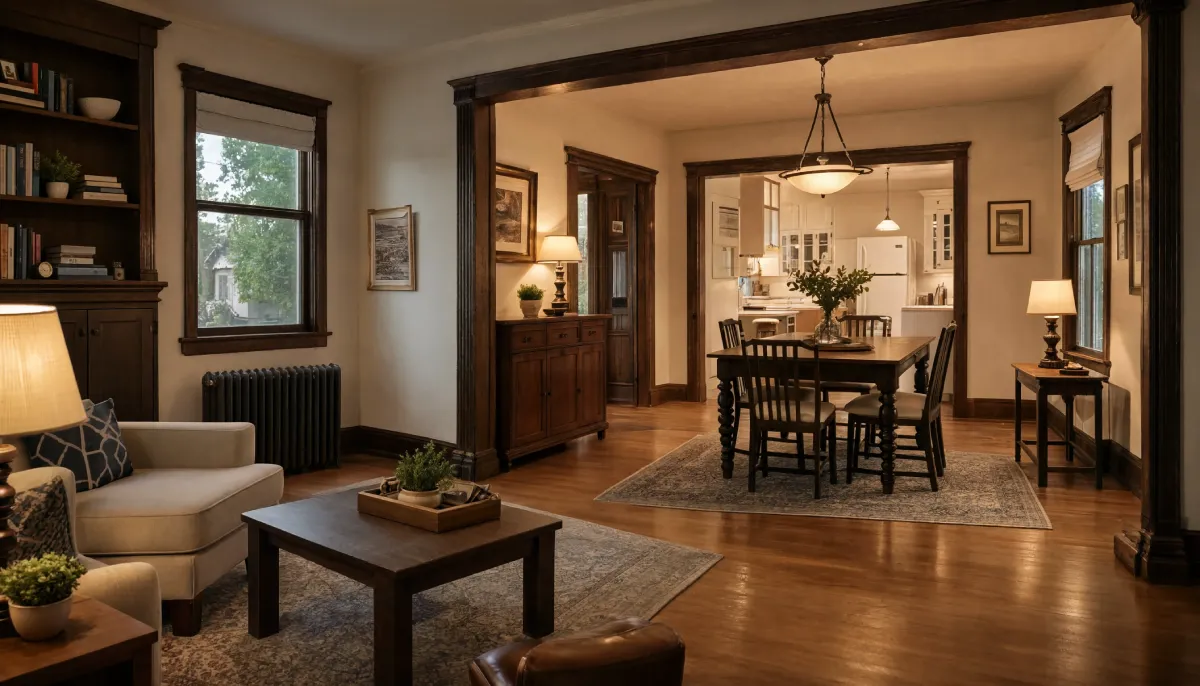
Chicago’s housing stock differs from that of newer Sun Belt cities. A significant portion of the city’s small homes are bungalows built between 1910 and 1940 — typically 900 to 1,400 square feet, with defined rooms rather than open layouts, plaster walls, hardwood floors under old carpet, and natural wood trim that can either be an asset or a design obstacle depending on your style.
A few things that matter specifically here:
- Plaster walls are common in pre-war Chicago bungalows. Hanging shelves or anchoring furniture requires more care than drywall — use toggle bolts, not standard anchors.
- Radiator heat takes up floor space and wall space. Design around it, not against it. A recessed shelf or built-in bookcase beside a radiator can actually make it a feature.
- Natural light is limited in many Chicago bungalows due to smaller windows and tight lot spacing. Artificial lighting strategy matters more here than in homes with larger windows.
- Basements are standard in Chicago small homes and are often underused. A finished or semi-finished basement adds functional square footage without touching the main floor.
If your small home was built after 1980, you’re likely dealing with a different set of constraints — lower ceilings in some cases, but more standard drywall and easier renovation paths.
Best Interior Design Approaches for Small Chicago Homes
Use Vertical Space Aggressively
In a small Chicago bungalow, floor space is the scarcest resource. The walls above 6 feet are almost always unused. Fix that first.
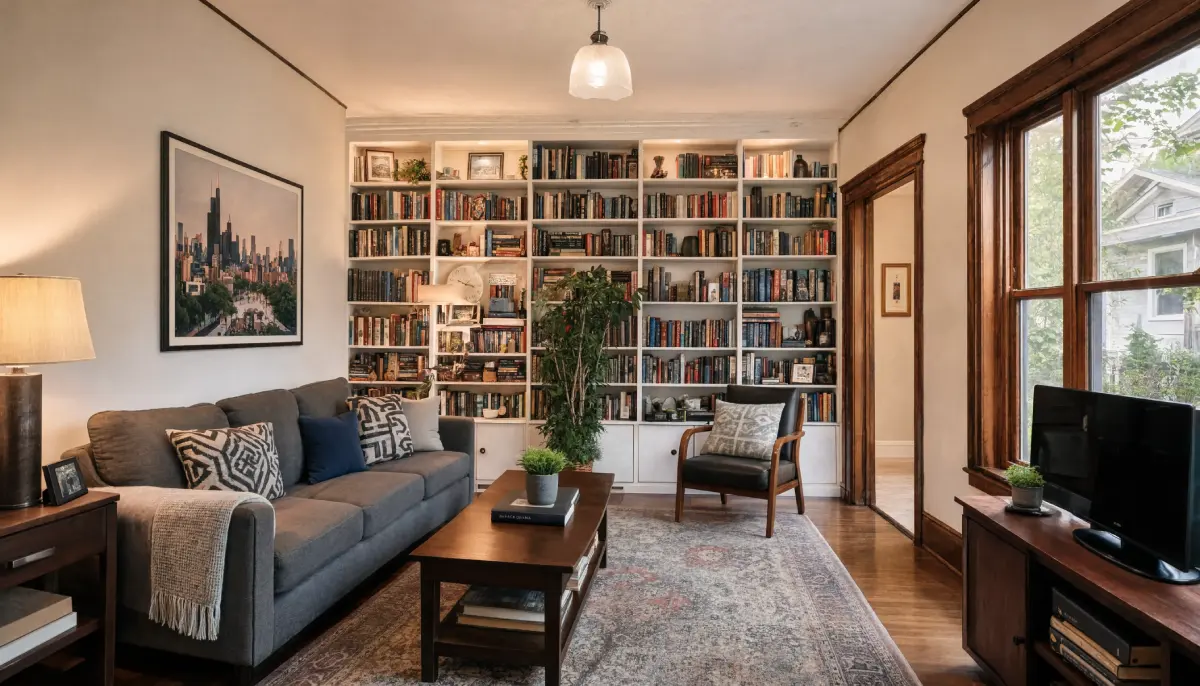
- Floor-to-ceiling shelving in living rooms and bedrooms adds storage and draws the eye upward, making ceilings feel higher.
- Hanging pot racks in kitchens free up cabinet space.
- Wall-mounted desks fold flat when not in use — practical for a spare bedroom that doubles as an office.
IKEA’s BILLY bookcases with height extensions are a budget-friendly standard for this — a full floor-to-ceiling unit runs $150–$300 depending on width and configuration.
Furniture Scale Matters More Than Style
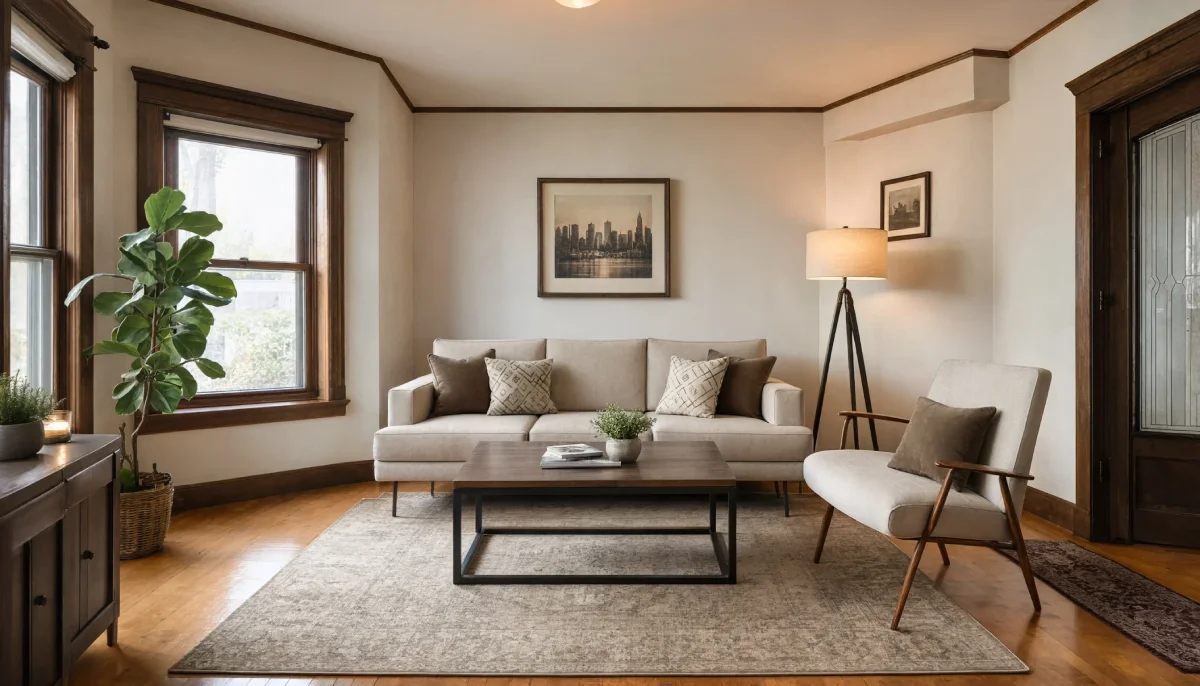
One of the most common mistakes I’ve seen in small Chicago homes is furniture that’s too large for the room. A sectional sofa that works in a 400-square-foot living room in a Texas ranch home will eat a Chicago bungalow living room alive.
Scale down:
- Sofas in the 72–84 inch range instead of 90+ inch pieces
- Apartment-sized dining tables (36×60 inches) seat four comfortably)
- Leggy furniture — pieces with visible legs rather than skirted bases — make rooms read as larger because you can see more floor
Crate & Barrel and West Elm both carry apartment-scale lines. For budget options, Article and Wayfair have decent small-space collections that ship to Chicago without inflated freight costs.
Light Layering Over Single Overhead Fixtures
Most Chicago bungalows have a single ceiling fixture per room — often a basic flush mount that casts flat, unflattering light. This makes small rooms feel smaller and more cave-like.
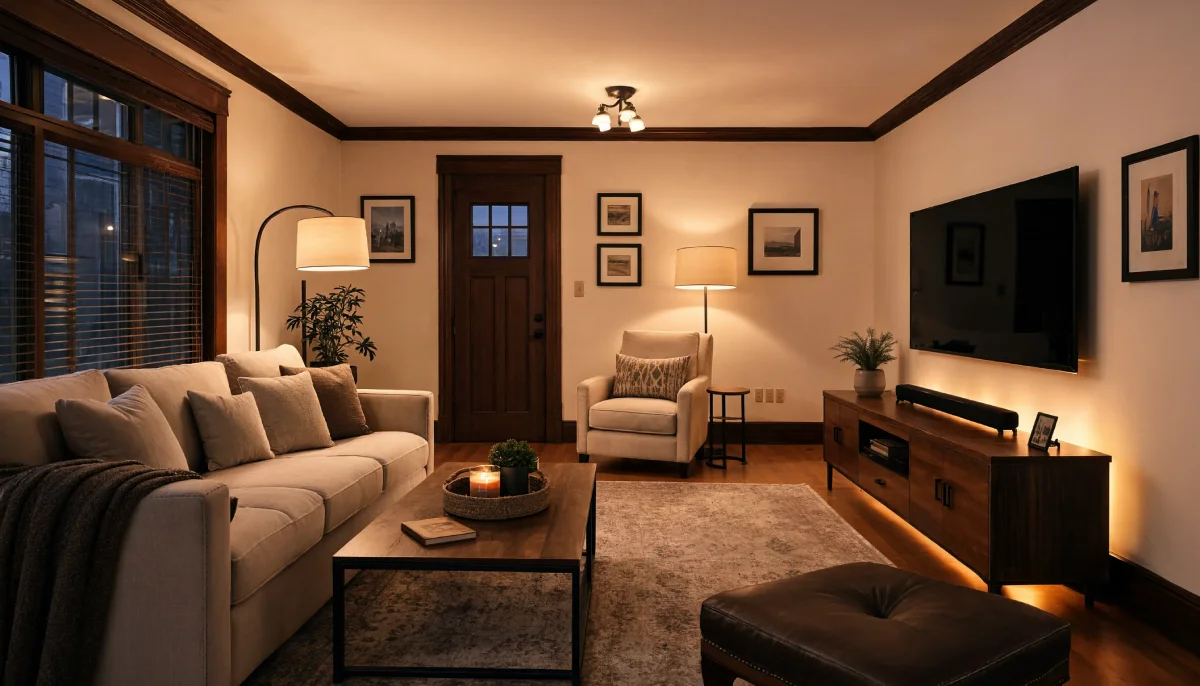
Replace single-source lighting with a three-layer approach:
- Ambient — ceiling fixture or recessed lights (if budget allows)
- Task — under-cabinet lights in kitchens, reading lamps beside chairs
- Accent — a plug-in sconce, a table lamp in a corner, and LED strip lights behind a TV unit
Total cost for relighting one room without rewiring: $150–$400 using plug-in fixtures and smart bulbs. If you’re rewiring or adding recessed lights, budget $500–$1,200 per room with an electrician, more in Chicago’s union labor market.
Color Strategy for Small Rooms
The “paint everything white” advice is oversimplified. In a north-facing Chicago room that gets little direct sunlight, bright white can read cold and flat. A warm white (Benjamin Moore White Dove, Sherwin-Williams Alabaster) or a soft warm gray works better in rooms with limited natural light.
For a bolder approach that actually works in small rooms: paint the ceiling the same color as the walls. This removes the visual boundary between wall and ceiling and makes the room feel taller. It works particularly well in Chicago bungalows with 8-foot ceilings.
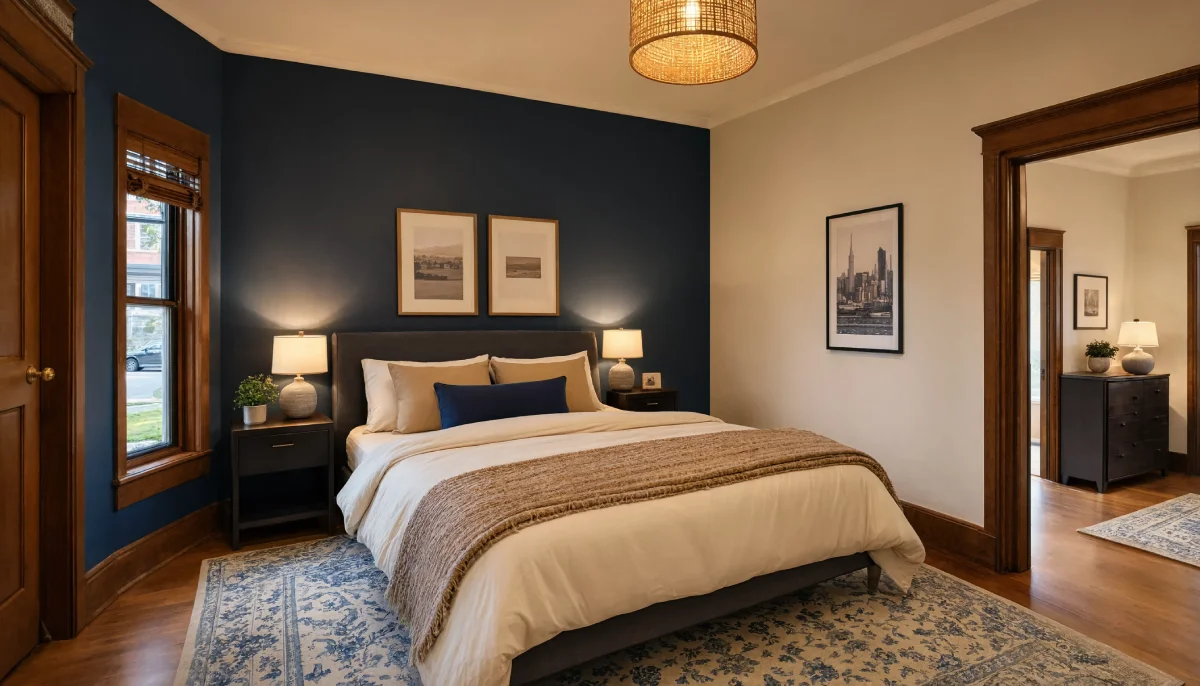
Dark accent walls — navy, forest green, deep terracotta — can make a small room feel more intentional rather than just small, when done in the right room. Reserve this for rooms with at least one strong light source.
Pros and Cons of Budget Interior Design for Small Chicago Homes
| Factor | Pros | Cons |
|---|---|---|
| DIY painting | Low cost, immediate visual impact | Time-intensive prep work is often skipped |
| Flat-pack furniture | Affordable, apartment-scale sizes available | Lower durability, assembly errors common |
| Secondhand/vintage pieces | Character, cost savings, Chicago resale market are strong | Condition risk, sourcing time |
| Peel-and-stick tile/wallpaper | Renter-friendly, low cost | Adhesion issues in humid Chicago winters |
| Lighting upgrades | High ROI for low cost | Rewiring adds cost quickly |
| Window treatments | Major visual impact on room scale | Quality curtains cost more than expected |
Cost Breakdown: Small Home Interior Design in Chicago
Budget Tiers by Room
| Area | Low Budget | Mid Budget | High Budget |
|---|---|---|---|
| Living Room | $300–$800 | $1,500–$3,500 | $5,000–$12,000 |
| Bedroom | $200–$600 | $1,000–$2,500 | $4,000–$9,000 |
| Kitchen (cosmetic only) | $400–$1,000 | $2,000–$5,000 | $8,000–$20,000+ |
| Bathroom (cosmetic) | $300–$800 | $1,500–$4,000 | $6,000–$15,000 |
| Full Home (2BR bungalow) | $1,500–$4,000 | $8,000–$20,000 | $30,000–$60,000+ |
Chicago-Specific Cost Notes:
- Labor costs in Chicago run higher than the national average due to union influence and cost of living. Interior painters charge $3–$6 per square foot here versus $2–$4 in Midwest markets like Indianapolis or Columbus.
- Permit requirements for purely cosmetic work (painting, new fixtures, furniture) are generally not required in Chicago. Structural changes, electrical panel work, or moving walls will require permits through the City of Chicago’s Department of Buildings.
- Vintage and secondhand sourcing is strong in Chicago — Andersonville, Wicker Park, and Logan Square have active resale and vintage furniture markets that can cut furniture costs by 40–60% versus retail.
- IKEA Bolingbrook (the closest Chicago-area location) is a reliable budget resource, though delivery costs to city neighborhoods add $50–$150, depending on order size.
Common Mistakes Homeowners Make in Small Chicago Homes
- Buying furniture before measuring. This sounds basic, but it’s the number one error. Chicago bungalow doorways and hallways are narrow — 28 to 32 inches in many pre-war homes. A sofa that fits in the room may not fit through the door. Measure doorways, hallways, and stairwells before purchasing any large piece.
- Ignoring window treatments. Bare windows make small rooms feel unfinished. More importantly, curtains hung at ceiling height rather than window height visually add 12–18 inches of perceived ceiling height. This is one of the highest-return, lowest-cost changes you can make — a set of floor-to-ceiling curtain panels from Target or IKEA runs $40–$120.
- Over-accessorizing. Small rooms with too many objects feel cluttered, not personalized. Edit aggressively. Every surface item should earn its place.
- Painting without fixing the surfaces first. Chicago’s older plaster walls often have cracks, previous paint texture, or damage. Painting directly over these without sanding and priming makes problems more visible, not less. A $15 bag of joint compound and proper prep make the paint job actually look good.
- Underestimating heating system constraints. Chicago homes with radiators have fixed heating units on exterior walls. Blocking radiators with furniture reduces heat output and risks damaging upholstered pieces. Design your furniture layout with radiator clearance as a constraint, not an afterthought.
- Choosing rugs that are too small. A small rug in a small room makes the room look smaller. Go larger — ideally, the rug extends under the front legs of all seating. In a typical Chicago bungalow living room, an 8×10 or 9×12 rug is the right call, not a 5×7.
DIY vs. Professional Help
Most cosmetic interior design work in a Chicago small home is DIY-capable with standard skill levels. Here’s a clear breakdown:
| Task | DIY Feasibility | Notes |
|---|---|---|
| Painting walls | High | Chicago’s plaster walls require good prep |
| Installing curtain rods | High | Plaster anchoring is the main skill needed |
| Assembling flat-pack furniture | High | Standard DIY |
| Installing peel-and-stick backsplash | Medium | Surface prep matters in humid kitchens |
| Installing light fixtures | Medium | Requires comfort with basic wiring; always shut off the circuit breaker |
| Adding recessed lighting | Low | Requires a licensed electrician in Chicago for permit work |
| Refinishing hardwood floors | Low-Medium | Rentable equipment from Home Depot, but a high skill curve |
| Painting kitchen cabinets | Medium | Prep is 80% of the job — degloss, prime, sand between coats |
For electrical work beyond fixture swaps, Chicago requires licensed electricians, and the permit process through the Department of Buildings applies. DIY electrical in Chicago that requires a permit and isn’t done by a licensed contractor can create issues at resale.
Related Factors to Consider
- Resale value in Chicago’s small home market. The North Side and Near West Side markets are competitive for bungalows and small homes. Cosmetic upgrades — fresh paint, refinished floors, updated lighting — consistently show positive ROI at resale in these neighborhoods. Over-personalized choices (very specific color schemes, niche tile patterns) can reduce buyer appeal.
- Chicago winters and humidity cycles. The climate creates seasonal humidity swings — hot and humid in summer, dry and cold in winter. Solid wood furniture expands and contracts. Peel-and-stick products can fail on walls that aren’t climate-stable. Choose materials that handle these cycles: engineered wood over solid where possible, acrylic or latex paints that flex slightly.
- HOA and condo rules don’t apply to small homes, but if your Chicago bungalow is in a historic district (Chicago has 24 of them), exterior changes may require approval from the Commission on Chicago Landmarks. Interior work is typically unrestricted.
Practical Tips for Small Homes in Chicago on a Budget
- Check Facebook Marketplace and Chicago Craigslist before buying furniture retail. Chicago has one of the most active secondhand markets in the Midwest — you’ll regularly find quality pieces at 20–30% of retail.
- Home Depot on North Avenue and the Lowe’s locations in Lincoln Park and Bridgeport carry Chicago-specific stock levels — call ahead for specialty plaster repair products or older fixture matches.
- Refinish, don’t replace. Chicago bungalows often have original hardwood floors under carpet. Refinishing runs $3–$5 per square foot versus $8–$15 for new flooring installation. It’s almost always worth investigating before laying new material.
- Use mirrors strategically — a large mirror on a wall opposite a window reflects natural light and reads as a visual extension of the room. Thrift stores in Andersonville and Pilsen regularly carry large mirrors at low cost.
- Menards (multiple Chicago-area locations) is consistently cheaper than Home Depot or Lowe’s for paint, basic hardware, and peel-and-stick products. Worth comparing prices before buying.
- Curtain panels from IKEA RITVA or Target’s threshold line at $20–$40 per panel are the most cost-effective way to get floor-to-ceiling window treatments without spending $150+ per panel at retail.
- Don’t touch original woodwork in pre-war Chicago homes without considering the cost. Stripping and refinishing original trim adds real value. Painting it is reversible. Removing it is a mistake you can’t undo cheaply.
FAQs
How much does interior design cost for a small home in Chicago?
A full cosmetic refresh of a 1,000-square-foot Chicago bungalow — paint, lighting, window treatments, some new furniture — runs $3,000–$8,000 on a mid-range budget when done primarily as DIY with some professional help. Hiring an interior designer adds $75–$200 per hour or 10–20% of the total project cost. Room-by-room cosmetic updates can start as low as $300–$600 per room if you’re resourceful with secondhand sourcing.
Can I DIY interior design work in a small Chicago home?
Most of it, yes. Painting, furniture arrangement, lighting swaps, window treatments, and accessory updates are all DIY-capable. The exceptions are work that touches electrical panels, load-bearing walls, or requires city permits — those require licensed contractors in Chicago. For plaster wall repairs, it’s learnable but has a steeper curve than drywall patching.
Do I need a permit for interior decorating in Chicago?
For purely cosmetic work — painting, new furniture, light fixture swaps, flooring overlays — no permit is required. Permits are required for electrical panel work, structural changes, adding new circuits, or moving walls. Check the City of Chicago’s Department of Buildings website or call 312-744-3449 for project-specific questions.
Is budget interior design worth it for a small Chicago home?
Yes, with clear boundaries. Cosmetic updates — paint, lighting, window treatments, strategic furniture — consistently improve livability and show measurable return at resale in Chicago’s active small home market. Where budget design fails is when homeowners try to fake structural changes (buying curved furniture to simulate an open plan, for example) instead of working honestly with the home’s layout.
What colors work best for small Chicago bungalows?
Warm whites and warm neutral tones outperform cool grays and stark whites in north-facing or light-limited rooms, which are common in Chicago bungalows. Benjamin Moore White Dove, Sherwin-Williams Accessible Beige, and Farrow & Ball Elephant’s Breath (available through local paint stores) are reliable performers. For a room with strong natural light, almost anything works — including deeper colors.
How do I make a small Chicago bungalow living room feel bigger?
Four changes with the highest visual return: hang curtains at ceiling height (not window height), use a rug that’s large enough to anchor all the furniture, remove at least 30% of the objects currently on surfaces, and add a floor lamp or table lamp to the darkest corner. These four things cost under $400 combined and change how the room reads significantly.
Where can I find affordable furniture for small homes in Chicago?
IKEA Bolingbrook, Facebook Marketplace (Chicago has a very active listing market), thrift stores in Andersonville, Pilsen, and Logan Square, and Article.com for mid-range small-scale pieces. For vintage and character pieces, the Randolph Street Market (seasonal) and the Chicago Antique Market are worth checking.
Should I refinish original hardwood floors or install new flooring?
In almost every case in a Chicago bungalow, refinish rather than replace. Original hardwood floors in pre-war Chicago homes are typically 3/4-inch solid wood — they can be refinished multiple times. Refinishing costs $3–$5 per square foot. New engineered hardwood installation runs $8–$15 per square foot installed. The original floors, once refinished, usually look better than new budget flooring anyway.
What’s the biggest design mistake in small Chicago homes?
Furniture that’s too large for the room and doorways. Chicago bungalows have narrow passages — 28 to 32-inch doorways are standard in pre-war construction. Many homeowners buy sofas and dressers that can’t physically enter the room without removing a door or window. Measure all passage points before any large furniture purchase.
How do I work around radiators in a small Chicago home?
Don’t block them and don’t ignore them. Design furniture layouts with 12–18 inches of clearance in front of all radiators. For radiators in awkward wall positions, a custom or semi-custom radiator cover (painted to match walls) turns them into a shelf or display surface. This is a $200–$600 carpentry job or a DIY project with basic woodworking skills.
Is it worth hiring an interior designer for a small home on a budget?
For a single consultation — 2 to 3 hours — yes. A $200–$400 design consultation with a local Chicago interior designer gives you a specific room-by-room plan, color recommendations, and sourcing guidance. This is different from full-service design, which involves the designer managing purchases and contractors and typically costs 15–25% of the total project cost. The consultation model is the right call for budget-conscious homeowners.
What furniture sizes work best in a small Chicago home?
Sofas in the 72–84 inch range, dining tables no larger than 36×72 inches for four to six people, and beds with storage underneath rather than standard box springs. For bedrooms under 120 square feet, a platform bed with built-in drawers eliminates the need for a separate dresser, freeing up significant floor space.
Conclusion
Small home interior design in Chicago comes down to a few honest decisions: how much you’re willing to spend, which rooms get priority, and whether you’re designing for long-term living or for resale. The city’s older housing stock — bungalows, two-flats, vintage frame houses — has real character worth preserving, and the best budget design decisions work with that character rather than against it.
Start with the changes that cost the least and do the most: paint, lighting, curtains at ceiling height, and a furniture edit. Then move to the structural cosmetics — refinishing floors, updating fixtures, addressing storage. Avoid the common errors of oversized furniture, under-lit rooms, and skipping surface prep before painting.
Chicago’s secondhand market, strong contractor network, and accessible building supply options mean you have real resources to work with. Use them before defaulting to retail.
