

Small apartment interior design ideas work best when they combine light, scale, and smart furniture choices rather than trying to hide the square footage. The fastest way to make a small apartment feel bigger is to lighten wall colors, choose furniture that does double duty, and keep sight lines open from the entry to the far wall. In apartments and condos, where you can’t knock down walls or add square footage, every decision has to earn its place. This guide walks through layout strategy, furniture selection, storage, lighting, and the budget realities of decorating a small apartment well.
Understanding Small Apartment Design Challenges
Small apartments present three consistent problems: limited floor space, fixed layouts you can’t alter, and shared walls or ceilings that limit renovation options. Most apartment interior design work has to happen through furnishing, color, and organization rather than construction.
Unlike a single-family home, you’re usually working within a lease or a building’s HOA rules. That means no moving walls, no relocating outlets in most cases, and often no permission to paint without approval. I’ve seen renters try to force a large sectional into a 400-square-foot living room because it looked good in a showroom — the room reads smaller the moment it’s installed. The lesson: measure the room first, then shop, not the other way around.
Ceiling height matters more in apartments than most people expect. A 9-foot ceiling with the right vertical elements — tall bookcases, floor-to-ceiling curtains, mirrors hung high — can make a room feel taller than the same footprint with an 8-foot ceiling and squat furniture. Older apartment buildings, especially walk-ups in the Northeast and mid-century buildings across the Midwest, often have lower ceilings and smaller window openings, which makes lighting strategy even more important later in this guide.
Best Layout Strategies for Small Apartments
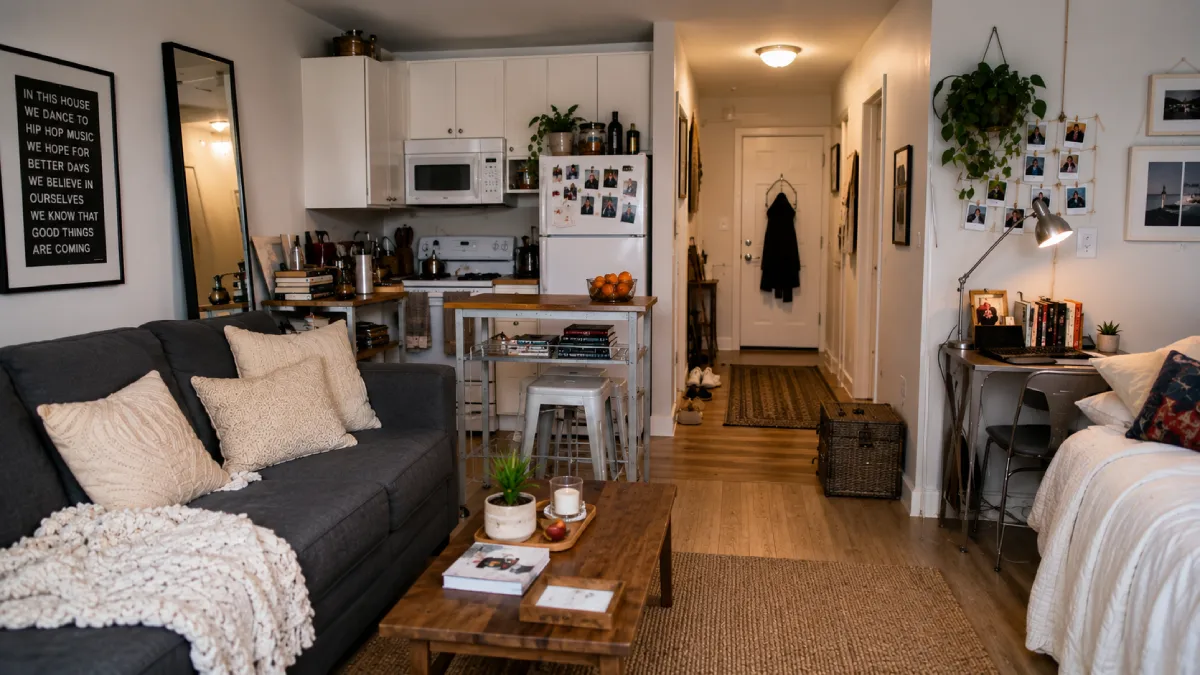
The best small apartment layout keeps a clear path from the entry to the main window, avoids blocking natural light, and treats every piece of furniture as multi-purpose. Floor plan efficiency matters more than any single design choice.
A few layout principles that consistently work:
- Float furniture away from walls when the room allows it — a sofa pulled 6 to 8 inches off the wall with a slim console behind it often reads larger than one pushed flush against it, because it creates a sense of depth.
- Keep at least one clear walking path at least 30 inches wide through the main living space.
- Anchor the room around the largest piece first (sofa or bed), then build outward.
- Use rugs to define zones in studio apartments — a rug under the seating area and a different one under the dining table signal separate “rooms” without walls.
- Avoid matching every piece to the same scale. Mixing a low-profile sofa with a taller bookshelf creates visual variety instead of a wall of uniform height.
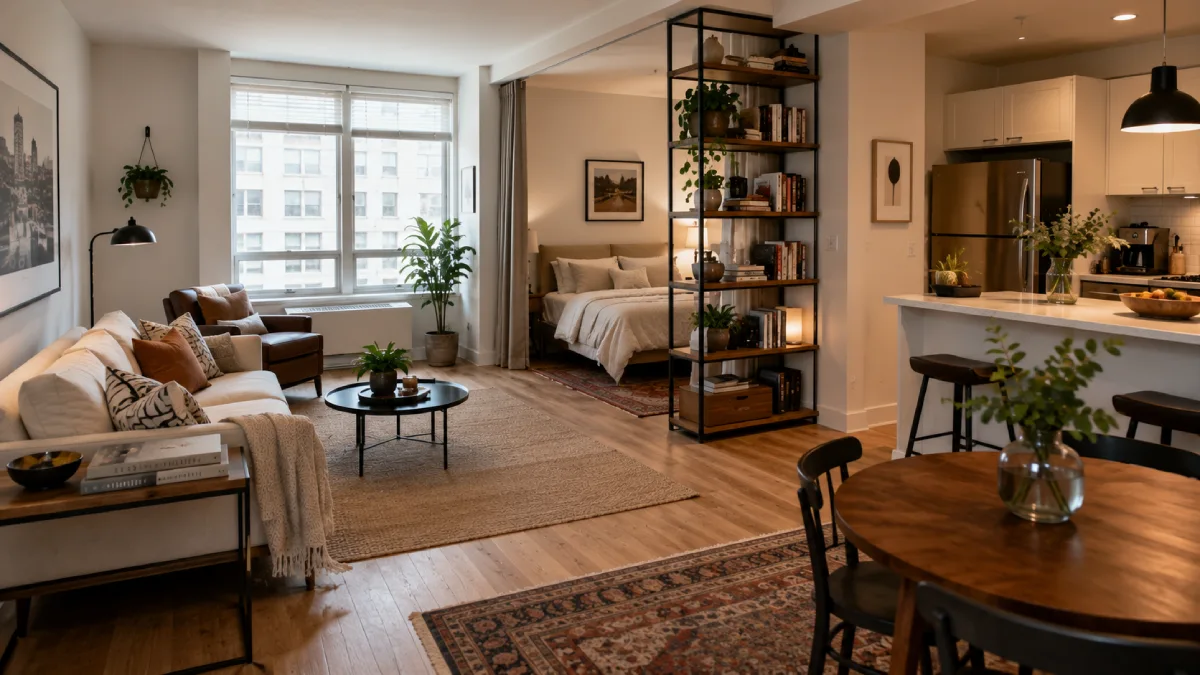
A common mistake I see in studio apartments is treating the whole unit as one open zone with no visual breaks. Without some kind of divider — a bookcase, a folding screen, or even a change in rug — the space feels chaotic rather than open. Zoning a studio properly is one of the highest-impact, lowest-cost design moves available.
Space-Saving Furniture That Actually Works
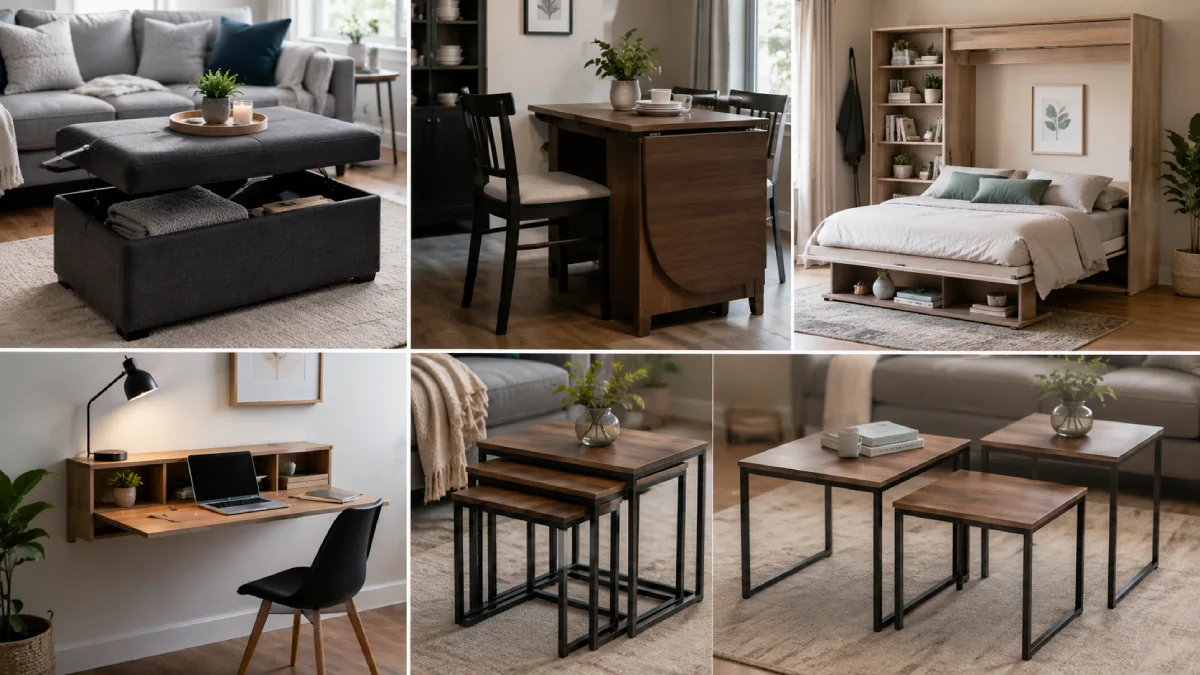
Space-saving furniture for small apartments includes storage ottomans, extendable dining tables, wall-mounted desks, and sofa beds — pieces that serve two functions instead of one. Multi-purpose furniture reduces the total number of items needed in a small footprint.
Furniture worth prioritizing:
- Storage ottomans or benches — double as seating, a coffee table surface, and hidden storage for blankets or off-season items.
- Extendable or drop-leaf dining tables — stay compact daily and expand only when guests come over.
- Murphy beds or daybeds — free up floor space in studios where the bed would otherwise dominate the room.
- Wall-mounted or floating desks — eliminate the footprint of a traditional desk and legs.
- Nesting tables — replace a single bulky coffee table with pieces that tuck away when not needed.
One issue I run into often with new tenants: they buy furniture sized for the photos in a showroom, not for their actual room dimensions. A sectional built for an open-concept new-construction apartment will overwhelm a prewar one-bedroom with a narrower living room. Always measure doorways and stairwells too — plenty of apartment buyers have had to return furniture that couldn’t make it around a tight stairwell turn or into a small elevator.
Storage Solutions for Small Apartments
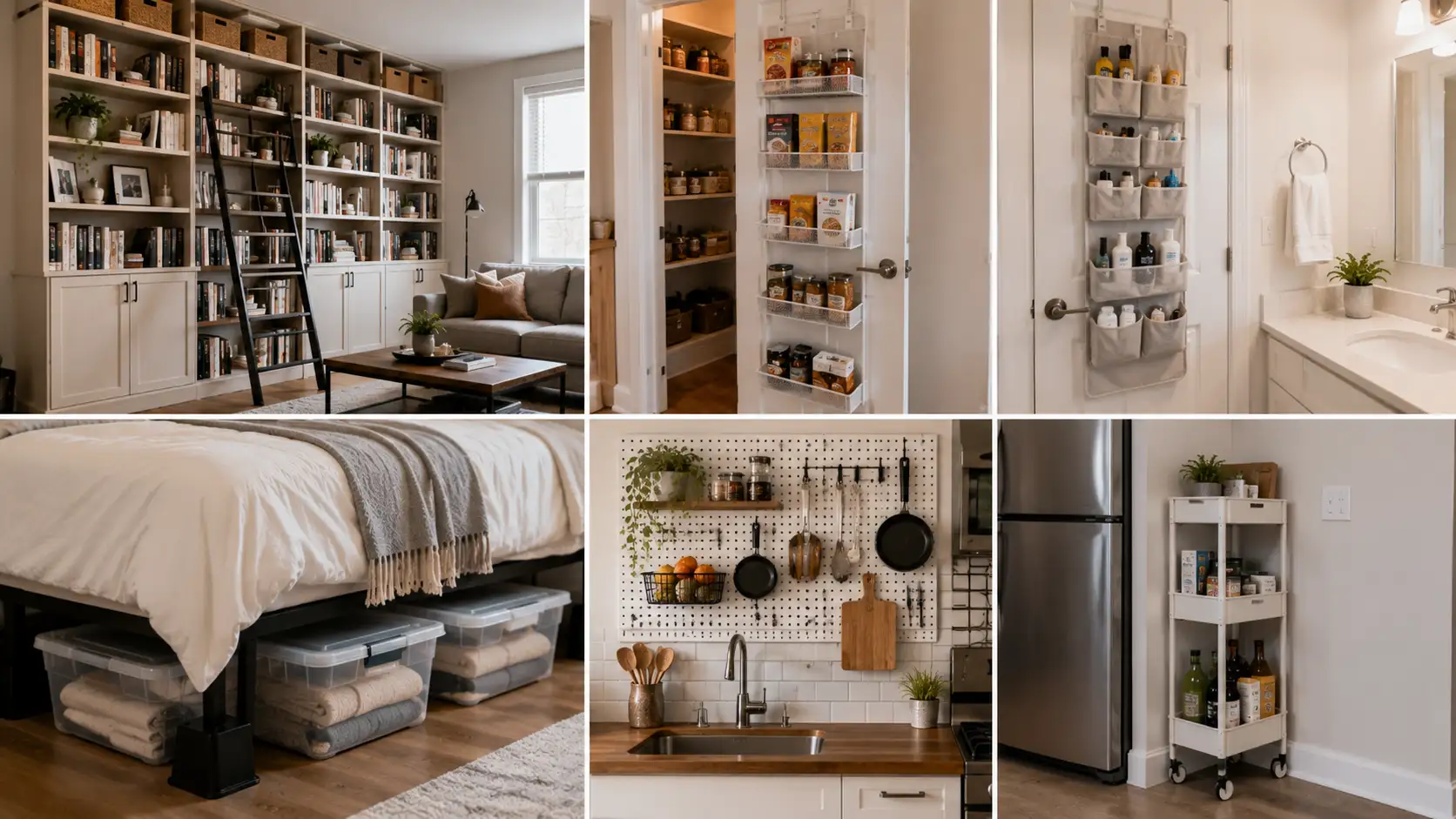
Vertical storage, under-bed containers, and multi-use furniture are the most effective storage solutions for small apartments, since floor space is limited, but wall space usually isn’t. Going vertical is almost always the answer when floor storage runs out.
Practical options include:
- Floor-to-ceiling bookshelves instead of short bookcases, which use the same footprint but double or triple the storage.
- Over-the-door organizers for closets, pantries, and bathrooms.
- Bed risers paired with storage bins to use the space under the bed, which is often the single most wasted area in a small apartment.
- Wall-mounted pegboards or shelving in kitchens to keep counters clear.
- Slim rolling carts that fit in narrow gaps next to the fridge or in a bathroom corner.
A recurring issue in older apartment buildings is a lack of closet space entirely, especially in prewar and mid-century units. In those cases, a freestanding wardrobe with a mirrored front does two jobs — storage and the illusion of a larger room — which is usually a better investment than trying to squeeze in extra shelving units.
Lighting and Color Choices That Expand a Room
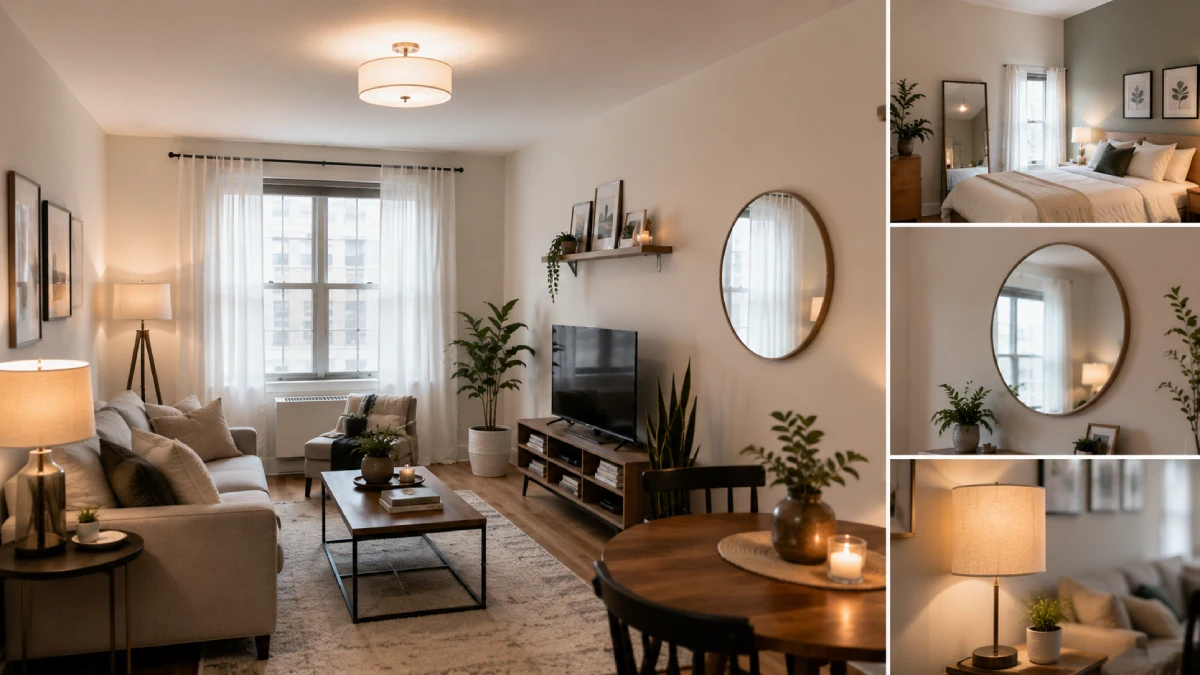
Light, neutral wall colors combined with layered lighting make small apartments feel larger, because they reduce visual weight and eliminate harsh shadows in tight corners. Paint and lighting are the lowest-cost, highest-impact changes available to renters.
Key choices:
- Stick to warm whites, soft grays, or light greiges on walls; reserve bold color for one accent wall or textiles if you want personality.
- Use at least three light sources per room — overhead, task, and ambient — instead of relying on a single ceiling fixture.
- Hang mirrors opposite windows to bounce natural light deeper into the room.
- Choose sheer or light-colored curtains that let daylight through rather than heavy blackout drapes in main living areas.
- Swap dated overhead fixtures for simpler flush-mounts if your lease allows fixture changes; keep the old fixture to reinstall at move-out.
I’ve walked into countless apartments where the single overhead bulb was the only light source in the entire main room. Adding a floor lamp and a couple of table lamps costs very little and changes the whole feel of the space more than most furniture purchases do.
Pros and Cons of Common Small-Space Design Approaches
| Approach | Initial Cost | Long-Term Cost | Durability | Maintenance | Installation Difficulty | Best Use Case |
|---|---|---|---|---|---|---|
| Multi-functional furniture | Moderate | Low | High | Low | Easy | Studios and one-bedrooms needing flexibility |
| Built-in style shelving (freestanding) | Moderate to high | Low | High | Low | Moderate | Apartments with limited closet space |
| Light paint + lighting refresh | Low | Low | Moderate (paint wears) | Low | Easy | Renters wanting quick visual impact |
| Room dividers/screens | Low to moderate | Low | Moderate | Low | Easy | Studios needing zoned areas |
| Custom window treatments | Moderate | Low | High | Low | Easy | Rooms with awkward window sizes |
Cost Breakdown: Small Apartment Design by Budget
| Category | Low Budget | Mid Budget | High Budget |
|---|---|---|---|
| Paint & minor refresh | $150–$400 | $400–$900 | $900–$1,800 |
| Space-saving furniture (per piece) | $100–$300 | $300–$800 | $800–$2,000+ |
| Lighting upgrades | $75–$200 | $200–$500 | $500–$1,200 |
| Storage solutions | $50–$200 | $200–$600 | $600–$1,500 |
| Full room refresh (furniture + decor) | $800–$1,500 | $1,500–$4,000 | $4,000–$8,000+ |
Costs vary by region — apartments in higher cost-of-living metro areas typically run 20–40% above these national ranges for comparable furniture and labor, while smaller markets often land at or below the low end. Since this guide is USA-wide, treat these as a starting baseline and adjust for your specific city’s cost of living.
Common Mistakes Homeowners and Renters Make
The most common small apartment design mistakes are oversized furniture, ignoring vertical space, and skipping a floor plan before shopping. Each of these mistakes is avoidable with basic planning before any purchase.
- Buying furniture before measuring the room and doorways.
- Pushing every piece against the wall, which flattens the room instead of opening it.
- Overlooking vertical storage in favor of buying more floor-based furniture.
- Choosing heavy, dark furniture that visually shrinks the space.
- Skipping a lighting plan and relying on one overhead fixture.
- Overdecorating with too many small accessories, which creates visual clutter in a room that has little room to spare.
The floor-plan mistake is the one I see most often. People shop first and measure later, then end up returning or reselling items that simply do not fit, which costs more in the long run than spending twenty minutes with a tape measure up front.
DIY vs. Professional Help
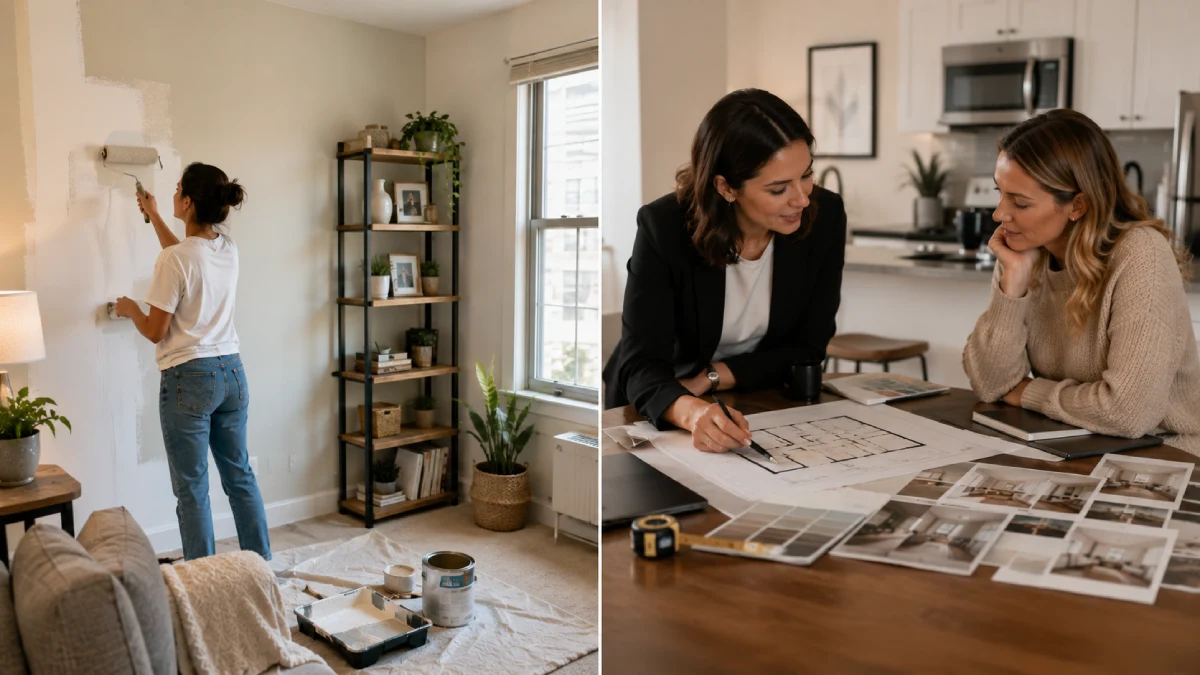
Most small apartment design work — furniture selection, paint, lighting swaps, and organization — is fully doable as a DIY project. Professional help is worth considering, mainly for custom built-ins, electrical work beyond swapping fixtures, or full design consultations if you want a cohesive plan across the whole unit.
If you’re renting, check your lease before any paint or fixture changes — many buildings require move-out restoration or landlord approval. For anything involving wiring, always use a licensed electrician rather than attempting it yourself, even for something that looks simple, like a light fixture swap.
Practical Tips for Small Apartment Design
- Measure every doorway, hallway turn, and elevator before buying large furniture.
- Shop at Home Depot, Lowe’s, or IKEA for modular and space-saving furniture lines built specifically for smaller footprints.
- Use removable wallpaper or peel-and-stick tile for a design refresh that satisfies most lease restrictions.
- Add a large mirror across from your main window to double the sense of natural light.
- Keep a “one in, one out” rule for decor items to avoid clutter creeping back in.
- Choose furniture with exposed legs over skirted pieces — visible floor space under furniture makes rooms feel larger.
- Group small items (books, remotes, mail) into a single tray or basket rather than leaving them scattered.
FAQs
How much does small apartment interior design cost?
A basic refresh with paint, lighting, and a few furniture swaps typically runs $800 to $4,000. Costs shift 20–40% higher in expensive metro markets.
Can I DIY a small apartment design in a rental?
Yes. Furniture arrangement, lighting, storage, and most paint work are renter-friendly. Confirm paint and fixture rules with your landlord first to avoid move-out deductions.
Do I need a permit for small apartment design changes?
No, in most cases. Furniture, paint, and decor don’t require permits. Permits only apply if you’re touching plumbing, electrical wiring, or load-bearing walls.
What’s the best furniture for a studio apartment?
Multi-functional pieces — a sofa bed, storage ottoman, or drop-leaf table — work best since they reduce the total footprint needed for daily living.
How do I make a small apartment look bigger without renovating?
Light wall colors, layered lighting, a mirror opposite the main window, and furniture with visible legs are the highest-impact, no-renovation changes.
How do I divide a studio apartment into separate zones?
Use a bookcase, folding screen, rug change, or curtain track to visually separate sleeping and living areas without any construction.
Related Factors to Consider
Ceiling height, window placement, and closet availability all affect which of these strategies will have the biggest impact in your specific unit. A unit with tall ceilings but few windows benefits more from lighting upgrades, while a unit with good natural light but no closets benefits more from vertical storage investment. Walk your own space with these categories in mind before committing to a full plan, since the highest-return changes differ from apartment to apartment.
Conclusion
Making a small apartment feel bigger comes down to a handful of decisions: choosing furniture sized correctly for the room, going vertical with storage, layering lighting instead of relying on one fixture, and keeping wall colors light. None of these require permits, construction, or a large budget — most can be done gradually, starting with the lowest-cost changes like paint and lighting before moving to furniture. The right sequence is to measure first, plan the layout second, and shop last. Renters should always confirm lease terms before paint or fixture changes, but the bulk of small apartment design work is fully within reach without landlord involvement.
