

Summer cooking has a way of turning your kitchen into the least inviting room in the house. The oven preheats, the sun beats through the windows, and suddenly even slicing a cucumber feels like a chore. But keeping your cool while cooking doesn’t require a full renovation or expensive air conditioning overhaul.
With a few easy upgrades, you can create a kitchen that stays comfortable, bright, and functional all season long. I’ll walk you through ten practical, low-fuss changes that make a noticeable difference—no sledgehammer needed.
1. Improve Airflow with a Portable Fan or Air Circulator
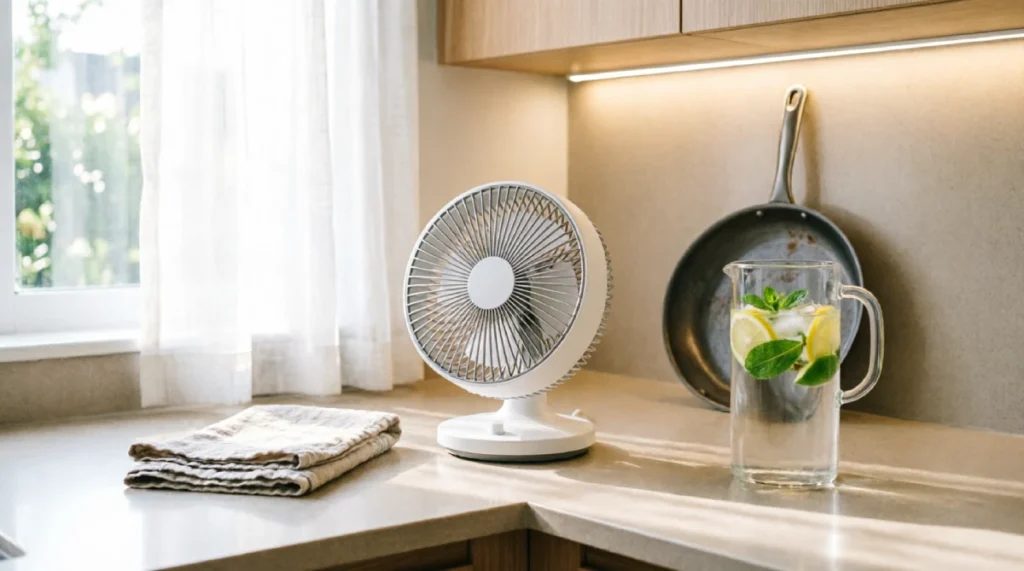
Cooking generates heat and steam, and still air makes it feel much worse. A small but powerful fan gets the air moving so you don’t have to work in a stifling pocket of heat.
Moving air accelerates evaporative cooling on your skin, so you feel cooler even if the room temperature doesn’t drop significantly. It also helps push cooking odors and humidity away from your face.
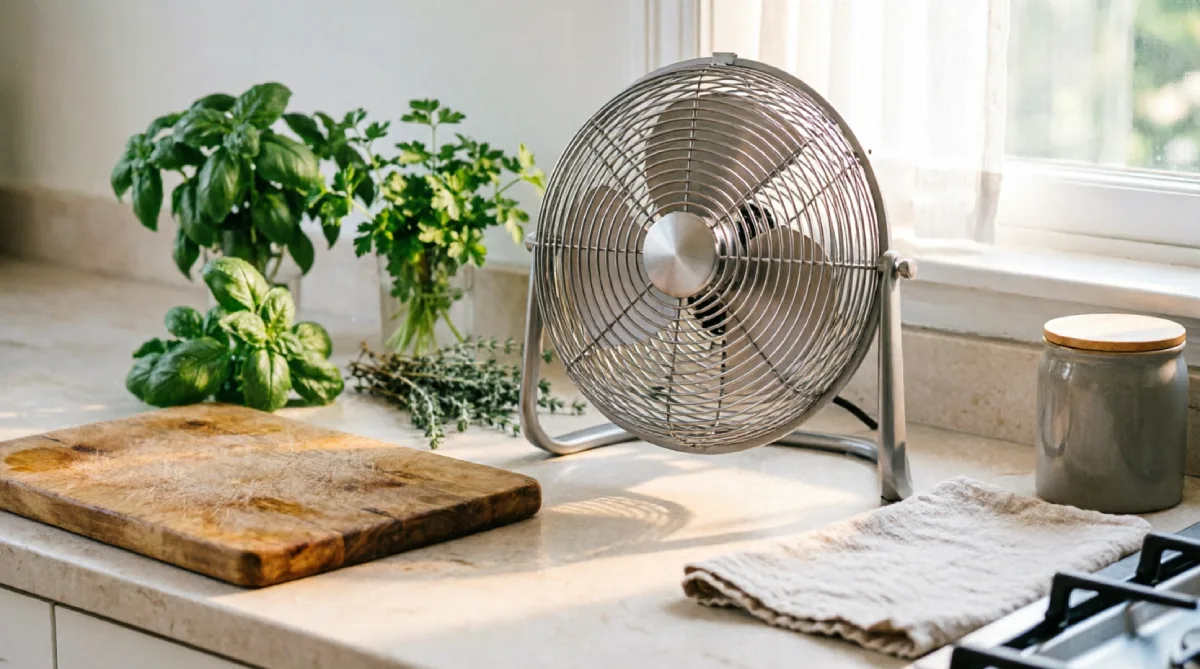
In many homes, the kitchen lacks natural cross-ventilation. A simple oscillating fan placed on a countertop or a shelf can create a steady breeze that makes standing over a hot pan far more bearable.
I recommend using a quiet, compact air circulator that you can angle toward the prep area, but away from the stove flames, so it doesn’t interfere with gas burners. Plug it in only when you cook to keep energy use low.
2. Install a Window Film to Block Heat and Glare
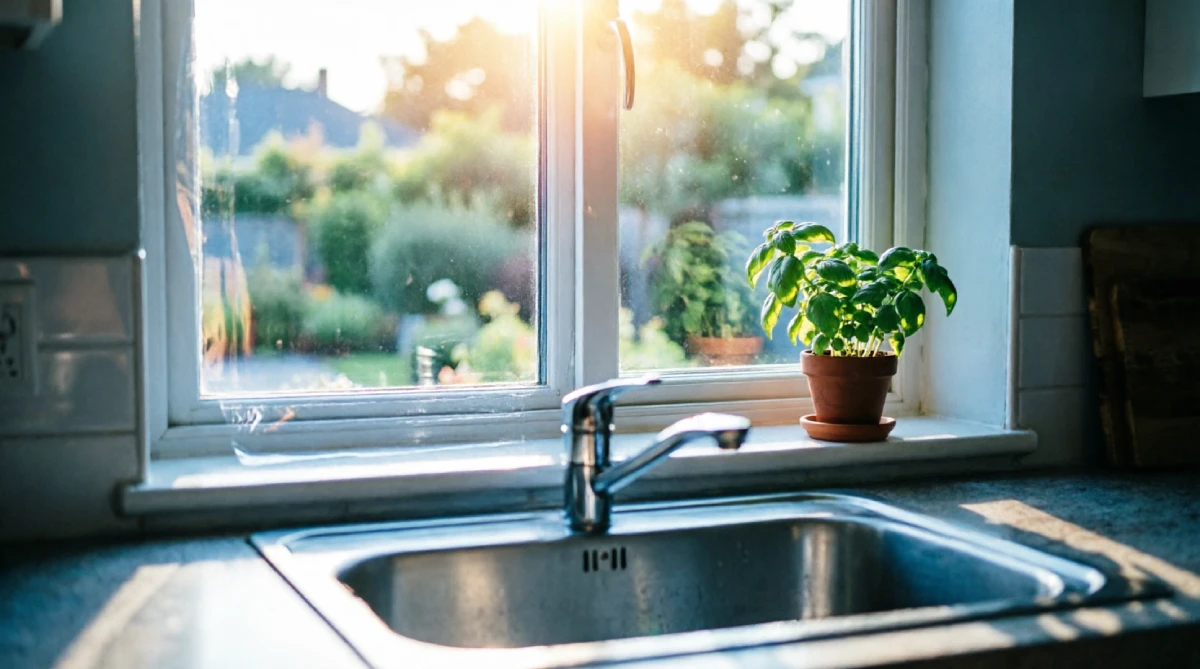
Sun streaming through kitchen windows can raise the indoor temperature quickly, especially during late afternoon. Applying a solar-control window film is a renter-friendly way to cut that heat gain significantly.
A reflective or lightly tinted film blocks UV rays and reduces solar heat transmission without turning your kitchen into a dark cave. The natural light still comes in, but the sharp warmth is noticeably softened.
A common issue is a west-facing window that turns the kitchen into a greenhouse right around dinner prep time. Homes with uncovered double-glazed windows often trap that heat, making the whole room feel sluggish.
Pick a static-cling film that requires no adhesive and can be peeled off at the end of summer. Measure carefully, cut to size, and smooth it on with water—a ten-minute upgrade with an immediate cooling payoff.
3. Swap Out Heavy Cookware for Light, Heat-Efficient Pans
Thick cast iron and enameled Dutch ovens hold heat exceptionally well—but in summer, that lingering warmth can make your kitchen feel like a sauna long after you’ve finished cooking. Switching to lighter, more responsive pans reduces thermal mass.
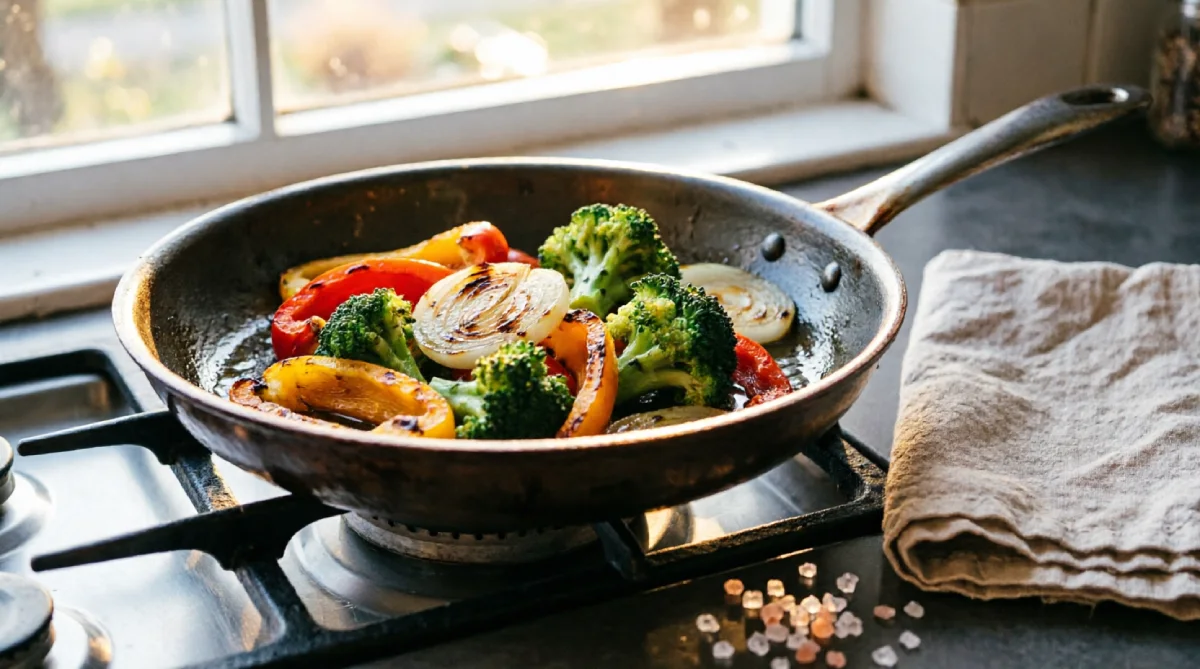
Pans made of carbon steel or thin, multi-clad stainless steel heat up fast and cool down quickly. They radiate less residual heat into the room once you turn off the burner, helping the kitchen feel less oppressive.
I’ve seen many home cooks pull out a heavy skillet for a quick sauté and then complain about the heat. In a small apartment kitchen, that extra warmth hangs around and raises the overall discomfort level.
Use a carbon steel frying pan for stir-fries, eggs, and quick sears. It’s durable, light enough to handle easily, and cools off much sooner than a thick cast-iron pan, which makes a tangible difference on a muggy day.
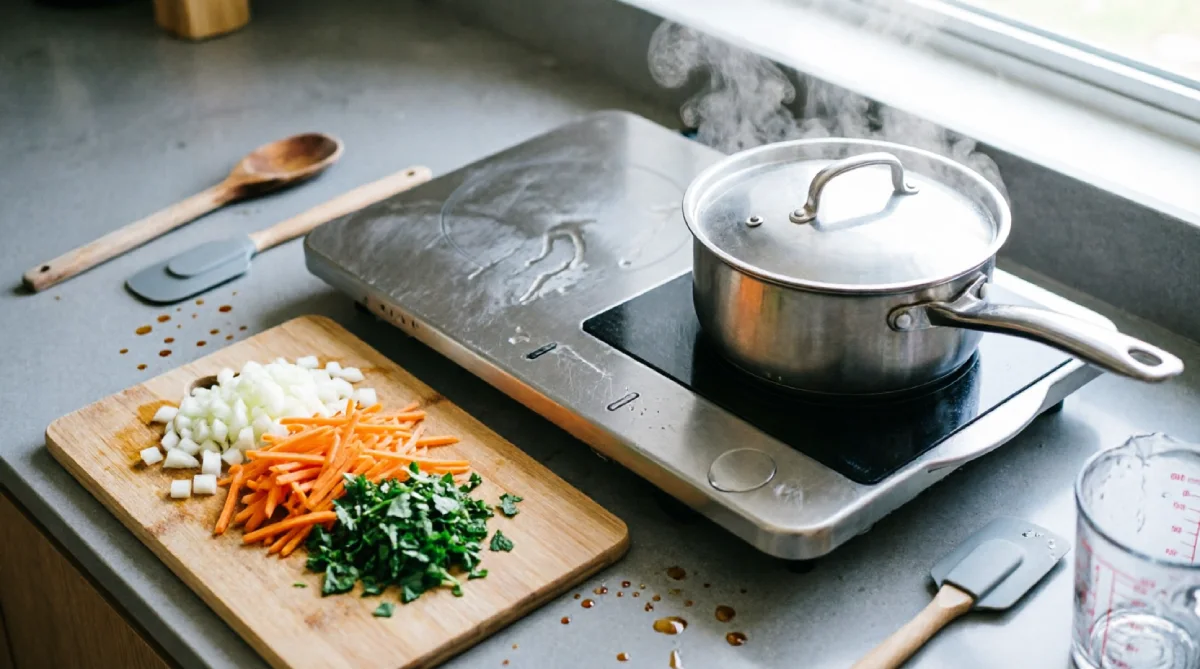
4. Use a Countertop Induction Burner
If your main range is a gas or electric coil, it radiates a lot of ambient heat into the room. A portable induction cooktop sidesteps that problem by heating only the pan, leaving the surrounding air cool.
Induction works through magnetic fields, so very little energy is lost as heat to the air. The surface stays relatively cool to the touch, and you won’t feel waves of warmth rising around the pot the way you do with a gas flame.
In many apartments and older homes, the stove becomes the single biggest heat source in summer. A small single-burner induction plate becomes a real workhorse for boiling water, making pasta, or simmering sauces.
Place an induction burner on a clear section of countertop and plug it in. Make sure your pans are induction-compatible (a magnet should stick to the base). Use it for most stovetop tasks, and leave the oven off entirely when possible.
5. Create a Cool-Down Drink Station
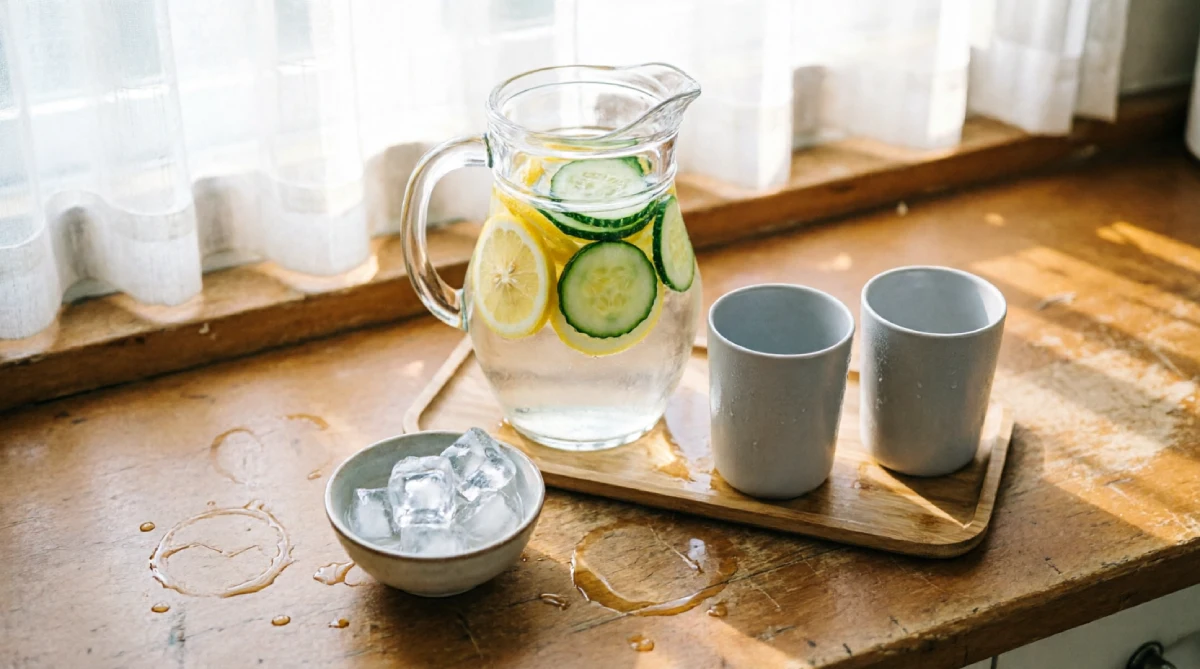
Staying hydrated while cooking is one of the simplest ways to feel more comfortable. A small, intentional drink station on the counter makes it easy to grab cold water, iced tea, or infused water without repeatedly opening the fridge.
When cold drinks are visible and within arm’s reach, you’re more likely to sip often, which helps regulate body temperature. Opening the fridge frequently lets cool air escape and forces the appliance to work harder, generating even more heat.
I’ve noticed that in kitchens where a water pitcher sits out with a bowl of ice and some fresh herbs, people cook longer without feeling exhausted by the heat. It turns a chore into a more relaxed ritual.
Set up a simple tray with a thermal carafe, a small ice bucket, a few glasses, and a sprig of mint or lemon slices. Refill it once in the morning, and you’ll have a cooling station that needs no electricity.
6. Switch to Light, Breathable Kitchen Linens
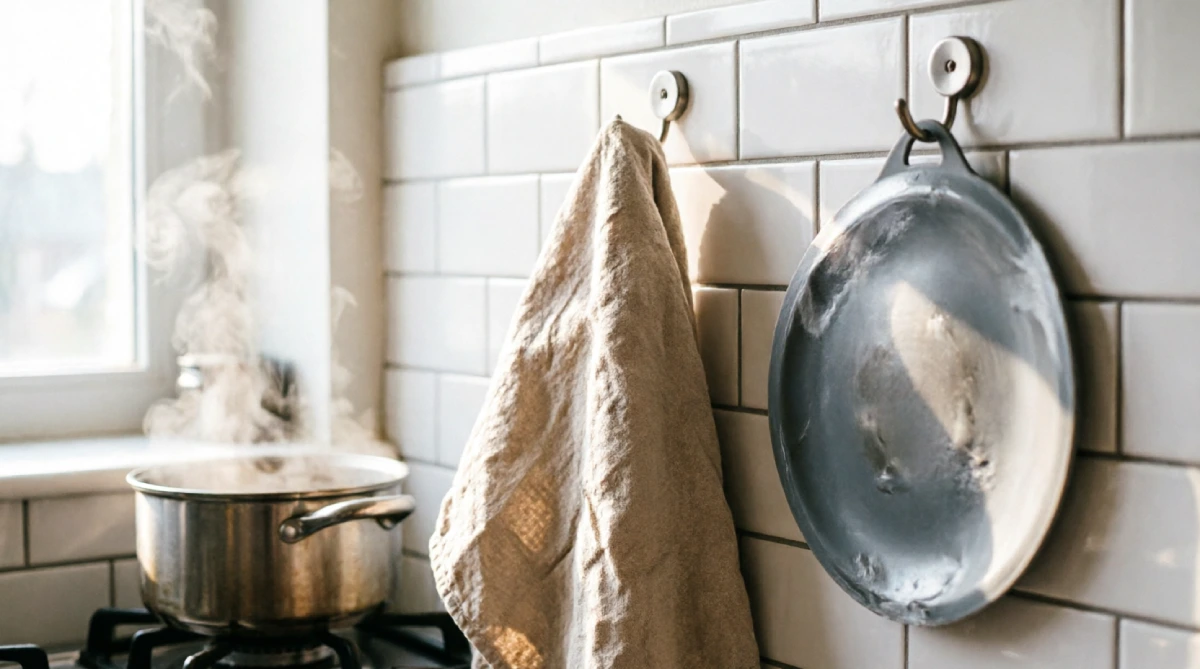
Heavy quilted oven mitts and thick terrycloth towels can feel oppressive in a warm kitchen. They trap heat and take longer to dry, adding to the muggy feel of the room. Lighter fabrics perform better in summer.
Thin cotton, flat-weave linen, or quick-dry waffle towels weigh less and don’t hold onto ambient warmth. They also dry faster, which keeps the counter area from getting damp and heavy. Using them feels more like handling a shirt sleeve than a blanket.
In many homes, the kitchen towel draped over the oven handle becomes a heat sponge that radiates warmth. A common improvement is switching to a short linen towel that dries in minutes and stays cool.
Replace bulky mitts with silicone-grip pot holders that have a thin cotton backing. Swap thick dish towels for flat-weave linen alternatives. Keep a few in rotation so one is always dry and refreshing to grab.
7. Add Under-Cabinet Task Lighting with Cool LED Strips
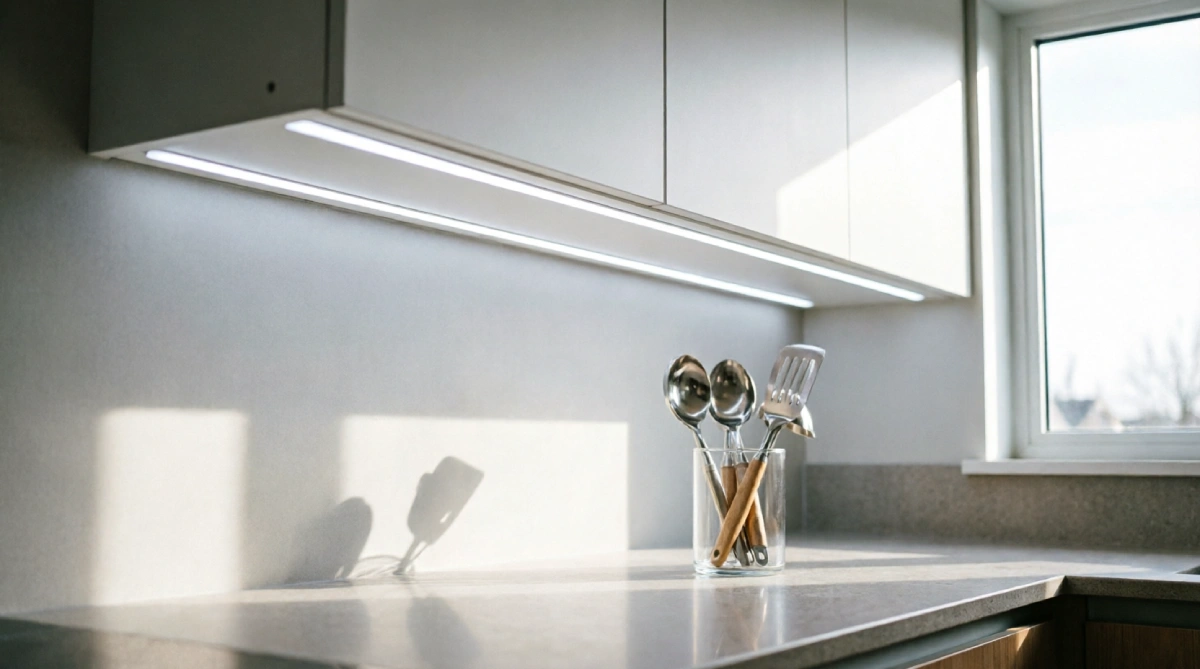
Old halogen or incandescent under-cabinet lights throw a surprising amount of heat right onto your prep surface. Replacing them with cool-running LED strips keeps the work zone comfortable and bright without adding to the thermal load.
LEDs produce very little heat, especially the daylight or cool-white varieties. They illuminate countertops evenly, reducing shadows and eye strain, while leaving the air temperature unchanged. Plus, they use minimal energy.
A common issue in older kitchens is that the main ceiling fixture gets too hot to stand under, and people avoid using it. When you switch to LED strips, you can turn off the overheated central light and still see clearly.
Use peel-and-stick LED tape lights with a plug-in driver. Mount them under the upper cabinets, hiding the strip behind the cabinet’s front lip. Connect to a smart plug to schedule them to turn on at dusk, keeping the evening kitchen welcoming.
8. Set Up a Summer-Only Appliance Zone
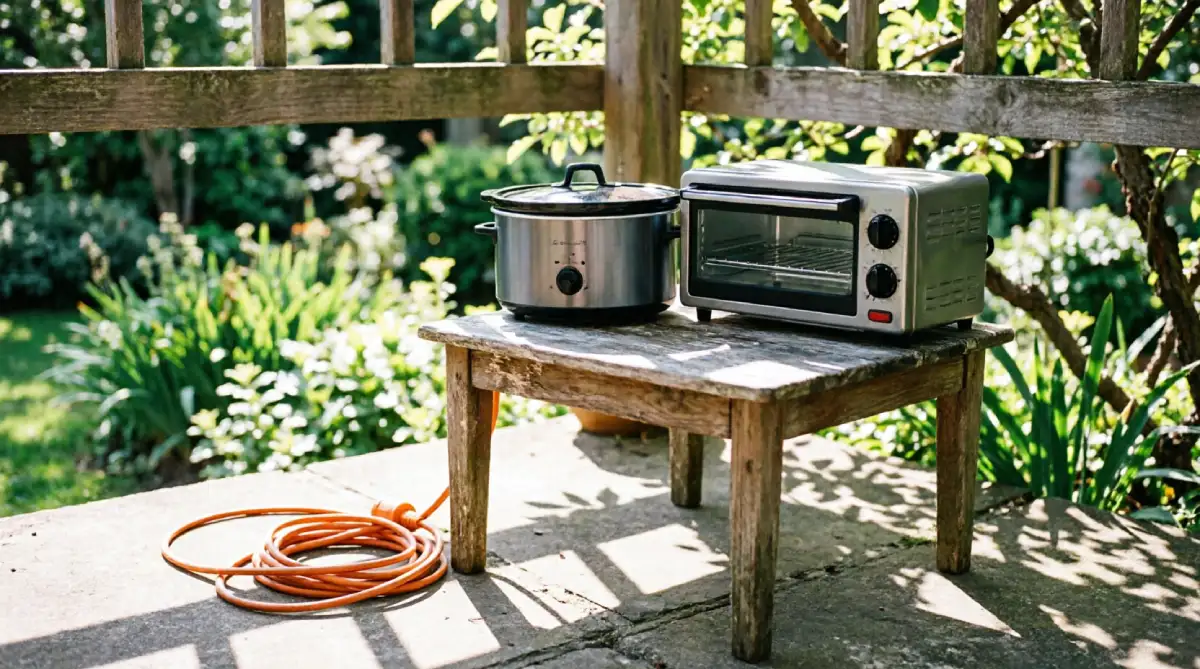
Some of the biggest heat offenders in a kitchen aren’t the stove but small appliances like slow cookers, air fryers, and toaster ovens. Moving them out of the main kitchen space keeps their heat from piling onto an already warm room.
Every appliance that generates heat adds to the ambient temperature. By setting up a temporary station in a garage, covered porch, or even a well-ventilated utility room, you export that warmth before it spreads.
I’ve seen families in older homes set up a folding table on the deck with a slow cooker and rice maker, creating a makeshift summer kitchen that reduces indoor heat dramatically. It also frees up counter space inside.
Designate a sturdy surface outdoors, out of direct sun, and run an extension cord rated for outdoor use. Use that spot for meal prepping, simmering stocks, or baking in a toaster oven, keeping your main kitchen cooler.
9. Declutter Countertops for a Cooler Look and Feel
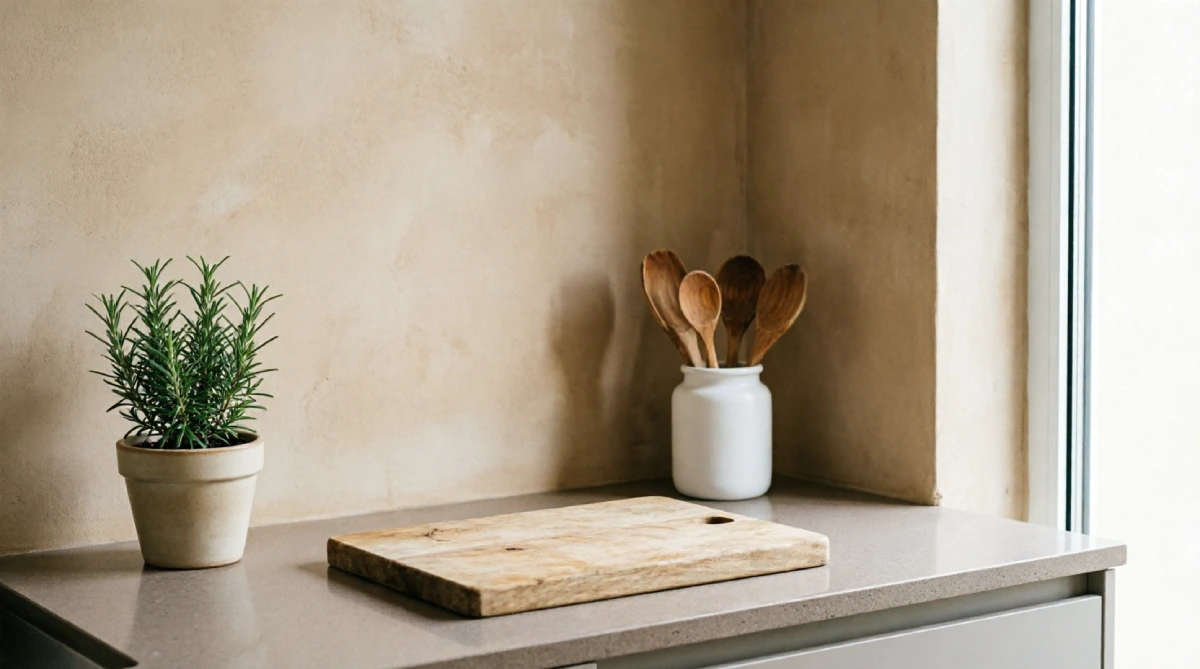
Visual weight has a real psychological effect on how we perceive temperature. Cluttered counters with piles of mail, stacked pans, and overcrowded small appliances make a room feel stuffy and trapped, even if the actual temperature hasn’t changed.
Clear surfaces reflect more light and allow air to circulate freely around the room. An uncluttered kitchen feels more open, airy, and breezy—sensations that genuinely make you feel cooler while cooking.
In many homes, the slow accumulation of items shrinks the workspace and creates pockets of trapped heat. Removing just a few non-essential items can transform the feeling from muggy to refreshing within minutes.
Keep only daily-use essentials on the counter: a kettle, a cutting board, and perhaps a fruit bowl. Store everything else inside cabinets or on open shelves with light-colored containers. A clean, open counter makes the whole room breathe.
10. Invest in a Compact Ice Maker or High-Performance Ice Trays
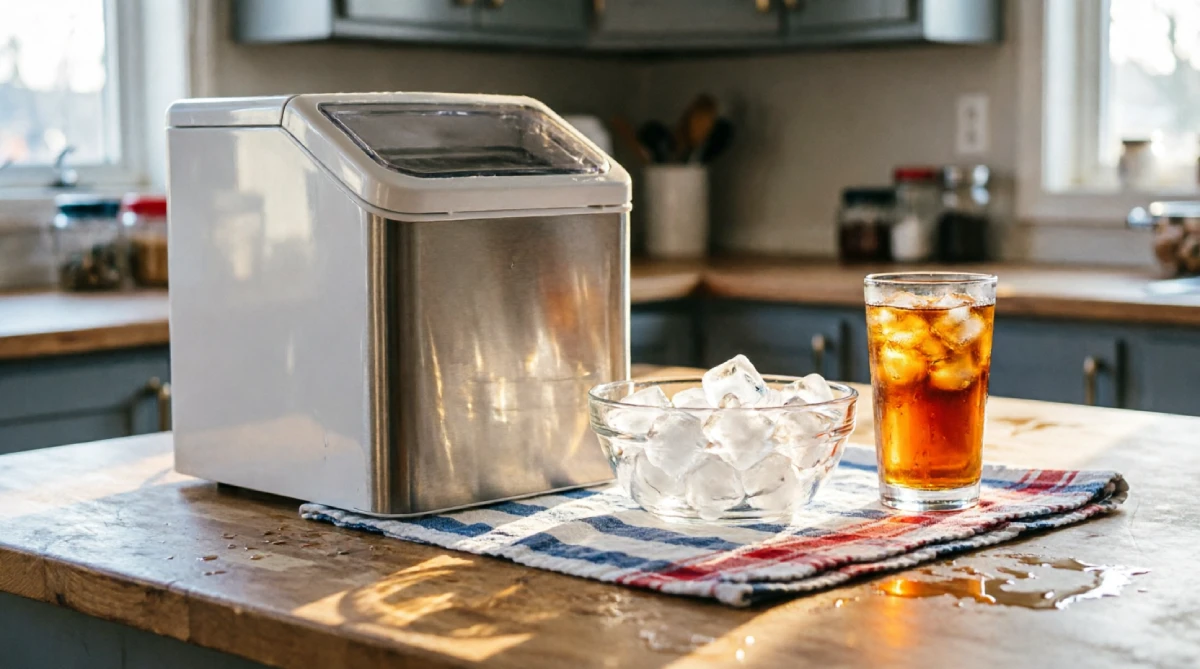
Running out of ice on a hot afternoon is a small frustration that can derail your comfort while cooking. A steady supply of ice keeps your drinks cold, helps you chill vegetables quickly, and makes the whole kitchen experience feel less sweaty.
A countertop ice maker produces ice in minutes without monopolizing freezer space, while oversized silicone ice trays make large cubes that melt slowly and keep pitchers cold longer. Both options reduce the need to constantly open the freezer.
A common complaint in summer is that standard ice cube trays take too long and produce thin cubes that dilute drinks fast. Having a dedicated ice setup means you’re never caught without that instant cooling moment.
If you have a bit of counter space, a compact ice maker can sit tucked into a corner. Otherwise, deep silicone molds that make 2-inch cubes are inexpensive and improve any drink. Either way, cold refreshment is always at hand.
Practical Tips
- Cook during the early morning or late evening when outdoor temperatures are lower, then simply reheat when needed.
- Keep lids on pots—they trap heat inside the pan, reduce cooking time, and prevent steam from flooding the room.
- Use your exhaust fan consistently; it pulls out hot air and humidity even if you’re just simmering.
- Place a bowl of ice in front of your portable fan for a quick, makeshift evaporative cooler.
- Swap dark-colored countertop accessories for light, reflective surfaces—white trays, light wood boards, or pale linens—to reduce heat absorption visually and physically.
- Freeze a damp washcloth in a plastic bag and drape it around your neck during long meal-prep sessions.
Common Mistakes to Avoid
- Ignoring the range hood or exhaust fan, thinking it only matters for smoke. It removes a surprising amount of heat and moisture.
- Keeping the oven on for tiny tasks. A toaster oven or induction burner often finishes the job with far less waste heat.
- Using dark, heavy curtains that absorb sunlight and radiate heat back into the room. Sheer, light-colored window treatments are a better summer choice.
- Placing a portable fan directly at a gas burner can disturb the flame and actually increase cooking time.
- Overloading the refrigerator. A jam-packed fridge can’t circulate cold air properly, so it runs longer and dumps more heat into the kitchen.
Comparison
| Cooking Method | Ambient Heat Added | Ease of Summer Use | Approximate Cost (Entry) |
|---|---|---|---|
| Gas range | High | Low (heats room) | Already in place |
| Electric coil | High | Low | Already in place |
| Portable induction | Low | High | $50–$100 |
| Slow cooker (outdoors) | Zero indoors | High (weather permitting) | $30–$60 |
| Air fryer (outdoors) | Zero indoors | Moderate | $40–$80 |
A portable induction cooktop and an outdoor slow cooker setup can dramatically reduce the heat load in your kitchen, giving you a genuine summer break from standing over a blazing stove.
FAQs
Can I use my existing pans on a portable induction burner?
Only if a magnet sticks firmly to the base. Stainless steel with a magnetic core and cast iron work well. Pure copper, aluminum, and glass will not heat up unless they have an induction-compatible plate.
Is window film safe for double-pane windows?
Yes, but you need a film rated for dual-pane applications. The wrong film can trap heat between the panes and cause seal failure. Check the packaging for compatibility before buying.
Do portable ice makers need a water line?
Most countertop models have a reservoir you fill manually. They don’t require a permanent water connection, so you can place one anywhere near an outlet and produce a batch of ice in under ten minutes.
How can I reduce heat without adding more appliances?
Start with behavior changes: cook outside during cooler hours, use the exhaust fan, switch to lighter pans, and clear the counters. Even combining a fan and a window film can cut the perceived temperature noticeably.
Will a fan make my gas stove unsafe?
It can if pointed directly at the burner. A slight breeze may extinguish the flame or make it flicker inefficiently. Angle the fan to circulate air around you, not across the stove top.
