

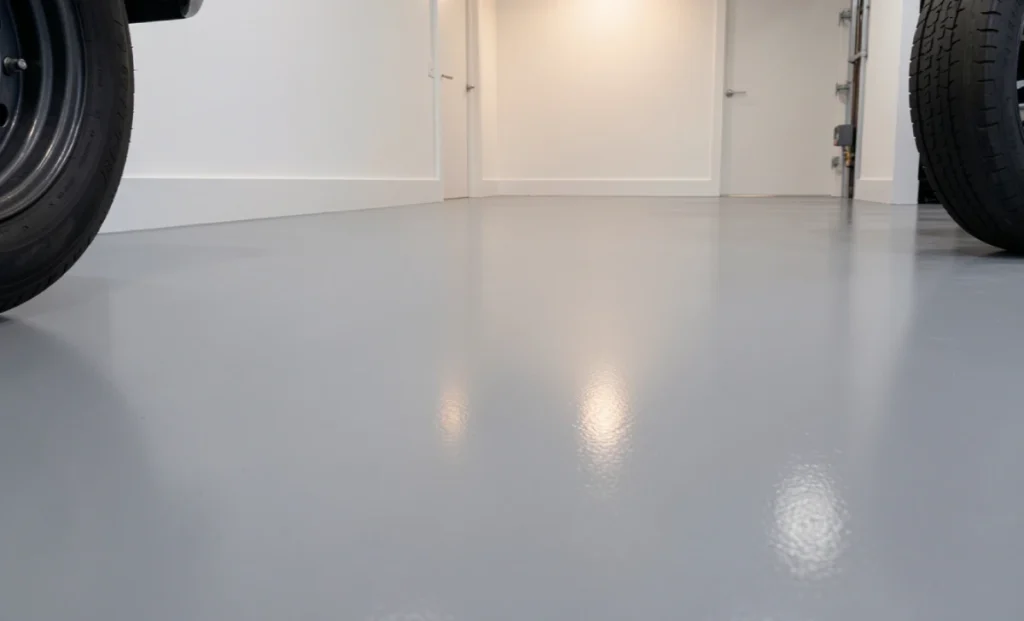
Epoxy floor coating is a two-part system made from resin and hardener that bonds chemically to concrete, creating a hard, protective surface. It resists stains, impacts, and chemicals, making it a practical choice for garages, basements, and industrial spaces. Types include water-based, 100% solids, flake, metallic, and self-leveling. Surface preparation is the most critical factor in how long the coating lasts.
What Epoxy Floor Coating Is and How It Works
You may have seen glossy, seamless floors in commercial garages or warehouses and assumed they were expensive custom jobs. In many cases, they are epoxy floor coatings, and you can achieve similar results in your own space.
Epoxy coating is a two-part product. You mix a resin with a hardener, which triggers a chemical reaction. That reaction creates a rigid, plastic-like film that bonds directly to concrete. The result is a surface that resists wear, moisture, and most common chemicals.
This is different from standard floor paint. Paint sits on top of concrete and can peel over time. Epoxy bonds into the substrate, which is why it lasts years longer when applied correctly.
Types of Epoxy Floor Coating Explained
Not all epoxy coatings are the same. Choosing the wrong type for your space is one of the most common and costly mistakes homeowners and contractors make.
Water-based epoxy is the easiest to apply and the most affordable. It has low odor and is a good fit for light-duty residential spaces. The trade-off is a thinner film, usually 3 to 5 mils once cured, which means less long-term durability under heavy use.
Solvent-based epoxy is stronger than water-based and penetrates concrete more deeply. It contains volatile compounds, so proper ventilation is required during application. This type performs well in spaces that see moderate foot traffic and occasional chemical exposure.
100% solids epoxy is the most durable option. It contains no water or solvents, so the applied thickness equals the cured thickness. According to thickness standards published in 2025, commercial and industrial floors typically require 10 to 20 mils, and 100% solids formulas are best suited to reach those specifications. Because it cures fast, professional application is recommended.
Beyond these base categories, there are several finish styles:
- Flake (broadcast) epoxy: Vinyl flakes are scattered into the wet base coat, then sealed with a clear topcoat. This adds texture, hides imperfections, and improves slip resistance.
- Metallic epoxy: Metallic pigments are worked into the resin during application to create a three-dimensional, shimmering look. Each floor turns out to be unique.
- Self-leveling epoxy: Poured onto the floor and allowed to spread on its own. It fills low spots and minor cracks, producing a smooth, high-gloss finish. Common in commercial kitchens, warehouses, and showrooms.
- Quartz-filled epoxy: Colored quartz is broadcast into the base coat. This creates a slip-resistant, textured surface used in schools, lobbies, and healthcare facilities.
- Epoxy mortar: Multiple thick layers applied by trowel. Finished thickness can reach 1/4 to 3/4 inch. Used in industrial settings where heavy machinery operates on the floor.
Where Epoxy Floor Coating Performs Best
Epoxy floor coating is not a one-size-fits-all product, but it does cover a wide range of environments effectively.
Garages are the most common residential application. The surface holds up against oil drips, road salt, and the weight of vehicles. A well-applied coating in a residential garage can last 10 to 20 years with basic maintenance.
Basements benefit from epoxy because it creates a moisture-resistant barrier. If your basement is at risk of water intrusion, a 100% solids epoxy offers the highest level of waterproofing. Keep in mind that moisture already present in the slab must be addressed before coating, or you will see blistering and adhesion failure.
Commercial and industrial facilities use epoxy to protect floors from chemical spills, forklift traffic, and continuous foot activity. Sherwin-Williams notes that industries including food processing, manufacturing, and healthcare rely on epoxy and resin-based flooring systems for these reasons.
Surface Preparation: The Step That Determines Success
Here is where most failures begin. According to Sherwin-Williams, improper or insufficient surface preparation is the number one reason epoxy floor coatings fail. The product is only as good as the surface beneath it.
Before any coating goes down, the concrete must be clean and properly profiled. Grease, oil, and curing compounds prevent epoxy from bonding. Grinding or shot blasting creates the surface texture the epoxy needs to grip.
A moisture test is also essential, especially for basement slabs or slabs poured directly on grade. Tape a 3-foot-square piece of polyethylene to the floor and leave it for 24 hours. If the concrete underneath looks dark or condensation forms on the underside of the plastic, moisture vapor is present. The flooring industry standard is a maximum of 3 pounds of water transmission per thousand square feet per 24-hour period. If your slab exceeds that, you need a moisture barrier primer before the epoxy goes down.
After prep, a primer coat goes on first. It seals the substrate and promotes adhesion. Skipping this step is a frequent mistake on DIY projects and often leads to peeling within months.
How Thick Your Epoxy Coating Should Be
Thickness directly affects how long your floor holds up. It is measured in mils, where 1 mil equals one-thousandth of an inch.
For residential garages and light-traffic areas, a total system thickness of 5 to 10 mils is typically enough. DIY kits usually produce a film around 5 mils. Professional applications run from 15 to 30 mils, since contractors apply heavier coats and use higher-grade materials that fully saturate the concrete.
For commercial floors, aim for 10 to 20 mils minimum. Industrial floors with forklift traffic or heavy machinery can require 20 to 40 mils or more. In those environments, an epoxy mortar system builds up the thickness needed to handle repeated impact and abrasion.
Every layer contributes to the total. A typical professional system includes a primer (2 to 5 mils), a base coat (5 to 15 mils), and a topcoat (2 to 5 mils). Decorative flakes or quartz can add 10 to 40 mils on top of that.
Epoxy vs. Polyaspartic: Which One Should You Choose
You will encounter polyaspartic coatings whenever you research epoxy, and the comparison matters if you are weighing your options.
Epoxy cures slowly, often taking up to a week to reach full hardness. It is also vulnerable to UV exposure, which can cause yellowing in areas that receive direct sunlight. However, it remains one of the most affordable options for durable floor protection and is widely available in DIY kit form.
Polyaspartic coatings cure significantly faster, allowing foot traffic in 6 to 12 hours and vehicle traffic in 24 to 96 hours. They resist UV damage, which makes them suitable for patios and areas near large windows. They also flex slightly with the concrete, reducing the risk of cracking.
The trade-off is cost. Polyaspartic systems carry a higher upfront price and require professional installation due to their rapid cure time.
For a garage that gets direct afternoon sun, or any outdoor-adjacent space, polyaspartic is worth the added cost. For a basement, interior utility room, or budget-conscious garage upgrade, epoxy remains a solid and proven choice.
Epoxy Floor Coating Costs: What to Expect
Costs vary depending on the type of epoxy, the size of the space, and whether you hire a professional or do it yourself.
For a two-car garage (around 360 square feet), DIY materials typically run between $700 and $1,800. That range reflects differences in kit quality, number of coats, and whether you add decorative flakes or a topcoat.
Professional installation costs more but produces a thicker, more durable result. Contractors apply coatings in greater volume and use commercial-grade products that are not available in consumer kits. If you expect your floor to handle heavy use or you want a long-term result, hiring a professional is often the better financial decision over time.
Surface repairs before coating, moisture mitigation, and decorative finishes all add to the total. Get quotes that include prep work, not just the coating itself.
FAQs
How long does epoxy floor coating last?
A professionally installed epoxy floor in a residential garage can last 10 to 20 years with proper care. DIY applications, which tend to be thinner, may need recoating after 5 to 10 years, depending on traffic and conditions.
Can epoxy be applied over existing paint or coating?
No. Old paint or failed coatings must be removed before applying epoxy. Applying over an unstable surface will cause the new coating to peel along with whatever is underneath it.
Does temperature affect epoxy application?
Yes. Most epoxy products require application temperatures between 50°F and 90°F (10°C to 32°C). Applying in cold conditions slows the cure and can lead to a soft, uneven finish. Hot conditions accelerate the cure, shortening your working time.
Is epoxy floor coating slippery when wet?
Solid-color epoxy with a high-gloss finish can be slippery when wet. Flake systems and quartz-filled coatings offer better traction. Anti-slip additives can also be mixed into any epoxy coating before application.
Do I need a topcoat over epoxy?
A topcoat is not always required, but it extends the life of the floor and protects the color from UV exposure and surface abrasion. Polyurethane topcoats are a common choice for high-traffic areas.
