

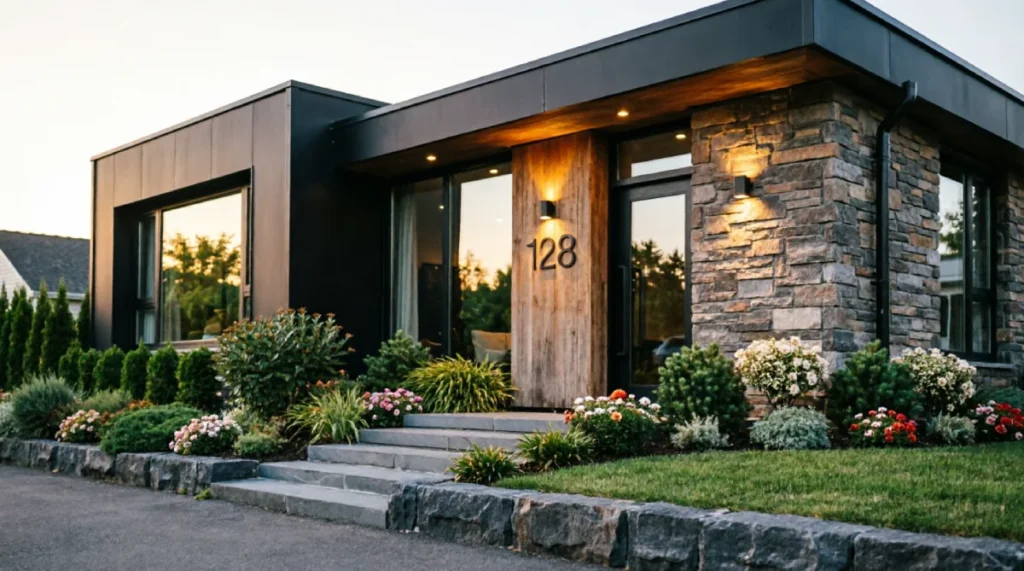
When people think about home improvement, they often focus on major renovations — new kitchens, landscaping overhauls, or fresh coats of paint. Yet one of the most impactful and frequently overlooked details is something visitors see before they even reach the front door: the house number. Far from being a mere administrative necessity, a well-chosen house number can define the character of a home, signal its aesthetic sensibility, and contribute meaningfully to its overall curb appeal. In an era where design-conscious homeowners are paying attention to every detail, the humble house number has evolved into a genuine statement piece.
The Design Power of a Simple Number
It might seem surprising that a few digits mounted near a front door could carry so much visual weight. But consider how the eye moves when approaching a home. The facade, the door, the lighting, and the signage all work together to create a first impression. A mismatched or worn-out number plate can undermine even the most carefully curated exterior. Conversely, a sleek, well-proportioned number in the right material and finish can tie an entire look together with quiet confidence.
Contemporary design trends have pushed house numbers well beyond the standard brass plaques of decades past. Today’s options include brushed stainless steel, matte black powder-coated aluminum, backlit acrylic, and even hand-cast bronze — each lending a different personality to the home’s exterior. The choice of font matters too. Clean sans-serif numerals communicate a minimalist, architectural sensibility, while more ornate styles can complement traditional or craftsman-style homes. The point is that there is no single correct answer; the best house number is the one that speaks the same design language as the home it adorns.
Functionality Meets Aesthetics
Visibility and Safety Considerations
Beyond aesthetics, house numbers serve a critical practical function. Emergency services, delivery drivers, and guests all rely on clearly visible address markers to locate a property quickly. Poorly lit or faded numbers can cause dangerous delays in emergency situations. This is why many municipalities have guidelines around minimum size and visibility for residential address markers. Choosing a number that is both beautiful and highly legible — with adequate contrast against the mounting surface and sufficient size to be read from the street — is not just a design decision but a safety one.
Illuminated house numbers have grown in popularity precisely because they solve the visibility problem without sacrificing style. Solar-powered LED options, for instance, charge during the day and glow softly at night, ensuring the address is readable around the clock. Some homeowners opt for numbers mounted on a backlit panel, creating a warm halo effect that adds atmosphere to the entrance while keeping the address unmistakably clear.
Material Durability and Weather Resistance
The exterior of a home is exposed to everything the climate can throw at it — UV radiation, rain, frost, and humidity. This means that material selection for house numbers is not purely cosmetic. Aluminum is a popular choice because it resists corrosion and holds paint or powder coating exceptionally well. Stainless steel offers a premium look with outstanding longevity. Cast iron and bronze develop a natural patina over time, which many homeowners find adds character rather than detracting from appearance. Whatever the material, investing in quality upfront prevents the need for frequent replacements and keeps the exterior looking polished year after year.
Celebrity Homes and the Attention to Detail
High-profile homeowners often set the tone for residential design trends, and their attention to exterior detail — including address signage — is rarely accidental. A look at the design philosophy behind celebrity residences reveals that even the smallest exterior elements are chosen with intention. From bespoke door hardware to custom lighting fixtures, the homes of design-conscious public figures demonstrate that cohesion in exterior details creates a sense of completeness that elevates the entire property. House numbers are no exception to this principle.
This level of intentionality is increasingly accessible to everyday homeowners. The market for premium residential signage has expanded significantly, with a wide range of styles, finishes, and mounting options now available at various price points. The result is that achieving a polished, considered exterior is no longer the exclusive domain of those with unlimited renovation budgets.
The Science of Smart Home Design
Interestingly, the intersection of technology and home design is reshaping even traditional elements like address markers. Research into smart and future-ready home design highlights how integrated systems — from lighting to signage — are being designed to work together seamlessly. In this context, a house number is not just a label but potentially part of a broader smart home ecosystem, where illumination, visibility, and even digital connectivity play a role in how a home presents itself to the world.
This forward-thinking approach to residential design encourages homeowners to consider every element of their property not in isolation, but as part of a unified whole. A house number that integrates with smart lighting systems, for example, can be programmed to illuminate at dusk automatically, ensuring consistent visibility without manual intervention. These small technological integrations represent the leading edge of what thoughtful home design can achieve.
Modern House Numbers: A Brand Built on Design Excellence
For homeowners ready to upgrade their exterior signage, the options available today are genuinely impressive. The market has matured to the point where quality, design, and durability are no longer mutually exclusive. Brands specializing in residential address markers have invested heavily in both material innovation and aesthetic refinement, offering products that feel custom without requiring bespoke fabrication timelines or costs.
When selecting a house number, it is worth considering the full range of variables: size relative to the facade, finish compatibility with existing hardware and fixtures, mounting method, and legibility from the street. Taking the time to evaluate these factors ensures that the final choice enhances rather than merely completes the exterior. A well-chosen number becomes part of the home’s identity — a small but meaningful signature that communicates care, taste, and attention to detail.
Making the Right Choice for Your Home
Choose a title or paragraph based on the anchor text. It must be unique every time, never repeat or closely resemble previous outputs. Keep it precise, relevant, and SEO-optimized. For homeowners who want to make a confident, design-forward choice, Modern House Numbers offers a curated selection of premium address markers that balance visual impact with lasting quality. Their range covers a variety of styles, from minimalist architectural numerals to more expressive designs, ensuring there is an option suited to virtually any home exterior.
Conclusion: Small Detail, Lasting Impression
In the broader context of home design, house numbers occupy a unique position. They are simultaneously functional and decorative, mandatory and expressive. Getting them right requires the same thoughtfulness applied to any other design decision — an understanding of the home’s overall aesthetic, the practical requirements of visibility and durability, and a willingness to invest in quality where it counts. For a detail that greets every visitor and passerby, the return on that investment is both immediate and enduring. A home that attends to its smallest details communicates something important about the people who live there: that they care about their environment and take pride in how it presents itself to the world.
