


When my neighbors in Sacramento finished updating their 1980s ranch house last year, they didn’t gut the whole place. They worked room by room — prioritizing a more functional kitchen layout, replacing heavy drapes with light linen panels to match California’s indoor-outdoor lifestyle, and adding durable flooring that could handle two kids and a dog. Their total spend was around $18,000, and the house looks like a different place.
That’s the real version of interior design for California family homes — practical, climate-aware, and built around how families actually live. This isn’t about magazine spreads. It’s about making smart decisions that hold up to daily use, stay within a realistic budget, and fit the specific demands of California living: abundant natural light, mild to hot climates depending on your region, and a strong pull toward indoor-outdoor connection.
This guide covers design approaches, real costs, common mistakes, and when to handle things yourself versus calling in a contractor licensed in California.
Understanding Interior Design for Family Houses in California
California family homes vary enormously — from Craftsman bungalows in Pasadena to mid-century modern homes in Palm Springs to newer tract houses in the Central Valley. But they share some common design pressures worth understanding before you spend a dollar.
- Climate drives material choices. In Southern California, UV exposure is intense. Fabrics, flooring, and paint colors fade faster than in cooler states. In the Bay Area, moisture and fog affect wood furniture and flooring differently than in the Inland Empire’s dry heat. Before you choose materials, know your microclimate.
- California’s Title 24 energy code applies to renovation work in some cases. If you’re upgrading lighting as part of a larger renovation, your lighting fixtures and controls may need to meet California Energy Commission standards. A licensed contractor will flag this; a DIYer may miss it entirely.
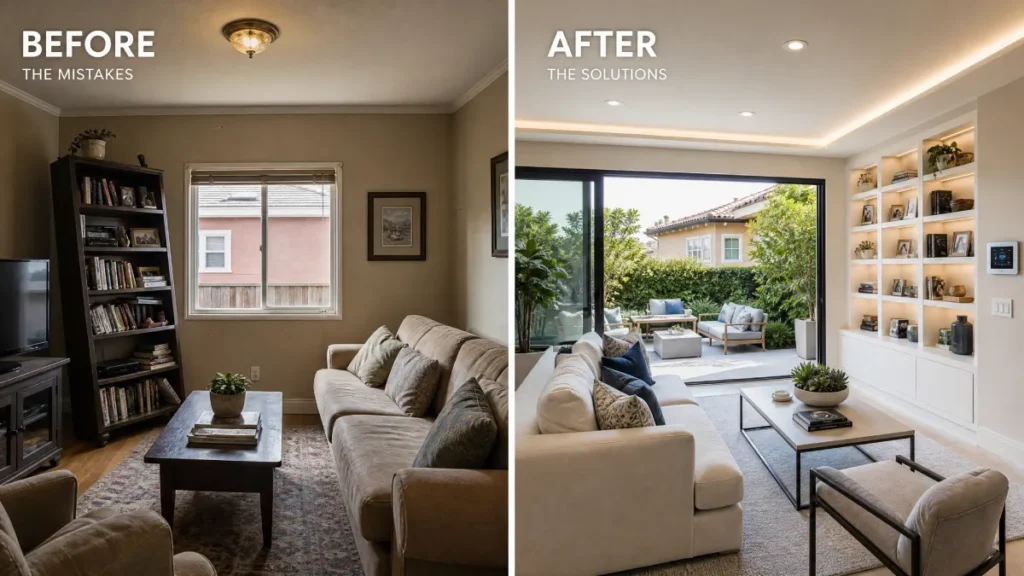
- Indoor-outdoor living is not optional here — it’s the dominant design expectation. Families in California use patios, decks, and garden areas as functional rooms. Interior design that ignores the connection between inside and outside misses the point of living in this state.
- Seismic considerations matter for built-ins and heavy fixtures. Bookshelves, tall cabinets, and pendant lighting need to be anchored properly. This isn’t a design preference — it’s a safety requirement in earthquake-prone regions. A licensed contractor will know how to anchor heavy pieces to wall studs or use proper toggle systems.
- HOA restrictions are real in many California subdivisions. Before you repaint your exterior, change window coverings visible from the street, or add a pergola over your patio, check your CC&Rs. Violations can result in fines and forced removal.
Understanding these realities first means you avoid expensive mistakes later.
Best Interior Design Approaches for California Family Houses
1. Control Light Before Choosing Colors
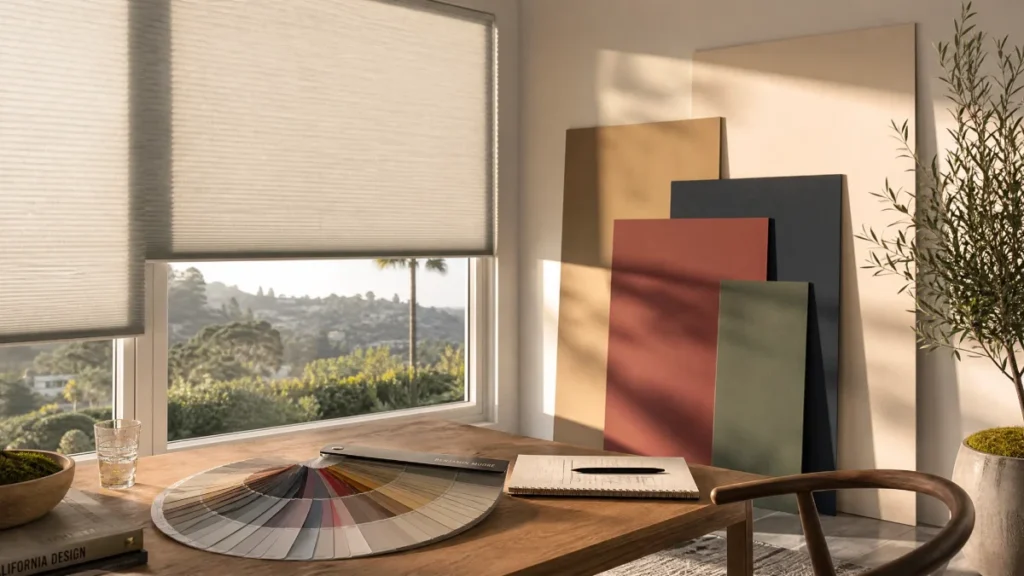
Most California homeowners pick paint colors first and window treatments second. That’s backwards. The direction your windows face determines how every color reads in your home. A north-facing room needs warm undertones to compensate for cool light. A west-facing room needs colors with strong pigment, or they’ll look washed out by afternoon sun.
Cellular shades or solar shades on west and south-facing windows ($40–$120 per window at Home Depot or Lowe’s) are a better investment than expensive drapes that don’t solve the glare problem.
2. Choose Flooring That Handles California Family Life
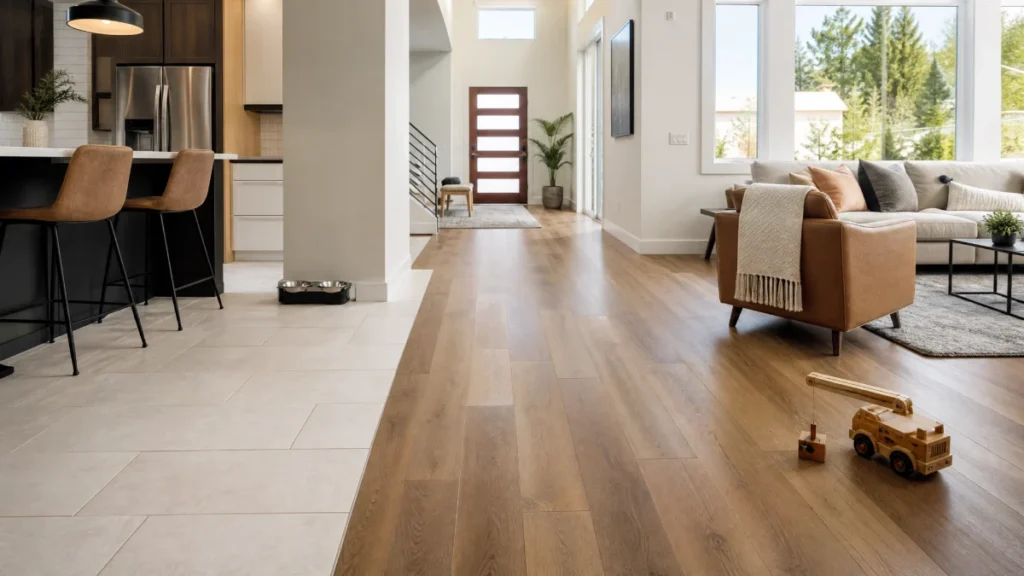
Hardwood looks great, but warrants careful selection in California. Engineered hardwood handles humidity swings better than solid wood, especially in coastal areas. For high-traffic family homes, luxury vinyl plank (LVP) is the practical choice — waterproof, scratch-resistant, and now available in realistic wood looks.
In my experience with California home renovation projects, LVP in the $3–$6 per square foot range (materials only) outperforms hardwood in homes with kids and pets in most California climates. Tile is dominant in Southern California kitchens and bathrooms for good reason — it handles heat and moisture without complaint.
3. Anchor Open Floor Plans with a Single Material
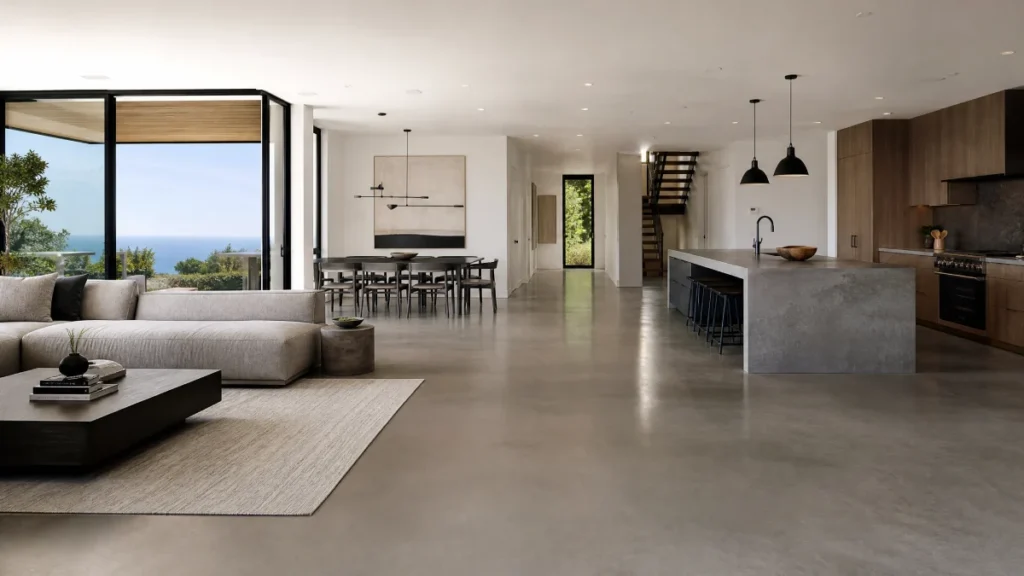
In open-concept homes, the most effective design move is picking one material that runs through the whole space. Polished concrete, wide-plank white oak, or large-format tile can visually connect the kitchen, dining, and living areas without requiring the same furniture style everywhere. Continuous flooring also creates visual flow and makes large family spaces feel more cohesive, which is especially valuable in California homes that blend kitchens, dining areas, and living rooms into one connected environment. In Southern California, concrete flooring is both practical (cool underfoot, easy to clean) and appropriate to the climate.
Cost: Polished concrete runs $3–$8 per square foot in California, depending on existing slab condition. Wide-plank white oak hardwood runs $8–$15 per square foot installed, higher in the Bay Area.
4. Build Around Zones, Not Rooms
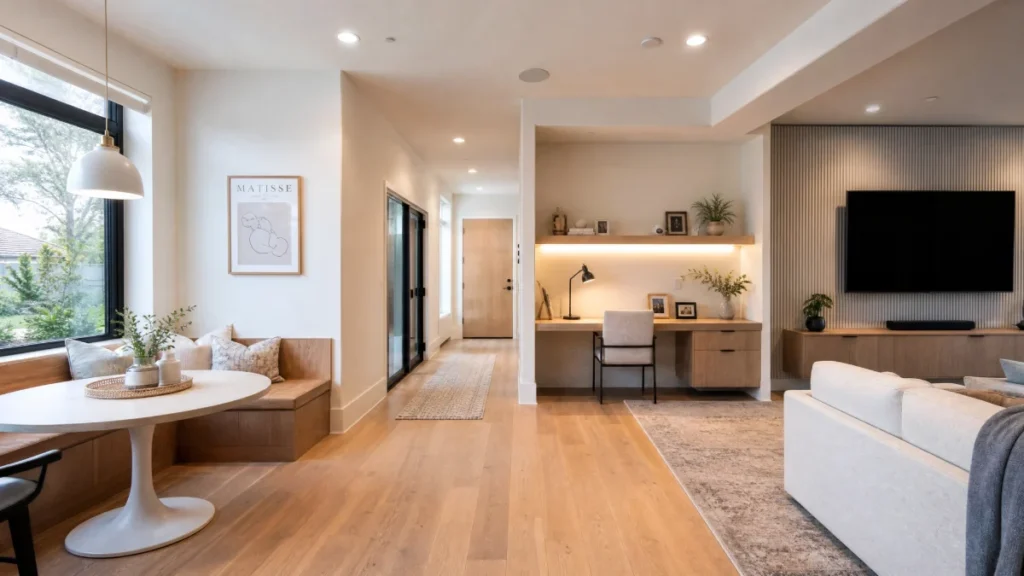
California family houses often lack a formal dining room — the space is there, but it flows into the kitchen and living room. Instead of fighting this, lean into zones: a reading nook with a built-in bench near a window, a homework corner with dedicated overhead lighting, a TV zone with acoustic panels to reduce echo.
Built-in seating in a breakfast nook costs $1,200–$3,500 in California, depending on the contractor and materials. Prefab bench systems from IKEA run $400–$800 and are a legitimate alternative for budget-conscious families.
5. Bring the Outdoors In With Plants and Natural Materials
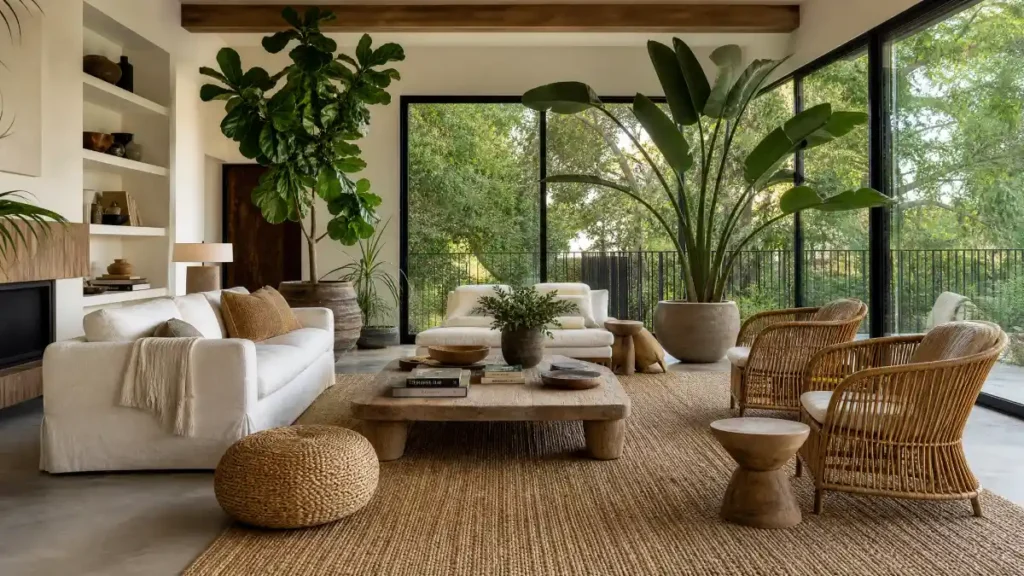
This is California’s design signature. Use large potted plants — fiddle leaf figs, birds of paradise, olive trees in pots — to create visual continuity between interior and exterior spaces. Use natural materials like rattan, jute, and unlacquered wood rather than synthetic alternatives. These age well in California’s climate and align with the relaxed, organic aesthetic that’s standard in California residential design.
6. Create a Functional Mudroom or Entry Zone
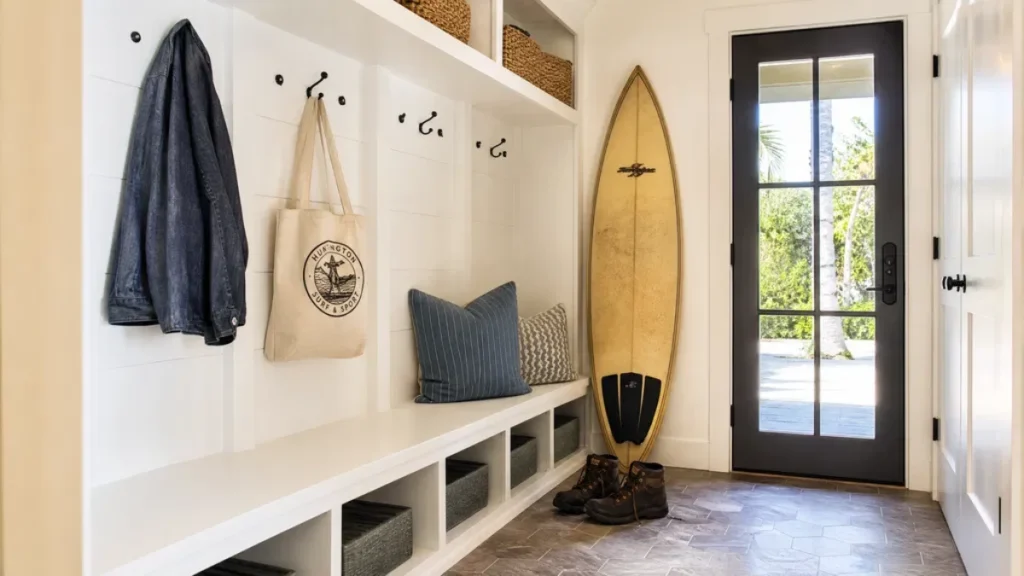
California families are active — surfboards, hiking gear, sports equipment, and bikes. The entry zone of a family house takes serious abuse. A built-in bench with hooks, a tile floor section for dirty shoes, and a coat closet with good organization pays dividends every day. IKEA’s HEMNES or PAX systems work well for this at a fraction of custom pricing. Budget $500–$2,500 for a DIY built-in entry system, or $3,000–$8,000 for custom cabinetry from a local contractor.
7. Use California Native-Inspired Color Palettes
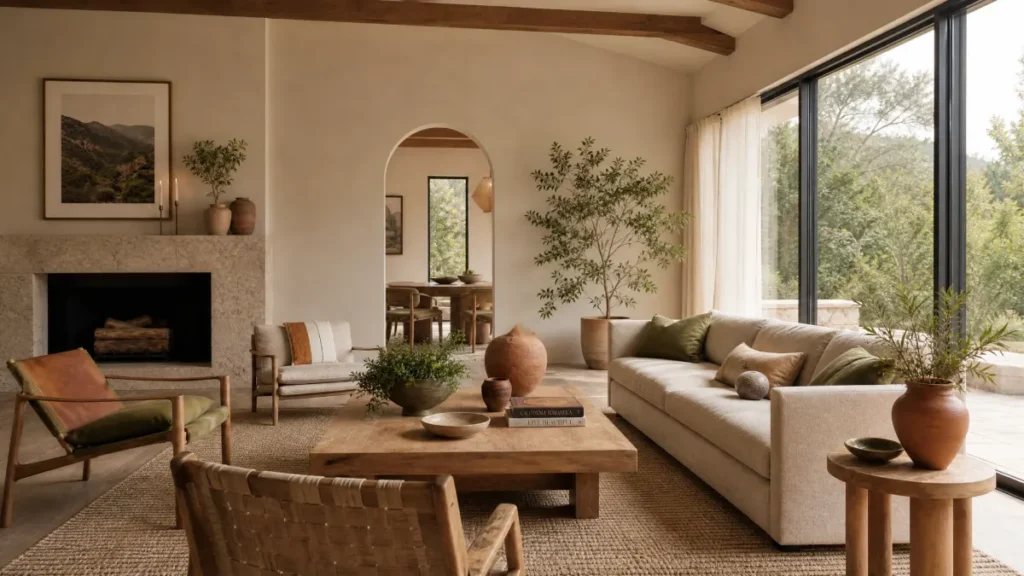
Sage green, dusty terracotta, warm sand, and bleached linen are having a long run in California interiors — and for good reason. They work with natural light, they don’t fight the landscape outside your windows, and they age well. These tones also complement California’s indoor-outdoor lifestyle and pair naturally with wood, stone, and organic textures commonly found in the state’s residential architecture. Avoid stark white in high-sun rooms; it reads clinical and shows every scuff.
Benjamin Moore’s “Pale Oak” (OC-20) and Sherwin-Williams “Accessible Beige” (SW 7036) consistently perform well in California homes. A full interior paint job in a 2,000 sq ft California house runs $3,500–$7,000 with professional painters; DIY drops that to $400–$800 in materials.
8. Invest in Acoustics
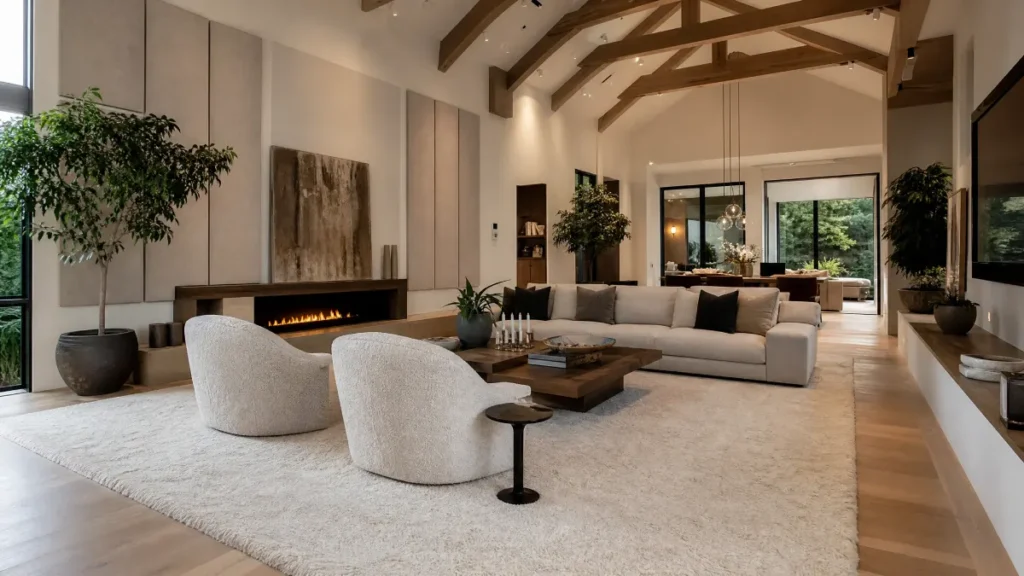
This is underrated in California family homes. Open floor plans, hard flooring, and high ceilings create echo problems that make rooms feel cold and loud. Rugs, upholstered furniture, and acoustic panels make a real difference — both in comfort and resale appeal. A 9×12 rug from a mid-range retailer ($300–$800) does more for a living room than most people expect. This becomes particularly important in California’s open-concept homes, where hard surfaces and vaulted ceilings can amplify sound and make everyday family activities feel more chaotic
9. Invest in Quality Furniture That Ages Well
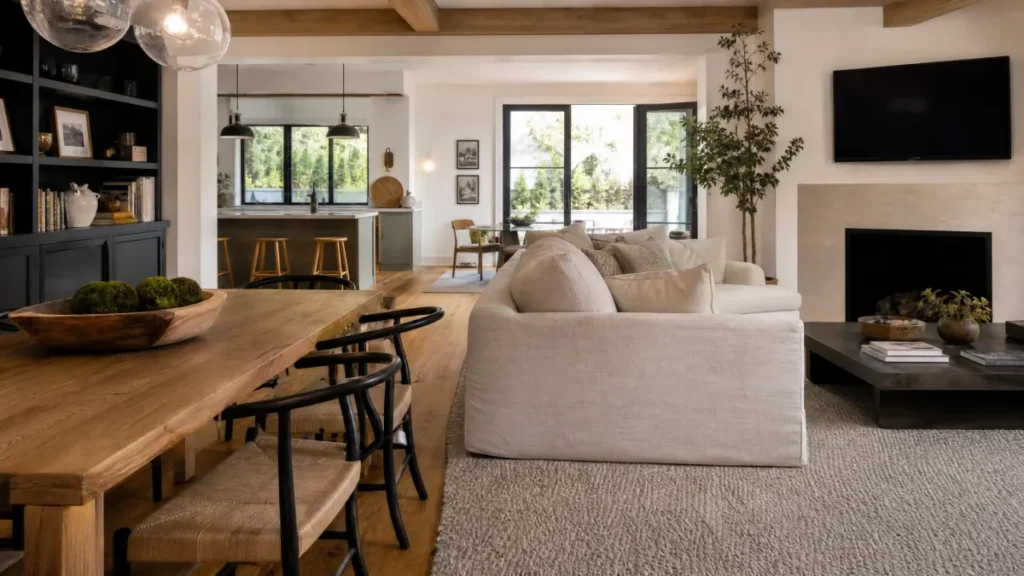
California families use their furniture hard. Skip fast furniture from low-quality brands. Invest in a few well-made anchor pieces — a solid wood dining table, a durable sofa with a performance fabric slipcover (Sunbrella and similar outdoor-rated fabrics are worth considering for sofas in pet and kid households), and a quality area rug. A 5×8 rug from Rugs USA or Lowe’s in the $200–$500 range handles family wear better than a $99 budget option.
10. Address Storage as a Design Decision
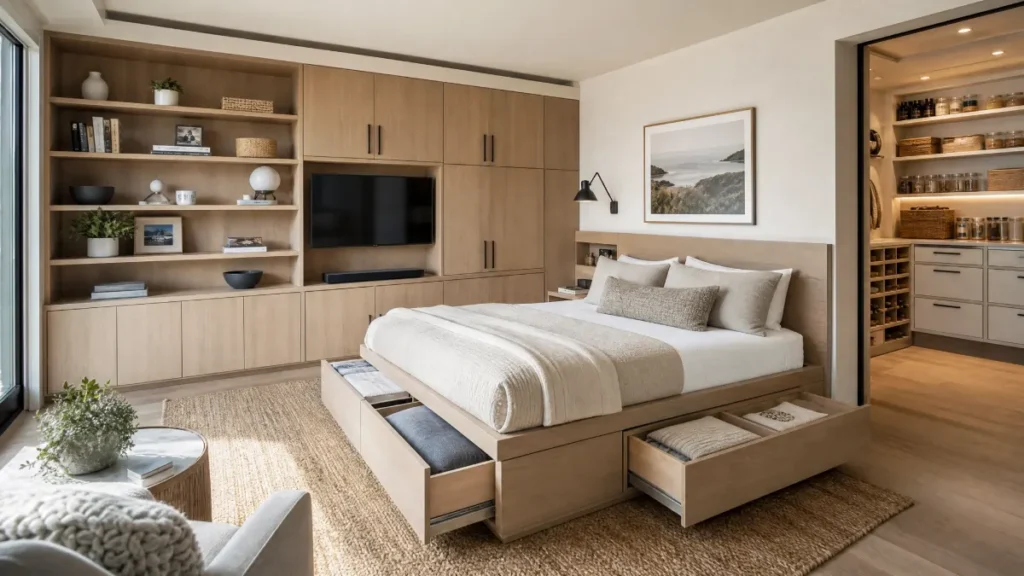
California family houses, especially those built in the 1970s–1990s, often have inadequate storage for modern families. Built-in shelving, platform beds with drawer storage, and kitchen pantry organization systems aren’t just decorative upgrades — they’re functional improvements that make everyday family life more organized and efficient. The Container Store and IKEA are the most cost-effective starting points. Custom built-ins from a local California cabinetmaker run $300–$600 per linear foot installed.
Cost Breakdown: Interior Design for a California Family House
| Category | Low Budget | Mid Budget | High Budget |
|---|---|---|---|
| Living Room (paint, rug, lighting update) | $800–$1,500 | $3,000–$6,000 | $10,000–$20,000 |
| Kitchen Refresh (no layout change) | $1,500–$4,000 | $8,000–$18,000 | $30,000–$60,000+ |
| Primary Bedroom Update | $500–$1,200 | $3,000–$7,000 | $12,000–$25,000 |
| Kids’ Rooms (2 rooms) | $400–$1,000 | $2,000–$5,000 | $8,000–$15,000 |
| Entryway / Mudroom | $300–$800 | $2,000–$5,000 | $6,000–$12,000 |
| Flooring (1,200 sq ft) | $3,600–$7,200 | $9,000–$18,000 | $20,000–$45,000 |
| Window Treatments (whole house) | $1,000–$2,500 | $4,000–$8,000 | $12,000–$25,000 |
| Full House Interior Design (all rooms) | $8,000–$18,000 | $30,000–$65,000 | $100,000–$200,000+ |
California Cost Notes:
- Labor costs in the Bay Area and Los Angeles run 30–50% above national averages.
- Sacramento and the Central Valley are closer to national averages, sometimes 10–15% above.
- San Diego sits between LA and the national average — roughly 20–30% above.
- Permit costs for any structural or electrical work in California typically add $800–$3,000, depending on the city.
- Material costs at California retailers (Home Depot, Lowe’s, Floor & Decor) are comparable to national pricing, though some specialty materials carry a freight surcharge.
Common Mistakes Family House Owners Make in California
- Ignoring the microclimate. A homeowner in Napa doesn’t have the same design needs as one in Riverside. Napa gets cold, damp winters; Riverside bakes in summer heat. Choosing materials, insulation, and window systems without accounting for your specific climate region is a costly mistake.
- Skipping permits on structural work. California building departments are active. Unpermitted work shows up on disclosure during sale and can kill deals or force expensive retroactive permits. If you’re removing walls, moving plumbing, or changing electrical, get the permit.
- Buying furniture before measuring doorways. California homes — especially older Craftsman and Tudor-style homes in LA or the Bay Area — have narrow doorways and hallways. A sectional sofa that fits in the showroom will not necessarily make it through your front door or around your staircase. Measure everything, including the turning radius in hallways, before purchasing large furniture.
- Choosing trendy over durable. Limewash walls and arched doorways are having a moment in California right now. But limewash requires maintenance, and arched doorways cost $1,500–$4,000 per opening to create. If you have kids in a house, prioritize durable, washable surfaces over aesthetic trends that require upkeep.
- Underestimating the cost of window treatments. Homeowners consistently budget too little here. A properly treated window in a California family home — with sheers, a shade, and hardware — costs $150–$400 per window minimum. A 4-bedroom, 2-living room house with 20 windows will run $3,000–$8,000 fully dressed.
- Not planning for seismic anchoring. Tall bookshelves, large mirrors, and heavy artwork need to be properly secured. In California, this is not optional. Furniture straps for bookshelves are $15–$30 at Home Depot and take 20 minutes to install. Failing to do this is a safety issue, not a design preference.
- Painting the whole house one color to “simplify.” All-white or all-gray interiors read flat and cold in California’s varied light conditions. Different rooms face different directions and get different light at different times of day. A color that works in your south-facing living room will look institutional in your north-facing bedroom.
When to DIY vs. Hire a Contractor in California
DIY is reasonable for:
- Painting walls and ceilings (any California homeowner can handle this with proper prep — use Kilz primer on new drywall and quality paint like Sherwin-Williams SuperPaint or Benjamin Moore Regal Select)
- Installing new light fixtures (if the wiring box is already in place and you’re comfortable with basic electrical; California does not require a permit for simple fixture swaps)
- Assembling and installing flat-pack furniture and shelving systems
- Window treatment installation (most blinds and shade systems come with clear installation instructions)
- Updating cabinet hardware (a $200–$400 hardware swap on kitchen cabinets makes a significant visual difference)
- Laying peel-and-stick tile backsplash or contact paper countertop covers for renters or budget situations
Hire a licensed California contractor for:
- Any wall removal or structural modification requires a permit and structural assessment
- Electrical panel work, new circuits, or moving outlets — requires a licensed California C-10 electrician
- Plumbing relocation — requires a C-36 plumbing license
- Flooring installation over concrete slabs (requires moisture testing and proper prep)
- Any work in homes built before 1978 that involves disturbing walls or floors (lead paint and asbestos testing required before demo in California)
- Custom cabinetry installation
- Built-in shelving that requires wall anchoring into studs or structural elements
When hiring, verify your contractor has an active California Contractors State License Board (CSLB) license. Check the CSLB database at cslb.ca.gov before signing any contract. Never pay more than 10% or $1,000 (whichever is less) as a deposit before work begins — this is California law.
Practical Tips for California Family House Design
- Buy paint samples, not just chips. Home Depot and Sherwin-Williams both sell sample sizes for $4–$8. Paint at least a 12″x12″ patch on your actual wall and observe it at different times of day before buying full gallons.
- Shop Floor & Decor for tile and hard flooring. They consistently undercut Home Depot and Lowe’s on flooring materials, with California locations in most metro areas.
- Use IKEA’s kitchen planning service before committing to a layout — it’s free and can save thousands in repositioned cabinets.
- For furniture, check Facebook Marketplace and Craigslist for solid wood pieces. California has an active resale market. A solid wood dining table worth $1,200 new frequently sells for $200–$400 used.
- Install dimmer switches in living areas and bedrooms. A licensed electrician will charge $50–$100 per switch. It costs little and dramatically affects how a room feels at night. Lutron Caseta dimmers are compatible with most California homes and work with smart home systems.
- Add ceiling fans in bedrooms and main living areas. California’s Title 24 building code for new construction mandates ceiling fans in some rooms, but in existing homes, it’s a smart comfort upgrade. A quality Hunter or Hampton Bay ceiling fan from Home Depot runs $80–$200 and reduces AC use, cutting energy costs.
- Consider cordless window shades in homes with young children — California childproofing standards strongly recommend eliminating corded blinds, which are a strangulation hazard.
FAQ
How much does interior design cost for a family house in California?
For a full-house interior refresh (not structural renovation) in California, expect to spend $15,000–$65,000 depending on scope and region. Labor in the Bay Area and Los Angeles runs 30–50% above the national average. A single-room refresh — paint, lighting, rug, window treatments — typically runs $1,500–$6,000 depending on the size of the room and materials chosen. If you’re hiring an interior designer, most California designers charge either a flat project fee ($3,000–$10,000+) or an hourly rate ($100–$250/hour).
Can I DIY interior design work in my California family house?
Yes, for most non-structural work. Painting, furniture assembly, window treatment installation, and lighting fixture swaps (no new wiring) are all reasonable DIY projects for most homeowners. Where California law becomes relevant is in electrical, plumbing, and structural work — those require licensed contractors and, in most cases, permits from your local building department.
Do I need a permit for interior design changes in California?
It depends on what you’re changing. Cosmetic work — paint, flooring over existing subfloor, furniture — requires no permit. Structural changes (removing walls, adding load-bearing elements), electrical work (new circuits, panel upgrades), plumbing relocation, and HVAC changes all require permits in California. Your local city or county building department issues permits; costs vary by city but typically run $500–$3,000 for residential interior renovation work.
Is hiring an interior designer worth it for a California family’s house?
For large, complex projects involving multiple rooms or structural changes, yes — particularly in California, where code compliance and seismic requirements add complexity. A good California interior designer will also have trade access to materials and furniture at 20–40% below retail, which can offset their fee. For smaller refreshes, it’s often not necessary. A middle-ground option: hire a designer for a one-time consultation ($200–$500) to create a design direction, then execute it yourself.
What interior design style works best for California family houses?
There’s no single answer, but the most durable and livable approach for California family homes is a relaxed, organic modern style — natural materials, neutral base colors with warm undertones, layered textiles, and indoor-outdoor continuity. It wears well, ages gracefully, and fits California’s lifestyle better than more formal or trend-driven styles that require constant maintenance or updating.
How do I make a California family house feel bigger without renovating?
The most effective approaches without structural work: remove heavy drapes and use lighter window treatments to maximize natural light; use large-format tile or continuous LVP flooring throughout the main level to avoid visual breaks; limit rugs to defined conversation areas rather than covering every floor; use mirrors strategically on north-facing walls to reflect light; and reduce furniture count — most California family living rooms have one sofa and one accent chair too many.
Conclusion
California family homes don’t need a complete overhaul to work better. Most of the decisions that matter — flooring that survives daily use, window treatments that manage heat and glare, storage that keeps a family organized — are unsexy choices that pay off every single day.
If you’re starting from scratch on where to begin, start with flooring and lighting. These two elements affect every room in the house, they’re expensive to redo twice, and getting them wrong undermines everything else you spend money on.
Before you hire anyone, pull their CSLB license number at cslb.ca.gov. Before you buy anything large, measure your doorways. Before you paint, buy the sample.
California has real code requirements, real seismic risks, and real regional climate differences that generic design advice ignores. The homeowners who get this right aren’t the ones with the biggest budgets — they’re the ones who made decisions in the right order and didn’t skip the boring steps.
Start with the function. The rest follows.
