

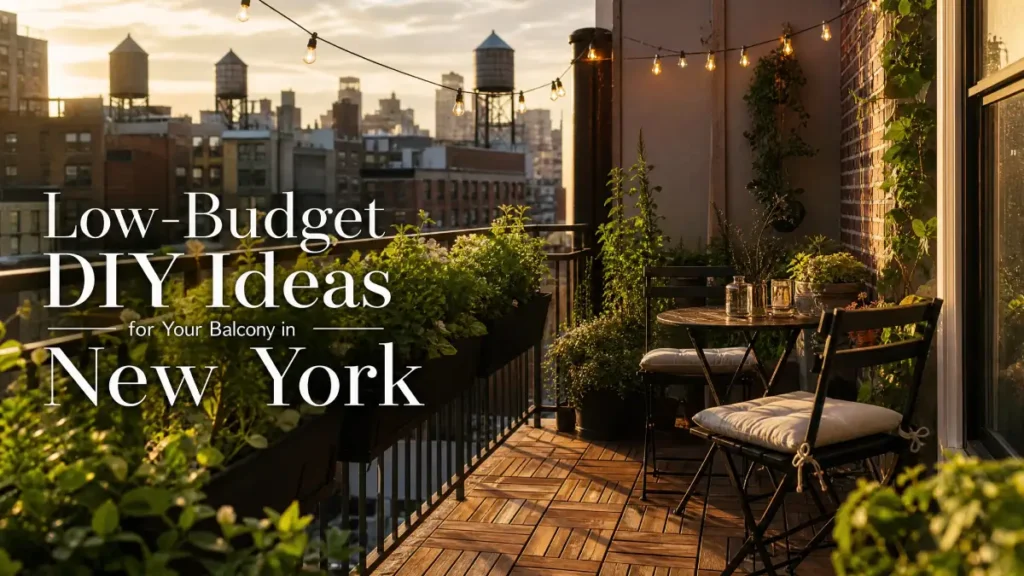
Last spring, my neighbor in a Williamsburg co-op turned a cracked, forgotten 40-square-foot balcony into a usable outdoor retreat — all for under $300. No contractors, no permits pulled for cosmetic work, and no design degree required. Just smart choices, weekend afternoons, and a trip to the Home Depot on Atlantic Avenue.
If you’re living in a New York City apartment or co-op, you already know how precious outdoor space is. A balcony — even a narrow one — is a rare asset. But most NYC residents either ignore it or assume that doing anything meaningful requires serious money. That’s not true.
This guide is built specifically around interior design ideas for small homes on a low budget, applied to New York balconies. You’ll get realistic costs based on NYC pricing, ideas that work within co-op board rules and NYC DOB guidelines for cosmetic changes, and step-by-step DIY approaches that don’t require a contractor. Whether your balcony faces the street, a courtyard, or an air shaft, there’s a workable plan here for you.
Understanding Small Balcony Design in New York City
New York balconies are not suburban decks. They’re typically 35 to 80 square feet, often in older pre-war or post-war buildings, and come with specific constraints that renters and owners both need to understand before spending a dollar.
- Building rules matter first. In NYC co-ops and condos, your board may restrict what you can attach to railings, install on the floor, or hang on exterior walls. Before buying anything, check your house rules and proprietary lease. Most boards allow potted plants, freestanding furniture, and removable floor tiles without approval. Permanent fixtures — including anything drilled into the exterior facade — typically require board approval and may need NYC DOB filing.
- Floor condition is your starting point. Many NYC balconies have original concrete that’s weathered, stained, or slightly uneven. Interlocking deck tiles (available at Home Depot for $1.50–$3.50 per square foot) sit directly on existing concrete with no adhesive and can be removed when you move out. That’s critical for renters in particular.
- Wind and sun exposure vary dramatically. A high-floor east-facing balcony in Midtown gets morning sun and significant wind — very different conditions than a sheltered courtyard-facing balcony in Astoria. Your furniture choices, plant selection, and shade solutions should match your actual exposure.
- Storage is always the issue. NYC apartments have almost no storage, and the balcony tempts people to dump things outside. Resist it. One well-chosen outdoor storage bench ($60–$120 at IKEA or Wayfair) keeps the space functional and visually clean.
Working within these realities — not against them — is what separates a DIY balcony that works from one that creates problems with your building or wastes money.
Best DIY Approaches for a Low-Budget NYC Balcony Makeover
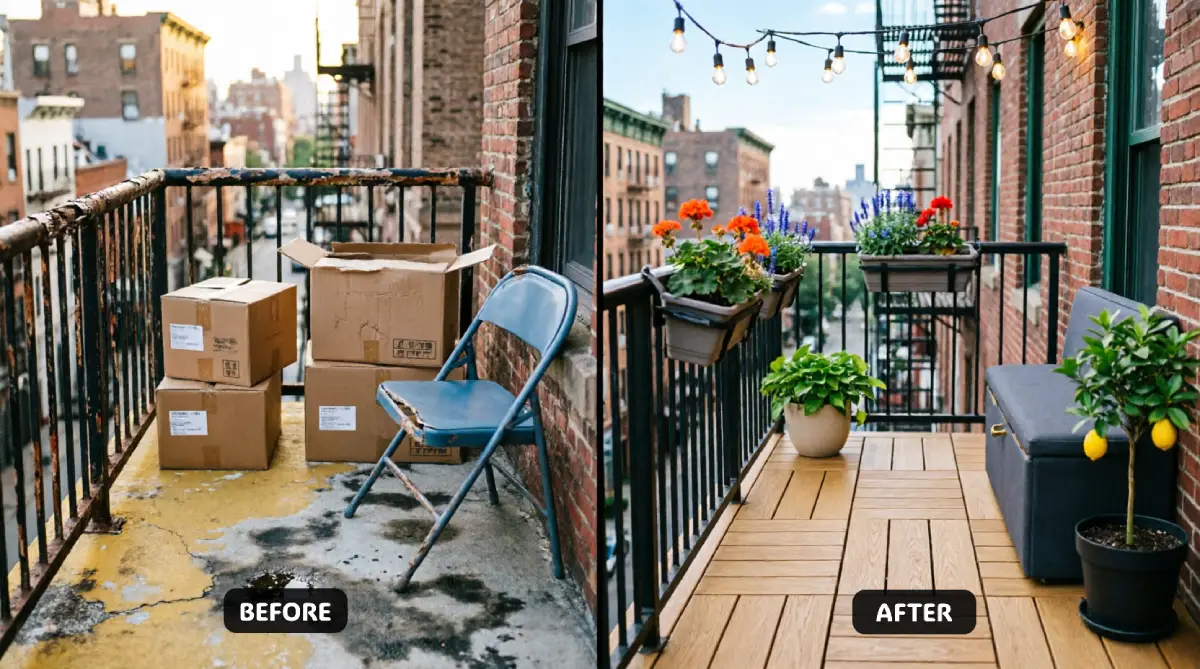
Here are more than five proven DIY approaches, each suited to the realities of New York balcony spaces and budgets.
1. Interlocking Deck Tiles for Instant Floor Transformation
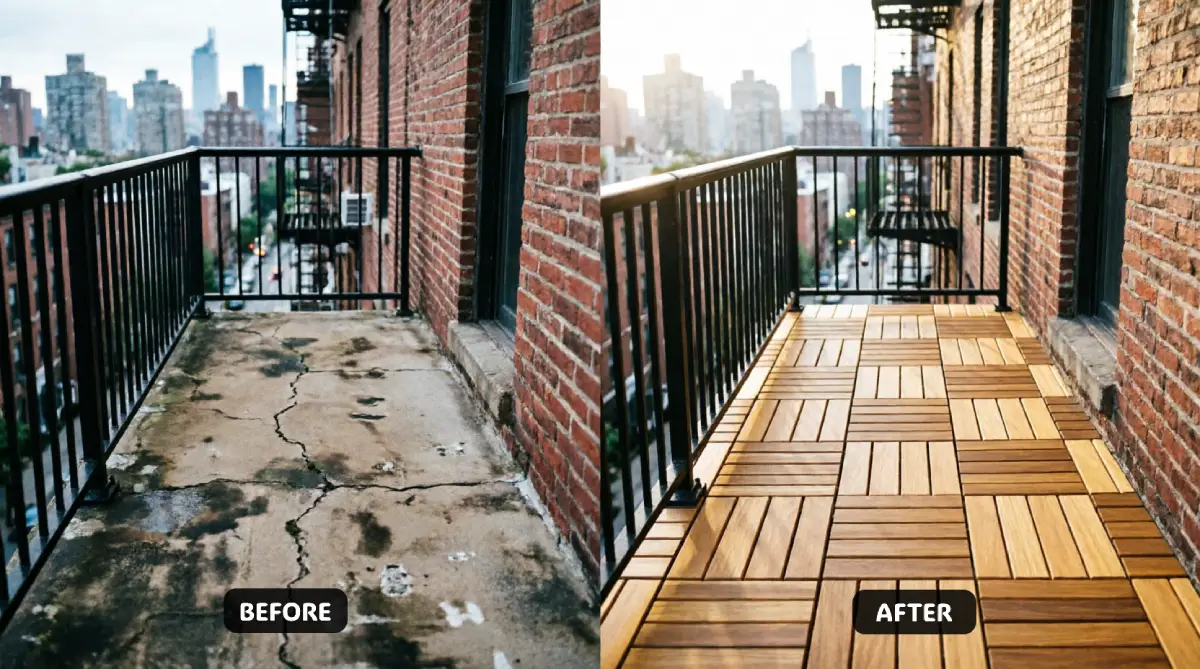
The single highest-impact change you can make is covering a weathered concrete floor with snap-together wood or composite deck tiles. No tools required, no adhesive, no permits. IKEA’s RUNNEN tiles run about $35 per 9-square-foot pack. For a 45-square-foot balcony, you’re looking at $175–$220 total. Acacia wood tiles from Home Depot cost slightly more but hold up better in NYC’s freeze-thaw cycles.
DIY difficulty: Easy. One afternoon.
Cost: $150–$250 for a standard NYC balcony
2. Vertical Garden Wall with PVC Pipe or Pallet Wood
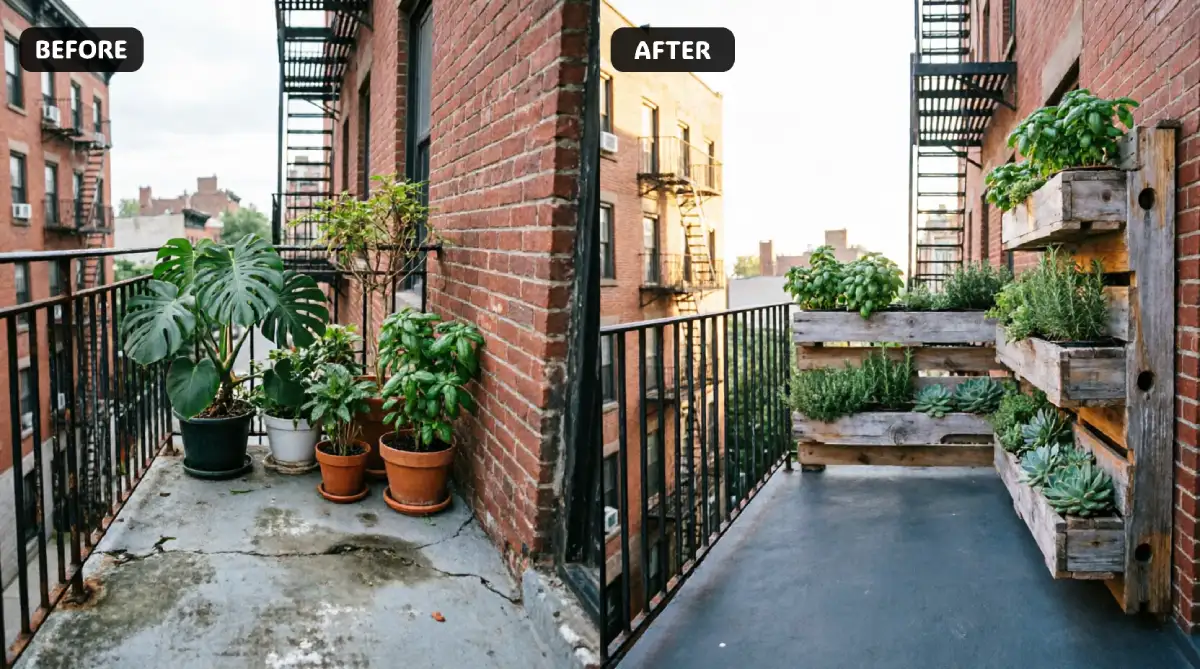
NYC balconies can’t afford to use floor space for large planters. Going vertical solves that. A basic vertical planter made from a salvaged pallet (often free on NYC street corners during move-out season, typically September) or a few sections of PVC pipe mounted to the interior railing face is a weekend project.
Drill drainage holes, fill with potting mix, and plant herbs, succulents, or compact ornamental grasses. The total cost with purchased pallet wood from Home Depot, screws, and three bags of potting soil runs $40–$80.
DIY difficulty: Moderate. Requires a drill and basic measuring.
Cost: $40–$80
3. String Lights and a Simple Shade Sail
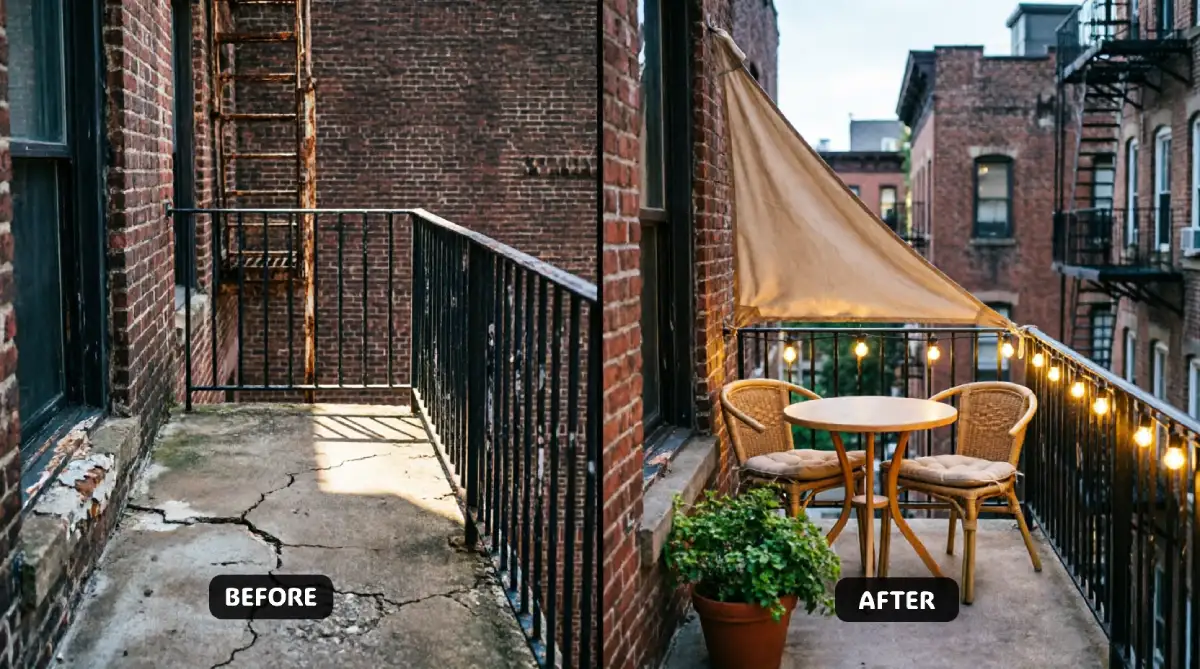
Lighting transforms a balcony from unused to inviting after dark. A strand of outdoor LED string lights (20 feet for $18–$35 on Amazon or at Target) clipped to railing posts or Command hooks creates immediate ambiance without any wiring or electrician cost.
For shade, a triangular shade sail ($25–$60) can be tied between railing corners and a hook on the exterior wall (check your building rules). For renters, freestanding umbrella stands ($40–$70) are a safer option since they leave no marks.
DIY difficulty: Easy.
Cost: $60–$110 for lights plus shade
4. Railing Planter Boxes
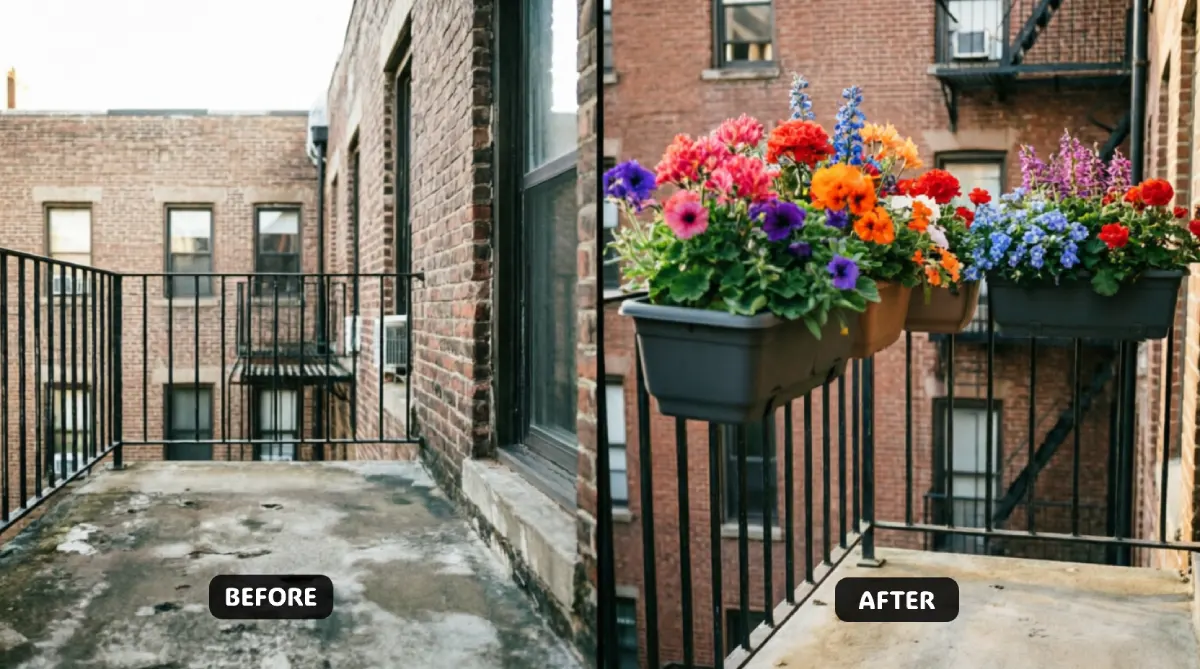
Railing planters hook onto balcony railings without drilling and are widely available at Home Depot and local NYC hardware stores in Brooklyn and Queens. At $12–$30 per planter box, you can line an entire railing edge with herbs or trailing plants for under $100. This adds green, privacy from adjacent units, and visual depth — all critical in NYC where balconies often look directly onto neighboring buildings.
DIY difficulty: Very easy.
Cost: $50–$100
5. DIY Outdoor Rug from Indoor-Outdoor Fabric
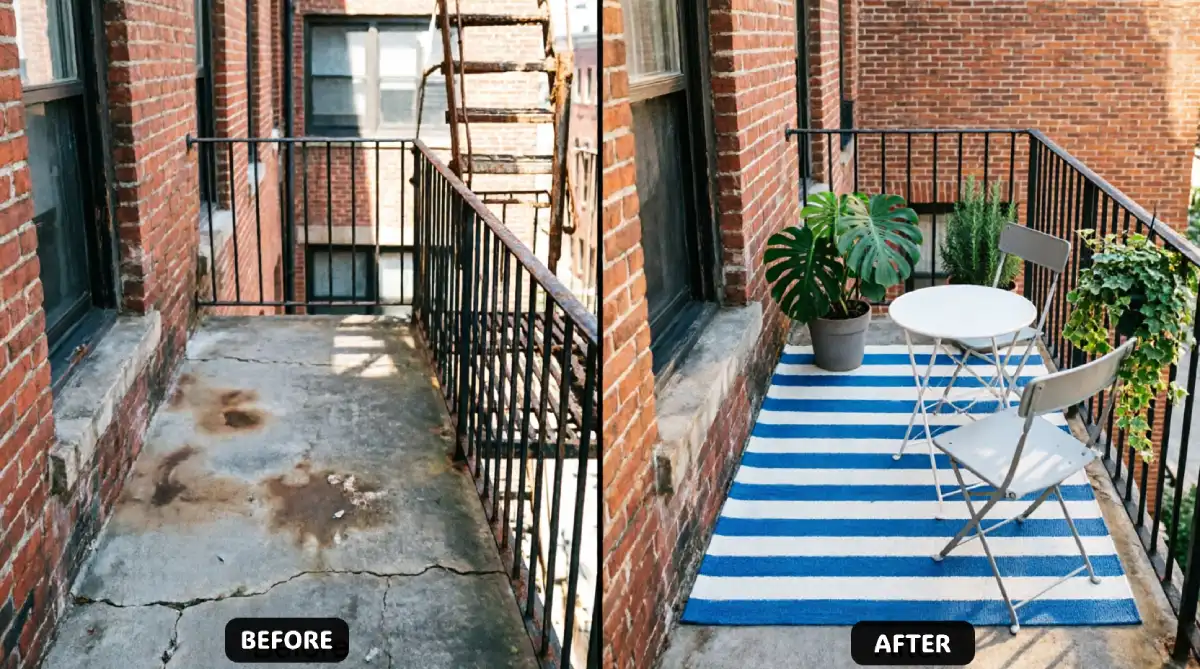
A flat-weave indoor-outdoor rug defines the seating zone and makes the space feel intentional. IKEA’s SOMMAR outdoor rug runs $25–$45 in compact sizes. Alternatively, you can cut and hem outdoor fabric from a fabric store on the Lower East Side or order remnants online for under $20.
DIY difficulty: Easy (cutting/hemming is optional).
Cost: $20–$50
6. Freestanding Privacy Screen from Bamboo or Lattice
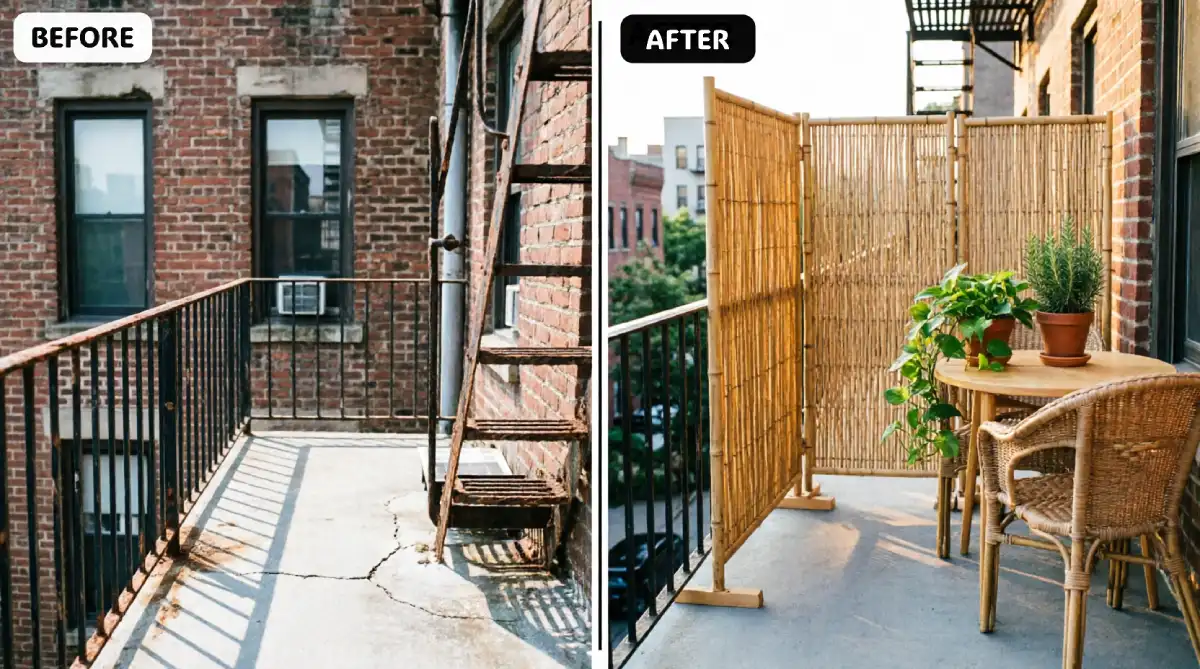
In NYC, balcony privacy is a real concern — you’re often within 10 feet of a neighbor’s window. A freestanding bamboo screen ($40–$80 at Home Depot) or a basic lattice panel in a weighted planter base creates a privacy barrier without any drilling. You can add climbing plants to the lattice over time.
DIY difficulty: Easy to moderate.
Cost: $50–$90
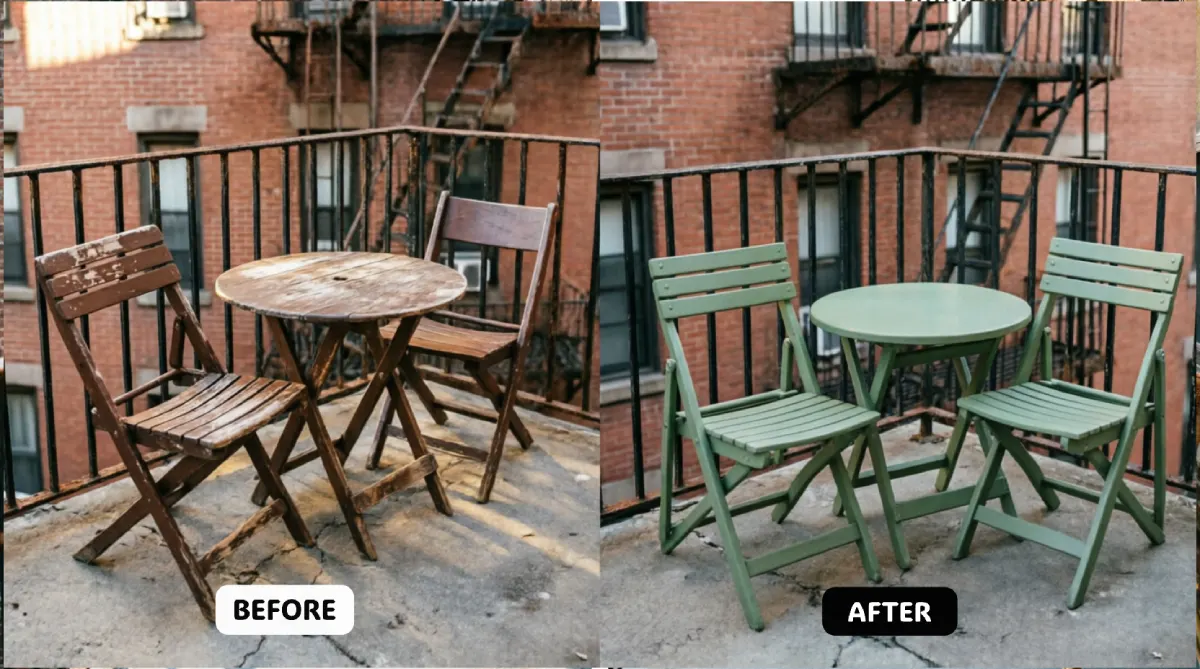
7. Upcycled Furniture with Outdoor Paint
Thrift stores in NYC — Goodwill on 17th Street, Housing Works locations throughout Manhattan and Brooklyn — regularly stock old wooden chairs and small tables. Strip and refinish with exterior-grade paint ($15–$25 per quart at Lowe’s), and you have custom outdoor furniture that costs a fraction of new.
DIY difficulty: Moderate. Requires sanding, priming, and painting over two weekends.
Cost: $30–$70, including thrift find and paint
H2: Cost Breakdown — Low, Mid, and High Budget NYC Balcony DIY
| Project Element | Low Budget | Mid Budget | High Budget |
|---|---|---|---|
| Floor covering (deck tiles) | $150 (composite, IKEA) | $220 (acacia wood, Home Depot) | $350 (teak or premium composite) |
| Seating | $0 (thrift + paint) | $80 (foldable bistro set) | $200 (weather-resistant wicker set) |
| Lighting | $18 (basic string lights) | $45 (solar + plug-in combo) | $90 (dimmable outdoor LED system) |
| Planters/greenery | $40 (railing boxes + soil) | $80 (vertical wall + pots) | $150 (mixed planters, premium soil, larger plants) |
| Privacy screen | $0 (bamboo sticks DIY) | $55 (freestanding bamboo screen) | $120 (custom lattice with planter base) |
| Shade | $0 (skip or use umbrella) | $55 (shade sail) | $130 (cantilever umbrella with base) |
| Rug | $20 (fabric remnant) | $35 (IKEA outdoor rug) | $80 (premium flat-weave outdoor rug) |
| Total Estimate | $228 | $570 | $1,120 |
NYC Cost Note: Labor in New York City runs 30–50% above the national average for any contractor work. These are all DIY projects, which is why keeping costs this low is realistic. If you hire out any element — even assembly — budget an additional $75–$150/hour for NYC handyman rates.
Common Mistakes NYC Balcony Owners Make
After watching dozens of New Yorkers attempt balcony upgrades, certain mistakes come up repeatedly.
- Skipping the building rules check. A resident in a Riverdale co-op installed a shade awning bolted into the exterior wall, spent $400 on the project, and was ordered by the board to remove it within 30 days. Always check house rules first. If anything is unclear, email your property manager in writing before purchasing.
- Choosing furniture that’s too large. A four-person dining set looks great online, but turns a 50-square-foot NYC balcony into an obstacle course. Measure your balcony floor dimensions before buying anything. For most NYC balconies, a two-seat bistro set (under 24 inches per chair) or one loveseat-style bench is the maximum comfortable seating.
- Ignoring wind. High-floor Manhattan or Long Island City balconies can see sustained winds that blow over tall planters, unweighted furniture, and lightweight privacy screens. Weigh your planters, choose low-profile furniture, and anchor anything that could become a hazard to people below.
- Using indoor materials outdoors. NYC’s climate swings from humid 90°F summers to single-digit winter nights. Untreated wood rots, non-exterior paint peels, and standard cushion foam turns to mold within one season. Always check that any material is rated for outdoor use before installing it on a balcony.
- Over-cluttering. The instinct in a small NYC apartment is to maximize every surface. On the balcony, restraint creates a better result. Three well-chosen elements — floor, seating, and plants — will feel more livable than ten items competing for space.
- Neglecting drainage. Adding potted plants without considering where water goes can cause water damage to the unit below. Use drip trays under all large pots and check that your balcony’s floor drain (if present) stays clear.
When to DIY vs. Hire a Contractor for NYC Balcony Work
For the projects in this guide, DIY is the right call nearly every time. But there are specific situations where a licensed contractor — and possibly a NYC DOB permit — are required.
Always DIY (no permit, no contractor needed):
- Installing interlocking deck tiles (removable, no adhesive)
- Adding freestanding planters, furniture, or screens
- Hanging string lights from existing railing hooks or Command strips
- Painting furniture or planter boxes
- Adding railing planter boxes that hook on without drilling
DIY with caution (check building rules first):
- Installing a shade sail with any wall attachment
- Mounting any bracket to the railing
- Adding a freestanding shade umbrella with a heavy-weighted base (confirm weight limits with your building’s structural guidelines if you’re above the ground floor)
Always hire a licensed contractor and check for permits:
- Any work that penetrates the exterior wall (holes, anchors, structural mounts)
- Installing a permanent awning or retractable shade system
- Any electrical work, including adding an exterior outlet
- Structural repairs to balcony railings, concrete, or drainage systems
For the last category, you’ll want a licensed NYC contractor — not a handyman — and may need to file with the NYC Department of Buildings. Building permit fees for minor balcony work in NYC typically run $200–$600 in filing costs before labor.
The good news: every project in this guide stays in the DIY column when done correctly, which is exactly why it’s possible to do a full balcony makeover for under $600.
Practical Tips for Your NYC Balcony DIY Project
- Shop the IKEA SOMMAR seasonal collection (released each spring) for the lowest-priced outdoor textiles and small furniture NYC residents can access at the Red Hook or Paramus locations.
- Check NYC street corners in late August and early September — move-out season produces a steady stream of usable outdoor furniture and wooden items left curbside.
- Use Command Outdoor strips (available at Target and Home Depot) for any lightweight hanging needs on balcony walls — they hold up to 7.5 lbs and leave no residue, critical for renters.
- Choose lightweight ceramic or fiberglass planters over terracotta — NYC balconies have weight limits, and fiberglass pots weigh 80% less than comparable clay while surviving freeze-thaw cycles.
- Seal deck tiles each fall with a wood sealer ($10–$15 per can at Home Depot) to extend lifespan through NYC winters.
- Buy a small outdoor storage box before you buy anything else — keeping cushions and tools dry protects every other investment you make.
- Stack and store furniture in winter if possible. NYC winters are harsh on outdoor furniture, and even “all-weather” ratings have limits after multiple seasons.
FAQs
How much does a DIY balcony makeover cost in New York City?
A basic NYC balcony DIY makeover — covering the floor, adding seating, lighting, and some plants — realistically costs $200–$600, depending on choices. Budget-conscious shoppers hitting IKEA and thrift stores can do it for under $250. A mid-range approach with better materials and a shade element runs $450–$600. These costs are for DIY only; any contractor involvement in NYC adds $75–$150 per hour in labor.
Can I DIY my balcony in a NYC co-op or condo?
Yes, for cosmetic and freestanding improvements. Interlocking deck tiles, freestanding furniture, railing, planter boxes, string lights on Command hooks, and freestanding privacy screens are all acceptable in most NYC co-ops without board approval. However, you should always review your proprietary lease and house rules before starting — some buildings restrict even decorative items that are visible from the street.
Do I need a permit for balcony work in New York City?
For cosmetic, removable, non-structural improvements, no permit is required. This covers the vast majority of DIY projects in this guide. However, if you’re drilling into exterior walls, installing permanent awnings, doing any electrical work, or making structural modifications, you’ll need to file with the NYC Department of Buildings. Permits for minor balcony work typically cost $200–$600 in filing fees, and you’ll need a licensed contractor for the actual work.
Is a balcony makeover worth it for NYC apartment owners?
Yes — especially if you’re an owner rather than a renter. In NYC, outdoor space adds meaningful value to a unit. Even a modest, well-maintained balcony makeover can contribute to resale or rental value. More practically, it converts an unusable concrete slab into an outdoor room, meaningful in a city where a 50-square-foot balcony represents a significant percentage of usable living space.
What plants survive on a New York City balcony?
For sun-exposed NYC balconies, lavender, sedum, ornamental grasses, and dwarf rosemary are excellent choices — all drought-tolerant and winter-hardy in USDA zone 7b (NYC). For shaded or partially shaded balconies, hostas, ferns, and impatiens work well. Avoid large tropical plants that won’t survive winters outdoors. Most herbs — basil, mint, thyme, chives — grow well through NYC summers and can be brought indoors in the fall.
Can renters do a balcony makeover in NYC?
Renters can do plenty. Stick to freestanding, removable items: interlocking deck tiles (no adhesive), freestanding furniture, railing planter boxes that hook without drilling, and Command hook-based lighting. Avoid any permanent installation, drilling, or structural change. At move-out, deck tiles pull up in minutes, planters pack up or are left behind, and Command strips come off without damage. A renter can achieve a full balcony transformation with zero impact on their security deposit.
Conclusion
A New York City balcony, even a small one, is worth taking seriously. The projects in this guide are realistic, affordable, and achievable on weekends without contractor help or high cost. Start with the floor — deck tiles make the biggest visual difference per dollar — and build from there with seating, greenery, and lighting.
The practical sequence matters: check your building rules first, measure your space carefully, and resist the instinct to fill every square foot. The best small balconies in NYC feel open and intentional, not crammed. With $200–$600 and a few weekends, you can have an outdoor space that actually functions as an extension of your apartment rather than a storage problem you’re ignoring.
