

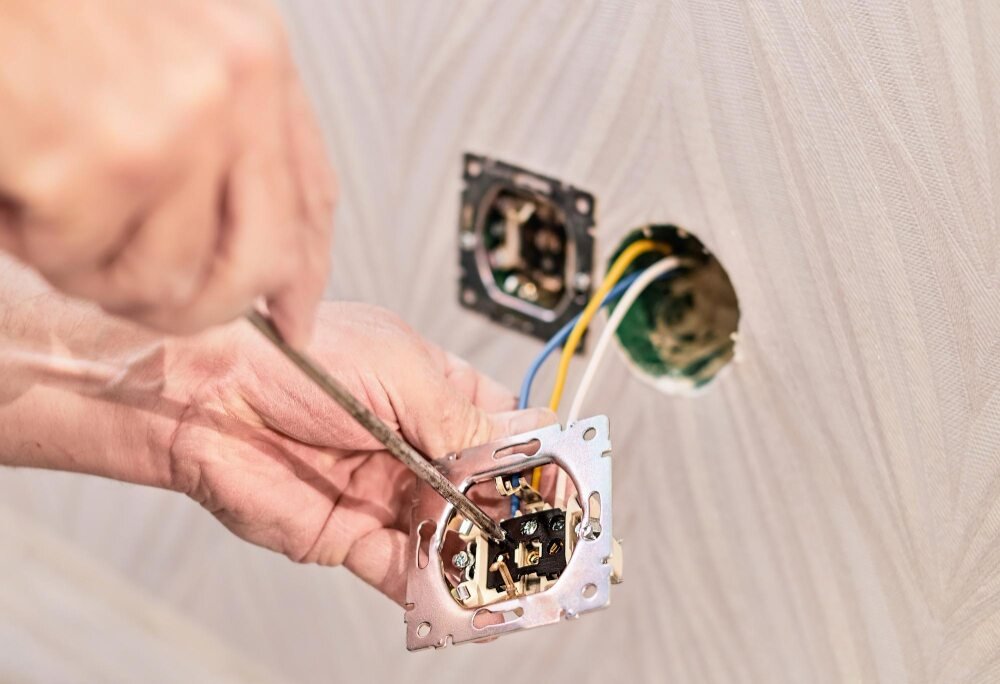
Are you tired of fumbling around for a lamp or light switch in the dark? Replace a light switch with an electrical outlet and enjoy the convenience of plugging in lamps or small appliances wherever you need them—if your switch box contains a neutral wire.
□ Turn off the power at the circuit breaker
□ Verify zero voltage with a non-contact voltage tester (e.g., Fluke 1AC-A1)
□ Label wires before disconnecting
□ Never work on live circuits
□ Confirm your installation follows National Electrical Code (NEC) standards
Getting Started: Turn Off the Power and Gather Your Tools
First, shut off the power at your circuit breaker—no exceptions. Once verified dead with a non-contact voltage tester, gather your tools to replace a light switch with an electrical outlet. Missing a tool mid-project creates unnecessary risk, so prepare thoroughly before starting your switch-to-outlet conversion.
Identifying the circuit breaker or fuse for the switch
Locate the circuit breaker panel or fuse box for your home’s electrical system. Identify the specific breaker or fuse controlling the switch you want to replace. Flip the breaker to the “off” position or remove the fuse to cut off the power supply to the switch.
Essential tools: screwdriver, wire stripper, voltage tester
You’ll need a flat-head and/or Phillips-head screwdriver to remove the switch cover plate and switch. Wire strippers are essential for neatly preparing the wire ends for connection. Use a voltage tester to double-check that the wires aren’t live before proceeding. Add wire nuts or Wago lever connectors for secure, code-compliant wire connections.
Preparing the workspace for safety
Clear the area around the switch to give yourself room to work. Ensure proper lighting and ventilation to avoid potential hazards. Gather all necessary tools and materials before starting the project. Most homes use NM-B cable (Romex)—verify your wiring matches standard color codes before proceeding.
Understanding Light Switch Wiring Basics
Ready to swap that light switch for a handy outlet? Let’s walk through the essentials—safely and step-by-step. While this project is beginner-friendly, matching each wire to its correct terminal is critical for both safety and function. Before you begin, confirm your switch box contains a neutral (white) wire; many switch loops lack this requirement for outlets.
The difference between single-pole and three-way switches
Single-pole switches control a light fixture from one location. Three-way switches control a light from two separate locations using traveler wires. The wiring differs, so identify the type of switch before proceeding.
How to use a voltage tester to check for electricity
Place the tester probes on the exposed wire ends or terminal screws. If the tester lights up or beeps, power is still present, and you should stop until it’s safely turned off.
Identifying wire colors and their purposes: black, white, and green or bare copper
Black wires are hot wires that carry the electrical current. White wires are neutral wires that complete the circuit. Green or bare copper wires are ground wires for safety. Always verify wire function with a tester—color alone isn’t foolproof in older installations.
Steps to Remove the Old Light Switch
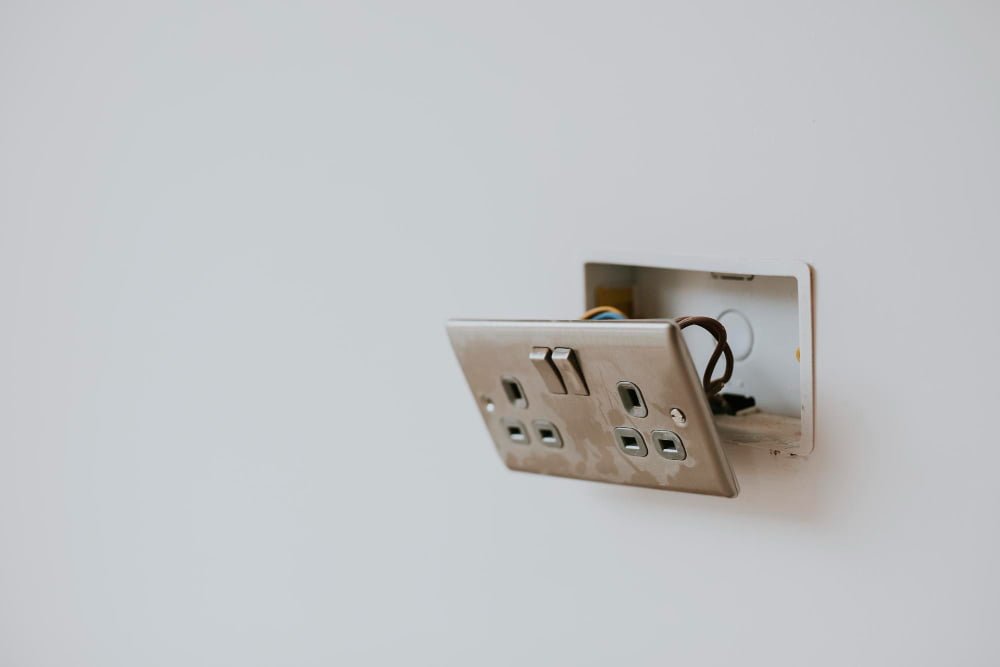
You’ve decided to replace a light switch with an electrical outlet. This project is manageable with preparation: shut off power at the breaker, verify with a tester, and label wires before disconnecting. No shortcuts on safety.
Once the power’s off, unscrew the old switch cover and examine the wiring. Carefully disconnect wires while noting their positions (a photo helps). You’re now ready to install your new outlet. Reconnect wires to matching terminals, secure everything, and test thoroughly.
Unscrewing and disconnecting the switch from the electrical box
Remove the switch cover plate by unscrewing it from the wall. Unscrew the switch from the electrical box, but don’t disconnect the wires just yet.
How to safely disconnect wires from the old switch
Use your voltage tester one more time to confirm there’s no power to the switch. Gently pull each wire end free from the terminal screws on the old switch. If wires or terminals are damaged, you may need to replace them.
Inspecting the old switch for wear or damage
Check the switch for any signs of scorching, melting, or other damage. If the switch is defective, carefully dispose of it and replace it with a new one.
How to Replace a Light Switch with an Electrical Outlet
You’re ready to install a receptacle in place of your light switch. First, confirm power is off. Then, remove the old device, disconnect the wires, and connect them to your new outlet. For outlets near sinks, garages, or outdoors, choose a GFCI receptacle for automatic shock protection.
Connecting wires to the correct terminal screws on the new outlet
The black wire connects to the brass screw terminals (hot) on the new outlet. The white wire connects to the silver screw terminals (neutral) on the new outlet. The green or bare copper wire connects to the green grounding screw. Use 14-gauge wire for 15-amp circuits; 12-gauge for 20-amp. Ensure your electrical box is at least 2.5 inches deep to accommodate the outlet.
Securing the new outlet in the electrical box and attaching the faceplate
Carefully tuck the connected wires into the electrical box. Secure the new outlet by tightening the mounting screws. Attach the outlet cover plate to complete the installation.
Double-checking connections and the installation before powering up
Ensure all wires are securely connected, and no stray strands are exposed. Check that the outlet is securely mounted and the cover plate is properly attached. Only then should you restore power to the circuit and test the new outlet.
Final Checks and Testing
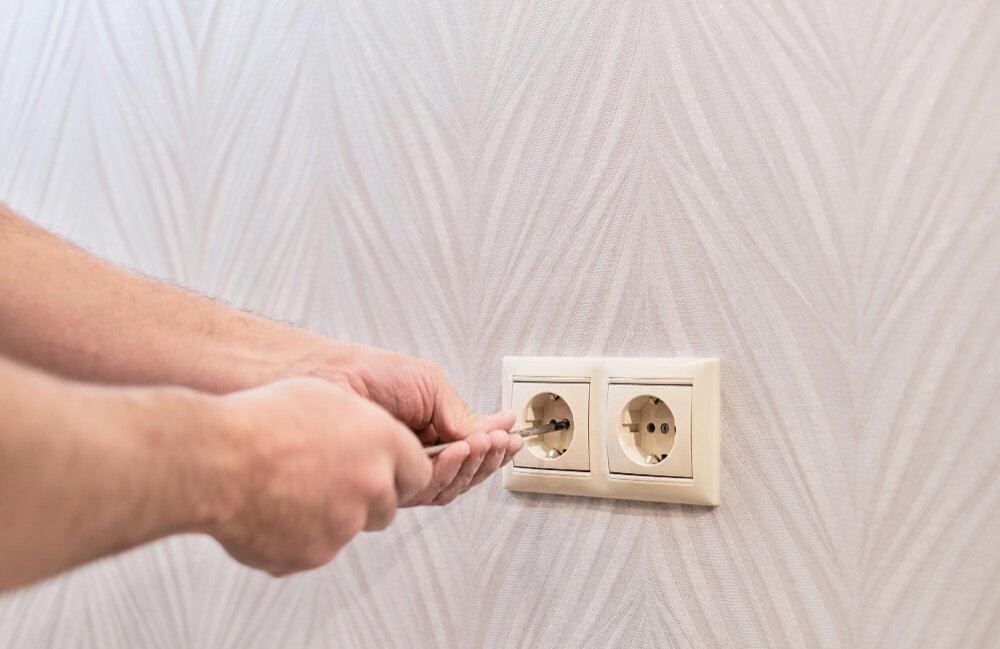
Before wrapping up, complete these final verification steps. This ensures your new outlet delivers reliable power—no guesswork, just safe, functional results. A thorough test prevents unexpected issues and confirms your work meets safety standards.
Ensuring all screws are tightened and wires are secure
Go back and double-check that all terminal screws are tightened. Gently tug each wire to make sure they’re securely connected to the outlet.
Turning the power back on and using a tester to check the outlet
Flip the circuit breaker back on or replace the fuse to restore power. Plug a lamp or small appliance into the new outlet to test it. Use a voltage tester or circuit tester to confirm the outlet is working properly.
Troubleshooting common issues after installation
If the outlet doesn’t work, double-check all wire connections and the power supply. If problems persist, shut off the power and call a professional electrician for assistance.
Pro Tips and Safety Precautions
Planning to replace a light switch with an outlet? First, ensure the receptacle is rated for your circuit’s amperage. Turn off the power before working on any electrical component. Standard switches use hot, neutral, and ground wires—attach the ground wire to the green screw. When in doubt, consult a licensed electrician.
Installing a new outlet? Loosen the screw with a screwdriver, wrap the wire end clockwise around the terminal screw, then tighten securely. Use needle-nose pliers for precision. Live (hot) wires connect to brass terminals. For safety, verify all connections before restoring power.
Once connections are secure and wires are neatly tucked, snap the cover plate on and restore power. Whether powering patio lights or lawn decorations, your new outlet is ready. Remember: two white (neutral) wires indicate a proper circuit—but if anything seems uncertain, professional guidance is always the safest choice.
When to call a professional electrician for help
Even if you’re comfortable with DIY projects, call an electrician if:
- You’re unsure about any part of the process
- The wiring is outdated or doesn’t match standard configurations
- You encounter any unexpected issues or hazards
The importance of proper insulation and avoiding common DIY mistakes
Use electrical tape or wire nuts to insulate all exposed wire ends. Avoid common mistakes like:
- Connecting the wrong wires
- Leaving exposed wire strands that could cause shorts
- Failing to properly ground the outlet
Regular maintenance tips for your new outlet
Periodically check the outlet for any signs of wear or damage. Never overload the outlet with too many high-wattage devices. Consider installing ground fault circuit interrupters (GFCIs) for added protection.
FAQs
Can you replace a light switch with an outlet?
Yes—if your switch box contains a neutral (white) wire. Many switch loops only have hot wires, making outlet installation unsafe or non-compliant with NEC standards. Use a voltage tester to confirm wire types before starting. When in doubt, consult an electrician.
How to replace a light outlet?
The process mirrors replacing a light switch: turn off power, verify with a tester, disconnect old wiring, and connect wires to matching terminals on the new outlet (black to brass, white to silver, ground to green). Always follow local electrical codes.
Can light switches be replaced?
Absolutely! Replacing light switches is a common DIY task, but it’s crucial to follow safety guidelines and turn off power before working. Use proper tools and verify wiring configurations before proceeding.
Can I replace electrical outlets myself?
Yes, many homeowners can replace outlets themselves with the right tools and precautions. However, if you’re uncomfortable, lack a neutral wire, or encounter unexpected wiring, it’s best to call a professional electrician.
