


The most effective roof maintenance tips for California homeowners start with two things: inspecting twice a year and acting before the rainy season hits. California’s climate — dry summers, UV-heavy sun, and concentrated winter rain — puts specific stress on roofing materials that most generic advice ignores. Schedule your first inspection in October before the rains arrive, and your second in April once they’re done.
If you’re in a wildfire-prone zone (most of Southern California and the foothills), add a third check after any nearby fire event. Stay on top of these basics, and you’ll avoid the most expensive roof repairs California homeowners face.
Understanding Roof Stress in California Homes
California doesn’t have one climate — it has six. What damages a roof in San Jose is different from what damages one in Fresno or San Diego. Most homeowners don’t account for this, which is why they end up with preventable damage.
Here’s what’s actually working against your roof depending on where you live:
- Coastal areas (LA, SF, San Diego): Salt air corrodes metal flashing and fasteners faster than inland homes. Moisture from the marine layer can work under shingles even without rain.
- Inland valleys (Fresno, Sacramento, Riverside): Extreme heat cycles — sometimes 110°F in summer — cause asphalt shingles to expand and contract, accelerating cracking and granule loss.
- Foothill and mountain zones: Fire ember exposure, pine needle accumulation in valleys and gutters, and occasional snow load are all real concerns.
- High desert (Palmdale, Lancaster, Victorville): UV intensity combined with temperature swings between day and night causes premature aging on shingles and sealants.
One pattern I see repeatedly: California homeowners treat their roof like a set-it-and-forget-it system because they don’t have harsh winters. That’s a mistake. The damage here is slower and quieter — UV degradation, dried-out flashing sealant, and cracked pipe boots — but by the time it’s visible inside the house, you’re looking at a $3,000–$8,000 repair minimum.
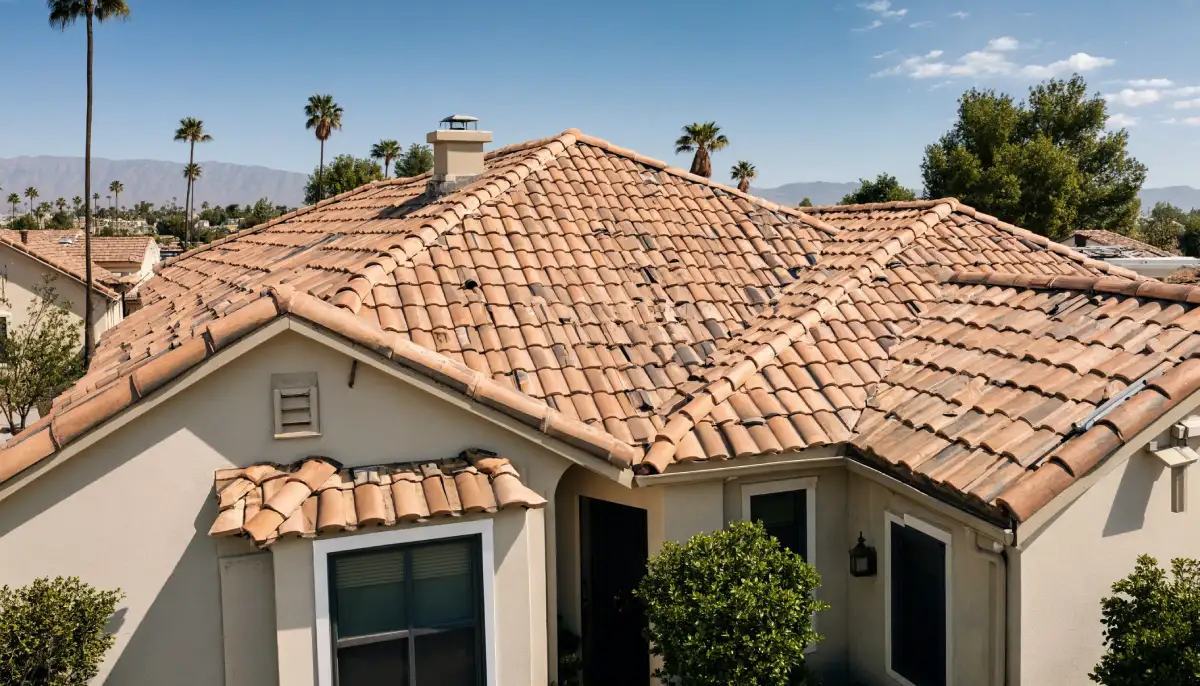
Seasonal Roof Maintenance Schedule for California
A calendar-based approach removes the guesswork and ensures nothing slips.
October (Pre-Rain Inspection)
This is your most important maintenance window. Before the first atmospheric river hits:
- Walk the perimeter and look for lifted, cracked, or missing shingles
- Check all roof penetrations — vents, skylights, chimney flashing, pipe boots
- Clear gutters and downspouts completely
- Inspect and reseal any exposed caulk around flashing (dried caulk is one of the top sources of interior leaks in California homes)
- Trim tree branches within 10 feet of the roofline — both for ember safety and debris prevention
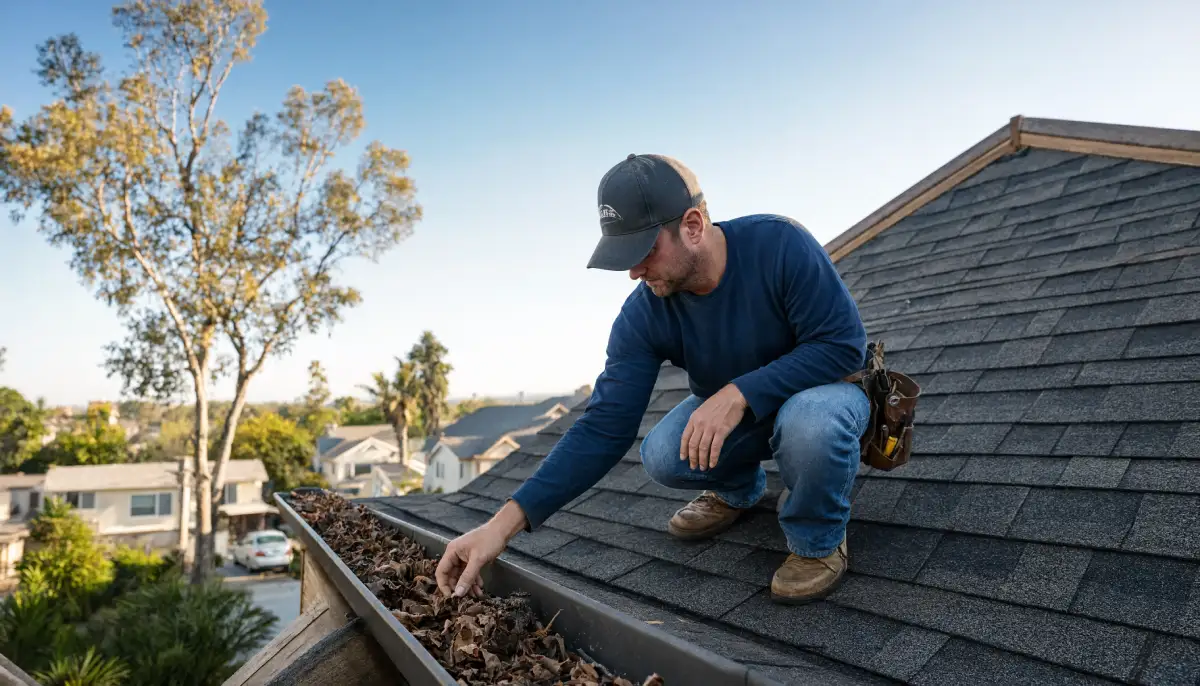
April (Post-Rain Assessment)
After the wet season, check for:
- Any granule accumulation in gutters (a sign your asphalt shingles are wearing)
- Moss or algae growth, particularly on north-facing slopes or shaded areas
- Water stains on attic sheathing or rafters (get in the attic with a flashlight)
- Any lifting or warped shingles caused by sustained moisture exposure
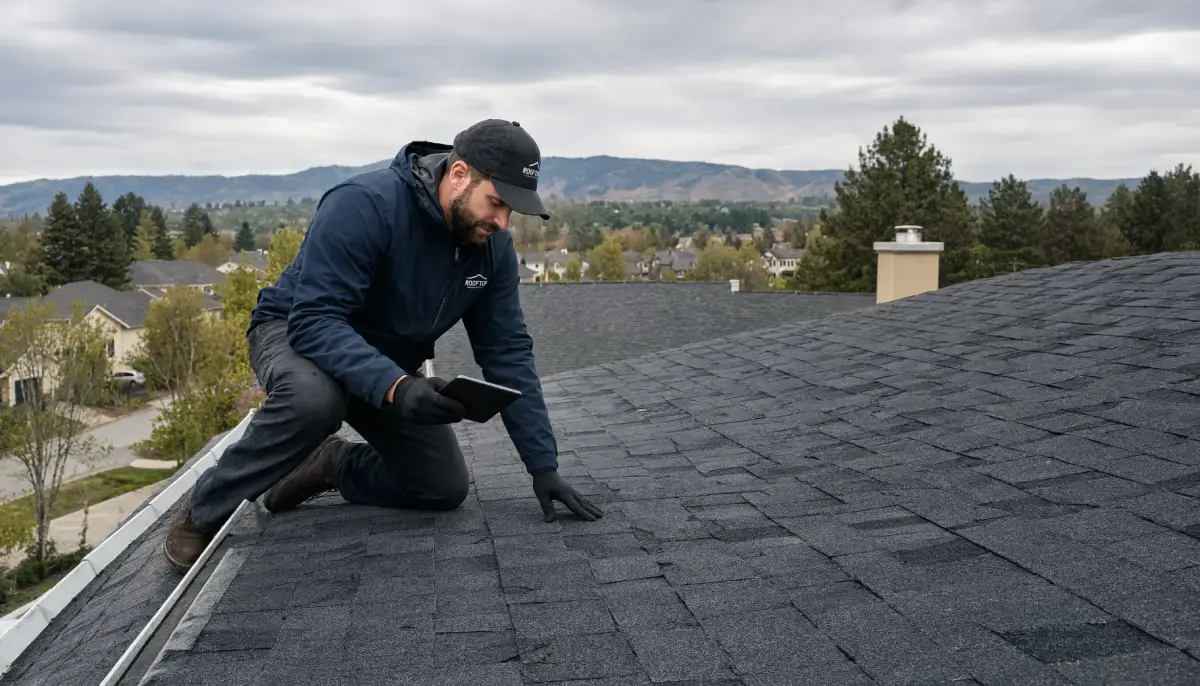
Summer (Wildfire and UV Check)
- Clear gutters, valleys, and flat sections of pine needles and debris
- If you’re in a WUI (Wildland-Urban Interface) zone, check that Class A fire-rated materials are intact — this matters for insurance coverage in California
- Inspect ridge cap shingles, which take the most UV exposure and wear out first
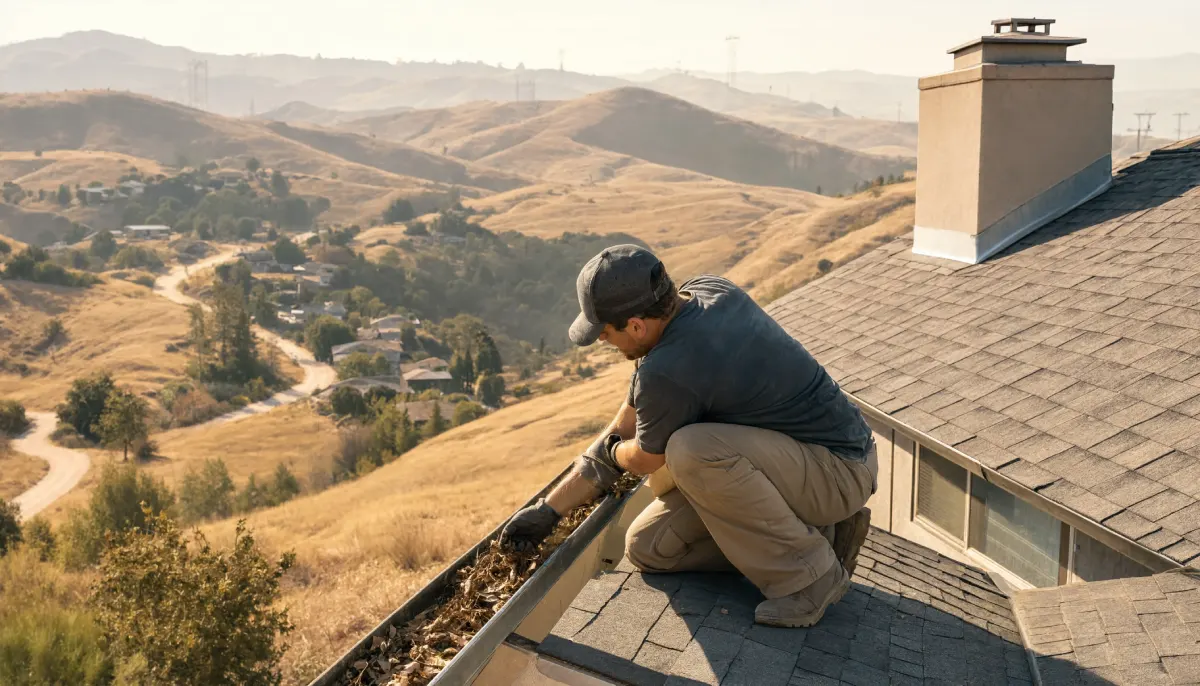
How to Prevent Roof Leaks: The High-Risk Areas
The most common sources of roof leaks in California homes are flashing failures, dried pipe boot seals, and clogged valleys — not shingle damage.
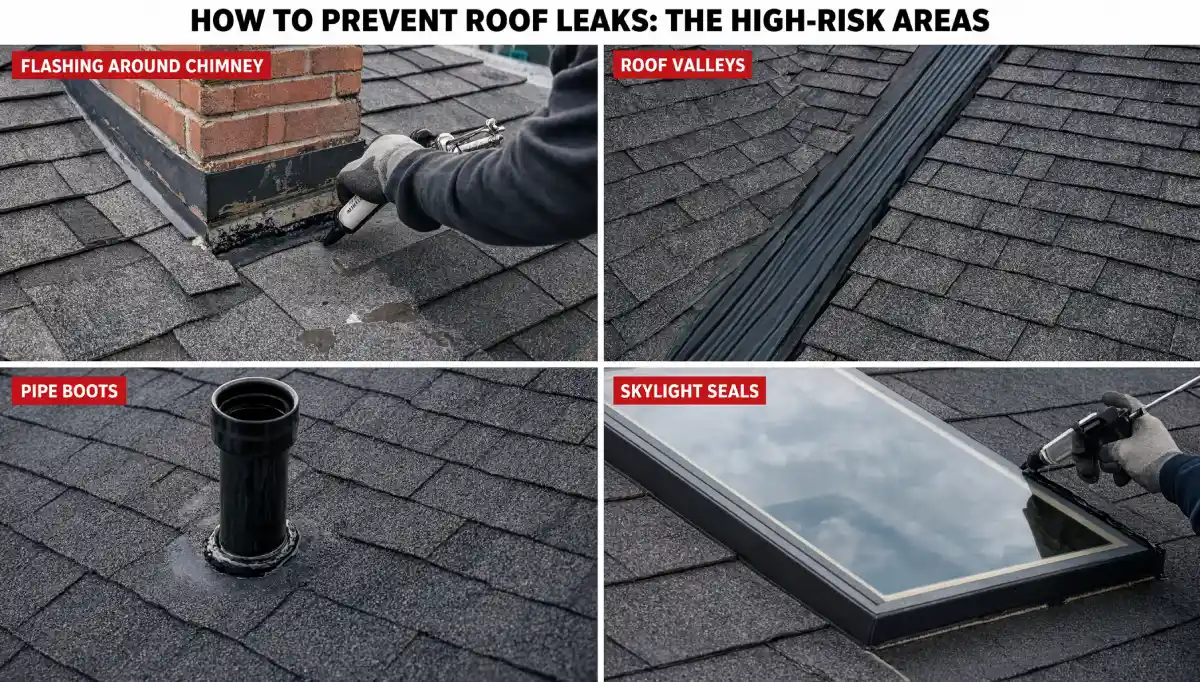
Shingles get all the attention, but in most leak cases I’ve seen on California homes, the shingles themselves are fine. The problem is almost always at a transition point.
Flashing
Metal flashing seals the joints where your roof meets walls, chimneys, dormers, and skylights. In California’s heat, the sealant over step flashing and counter-flashing dries out every 3–5 years. Check it annually. If it’s cracked, chalky, or pulling away, apply a compatible roofing sealant — or better, have a roofer re-bed and seal it properly.
Pipe Boots
Every plumbing vent that exits through your roof has a rubber boot around it. Rubber deteriorates under UV exposure. A cracked pipe boot is one of the fastest ways to get water in your attic without seeing any shingle damage. Replacement boots cost $10–$25 at Home Depot and take about 30 minutes to swap if you’re comfortable on a roof.
Roof Valleys
Valleys collect debris fast, especially under trees. Wet leaves sitting in a valley can hold moisture against the underlayment and eventually work water under the shingles. Keep valleys cleared after every windstorm.
Skylights
Older skylights — anything installed before 2005 — are worth a close look. The flashing kits on many older units weren’t designed for California’s temperature swings. If you see any lifting of the flashing apron or cracked sealant at the curb, treat it as a priority.
Roof Materials Comparison for California Homes
Choosing the right material matters, especially if you’re re-roofing or repairing a section. California’s Title 24 energy code and wildfire risk both influence what makes sense.
| Material | Initial Cost (per sq ft installed) | Lifespan | Fire Rating | Heat Performance | Best Use Case |
|---|---|---|---|---|---|
| Asphalt Shingles (30-yr architectural) | $4–$7 | 20–30 years | Class A (rated) | Moderate | Most CA homes are budget-friendly |
| Concrete Tile | $10–$18 | 40–50 years | Class A | Excellent | Southern CA, Mediterranean-style homes |
| Clay Tile | $15–$30 | 50+ years | Class A | Excellent | High-end homes, coastal and inland |
| Metal (standing seam) | $14–$22 | 40–70 years | Class A | Excellent with coating | WUI zones, modern homes |
| Cool Roof Coating | $1–$3 (over existing) | 5–15 years | N/A | Best for energy savings | Flat or low-slope sections |
California-specific note: If you live in a designated fire hazard severity zone (FHSZ), your roofing material must meet Class A fire resistance per California Building Code Section R902. Asphalt shingles qualify only if they’re rated Class A — not all are. Verify the label before purchasing.
In inland California, where summer temps push above 100°F regularly, concrete and clay tile outperform asphalt significantly for longevity. In coastal areas, the cost-per-year math often still favors good architectural shingles over tile, especially on older homes with rafters not sized for tile weight.
Cost Breakdown for Roof Maintenance and Repairs in California
| Service | Low Budget | Mid Budget | High Budget |
|---|---|---|---|
| Annual inspection (pro) | $150–$250 | $250–$400 | $400+ (thermal imaging included) |
| Gutter cleaning | $100–$200 | $200–$350 | $350–$500 (large home, multi-story) |
| Flashing repair/reseal | $200–$500 | $500–$1,200 | $1,200–$3,000 (full re-flash) |
| Pipe boot replacement | $75–$150 each | $150–$300 each | $300+ (multiple, steep pitch) |
| Shingle repair (small section) | $300–$700 | $700–$1,500 | $1,500–$3,500 |
| Full roof replacement | $12,000–$18,000 | $18,000–$30,000 | $30,000–$60,000+ (tile, large home) |
| Moss/algae treatment | $300–$600 | $600–$1,000 | $1,000–$2,000 (severe coverage) |
California cost notes:
- Labor costs in the Bay Area and Los Angeles run 20–35% higher than the national average. A job quoted at $8,000 in Phoenix may cost $11,000–$12,000 in San Jose.
- California requires roofing contractors to hold a C-39 license. Always verify at the CSLB (Contractors State License Board) website before hiring — unlicensed work voids most homeowner’s insurance claims.
- Some California counties require a permit for full replacements even if you’re using the same material. Los Angeles, San Francisco, and San Diego all have permit requirements for roof replacements. Budget $200–$600 for permits.
- If you’re in an HOA, check the CC&Rs before changing roofing material or color — many California HOAs restrict material and color choices.
DIY vs. Hiring a Licensed Roofer in California
For most California homeowners, maintenance tasks are DIY-friendly, but repairs should go to a licensed C-39 contractor.
Here’s a clear breakdown:
DIY-Appropriate Tasks
- Gutter cleaning and downspout flushing
- Clearing debris from valleys and flat sections
- Replacing a single cracked pipe boot (single-story, low pitch)
- Applying roofing sealant to small areas of dried flashing caulk
- Attic inspection for moisture or daylight gaps
- Installing gutter guards
Tools you’ll need: Extension ladder, non-slip roof shoes, safety harness (required for pitches above 4:12), roofing sealant (Geocel 2300 or similar), a stiff brush, and a garden hose.
Leave It to a Licensed Pro
- Any structural repair — decking, rafters, fascia
- Flashing replacement (step, counter, chimney)
- Skylight re-flashing
- Full or partial re-roofing
- Any work in a WUI fire zone where materials must meet Class A requirements
- Anything on a steep pitch (above 6:12) — California’s worker safety rules apply to homeowners doing work above certain heights as well
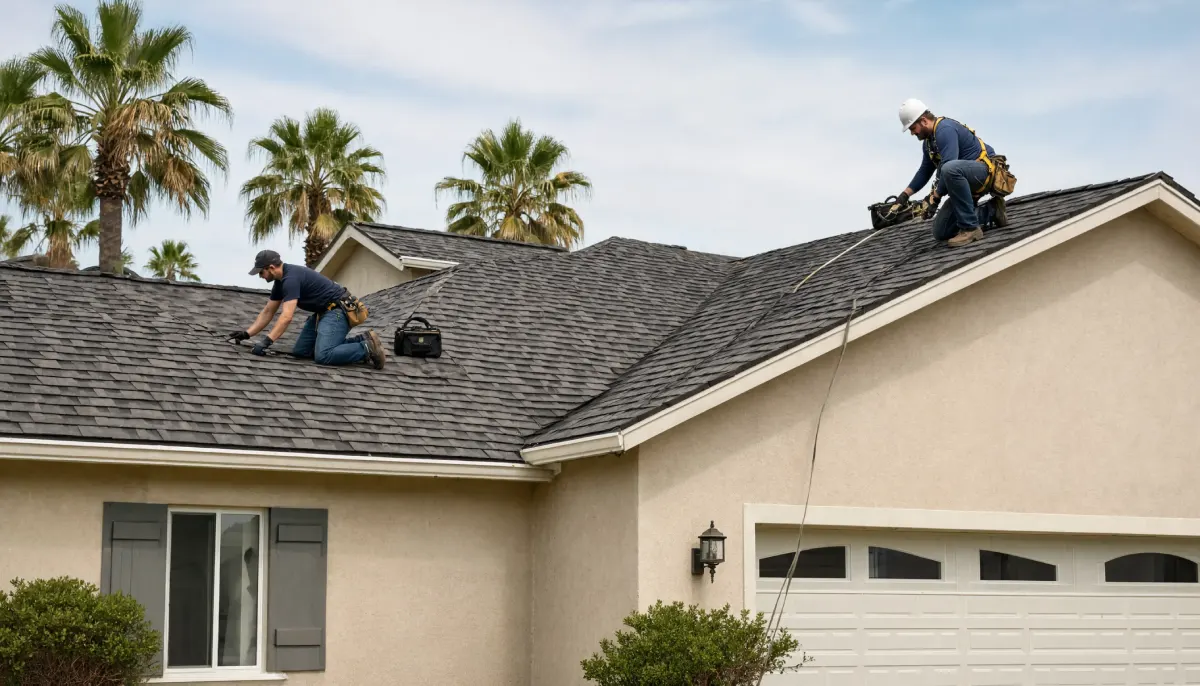
One thing that trips up California homeowners: roofing work on a home in an FHSZ (Fire Hazard Severity Zone) sometimes triggers a full inspection by the local fire authority or building department. If you’re doing more than minor repairs, call your local building department first.
Common Mistakes California Homeowners Make
- Waiting until they see a ceiling stain. By the time water is dripping inside, there’s usually 6–18 months of slow infiltration already in the attic sheathing. Attic checks should be routine.
- Ignoring granule loss. Granules in the gutter after every rainstorm aren’t normal — they signal your shingles are past mid-life and need monitoring.
- Using the wrong sealant. Silicone caulk from a hardware store is not the same as roofing sealant. Using it on flashing can cause adhesion failures within one season.
- Letting moss go untreated. Moss holds moisture against shingles and accelerates deterioration. In Northern California and coastal areas where moss grows fast, treat it with zinc sulfate or a dedicated roof cleaner once a year.
- Hiring unlicensed labor for “small jobs.” In California, any roofing repair over $500 in labor and materials requires a licensed contractor. Beyond legality, unlicensed work can invalidate your homeowner’s insurance claim if a leak returns.
- Not documenting maintenance. If you ever file an insurance claim for storm damage, insurers look for evidence of neglect. Keep a simple log of every inspection, cleaning, and repair with dates.
Practical Roof Maintenance Tips
- Buy zinc strips from Home Depot or Lowe’s and install them along the ridge — rain washes zinc down the slope and inhibits moss and algae growth for years
- Use Flex Seal or a purpose-made roof sealant for pipe boots and small flashing gaps, not standard caulk
- After any windstorm, check the roof from the ground with binoculars before getting on a ladder — you can spot lifted shingles and debris accumulation without the safety risk
- Install leaf guard or micro-mesh gutter covers if you have mature trees nearby — they pay for themselves fast in Northern California and foothill areas
- Keep your attic ventilated properly; inadequate attic airflow in California summers raises deck temperatures and shortens shingle life by 5–10 years
- If you’re in a WUI zone, use a garden hose to clear pine needles from gutters and valleys after every Santa Ana wind event — those are your highest fire-risk windows
- Take date-stamped photos of your roof condition every year — it takes 10 minutes and is invaluable for insurance claims or when selling the house
FAQs
How much does roof maintenance cost in California?
Professional annual inspections run $150–$400, depending on the region and roof size. Gutter cleaning adds $100–$350. Budget $500–$800 per year for routine professional maintenance on an average California home. DIY maintenance costs significantly less — mostly your time and $50–$150 in supplies.
Can I DIY roof maintenance on my California home?
Yes, for basic tasks: gutter cleaning, debris clearing, attic checks, and minor sealant touch-ups. Anything involving structural repair, flashing replacement, or work on steep pitches should go to a licensed C-39 contractor. California’s pitch-and-fall safety rules apply to homeowners, too, not just contractors.
Do I need a permit for roof work in California?
Permits are required for full replacements in most California counties, including LA, San Diego, and San Francisco. Minor repairs — replacing a few shingles, resealing flashing — typically don’t require permits, but always verify with your local building department. Work in fire hazard severity zones may trigger additional inspections.
Is roof maintenance worth it for California homeowners?
Absolutely. The average cost of a full roof replacement in California runs $18,000–$45,000, depending on material and home size. Spending $500–$1,000 a year on maintenance can add 5–10 years to your roof’s life. The math is clear.
How often should I inspect my roof in California?
Twice a year minimum — October before the rainy season and April after it. Add an inspection after any major windstorm, Santa Ana event, or nearby wildfire. Homeowners in coastal areas with salt air exposure should also check metal components (flashing, fasteners) annually.
What roofing materials are best for California wildfire zones?
Class A fire-rated materials are required by the California Building Code in FHSZ zones. Concrete tile, clay tile, and metal roofing all qualify. Some architectural asphalt shingles are Class A rated — verify the product label. Wood shakes are prohibited in most California fire zones.
How do I know if my roof is leaking before water shows inside?
Go into your attic after a heavy rainstorm with a flashlight. Look for dark staining on the sheathing, wet insulation, or daylight gaps at the eaves or ridge. Catching it at this stage — before water penetrates the ceiling — saves thousands in drywall and insulation repair.
What causes most roof leaks in California homes?
Failed flashing sealant, cracked pipe boots, and clogged roof valleys are responsible for the majority of leaks in California residential roofing. Shingle damage is less common. Focus your inspections on these transition points first.
How does California’s heat affect asphalt shingles?
Sustained high heat — above 90°F for extended periods — accelerates granule loss and causes shingles to become brittle faster than in cooler climates. Asphalt shingles in inland California valleys often reach end-of-life in 18–22 years rather than the 25–30 years advertised. Proper attic ventilation slows this significantly.
Does homeowner’s insurance in California cover roof repairs?
It depends. Most California homeowner’s policies cover sudden damage — storm, falling tree, fire. They do not cover damage resulting from deferred maintenance or gradual wear. Insurers have tightened this in recent years, particularly in wildfire-risk areas. Document your maintenance history and keep your receipts.
What is a cool roof, and do I need one in California?
A cool roof uses reflective materials or coatings to reduce heat absorption. California’s Title 24 energy code mandates cool roof products for new construction and full re-roofs in many climate zones, particularly in hot inland areas. If you’re replacing your roof in the Central Valley or Inland Empire, confirm your contractor is using Title 24-compliant materials.
When should I replace my roof instead of repairing it?
If more than 25–30% of the surface needs work, the decking shows moisture damage, or the shingles are over 20 years old and showing widespread granule loss or curling, replacement is usually more cost-effective than continued repair. A licensed roofer can give you an honest assessment — get two or three quotes before deciding.
Conclusion
California roofing comes down to timing and specificity. The homeowners who avoid expensive repairs are the ones who inspect in October, clear gutters before the first rain, and know which parts of their roof are highest-risk — the flashing, the pipe boots, the valleys. They also know when to stop DIYing and call a licensed C-39 contractor.
The climate here is deceptive. No harsh winters means many homeowners assume the roof is fine. But UV degradation, wildfire exposure, and concentrated seasonal rain do real damage when ignored. Your roof doesn’t announce problems until they’re already expensive. A few hours of inspection and a few hundred dollars in annual maintenance is a straightforward way to protect what’s typically a $20,000–$50,000 replacement cost down the road. Schedule that October walkthrough now — don’t wait until you’re mopping up a ceiling.
