


,Maria bought her 1980s ranch home in Fresno, thinking the living room just needed a fresh coat of paint. Six months later, she’d replaced the popcorn ceiling, swapped the carpet for engineered hardwood, and opened up the wall to the kitchen — total spend: $28,000. What she didn’t expect was how many California-specific decisions slowed her down: Title 24 lighting compliance, a load-bearing wall that required a structural engineer, and a permit process that added three weeks to the timeline.
If you’re planning a living room remodeling in California, that story matters. This state has its own rules — seismic codes, energy mandates, wildfire zone restrictions — and ignoring them doesn’t just cost money, it can kill a sale or fail an inspection.
This guide covers practical living room remodeling ideas built specifically for California homeowners: what works, what it costs in real dollar figures, what requires a permit, and where people make avoidable mistakes.
Understanding Living Room Remodeling for California Homes
California living rooms come with a specific set of constraints that homeowners in other states don’t face. Before you pick a paint color or a flooring type, you need to understand what’s working against you — and what’s working for you.
- Title 24 Energy Compliance California’s Title 24 building code applies to any permitted renovation. If you’re adding or replacing lighting, you’re required to use high-efficacy fixtures (typically LED). This isn’t optional — inspectors check it. Budget for this from the start rather than retrofitting at the end.
- Seismic Considerations. In most of coastal and central California, you’re in a seismic zone. This affects structural changes. Opening a wall between your living room and kitchen requires a structural engineer’s sign-off, not just a contractor’s opinion. That adds $500–$1,500 to your project cost but protects you legally and physically.
- Wildfire Zones. If your home is in a High Fire Hazard Severity Zone (HFHSZ) — which covers large parts of the Bay Area foothills, Inland Empire, and Northern California — your renovation materials may need to meet fire-resistance standards. This applies primarily to exterior work, but if you’re adding windows or changing your home’s envelope, check with your local fire authority.
- Climate Variety California isn’t one climate. San Diego living rooms need different solutions than those in Sacramento. Coastal areas experience marine-layer humidity and salt air. The Central Valley gets extreme heat (110°F+ summers). Mountain communities deal with cold winters and snow loads. Your remodel decisions — insulation, flooring, HVAC tie-ins — should match your specific region, not a generic California template.
Best Living Room Remodeling Ideas for California Homes
1. Open Up the Floor Plan
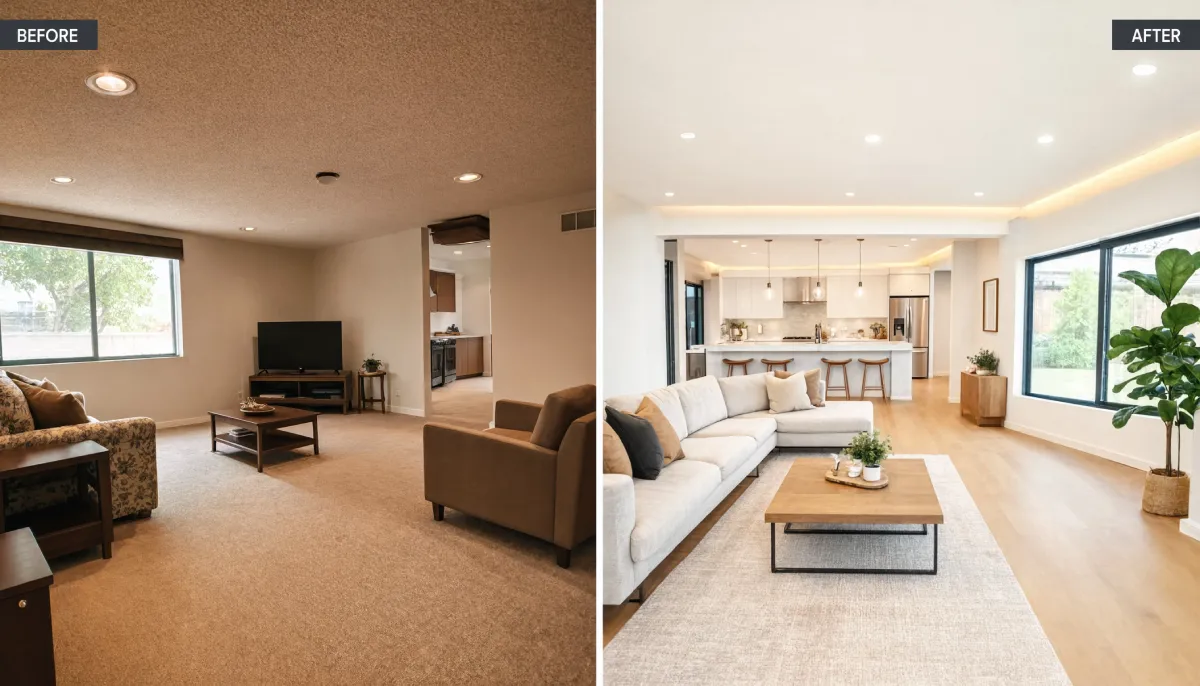
The most requested living room project in California right now is removing or partially opening the wall between the living room and the kitchen or dining area. This creates the open-concept layout that California buyers expect.
What it costs: A non-load-bearing wall removal runs $1,200–$3,500 in most California markets. A load-bearing wall removal — which requires a structural engineer, a beam, and temporary support — runs $8,000–$18,000 in the Bay Area and Southern California. Fresno and Bakersfield tend to come in 20–30% lower.
What to know: You will need a permit for any structural wall removal. Pull it. Unpermitted structural work is a red flag in California real estate disclosures and can create problems at resale.
2. Replace Carpet with Hard Flooring
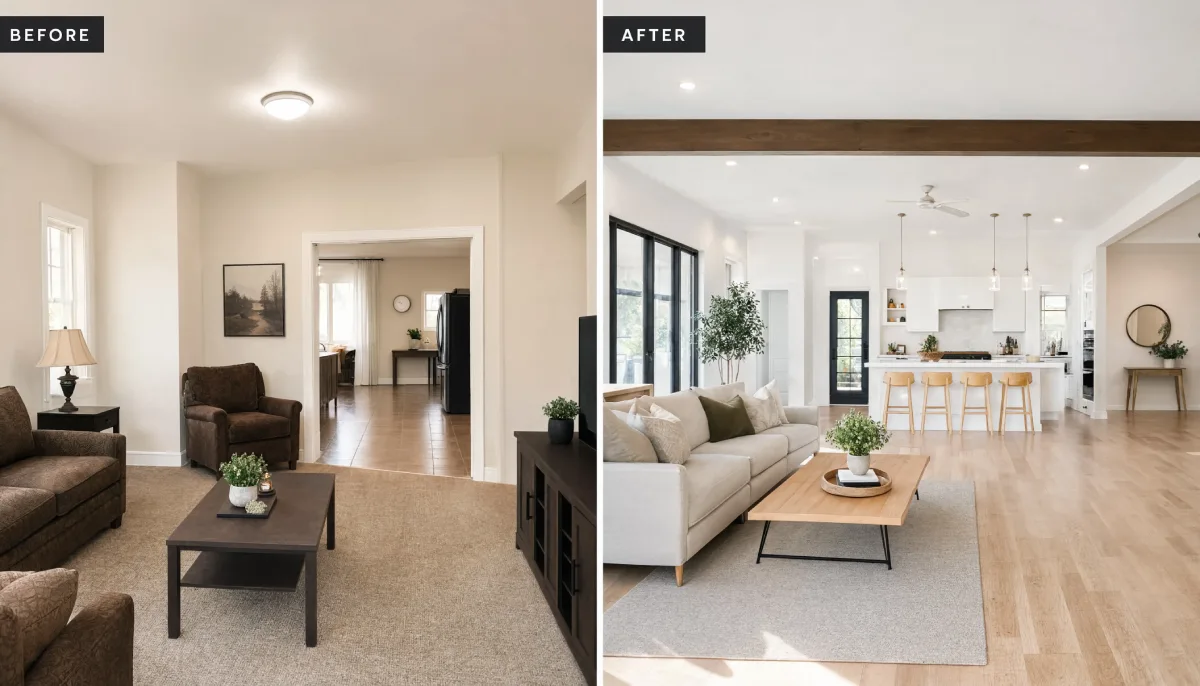
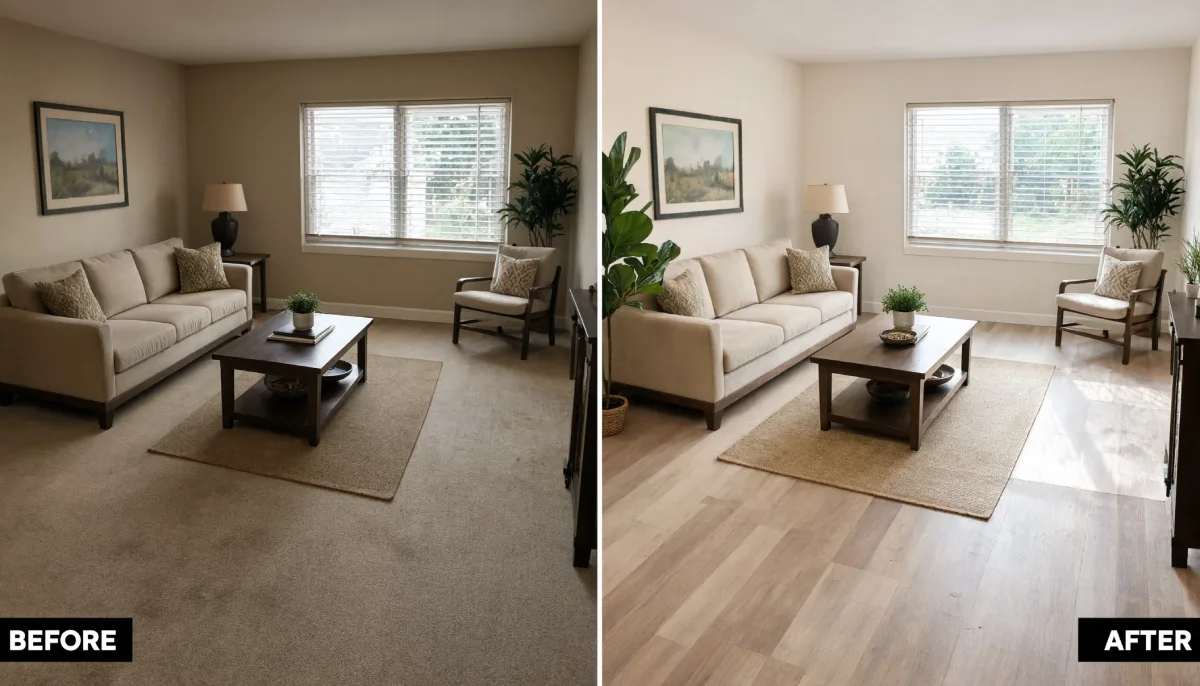
Carpet in a California living room is increasingly a liability. It traps allergens in high-pollen areas like the Central Valley, absorbs moisture in coastal homes, and reduces resale appeal. Engineered hardwood and luxury vinyl plank (LVP) are the two dominant replacements.
- Engineered hardwood: $8–$14 per square foot installed in California. Better stability than solid wood in homes with temperature swings.
- LVP: $4–$9 per square foot installed. Fully waterproof, handles coastal humidity well, looks nearly identical to hardwood at a distance.
- Concrete polishing: A popular choice in modern California homes — $3–$8 per square foot and excellent for passive cooling in hot climates.
Permit required? No, for flooring replacement. But if you’re adding radiant heat underneath, yes.
3. Add or Enlarge Windows for Natural Light
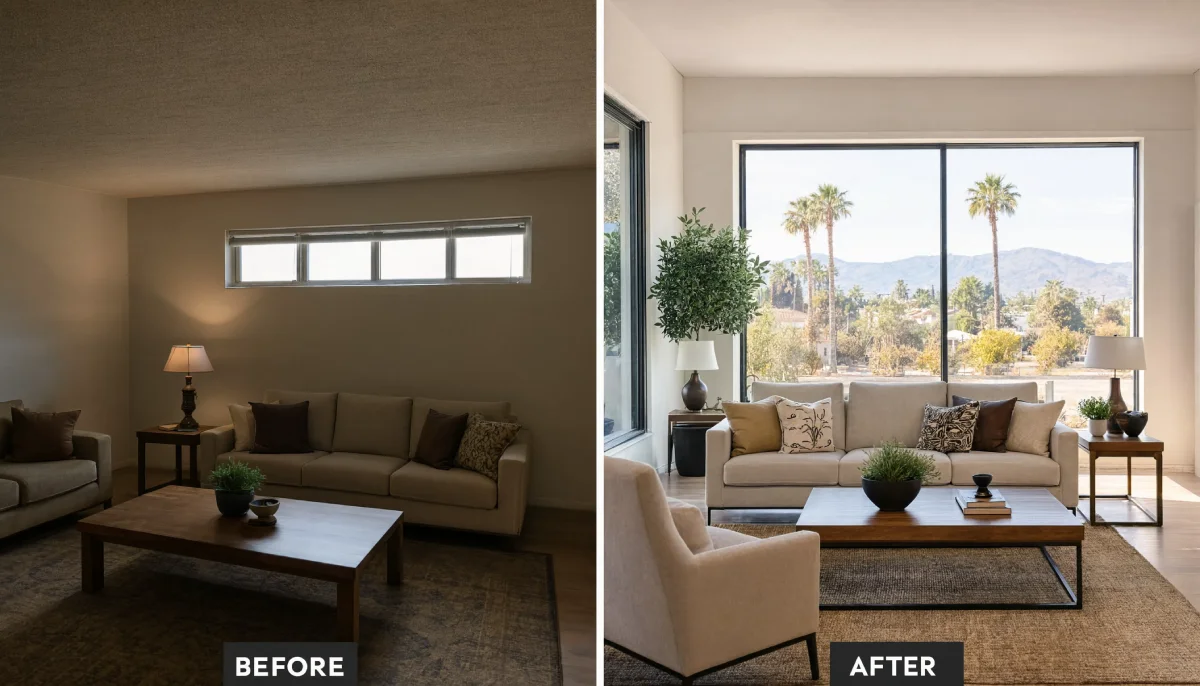
California has the light — use it. Many 1960s–1990s California homes were built with smaller windows than current design standards favor. Enlarging existing windows or adding a picture window on a south or west-facing wall is one of the highest-ROI projects in this state.
Cost: $1,800–$6,500 per window, depending on size, framing changes, and whether you’re touching a load-bearing element. In wildfire zones, you may be required to install dual-pane, tempered, or fire-rated glass, which adds cost but is non-negotiable.
Always pull a permit for window enlargement. California cities take this seriously.
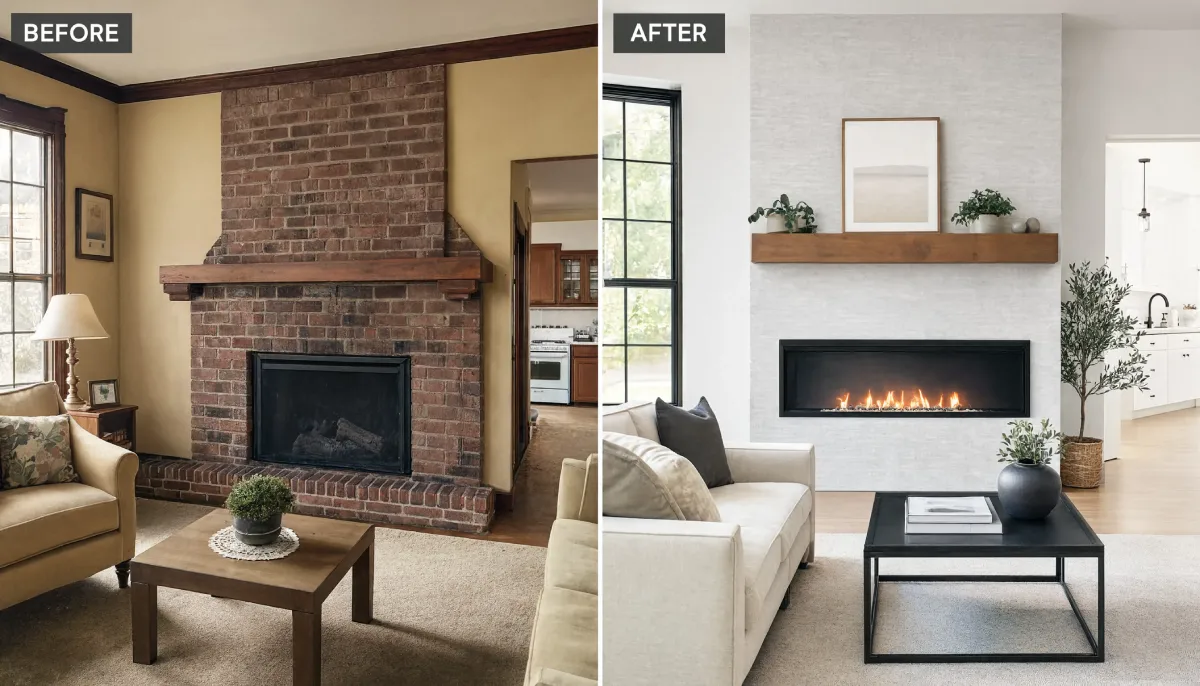
4. Install a Statement Fireplace or Update an Existing One
In Southern California and Bay Area homes, a fireplace is often the living room’s focal point. But older wood-burning fireplaces have problems: they’re illegal to use on Spare the Air days (which AQMD enforces in most of Southern California and the Bay Area), they lose heat, and they look dated.
Options:
- Gas insert conversion: $2,500–$5,000 installed. Works on Spare the Air days, much more efficiently.
- Electric fireplace insert: $800–$2,500 installed. No permit is usually required, zero emissions.
- Updating the surround: Replacing tile, adding a new mantle, or resurfacing with plaster or stone — $1,500–$8,000 depending on materials.
In mountain communities (Big Bear, Tahoe area), wood-burning stoves and fireplaces are still common and practical. Rules vary by air district — check with your local AQMD.
5. Recessed Lighting Upgrade (Title 24 Compliant)
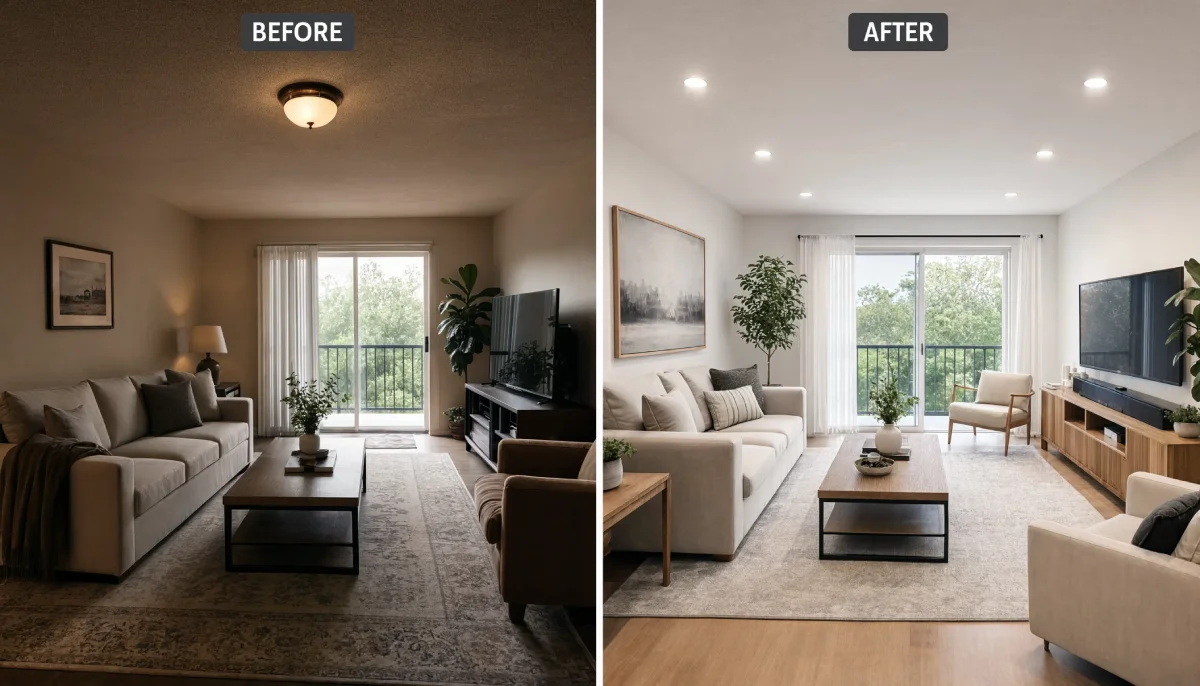
Older California homes often have a single ceiling light box in the center of the living room — completely inadequate for modern use. Recessed lighting is the standard upgrade.
Cost: $200–$350 per can installed (including electrical). A 400-square-foot living room typically needs 8–12 cans.
Title 24 requires these to be LED with a minimum efficacy. Your electrician should know this — if they don’t, find another one. All electrical work requires a permit in California.
6. Built-In Shelving and Storage
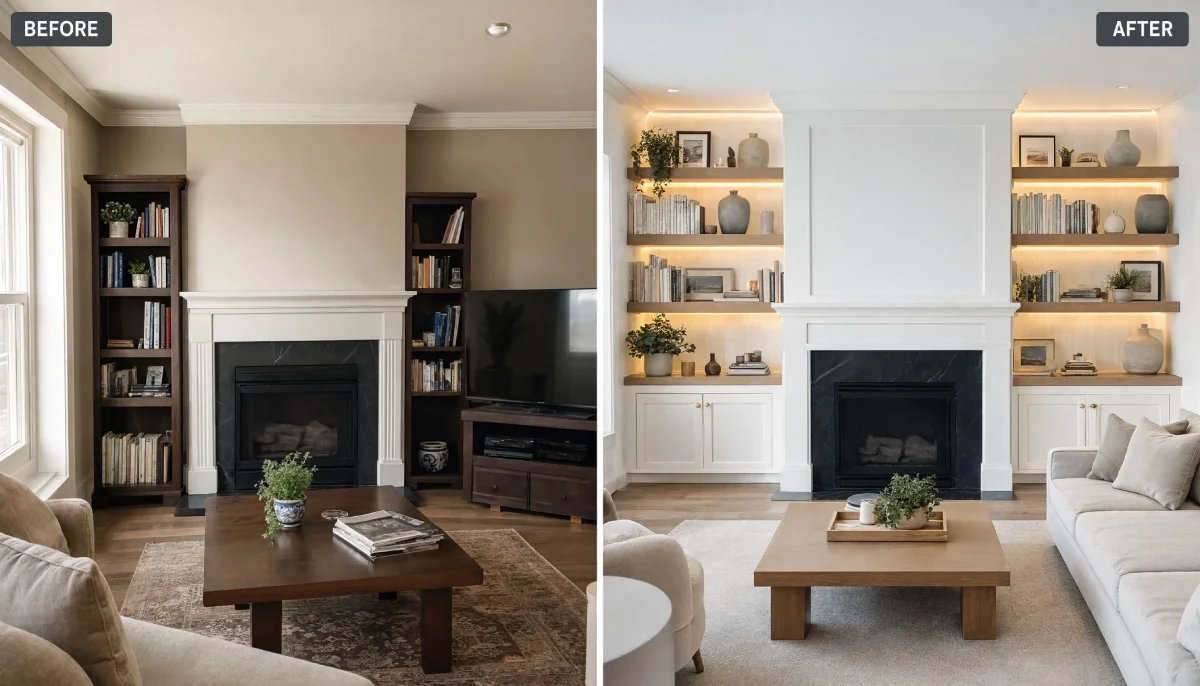
Custom built-ins around a fireplace or along a wall are popular in California homes, especially in smaller coastal properties where square footage is tight. They add storage, visual interest, and perceived value.
Cost: $3,000–$12,000 for custom built-ins. Semi-custom options from local cabinet shops can come in at $1,500–$4,500.
No permit required for non-structural built-ins.
7. Textured or Smooth Wall Finish Upgrade
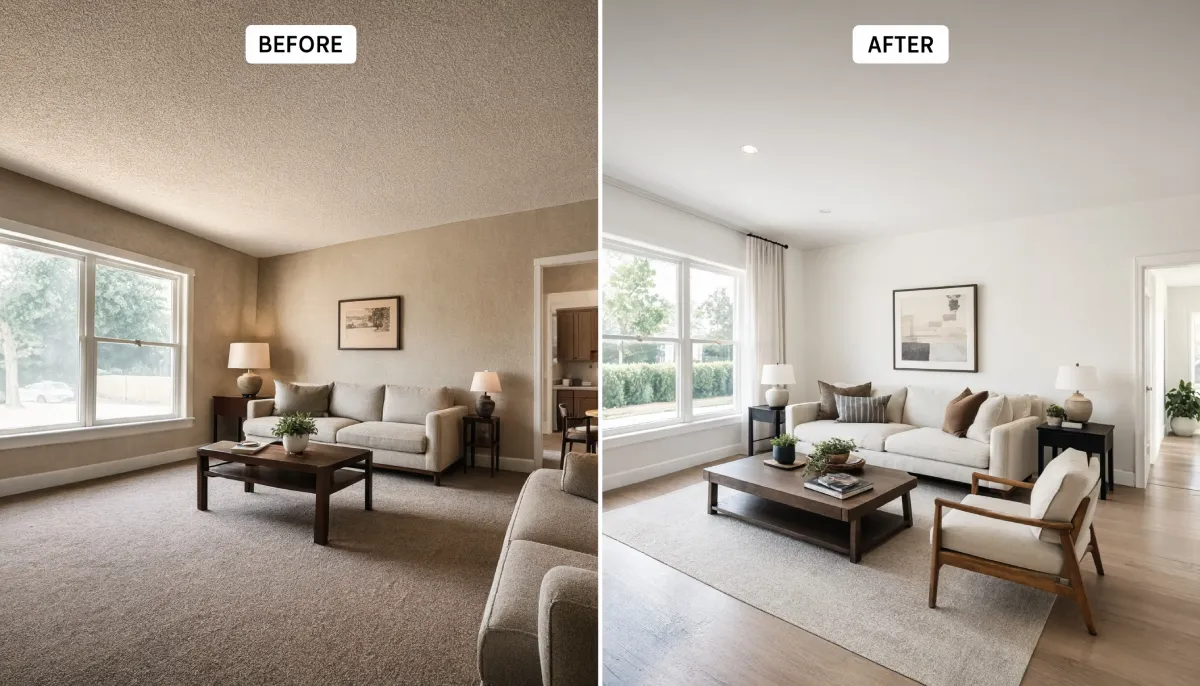
Popcorn ceilings are still common in pre-1990 California homes. Many contain asbestos — any home built before 1980 should be tested before you scrape. Asbestos abatement runs $1,500–$4,000, depending on scope.
Smooth plaster or Level 5 drywall finish is the current California standard for higher-end homes. Cost: $3–$7 per square foot for skim coating an existing ceiling or walls.
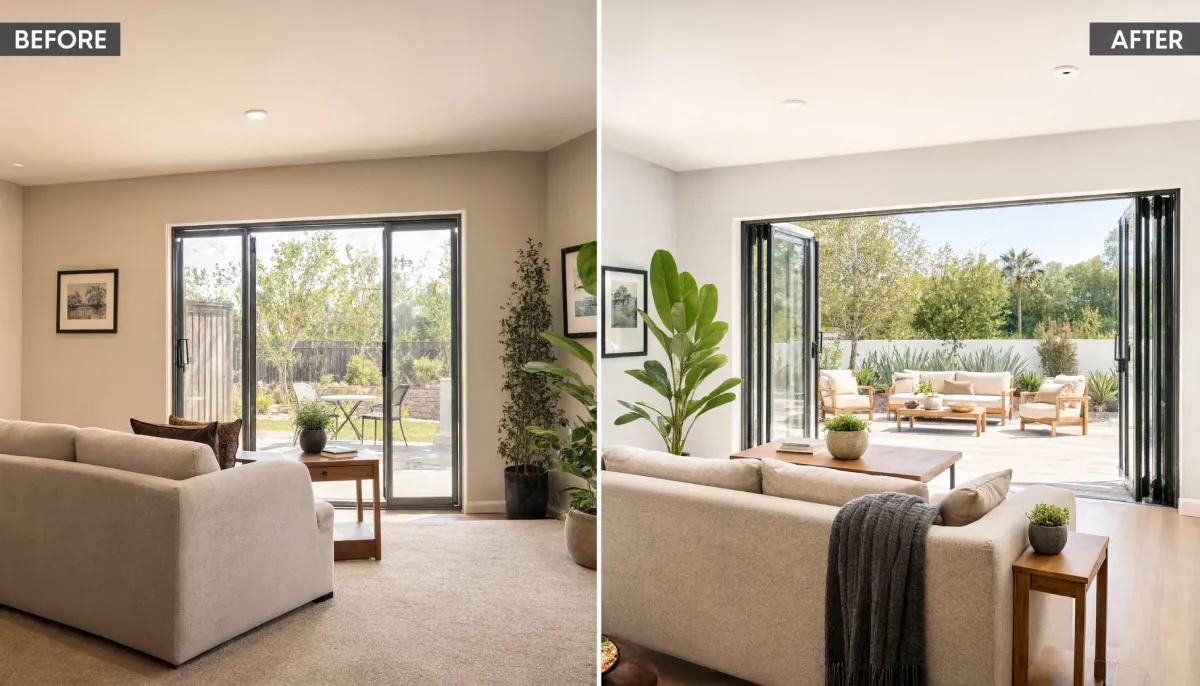
8. Sliding or Folding Glass Door to Outdoor Space
This is a California-specific move: connecting your living room to a patio, deck, or backyard through a large sliding or folding glass door system. It’s both practical for the climate and a strong resale feature.
- Standard sliding glass door replacement: $2,500–$6,000 installed
- Multi-panel folding/bifold glass door system: $8,000–$25,000 installed
Permit required. In wildfire zones, fire-rated glazing may be required.
Cost Breakdown: Living Room Remodeling in California
| Scope | Low Budget | Mid Budget | High Budget |
|---|---|---|---|
| Cosmetic refresh (paint, lighting, fixtures) | $2,500–$5,000 | $6,000–$10,000 | $12,000–$18,000 |
| Flooring replacement (1,000 sq ft) | $4,500–$7,000 | $8,000–$14,000 | $16,000–$25,000 |
| Wall removal (non-load-bearing) | $1,200–$2,500 | $3,000–$5,000 | $6,000–$9,000 |
| Wall removal (load-bearing) | $8,000–$12,000 | $13,000–$18,000 | $20,000–$30,000 |
| Window enlargement (per window) | $1,800–$3,000 | $3,500–$5,500 | $6,000–$10,000 |
| Full living room remodel (all-in) | $20,000–$35,000 | $40,000–$65,000 | $75,000–$120,000+ |
California-specific cost notes:
- Bay Area and Los Angeles labor runs 35–55% above the national average
- San Diego is typically 25–40% above the national average
- Central Valley (Fresno, Bakersfield, Stockton) is 10–20% above the national average — still not cheap
- Permit fees in California cities are higher than most states — budget $500–$2,500 for permits alone, depending on project scope and city
- Structural engineer fees ($500–$1,500) are not optional for load-bearing work
Common Mistakes California Living Room Owners Make
- Skipping the permit. This is the most common and most expensive mistake. California home sales require disclosure of unpermitted work. Buyers and their inspectors find it. You’ll either need to retrofit permits (expensive and uncertain), reduce your sale price, or lose the deal. Always pull permits for structural, electrical, and window work.
- Ignoring the seismic angle on wall removal, contractors in other states can often open walls based on experience alone. In California, you need a licensed structural engineer for any load-bearing work. Some contractors will tell you a wall is non-load-bearing when they’re not actually sure. Pay for the engineer — it’s cheap insurance.
- Buying flooring without checking the subfloor condition. Older California homes, especially in areas with significant temperature swings, often have damaged or uneven subfloors under carpet. Discovering this after you’ve bought the flooring adds $1,500–$4,000 to your project. Always inspect the subfloor first.
- Choosing materials that don’t match the climate. Solid hardwood in a coastal home with marine humidity is a bad idea — it expands, contracts, and warps. Wide-plank solid wood in a Central Valley home with 80°F temperature swings is the same problem. Match your material to your specific California climate zone, not just “what looks good.”
- Not accounting for Title 24 in the electrical budget, homeowners often budget for basic recessed lighting, then get surprised when their electrician or inspector requires Title 24-compliant LED fixtures with specific efficacy ratings. Know this upfront.
- Hiring unlicensed contractors in California requires contractor licensing through the Contractors’ State License Board (CSLB). Any job over $500 in labor and materials legally requires a licensed contractor. Unlicensed work voids permits, creates insurance problems, and leaves you without legal recourse if the work fails. Check CSLB.ca.gov before hiring anyone.
- Ignoring HOA rules. If you’re in a planned community — which covers a large percentage of Southern California homes — your HOA may have strict rules about exterior changes, window types, and even paint colors. Interior changes are usually fine, but anything visible from the street or affecting the building’s exterior needs HOA approval before you start.
Here’s the fixed section only — no need to rewrite the whole article:
When to DIY vs. Hire a Contractor in California
California’s contractor licensing laws are strict for a reason. Here’s a direct breakdown:
Handle these yourself:
- Painting (interior walls, ceilings)
- Installing light fixtures on existing circuits (though a permit may still technically be required in some cities)
- Assembling and installing freestanding furniture or non-structural shelving
- Laying click-lock LVP flooring over an existing subfloor
- Replacing outlet covers, switch plates, and hardware
Bring in a licensed contractor for:
- Any wall removal — structural assessment required
- All electrical work beyond basic fixture swaps — permit and inspection required
- Window enlargement — structural and permit implications
- Fireplace conversion or gas work — requires a licensed HVAC or plumbing contractor
- Flooring installation over a subfloor that needs repair
No exceptions — licensed professionals only:
- Structural engineer for load-bearing assessments
- Any gas line work
- Asbestos abatement (if found in popcorn ceilings or flooring underlayment)
- Electrical panel upgrades
If a contractor tells you, “We don’t need a permit for that” and the work is structural, electrical, or involves windows, that’s a red flag. Walk away.
Practical Tips for California Living Room Remodeling
- Test for asbestos before scraping any ceiling in homes built before 1985. Send a sample to a certified lab — kits available at Home Depot for $30–$50, lab fees around $25–$50.
- Shop engineered hardwood at local California suppliers like Floor & Decor (locations in LA, San Diego, Bay Area, Sacramento) for better regional selection and contractor pricing.
- Get three bids from CSLB-licensed contractors. Verify the license number at CSLB.ca.gov — takes 60 seconds and catches a lot of problems.
- Budget 15–20% over your initial estimate for California projects. Between permit fees, engineer costs, and the likelihood of subfloor or wall surprises in older homes, overruns are common.
- Check your air district rules before changing a fireplace. South Coast AQMD (Southern California) and Bay Area AQMD both have specific rules about what you can install and operate.
- If you’re in a wildfire zone, verify material compliance before ordering. CAL FIRE maintains maps of High Fire Hazard Severity Zones — check before buying windows, decking materials, or anything that affects the building envelope.
- Time your project for off-peak contractor season — late fall and winter typically mean shorter wait times and occasionally better pricing in California markets, where summer and spring are peak renovation months.
FAQs
How much does living room remodeling cost in California?
A full living room remodel in California typically runs $40,000–$65,000 at mid-range, depending on scope and location. Cosmetic-only projects (paint, lighting, flooring) can be done for $10,000–$20,000. Bay Area and LA projects consistently run 35–55% above national averages due to labor costs and permitting fees.
Do I need a permit for living room remodeling in California?
It depends on the work. Painting, flooring, and non-structural built-ins typically don’t require permits. Wall removal, window enlargement, electrical work, and fireplace changes all require permits in California. Skipping permits creates real problems at resale — California disclosure laws require you to report unpermitted work.
Can I DIY my living room remodel in California?
Partial DIY is realistic. Painting, flooring installation, and cosmetic updates are manageable for skilled homeowners. Anything structural, electrical, or involving gas requires licensed contractors under California law. Work over $500 legally requires a licensed contractor (CSLB).
Is living room remodeling worth it for California homeowners?
Generally, yes — California home values are high enough that well-executed renovations tend to hold their value. Open-concept layouts, updated flooring, and improved natural light are consistently valued by California buyers. The key is doing it with permits and licensed contractors, so the work shows up cleanly in a pre-sale inspection.
What flooring works best for California living rooms?
It depends on your specific climate. Engineered hardwood works well across most California climates and handles temperature variation better than solid hardwood. LVP is the best choice for coastal homes with humidity concerns or homes with pets and kids. Polished concrete is popular in modern and warm-climate California homes for its durability and passive cooling properties.
How long does a living room remodel take in California?
A cosmetic refresh takes 1–3 weeks. A mid-range remodel with flooring, lighting, and one wall change takes 4–8 weeks, including permit processing time. A full remodel with structural changes can take 3–6 months in California cities where permit review times are longer — LA and San Francisco often have 4–8 week permit review windows.
Conclusion
Living room remodeling in California is not a simple weekend project, and it shouldn’t be treated like one. The state’s energy codes, seismic requirements, permit culture, and climate variation make it genuinely different from a remodel in Texas or Ohio.
The decisions that matter most: pull permits on any structural or electrical work, hire CSLB-licensed contractors and verify them, match your materials to your specific California climate zone, and budget realistically — which in most California markets means more than you initially expect.
The upside is real. California buyers consistently value open layouts, updated flooring, good natural light, and functional fireplaces. Done right, a well-planned living room remodel here adds measurable value and makes the space genuinely better to live in. Start with the changes that match your budget and your specific home’s constraints — and build from there.
