

If your California home’s roof is showing curling shingles, granules in the gutters, or water stains on interior ceilings, those are clear roof replacement signs you should not ignore. Most asphalt shingle roofs last 20 to 25 years, but California’s intense UV exposure, seasonal wildfires, and extreme heat cycles shorten that lifespan — sometimes significantly. A roof that looks fine from the ground can already be failing structurally. Get a professional inspection if your roof is 15 years or older, especially before wildfire season.
Understanding Roof Replacement Signs for California Homes
California’s climate does things to a roof that most homeowners underestimate. In inland areas like the Central Valley, Sacramento, and the Inland Empire, summer temperatures regularly push past 100°F. That heat accelerates shingle degradation. In coastal markets like Los Angeles and the Bay Area, marine layer moisture can trap humidity under roofing materials, promoting mold and rot in the underlayment — the layer you cannot see from the outside.
Sacramento Valley heat shortens roof lifespan significantly, and homes built during the building boom of 2003 to 2008 are now hitting replacement age — a pattern that’s consistent across Elk Grove, Roseville, and the broader Sacramento metro.
In short, your roof may be failing faster than its rated lifespan suggests, and California’s climate is a direct reason why.
The 9 Most Common Roof Replacement Signs in California Homes
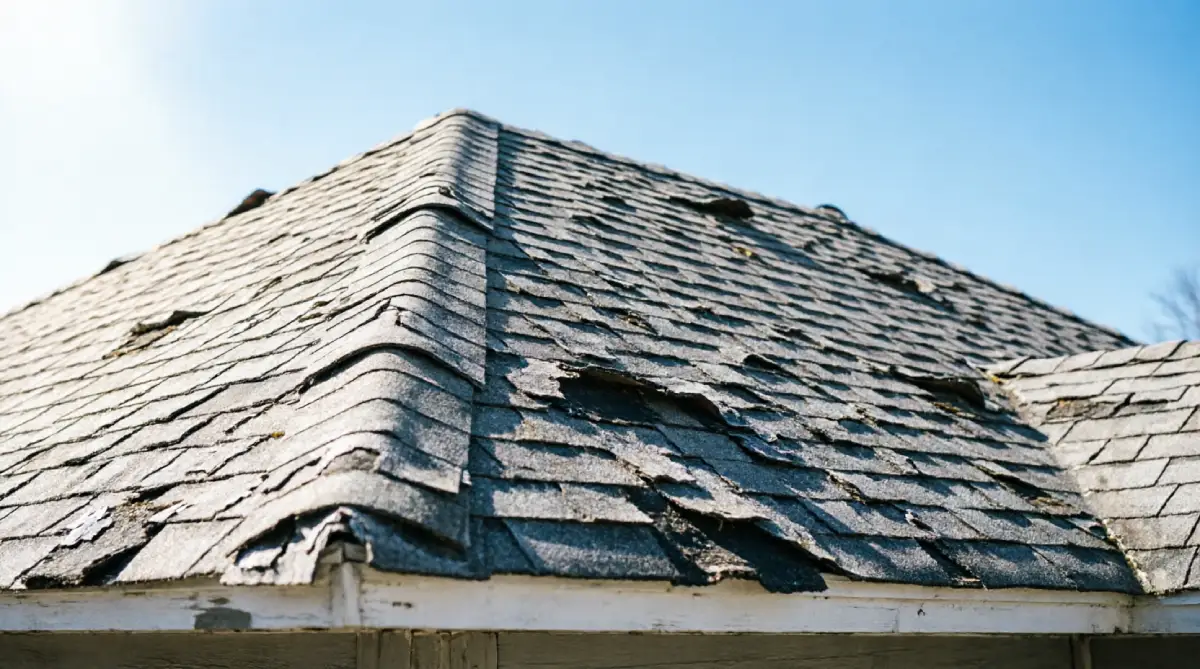
1. Shingle Curling or “Unzipping”
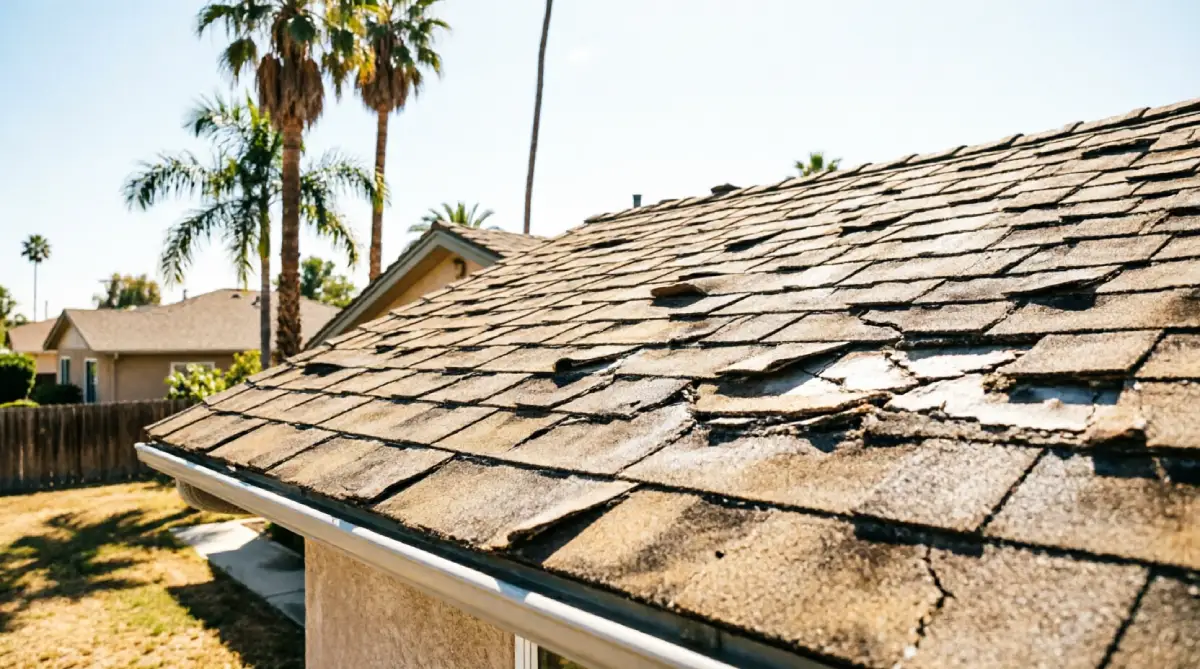
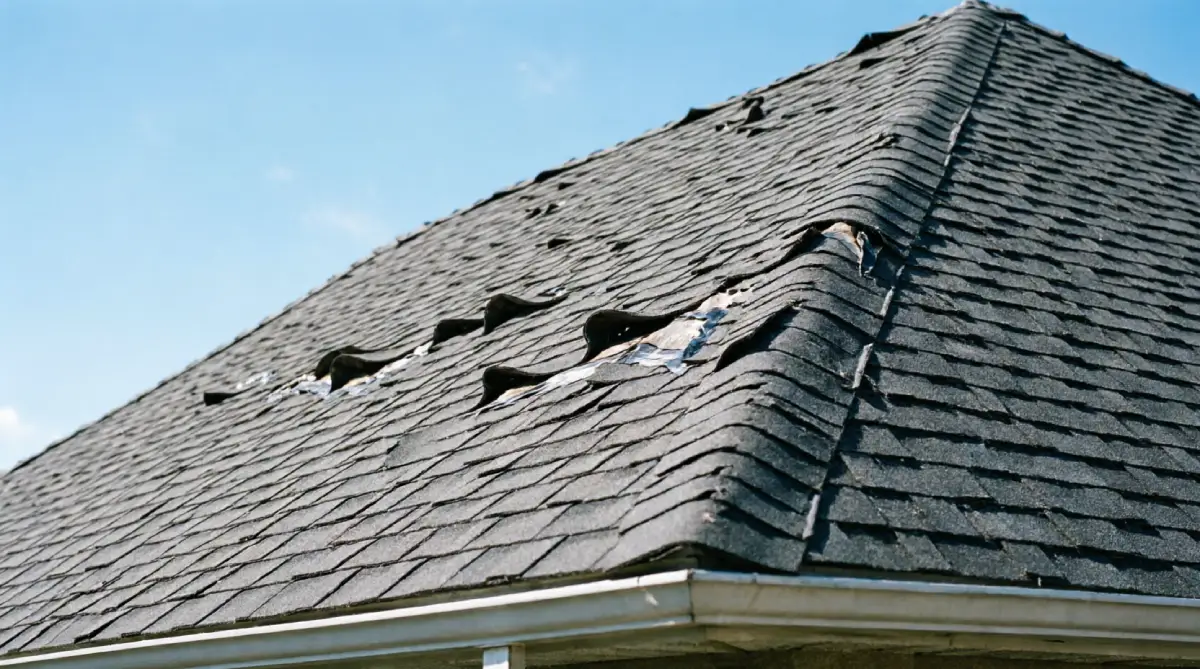
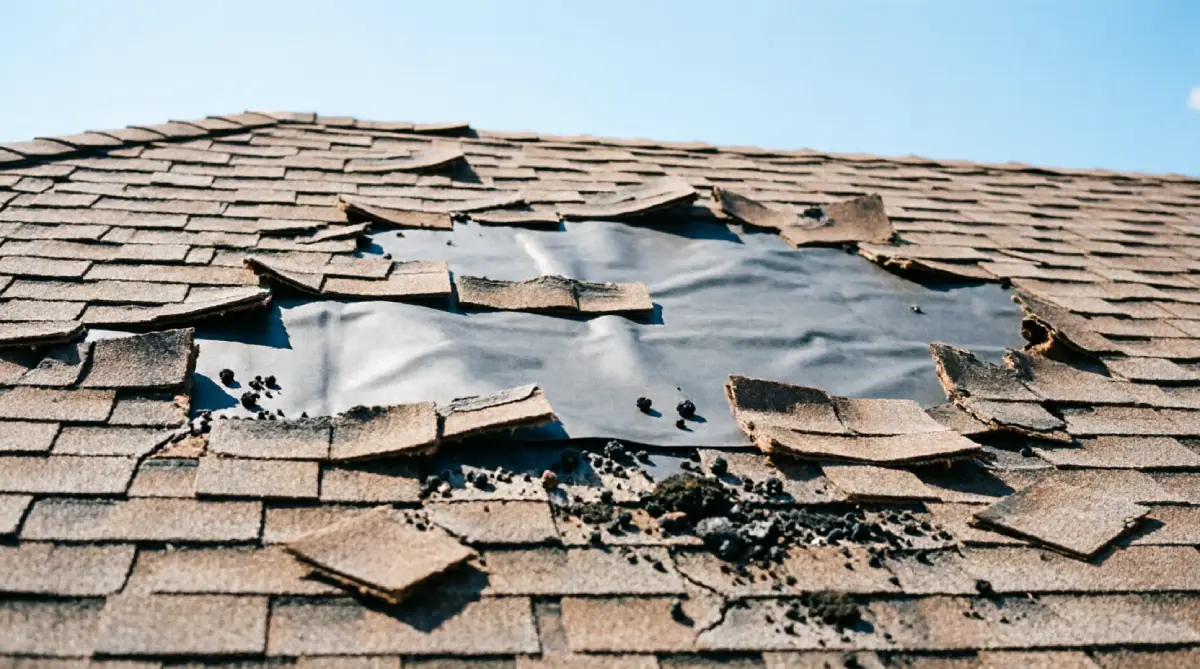
Walk to the edge of your property and look at the roof slope from the ground. If shingle corners are lifting in a diagonal pattern across multiple sections, the adhesive strip has deteriorated throughout — not just in one spot. A few loose corners can be repaired with roofing cement, but widespread unsealing across multiple roof sections indicates the adhesive has deteriorated throughout, and replacement becomes more practical than spot repairs.
2. Granule Loss in the Gutters
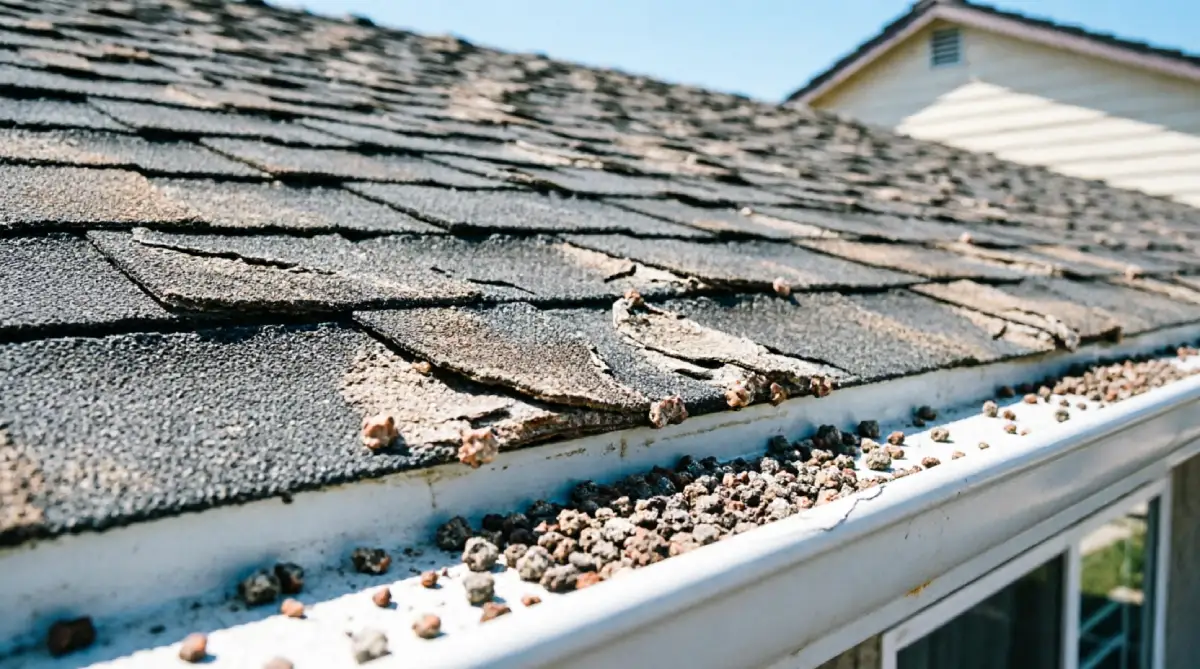
Asphalt shingles are coated with ceramic granules that protect against UV damage. As shingles age, these granules wash off during rain. A few granules are normal, but if you’re seeing clumps or bare spots on your shingles, the protective layer is gone, and your roof is vulnerable. In Southern California, where UV intensity is higher than in most of the country, this process moves faster than manufacturers’ rated timelines suggest.
3. Interior Water Stains or Ceiling Damage
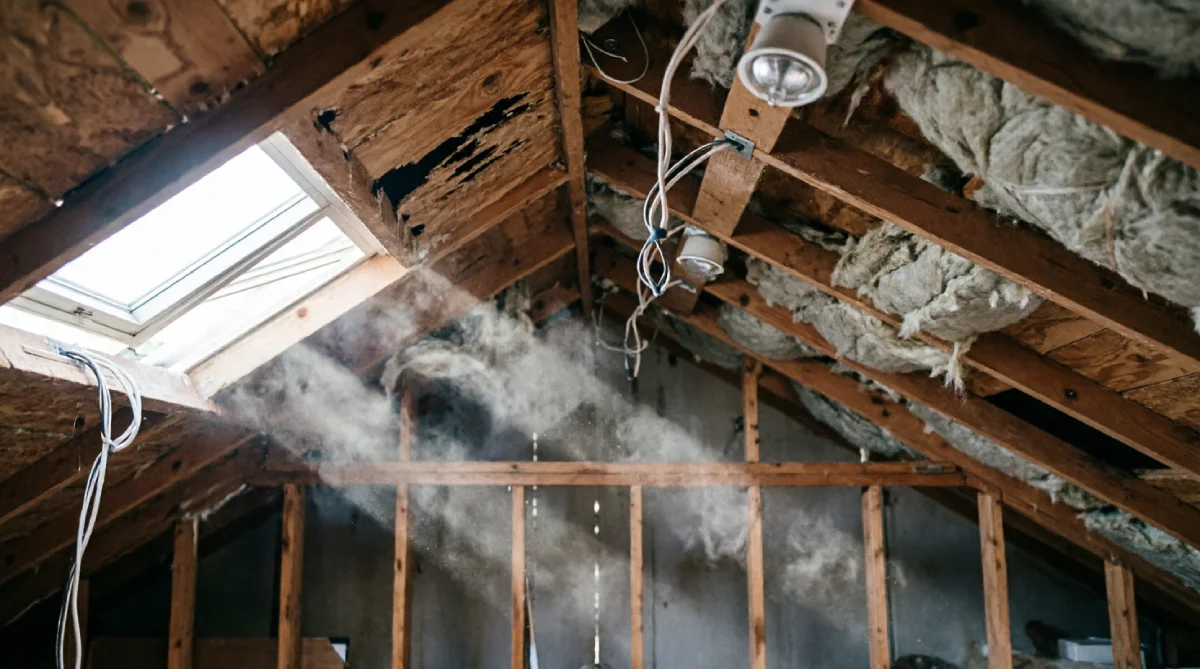
A water stain on your ceiling is a late-stage signal. By the time moisture penetrates through the decking and into your living space, the damage has already been spreading — often for months. Check your attic after the first heavy rain of the season. Look for wet insulation, dark staining on rafters, or daylight visible through the decking boards. Any of these means the roof system has been compromised.
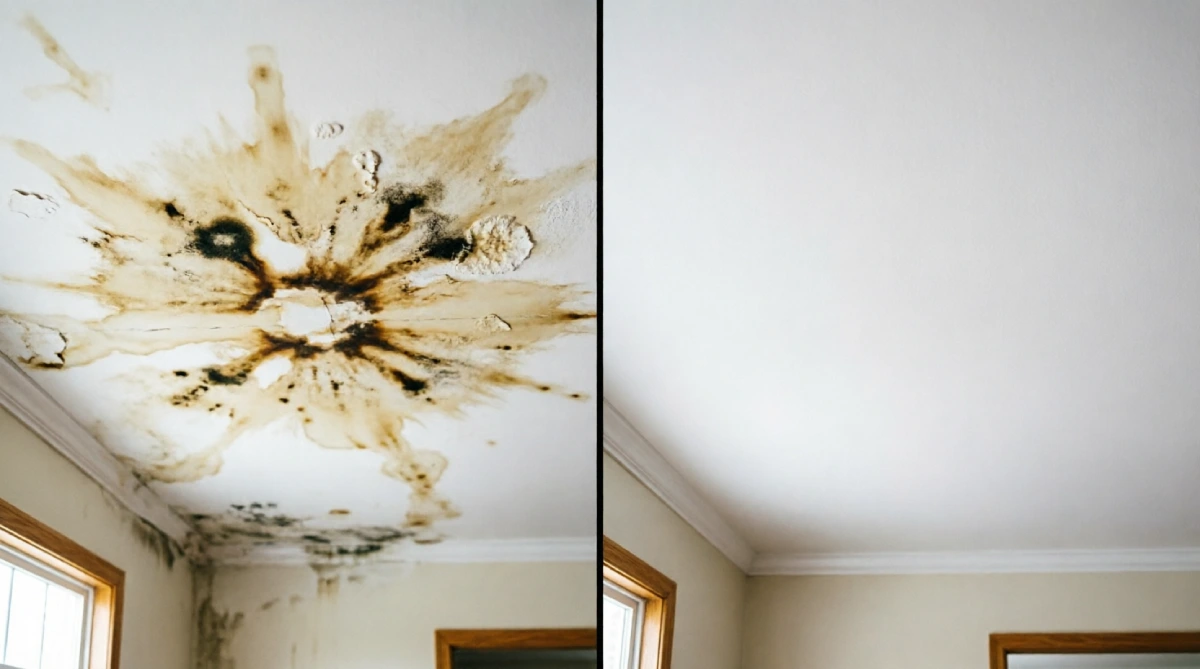
4. Sagging Roof Deck
A visibly sagging section means the decking underneath has taken on moisture and lost structural integrity. This is not a repair scenario — it is a replacement scenario, and in some cases, it requires structural assessment before any new materials go on. In older California homes with wood plank decking (pre-1970s construction), this issue is more common and more expensive to address.
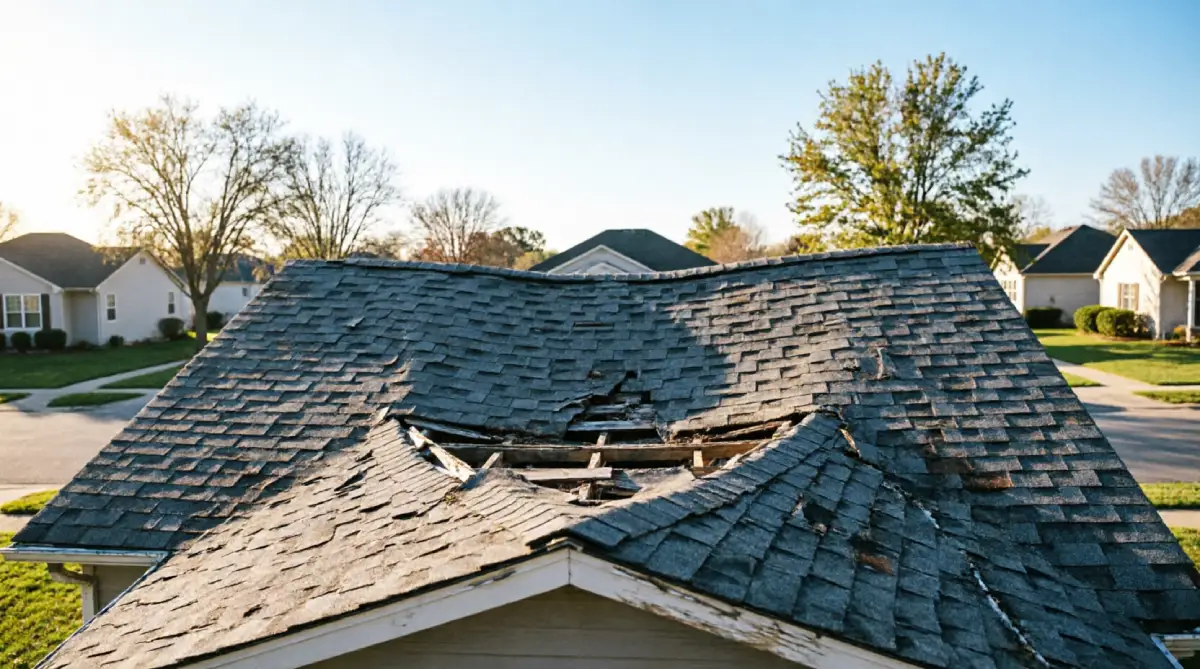
5. Roof Age Past 15 to 20 Years
If your roof is approaching or past 15 years old and showing any warning signs, replacement is usually more cost-effective than repeated repairs. The question is not “if” but “when.” Age alone is not a replacement trigger — but age combined with any other sign on this list is a strong signal to get a licensed inspector on the roof.
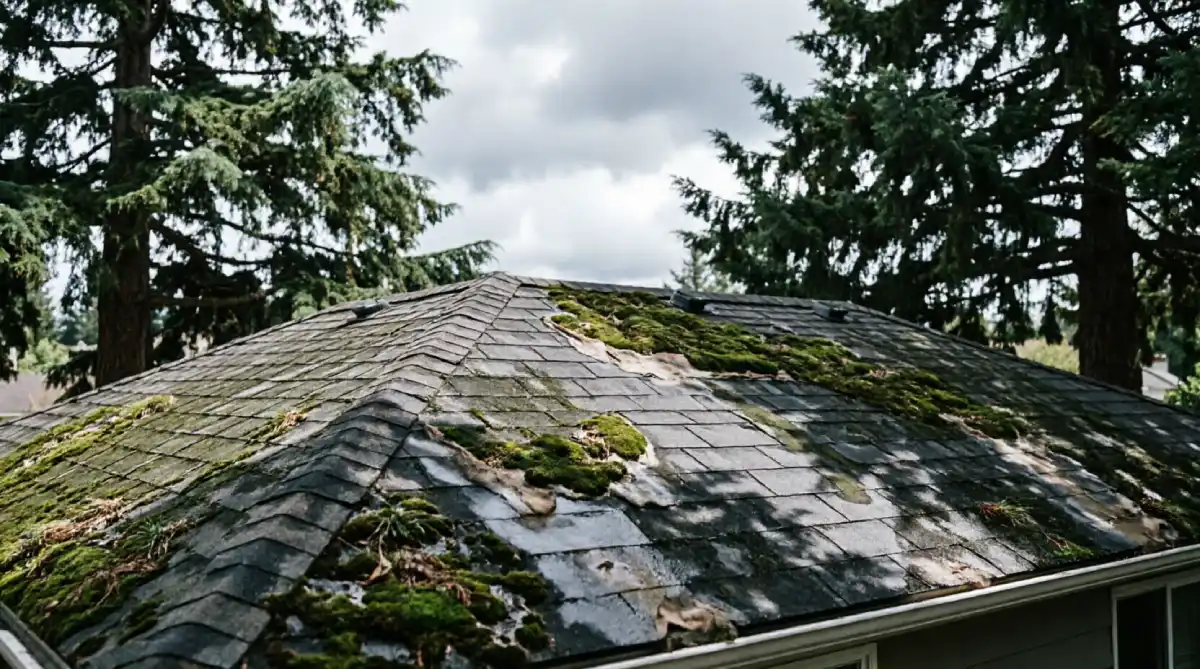
6. Moss, Algae, or Lichen Growth
Moss holds moisture against the shingle surface. Over time, it works under the shingles and breaks the seal. In Northern California and coastal areas with more moisture and shade, moss growth is a real problem. You can treat light moss growth, but if it has covered large sections or been present for years without treatment, the shingles beneath are likely compromised.
7. Missing or Cracked Shingles After a Storm or High Wind
California’s Santa Ana winds in Southern California, Diablo winds in the Bay Area, and general offshore wind events can strip shingles or crack them at the tabs. One or two missing shingles can be replaced. If you are replacing shingles every season and matching colors has become impossible, you are patching a roof that needs full replacement.
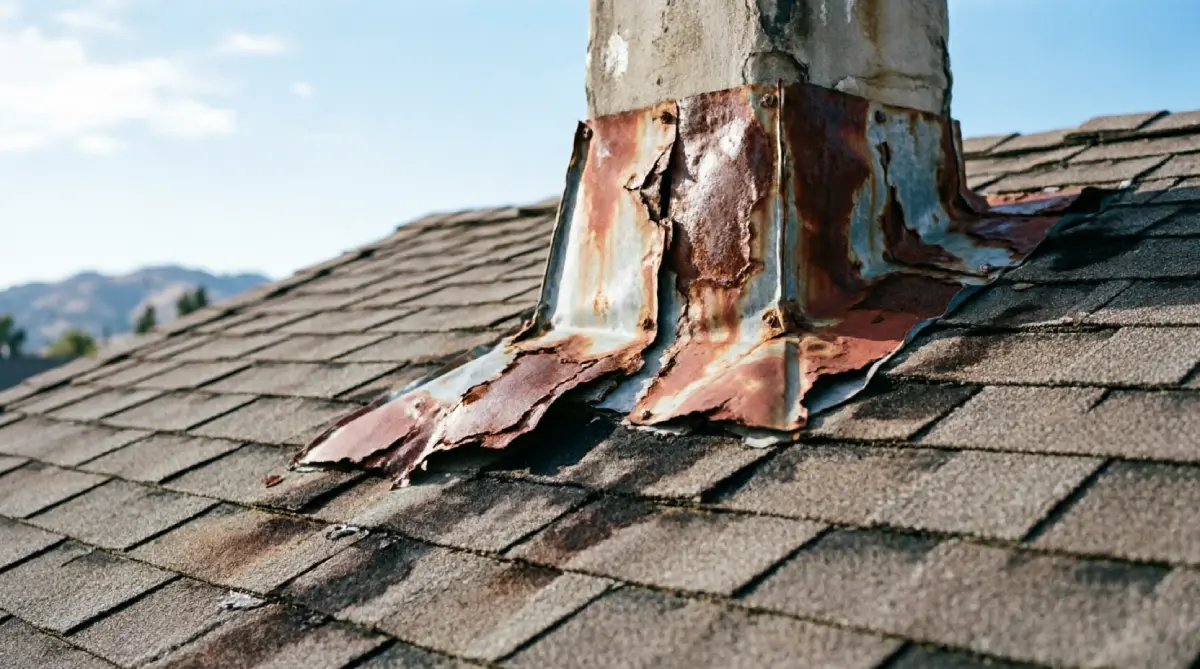
8. Flashing Failure Around Chimneys, Skylights, or Vents
Flashing — the metal strips that seal transitions between the roof surface and structures — corrodes, loosens, and separates over time. Failed flashing is one of the most common entry points for water in California homes. If your contractor is recommending flashing repair for the second or third time on the same section, it is worth asking whether the underlying cause is a failing roof rather than the flashing itself.
9. Higher Energy Bills Without a Clear Cause
A failing roof with compromised insulation and ventilation makes your HVAC system work harder. California’s Title 24 energy standards exist specifically because roofing and insulation have a direct impact on energy use. If your cooling costs have climbed without explanation, your attic ventilation or insulation may be damaged — often tied to a roof that is no longer performing as it should.
California-Specific Factors That Accelerate Roof Damage
Beyond the universal signs above, California homeowners face conditions that are specific to this state:
1. Wildfire ember intrusion:
In High and Very High Fire Hazard Severity Zones — which now cover large portions of Los Angeles County, the Sierra Nevada foothills, and parts of the Bay Area — ember exposure degrades roofing materials even when the home itself does not burn. After any nearby fire event, get your roof inspected. Small ember impacts that go undetected become moisture entry points in the next rain season.
2. Title 24 cool roof compliance:
Projects with permits pulled on or after January 1, 2026, are subject to the 2025 Title 24 update. Full tear-off and replacement triggers full compliance. Recover — installing over existing — triggers compliance when affecting over 50% of the roof area. This means your replacement material choice is no longer purely aesthetic or budgetary. Standard dark asphalt shingles do not meet the aged solar reflectance requirement in most California climate zones. Your contractor must specify a CRRC-listed cool roof product.
3. Seismic stress on roofing:
California homes in seismic zones experience low-level ground movement regularly. Over time, this can loosen fasteners, shift flashing, and create micro-gaps in the roof assembly that are not visible until moisture has already entered. This is more relevant in older homes where fastener patterns did not meet current code.
Roof Damage Symptoms: Repair vs. Replace Decision Guide
| Symptom | Likely Action | Notes |
|---|---|---|
| 1–3 missing shingles, roof under 10 years old | Repair | Patch if a color match is possible |
| Granule loss across 30%+ of the surface | Replace | UV protection is gone |
| One flashing leak, no deck damage | Repair | Re-flash the transition |
| Deck rot or sagging section | Replace | Structural issue, not cosmetic |
| Moss covering multiple slopes | Inspect first | May be repaired or replaced, depending on the underlayment |
| Interior water stains | Inspect immediately | Could be repaired or replaced |
| Roof over 20 years with multiple symptoms | Replace | Stacking repairs costs more in the long term |
| Wildfire zone with non-Class-A material | Replace | Code compliance and insurance risk |
Cost Breakdown: Roof Replacement in California Homes
A new roof in California typically costs between $10,000 and $25,000 for most residential homes, with the average homeowner spending around $15,000 to $18,000 on a full replacement. California consistently runs higher than the national average of roughly $9,500 to $12,000.
| Budget Tier | Cost Range | What You Get |
|---|---|---|
| Low Budget | $8,000 – $13,000 | Three-tab asphalt shingles, basic underlayment, standard warranty, and smaller homes under 1,500 sq ft |
| Mid Budget | $13,000 – $22,000 | Architectural (dimensional) asphalt shingles, cool roof-rated materials, full tear-off, 2,000 sq ft home |
| High Budget | $22,000 – $45,000+ | Concrete or clay tile, metal roofing, premium underlayment, complex roof geometry, Bay Area or LA labor rates |
California-specific cost notes:
- Licensed roofing crews in California charge $60 to $85 per hour, compared to a national average of $40 to $55. In the Bay Area and Los Angeles, rates sit at the higher end due to the elevated cost of living, union labor agreements, and strong local demand.
- If your current roof has only one layer of shingles, a standard tear-off typically adds $1,000 to $2,500 to your total project.
- If a roof already has two layers of covering, both existing layers must be removed before the new roof can be installed. This adds labor cost.
- Metal roofing prices have risen 15 to 25% compared to 2024 pricing, driven by ongoing steel and aluminum tariffs. Budget accordingly if metal is your preferred material.
- Homes in wildfire zones may qualify for grants: the Safe Homes Act (AB 888) provides grants of up to $40,000 per household for fire-hardening improvements, with roof replacement being one of the primary qualifying projects for properties in CAL FIRE-designated High or Very High fire hazard severity zones.
Roofing Materials for California Homes: Comparison
| Material | Initial Cost (per sq ft installed) | Lifespan | Cool Roof Compliant | Fire Rating | Best For |
|---|---|---|---|---|---|
| Three-tab asphalt | $4 – $6 | 15–20 yrs | Requires a cool-rated version | Class A (rated) | Tight budget, mild climate zones |
| Architectural asphalt | $5 – $9 | 25–30 yrs | Requires a cool-rated version | Class A (rated) | Most California homes |
| Concrete tile | $10 – $15 | 40–50 yrs | Most colors are compliant naturally | Class A | Southern CA, Mediterranean-style homes |
| Clay tile | $12 – $18 | 50+ yrs | Terracotta and light glazed colors are compliant | Class A | Coastal and high-end homes |
| Metal (standing seam) | $10 – $16 | 40–70 yrs | Yes, with a Kynar-coated finish | Class A | Wildfire zones, energy-focused homeowners |
Permits and Code: What California Homeowners Must Know
This is where California diverges significantly from most other states, and where I see homeowners get caught off guard the most.
A building permit is required when more than 200 square feet of roof covering is installed, repaired, or replaced. All roofing work must be performed by a contractor with a valid C-39 license from the California Contractors State License Board.
Operating without a valid C-39 exposes a contractor to criminal misdemeanor charges and civil penalties. Before you sign anything, verify your contractor’s license at CSLB.ca.gov using their license number. It takes two minutes and has saved homeowners from expensive disasters.
WUI zone requirements: As of January 1, 2026, a standalone California Wildland-Urban Interface (WUI) Code — Title 24, Part 7 — now consolidates wildfire-resistant construction standards into a single enforceable code. For contractors working in designated WUI areas, Part 7 governs requirements for ignition-resistant construction, including roofing assemblies, vents, eaves, and decks.
If you live in a wildfire zone and hire a contractor who is unaware of these requirements, your project may fail inspection, your permit may be revoked, and your homeowner’s insurance claim could be denied after a fire event.
DIY vs. Hiring a Licensed Contractor
The honest answer for California: DIY roof replacement is legal under the owner-builder exemption if you own and occupy the home and do the work yourself. In practice, it is rarely worth it for a full replacement.
Here is why:
- Title 24 cool roof compliance requires CRRC-listed products and documentation submitted at the permit stage. Most homeowners do not know how to navigate this.
- WUI zone requirements mandate specific assembly methods, ember-resistant venting, and Class A materials — all of which require licensed installation to pass inspection.
- California requires a C-39 roofing license for any roofing work valued above $500 in combined labor and materials. If you hire any help, that person needs to be licensed.
- Insurance carriers in California are already pulling back from fire-prone areas. A non-permitted or improperly installed roof gives them cause to deny future claims.
DIY is reasonable for minor repairs — replacing one or two shingles, resealing flashing, and clearing debris from valleys. Full replacement is a different category entirely in this state.
Common Mistakes California Homeowners Make
- Waiting until there is visible interior damage. By that point, decking and insulation have already been compromised. Replacement costs are higher, and there may be mold remediation involved.
- Hiring on price alone without checking CSLB. Storm chasers and unlicensed contractors flood California markets after fire events and heavy rain seasons. Always verify the C-39 license before any contract is signed.
- Installing non-cool-roof-rated materials in a climate zone that requires them. This will fail inspection and require tear-off and reinstallation at full cost.
- Skipping the attic inspection. The roof surface is visible. The underlayment, decking, and insulation are not. A surface inspection that does not include attic access is incomplete.
- Assuming one layer of new shingles over old shingles is acceptable. New roof coverings can only be applied over a single layer of existing roofing. If a roof already has two layers of covering, both existing layers must be removed before the new roof can be installed. Many homeowners discover this mid-project.
Practical Tips for California Homeowners
- Get at least three bids from CSLB-licensed (C-39) contractors. Verify each license at CSLB.ca.gov before signing.
- Ask each contractor specifically which CRRC-listed cool roof product they are specifying and confirm it meets Title 24 requirements for your climate zone.
- If you are in a fire hazard severity zone, check CAL FIRE’s website to confirm your zone designation before discussing materials with any contractor — it affects both code compliance and insurance coverage.
- Buy materials like roofing cement, flashing tape, or gutter guards from Home Depot or Lowe’s for minor maintenance. For full replacement, let the contractor source materials — they carry liability for product warranties.
- Schedule inspections in late summer or early fall — before the rainy season hits and contractor availability drops.
- If your roof is 15 or more years old, document its condition with photos annually. This helps with insurance claims and replacement planning.
- Request a written scope of work that explicitly covers tear-off, deck inspection, underlayment specification, flashing replacement, and cleanup. Vague contracts lead to disputes.
- If you received a non-renewal or premium increase notice from your insurer, a Class A fire-rated roof replacement may be the most direct path to restoring coverage eligibility.
FAQs
How much does roof replacement cost in California?
Most California homeowners pay between $10,000 and $25,000, with the average landing around $15,000 to $18,000 for a full replacement on a standard two-story home with asphalt shingles. Bay Area and Los Angeles projects typically run at the higher end of that range due to labor costs.
Can I DIY a roof replacement on my California home?
Legally, yes — under the owner-builder exemption. Practically, it is rarely advisable. Title 24 cool roof compliance, WUI zone requirements, and permit inspections all require product and installation knowledge that most homeowners do not have. Minor repairs are reasonable DIY territory; full replacement is not.
Do I need a permit for roof replacement in California?
Yes. A building permit is required when more than 200 square feet of roof covering is installed, repaired, or replaced, and all roofing work must be performed by a contractor with a valid C-39 license. Permit thresholds vary slightly by city or county, so confirm with your local building department.
Is roof replacement worth it for California homeowners?
Yes, particularly now. California insurers are withdrawing from fire-prone markets. A Class A fire-rated, Title 24-compliant replacement roof is increasingly a precondition for maintaining homeowner’s insurance coverage — not just an upgrade. The functional and financial risk of delaying is higher in California than in most other states.
What are the clearest signs my California roof needs replacement rather than repair?
Granule loss across more than 30% of the surface, widespread shingle curling, any sagging in the deck, interior water stains, combined with a roof over 15 years old, or a roof that does not carry a Class A fire rating in a designated wildfire zone. Any one of these, in combination with an older roof age, tips the math toward replacement.
How does California’s climate affect roof lifespan?
Significantly. Sacramento Valley heat shortens asphalt shingle lifespan, and homes that received basic shingles during the 2003 to 2008 building boom are now hitting replacement age ahead of their rated timeline. In Southern California, UV intensity does the same. Cool-rated shingles and proper attic ventilation extend lifespan — without them, you are losing years off your manufacturer’s rating.
What roofing materials comply with California’s cool roof requirements?
Cool-rated asphalt shingles include GAF Timberline Cool Series, Owens Corning Duration Cool Plus, and CertainTeed Landmark Solaris. Most mid-to-light color concrete tiles from Eagle, Boral, and US Tile meet requirements naturally. Standing-seam metal with factory Kynar 500 cool pigment coatings also qualifies.
Do I need Class A fire-rated roofing in California?
If your property is in a CAL FIRE-designated High or Very High Fire Hazard Severity Zone, Class A fire-rated roofing is required — it is not optional. Even outside those zones, multiple major California insurers now treat it as a coverage eligibility factor.
What does a California roofing permit cover?
The permit covers compliance with the 2025 California Residential Code, Title 24 energy requirements, and — in wildfire zones — Title 24 Part 7 WUI standards. It also triggers a post-installation inspection. Never let a contractor suggest skipping the permit to reduce cost.
How do I find a legitimate roofing contractor in California?
Verify C-39 license status at CSLB.ca.gov before any conversation about pricing. Ask for proof of general liability and workers’ compensation insurance. Get the scope of work in writing before signing. Three competitive bids are the minimum standard. Inactive license status means the contractor is not currently licensed — do not hire them regardless of price or reviews.
Can I get financial help for roof replacement in California’s fire zones?
The Safe Homes Act (AB 888) provides grants of up to $40,000 per household for fire-hardening improvements. Eligibility requires the property to be in a CAL FIRE-designated High or Very High Fire Hazard Severity Zone, the home must have been built before current fire-hardening codes took effect, and all work must be performed by a CSLB-licensed contractor with proper permits. Additional funding may be available through FEMA Hazard Mitigation Grants after disaster declarations.
What happens if I ignore roof replacement signs?
Water damage to decking, insulation, framing, and interior finishes compounds quickly. A $15,000 roof replacement can turn into a $30,000+ project once mold remediation, structural repairs, and interior restoration are added. In wildfire zones, an out-of-compliance roof can also result in insurance non-renewal.
Conclusion
The roof replacement signs in California homes are not difficult to read — curling shingles, granule loss, interior staining, sagging sections, or a roof that has passed 15 years. The harder part is acting on them before the damage compounds. California’s climate, wildfire risk, Title 24 energy code, and tightening insurance market all make the cost of delay higher here than in most other states.
Your core decisions are straightforward: get a licensed C-39 inspector on the roof if it is 15 or older, confirm which climate zone and fire hazard zone your property sits in before specifying materials, and verify every contractor’s CSLB license before signing anything. If you are in a wildfire zone, check AB 888 grant eligibility before paying out of pocket.
A replacement done correctly — with the right material, a proper permit, and a licensed crew — adds value, restores insurance eligibility, and removes the uncertainty of knowing your home’s first line of defense is failing.
