

I know the frustration of staring at a tiny yard and thinking you can’t possibly fit everything you want this summer. Maybe you’re juggling a grill, a seating area, and the kids’ slip-and-slide on a patch of grass the size of a postage stamp. I focus on practical, lived-in solutions rather than fancy magazine spreads.
This guide shares 10 small backyard summer ideas that maximize space—proven strategies I use to make even the coziest outdoor spots feel open, functional, and inviting all season long.
1. Floating Wall Bar
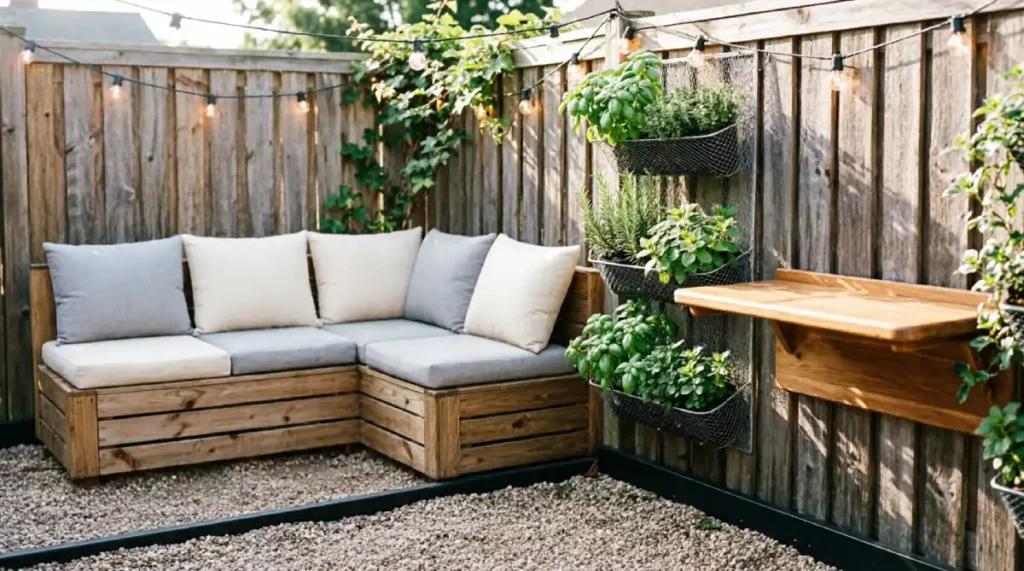
I always recommend ditching the bulky rolling bar cart in a small yard. A fold-down, floating bar mounted to a sturdy fence or exterior wall takes up zero floor space when closed. You simply unlatch it when guests arrive, and instantly you have a serving station at hip height.
I use naturally weather-resistant cedar boards to build these, treating them with a food-safe exterior oil. The wall acts as a windbreak, but more importantly, it gives you back precious square footage. You aren’t constantly stepping around a cart to get to the grill.
I once helped a friend install one on a narrow side-yard fence that was just two feet wide. Before the shelf, that strip of land was dead space where nothing fit. Afterward, it became the cocktail mixing hub, keeping foot traffic out of the kitchen.
I suggest adding a couple of magnetic strips underneath to hold a bottle opener and metal cocktail tools. It keeps the surface clean and saves you from running inside for small gear. Just make sure the bracket hinges are rated for heavy live loads.

2. Low-Profile Deep Seating
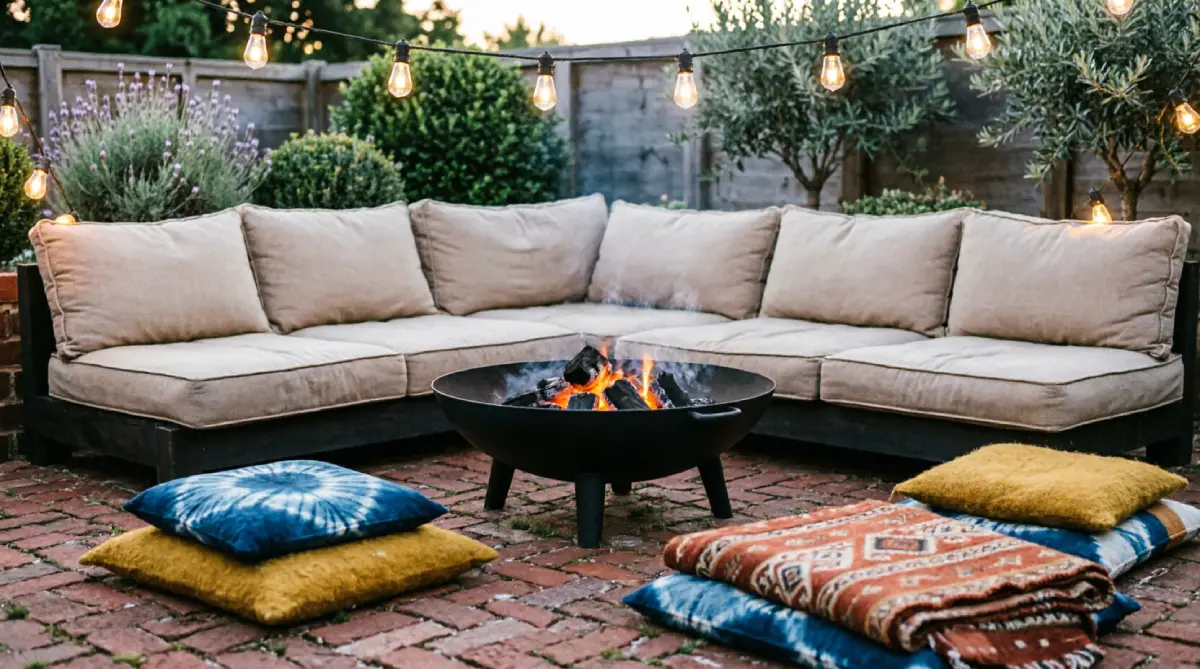
I always steer clear of tall, barstool-height bistro sets in tight spaces. High seating places everyone’s eyeline right at the top of privacy fencing, making a yard feel visually boxed in. Low-profile deep seating, where you sit closer to the ground, creates a sense of horizon and makes the boundaries disappear.
I use weatherproof outdoor floor cushions arranged around a fire bowl that sits directly on pavers. It’s a lounging setup that risks less visual clutter. Because you’re looking up at the sky instead of across at fence boards, the space feels instantly larger.
I noticed a significant shift in my own tiny city plot when I swapped metal chairs for thick Turkish-style outdoor kilim pillows. Suddenly, the yard felt like a cozy conversation pit rather than a crowded furniture showroom. The low vantage point highlighted the greenery above the fence line.
I suggest looking for cushions with a thickness of at least six inches so adults can get up comfortably. Stack them in a dry deck box when not in use to double them as a beanbag pile for kids, keeping the dual-purpose function alive.
3. Shade Sail Zoning
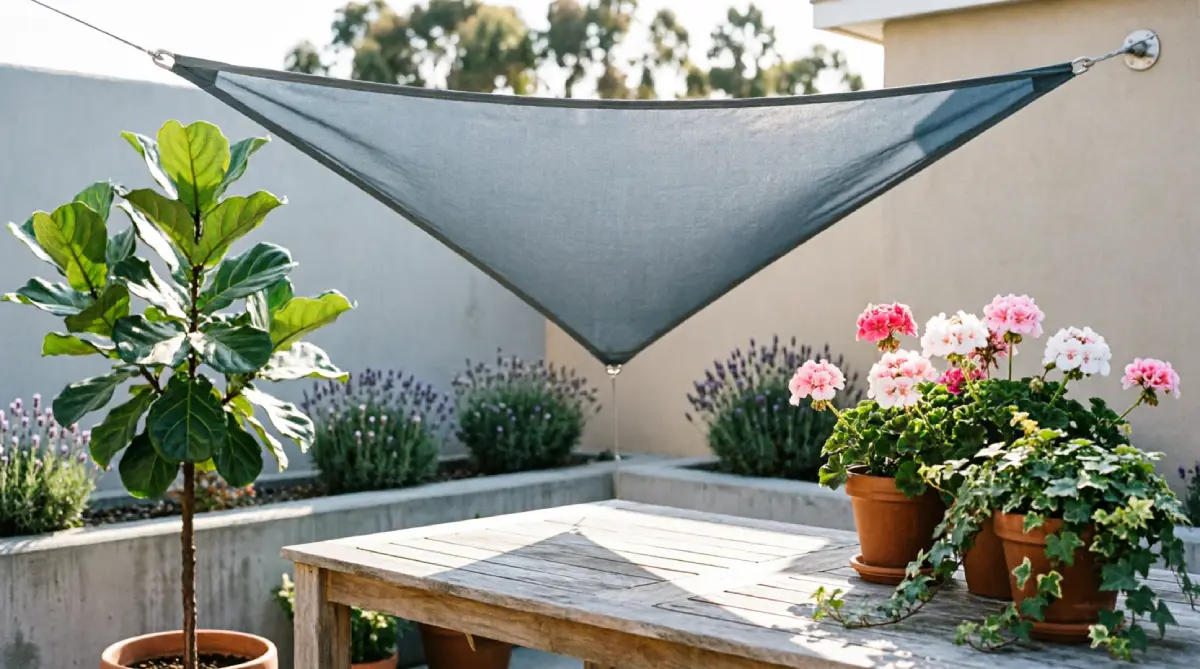
I always treat shade as a tool for defining rooms, not just for blocking the sun. In an open rectangle of a yard, a properly angled shade sail visually slices the space into distinct zones. It signals to the brain that the area underneath is for dining, while the sunny section is for plants or play.
I use tensioned triangular sails instead of bulky cantilever umbrellas with heavy bases. They attach to eyelet screws on the house wall and sturdy posts at the fence line. The absence of a center pole means you can place a dining table directly under the high point without bumping your head.
I once underestimated the cooling power of a dark charcoal sail versus a white one. The charcoal blocked significantly more UV rays and created a visibly sharper border of shadow, making the “room” feel much more intentional. It instantly turned a hot patch of concrete into a spot you’d want to sit.
I suggest installing removable turnbuckles rather than tying knots if you face summer storms. You can tighten the fabric like a drum so it doesn’t flap loudly in the wind, then take it down in minutes when heavy weather rolls in.
4. Vertical Tiered Planting
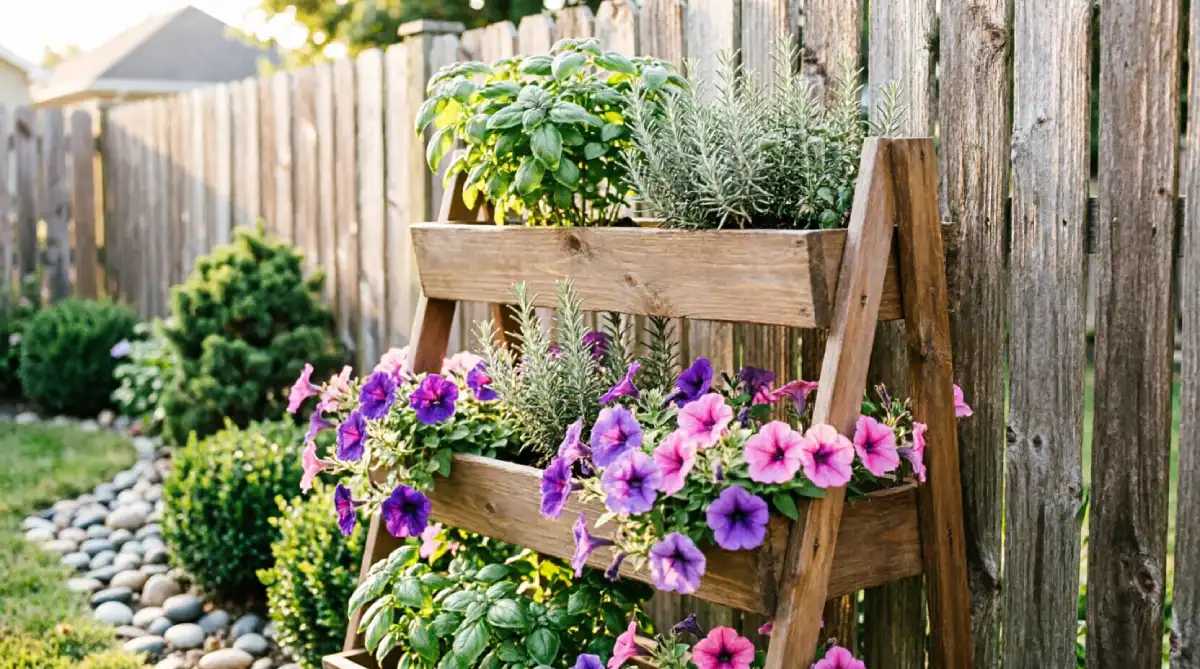
I always skip the single-level planter boxes that hog the perimeter. For truly maximizing ground space, I build vertical tiered stands—almost like narrow bleachers for pots. This lets me stack a herb garden, trailing flowers, and leafy greens in a footprint barely wider than a ladder.
I use a simple A-frame cedar stand with three shelves that step inward. This allows sunlight to hit every level without the front pots shading the back. You get triple the planting surface while keeping the grass open for activities. It also hides a boring fence.
I once tried using pocket fabric planters, but I found they dried out too fast in direct summer heat and left water stains on the wood. The tiered pot method held moisture much better because the ceramic pots insulated the roots, requiring less frantic daily watering.
I suggest installing a discreet drip irrigation tube woven through the back of the shelves. A single timer line feeds all three levels, preventing the dry-out issues that plague vertical setups and making a week-long heatwave far less stressful for your plants.
5. Mirror Illusion Windows
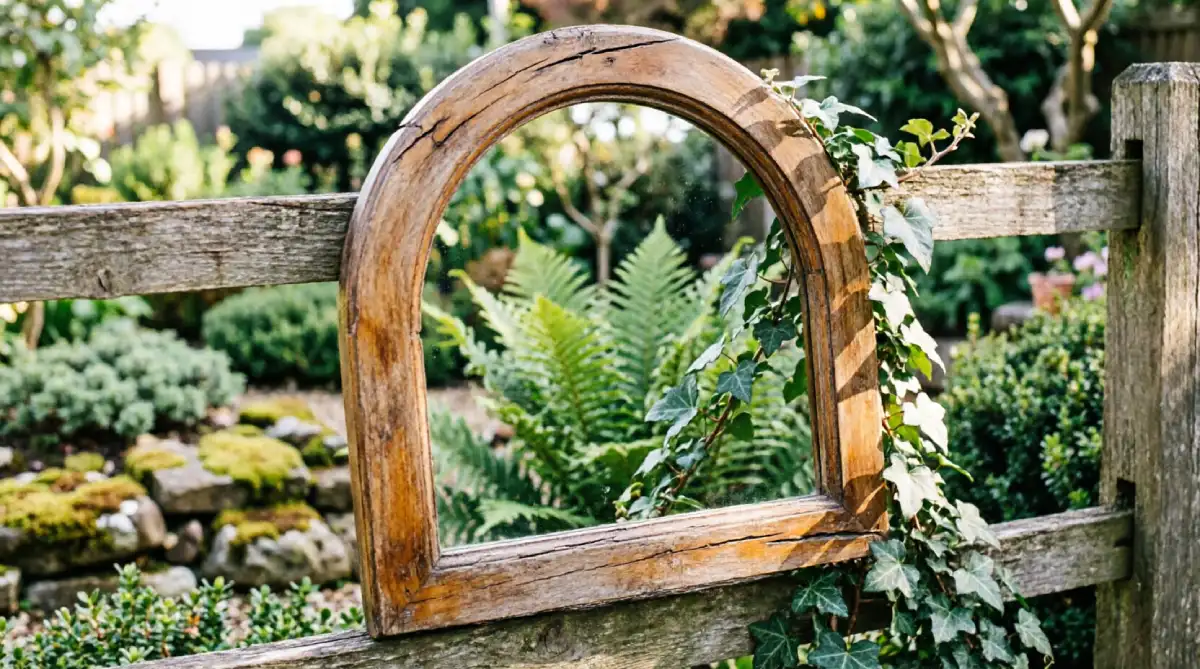
I always look for ways to borrow light, especially in gloomy, narrow side yards. An exterior-grade mirror or a repurposed old window frame with mirrored glass acts like a fake gate that hints at a garden beyond. It tricks the eye into seeing depth where there is only a wall.
I use polycarbonate mirrored sheets instead of real glass outdoors. They are lightweight, won’t shatter dangerously in a storm, and can be screwed directly into a fence post. When framed with wood to look like a window, it softens the harshness of a boundary wall better than any paint color can.
I once hung an arched mirror on a dead-end brick wall flanked by tall grasses. A visiting neighbor genuinely tried to walk through it, thinking it was an entrance to a hidden pathway. That’s when I knew the depth perception trick actually held up in natural daylight.
I suggest placing the mirror where it reflects a significant plant rather than a reflection of an empty plastic chair. The goal is to reflect lush greenery, doubling the visible foliage. Just add a decal at eye level to keep birds from flying into the glass.
6. Corner L-Shaped Daybed
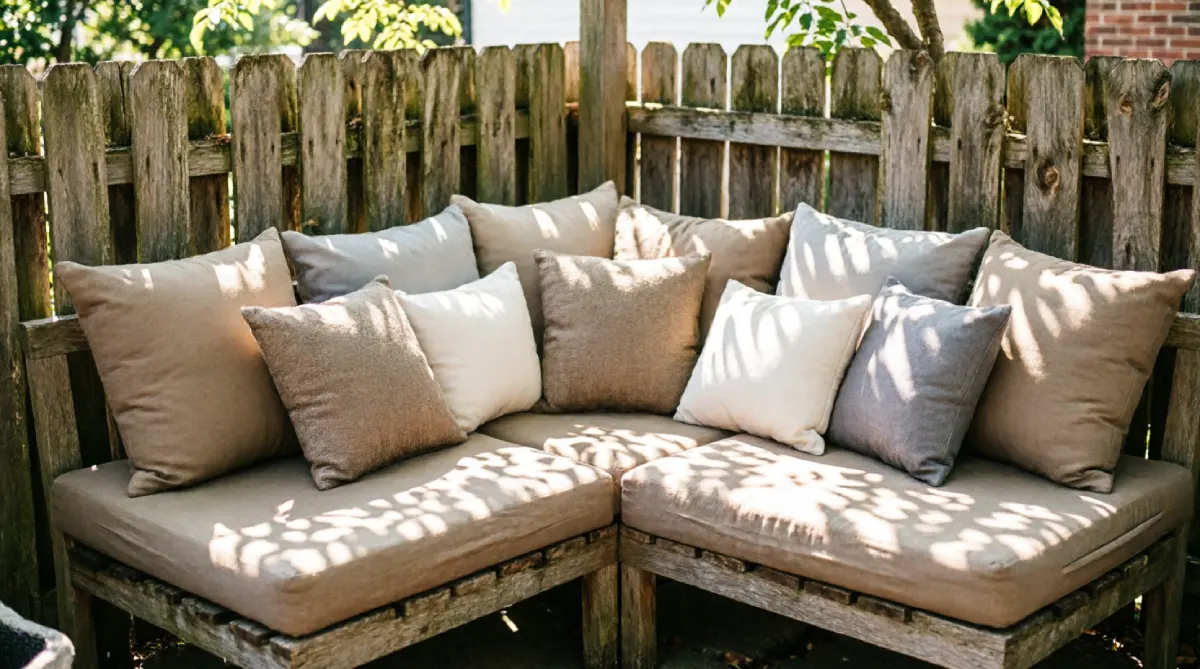
I always reclaim the most awkward corner of a yard for lounging. A tight 90-degree corner is rarely big enough for a table but perfectly fits an L-shaped daybed. By building a base from simple pallet collars or deck tiles, you turn a dead angle into the best nap spot on the property.
I use a continuous mattress cushion across the L-shape rather than separate squares. This visually unifies the corner and eliminates the cracks where legs usually fall through. It invites people to sprawl diagonally, which takes up far less room than two separate chaises facing each other.
I noticed my guests naturally gravitate to this corner during parties, even when more formal chairs are available. There is something about being tucked into a corner with all the pillows that feels secure and private, so the rest of the yard stays open for circulation.
I suggest putting large castor wheels on the base, hidden behind a skirt. It makes the daybed easy to pull out for sweeping leaves underneath. A waterproof fitted mattress cover underneath the outdoor fabric also saves you from mildew panic after a sudden rain.
7. Portable Fire Column
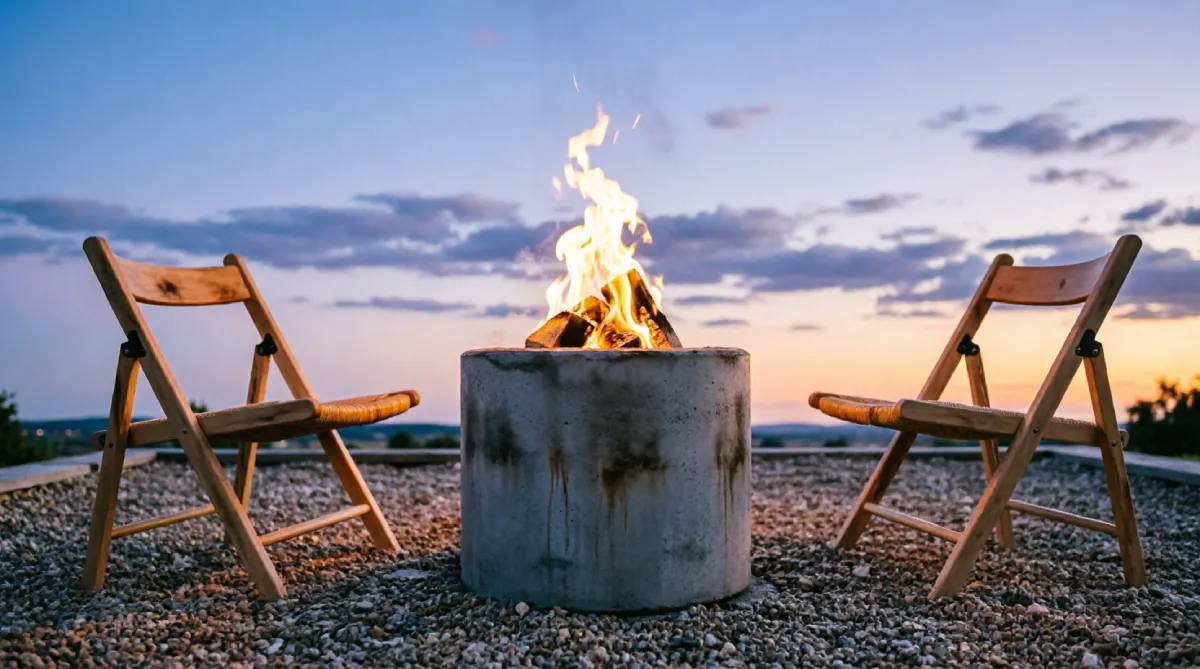
I always treat the fire feature as movable furniture, not a permanent structure. A lightweight, portable concrete column fire pit gives you the warm ambiance of a campfire but can slide to a shelf when not lit. You never have to mow around a fixed stone ring or commit to one layout.
I use a sleek, fiber-reinforced concrete fire table that runs on a standard propane tank stashed in a matching side table. This avoids the smoke issues that annoy neighbors in tight quarters—and bypasses the permanent fire-permit rules some small lots face with wood-burning pits.
I once hosted a dinner where we lit the column in the middle of the table for burgers, then easily carried it to the far gravel patch for s’mores later. The freedom to reshape the yard layout for different phases of the evening completely changes how you use a tiny square footage.
I suggest buying an auto-ignition model that starts with a battery click, not a long lighter. It feels safer when moving a hot unit, and you can top it with a custom-cut tempered glass lid to use the column as a standard coffee table on the 90% of days you don’t need a fire.
8. Invisible Galley Kitchen Deck
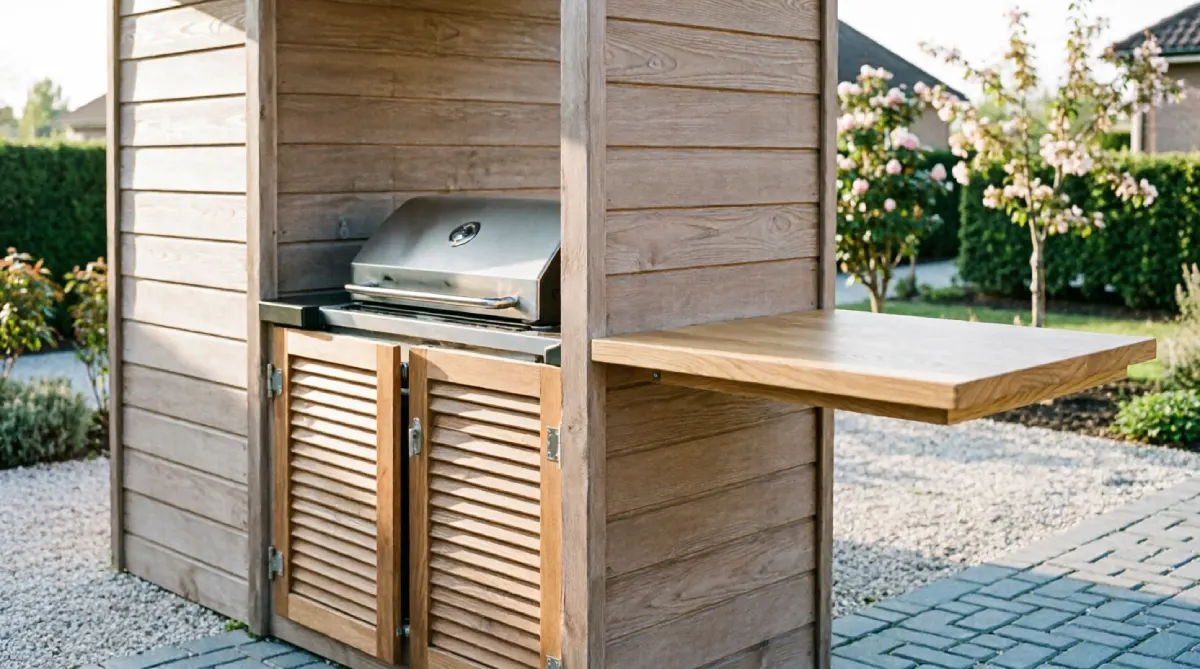
I always hide the outdoor cooking clutter by building a narrow galley kitchen along the side of the house. Most backyards under 400 square feet cannot handle a full pizza oven island. A slim 24-inch-deep countertop with shutter-style doors keeps the grill, tank, and tools feeding off the house’s utility lines.
I use marine-grade plywood or slatted composite deck boards for the cabinet doors to allow airflow for gas tanks. By placing the grill flush against the house in a straight line, your traffic flow moves left to right, and nobody ever has their back dangerously to a hot lid.
I once struggled with a standalone grill that seemed to always block the path to the hose reel. Moving it into this galley configuration freed up a full 5-foot radius circle in the center of the patio, which instantly made the space safe for a kiddie pool without worrying about grease splatter.
I suggest adding a fold-out side wing on piano hinges for prep space. You flip it down after cooking, and it vanishes flat against the cabinet. This gives you a landing zone for plates without permanently stealing the walkway width you need to navigate the narrow passage.
9. Hanging Cylinder Garden
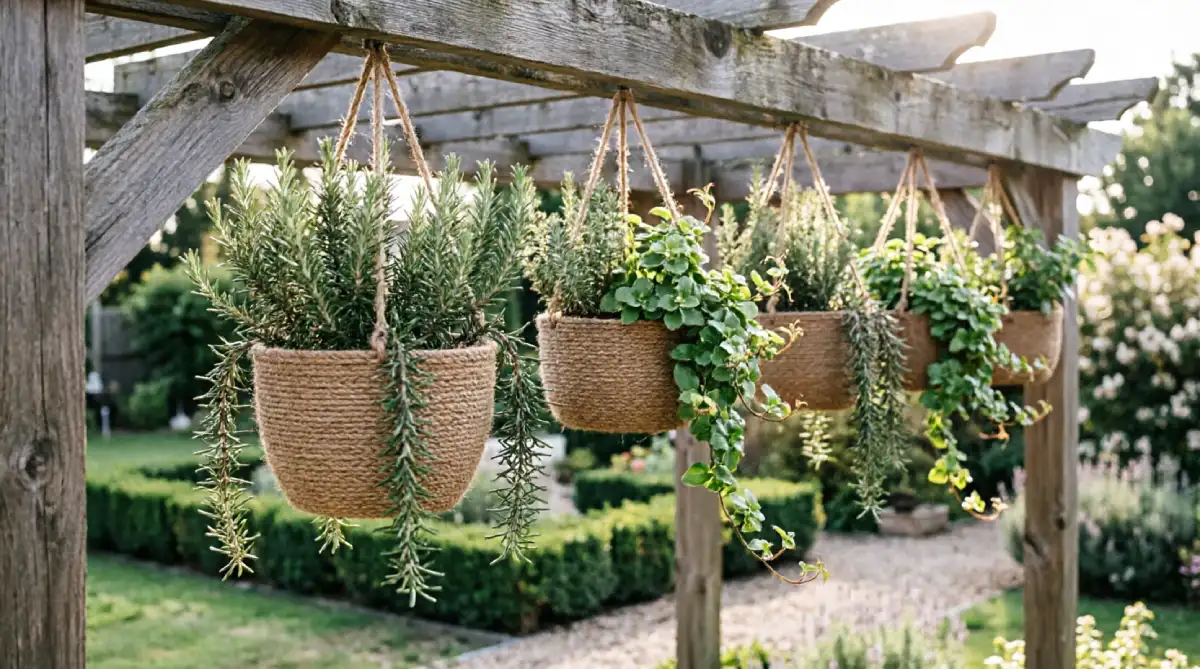
I always look for planting space, and I don’t mean just hanging a single basket. I cluster vertical cylinders—think sturdy metal rings or repurposed buckets with holes—chained at different heights like a hanging herb tower. It creates a visual column of green from a single ceiling hook.
I use a powder-coated steel structure that holds six to eight pots in a spiral pattern. It spins slightly on a swivel hook for even sun exposure, and watering from the top drips down through the levels. No floor space is sacrificed at all for a large herb crop.
I noticed that these hanging columns naturally make a fantastic privacy screen if you hang a few in a row between you and a neighboring window. The cascading strawberry plants or ferns break the sightline directly at eye level without blocking the sun from above.
I suggest using lightweight fiberglass resin pots instead of heavy terracotta for hanging towers. The overall load stays well under the capacity of a single joist-mounted eye hook. Chain links instead of rope also resist mildew and won’t snap even if the soil gets waterlogged.
10. Convertible Gravel Patio
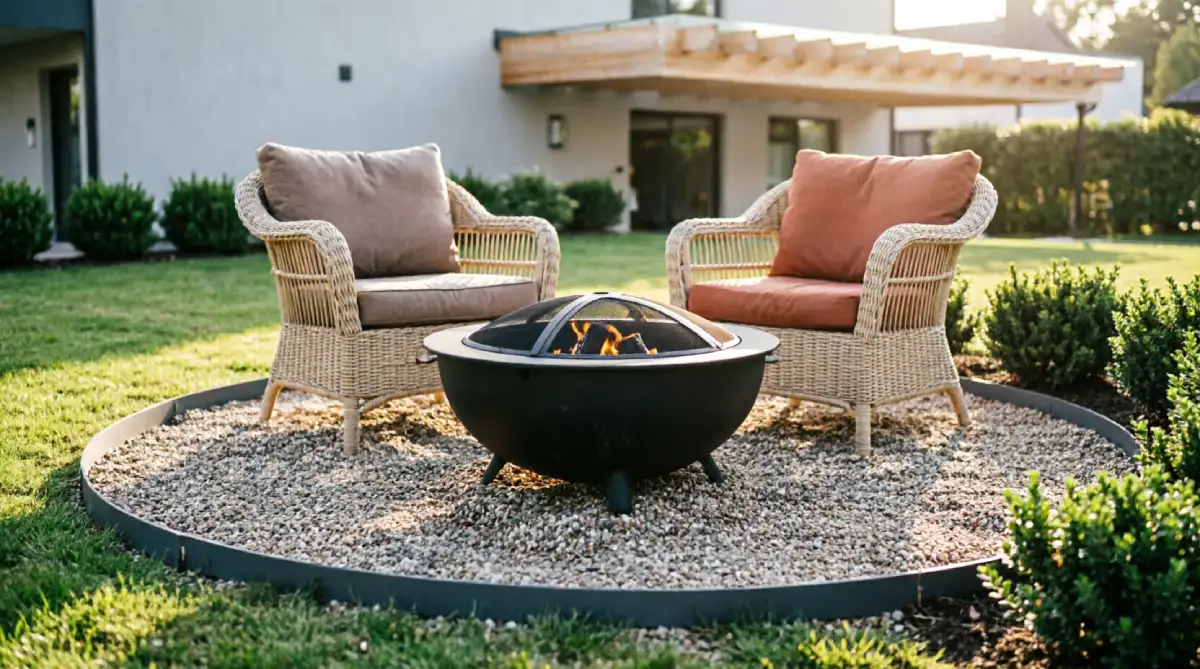
I always advise against pouring a permanent concrete slab if you rent or need flexible space. A compacted gravel and crushed granite patio is a chameleon. You can drive stakes for a sun sail, dig in a pole for string lights where you want, or rake it smooth to shift the layout.
I use stabilized decomposed granite with a binding agent, so it drains well but stays firm enough for chair legs. On a Monday, it’s a serene yoga platform. On Saturday, I place outdoor rugs over it, drag the grill in, and it’s a party floor. It breathes much cooler than concrete in August.
I once tore up a rotting deck and replaced it with a French drain and clean pea gravel in a single weekend. The temperature on bare feet dropped about twenty degrees compared to the composite decking it replaced. The sound of footsteps on gravel also alerted me to a delivery driver before the dog did.
I suggest defining the gravel border with steel edging sunk an inch into the ground. It keeps the rocks from escaping into the lawn and creates a crisp, intentional line that looks high-end, even though the material is incredibly budget-friendly and easy to top up.
Practical Tips
- Light the perimeter, not the center: Clip path lights onto the fence base to push the visual boundary outward. A dark center surrounded by a halo of light feels more expansive.
- Choose clear chairs: Acrylic or wire mesh chairs practically disappear visually. They keep sightlines open but provide the necessary seating without looking like a storage unit yard sale.
- Go heavy on white and silver foliage: Dusty miller or white caladiums reflect the last bit of evening light. Dark green plants in deep shade corners disappear, making the space feel smaller.
- Scale your accessories up, not down: One large ceramic lantern makes a stronger impact than five tiny trinkets. Small clutter emphasizes the lack of space much more than a few intentional large pieces.
Common Mistakes to Avoid
- Pushing everything against the walls: Pulling a bench just 6 inches away from a fence, with LED strip lighting behind, creates a floating silhouette that adds depth. Plastering furniture flat against boundaries flattens the yard.
- Ignoring the floor-to-air transition: Neglecting the canopy leaves a heavy, squat feeling. A pergola with a light, airy slatted roof draws the eye up and utilizes the vertical plane for lights and vines.
- Using a single harsh floodlight: This kills the mood and turns a cozy spot into a security checkpoint. Multiple low-watt warm sources, around 2700K, create shadows that make corners recede.
- Buying matching furniture sets: A showroom set often packs too many similar visual footprints together. Mixed textures—a wooden bench with a metal chair—keep the eye moving and curious.
Comparison Table
| Feature | Best Option | Why It Works |
|---|---|---|
| Seating for tight corners | L-Shaped Daybed | Fits flush into wasted 90-degree angles; eliminates the dead zone behind typical round tables. |
| Privacy screening | Hanging Cylinder Garden | Breaks eye-level sightlines without casting heavy ground shade that kills grass. |
| Cooling direct sun | Tensioned Triangular Shade Sail | Has no center pole obstruction, allowing furniture to sit flush under the highest point of the sail. |
| Non-permanent hardscape | Stabilized Decomposed Granite | Drains instantly, prevents muddy feet, and allows future addition of conduit or stakes with a simple rake and tamp. |
FAQs
What is the best way to create privacy in a small backyard without putting up a big fence?
I suggest breaking up the line of sight with staggered vertical elements rather than solid walls. A mix of hanging cylinder planters, tall ornamental grasses in raised troughs, and a canopy-level shade sail works wonders. Solid fences trap heat and highlight the cramped footprint; layered gaps in greenery feel effortlessly secluded.
Can I have a fire pit in a very small backyard safely?
Yes, you can absolutely have a fire feature in a tiny space if you skip bulky wood stacks. I rely on a portable propane fire column placed on a gravel base, keeping it far from overhanging branches. It produces zero embers and cools quickly, letting you store it out of the way when playtime needs to take over the yard.
Is it expensive to upgrade a small backyard?
It truly doesn’t have to be expensive, but I’ve found it helps to spend on one anchor piece. A DIY floating wall bar or a gravel patio with steel edging are very budget-friendly heavy lifters. Save money by using simple cylinder blocks for plant stands and focus your wallet on luxurious, thick outdoor cushions that make the space livable.
How do I keep my small backyard from feeling cluttered with summer gear?
I obsess over dual-purpose storage. A deck box lid becomes a bench seat; a low-profile lounging cushion stack serves as a play fort. I hide hoses in a vertical rattan tower and use magnetic strips for metal tools. Never bring out a piece of furniture that only does one job in a tight yard.
Conclusion
A limited footprint doesn’t mean a limited summer experience. By shifting your focus upward with vertical gardens and floating bars, creating the illusion of depth with mirrors and lighting, and using reconfigurable pieces like gravel patios and portable fire columns, you unlock the full potential of your space. I’ve found that the most relaxing small yards treat boundaries as opportunities rather than obstacles. Focus on lowering your seating, decluttering your floor corners, and defining clear zones with shade. Pick one idea from this list to try this weekend—once your bare spot of grass becomes an outdoor room, you’ll wonder why you waited so long.
