

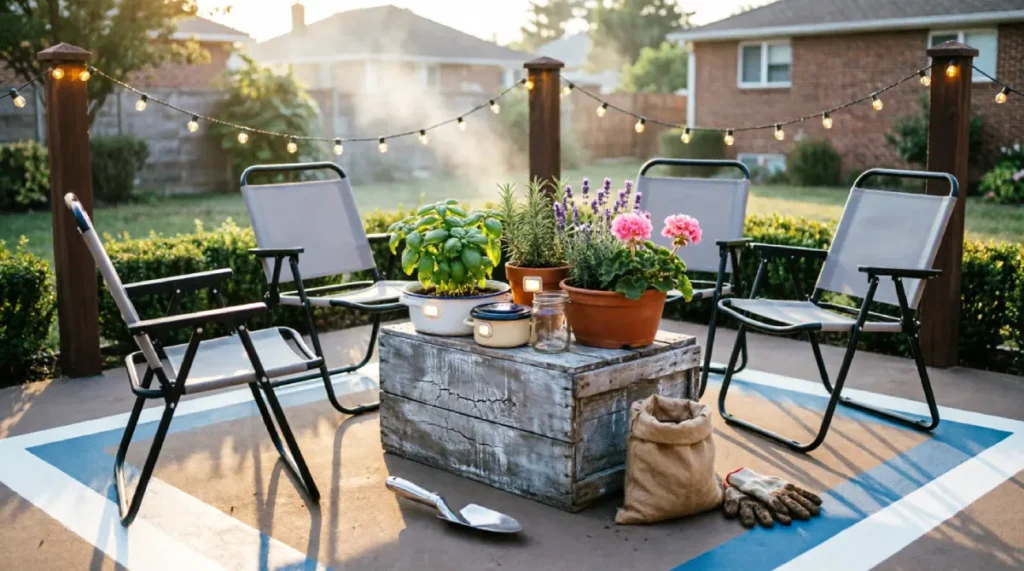
A bare patio or neglected yard can make summer feel less relaxing than it should. When every home project seems to demand a bigger budget than you planned, improving your outdoor space quietly drops off the list. It doesn’t have to.
I focus on practical changes that work with what you already have, not against your wallet. This article covers 11 budget outdoor summer ideas that save money while making your backyard, balcony, or porch somewhere you actually want to spend time. Each suggestion keeps costs low, effort reasonable, and results noticeable. By the end, you’ll have a clear path to a better summer setup without overspending.
1. Define a Conversation Zone with Leftover Paint
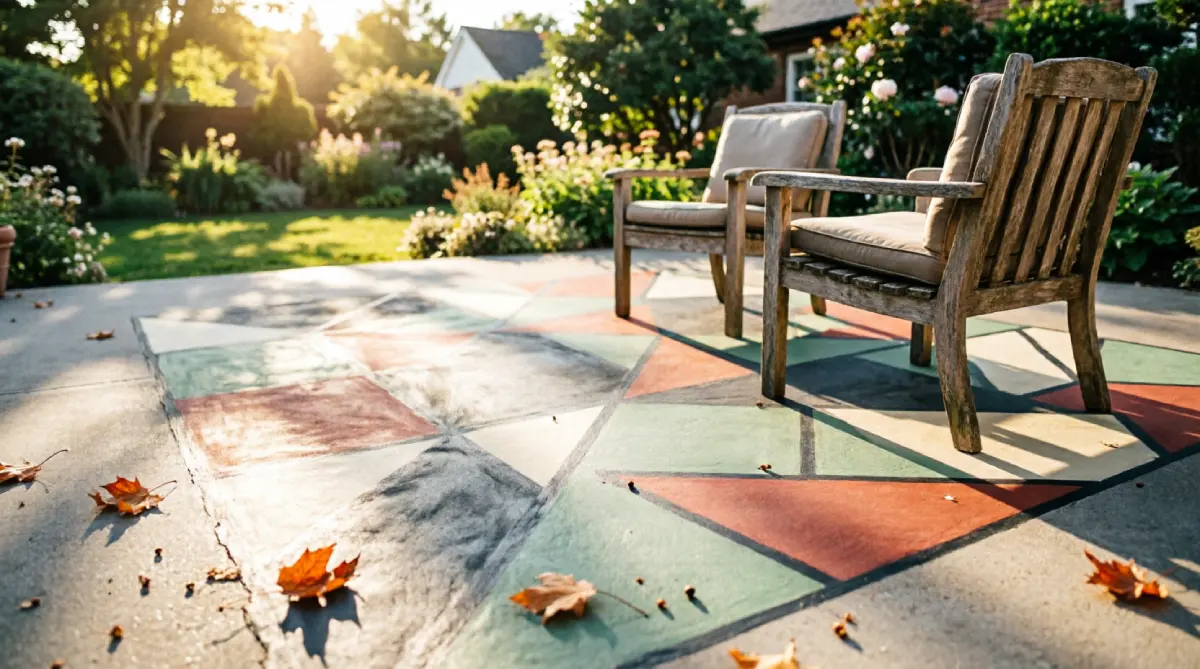
A patio can feel aimless when furniture floats without connection. You don’t need a full deck renovation to fix that. A simple painted area on concrete or an old piece of plywood laid flat can visually anchor chairs and a small table.
Ground-level definition tricks the eye into seeing structure without construction costs. A painted rectangle or circular shape in a muted tone creates the feel of an intentional outdoor room. In many homes, leftover exterior paint sits in the garage from a past trim job. Using what you already have makes this essentially free. I’ve seen this work on worn concrete slabs and uneven paver surfaces alike. Choose a color that complements your house exterior and keep the shape simple—sharp lines work best with masking tape.
2. Repurpose Indoor Rugs Outdoors for a Season
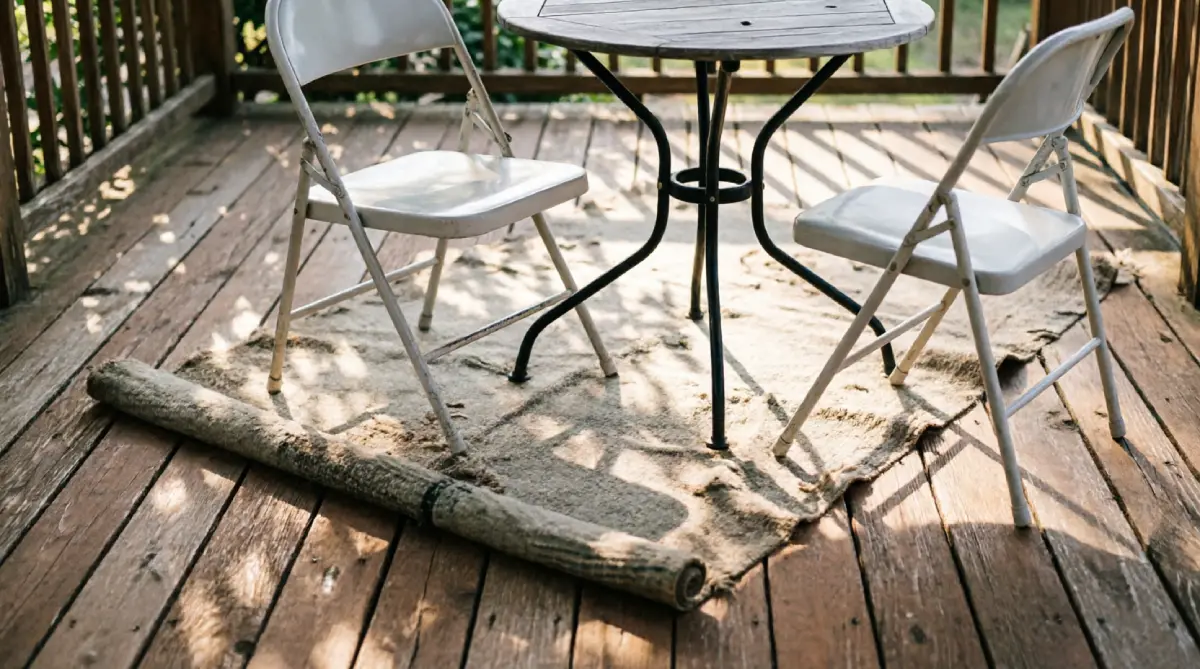
Outdoor rugs labeled for exterior use often come with inflated prices during the summer months. A flat-woven cotton or jute rug you already own can handle a dry season on a covered porch or beneath a shade tree just fine. I prefer older rugs with some wear already, since sun and foot traffic will accelerate aging anyway.
Natural fiber rugs breathe well and dry quickly after absorbing light moisture. They add warmth underfoot and soften the hard edges of stone or wood decking. A common issue is people assuming every rug must be weatherproof to work outside. In many homes, a covered patio stays dry enough for months of rug use with no problem. Shake it out weekly and bring it inside if heavy rain is forecast. When September arrives, you haven’t spent anything extra.
3. Use Solar Path Lights in Unexpected Places
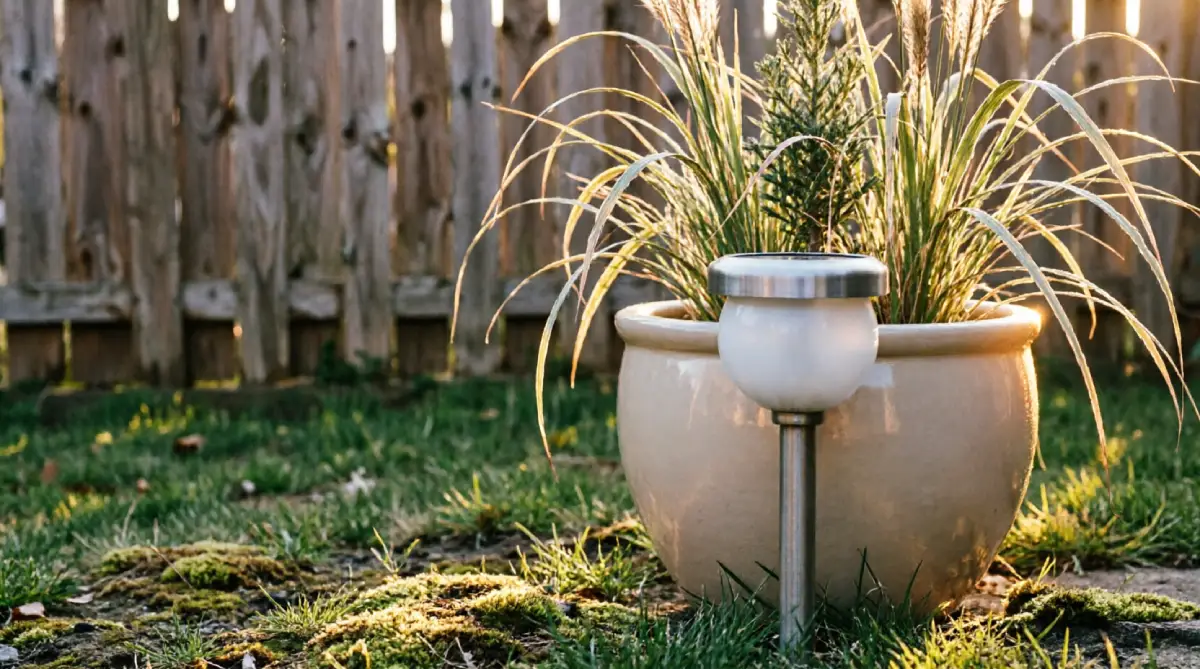
Path lights sold in sets often cost less than a single hardwired fixture, yet most people line them only along walkways. Placing them inside large potted plants, at the base of a blank fence section, or tucked among groundcover creates soft accent lighting that makes a yard feel designed.
Solar technology in budget lights has improved noticeably. Even inexpensive units now stay lit for several hours after a sunny day. Warm white options look far more natural than the cool blue tones common a decade ago. I’ve seen these tucked behind a container of ornamental grass, creating a gentle glow through the blades. In many homes, dark corners near the foundation simply get ignored. Three small lights spaced apart can shift the entire nighttime feel of a space for under twenty dollars total.
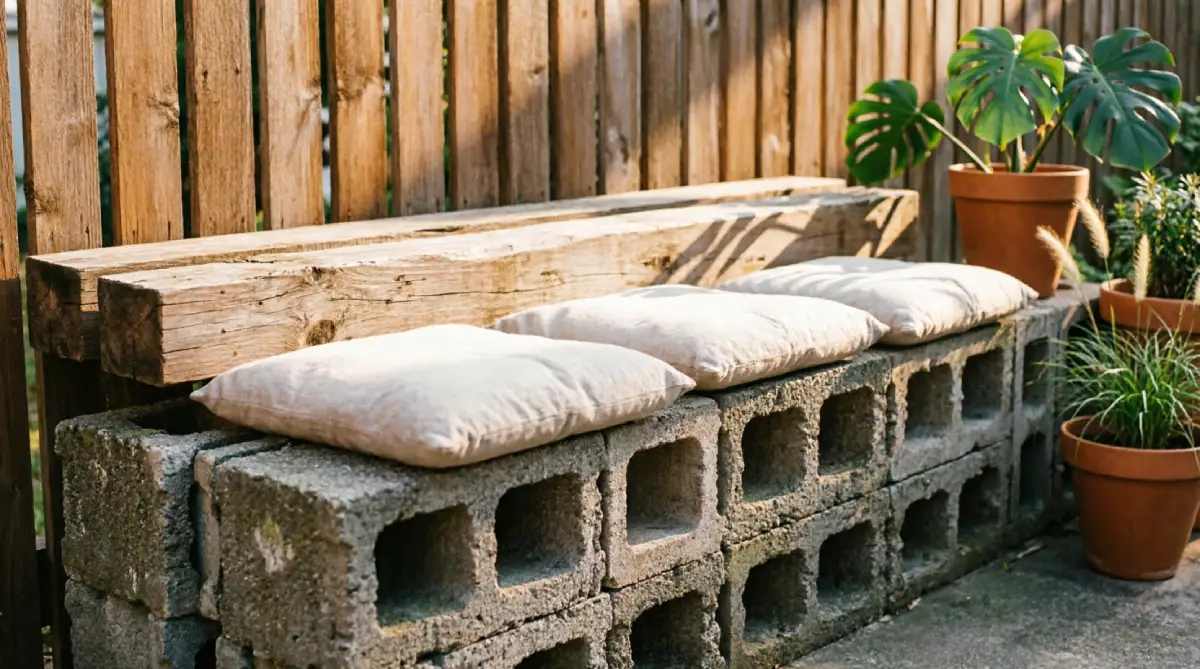
4. Build a Simple Cinder Block Bench
Outdoor seating costs climb fast when you look at ready-made options. Dry-stacked cinder blocks with wooden posts slid through the openings create a sturdy bench in under an hour. Four blocks, two pressure-treated 4×4 posts, and some outdoor cushions make a modern, minimalist seat.
The industrial look fits contemporary homes and contrasts nicely with planted surroundings. No mortar or permanent attachment means renters can use this solution too. In many homes, unused side yards or forgotten corners just need one seating element to become useful. I recommend sanding the wood posts smooth and adding a clear sealer to prevent splinters. Total material cost runs around thirty to forty dollars, depending on cushion choice, far less than any comparable bench you’d buy assembled.
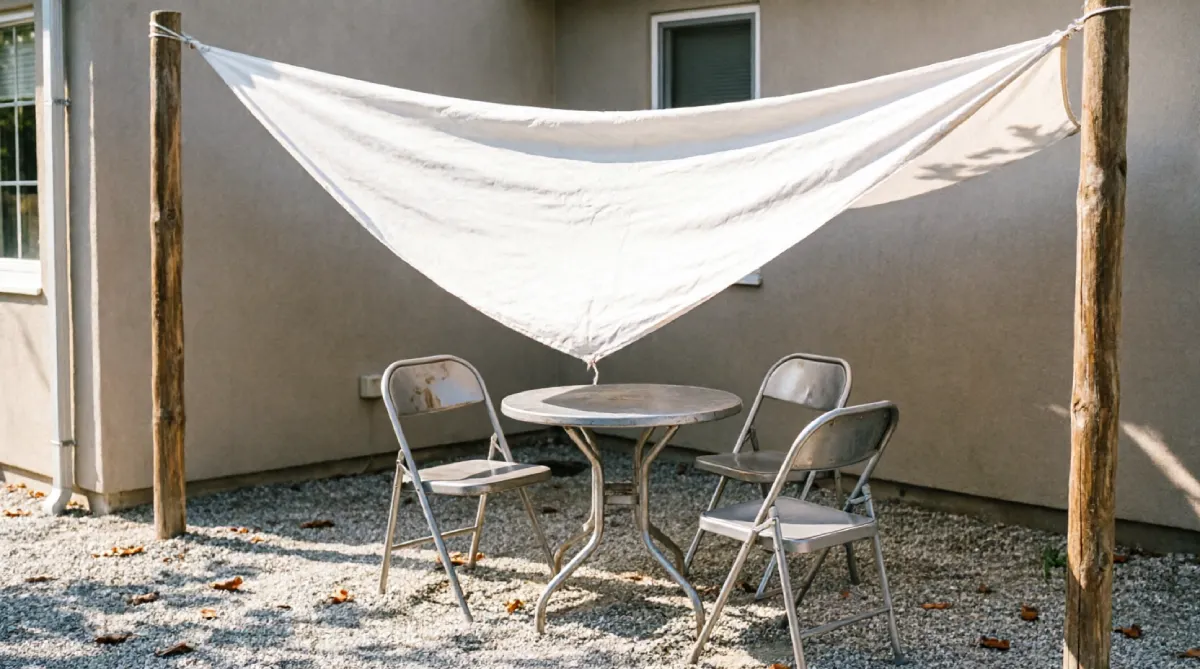
5. Hang a Shade Sail Instead of Building a Pergola
A shade sail costs a fraction of a pergola and installs in a single afternoon. Triangle or rectangle fabric panels are tensioned between anchor points on your house, fence posts, or sturdy trees. The filtered light underneath feels cooler immediately while still letting breezes through.
Permanent structures require permits, footings, and often professional help. A shade sail avoids all of that. In many homes, a south-facing patio becomes unusable between noon and four during July. Knocking down direct sunlight transforms the space for under fifty dollars. I usually recommend white or sand-colored fabric—darker shades absorb more heat. Take the sail down before winter storms arrive, and it’ll last multiple seasons.
6. Make DIY Citronella Candle Holders from Tin Cans
Store-bought citronella candles in decorative containers often cost ten to fifteen dollars each. Empty food cans, cleaned and painted or left as raw metal, hold bulk citronella tealights or poured wax just as well. A hammer and nail punched through the sides create patterns that glow when lit.
The warm flicker through small perforations adds an atmosphere that smooth glass holders don’t offer. Grouping three or four on a table makes a noticeable difference against mosquitoes without noticeable cost. In many homes, a few cans of soup or beans get used weekly—saving those empties takes no effort. I’ve seen these scattered across deck railings and clustered on outdoor dining tables. A wire handle added from a bent coat hanger turns them into hanging lanterns, too.

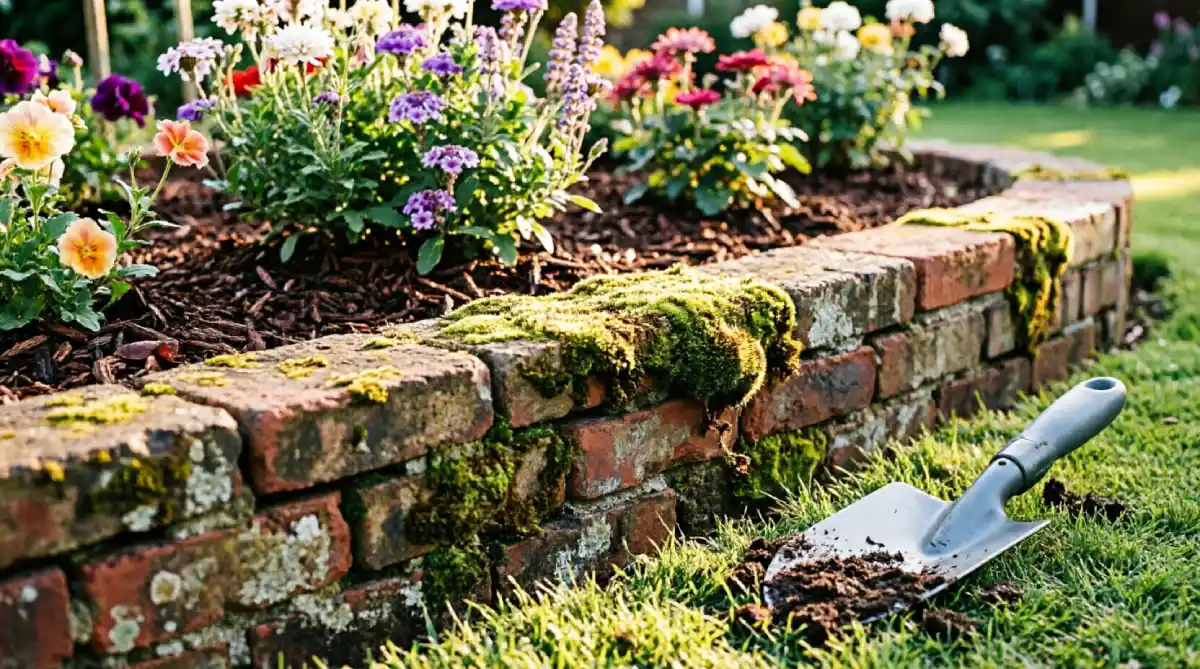
7. Edge Garden Beds with Found Stone or Reclaimed Brick
Crisp edges make planted areas look intentional even before plants fill in. Landscape edging from a garden center adds up per linear foot. Stones unearthed while digging, broken concrete chunks, or old bricks from a demolition site often sit available for free or nearly so.
A defined border keeps mulch in place and lawn grasses from creeping into beds. It also creates a visual line that makes the whole yard feel maintained. A common issue is that garden beds blur into the lawn without a clear separation. In many homes, a weekend of collecting and placing found materials sharpens up the entire property’s appearance. I recommend digging a shallow trench and setting each piece firmly against the next. Imperfect edges look more natural than plastic edging strips anyway.
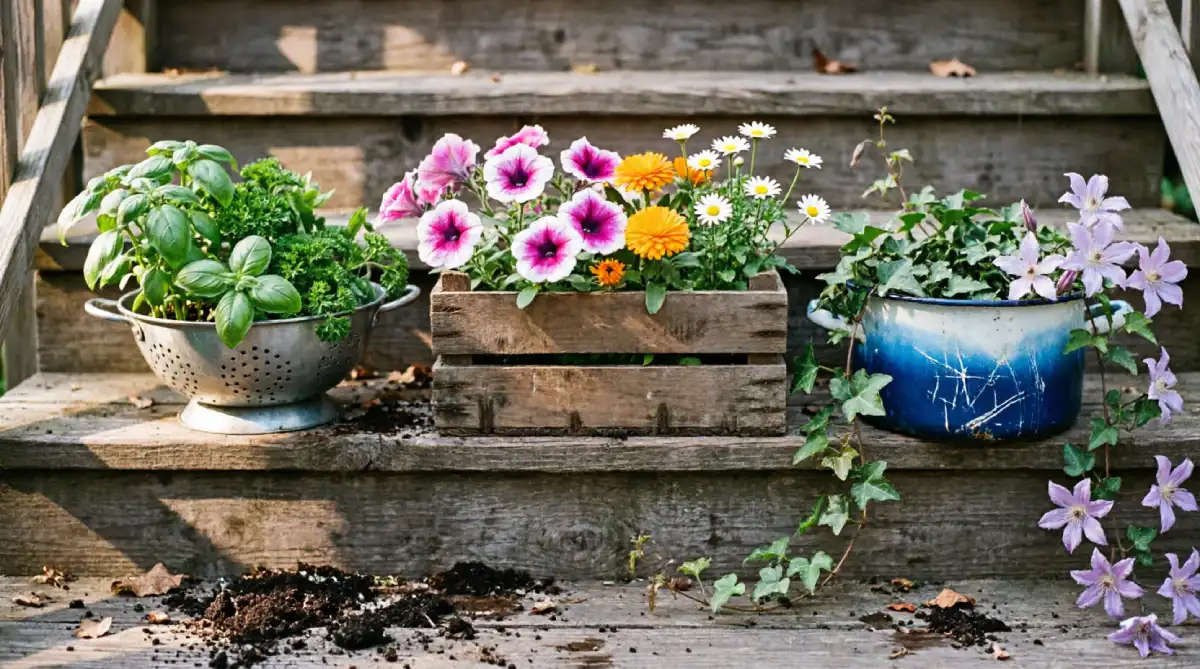
8. Create a Container Garden from Household Objects
Terracotta and ceramic planters carry a real cost when you need several. A deep colander with drainage already built in, an old metal washtub, a wooden crate lined with burlap, or even a sturdy canvas tote filled with soil can grow herbs and annuals successfully.
Unexpected containers add personality that matching store-bought pots rarely achieve. Drainage matters most—if water can escape, most vessels work. In many homes, unused items in the garage or attic just need repurposing. I’ve seen basil thriving in a chipped enamel pot and cherry tomatoes spilling from a repurposed laundry basket. Group odd containers together on steps or along a fence line, and the collected look feels curated, not random. Soil and seedlings cost little while the container comes free.
9. Pressure Wash Instead of Replacing Surfaces
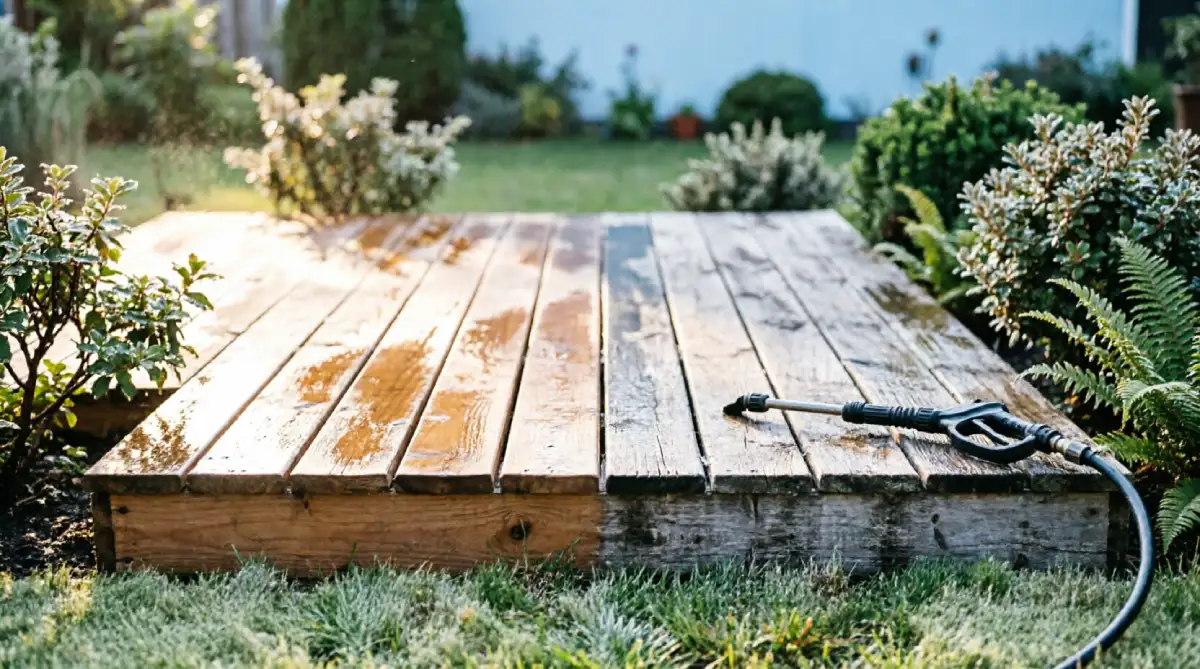
A grimy deck, stained driveway, or algae-covered fence can look like it needs replacement when it only needs cleaning. Pressure washer rentals run about thirty to forty dollars for a half-day, and the transformation reveals the original material hiding underneath grayed grime.
Wood that appears rotted often still has a solid structure beneath surface weathering. Concrete goes from dark and neglected to nearly new. In many homes, surfaces get replaced because they look bad when they actually just need exposure. I’ve seen homeowners plan full deck board replacement, then realize after washing that the existing wood was fine. This saves hundreds to thousands compared to unnecessary material purchases. Work methodically with the grain on wood and hold the nozzle at a consistent distance to avoid marking.
10. String Up Café Lights Using Existing Structures
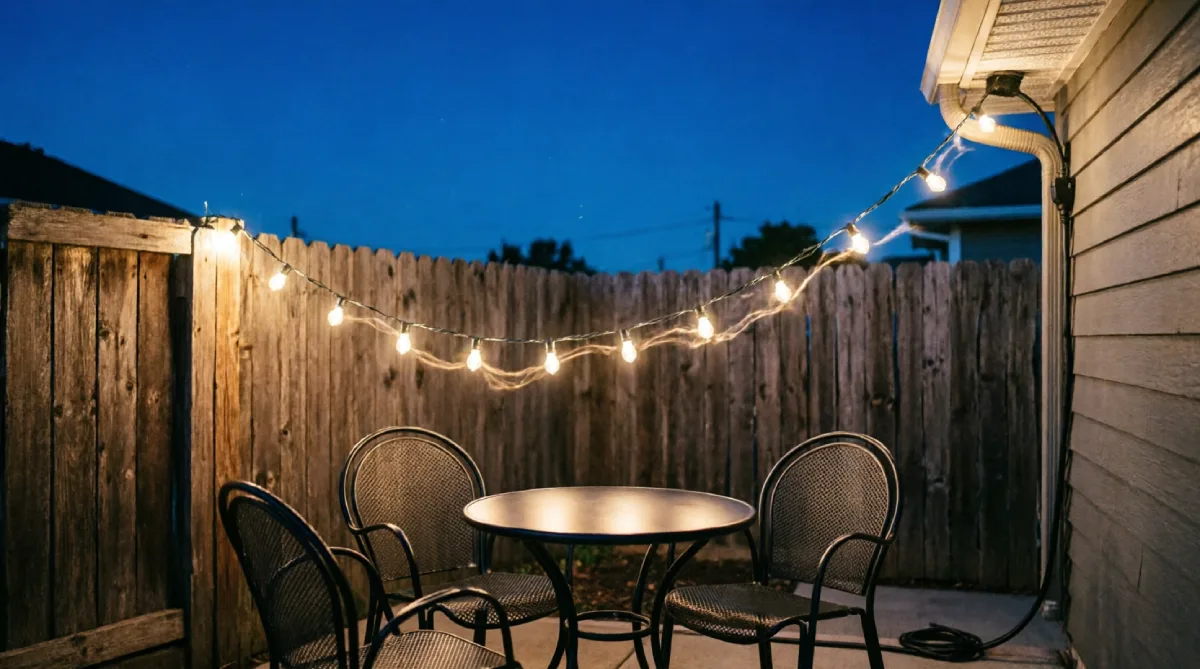
Hardwired outdoor lighting requires an electrician. A strand of weatherproof string lights plugged into an exterior outlet and supported by what’s already standing—fence posts, tree branches, house eaves—delivers evening ambiance for under thirty dollars.
The warm glow overhead creates a ceiling effect that makes the open sky feel sheltered. Commercial-grade strands with replaceable bulbs last multiple seasons, even from budget retailers. A common issue is a lack of a central outdoor outlet. In many homes, running a heavy-duty extension cord along the house foundation to reach the seating area solves this neatly. I usually recommend warm white bulbs over cool or colored options for versatility. Drape them with a slight sag rather than pulling tight for a relaxed feel.
11. Mulch with Shredded Leaves or Grass Clippings
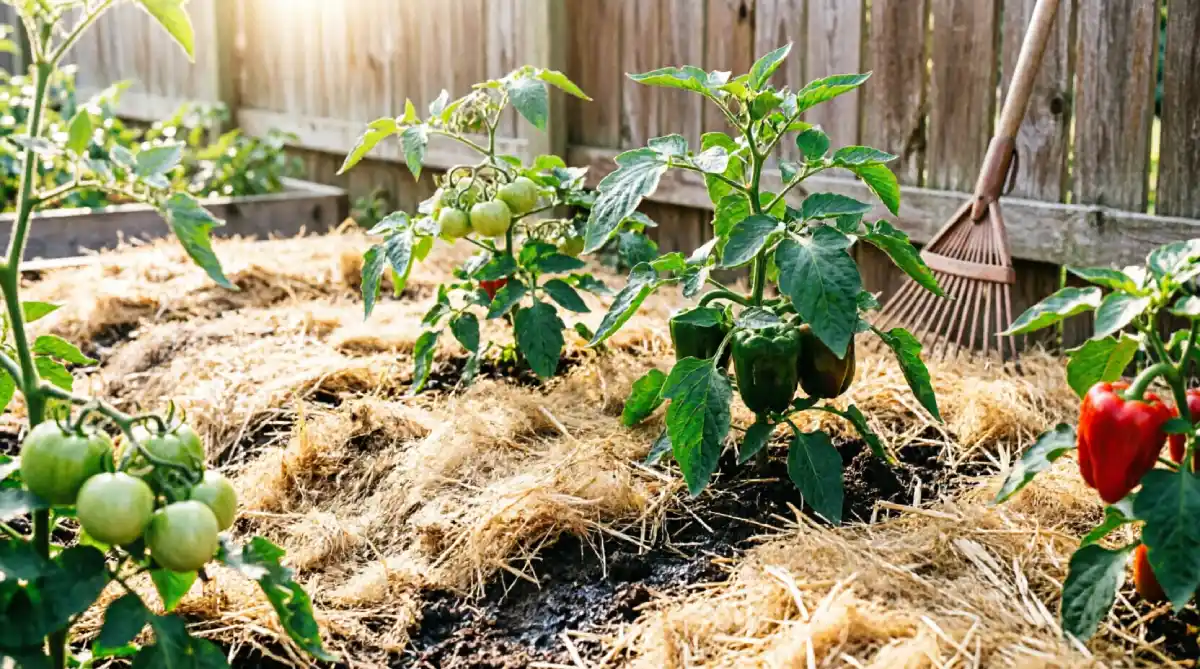
Bagged mulch from the garden center costs three to six dollars per bag and disappears faster than expected across beds. Shredded fall leaves saved in a corner pile or grass clippings spread thin between plants suppress weeds and retain moisture just as effectively at zero cost.
Organic matter breaks down and feeds the soil over time, something dyed wood mulch doesn’t do as well. A thin layer of dried clippings applied weekly prevents the matted, slimy problem that comes from piling them thick. In many homes, bags of yard waste head to the curb weekly during mowing season—that material could stay on site. I’ve seen vegetable gardens mulched entirely with grass clippings produce well all summer. This habit saves on both mulch purchases and yard waste bags simultaneously.
Practical Tips
- Check community material exchange groups online before buying anything new—people often give away leftover stone, brick, and lumber after their own projects finish.
- Time purchases for late summer clearance when retailers discount outdoor items. Patio cushions, planters, and solar lights drop significantly after July.
- Borrow tools rather than buying them. Pressure washers, post-hole diggers, and staple guns sit idle in neighbor garages most of the year.
- Use exterior screws instead of nails for anything you build. They hold better through weather cycles and allow disassembly if you move or reconfigure later.
- Apply a basic wood sealer to any raw material left outdoors. A ten-dollar can extends the life of a fifty-dollar project by several seasons.
- Work with your existing shade and sun patterns rather than fighting them. Put seating where afternoon shade naturally falls instead of trying to manufacture shade where there is none.
Common Mistakes to Avoid
- Skipping surface preparation before painting outdoor areas. Dirt and loose debris prevent adhesion regardless of paint quality. A quick sweep and wash makes the difference.
- Overloading the budget for solar lights with high expectations for cloudy weeks. They need direct sunlight to charge fully. Place them where sunlight hits longest, not where they look best in daytime.
- Using indoor extension cords for permanent outdoor setups. Outdoor-rated cords cost slightly more but handle moisture and sun exposure safely.
- Crowding too many small budget projects into one space until it looks cluttered rather than curated. Negative space between elements matters as much as the pieces themselves.
- Assuming cheap materials can’t look good. The execution matters more than the price tag. Careful placement and consistent finishes elevate basic items.
FAQs
What is the best way to start an outdoor makeover on a very small budget?
Begin with cleaning and defining your space. Pressure wash surfaces, trim overgrown edges, and arrange the furniture you already own intentionally. These zero-cost steps alone transform how a yard feels. Add one lighting element next—solar or string lights shift evening usability dramatically for little money.
Can I really leave indoor rugs outside all summer?
Flat-woven cotton and jute rugs handle covered porches well through the dry summer months. They won’t survive direct exposure to repeated soaking rain. Shake them out weekly and store under cover during extended wet weather. Expect some sun fading by season’s end.
Is it safe to grow vegetables in repurposed containers?
Yes, provided the container didn’t previously hold chemicals or toxic materials. Food-grade plastics, untreated wood, metal without rust-inhibiting coatings, and ceramic all work. Avoid containers that held paint, solvents, or cleaning products. When uncertain, line the interior with a food-safe plastic bag and punch drainage holes.
How many solar lights do I actually need for a small yard?
Three to five lights placed strategically create more impact than a dozen lined up evenly. Focus on illuminating one key feature, such as a seating area, a path bend, or a planter grouping. Clustered light draws the eye and feels intentional rather than scattered.
Do I need to remove old mulch before adding grass clippings?
No. Spread a thin layer—no more than an inch—of dried clippings directly on top. Thick layers mat together and block water penetration. Reapply weekly in thin amounts as clippings break down. This builds soil gradually without needing to strip existing mulch away.
Conclusion:
A better outdoor summer doesn’t demand a renovation budget. The 11 ideas covered here—painted patio zones, repurposed rugs, solar lights tucked into planters, cinder block seating, shade sails, tin can candles, found stone edging, household container gardens, pressure washing existing surfaces, string lights on existing structures, and mulching with yard waste—all keep money in your pocket while making your space more livable.
Each suggestion works because it solves a real problem using what’s available rather than chasing what’s for sale. Start with the idea that addresses your most frustrating outdoor issue. One change often reveals what to tackle next. Summer’s short enough without putting off the improvements that make it enjoyable.
