

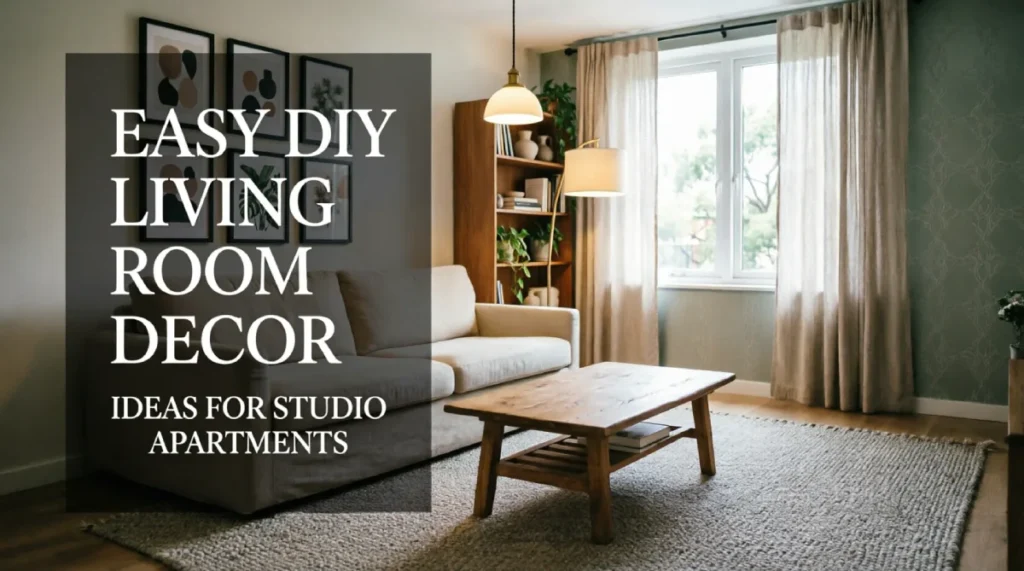
My neighbor in a Chicago suburb once told me her studio apartment felt like a storage unit with a bed in it. The living room, kitchen, and sleeping area all bled into each other, and every decor attempt made things look more cluttered, not less. Sound familiar?
If you’re living in a studio apartment — whether it’s in a suburban complex outside Dallas, a mid-rise near Atlanta, or a converted unit in the Pacific Northwest — you’ve probably run into the same problem. The living room isn’t really a room. It’s a corner. And making that corner feel intentional, cozy, and actually livable takes more than a throw pillow from Target.
The good news: most of the fixes that work best in studio apartments are DIY-friendly, cost under $100, and don’t require a contractor. This guide covers exactly what to do, what to avoid, and how to do it yourself with tools you likely already own or can grab at Home Depot on a Saturday morning.
Why Studio Apartments in US Suburbs Are a Unique Challenge
Studios in American suburbs come with a specific set of problems that city apartments don’t always share:
- More natural light, less layout logic. Suburban units often have larger windows, which is great — but the open floor plan that comes with a studio means furniture placement becomes critical. One wrong couch position and the whole space reads as chaotic.
- Generic builder-grade finishes. Beige walls, builder carpet, and stock light fixtures are standard. Nothing is offensively bad, but nothing stands out either. You’re working with a blank, boring canvas.
- Limited wall options for renters. Most suburban apartment leases prohibit large holes or permanent modifications. That rules out a lot of traditional decor.
- No visual separation between zones. In a house, walls do the organizing. In a studio, you have to create zone separation yourself — and doing it wrong makes the space feel smaller.
None of these is a dealbreaker. They’re just the actual constraints you’re working within.
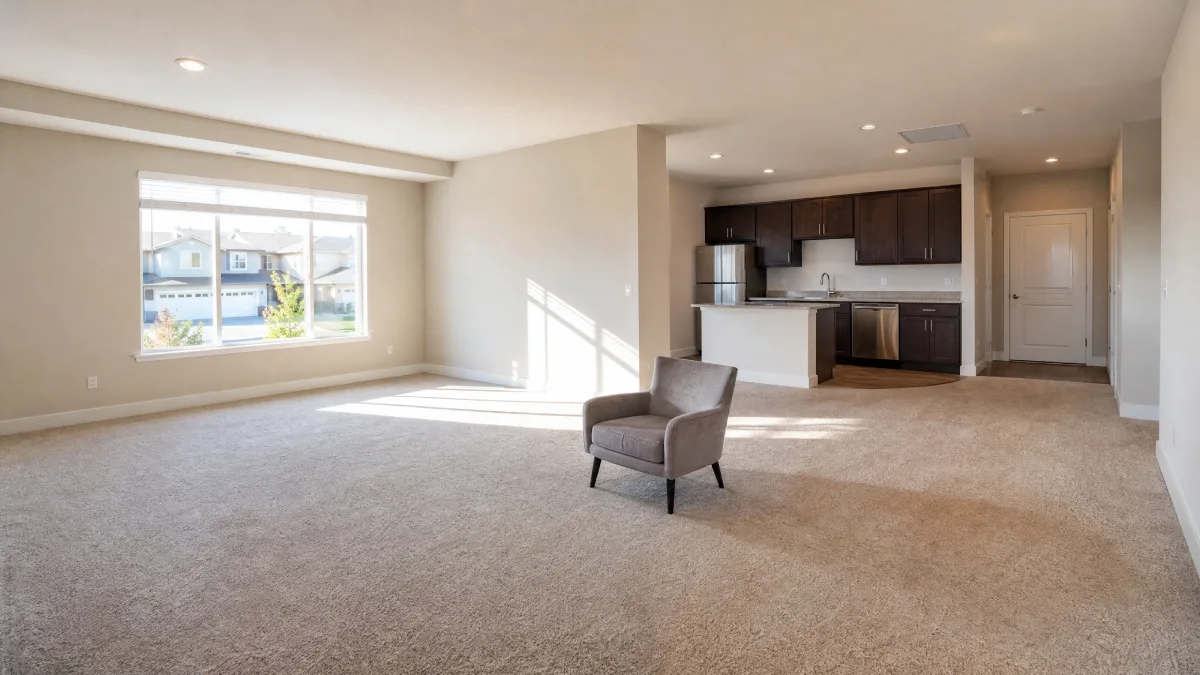
The Zone Strategy: Make One Room Feel Like Three
The single most effective DIY move in a studio apartment living room is zoning — visually separating the living area from the sleeping and dining areas without building walls.
- Area rugs are the fastest and cheapest fix. A well-placed rug under a sofa and coffee table anchors the “living room” and signals where that zone starts and ends. For a standard studio, a 5×8 rug works well. Expect to spend $60–$150 at Rugs USA, IKEA, or HomeGoods. If you go to Home Depot, their outdoor rugs are surprisingly durable and cost even less.
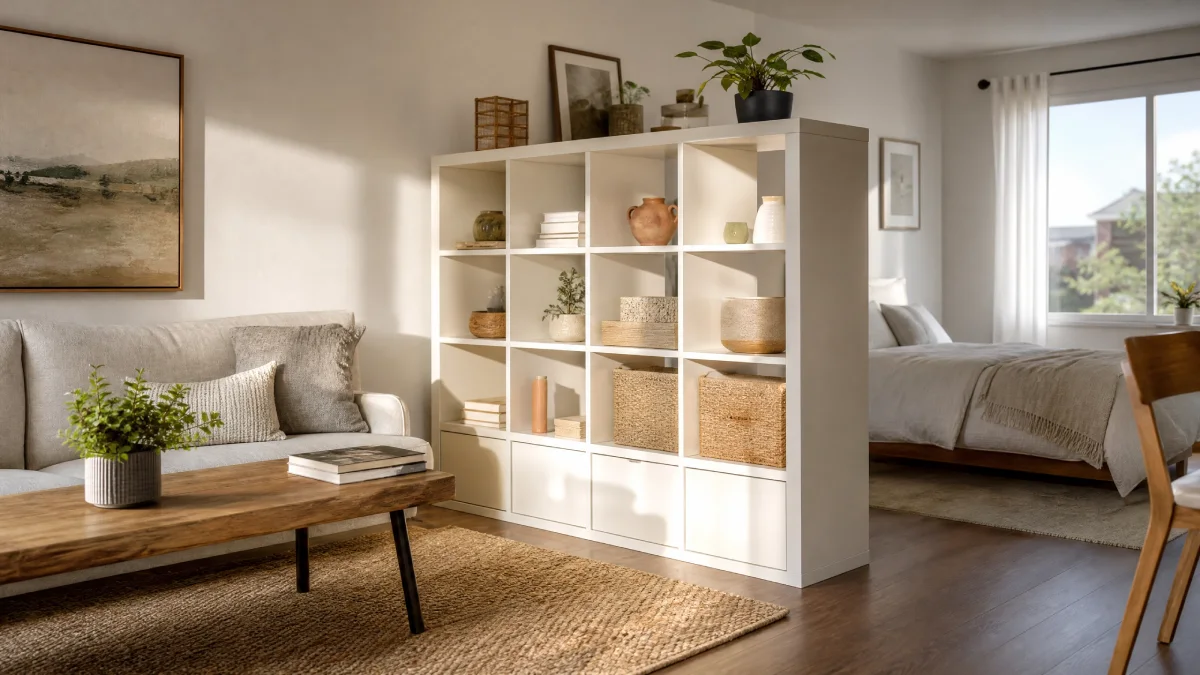
- Use a bookshelf or open shelving unit as a room divider. A 5-shelf IKEA KALLAX or BILLY unit placed perpendicular to a wall creates a visual partition between the sleeping area and living area. It adds storage, looks intentional, and costs $80–$150 depending on size. No drilling into load-bearing walls. No permits. No contractor.
- Curtains hung from a ceiling-mounted tension rod can create a soft boundary between zones. This is especially useful if you want to visually hide the bed from the living area. Curtains from IKEA run $20–$40. A tension-mounted curtain rod that requires no drilling is around $15–$25.
DIY Wall Decor That Won’t Get You Evicted
Lease restrictions don’t mean you’re stuck with blank walls. Several approaches work well in rental units:
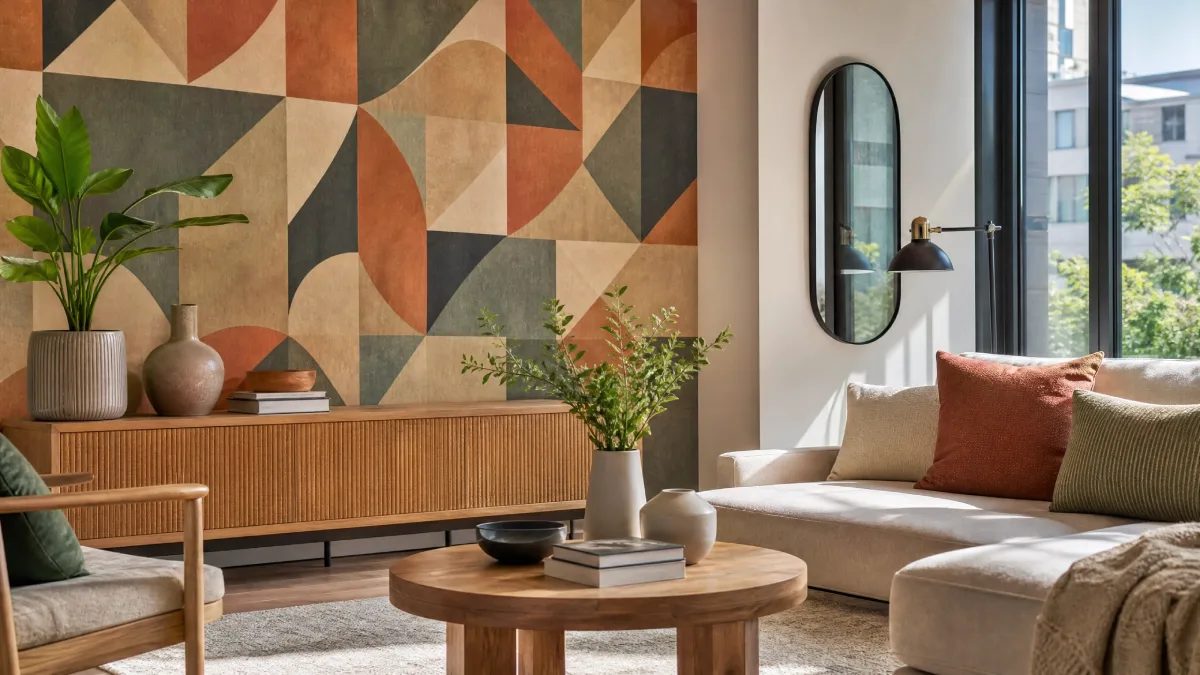
- Removable wallpaper (peel-and-stick) has improved dramatically in the past few years. Brands like Tempaper and NuWallpaper sell designs that go up clean and come down without residue. Covering one accent wall in a studio living room takes about 2–3 hours and costs $50–$120, depending on the size of the wall and the pattern. This single change has more visual impact than almost anything else on this list.
- Gallery walls with Command strips. 3M Command strips hold up to 16 lbs per pair and leave walls clean when removed. A curated gallery wall with 6–10 frames costs $40–$80 if you use IKEA RIBBA frames and print your own photos or artwork from Canva. The key is consistent frame colors — don’t mix black, white, and wood tones unless you’re going for an intentionally eclectic look.
- Floating shelves with no-stud anchors. Monkey Hooks or toggle bolts let you mount shelves on drywall without finding studs. Each shelf holds 20–30 lbs. A pair of floating shelves from Home Depot costs $20–$40 installed yourself in under an hour.
What to avoid: mirror tiles with adhesive backs, which look cheap and peel off in humidity. Also, skip those large canvas prints that come pre-framed — they often look like hotel art and do nothing to personalize the space.
Lighting: The Most Underrated DIY Upgrade
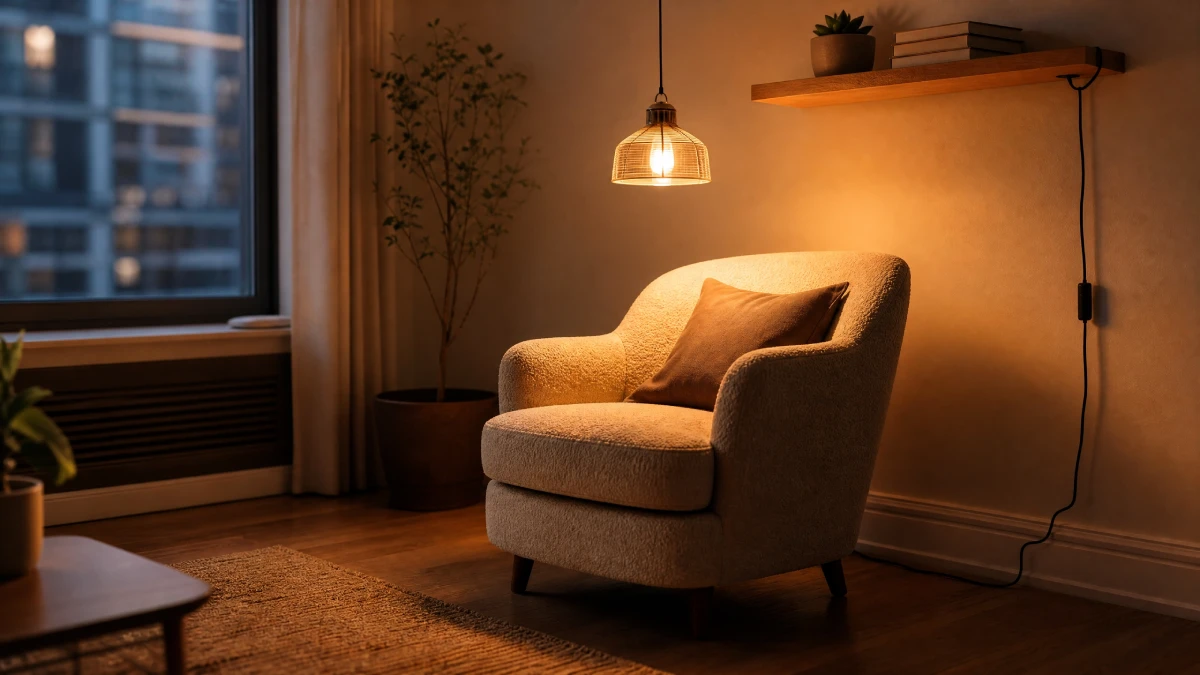
The overhead light in most studio apartments is one flat, harsh fixture. It makes everything look like a hospital waiting room. Fixing this costs less than people think.
- Plug-in pendant lights are a real thing. They hang from a hook in the ceiling (no wiring), run their cord along the wall or ceiling, and plug into a standard outlet. Sold at Home Depot, Wayfair, and Amazon, they run $30–$80 each. One above a reading chair or side table transforms the feel of a corner.
- Floor lamps with warm-toned bulbs do the same job for less. A decent arc floor lamp costs $50–$120. Pair it with a 2700K–3000K LED bulb. That color temperature is warm and residential — it’s the difference between a cozy living room and a fluorescent office.
- Under-shelf LED strip lights are a $15–$25 project. Plug them into an outlet, stick them to the underside of floating shelves or a bookcase, and they create indirect ambient lighting that makes the space feel larger.
For renters who can’t swap out overhead fixtures: a dimmer plug adapter (around $15) lets you control the intensity of any lamp plugged into it. A small upgrade with noticeable results.
Furniture Layout: The DIY Move Nobody Talks About Enough
Before buying anything, rearrange what you have. In most studio apartments, people push everything against the walls — this is almost always the wrong move. It creates dead space in the middle of the room and makes the perimeter feel cluttered.
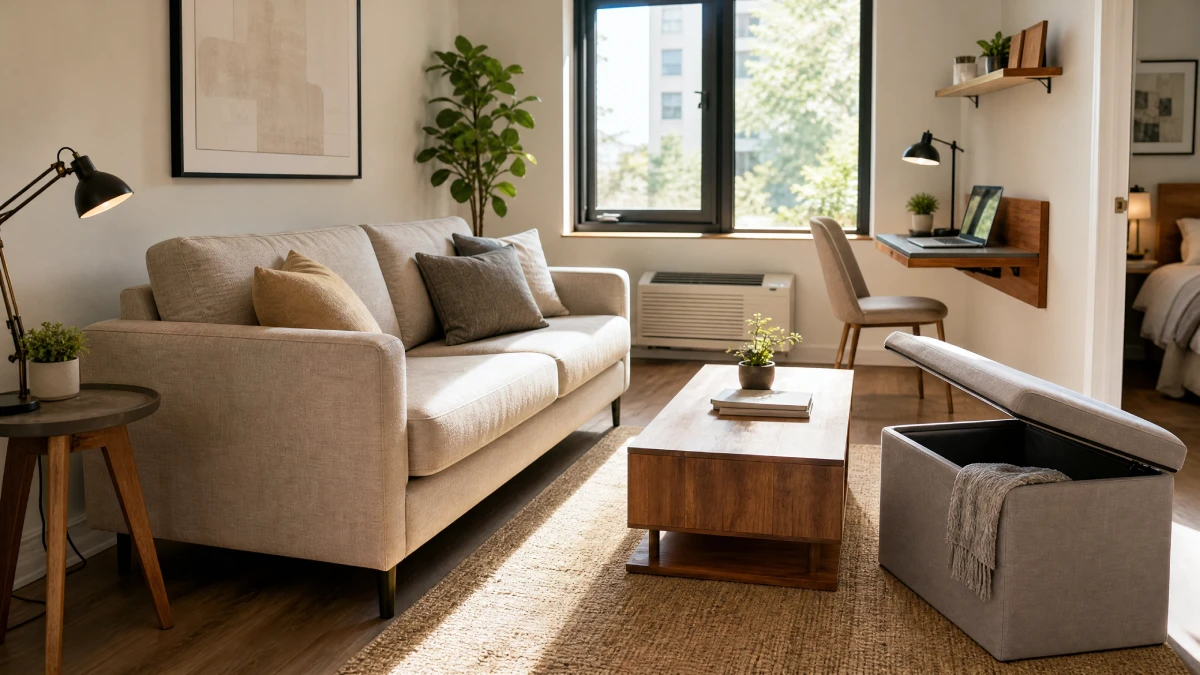
Try pulling the sofa away from the wall by 6–12 inches. Place the coffee table 18 inches from the sofa edge. This creates a more intentional, conversational arrangement and actually makes the room feel larger.
- DIY furniture risers are worth mentioning here. If your sofa or bed sits low, $15–$20 furniture risers from Amazon or Walmart lift pieces 3–6 inches, which helps storage underneath and improves proportions visually.
- Multifunctional furniture is worth the investment. An ottoman with interior storage replaces a coffee table and a storage bin. A sofa with a pullout bed saves square footage. A wall-mounted fold-down desk from Wayfair ($80–$150) replaces a full desk footprint in a small living area. These aren’t DIY builds — they’re strategic purchases that complement your DIY decor work.
Cost Breakdown: What to Budget for a Studio Living Room Makeover
Here’s a realistic range for the full scope of what’s covered above:
Low budget ($150–$300):
- Area rug: $60–$80
- Command strip gallery wall: $40–$60
- LED strip lights + plug-in pendant: $40–$60
- Curtain room divider: $35–$50
- Rearrange existing furniture: free
Mid budget ($300–$600):
- Everything above, plus:
- Removable accent wall wallpaper: $80–$120
- Two floating shelves: $40–$60
- Arc floor lamp: $80–$120
- IKEA shelf room divider: $100–$150
Higher budget ($600–$1,000+):
- All of the above, plus:
- New multifunctional furniture (storage ottoman, fold-down desk)
- Upgraded rug (larger or higher quality)
- Statement plug-in pendant lights (multiple)
- Full gallery wall with printed and framed art
A contractor hired for purely decorative work in a studio apartment would charge $80–$150/hour for labor alone. Every item on this list is realistically DIY with basic tools: a stud finder, a level, a drill, and a tape measure.
Common Mistakes US Renters Make (and How to Avoid Them)
- Buying furniture that’s too large. A full-size sectional in a 400 sq ft studio kills the room. Measure first. The sofa should not exceed 84 inches wide in most studios.
- Ignoring scale. One large piece of art beats five small ones scattered randomly.
- Matching everything too closely. Perfectly matched sets look staged. Mix textures — linen, wood, metal — to make it feel lived-in.
- Over-accessorizing. Shelves packed with objects look like clutter. Group items in odd numbers (3 or 5), leave breathing room between groups.
- Cheap blinds left as-is. Those white vinyl blinds are doing more damage to the room’s look than almost anything else. Curtain panels hung above and outside the window frame make the window look taller and the room more polished. Budget $20–$40 for IKEA curtains.
When NOT to DIY (Be Honest With Yourself)
Most of the projects above are genuinely beginner-friendly. But there are clear limits:
- Electrical work — swapping out ceiling fixtures in a rental requires an electrician or landlord approval. Never rewire outlets or light switches yourself. In most US states, this requires a licensed contractor and a permit.
- Structural wall changes — if you want to remove a closet wall or open a layout, that’s not a weekend project. Get a contractor and a permit.
- Plumbing — not relevant to living room decor, but worth noting: don’t let YouTube overconfidence bleed into areas where mistakes cost thousands.
For pure decor work — paint, removable wallpaper, lighting, furniture, rugs, shelves — DIY is almost always the right call in a studio apartment.
FAQ’s
How much does it cost to decorate a studio apartment living room in the US?
A realistic mid-range DIY budget is $300–$600 for noticeable changes. High-end DIY approaches top out around $800–$1,000. Hiring a decorator for the same scope would cost $1,500–$3,000+ in most US suburban markets.
Can I make DIY decor changes as a renter without losing my deposit?
Yes, if you stick to removable wallpaper, Command strips, peel-and-stick products, and furniture-based changes. Avoid adhesive hooks rated below the weight of what you’re hanging, and always follow the manufacturer’s removal instructions.
What’s the single highest-impact change for a studio living room?
An area rug that anchors the living area, followed closely by warm lighting. These two changes shift the feel of a space faster than anything else, and both cost under $150 combined.
Do I need permits for decorating a studio apartment?
No — for decor. Yes — if you’re doing any electrical, structural, or plumbing work. Cosmetic changes like paint (with landlord permission), removable wallpaper, floating shelves, and furniture changes require no permits anywhere in the US.
Is it worth hiring a professional for a studio apartment?
For structural or electrical work, absolutely. For pure decor? The ROI on DIY is significantly better, especially in a rental where you can’t make permanent changes anyway.
Conclusion
A studio apartment living room doesn’t need a big budget or a contractor — it needs clear thinking about zones, lighting, scale, and smart use of removable products. The projects above have been done in real US apartments from suburban Phoenix to suburban Boston, and they work because they address the actual constraints of the space rather than pretending those constraints don’t exist.
Start with one change — an area rug, a gallery wall, or a plug-in pendant light — and build from there. You don’t need to redo everything at once. Each upgrade compounds on the last, and within a few weekends, the space starts to feel intentional rather than accidental.
