


Introduction
My friend Priya moved into a 620-square-foot studio in Wicker Park two years ago. She called me the week after she got the keys, half-excited and half-panicked. “It looked bigger in the listing photos,” she said. Sound familiar?
Chicago renters deal with this constantly. The city has some of the most character-rich apartment stock in the country — vintage courtyard buildings in Lincoln Park, converted lofts in the West Loop, high-rise units along Lake Shore Drive — but most of them are small. And in Chicago’s older building stock, you’re often working around radiators, clunky baseboards, long, narrow floor plans, and zero closet depth.
The good news: small doesn’t mean cramped if you design it right. Modern small apartment design in Chicago isn’t about buying expensive furniture or gutting the place. It’s about making intentional decisions — what goes in, where it lives, and how it pulls double duty. This guide covers what actually works, what to skip, and how to do most of it yourself without hiring anyone.
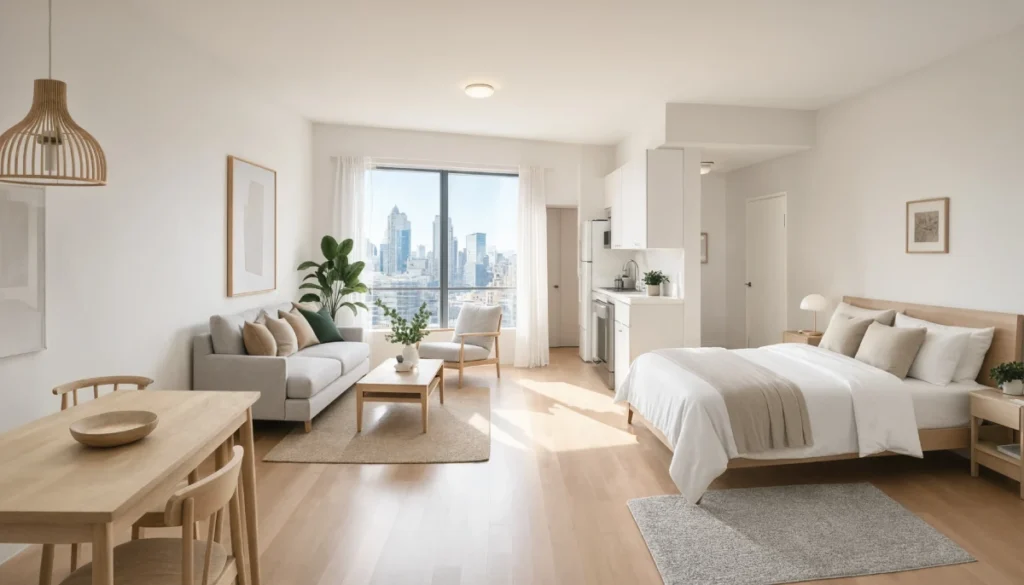
Understanding Small Apartment Layouts in Chicago
Chicago apartments have their own quirks. A lot of the city’s housing stock was built before 1960, which means you’re dealing with layouts that weren’t designed for modern living.
The most common Chicago small apartment types:
- Railroad apartments: Rooms line up one after another with no hallway. Common in Logan Square, Pilsen, and Bridgeport. The challenge is traffic flow and privacy.
- Courtyard building units: Usually 550–800 sq ft, often with one small bedroom, a narrow kitchen, and good natural light from multiple exposures.
- Studio conversions in high-rises: Especially along Michigan Avenue and Streeterville. Open-plan but with limited wall space due to floor-to-ceiling windows.
- Garden units: Lower rents, lower ceilings, less light. Require specific design adjustments to avoid a cave-like feel.
Before you start buying anything, draw a rough floor plan — even on paper. Measure every wall, note where the radiators and vents sit, and figure out which walls are load-bearing (you won’t be moving those). In most Chicago rentals, you’re also working within landlord restrictions: no holes bigger than a nail, no painting without permission in some buildings.
Knowing your constraints before you spend a dollar is the most important design step.

The Best Layout Strategies for Small Chicago Apartments
Layout decisions matter more than decor in a small space. Furniture placement alone can make a 550-square-foot apartment feel either tight or surprisingly functional.
- Zone your space without walls. In studio and open-plan apartments, define areas visually using rugs, lighting, and furniture arrangement. A 5×8 rug under the bed creates a bedroom zone. A pendant light over a small dining table signals “eating area” without a single partition.
- Push furniture against walls — but not everything. A common mistake is pushing all furniture flush to the walls to “create space.” This actually makes a room feel smaller because it creates a hollow, dead zone in the center. Float your sofa slightly away from the wall (even 4–6 inches) and use the space between it and the wall for a console table or shelving.
- Go vertical. Chicago apartments often have 9 or 10-foot ceilings in older buildings — that’s an asset. Use it. Floor-to-ceiling bookshelves, tall wardrobes, and high-mounted floating shelves draw the eye up and add storage without eating floor space.
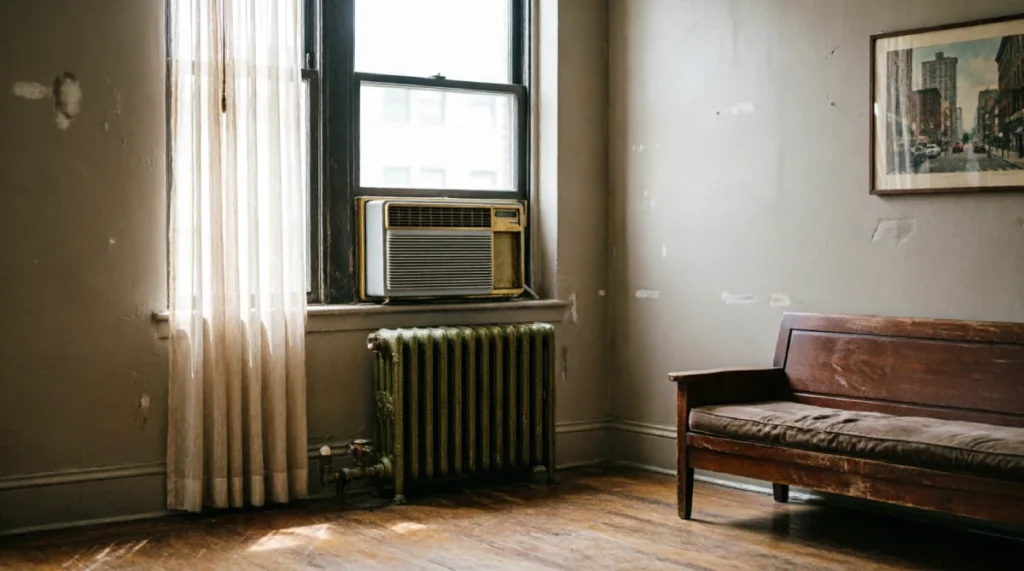
- The Chicago radiator problem. Cast-iron radiators are a fact of life in vintage Chicago buildings. They’re usually positioned under windows, which is actually the best spot for heat distribution — but they make furniture placement tricky. Don’t push sofas or beds directly against them. Instead, use a radiator cover (available at Home Depot for $80–$200 depending on size) that doubles as a shelf or window seat.

Modern Design Styles That Work in Small Chicago Apartments
Not every design trend translates well to tight city spaces. These styles consistently perform well in small Chicago apartments:
- Scandinavian minimalism works because it prioritizes function. Light wood tones, white or off-white walls, and clean-lined furniture keep visual noise low. In a 600-square-foot apartment, every object you can see contributes to how spacious or cluttered the space feels.
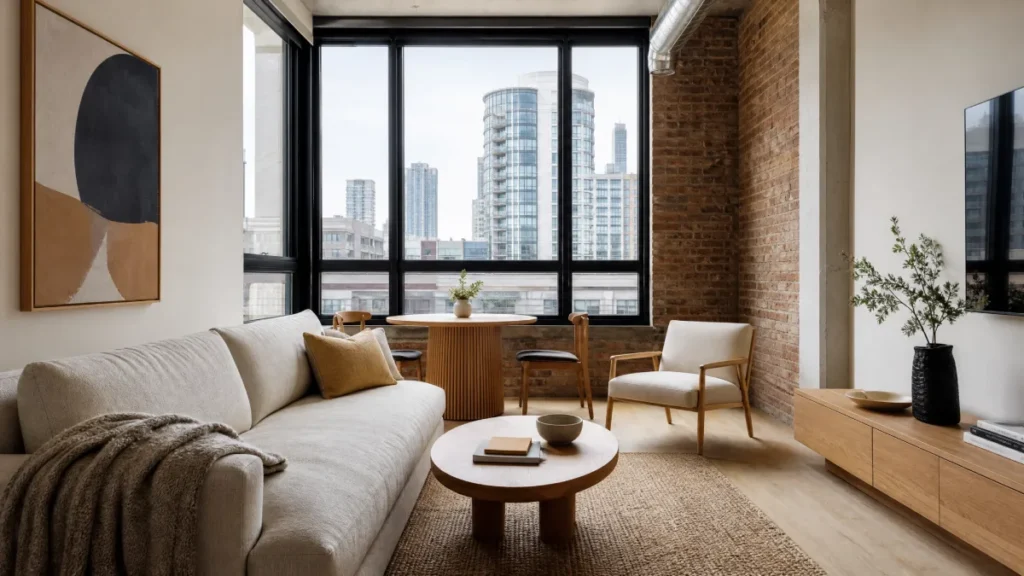
- Industrial modern fits naturally in Chicago’s loft and converted warehouse stock. Exposed brick (common in Lincoln Park, River North, and Fulton Market), black metal accents, and concrete-look surfaces play to the building’s existing character rather than fighting it.
- Japanese-inspired minimalism (Japandi) takes Scandinavian sensibility and adds a warmer, more intentional quality. Low-profile furniture, natural materials, and deliberate negative space. Especially effective in narrow railroad apartments where visual clutter amplifies the tightness.
What to avoid in small Chicago spaces:
- Heavy dark curtains that block light in already-dim garden units
- Oversized sectional sofas that dominate the room
- Too many patterns are competing with each other
- Farmhouse or cottage styles — they need space to breathe; they look cluttered in tight rooms
Storage Solutions That Work Without a Contractor
Most Chicago renters can’t drill through tile or add built-ins. Here’s what’s practical, affordable, and renter-friendly:
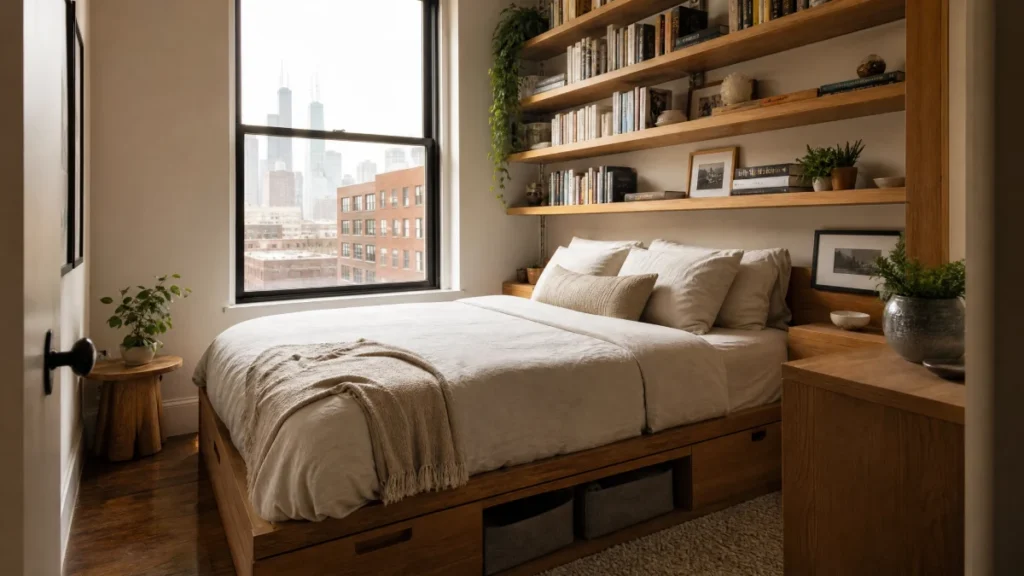
- Under-bed storage is the most underused square footage in small apartments. Platform beds with built-in drawers (IKEA’s MALM line runs $300–$600 depending on size) or simple bed risers with storage containers beneath can hold off-season clothes, extra linens, and bulky items.
- Ottoman storage doubles as seating, a coffee table, and hidden storage. A decent one runs $80–$150 at Target or HomeGoods.
- Command hooks and strips (3M brand, available at every Home Depot and Lowe’s in Chicago) hold more than most people realize. The heavy-duty strips hold up to 16 lbs per pair. Use them for hanging bikes, organizing kitchen tools, or mounting floating shelves without wall damage.
- Over-the-door organizers work in every room. The back of a closet door, bathroom door, or pantry door adds usable storage in zero square footage.
- Pegboards mounted on a single wall nail (or leaned and supported) create flexible kitchen or home office organization. A 2×4 pegboard from Home Depot costs about $15.
- Tension rod shelving inside cabinets. A $10 tension rod inside a cabinet creates a second shelf for pan lids, cutting boards, or cleaning supplies.
What US Homeowners (and Renters) Usually Deal With in Chicago
Chicago has specific conditions that affect apartment design decisions in ways that general design guides often ignore.
- Heating costs and radiator management. Chicago winters are brutal — average lows in January hover around 18°F. Radiator-heated buildings often have poor heat control: it’s either full blast or off. Thermal curtains help insulate windows and control heat loss. In units with window AC units (which most vintage Chicago apartments use instead of central air), the summer design challenge is blocking the visual noise of the AC unit while keeping it functional.
- Humidity swings. Chicago summers are humid — 70–80% humidity in July is common. This matters for furniture choices: solid wood expands and contracts. MDF and engineered wood hold up better in high-humidity conditions. It also means you should run a small dehumidifier in summer to prevent musty smells in basement or garden units.
- Light differences by neighborhood and unit type. A south-facing unit in Lincoln Park gets completely different light than a north-facing garden unit in Uptown. Before buying furniture, pay attention to your natural light. Rooms with limited light need light-colored walls, mirrors placed to bounce light, and sheer (not blackout) window treatments.
- Permit requirements. If you own your unit (condo), any structural change — moving walls, updating electrical, changing plumbing — requires a permit from the City of Chicago’s Department of Buildings. The permit process can take weeks. For renters, you almost certainly can’t make structural changes regardless. Stick to non-permanent improvements.
Cost and Budget Breakdown for Small Apartment Design in Chicago
Here’s a realistic look at what modern small apartment design costs in Chicago across three budget levels:
Low budget: $500–$1,500
- Focus on paint (if allowed), rearranging existing furniture, adding storage solutions, and swapping out lighting fixtures
- Command strips, pegboards, tension rods, and secondhand furniture from Facebook Marketplace or Chicago-area estate sales
- New throw pillows, curtains, and a statement rug to anchor the living space
- Expected result: noticeably cleaner and more intentional, but limited visual transformation
Mid budget: $1,500–$5,000
- New sofa or sectional, platform bed with storage, floating shelves
- New lighting (floor lamps, pendant swaps, LED strip lighting for $30–$80 per room)
- Fresh window treatments ($100–$400 for quality curtains)
- One or two key furniture pieces from IKEA, Article, or CB2 (all have Chicago stores or fast Chicago-area shipping)
- Expected result: genuinely transformed look with functional storage gains
High budget: $5,000–$15,000+
- Custom built-ins (Chicago carpenters run $150–$300/hour; a full wall of shelving can cost $2,000–$6,000)
- New kitchen hardware, cabinet painting, or countertop refinishing (no permits required in most cases)
- Quality furniture investment pieces with 10+ year lifespans
- Professional interior designer consultation ($150–$300/hour for Chicago designers, or flat project fees starting around $2,000)
- Expected result: magazine-quality space that functions as well as it looks
Practical DIY Tips for Chicago Apartment Renters
Most Chicago renters don’t need a contractor. These projects are weekend-level DIY:
- Paint an accent wall. One bold wall changes a room. Get landlord permission first — some buildings require you to repaint to the original color when you move out. Behr and Sherwin-Williams (both have Chicago locations) offer paint samples for $5–$7 before you commit.
- Swap light fixtures. Turn off the breaker, unscrew the old fixture, and connect matching wires. A $60 fixture from Home Depot on Milwaukee Avenue can replace a builder-grade ceiling light in under 30 minutes. Save the original to reinstall when you move.
- Install floating shelves. In drywall, use drywall anchors (included in most shelf kits). In Chicago’s older plaster walls, you’ll need different anchors — ask at the hardware store for plaster wall anchors or use toggle bolts.
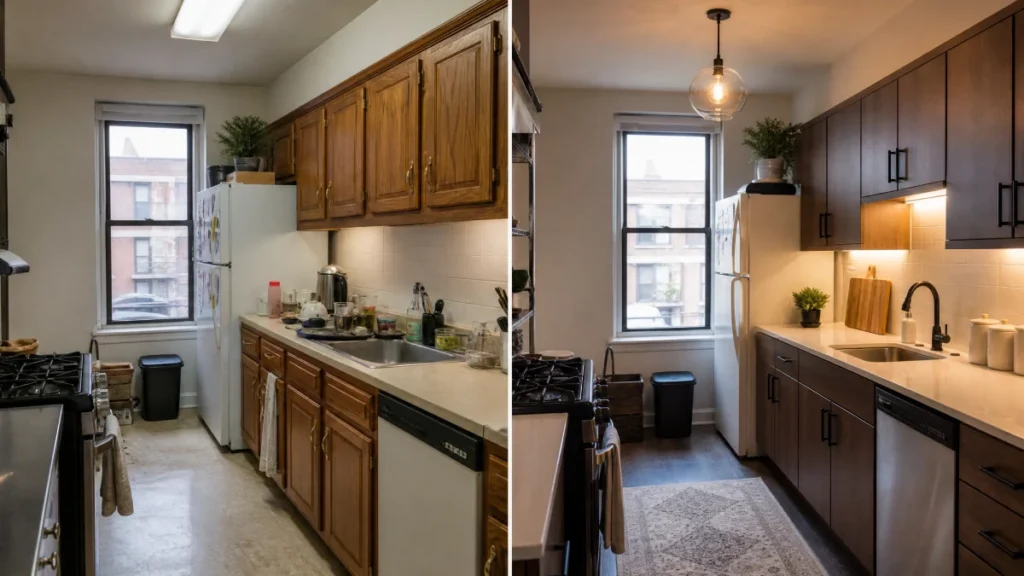
- Reface cabinet hardware. Swapping cabinet knobs and drawer pulls takes 20 minutes and a screwdriver. A set of 10 knobs runs $25–$60 and immediately modernizes a dated kitchen.
- Add under-cabinet lighting. Peel-and-stick LED strips from Home Depot or Amazon ($20–$40) add functional kitchen lighting and visual warmth without any wiring.
When to hire a professional instead:
- Anything involving electrical panel changes or new circuits
- Plumbing rerouting or fixture relocation
- Structural wall removal (always requires a permit and an engineer in Chicago)
- If your building has knob-and-tube wiring (common in very old Chicago buildings) — do not DIY electrical
FAQs
How much does it cost to redesign a small apartment in Chicago?
A basic refresh — new storage, lighting swaps, a rug, and accent pieces — runs $500–$1,500. A mid-level furniture overhaul with some built-ins runs $3,000–$7,000. A full professional design project with custom elements can reach $15,000 or more. Most renters get strong results in the $1,500–$3,500 range.
Is it worth investing in design changes for a Chicago rental apartment?
Depends on how long you’re staying. If you’re there for two or more years, yes, your daily quality of life improves, and most changes are reversible. If it’s a one-year lease, focus on low-cost, high-impact changes like lighting and storage that you can take with you.
Can I DIY a small apartment design in Chicago without contractor help?
For the vast majority of changes — furniture, storage, lighting swaps, paint — yes. Anything touching the building’s structure, plumbing, or electrical panel needs a licensed contractor. Chicago enforces this strictly, and landlords can hold you liable for unpermitted work.
Do I need a permit to redesign my Chicago apartment?
For cosmetic changes (paint, furniture, fixtures, non-structural shelving), no permit is needed. For structural work, electrical changes, or plumbing modifications, yes — file with the City of Chicago Department of Buildings. Renters rarely have permission for permit-required work anyway; that’s on the building owner.
What furniture brands work well for small Chicago apartments?
IKEA (Clybourn location), CB2 (several Chicago locations), Article, and West Elm are the most popular. For budget options, IKEA and Target perform well. For investment pieces, CB2 and Article offer quality at mid-range prices. Chicago also has strong secondhand markets — Facebook Marketplace, Craigslist, and estate sales regularly turn up quality pieces at 20–40 cents on the dollar.
What’s the best way to make a small Chicago apartment feel bigger?
Three things matter most: light, height, and reduction. Maximize natural light with sheer curtains. Draw the eye upward with tall shelving and vertical art placement. Remove anything that doesn’t serve a clear function. These three moves do more than any single furniture purchase.
Conclusion
Small apartment living in Chicago is a real constraint — but it’s also a design problem with solid, tested solutions. The city’s renters have been working with tight layouts, vintage quirks, and brutal winters for a long time. What works isn’t complicated: plan before you buy, use vertical space, store things you don’t need to see, and invest in light.
You don’t need a designer or a big budget to make a meaningful difference. Start with one room, make a few intentional changes, and build from there. Most of the practical improvements in this guide cost under $200 and can be done on a weekend. The key is being deliberate rather than reactive — knowing what you’re solving for before you start moving furniture or opening your wallet.
