


A Texas homeowner in Katy recently called three contractors for a master bathroom quote. The bids came back at $18,000, $27,000, and $44,000 for the same job. No explanation. No itemized breakdown. Just three wildly different numbers and a lot of confusion about who to trust and what was actually reasonable to spend.
That gap is real, and it happens all the time across Texas. Bathroom remodel cost in Texas varies significantly based on where you live in the state, how much of the bathroom you’re touching, and the materials you choose. In 2026, most Texas homeowners spend between $7,500 and $32,000 on a standard bathroom renovation — but that number can climb past $75,000 for a full master suite overhaul in Houston or Dallas.
This guide breaks down exactly what drives those costs, what’s realistic to budget at each tier, how permit requirements work across major Texas cities, and where most homeowners lose money by making avoidable mistakes.
Understanding Bathroom Remodel Cost in Texas Homes
Texas homes are built differently from homes in most other states. You’re dealing with slab foundations instead of basements, hot and humid summers (especially in Houston and the Gulf Coast), and homes that range from 1970s ranch-style builds in San Antonio to newer construction in the suburbs of Fort Worth.
Each of those factors affects your remodel cost directly.
Why Texas pricing sits below the national average — mostly
Texas construction costs run roughly 8% below the national average, with a regional labor multiplier of about 0.92x. Skilled trades average around $42/hour statewide. No state income tax means homeowners generally have more renovation budget than they might in comparable states.
But that “below average” label gets complicated fast:
- Austin has seen contractor costs climb sharply due to tech-driven population growth. Mid-range bathroom remodels run $90,000–$125,000 for full renovations in higher-end neighborhoods — far above state norms.
- Dallas-Fort Worth runs 8–12% above the national average because of shipping costs, skilled labor demand, and permit fees.
- Houston stays about 10–15% below the national average labor costs, making it one of the more budget-friendly major metros for renovation.
- Smaller cities — Lubbock, El Paso, Corpus Christi, Amarillo — generally see costs of $7,000–$25,000 for full bathroom remodels.
What Texas humidity means for your bathroom budget
In high-humidity markets like Houston and Beaumont, ventilation and waterproofing aren’t optional upgrades — they’re baseline requirements. Poor moisture management in a Texas bathroom leads to mold behind tile, warped cabinetry, and subfloor rot. Budget-conscious homeowners who skip proper exhaust fans or use the wrong grout materials end up spending more on repairs than they saved upfront.
In most Texas homes I’ve reviewed, ventilation upgrades alone add $300–$800 to the scope, but they’re among the highest-value line items in the project.
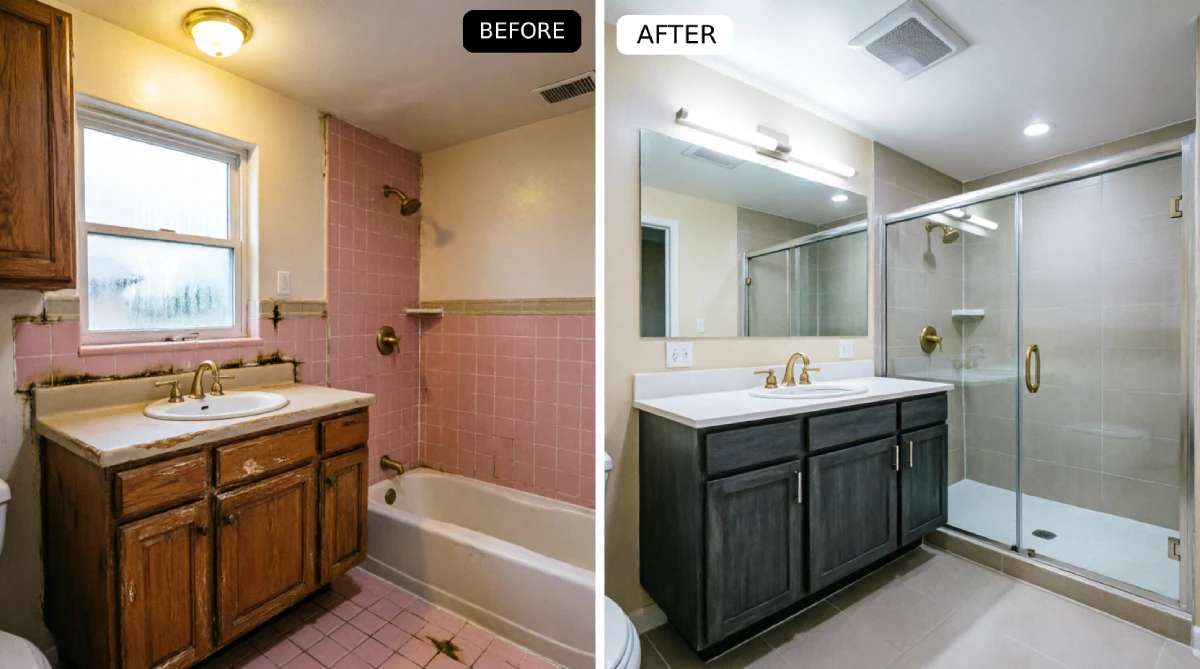
Best Approaches to Bathroom Renovation in Texas
Not every bathroom needs a full gut job. Here are the most common remodel approaches Texas homeowners choose — and what each realistically costs.
1. Cosmetic Refresh (Surface-Level Updates)
This covers paint, new fixtures, updated lighting, and hardware swaps. No plumbing moves, no structural changes.
Typical cost range: $3,000–$8,000 statewide
Best for: dated but functional bathrooms where the layout works and the bones are solid. Common in older ranch homes in suburbs like Pflugerville, Allen, or League City, where cosmetics are holding back resale value.
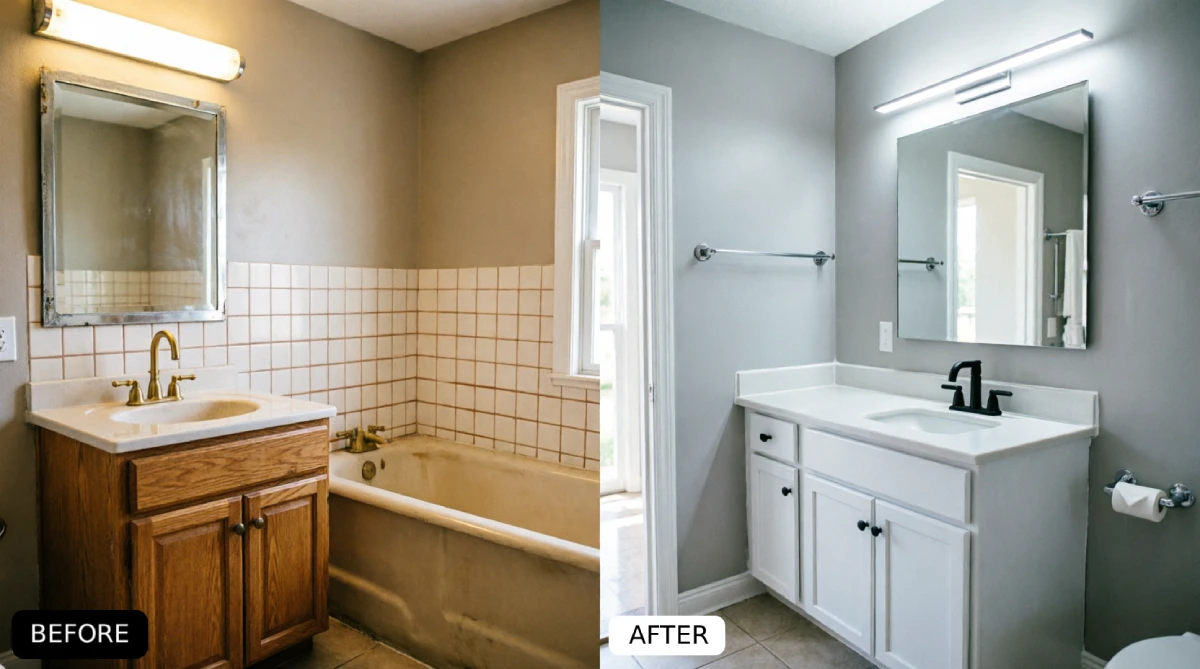
2. Partial Remodel (Fixtures + Tile)
Replaces vanity, toilet, flooring, and shower surround without moving plumbing or walls. May include new lighting and a basic exhaust fan.
Typical cost range: $8,000–$18,000
This is the sweet spot for most Texas homeowners. You get a dramatically updated bathroom without the cost and disruption of structural work.
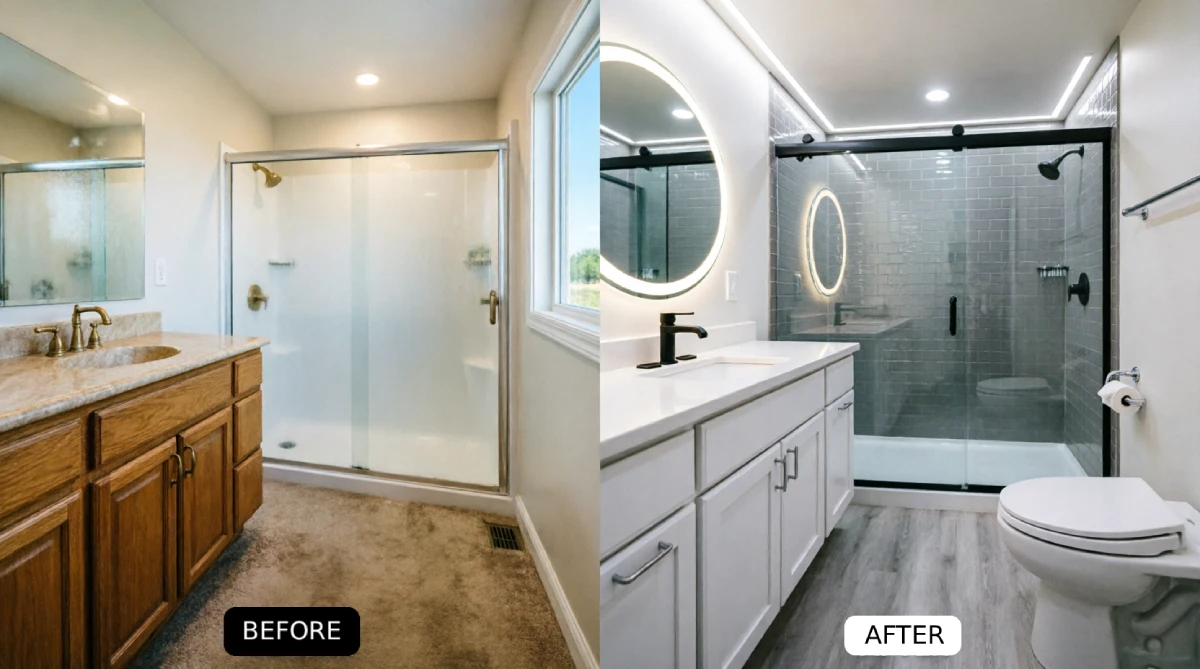
3. Mid-Range Full Remodel
Full gut of the bathroom — tile, fixtures, vanity, lighting, mirror, shower or tub replacement — without major layout changes. May include minor plumbing adjustments.
Typical cost range: $18,000–$35,000
In Houston, this tier covers the majority of jobs. In Dallas, expect the upper end of that range or slightly above due to higher labor rates.
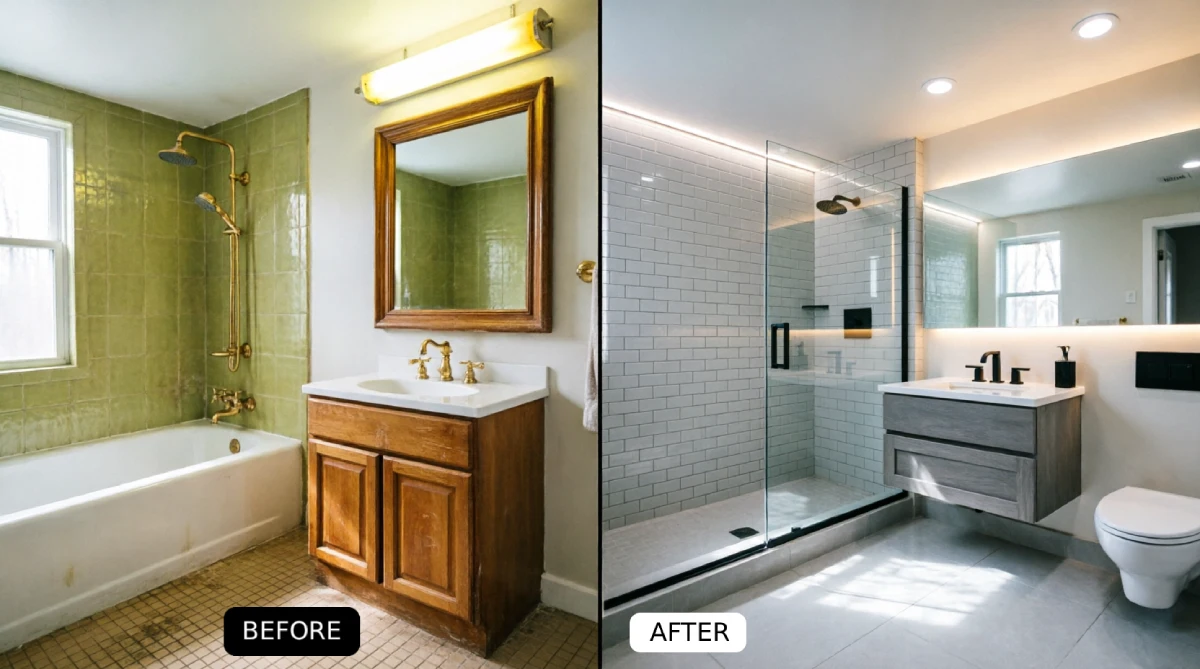
4. Full Remodel with Layout Changes
Moving plumbing lines, relocating the toilet, expanding the shower footprint, or reconfiguring the floor plan adds high cost. Every plumbing move requires a licensed master plumber in Texas.
Typical cost range: $30,000–$55,000+
Layout changes are where budget overruns happen. The moment you move a drain or wet wall, you’re paying for demolition, re-routing, patching, and re-inspections.
5. Tub-to-Shower Conversion
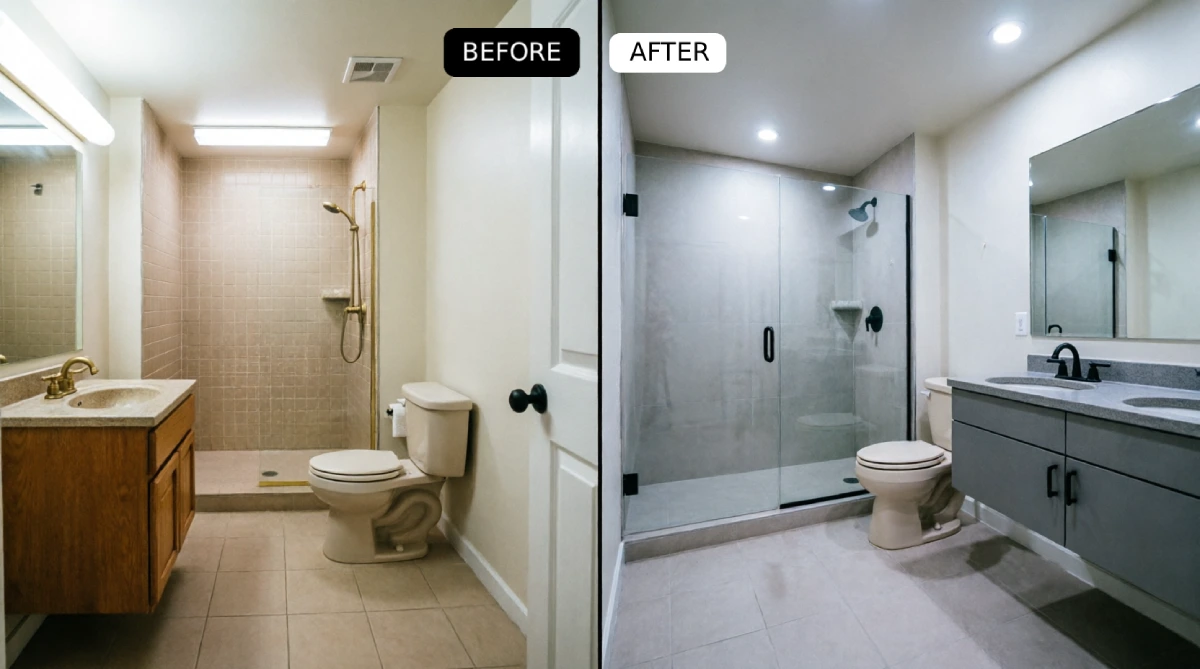
One of the most popular bathroom projects in Texas right now, especially in homes built before 2000 that have jetted garden tubs no one uses. A standard walk-in shower installation averages $9,000 in Houston. Custom tile builds reach $15,000–$20,000.
Typical cost range: $6,500–$20,000
6. Master Bathroom Renovation
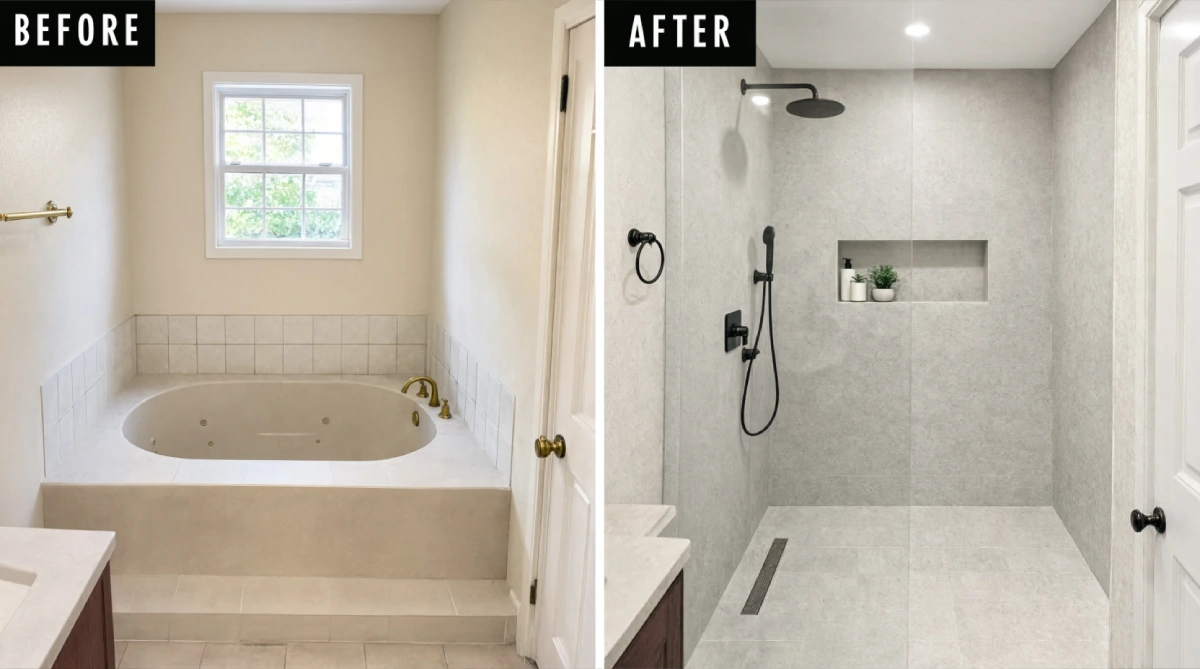
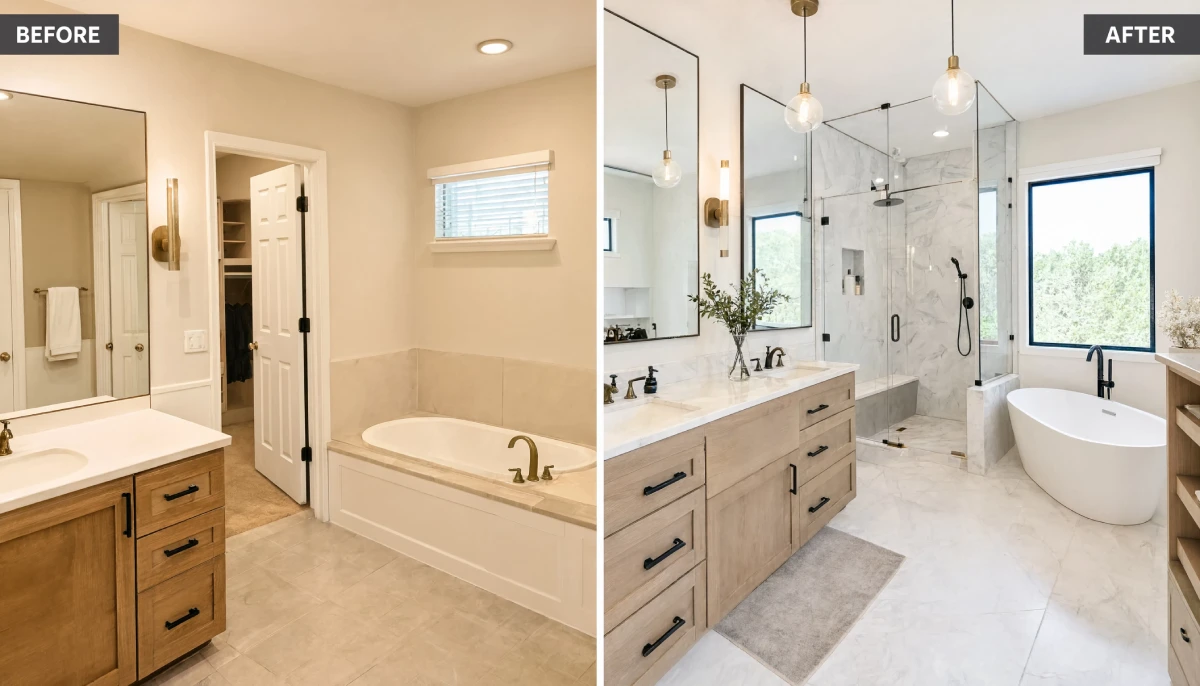
Larger footprint, double vanity, freestanding tub or walk-in shower, premium tile, and often custom cabinetry. Labor intensity is high, and sequencing matters — tile, plumbing, and carpentry trades all need to coordinate properly.
Typical cost range: $35,000–$75,000+ (Houston/San Antonio), $45,000–$90,000+ (DFW/Austin)
7. Powder Room Update
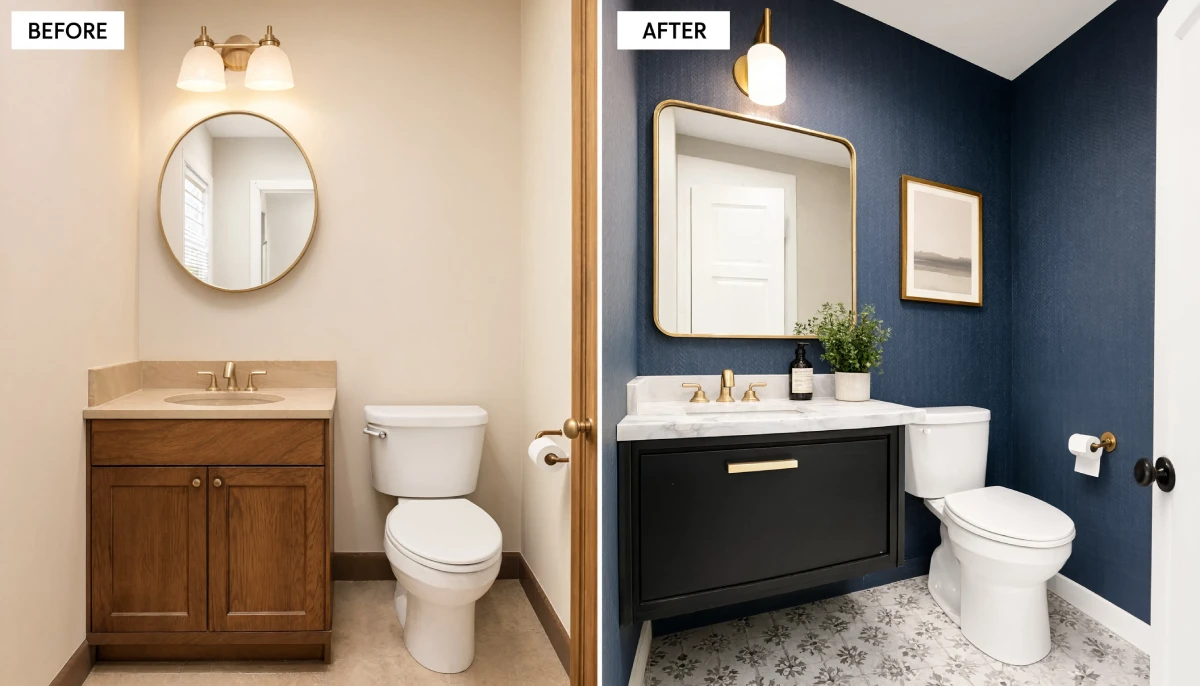
Half baths are the easiest and most cost-effective bathroom renovation in a Texas home. No shower or tub means a dramatically simpler plumbing and waterproofing scope.
Typical cost range: $2,500–$8,000
Bathroom Remodel Cost Breakdown by Budget (Texas 2026)
| Line Item | Low Budget | Mid Budget | High Budget |
|---|---|---|---|
| Demo + Disposal | $400–$800 | $800–$1,800 | $1,800–$4,000 |
| Plumbing | $500–$1,500 | $1,500–$5,000 | $5,000–$15,000+ |
| Electrical / Lighting | $300–$800 | $800–$2,500 | $2,500–$6,000 |
| Tile (Floor + Walls) | $800–$2,500 | $2,500–$7,000 | $7,000–$20,000+ |
| Vanity + Countertop | $400–$1,200 | $1,200–$4,000 | $4,000–$12,000 |
| Toilet | $200–$500 | $500–$1,200 | $1,200–$3,500 |
| Shower / Tub | $1,000–$3,500 | $3,500–$9,000 | $9,000–$25,000+ |
| Exhaust Fan + Ventilation | $150–$400 | $400–$800 | $800–$2,000 |
| Permits + Inspections | $110–$300 | $300–$700 | $700–$1,500 |
| Labor (Total) | $2,500–$6,000 | $6,000–$15,000 | $15,000–$35,000+ |
| TOTAL ESTIMATE | $6,500–$15,000 | $16,000–$35,000 | $40,000–$90,000+ |
Texas-specific cost notes:
- Houston labor runs 10–15% below the national average. Dallas labor runs 8–12% above.
- Austin luxury remodels regularly exceed $100,000 due to design fees and high-end fixture demand.
- Permit fees across Texas municipalities range from $110 to $1,000+, depending on scope and city.
- Skilled labor in Texas averages $42/hour — plumbers and electricians run higher, often $85–$125/hour.
- Material prices in Texas rose 4–6% in 2025–2026 due to supply chain and tariff pressures on tile and fixtures.
Common Mistakes Texas Bathroom Owners Make
1. Skipping Permits to Save Money
Texas has no universal statewide permit requirement, but every major city does require permits for plumbing and electrical work. Houston, Dallas, San Antonio, and Austin all require them. Skipping permits creates problems when you sell — inspectors flag unpermitted work, and it can kill a sale or force expensive remediation.
Permit costs range from $110 to $1,000, depending on the city and scope. That’s not worth risking.
2. Hiring Unlicensed Plumbers
In Texas, all plumbing work must be performed by a licensed plumber. The Texas State Board of Plumbing Examiners (TSBPE) licenses all plumbers in the state. Electrical work requires a licensed electrician under the Texas Department of Licensing and Regulation (TDLR).
Any contractor who says they can do plumbing or electrical without a licensed sub — and can’t show proof of that license — is a red flag.
3. Ignoring Moisture Control in High-Humidity Markets
This is the single biggest long-term cost trap in Houston and Southeast Texas. Improper tile installation, missing backer board, or cheap caulk around tubs leads to water intrusion behind walls. By the time you see visible mold or soft flooring, you’ve got a much bigger repair bill than your original remodel cost.
Require your contractor to use cement board or similar tile backer on all wet areas — not drywall, not greenboard.
4. Getting Only One Bid
The spread between contractor bids in Texas is wide. A reasonable rule: get at least three bids, and be suspicious of any quote more than 15% below the others. That low number usually means unlicensed labor, skipped materials, or an intent to hit you with change orders once the job starts.
5. Underestimating Hidden Costs in Older Homes
Texas has a large stock of homes built in the 1960s–1980s with galvanized steel plumbing, outdated electrical panels, and questionable tile installation. Once demolition starts, surprises are common — and each one adds cost. Budget a 15–20% contingency in any home built before 1990.
6. Choosing the Wrong Tile for the Texas Climate
Large-format porcelain tiles (24×24 or larger) look great but require skilled installation, especially on slab foundations that expand and contract with Texas heat. Using cheap tile adhesive or skipping movement joints leads to cracking. Budget for quality thinset and proper substrate preparation.
When to DIY vs. Hire a Contractor in Texas
Being honest about this: most bathroom work in Texas should be handled by licensed contractors. Here’s the clear breakdown.
You can reasonably DIY:
- Painting walls and ceiling
- Swapping out a light fixture (if you’re comfortable with basic electrical)
- Installing a new toilet (straightforward swap, same rough-in)
- Replacing a vanity mirror or towel bars
- Recaulking around a tub or shower
- Installing a new vanity if no plumbing changes are needed
Do NOT DIY in Texas:
- Any plumbing work that requires a permit — it must be done by a TSBPE-licensed plumber
- Electrical panel work or adding new circuits requires a licensed electrician
- Tile work in wet areas — bad installation causes long-term moisture damage; this is skilled work
- Shower pan installation — a failed shower pan is one of the most expensive bathroom repairs you can face
- Any structural wall removal to expand the bathroom footprint
If you’re a skilled DIYer and want to handle demo, painting, and trim work yourself while hiring licensed trades for plumbing and electrical, that’s a reasonable hybrid approach. Demo labor alone can save $500–$1,500 on a mid-range project.
One thing Texas homeowners often overlook: even when you DIY part of the project, you still need the proper permits pulled by the licensed trade contractor doing the plumbing and electrical. You can’t skip the permit just because you’re doing some of the work yourself.
Practical Tips for Budgeting a Texas Bathroom Remodel
- Get bids from TDLR-licensed general contractors. Check their license at tdlr.texas.gov. For plumbing, verify at tsbpe.texas.gov. Non-negotiable.
- Check Home Depot and Lowe’s online before your contractor quotes materials. Contractors markup materials 15–30%. Knowing baseline prices helps you spot inflated line items.
- Order your vanity and fixtures before the demo starts. Lead times on popular vanities from Home Depot or Lowe’s can run 2–6 weeks. Contractor sitting idle because your vanity is on backorder costs money.
- Ask for a line-item bid, not a lump sum. Lump-sum bids make it impossible to understand what you’re paying for and leave you no leverage if something changes.
- Tile first, then fixtures. Sequence matters. Floors and walls need to be fully tiled before vanity, toilet, and shower door installs. Contractors who deviate from this create problems.
- Budget $500–$1,000 for ventilation in any Houston-area or Gulf Coast bathroom. Undersized or improperly vented exhaust fans are one of the most common causes of long-term moisture damage in Texas homes.
- Plan for 15–20% contingency in homes built before 1990. Older galvanized pipes, subfloor issues, and outdated wiring get discovered during demo regularly across Texas.
- Check your homeowner’s insurance before starting. Some policies require notification for renovations above a certain value. A few Texas insurers adjust coverage limits during active renovation.
FAQs
How much does a bathroom remodel cost in Texas in 2026?
Statewide, Texas bathroom remodels range from $7,500 to $32,000 for standard projects in 2026. A basic cosmetic update runs $3,000–$8,000. A mid-range full renovation runs $16,000–$35,000. Luxury master bathroom remodels in Houston and Dallas range from $40,000 to $90,000 or more. Austin is an outlier — full renovations in higher-end neighborhoods regularly exceed $100,000.
Can I DIY a bathroom remodel in a Texas house?
Partly, yes. You can DIY painting, simple fixture swaps, toilet replacement, and demo work. But Texas law requires licensed plumbers for all plumbing work that needs a permit, and licensed electricians for electrical modifications. Tile work in wet areas is also best left to skilled tradespeople — poor installation leads to moisture damage that costs far more to fix than the original labor savings.
Do I need a permit for a bathroom remodel in Texas?
It depends on the city and the scope of work. Houston, Dallas, San Antonio, and Austin all require permits for plumbing and electrical work. Cosmetic updates — paint, fixture swaps, vanity replacement without plumbing changes — often don’t require permits. Structural changes, adding new circuits, or moving plumbing lines always require permits. Permit fees across Texas range from $110 to $1,000+, depending on municipality and project scope.
Is a bathroom remodel worth it for Texas homeowners?
Generally, yes, especially in a strong real estate market. A mid-range bathroom remodel in Texas returns roughly 45–70% of its cost at resale in most markets. More importantly, bathrooms are among the top spaces that influence buyer perception. An updated master bath in a Houston or DFW home can reduce time on market significantly. The ROI is lower for luxury remodels — spending $80,000 on a master bath in a $350,000 house rarely makes financial sense if you’re planning to sell soon.
How long does a bathroom remodel take in Texas?
A basic update takes 1–2 weeks. A mid-range full renovation typically runs 3–5 weeks. A full luxury master bath remodel can take 6–10 weeks, including time for permit processing. Texas summer heat can also affect scheduling — concrete, tile adhesive, and caulk all have temperature and humidity curing requirements that can slow outdoor material prep.
Which Texas city has the highest bathroom remodel costs?
Austin currently has the highest bathroom renovation costs in Texas for high-end projects, driven by design fees, premium contractor demand, and high cost of living. Dallas-Fort Worth runs 8–12% above the national average for standard projects. Houston is generally the most budget-friendly major metro for mid-range work.
Conclusion
Bathroom remodel cost in Texas isn’t a single number — it’s a range shaped by your city, your home’s age, the scope of work, and the contractors you hire. In 2026, most Texas homeowners are looking at $16,000–$35,000 for a solid mid-range full bathroom renovation, with the lower end achievable in Houston and smaller metros, and the upper end more common in Dallas and growing suburbs.
The core decisions you need to make: How much of the bathroom are you changing? Are you moving plumbing? What finish level matches your neighborhood’s resale ceiling? And have you verified your contractor’s TDLR license and their plumbing sub’s TSBPE license?
Get three line-item bids. Build in a 15–20% contingency on older homes. Pull the permits. Those three steps alone will protect you from the majority of budget disasters that Texas homeowners run into during bathroom renovations.
