


Small bathroom remodeling ideas for New York houses work best when they combine space-saving fixtures, light colors, and smart storage instead of trying to add square footage. A corner sink, a sliding barn-style door, and a walk-in shower with a low curb can make a 35-square-foot bathroom feel twice its size. In older New York houses, plumbing lines often run through tight walls shared with neighboring rooms, so layout changes need to work with the existing pipe routes rather than against them. The ideas below cover layout, materials, fixtures, and costs specific to New York homeowners working with compact bathrooms.
Understanding Small Bathroom Remodeling for Houses in New York
New York houses, especially in boroughs like Queens, Brooklyn, and parts of Staten Island, often have bathrooms built between the 1920s and 1960s. These rooms typically measure between 30 and 50 square feet, with cast-iron tubs, narrow doorways, and plumbing stacks never designed with modern fixtures in mind. I’ve walked into more than a few Brooklyn rowhouse bathrooms where the original tile is still structurally sound but completely outdated in layout.
In a single-family house, you have more flexibility than a co-op or condo owner, since you don’t need board approval for most interior work. You will still need to follow New York City Department of Buildings (DOB) rules if you’re moving plumbing, electrical, or load-bearing elements. If your house is in a flood zone, which applies to parts of Staten Island and the Rockaways, plumbing and electrical work below base flood elevation may be subject to additional requirements.
A common mistake homeowners make is assuming a small bathroom means a small budget. Tight spaces often cost more per square foot because labor, custom fixtures, and waterproofing details don’t scale down proportionally with room size.
Best Layout and Design Approaches for Small Bathrooms
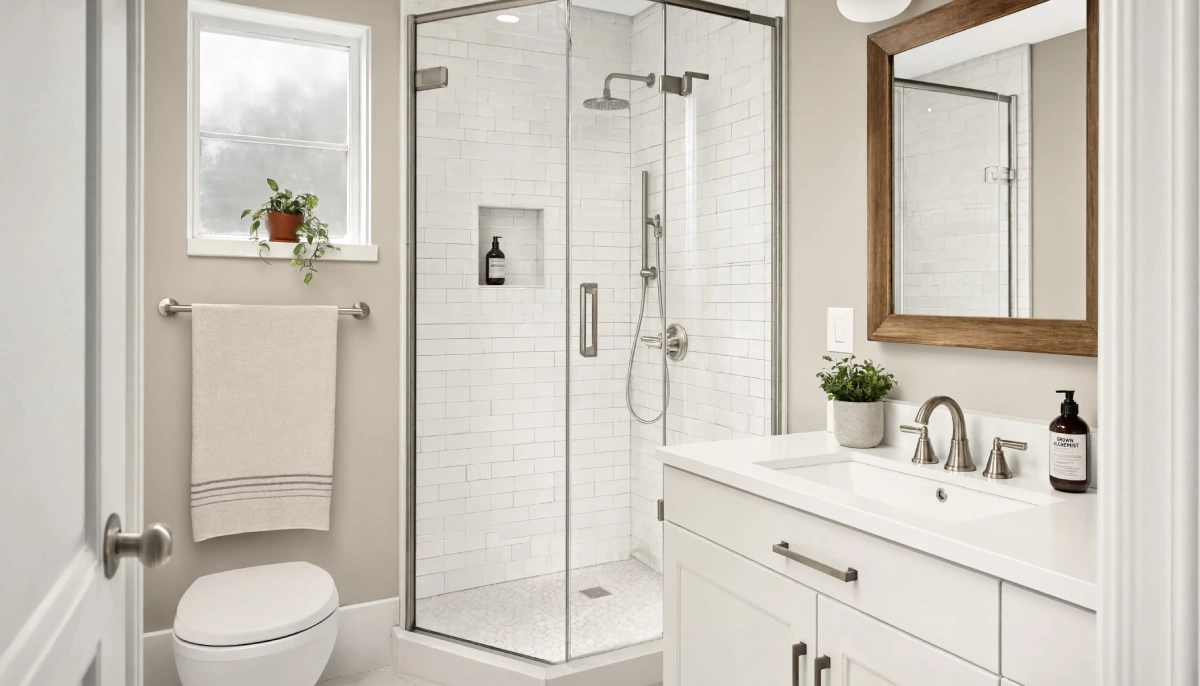
The layout decision matters more than any single fixture choice. In most small New York bathrooms I’ve reviewed, the existing footprint can be optimized without moving the toilet or main drain line, which keeps both labor and permit costs lower.
What is the best layout for a small bathroom?
The best layout keeps the toilet, sink, and shower or tub along the existing plumbing wall, uses a pocket or sliding door instead of a swinging door, and positions storage vertically rather than horizontally to preserve floor space.
A few approaches that consistently work in New York houses:
- Corner sink installations free up wall space along the main plumbing run, which works well in bathrooms under 35 square feet.
- Walk-in showers with a low or no curb replace bulky tub-shower combos and make the room read larger, though this requires careful waterproofing given New York’s freeze-thaw cycles in unheated crawl spaces below older houses.
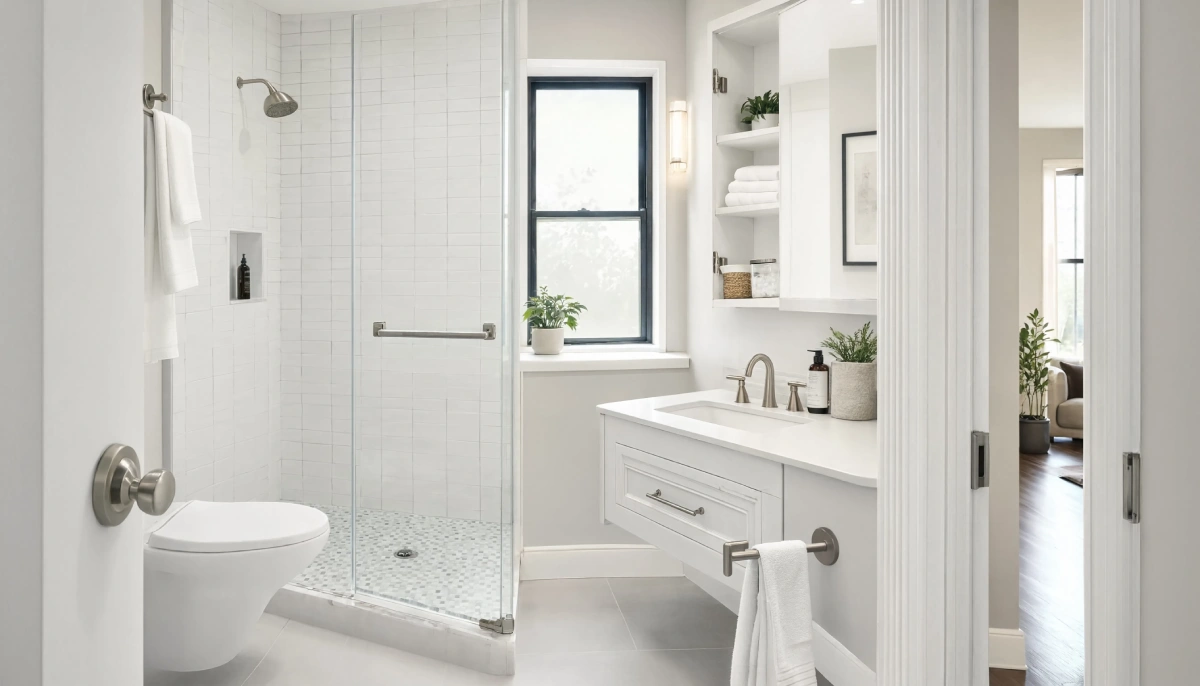
- Pocket doors reclaim the 8 to 10 square feet a swinging door typically requires, though this only works if the wall isn’t load-bearing or carrying plumbing.
- Wall-mounted vanities and toilets create visual openness and make floor cleaning easier, a detail more homeowners are requesting in recent renovations I’ve consulted on.
- Vertical storage, like recessed medicine cabinets built into the stud bay, adds storage without consuming floor area, which matters in houses with 2×4 wall framing common to pre-war New York construction.
Pros and Cons of Common Small Bathroom Remodeling Approaches
| Approach | Initial Cost | Long-Term Cost | Durability | Maintenance | Installation Difficulty | Best Use Case |
|---|---|---|---|---|---|---|
| Tub-to-shower conversion | Mid | Low | High | Low | Moderate | Houses prioritizing accessibility and resale |
| Pocket door installation | Low-Mid | Low | High | Low | Moderate-High | Bathrooms under 40 sq ft with non-load-bearing walls |
| Full layout reconfiguration | High | Mid | High | Moderate | High | Major renovations with new plumbing runs |
| Vanity and fixture swap only | Low | Low | Moderate | Low | Low | Budget-conscious cosmetic updates |
| Custom tile and waterproofing upgrade | Mid-High | Low | High | Low | Moderate | Houses with existing moisture or mold issues |
A tub-to-shower conversion is one of the more requested changes I see in New York houses, particularly from owners planning to age in place or sell within five years. The tradeoff is that some buyers in family-heavy New York neighborhoods still expect at least one tub in the house, so removing the only tub can affect resale in certain markets.
Materials and Fixtures That Work Best in Small Spaces
Material choice in a small bathroom has an outsized visual effect because there’s less room for the eye to rest. Large-format tile, for example, reduces the number of grout lines and makes a small floor look more continuous.
Fixtures and materials that perform well in compact New York bathrooms:
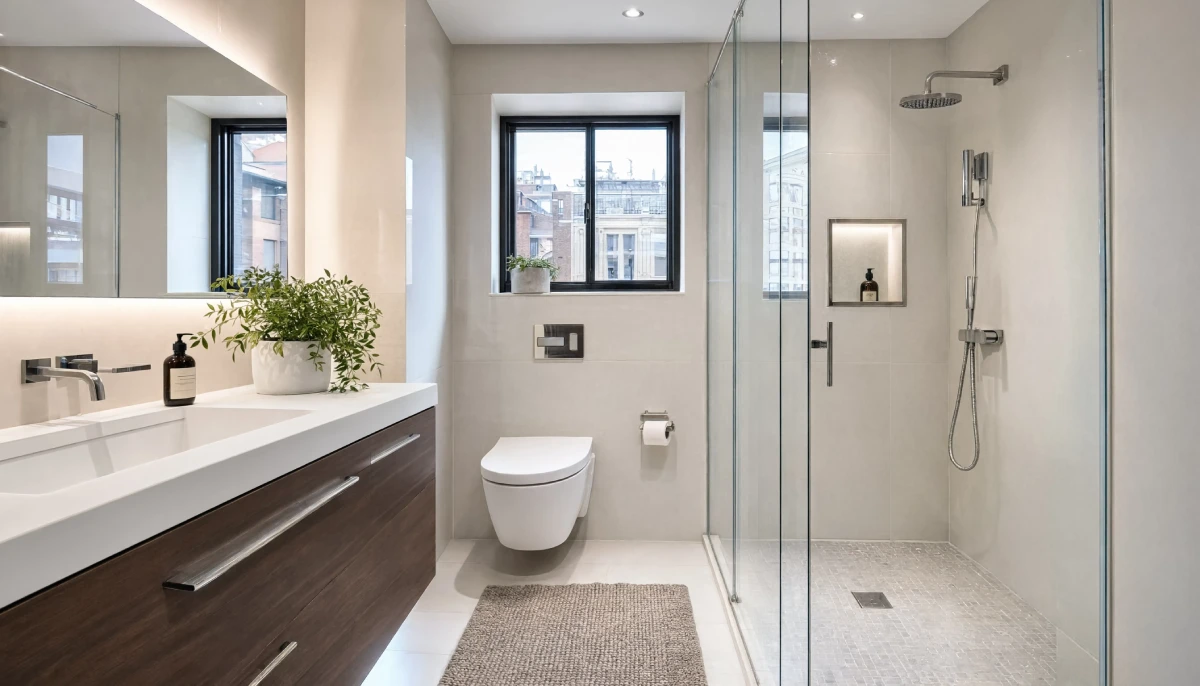
- Large-format porcelain tile (12×24 inches or bigger) on floors reduces visual clutter and is more resistant to the moisture fluctuations common in older New York houses without modern ventilation.
- Light, neutral wall colors or glossy tile reflect available light, which matters in interior bathrooms that often have no exterior window.
- Frameless glass shower enclosures remove visual barriers compared to framed doors or shower curtains.
- Low-profile or wall-mounted toilets save several inches of floor depth compared to standard two-piece toilets.
- Heated floors (electric radiant) are worth considering in New York’s cold winters, especially in houses with unheated basements directly below the bathroom.
A mistake I see often: homeowners choose small mosaic tile, thinking it suits a small room, when in fact the increased grout lines visually shrink the space further. Scale up the tile, not down.
DIY vs Professional Help for Small Bathroom Remodels
Should you DIY or hire a professional for a bathroom remodel in New York?
Cosmetic updates like painting, hardware swaps, and vanity replacement can reasonably be done by a homeowner. Anything involving plumbing relocation, electrical work, or waterproofing behind tile should go to a licensed professional, both for code compliance and insurance reasons.
New York City requires licensed plumbers for any work that involves altering supply or waste lines, and a licensed electrician for new circuits or outlet relocation, particularly GFCI-protected outlets required near water sources. DOB permits are typically required when you’re moving fixtures, not just replacing them in place.
Tasks reasonable for a confident DIYer in a New York house:
- Repainting walls and ceiling with moisture-resistant paint
- Replacing a vanity faucet or showerhead
- Installing new mirrors, lighting fixtures with existing wiring, and hardware
- Caulking and grout refreshing
Tasks that should go to licensed professionals:
- Moving the toilet, sink, or shower drain
- Any wall removal or modification, even non-load-bearing, where plumbing or electrical runs through it
- Waterproofing and tile installation in wet areas (a failed waterproofing job is one of the most expensive mistakes to fix later)
- Electrical work near water sources
I’ve seen homeowners attempt DIY tile work in a shower pan only to discover a leak into the floor below a year later. The repair cost, including drywall and flooring damage, often exceeds what professional installation would have cost upfront.
Cost Breakdown for Small Bathroom Remodeling in New York
| Item | Low Budget | Mid Budget | High Budget |
|---|---|---|---|
| Full bathroom remodel (30-50 sq ft) | $8,000 – $12,000 | $15,000 – $25,000 | $30,000 – $50,000+ |
| Tub-to-shower conversion | $3,500 – $6,000 | $7,000 – $10,000 | $12,000 – $18,000 |
| Vanity and fixture replacement only | $1,200 – $2,500 | $3,000 – $5,000 | $6,000 – $9,000 |
| Tile work (floor and walls) | $2,500 – $4,500 | $5,000 – $8,000 | $9,000 – $14,000 |
| Plumbing relocation | $1,500 – $3,000 | $3,500 – $6,000 | $7,000 – $12,000 |
| Permit and inspection fees (NYC) | $300 – $600 | $700 – $1,200 | $1,500 – $2,500 |
New York-specific cost notes: Labor costs in New York City run higher than national averages due to union labor rates and the higher cost of living for skilled trades. Pre-war houses often carry hidden costs for asbestos abatement in old tile or flooring adhesive, which should be tested before demolition begins. Houses in flood-prone areas like the Rockaways or parts of Staten Island may need additional costs for moisture-resistant materials and elevated electrical components.
Common Mistakes Homeowners Make in Small Bathroom Remodels
The most frequent mistake I encounter is skipping a permit on a project that technically requires one, usually because the homeowner assumes “small” means “exempt.” In New York City, that assumption can lead to fines or complications when the house is eventually sold and the buyer’s attorney requests proof of permitted work.
Other recurring mistakes:
- Underestimating ventilation needs. A small bathroom without a working exhaust fan develops mold faster, especially in older New York houses with limited natural airflow.
- Choosing a tub size that doesn’t fit the room’s proportions makes the space feel even more cramped.
- Ignoring the existing plumbing stack location and insisting on a layout that requires expensive rerouting.
- Skipping a vapor barrier or proper waterproofing membrane, which becomes a costly fix once tile is already installed.
- Hiring unlicensed contractors for plumbing or electrical work to save money upfront can void insurance coverage if something goes wrong later.
Common Questions Homeowners Ask Before Making a Decision
Is a full remodel worth it for a small bathroom, or should I just do a cosmetic update?
A full remodel is worth it if your plumbing or electrical system is outdated, or if you’re addressing moisture damage. If the bones are sound, a cosmetic update with new fixtures, paint, and tile refresh delivers most of the visual impact at a fraction of the cost.
Homeowners in New York frequently ask whether resale value justifies the investment. In most cases, a well-executed small bathroom remodel recovers a meaningful portion of its resale cost, particularly in competitive New York neighborhoods where buyers expect updated bathrooms even in starter houses.
Related Factors Homeowners Should Consider
Before finalizing a small bathroom remodel, think through how the project connects to the rest of the house. Older New York houses often have a single shared water heater and main shutoff valve, so a bathroom remodel is a logical time to assess whether the water heater needs replacement, too. Electrical panel capacity matters if you’re adding heated floors or a larger exhaust fan, since older houses may have panels near their limit. Finally, consider how long you plan to stay in the house, since a higher-end finish package makes more sense for a 10-plus year stay than for a house you intend to sell within two to three years.
Practical Tips for Small Bathroom Remodeling
- Measure twice before ordering any fixture, since even a half-inch miscalculation can make a vanity or toilet not fit in a tight footprint.
- Visit Home Depot or Lowe’s in person to see tile and fixture finishes under real lighting before ordering online.
- Ask your contractor for references from other New York house projects, not just apartment work, since house plumbing and house permits differ from co-op rules.
- Get written permit confirmation from your contractor before demolition begins, not after.
- Choose a single accent material, like a patterned floor tile, rather than multiple competing finishes in a small space.
- Budget an additional 10 to 15 percent contingency for older New York houses, since opening walls often reveals outdated plumbing or wiring.
- Test for asbestos in any pre-1980s flooring or tile adhesive before starting demolition.
- Schedule major remodels outside of peak summer months when New York contractors tend to have longer lead times.
FAQs
How much does a small bathroom remodel cost in New York?
A small bathroom remodel in a New York house typically ranges from $8,000 for a basic cosmetic update to $50,000 or more for a high-end full renovation with custom materials and plumbing relocation.
Can I DIY a small bathroom remodel in a New York house?
You can DIY cosmetic work like painting, fixture swaps, and hardware updates. Plumbing relocation, electrical work, and shower waterproofing should be handled by licensed professionals due to code requirements and the risk of costly water damage.
Do I need a permit for a bathroom remodel in New York? You generally need a DOB permit if you’re moving plumbing fixtures, altering electrical circuits, or modifying walls. Like-for-like fixture replacement without relocation typically doesn’t require a permit, but confirm with your contractor or the DOB directly.
Is a small bathroom remodel worth it for resale value?
Yes, in most New York markets, an updated bathroom is one of the higher-recovery renovations at resale, particularly when the original bathroom is visibly outdated or shows signs of wear.
What’s the best layout for a small bathroom in an older New York house?
The best layout keeps the toilet, sink, and shower along the existing plumbing wall to avoid expensive rerouting, while using a pocket door and vertical storage to maximize usable floor space.
How long does a small bathroom remodel take in New York?
A cosmetic update can take 1 to 2 weeks, while a full remodel with plumbing and electrical changes typically takes 4 to 8 weeks, factoring in permit approval timelines and material lead times.
Should I replace my tub with a shower in a small New York house?
This depends on your household and resale goals. A shower conversion improves accessibility and visually opens the room, but removing the only tub in the house can affect appeal to buyers with young children if you plan to sell.
What’s the most common mistake in small bathroom remodels?
The most common mistake is skipping proper ventilation or waterproofing to save money, which often leads to mold or water damage that costs more to repair than it would have cost to do it the first time correctly.
Does asbestos testing matter for older New York bathroom remodels?
Yes, if your house was built before 1980, the original flooring or tile adhesive may contain asbestos. Testing before demolition is a standard precaution and may be required depending on the scope of work and your contractor’s policies.
What flooring works best for a small bathroom in New York’s climate?
Porcelain tile is the most reliable choice for New York’s humidity swings and cold winters, especially with radiant heating underneath for added comfort during colder months.
Conclusion
A small bathroom remodel in a New York house comes down to a few core decisions: how much of the existing layout you keep, whether you handle cosmetic work yourself or bring in licensed professionals for plumbing and electrical, and how your budget aligns with your timeline in the house. Permits matter more than many homeowners expect, particularly when fixtures are relocated, so confirm requirements with the DOB or your contractor before work begins. Material choices like large-format tile and wall-mounted fixtures make the biggest visual difference in tight spaces, while ventilation and waterproofing protect the investment long-term. Weigh your remodel scope against how long you plan to stay in the house, and prioritize the changes that hold up both for daily use and for resale.
