

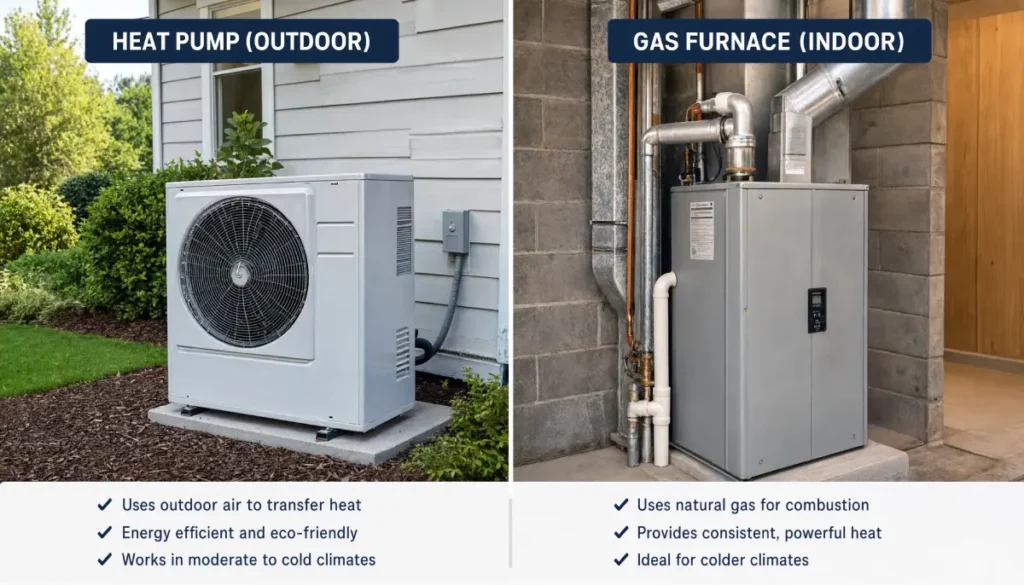
Are you considering upgrading your home’s heating system but can’t decide between a heat pump vs furnace? Understanding the key differences between these two systems is crucial to making an informed decision that affects your comfort, energy bills, and home value for years to come. In this comprehensive guide, we’ll explore how heat pumps and furnaces work, compare their efficiency and costs, and help you determine which option is the right fit for your home.
What Are the Key Differences Between a Heat Pump and a Furnace?
When comparing a heat pump vs. a furnace, the most fundamental difference lies in how each system produces warmth. A gas furnace — whether powered by natural gas, propane, or oil — generates heat by burning fuel inside a combustion chamber. This process produces intensely hot air that is then pushed through your ductwork by a blower fan. High-efficiency models, such as a condensing gas furnace, can achieve an AFUE (Annual Fuel Utilization Efficiency) rating of up to 98.5%, meaning nearly all the fuel consumed is converted directly into usable heat.
A heat pump, on the other hand, does not generate heat at all. Instead, it uses electricity and a refrigerant cycle to move existing heat from one location to another — pulling warmth from the outdoor air, ground, or water source and transferring it indoors. Because a heat pump transfers heat rather than creating it, it can deliver up to three times more heat energy than the electrical energy it consumes. This is measured by its Coefficient of Performance (COP), and modern units carry HSPF (Heating Seasonal Performance Factor) ratings for heating efficiency and SEER (Seasonal Energy Efficiency Ratio) ratings for cooling.
This distinction — combustion versus heat transfer — drives nearly every other difference between the two systems: operating cost, climate suitability, safety profile, maintenance needs, and even how the heat physically feels inside your home.
Heat Pump vs Furnace: Understanding How They Generate Heat
A gas furnace burns natural gas in a sealed combustion chamber. The flame heats a heat exchanger, and air is blown across this exchanger, which is warmed and distributed through your ductwork. This process delivers a powerful blast of hot air in relatively short cycles — the air coming from your registers can reach 120–140°F.
A heat pump works through the refrigeration cycle. An outdoor unit contains a compressor and a coil where refrigerant absorbs ambient heat from the outside air — even when it feels cold outdoors. This refrigerant is compressed, which raises its temperature further, and is then circulated to an indoor air handler, where the heat is released into your home’s air supply. In summer, the cycle reverses: the system extracts heat from inside your home and expels it outdoors, functioning as an air conditioner.
The result is a noticeably different “feel” of heat. Furnace heat tends to be intense and dry — hot air blasts from the registers in powerful bursts. Heat pump heat is gentler, delivered at lower register temperatures (typically 90–110°F) over longer cycles, producing a more gradual and even warmth throughout the home. Neither is inherently better — some homeowners prefer the immediate intensity of a furnace, while others appreciate the steady, even distribution from a heat pump.
Electric Furnace vs Heat Pump: A Comparison of Energy Use
Both electric furnaces and heat pumps use electricity, but their efficiency differs dramatically. An electric furnace uses resistance coils to generate heat directly — essentially the same technology as a space heater or a toaster. While this method is 100% effiocient at converting electricity into heat, it is expensive to operate, often costing up to 2.5 times more than a heat pump to produce the same amount of warmth.
A heat pump, by contrast, uses electricity to move heat rather than create it. This means that for every unit of electricity consumed, a heat pump can produce two to three units of heat — making it far more cost-effective to run than an electric furnace, particularly in regions with moderate winter temperatures.
Assessing the Impact of Climate on the Efficiency of Heat Pumps and Furnaces
Your local climate is one of the most decisive factors in the heat pump vs furnace debate. Here is how performance breaks down across different temperature ranges:
- Mild climates (above 40°F average winter lows): Heat pumps operate at peak efficiency, often delivering 100% of rated heating capacity with minimal electricity use. In these regions, a heat pump is almost always the more economical choice.
- Moderate climates (20–40°F average winter lows): Heat pumps remain effective but work harder as temperatures drop. Modern variable-speed models maintain strong performance in this range, though energy consumption increases.
- Cold climates (below 20°F average winter lows): Traditional heat pumps lose capacity as outdoor temperatures fall. However, cold climate heat pumps — engineered with enhanced vapor injection compressors and optimized refrigerant cycles — can now deliver 100% heating capacity down to approximately 5°F and maintain roughly 70% capacity even at -13°F. Some models are rated for operation as low as -22°F.
- Extreme cold (sustained sub-zero): Gas furnaces maintain consistent output regardless of outdoor temperature, making them the more dependable option in regions where temperatures routinely plunge well below zero for extended periods.
Understanding where your home falls on this spectrum will help narrow your options significantly.
How Do Heat Pumps Function Compared to Furnaces?
While both systems deliver warm air through ductwork, the mechanics behind them differ in important ways. Understanding these operational differences helps explain why each system performs the way it does under varying conditions.
Exploring Air-Source Heat Pumps and How They Extract Heat from Outside
An air-source heat pump is the most common type installed in residential homes. Its outdoor unit contains a coil and a fan that draw ambient air across the coil, where the refrigerant absorbs whatever heat is present. Even when outdoor air feels cold, it still contains thermal energy — the refrigerant captures this energy, and the compressor amplifies it to a usable temperature for indoor heating.
Modern air-source heat pumps use variable-speed compressors and variable-speed fan motors, which allow the system to adjust its output precisely to match the home’s current heating demand. Instead of cycling fully on and off like a traditional furnace — which creates temperature swings — a variable-speed heat pump runs at lower capacity for longer periods, maintaining a more consistent indoor temperature with less energy waste.
Beyond air-source models, homeowners also have the option of geothermal (ground-source) heat pumps. These systems extract heat from the ground or a nearby water source, where temperatures remain relatively stable year-round (typically 45–75°F depending on region). Geothermal systems are significantly more efficient than air-source models because the ground temperature is far less variable than air temperature. However, they come with substantially higher installation costs due to the need for underground loop fields.
For homes without existing ductwork, mini-split (ductless) heat pumps offer a practical alternative. These systems use small indoor wall-mounted units connected to an outdoor compressor, providing zone-by-zone heating and cooling without the need for traditional ductwork — making them especially popular for older homes, additions, and converted spaces.
Gas Furnace vs Electric Heat Pump: Diving Into Their Heating Processes
A gas furnace operates in short, powerful cycles. When the thermostat calls for heat, the furnace ignites its burner, the heat exchanger warms up, and the blower pushes hot air through the registers — typically reaching full output within a minute or two. Once the thermostat is satisfied, the system shuts off completely. This on-off cycling delivers strong, concentrated heat but can create noticeable temperature fluctuations of 2–4°F between cycles.
An electric heat pump, by contrast, tends to run in longer, steadier cycles. Because it delivers air at a lower temperature differential, it takes longer to raise the home’s temperature. However, this extended run time is by design — it allows for more even heat distribution, fewer hot and cold spots, and more consistent humidity levels. This longer running time does not mean the system is struggling; it is simply a different operational approach. If your heat pump seems to run continuously during cold weather, this is normal behavior and is actually a sign of efficient operation.
One important consideration with heat pumps is the defrost cycle. When outdoor temperatures drop near freezing, frost can accumulate on the outdoor unit’s coil. The heat pump periodically shifts into a brief defrost mode — temporarily reversing to send warm refrigerant through the outdoor coil to melt the ice. During this short cycle (usually a few minutes), supplemental heat from electric resistance strips inside the air handler may activate to prevent cold air from entering the home.
The Role of Air Conditioning in Heat Pump Systems Versus Furnaces
One of the most practical advantages of a heat pump is its built-in cooling capability. Because the system already contains a compressor, refrigerant, and both indoor and outdoor coils, reversing the refrigerant cycle in summer allows it to function as a full air conditioner. This means one system handles both heating and cooling year-round.
A furnace, by contrast, provides heating only. To cool your home in summer, you will need a separate air conditioning system — typically an outdoor condenser unit paired with an indoor evaporator coil installed on top of the furnace. This means purchasing, installing, and maintaining two distinct pieces of equipment. While this setup is standard in many homes, it does represent additional cost and complexity compared to the all-in-one capability of a heat pump.
Examining the Installation Costs and Long-Term Savings of Heat Pumps and Furnaces
Cost is one of the primary factors homeowners weigh when choosing between these systems. Understanding both the upfront investment and the long-term financial picture will help you make a decision that aligns with your budget and goals.
Initial Installation Cost: Heat Pump vs Furnace
As a general guideline:
- Gas furnace installation typically ranges from $3,000 to $7,000, depending on efficiency rating, size, and complexity. However, if your home does not already have natural gas lines, the cost of running a new gas line from the street can add $1,000 to $3,000 or more to the total — a significant factor that is often overlooked in initial comparisons. Gas furnaces also require proper venting and exhaust systems to safely expel combustion gases, which adds to installation complexity and cost.
- Heat pump installation typically ranges from $4,500 to $10,000 for a standard air-source system. Geothermal systems can range from $15,000 to $35,000 or more due to excavation and loop field installation. However, a heat pump replaces both a furnace and an air conditioner, so the total system cost should be compared against the combined cost of a furnace plus a separate AC unit.
Space requirements also differ. A furnace is installed indoors and typically requires at least 30 inches of clearance around the unit for safe operation and maintenance access. A heat pump’s primary unit sits outdoors and requires approximately 24 inches of clearance on all sides for adequate airflow, with an indoor air handler that is generally more compact than a furnace. For homeowners with limited indoor utility space, the outdoor placement of a heat pump can be a practical advantage.
Efficient Than Gas Furnaces: Do Heat Pumps Save More in the Long Run?
In mild to moderate climates, heat pumps can reduce heating and cooling costs by 30–50% compared to an older furnace and separate air conditioning system. This efficiency advantage comes from the heat pump’s ability to move heat rather than generate it through combustion.
However, the actual savings you experience will depend on several variables:
- Local energy prices: The relative cost of electricity versus natural gas in your area plays a major role. In regions where electricity is inexpensive and natural gas is costly, heat pump savings are substantial. In areas with very cheap natural gas and expensive electricity, the savings gap narrows significantly.
- Climate severity: The colder your winters, the harder a heat pump works, and the more its efficiency advantage diminishes. In extremely cold regions, a gas furnace may actually cost less to operate despite its lower theoretical efficiency.
- System efficiency ratings: A high-efficiency heat pump with strong HSPF and SEER ratings will deliver greater savings than a budget model. Similarly, a high-AFUE furnace will cost less to run than an older, less efficient unit.
- Fuel type being replaced: Homeowners switching from propane or heating oil to a heat pump often see the most dramatic savings, since delivered fuels tend to be significantly more expensive per unit of heat than either natural gas or electricity-driven heat pump operation.
Considering the Cost of Gas Line Installation for Gas Furnaces
If your home currently uses electric heating, oil, or propane and you are considering a gas furnace, you need to account for the cost of extending or installing a natural gas line to your property. This process involves coordination with your local gas utility, potential trenching from the street to your meter, and permits. Depending on your location and the distance from the nearest gas main, this can add anywhere from $1,000 to $5,000 or more to the total project cost. In some rural areas, gas service may not be available at all, which eliminates the gas furnace option unless propane is used instead.
Rebates, Tax Credits, and Financial Incentives
An important factor in the cost equation is the availability of financial incentives for energy-efficient heating systems. Under the Inflation Reduction Act (IRA), homeowners may qualify for a federal tax credit of up to $2,000 for qualifying heat pump installations. Many states, utilities, and manufacturers also offer additional rebate programs that can reduce the net cost of a heat pump by several hundred to several thousand dollars.
For example, some states offer particularly generous incentives for homeowners who install heat pumps — especially when paired with a non-electric backup system. These programs change frequently, so it is worth checking with your local utility, your state energy office, and your HVAC installer to identify what incentives are currently available in your area. In many cases, these rebates and credits can significantly close the upfront cost gap between a heat pump and a furnace.
Pros and Cons of Heat Pumps and Furnaces for Your Home Heating Needs
Both systems have clear strengths and limitations. Here is an honest look at what each offers.
Heat Pump System: Weighing the Benefits and Drawbacks
Pros:
- Year-round comfort from a single system — heats in winter, cools in summer, eliminating the need for separate AC equipment.
- Superior energy efficiency — delivers 2–3 times more heat energy than the electricity it consumes, particularly in mild to moderate climates.
- No combustion or carbon monoxide risk — because heat pumps use electricity and refrigerant rather than burning fuel, there is no risk of carbon monoxide leakage, no combustion gases to vent, and no flame-related hazards in the home.
- Better humidity management — heat pumps do not strip moisture from the air the way furnaces do. In winter, this means your indoor air retains more natural humidity, reducing problems like dry skin, static electricity, irritated sinuses, and cracking wood furniture. Many homeowners find that slightly higher humidity levels allow them to feel comfortable at a lower thermostat setting, which further reduces energy use.
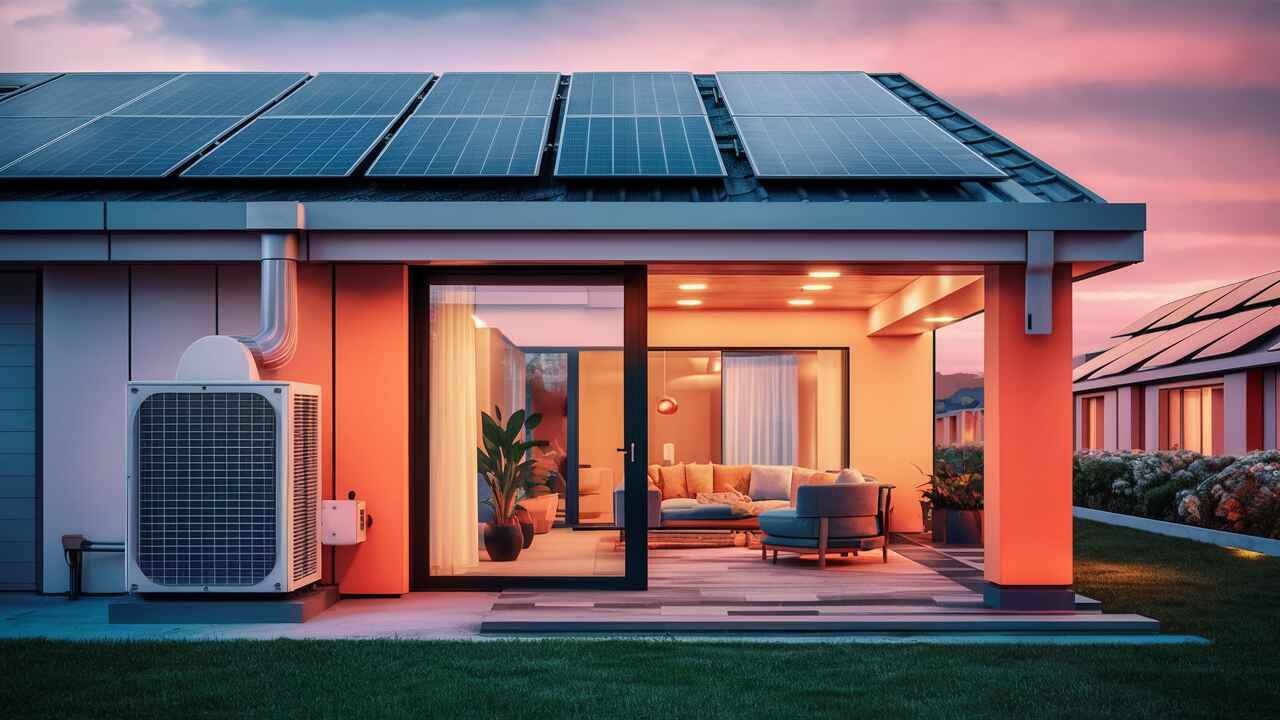
- Lower direct emissions — heat pumps produce no on-site greenhouse gas emissions. When paired with renewable electricity (such as solar panels), they can heat and cool a home with near-zero carbon impact. Studies have shown that replacing a gas furnace with a heat pump can reduce a home’s carbon footprint by 38–53%.
- Can be powered by renewable energy sources, including rooftop solar, making them a key component of whole-home electrification.
Cons:
- Higher upfront equipment and installation costs compared to a furnace alone, though this gap is narrowing and can be offset by rebates and the elimination of a separate AC purchase.
- Reduced output in extreme cold — while modern cold-climate models have made significant strides, traditional heat pumps lose capacity as temperatures drop below 25–30°F. In very cold regions, supplemental heating from electric resistance strips or a backup furnace may be needed, which increases electricity consumption during the coldest days.
- More moving parts — with both an outdoor unit and an indoor air handler, more components require periodic inspection and servicing. Outdoor coils need to be kept clear of debris, and the defrost system should be checked regularly.
- Outdoor unit space and noise — the outdoor unit requires adequate clearance and produces some operational noise. While modern units are considerably quieter than older models, placement near bedroom windows or neighboring properties should be considered.
Gas Furnace: A Closer Look at Its Advantages and Limitations
Pros:
- Powerful, consistent heat regardless of outdoor temperature — a gas furnace delivers the same output whether it is 30°F or -10°F outside, making it extremely reliable in regions with harsh winters.
- Lower upfront equipment cost compared to a heat pump, particularly when a gas line already exists at the property.
- Simpler system with fewer components — a furnace is an indoor-only system with no outdoor unit, which means no exposure to weather, debris, or defrost concerns.
- Faster initial heating — furnaces raise the indoor temperature quickly due to the high temperature of the air they produce, which some homeowners prefer.
Cons:
- Combustion safety considerations — because gas furnaces burn fuel, they carry an inherent risk of carbon monoxide exposure if the heat exchanger cracks or the venting system fails. Modern furnaces include advanced safety switches and pressure regulators to mitigate this risk, but regular professional inspection is essential. A carbon monoxide detector is strongly recommended in any home with a gas furnace.
- Dry indoor air — the combustion process naturally removes moisture from the circulated air. In winter, this can exacerbate dry skin, respiratory irritation, and static electricity. Many homeowners with furnaces find it necessary to install a whole-house humidifier to restore comfortable humidity levels.
- Requires a separate air conditioning system for cooling, adding to total equipment and maintenance costs.
- Higher greenhouse gas emissions — gas furnaces release carbon dioxide and other combustion byproducts directly. For environmentally conscious homeowners, this is an increasingly important factor.
- Dependence on fossil fuel supply and pricing — natural gas prices fluctuate based on market conditions, and propane or oil must be delivered and stored on-site, adding logistical considerations.
Electric Heat Pump vs Gas Heating: Which Is More Efficient?
In terms of raw energy efficiency, electric heat pumps outperform gas furnaces across most conditions. A heat pump with a COP of 3.0 delivers three units of heat for every one unit of electricity consumed — an effective efficiency of 300%. Even a high-efficiency gas furnace with a 96% AFUE rating, while excellent for a combustion-based system, converts only 96% of its fuel energy into heat.
However, efficiency alone does not tell the whole story. The cost of that energy matters. In regions where natural gas is inexpensive and electricity rates are high, the operating cost of a gas furnace may be comparable to or even lower than a heat pump, despite the furnace’s lower theoretical efficiency. The most accurate way to compare is to calculate your expected annual operating cost based on local utility rates, your home’s heating load, and the specific efficiency ratings of the systems you are considering.
Deciding Which Heating System Is Right for Your Home
Choosing between a heat pump vs furnace depends on several factors specific to your home and circumstances. Here are the key considerations to weigh.
Climate Considerations: Heat Pump or Furnace?
Your climate zone remains the single most influential factor:
- Southern and coastal states with mild winters — such as Florida, Georgia, the Carolinas, and much of the Southwest — are ideal for heat pumps. The system handles both heating and cooling efficiently year-round, and extreme cold events are rare.
- Middle-tier states — including much of the Mid-Atlantic, the Southeast interior, and parts of the Pacific Northwest — can benefit from either a heat pump or a dual-fuel (hybrid) system. A dual-fuel setup pairs an electric heat pump with a gas furnace: the heat pump handles heating during mild weather at maximum efficiency, and the furnace automatically takes over when temperatures drop below a set threshold (often around 25–35°F). This gives homeowners the best of both worlds — efficient everyday heating and powerful backup during cold snaps.
- Northern states — including Minnesota, Wisconsin, Maine, Montana, Wyoming, Vermont, New Hampshire, Idaho, North Dakota, and Alaska — experience prolonged periods of severe cold where a gas furnace provides the most reliable performance. However, as noted above, cold-climate heat pumps are rapidly closing this gap, and dual-fuel systems offer a compelling middle ground even in these regions.
Some regions also have unique considerations. In the Northeast, where many older homes lack natural gas access and rely on oil or propane for heating, switching to a heat pump can yield significant cost savings and eliminate the need for fuel delivery. In areas prone to power outages, a gas furnace (which requires minimal electricity for its blower and controls) may be easier to run on a backup generator than a heat pump.
Analyzing Your Home’s Heating Needs
Beyond climate, your home’s individual characteristics matter:
- Insulation and air sealing: A well-insulated home with minimal air leakage retains heat more effectively, which allows a heat pump to operate at its highest efficiency. Older homes with poor insulation may lose heat faster than a heat pump can replace it during very cold weather, making a furnace — or improvements to insulation before system installation — the better approach.
- Home size and layout: Larger homes or those with complex layouts may benefit from the powerful output of a furnace or from a multi-zone mini-split heat pump configuration. Smaller, well-sealed homes are often ideal candidates for a single heat pump system.
- Existing infrastructure: If your home already has ductwork in good condition and an existing gas line, a furnace replacement is straightforward. If there is no ductwork — common in older homes, additions, or converted spaces — a ductless mini-split heat pump can provide efficient heating and cooling without the expense of installing ductwork.
- New construction vs. retrofit: Heat pumps are increasingly the standard choice in new construction, where proper insulation, air sealing, and system sizing can be designed in from the start. For retrofits in existing homes, the decision depends more heavily on current infrastructure, insulation quality, and climate.
Installation and Long-Term Costs: What to Expect

To summarize the financial picture:
- Upfront cost: Heat pumps generally cost more to purchase and install than furnaces alone. However, when you factor in the cost of a furnace plus a separate air conditioning system — which a heat pump replaces — the gap narrows considerably. Federal tax credits and state/utility rebates can further reduce the net cost of a heat pump.
- Operating cost: In most mild and moderate climates, heat pumps are less expensive to operate month-to-month. In cold climates with cheap natural gas, a furnace may have the operating cost advantage.
- Maintenance cost: Both systems require regular maintenance. Furnaces need annual burner inspections, heat exchanger checks, and venting system evaluation — and a separate AC unit adds its own maintenance needs. Heat pumps need biannual servicing (once for heating season, once for cooling season), including outdoor coil cleaning, refrigerant level checks, and air handler filter replacement. Overall maintenance requirements are comparable, though heat pump maintenance is more frequent due to year-round use.
- Lifespan: Both systems have similar potential lifespans of approximately 15–20 years when properly maintained. Gas furnaces sometimes last slightly longer (20–25 years) since they operate only during the heating season, while heat pumps run year-round. However, actual lifespan depends heavily on installation quality, usage patterns, and how consistently the system is maintained.
- Financing: Most HVAC contractors offer financing plans for new system installations, allowing homeowners to spread the cost over several years. This can make the higher upfront investment of a heat pump more manageable, especially when monthly energy savings help offset the financing payment.
FAQs
Can heat pumps provide enough heat in colder climates?
Modern heat pumps — particularly cold-climate rated models — are designed to operate effectively in temperatures well below freezing. Standard models typically maintain full capacity down to around 25–30°F, while cold-climate models can deliver 100% capacity at approximately 5°F and maintain useful output at temperatures as low as -13°F to -22°F, depending on the specific model. For homes in extremely cold regions, a hybrid system that pairs a heat pump with a gas furnace provides the efficiency of a heat pump during milder weather with the reliable power of a furnace during the coldest days.
Is a gas furnace more reliable than a heat pump?
Both systems are reliable when properly installed and maintained. Gas furnaces have fewer moving parts and operate only during the heating season, which can contribute to a longer service life. Heat pumps operate year-round, handling both heating and cooling, which means more cumulative run time. Regular professional maintenance is the most important factor in reliability for either system.
Which system is more environmentally friendly?
Heat pumps are generally the more environmentally friendly option. They produce no direct on-site emissions and can be powered by renewable electricity. Replacing a gas furnace with a heat pump has been shown to reduce a household’s carbon footprint by 38–53%, according to research published in the journal Energy Policy. Gas furnaces, while increasingly efficient, still rely on fossil fuel combustion and release carbon dioxide and other byproducts.
Is a heat pump better than a furnace?
Neither system is universally “better” — the right choice depends on your climate, your home, your energy costs, and your priorities. Heat pumps offer greater energy efficiency, dual heating/cooling capability, and lower emissions. Furnaces offer powerful, temperature-independent heating and a lower upfront cost. For many homeowners, a dual-fuel system that combines both technologies offers the most balanced solution.
What is the downside to a heat pump?
The primary trade-offs are a higher upfront cost and reduced heating capacity in extreme cold. In very low temperatures, a traditional heat pump may need to rely on supplemental electric resistance heat, which is effective but uses more electricity. Cold-climate heat pump models have significantly reduced this limitation, but homeowners in the coldest regions may still want a backup heat source for the most extreme days.
Is it cheaper to run a heat pump or a gas furnace?
In most mild to moderate climates, a heat pump is cheaper to run due to its higher efficiency. In areas with very low natural gas prices and high electricity costs, a gas furnace may have the operating cost advantage. The best way to know for your specific situation is to compare your local electricity and gas rates against the efficiency ratings of the specific systems you are considering. Your HVAC installer can help you run this analysis.
Should I switch from a furnace to a heat pump?
Switching makes the most sense if you live in a mild to moderate climate, currently pay high heating costs (especially if using propane or oil), want to combine heating and cooling into one system, or are looking to reduce your home’s carbon emissions. If you live in a very cold region with affordable natural gas, retaining a furnace — or opting for a dual-fuel system — may be the more practical choice. Taking advantage of available rebates and tax credits can also improve the financial case for switching.
Do heat pumps run longer than furnaces?
Yes — heat pumps typically operate in longer cycles than furnaces, and this is completely normal. Because a heat pump delivers air at a lower temperature (90–110°F compared to a furnace’s 120–140°F), it runs for extended periods to maintain your desired indoor temperature. This longer run time actually contributes to more even heat distribution, fewer temperature swings, and better humidity balance. It does not indicate a problem or inefficiency.
How do heat pumps and furnaces affect indoor humidity?
This is one of the less discussed but meaningful differences. A gas furnace, through the combustion process, tends to dry out indoor air. During winter, when outdoor air is already moisture-depleted, this can lead to noticeably low indoor humidity — causing dry skin, irritated sinuses, static electricity, and potential damage to wood furnishings and flooring. Many furnace owners address this by installing a whole-house humidifier.
A heat pump does not involve combustion and therefore does not remove moisture from the air. In fact, because heat pump air is delivered at lower temperatures, it tends to retain more of its natural humidity. Many homeowners report that their homes feel more comfortable with a heat pump, even at slightly lower thermostat settings, because the higher humidity level makes the air feel warmer.
Conclusion:
In conclusion, choosing between a heat pump and a furnace requires careful consideration of your home’s specific needs, your local climate, energy costs, and your long-term comfort and efficiency goals. Both systems are proven, reliable technologies — and in many cases, a dual-fuel approach that combines the strengths of both may offer the ideal solution. By understanding the key differences outlined in this guide, you are well-equipped to have an informed conversation with your HVAC professional and make a decision that will keep your home comfortable for years to come.
