Indoor and Outdoor Fireplace Ideas for Modern Homes
Explore indoor and outdoor fireplace ideas, from panoramic and rotating saucer designs to conical fireplaces. Learn what to check before ordering.
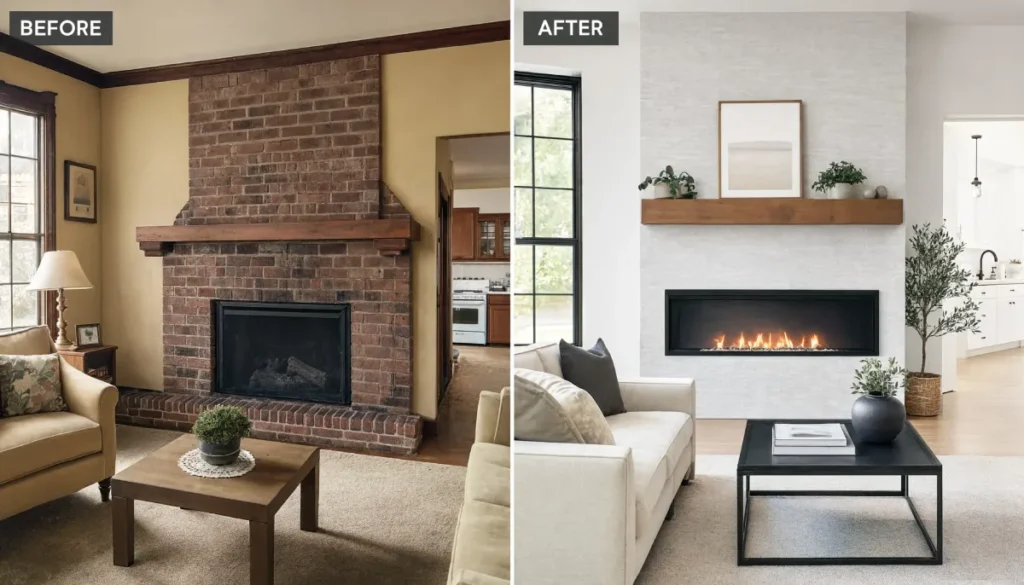
A fireplace can change how a room is arranged. In an open-plan living space, seating can turn towards the fire from more than one direction. On a terrace, a fire feature can give a conversation area a clear centre. The best place to start is by looking at where people sit, which views you want to keep open and how the space will be used after dark.
A ceiling-hung fireplace opens up different design possibilities from a traditional hearth. A panoramic firebox can connect two seating areas, a saucer can introduce a softer shape, and a conical hood can draw attention to the height of a room. Each works best in a different layout.
Use a panoramic fireplace to connect two seating areas
A wall fireplace gives furniture an obvious direction. In a larger room with several places to sit, a panoramic design gives you more freedom. An armchair can face the fire from near the window, while a sofa on the other side still has a view. This works particularly well when the seating areas feel disconnected and need a feature they can share.
The Panoramic Horn uses a broad, sculptural hood to frame the fire.
The Panoramic Horn Hanging Fireplace is an example of this approach. Its broad hood gives the flame a strong outline, so the feature holds its shape visually even in a large interior. When planning the room, look at the proposed position from the entrance, the main sofa and any adjoining dining area. Those viewpoints tell you how much of the fireplace people will see and whether it sits naturally in the room.
Choose a rotating saucer for a more relaxed seating layout
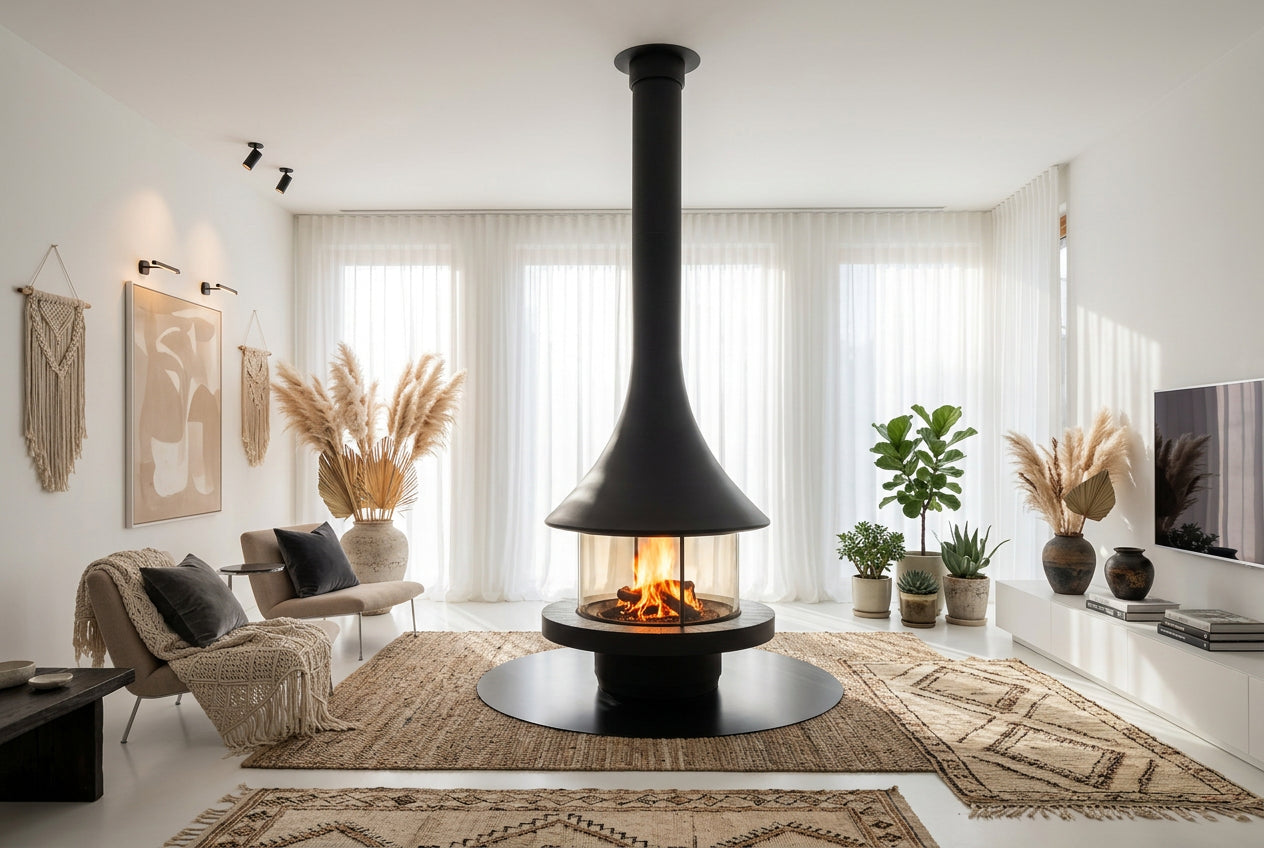
A round firebox can feel at home with curved sofas, rounded coffee tables or armchairs set at an angle. The Firewood Saucer is listed as a suspended wood-burning fireplace with a 360-degree rotating design. A rotating format is worth considering if the room has more than one seating arrangement. Ask the supplier to explain the rotation and operating limits of the exact version you’re considering before building your layout around it.

The Firewood Saucer’s low, rounded profile suits a seating group arranged around a central feature.
Look at the floor plan as well as the finish. Sketch the route people take between the seats, doors and adjoining rooms. A suspended fireplace affects how people move through the space, so have the installer confirm its position and required clearances before finalising the furniture layout.
Let a conical fireplace draw the eye upwards
In a tall living room, a conical fireplace can make use of the space above the furniture. Its taper leads the eye up towards the ceiling, while the firebox gives the seating area a focal point closer to eye level. A dark cone stands out clearly against pale plaster, light stone or timber.
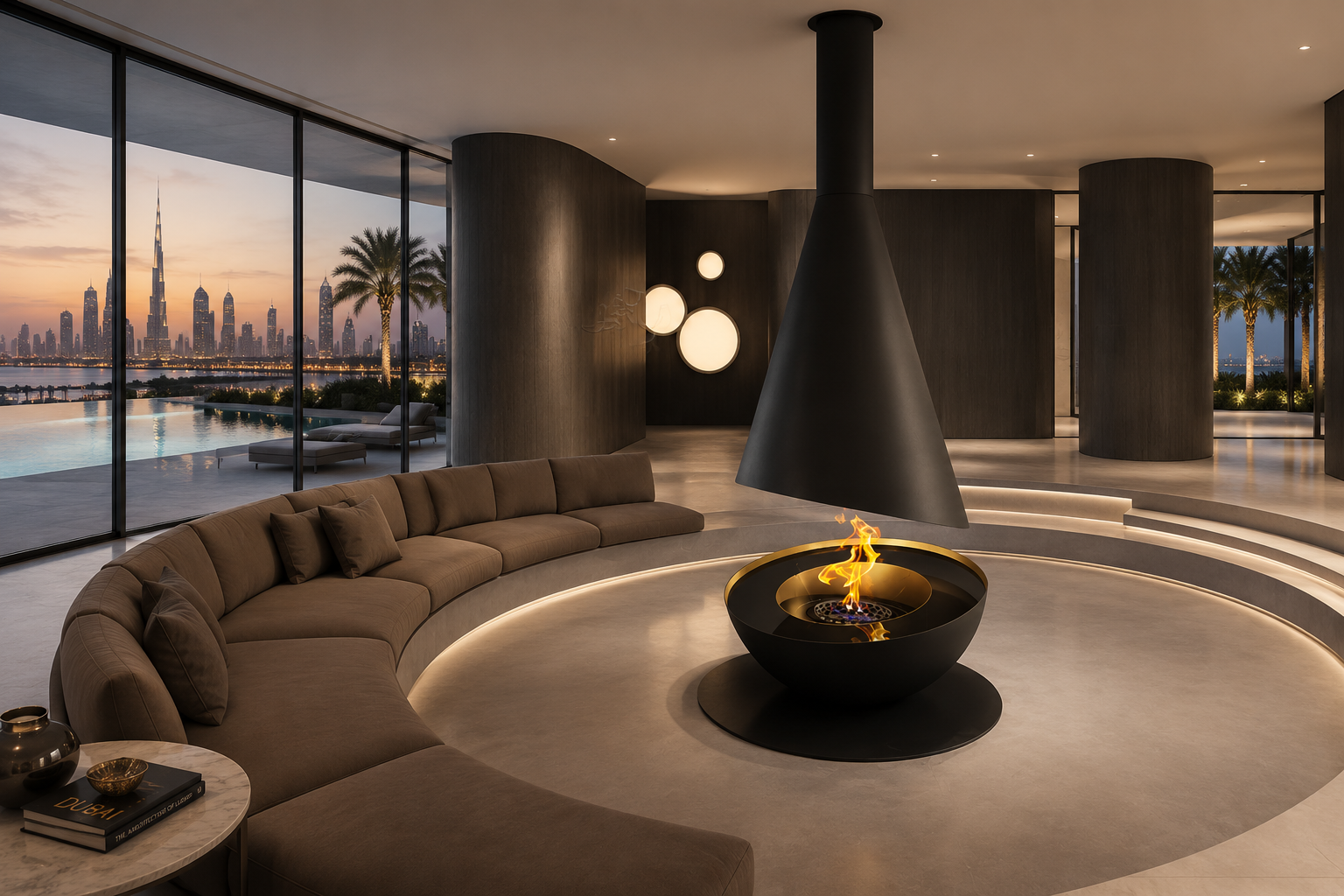
A tapered conical hood brings a vertical line into a modern seating area.
For a lighter look, leave some open wall or glazing around the silhouette. In a room with a busy stone wall, exposed beams or large artwork, decide which element should take the lead. The fireplace often has more impact when it has a little breathing room.
Plan an outdoor fireplace around how you use the terrace
On a terrace, think about what happens after dinner. Will people move from the table to a separate seating area, or stay in one place? A fireplace can help define that second area and make it feel like an outdoor living room. Consider where people will carry food and drinks, which seats have the best view and how exposed the spot is to wind and weather.
For an outdoor or covered installation, confirm that the exact appliance, fuel configuration and finish are suitable for the intended location. Share photos or plans with the supplier and installer, including any roof, overhang or nearby walls. Ask for written confirmation of suitability before ordering.
Confirm the fuel, documentation and installation before ordering
When comparing fireplaces for the USA, Canada or Europe, start with the exact model and fuel configuration. Ask which appliance documentation applies in your location, whether the model is suitable for indoor or outdoor use as planned, and what your installer needs to review. Two versions that look similar can have different installation requirements.
For a suspended design, share the floor-to-ceiling measurement, any ceiling slope, photos of the proposed location and a drawing of the room if available. Ask a qualified local installer to confirm the structural support, required clearances, and venting or flue arrangements where applicable. If you’re ordering across borders, also confirm which components are included so the installer can review the complete setup.
Browse the GraffitiWallArts fireplace collection to compare panoramic, saucer and conical designs. Start with the view you want from your favourite seat, then work through the practical details that will make that design suitable for your home.