


You moved to Florida for the sunshine, the lifestyle, maybe the no-state-income-tax perk. But six months in, your master bedroom still looks like a placeholder — builder-grade ceiling fan, beige walls that absorb heat instead of deflecting it, and curtains that do nothing against the 7 a.m. sun blazing through east-facing windows. You’re not alone. I’ve talked with homeowners across Tampa, Orlando, and the Palm Beach area who’ve invested real money into their kitchens and bathrooms but left the master bedroom untouched for years.
This article fixes that. Whether you’re working with $1,500 or $15,000, these bedroom interior design ideas are built specifically for Florida’s climate — high humidity, intense UV exposure, hurricane season, and HOA restrictions that govern everything from paint colors to window treatments. Every suggestion here accounts for what actually works in Florida homes, not generic design advice that could apply to a condo in Minnesota.
Understanding Bedroom Interior Design for Master Bedrooms in Florida
Florida’s climate is not a footnote — it’s the central fact of every design decision you make.
- Humidity is your biggest enemy. Average indoor humidity in Florida can run between 60–80% during the summer months if your HVAC isn’t properly sized. That directly affects material choices. Solid wood furniture warps. Certain paints peel. Carpeting holds moisture and becomes a mold risk. This isn’t theory — it’s what happens in homes from Jacksonville to Miami every year.
- UV exposure destroys materials faster here than in most other states. Florida gets roughly 2,800–3,000 hours of sunshine annually. Untreated fabrics fade. Hardwood floors bleach out near windows. Artwork loses color. Your design choices need to account for this from day one.
- HOA rules in Florida are strict. Communities in Sarasota, Naples, Boca Raton, and hundreds of other areas control exterior paint colors, window treatments visible from the street, and sometimes even the types of shutters you can install. Before you pick a paint color or window covering, pull your HOA documents. Violations carry fines that easily run $100–$500 per day in some Florida communities.
- Hurricane codes matter even indoors. Impact-resistant windows are now standard in most new Florida construction. If you’re renovating an older home, upgrading bedroom windows to meet current Florida Building Code (FBC) standards not only protects you — it can lower your homeowner’s insurance premium by $200–$800 annually.
Design around these realities first. Everything else is secondary.
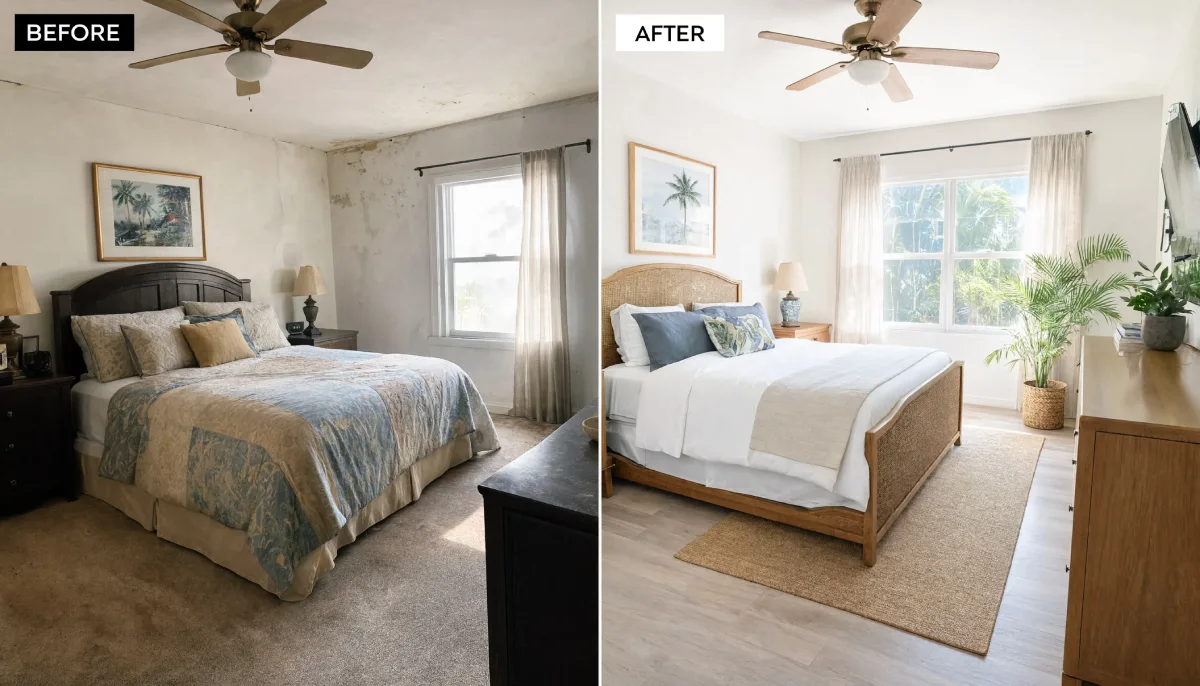
Best Bedroom Interior Design Approaches for Florida Master Bedrooms
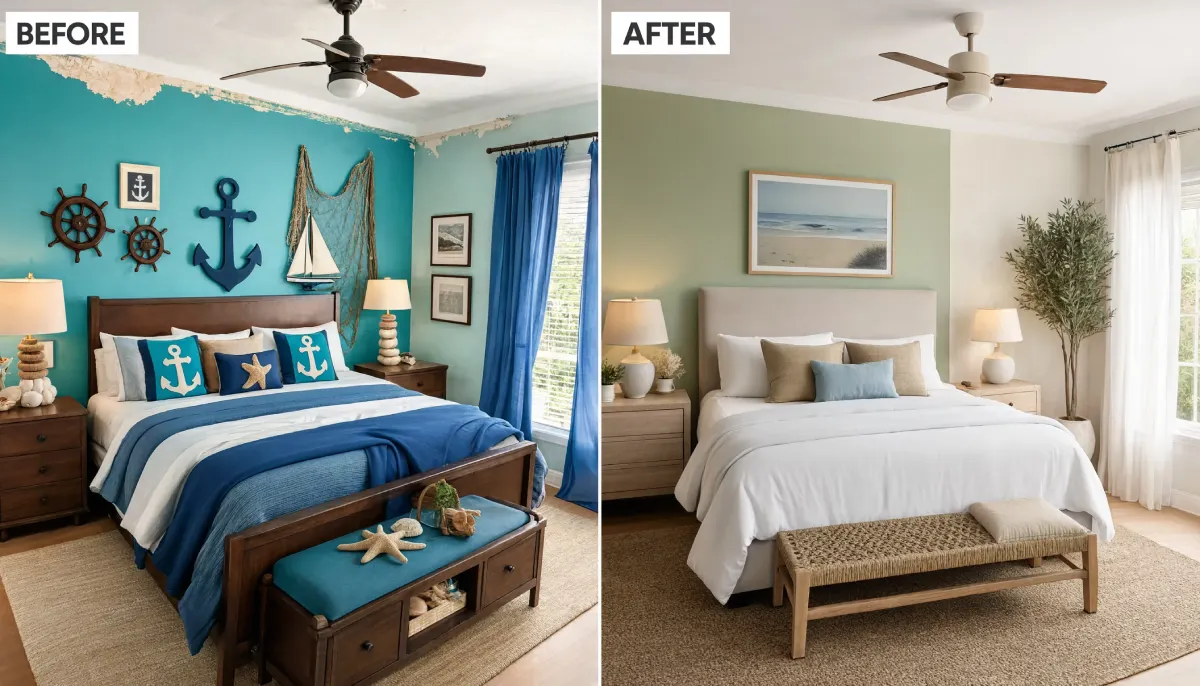
1. Go with a Coastal-Neutral Color Palette (That Actually Works)
The “coastal Florida bedroom” look gets overdone, but there’s a reason it holds up — light, cool tones reflect heat and create visual calm in a climate that already feels intense. The mistake most homeowners make is going too literal: too much turquoise, too many seashells.
What works better: soft white, warm sand, greige (gray-beige), and ocean-inspired blues used as accents rather than dominant colors. Benjamin Moore’s “White Dove” (OC-17) and Sherwin-Williams’ “Sea Salt” (SW 6204) are two of the most-used colors in Florida master bedrooms for good reason — they’re light-reflective without being stark, and they work with natural light without washing out.
For walls, use a low-sheen or eggshell finish. Flat paint shows humidity damage quickly in Florida. Semi-gloss holds up better but can make a room feel clinical. Eggshell is the practical middle ground.
Cost: A professional interior paint job for a master bedroom in Florida (average 200–250 sq ft) runs $350–$700, depending on prep work needed. DIY materials from Home Depot or Lowe’s will run $80–$150.
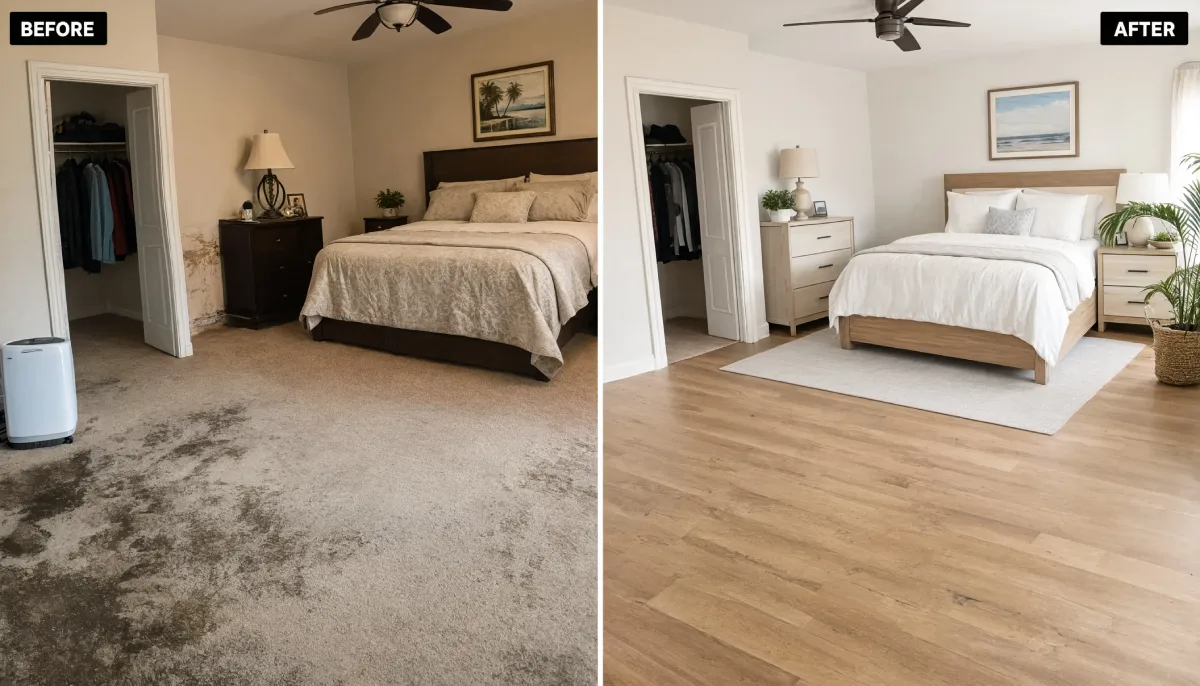
2. Choose Flooring That Handles Humidity Without Warping
Carpet in a Florida master bedroom is a risk. It holds moisture, it’s a mold incubator, and it’s harder to clean after a hurricane-related water intrusion. The better options:
- Luxury Vinyl Plank (LVP): The most practical choice for Florida master bedrooms. 100% waterproof, dimensionally stable in humidity, and available in wood-look finishes that are nearly indistinguishable from hardwood. Brands like LifeProof (sold at Home Depot) and COREtec are built specifically for high-moisture environments. Installed cost in Florida: $4–$8 per sq ft.
- Porcelain Tile: The most durable option. Zero moisture absorption. Tiles with wood-grain or stone finishes work well in a master bedroom without feeling cold. One trade-off: tile gets warm in Florida heat (not cold like in northern states), so it’s actually comfortable year-round. Installed cost: $6–$14 per sq ft, depending on tile size and pattern complexity.
- Engineered Hardwood (with caveats): Real hardwood is not recommended in Florida unless your HVAC system keeps humidity consistently below 50%. Engineered hardwood is more stable, but even that can cup or gap with humidity swings. If you want the wood look without the risk, LVP is the smarter call.
Avoid: Laminate flooring in Florida master bedrooms. It swells at the seams when moisture gets under it, and in Florida, it will.
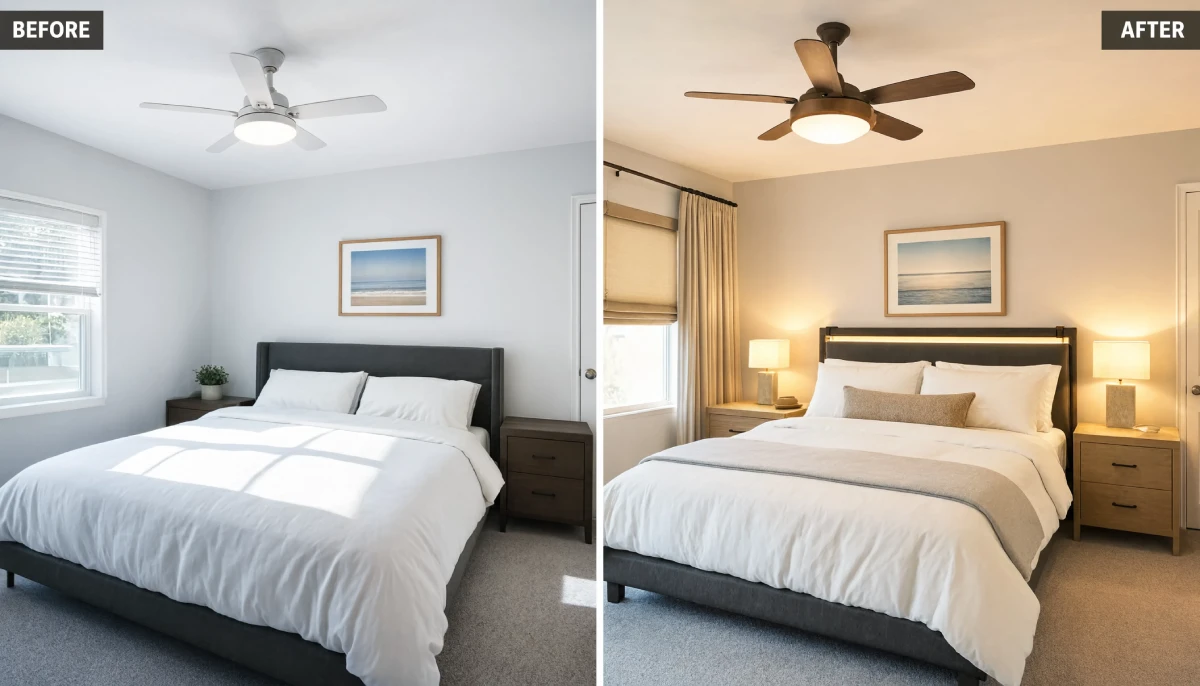
3. Get the Lighting Right for Florida’s Natural Light
Florida master bedrooms often have two competing problems: too much harsh morning light and too little warm evening light. Most builder-spec homes have a single overhead fixture that does neither job well.
Layer your lighting with three types:
- Ambient (general): Replace the builder ceiling fan with a quality unit that includes an integrated LED light kit. Hunter and Minka-Aire make models specifically rated for high-humidity environments. A good ceiling fan (80-inch span for a 14×16 room) runs $180–$450 at Home Depot.
- Task lighting: Bedside sconces or table lamps with warm-white bulbs (2700K–3000K color temperature) make the room feel intentional rather than an afterthought.
- Accent lighting: LED strip lighting behind a headboard or inside a closet adds depth without adding heat — important in a climate where you want to minimize heat sources inside the bedroom.
- Window treatments for Florida sun: Blackout curtains are non-negotiable if you have east or west-facing windows. Solar shades (which block UV without blocking the view) run $60–$180 per window for quality options. Blackout curtain panels from Lowe’s or Home Depot: $25–$80 per panel.
4. Master Bedroom Furniture Choices Built for Florida’s Climate
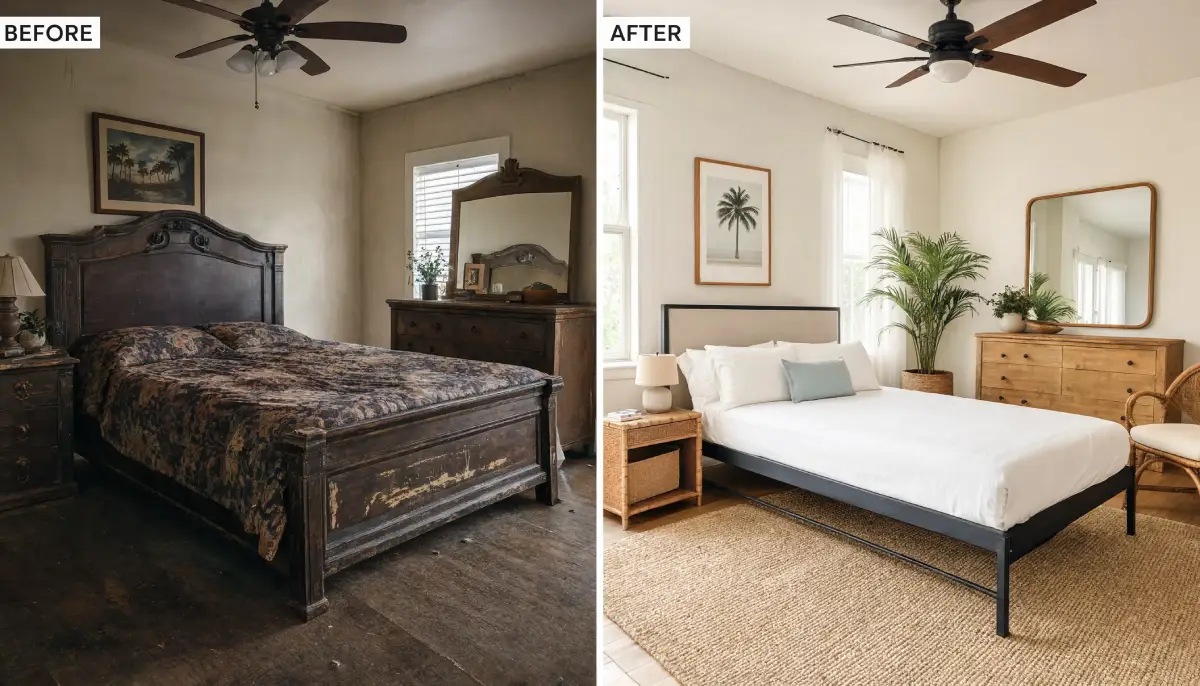
Solid wood bedroom furniture warps and splits in Florida humidity unless your home is climate-controlled year-round. Practical alternatives:
- Manufactured wood (MDF/plywood core) with veneer finishes holds up better in humidity than solid wood. IKEA’s bedroom furniture (specifically the HEMNES and SONGESAND lines) performs reasonably well in Florida because the MDF core doesn’t expand and contract the way solid wood does.
- Metal bed frames are underrated in Florida. No warping, no cracking, and easier to keep clean. West Elm and Article carry quality metal frames in the $400–$900 range that look high-end without the humidity risk.
- Rattan and natural fiber accents work exceptionally well in Florida because they’re designed for humid environments. A rattan accent chair or woven bedside table adds texture without the maintenance cost of wood.
- Mattress selection: Florida heat affects sleep quality. Mattresses with gel-infused memory foam or latex cores sleep cooler than traditional foam. A quality queen-size gel-foam mattress (Purple, Saatva, or Casper) runs $1,000–$2,500 — worth the investment given how much heat affects sleep in a Florida summer.
5. Smart Storage Solutions for Florida Master Bedrooms
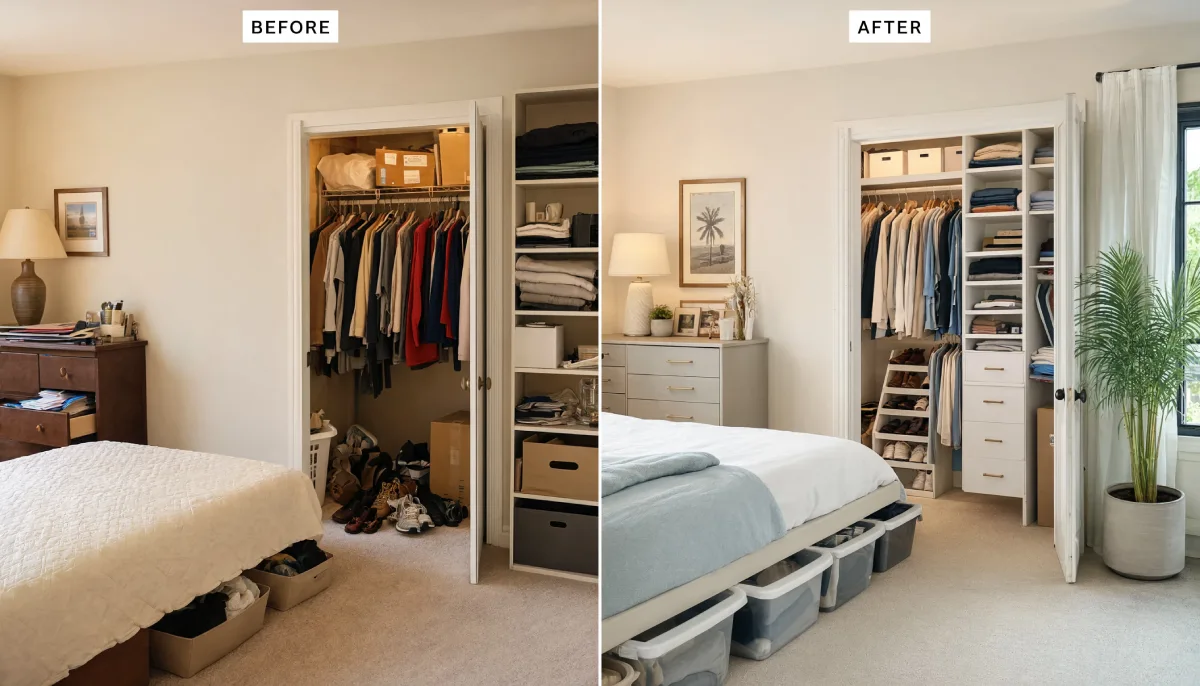
Florida master bedrooms often lack the closet depth of homes built in colder climates (no need for coat storage). That means storage planning matters more here, not less.
- Built-in closet systems: Florida Closet (a Florida-based company) and The Container Store’s Elfa system are the two most-used options. A full master closet build-out using Elfa components runs $800–$2,500 DIY or $2,500–$6,000 installed through a local contractor.
- Under-bed storage: In Florida, use sealed plastic storage bins rather than open fabric ones. Humidity and occasional pest issues (especially in homes closer to nature preserves or coastal areas) make airtight containers the practical choice.
- Dressers with closed storage are preferable to open shelving in Florida bedrooms. Open shelving collects dust faster in the heat, and items on open shelves fade more quickly due to UV exposure.
6. Ceiling and Wall Treatments That Handle Florida Conditions
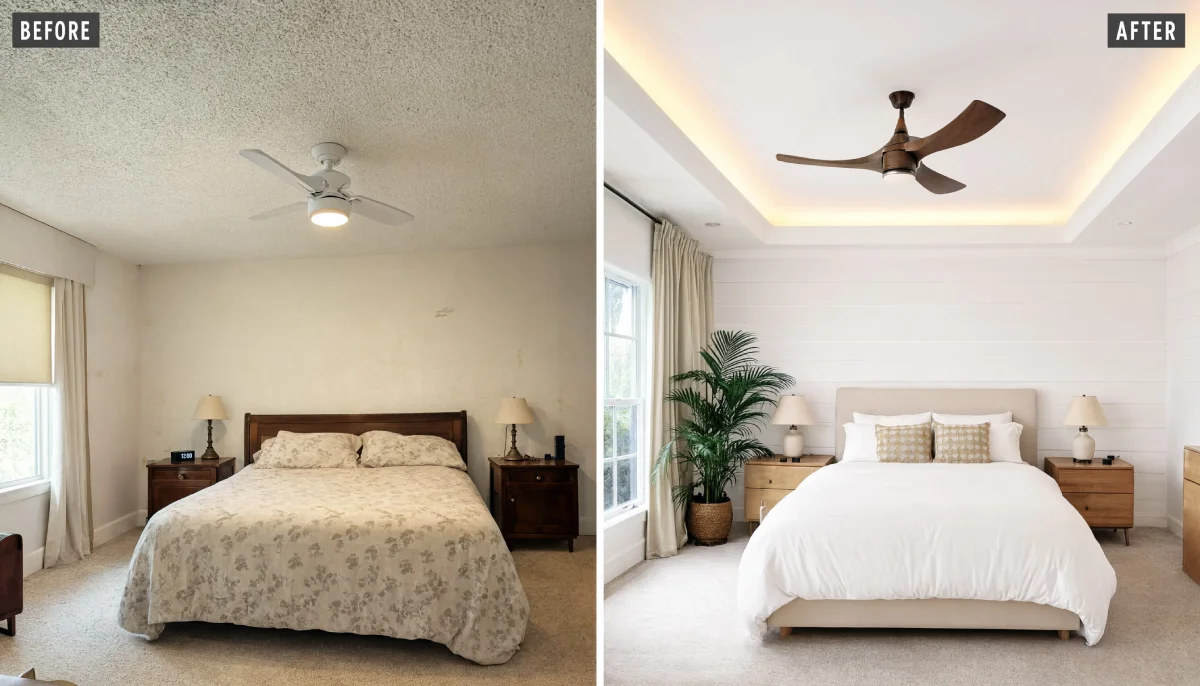
- Popcorn ceilings are common in older Florida homes built in the 1970s–1990s. Removing them costs $1–$3 per sq ft in Florida. If the home was built before 1980, test for asbestos before any removal — abatement in Florida runs $1,500–$5,000, depending on scope.
- Shiplap accent walls have become popular in Florida master bedrooms. Moisture-resistant MDF shiplap (not real wood) holds up better in Florida conditions. Materials cost $150–$400 for a standard accent wall; installation by a handyman or carpenter adds $200–$500.
- Tray ceilings are a common feature in Florida master bedrooms. If yours is flat, adding a tray ceiling detail costs $500–$1,500, depending on size and crown molding complexity. It’s a mid-range upgrade that significantly changes the room’s character.
Cost Breakdown: Budget Bedroom Interior Design Ideas for Florida Homes
| Element | Low Budget ($1,000–$3,000) | Mid Budget ($3,000–$8,000) | High Budget ($8,000–$20,000+) |
|---|---|---|---|
| Paint (walls + ceiling) | DIY: $100–$200 | Pro paint job: $400–$700 | Designer color consult + pro paint: $800–$1,500 |
| Flooring | LVP DIY: $600–$1,200 | LVP installed: $1,500–$3,000 | Porcelain tile installed: $3,000–$7,000 |
| Lighting (fan + fixtures) | Builder fan upgrade: $150–$300 | Quality ceiling fan + sconces: $400–$800 | Designer fixtures + smart lighting: $1,500–$4,000 |
| Window Treatments | Blackout curtains: $100–$250 | Solar shades + curtains: $400–$900 | Motorized shades + custom drapery: $2,000–$6,000 |
| Furniture | IKEA/big box: $500–$1,000 | Mid-range brands: $1,500–$3,500 | Custom/designer: $5,000–$15,000+ |
| Closet Storage | DIY wire system: $200–$500 | Elfa or Florida Closet: $1,500–$3,500 | Fully built-in: $4,000–$10,000 |
| Total Estimated | $1,650–$3,450 | $5,700–$12,400 | $16,300–$43,500+ |
Florida-specific cost note: Labor costs in South Florida (Miami-Dade, Broward, Palm Beach counties) run 20–35% above Central Florida rates. If you’re in Orlando, Tampa, or Jacksonville, expect the lower end of contractor labor estimates. Always get three quotes — contractor pricing in Florida varies significantly, especially post-hurricane season when demand spikes.
Common Mistakes Florida Master Bedroom Owners Make
- Installing carpet over concrete slab floors. Many Florida homes are slab-on-grade construction. Carpet over concrete — without a proper moisture barrier — leads to mold within 12–18 months in Florida’s climate. If you want softness underfoot, use area rugs over LVP or tile instead.
- Buying solid wood furniture without climate control. If your HVAC system is undersized or your home sits unoccupied for months (common with snowbird properties), solid wood furniture will crack and warp. It happens consistently in vacation homes from Fort Lauderdale to Naples.
- Ignoring mold-resistant paint. Standard interior paint is not mold-resistant. In Florida, spending the extra $5–$10 per gallon on mold-resistant paint (Zinsser Perma-White or Kilz Clean Start) is not optional — it’s maintenance prevention.
- Choosing dark paint colors for sun-facing walls. Dark colors absorb heat in Florida, making your HVAC work harder. This directly increases your energy bill. South and west-facing bedroom walls should be light-colored unless your windows have high-quality solar film or impact glass.
- Skipping impact window upgrades when renovating. If you’re already spending $10,000+ on a master bedroom renovation, adding impact window upgrades at the same time (while contractors are already on-site) is the most cost-efficient timing. Standalone impact window installation in Florida runs $800–$2,500 per window. Combined with a renovation, you reduce mobilization costs.
- Underestimating HOA restrictions. In communities like The Villages, Pelican Bay, or Weston, even interior changes visible through windows can trigger HOA issues. Window treatment colors, for example, are sometimes regulated. Read your HOA docs before purchasing anything.
When to DIY vs. Hire a Contractor for Florida Bedroom Renovations
DIY is reasonable for:
- Painting walls and ceilings (low skill, high impact)
- Installing LVP flooring (moderate skill, well-documented process)
- Swapping light fixtures and ceiling fans (basic electrical comfort required)
- Installing closet organizer systems like Elfa
- Hanging curtains, mirrors, and artwork
- Assembling and arranging furniture
Hire a contractor for:
- Any work involving Florida’s electrical code (HVAC-connected work requires a licensed contractor by Florida law)
- Tray ceiling installation or structural ceiling changes
- Tile installation (especially large-format tiles over slab)
- Impact window upgrades (requires a Florida-licensed contractor and permit)
- Mold remediation if discovered during renovation
- Any wall removal or structural modification
Permit reality in Florida: Many homeowners skip permits on cosmetic work — paint, flooring, and furniture don’t require permits. But electrical work, window replacements, and structural changes do. Florida’s building department enforcement has tightened significantly since Hurricane Ian (2022). Unpermitted work can complicate home sales and void insurance claims. Don’t cut corners on this.
Practical Tips for Your Florida Bedroom Makeover
- Buy ceiling fans rated for “damp” or “wet” locations — even for interior use in Florida. The humidity makes standard fans corrode faster. Home Depot and Lowe’s both stock these.
- Use a dehumidifier as a backup to your HVAC during extended power outages or shoulder seasons. A good 50-pint unit (Frigidaire or hOmeLabs) runs $180–$280 and protects your furniture and flooring investment.
- Apply UV-blocking window film before installing new flooring or furniture. 3M and Gila make DIY-friendly window films ($30–$80 per roll) that block up to 99% of UV rays and protect your materials.
- Test for moisture in your slab before installing any flooring over concrete. A simple calcium chloride moisture test kit from Home Depot costs under $20. Skipping this step is one of the most expensive mistakes in Florida floor installations.
- Choose mattress protectors rated for hot/humid climates — standard cotton protectors trap heat. Tencel or bamboo fabric protectors breathe better and are widely available at Target and Walmart.
- Use washable paint finishes on all surfaces — Florida dust, humidity, and the general wear of an active household mean you’ll clean walls more often than in drier climates.
- Plan your furniture layout around airflow — keep furniture away from AC vents and position the bed to avoid direct ceiling fan drafts, which can cause joint stiffness over time.
FAQs
How much does a master bedroom interior design makeover cost in Florida?
Budget renovations (paint, flooring, basic lighting) run $1,500–$3,500. Mid-range makeovers, including furniture, quality window treatments, and closet systems, typically land between $5,000–$12,000. Full custom renovations with designer furniture, impact windows, and built-ins can reach $20,000–$40,000+. South Florida labor costs run 20–35% higher than Central or North Florida.
Can I DIY my master bedroom renovation in Florida?
Yes, for most cosmetic work — painting, LVP flooring installation, ceiling fan swaps, and closet systems are all manageable DIY projects. However, anything involving electrical panels, structural changes, or window replacements requires a licensed Florida contractor and permits. Florida’s contractor licensing requirements are among the strictest in the US.
Do I need a permit for bedroom renovations in Florida?
Cosmetic changes (paint, flooring, furniture) don’t require permits. Electrical work, window replacements, ceiling modifications, and structural changes do. Permit requirements vary slightly by county — check with your local building department (Miami-Dade, Orange County, Hillsborough, etc.) before starting any work beyond purely cosmetic updates.
Is a bedroom makeover worth the investment in Florida?
Yes, with conditions. If you’re in a high-demand market (Miami, Orlando, Tampa, Naples), bedroom upgrades have real resale impact. According to Remodeling Magazine’s Cost vs. Value data, bedroom renovations in the South Atlantic region (which includes Florida) return 60–75% of costs at resale. Beyond resale, the quality-of-life return in Florida’s climate — better sleep, better humidity control, better UV protection — is measurable.
What flooring is best for Florida master bedrooms?
Luxury Vinyl Plank (LVP) is the most practical choice for Florida master bedrooms — waterproof, stable in humidity, and cost-effective at $4–$8 per sq ft installed. Porcelain tile is the most durable option, but harder underfoot. Avoid carpet over concrete slab and real hardwood unless you have year-round climate control.
How do I protect my master bedroom furniture from Florida humidity?
Keep indoor humidity between 45–55% using your HVAC system and a supplemental dehumidifier. Choose furniture made from MDF core, metal, or rattan rather than solid wood. Apply furniture wax or sealant to any wood pieces annually. Avoid placing wood furniture directly against exterior walls, which have higher moisture transfer rates in Florida construction.
Conclusion
Renovating a Florida master bedroom isn’t just a style decision — it’s a climate and maintenance decision. The choices that look good in a design magazine may last three years in Florida humidity before they start failing. The choices that account for UV exposure, moisture, HOA rules, and Florida’s building codes will hold up for 15 years or more.
Start with the fundamentals: moisture-resistant flooring, mold-resistant paint, and proper window treatments for solar control. Layer in the aesthetic choices — color palette, lighting, furniture — once the practical foundation is solid.
If your budget is limited, prioritize flooring and paint first. Both have the highest visual impact per dollar and the most direct relationship to Florida’s climate challenges. Everything else builds from there.
Get three contractor quotes for any work beyond DIY scope, pull permits where required, and check your HOA documents before purchasing anything. Those three steps alone will save you significant money and headaches.
